Smith is born at 174 South Street, New York City, on December 30, 1873, and raised in the Fourth Ward on the Lower East Side of Manhattan. He resides there for his entire life. His mother, Catherine (née Mulvihill), is the daughter of Maria Marsh and Thomas Mulvihill, who are immigrants from County Westmeath, Ireland. His father, baptised Joseph Alfred Smith in 1839, is a Civil War–veteran and the son of Emanuel Smith, an Italian marinaro.
Although Smith remains personally untarnished by corruption, he — like many other New York Democrats — is linked to the notorious Tammany Hallpolitical machine that controls New York City politics during his era. He serves in the New York State Assembly from 1904 to 1915 and holds the position of Speaker of the Assembly in 1913. He also serves as sheriff of New York County from 1916 to 1917. He is first elected governor of New York in 1918, loses his 1920 bid for re-election, and is elected governor again in 1922, 1924, and 1926. He is the foremost urban leader of the efficiency movement in the United States and is noted for achieving a wide range of reforms as the New York governor in the 1920s.
Smith is the first Roman Catholic to be nominated for president of the United States by a major party. His 1928 presidential candidacy mobilizes both Catholic and anti-Catholic voters. Many Protestants, including German AmericanLutherans and Southern Baptists, fear his candidacy, believing that the Pope in Rome would dictate his policies. He is also a committed “wet” (i.e., an opponent of Prohibition in the United States) and as New York governor, he repeals the state’s prohibition law. As a “wet,” he attracts voters who want beer, wine and liquor without having to deal with criminal bootleggers, along with voters who are outraged that new criminal gangs have taken over the streets in most large and medium-sized cities. Incumbent RepublicanSecretary of CommerceHerbert Hoover is aided by national prosperity, the absence of American involvement in war and anti-Catholic bigotry, and he defeats Smith in a landslide in 1928.
Smith then enters business in New York City and becomes involved in the construction and promotion of the Empire State Building. He seeks the 1932 Democratic presidential nomination but is defeated by Franklin D. Roosevelt, his former ally and successor as governor of New York. During the Roosevelt presidency, he becomes an increasingly vocal opponent of Roosevelt’s New Deal.
Smith is an early and vocal critic of the Nazi regime in Germany. He supports the Anti-Nazi boycott of 1933 and addresses a mass-meeting at Madison Square Garden against Nazism in March 1933. His speech is included in the 1934 anthology Nazism: An Assault on Civilization. In 1938, he takes to the airwaves to denounce Nazi brutality in the wake of Kristallnacht. His words are published in The New York Times article “Text of the Catholic Protest Broadcast” of November 17, 1938.
Like most New York City businessmen, Smith enthusiastically supports American military involvement in World War II. Although he is not asked by Roosevelt to play any role in the war effort, he is an active and vocal proponent of FDR’s attempts to amend the Neutrality Act in order to allow “Cash and Carry” sales of war equipment to be made to the British. He speaks on behalf of the policy in October 1939, to which FDR responds directly: “Very many thanks. You were grand.”
Smith is memorialized by The Alfred E. Smith Foundation, founded by CardinalFrancis Spellman. Today it is a significant fund raiser for charity. Each election year, presidential candidates are expected to attend, make witty remarks, and profound commentary about Smith. In 2008, then candidate Barack Obama speaks eloquently of “a man who fought for many years to give Americans nothing more than fair shake and a chance to succeed. He touched the lives of millions as a result.”
(Pictured: Official Gubernatorial portrait of Alfred E. “Al” Smith by Douglas Volk)
Jack “Legs” Diamond, an Irish Americangangster in Philadelphia and New York City during the Prohibition era also known as John Nolan and Gentleman Jack, is born in Philadelphia on July 10, 1897, to Sara and John Moran, who emigrated from Ireland to Philadelphia in 1891. A bootlegger and close associate of gambler Arnold Rothstein, he survives a number of attempts on his life between 1916 and 1931, causing him to be known as the “clay pigeon of the underworld.” In 1930, his nemesis Dutch Schultz remarks to his own gang, “Ain’t there nobody that can shoot this guy so he don’t bounce back?”
In 1899, Diamond’s younger brother Eddie is born. He and Eddie both struggle through grade school, and their mother suffers from severe arthritis and other health problems. She passes away on December 24, 1913, following complications brought on by a bacterial infection and a high fever. John Moran then moves his family to Brooklyn, New York.
Diamond soon joins a Manhattan street gang called the Hudson Dusters. His first arrest for burglary occurs when he breaks into a jewelry store on February 4, 1914. He serves in the United States Army in World War I but is convicted and jailed for desertion in 1918 or 1919. He serves two years of a three- to five-year sentence at Leavenworth Military Prison. After being released in 1921, he becomes a hired thug and later personal bodyguard for crime boss Arnold Rothstein.
Diamond is known for leading a rather flamboyant lifestyle. He is an energetic individual, his nickname “Legs” derived either from his being a good dancer or from how fast he could escape his enemies. His wife Alice is never supportive of his life of crime but does not do much to dissuade him from it. He is a womanizer, with his best-known mistress being a showgirl and dancer, Marion “Kiki” Roberts.
In the late 1920s, Prohibition is in force, and the sale of beer and other alcoholic beverages is illegal in the United States. Diamond travels to Europe to acquire beer and narcotics but fails. However, he does obtain liquor, which is dumped overboard in partially full barrels that float to Long Island as ships enter New York Harbor. He pays children a nickel for every barrel they bring to his trucks.
Following the death of Jacob “Little Augie” Orgen, Diamond oversees illegal alcohol sales in downtown Manhattan via the Hotsy Totsy Club, an establishment partly owned by Diamond on Broadway. This work brings him into conflict with Dutch Schultz, who wants to move beyond his base in Harlem. He also runs into trouble with other gangs in the city. On July 14, 1929, he and fellow gang member Charles Entratta shoot three drunken brawlers in the Hotsy Totsy Club. Two of the brawlers, William Cassidy and Simon Walker, are killed, while the survivor, Peter Cassidy, is severely wounded. The club’s bartender, three waiters, and the hat check girl vanish, with one of them being found shot dead in New Jersey. He is not charged but is forced to close the club.
In 1930, Diamond and two henchmen kidnap truck driver Grover Parks in Cairo, New York, demanding to know where he had obtained his load of hard cider. When Parks denies carrying anything, Diamond and his men beat and tortured Parks, eventually letting him go. A few months later, he is charged with the kidnapping of James Duncan. He is sent to Catskill, New York, for his first trial, but is acquitted. However, he is convicted in a federal case on related charges and sentenced to four years in jail. He is tried in December 1931 in Troy, New York, also for kidnapping, and is once again acquitted.
On August 23, 1930, Diamond, under the false name John Nolan, boards the ocean liner SS Belgenland, bound for Europe. The New York City Police Department (NYPD) suspect that he might have left the U.S. aboard RMS Olympic or RMS Baltic, but he is not found on either ship when they reach Europe. The NYPD then sends a wireless telegraph message to the crew of SS Belgenland, who reply that a man similar to Diamond’s description is among the passengers. Diamond spends much of the voyage in the ship’s smoking-room playing poker, with one report claiming that he won thousands of dollars in this game. The SS Belgenland‘s officers, however, refute this, saying his winnings were small.
The NYPD telegraphs police in England, France and Belgium with the warning that Diamond is an undesirable character. When SS Belgenland reaches Plymouth on August 31, Scotland Yard officers tell Diamond he will not be allowed to land in England. He tells reporters that he wants to travel to the French spa town of Vichy for “the cure.” He disembarks in Antwerp on September 1, where Belgian police take him to their headquarters. Eventually, he agrees to voluntarily leave Belgium and is put on a train to Germany. When his train reaches Aachen, German police arrest him. On September 6, the German government decides to deport Diamond. He is driven to Hamburg and put on the cargo ship Hannover for passage to Philadelphia.
On September 23, Hannover arrives in Philadelphia, and Diamond is immediately arrested by the Philadelphia police. At a court hearing that day, the judge says he will release him if he leaves Philadelphia within the hour. Diamond agrees.
On October 24, 1924, Diamond is shot and wounded by shotgun pellets, reportedly after trying to hijack liquor trucks belonging to a rival crime syndicate.
On October 16, 1927, Diamond tries to stop the murder of “Little Augie” Orgen. His brother Eddie is Orgen’s bodyguard, but Diamond substitutes for Eddie that day. As Orgen and he are walking down a street on Manhattan’s Lower East Side, three young men approach them and start shooting. Orgen is fatally wounded, and Diamond is shot twice below the heart. He is taken to Bellevue Hospital, where he eventually recovers. Police interview him in the hospital, but he refuses to identify any suspects or help the investigation in any way. Police initially suspect that he is an accomplice and charge him with homicide, but the charge is dropped. The assailants are supposedly hired by Lepke Buchalter and Jacob “Gurrah” Shapiro, who are seeking to encroach on Orgen’s garment-district labor rackets.
On October 12, 1930, Diamond is shot and wounded at the Hotel Monticello on Manhattan’s West Side. Two men force their way into his room and shoot him five times. Still in his pajamas, he staggers into the hallway and collapses. When asked later by the police commissioner how he managed to walk out of the room, he says he drank two shots of whiskey first. He is rushed to the Polyclinic Hospital, where he eventually recovers. He is discharged from Polyclinic on December 30, 1930.
On April 21, 1931, Diamond is arrested in Catskill on assault charges for the Parks beating in 1930. Two days later, he is released from the county jail on $25,000 bond. Five days later, he is again shot and wounded at the Aratoga Inn, a roadhouse near Cairo. After eating in the dining room with three companions, he is shot three times and collapses by the front door. A local resident drives him to a hospital in Albany, where he eventually recovers. On May 1, while he is still in the hospital, the New York State Police seize over $5,000 worth of illegal beer and alcohol from his hiding places in Cairo and at the Aratoga Inn.
In August 1931, Diamond and Paul Quattrocchi go on trial for bootlegging. The same month, he is convicted and sentenced to four years in state prison. In September 1931, he appeals his conviction.
On December 18, 1931, Diamond’s enemies finally catch up with him. He is staying in a rooming house on Dove Street in Albany while on trial for kidnapping in Troy. On the night of his acquittal, December 17, he and his family and friends visit a restaurant in Albany. At 1:00 a.m., he and mistress, Marion “Kiki” Roberts, entertain themselves at the Rain-Bo Room of the Kenmore Hotel on North Pearl Street.
At 4:30 a.m., Diamond drunkenly goes back to the rooming house and passes out on his bed. Two gunmen enter his room about an hour later. One man holds Diamond down and the other shoots him three times in the back of the head.
There is much speculation as to who is responsible for the murder. Likely candidates include Schultz, the Oley Brothers, the Albany Police Department, and relatives of Red Cassidy, another Irish American gangster at the time. According to author William Kennedy in his book O Albany, Dan O’Connell, who runs the local Democraticpolitical machine, orders Diamond’s execution, which is carried out by the Albany police.
Given the power that the O’Connell machine holds in Albany and its determination to prevent organized crime, other than their own, from threatening their monopoly of vice in the city, some accept this account of the story. For those believing this theory, William Fitzpatrick’s promotion to chief of police is said to be a reward for executing Diamond. In 1945, Chief Fitzpatrick is shot and killed in his own office by John McElveney, an Albany police detective. McElveney is sentenced to 20 years to life in prison. He is released in 1957 when his sentence is commuted by GovernorW. Averell Harriman.
On December 23, 1931, Diamond is buried at Mount Olivet Cemetery in Maspeth, Queens. There is no church service or graveside ceremony. Family and spectators numbering 200 attend the interment. No criminal figures are spotted.
On July 1, 1933, Alice Kenny Diamond, Diamond’s 33-year-old widow, is found shot to death in her Brooklyn apartment. It is speculated that she is shot by Diamond’s enemies to keep her quiet.
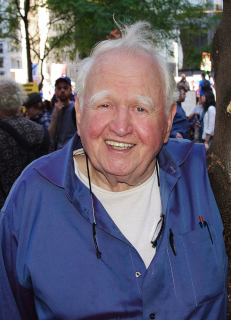
McCourt is the son of Irish parents Angela (née Sheehan) and Malachy McCourt. He is the last survivor of their seven offspring, following the death of his younger brother Alphonsus in 2016. He is raised in Limerick, County Limerick, and returns to the United States in 1952. He has four children: Siobhán, Malachy III, Conor, and Cormac, the latter two by his second wife, Diana. He also has a stepdaughter, Nina. He is portrayed by Peter Halpin in the film version of his brother’s memoir Angela’s Ashes. He is also one of the four founding members of the Manhattan Rugby Football Club in 1960. He appears in Frank McCourt’s memoirs.
In 1970, McCourt releases an album, And the Children Toll the Passing of the Day. Also, in the 1970s he hosts a talk show on WMCA.
In recent years McCourt occasionally appears on various programs on New York City’s political radio station, WBAI. Among the shows on which he appears is Radio Free Éireann. He is also a regular guest artist at the Scranton Public Theatre in Pennsylvania, having performed in Inherit the Wind, Love Letters and A Couple of Blaguards, which he co-wrote with brother Frank McCourt. Currently, he has been hosting a call-in radio forum on WBAI, airing on Sunday mornings at 11:00 a.m. He also has a short-lived role as a Catholic priest on the HBO prison drama Oz. He is the owner of Malachy’s, a bar on Third Avenue in New York City. One of his frequent patrons was actor, and friend, the late Richard Harris, who although famous works for a short time behind the bar for McCourt. He plays Francis Preston Blair in Gods and Generals (2003).
McCourt has written two memoirs titled, respectively, A Monk Swimming and Singing My Him Song, detailing his life in Ireland and his later return to the United States. He has also authored a book on the history of the ballad Danny Boy, and put together a collection of Irish writings, called Voices of Ireland.
On April 18, 2006, McCourt announces that he will run as a Green Party candidate to become governor of New York in the November 2006 election. Running under the slogan “Don’t waste your vote, give it to me,” he promises to recall the New York National Guard from Iraq, to make public education free through college, and to institute a statewide comprehensive “sickness care” system. He polls at 5% in an October 10 Zogby poll, versus 25% for RepublicanJohn Faso and 63% for Democrat Eliot Spitzer. He is endorsed by Cindy Sheehan, mother of a fallen soldier in the Iraq War. The League of Women Voters exclude him from the gubernatorial debate. He comes in a distant third in the general election, receiving 40,729 votes (or just under 1%), 9,271 votes short of what is required to gain automatic access in the 2010 election.
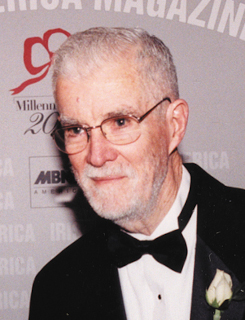
Born John Thomas McKiernan in New York City on May 10, 1915, McKiernan adopts the old Irish form of his name, Eoin, early in his life. While in college, he wins a scholarship to study Irish language in the ConnemaraGaeltacht in the west of Ireland. In 1938, he marries Jeannette O’Callaghan, whom he met while studying Irish at the Gaelic Society in New York City. They raise nine children.
Passion for Irish culture is the dominant undercurrent of a distinguished teaching career in secondary (Pittsfield, NH, 1947–49) and university levels (State University of New York at Geneseo, 1949–59, and University of St. Thomas in Saint Paul, MN, 1959–72). McKiernan serves as an officer of the National Council of College Teachers of English, is appointed by the Governor of New York to a State Advisory Committee to improve teacher certification standards and serves as a Consultant to the U.S. Department of Education in the early 1960s.
McKiernan suggests to the Irish government in 1938 that a cultural presence in the United States would promote a deeper understanding between the two countries, but he eventually realises that if this is to happen, he will have to lead the way. His opportunity comes in 1962, when he is asked to present a series on public television. Entitled “Ireland Rediscovered,” the series is so popular that another, longer series, “Irish Diary,” is commissioned. Both series air nationwide. The enthusiastic response provides the impetus to establish the Irish American Cultural Institute (IACI) in 1962. In 1972 he resigns from teaching to devote his energy entirely to the IACI.
Under McKiernan’s direction, the IACI publishes the scholarly journal Eire-Ireland, with subscribers in 25 countries, and the informational bi-monthly publication Ducas. The IACI still sponsors the Irish Way (an immersion program for U.S. teenagers), several speaker series, a reforestation program in Ireland (Trees for Ireland), theatre events in both countries and educational tours in Ireland. He continues these educational Ireland tours well into his retirement. At his suggestion, the Institute finances the world premiere of A. J. Potter‘s Symphony No. 2 in Springfield, Massachusetts.
Troubled by the biased reporting of events in Northern Ireland in the 1970s, McKiernan establishes an Irish News Service, giving Irish media and public figures direct access to American outlets. In the 1990s, he is invited by the Ditchley Foundation to be part of discussions aimed at bringing peace to that troubled area and is a participant in a three-day 1992 conference in London dealing with civil rights in Northern Ireland. Organized by Liberty, a London civil rights group, the conference is also attended by United Nations, European Economic Community, and Helsinki representatives.
McKiernan also founds Irish Books and Media, which is for forty years the largest distributor of Irish printed materials in the United States. In his eighth decade, he establishes Irish Educational Services, which funds children’s TV programs in Irish and provided monies for Irish language schools in Northern Ireland. Irish America magazine twice names him one of the Irish Americans of the year. In 1999, they choose him as one of the greatest Irish Americans of the 20th century.
McKiernan dies on July 18, 2004, in Saint Paul, Minnesota. On his death, The Irish Times refers to him as the “U.S. Champion of Irish culture and history . . . a patriarch of Irish Studies in the U.S. who laid the ground for the explosion of interest in Irish arts in recent years.”
Clinton’s parents are Colonel Charles Clinton and Elizabeth Denniston Clinton, Presbyterian immigrants who had left County Longford in Ireland in 1729 to escape an Anglo-Irish regime that imposed severe disabilities on religious dissenters. His political interests are inspired by his father, who is a farmer, surveyor, and land speculator, and serves as a member of the New York colonial assembly. He is the brother of General James Clinton and the uncle of New York’s future governor, DeWitt Clinton. He is tutored by a local Scottish clergyman.
Clinton serves in the French and Indian War, rising to the rank of lieutenant in the colonial militia. He begins a legal practice after the war and serves as a district attorney for New York City. He becomes Governor of New York in 1777 and remains in that office until 1795. He supports the cause of independence during the American Revolutionary War and serves in the Continental Army despite his gubernatorial position. During and after the war, he is a major opponent of Vermont‘s entrance into the union due to disputes over land claims.
Opposed to the ratification of the Constitution of the United States, Clinton becomes a prominent Anti-Federalist and advocates for the addition of the United States Bill of Rights. In the early 1790s, he emerges as a leader of the incipient Democratic-Republican Party and serves as the party’s vice-presidential candidate in the 1792 presidential election. He receives the third most electoral votes in the election, as President George Washington and Vice President John Adams both win re-election. He does not seek re-election in 1795 but serves as governor again from 1801 to 1804. He is the longest-serving governor in U.S. history until Terry Branstad surpasses his record in 2015.
George Clinton dies in Washington, D.C. on April 20, 1812, leaving the office of vice president vacant for the first time in U.S history. He is buried in the Old Dutch Churchyard in Kingston, New York. His nephew, DeWitt Clinton, continues the Clinton New York political dynasty after his uncle’s death.
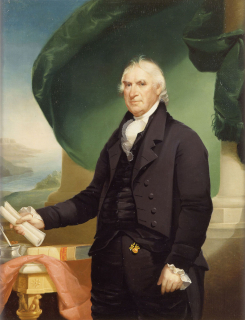
(Pictured: Portrait of George Clinton by Ezra Ames, 1814)


 seamus dubhghaill