seamus dubhghaill

Promoting Irish Culture and History from Little Rock, Arkansas, USA


Leave a comment

The Woolwich Pub Bombing

The Woolwich pub bombing is an attack by the Provisional Irish Republican Army (IRA) on the Kings Arms, a public house in Woolwich in southeast London, on November 7, 1974. Two people are killed in the explosion.

Standing at 1 Frances Street to the south of Woolwich Dockyard and the Royal Marine Barracks, and northwest of the Royal Artillery Barracks, the Kings Arms was built in the 19th century. In the 1881 census it is listed as the Kings Arms Hotel.

The pub is attacked by the Provisional Irish Republican Army on November 7, 1974, and two people are killed: Gunner Richard Dunne (aged 42), of the Royal Artillery (whose barracks are just 100 yards away), and Alan Horsley (aged 20), a sales clerk. A further 35 people, including the landlady, Margaret Nash, are injured. Echoing similar attacks in Guildford the previous month, a bomb, made of 6 lbs. of gelignite plus shrapnel, is thrown through a window into the pub.

Initially a left-wing extremist group called Red Flag 74 says it had placed the bomb, but responsibility is subsequently claimed by the Provisional Irish Republican Army and specifically by part of the Active Service Unit apprehended in December 1975 at the Balcombe Street siege. Two of the Guildford Four are wrongfully charged in December 1974 with involvement in the Woolwich pub bombing, and their convictions in October 1975 are eventually quashed in 1989 after a long campaign for justice.

The bombing is most likely the work of the Balcombe Street ASU, which claims sole responsibility during the 1977 trial of four members apprehended at the siege and include Joe O’Connell, who states from the dock: 

“We have instructed our lawyers to draw the attention of the court to the fact that four totally innocent people – Carole Richardson, Gerry Conlon, Paul Hill and Paddy Armstrong – are serving massive sentences for three bombings, two in Guildford and one in Woolwich, which three of us and another man now imprisoned, have admitted that we did.”

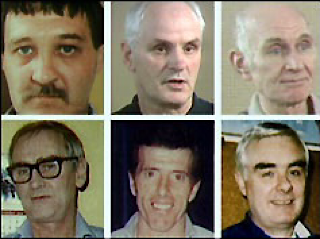
The other three members apprehended at the siege are Hugh DohertyEddie Butler and Harry DugganLiam Quinn (a US-born member) and Brendan Dowd are also active within the unit. Sentenced to life imprisonment, the “Balcombe Street four” serve 23 years in English prisons until transferred to Portlaoise PrisonCounty Laois, in early 1998. They are then released in 1999 under the terms of the Good Friday Agreement.

Neither the Woolwich bombing nor the wrongful imprisonments result in further charges or convictions. Three British police officers—Thomas Style, John Donaldson and Vernon Attwell—are charged in 1993 with conspiracy to pervert the course of justice, but each is found not guilty.

In continuation of a “troubles” overseas offensive, the Royal Artillery Barracks in Woolwich are bombed by the IRA in December 1983.

On April 17, 2018, P2P Residential Limited obtains full planning permission to demolish the pub and redevelop it as 19 residential units, nine parking spaces and a replacement pub across the ground floor and basement.

Similar plans had been proposed in 2013. Permission was granted in 2015 for 12 residential units and a pub, but the then owner did not implement the consent. The pub is demolished for redevelopment in 2020. Following a 2022 planning application, a Tesco Express supermarket is opened on the ground floor of the building.


Leave a comment

Judith Ward Wrongfully Convicted of M62 Coach Bombing

Judith Ward is wrongfully convicted and sentenced to life imprisonment on November 4, 1974, for the Provisional Irish Republican Army‘s (IRA) M62 coach bombing, which took place on February 4, 1974, killing twelve.

Ward, 25, from Stockport in Cheshire, receives a life term for each of those who died when the coach exploded on the M62 motorway. The sentences are to run concurrently with three other sentences of up to twenty years for causing explosions. She remains impassive as Justice Waller passes sentence.

During the trial the court hears that Ward had joined the army – from which she later deserts – on the instructions of the republican group, the IRA. Her detailed knowledge of bases helps to facilitate the coach bombing, prosecution barrister John Cobb QC alleges. She also gives information to the IRA which leads to two attacks on army targets in which six people die, Cobb adds. 

Ward initially confesses her crimes in a statement to police which she later retracts. She denies being a member of the IRA but photographs of her in the outlawed organisation’s uniform are shown to the jury at Wakefield Crown Court.

It also emerges in court that Ward was arrested after the bombing of Euston railway station in September 1973 but is later released. Questions are raised as to why the police let her go even though traces of explosives were found on her hands. 

As Ward is led from the courtroom to the cells, the only member of her family present, sister-in-law Jean Ward, sobs. Her father, Thomas, says earlier he does not believe his daughter is capable of such “brutal and callous acts.” Her brother, Tommy, says none of the family think Judith has ever been in the IRA. “We don’t think she was so heavily involved. There has been a lot of romancing,” he says. 

That is a point echoed in court by Ward’s solicitor, Andrew Rankin QC, who highlights many improbabilities in her confessions. They include having been married to an IRA man and having borne a child by another.

Ward spends 18 years in jail before her conviction is quashed in 1992. Her lawyers argue that the trial jury should have been told of her history of mental illness.

Three Appeal Court judges conclude that Ward’s conviction had been “secured by ambush.” They say government forensic scientists had withheld information that could have changed the course of her trial. Her case is one of a spate of miscarriage of justices revealed in the early 1990s. 

Others released around the same time include the Birmingham Six and the Guildford Four.

After her release, Ward writes an autobiography, Ambushed, published in 1992. She subsequently starts a course in criminology and becomes a campaigner for prisoners’ rights.

(From: “On This Day – 4 November,” BBC News, news.bbc.co.uk)


Leave a comment

Birth of Tom McGurk, Journalist, Radio Presenter & Sportscaster

Tom McGurk (Irish: Tomás Mag Oirc), Irish poet, journalist, radio presenter and sportscaster, is born on December 20, 1946, in Cookstown, County Tyrone, Northern Ireland. He attends Portadown College and studies English and Philosophy at Queen’s University Belfast (QUB). He is involved in the Civil Rights demonstrations while at Queen’s.

McGurk first joins RTÉ in 1972, as a news reporter, moving on to present Last House and First House on television. In 1972 he wins a Jacob’s Award for his RTÉ Radio documentaries on Ireland’s islands. For 20 years he is the presenter of RTÉ Sport‘s rugby coverage, most notable of the Six Nations Championship and Internationals with the panel of George Hook and Brent Pope. He also spends time in the 1980s and 1990s in the UK, working for BBC Radio 4‘s Start of the Week as a presenter on the regional ITV station for the North West of England, Granada Television. On his return to Ireland, he presents the Sunday Show on RTE Radio 1. He also guest presents Tonight with Vincent Browne, on TV3. He presents a drive-time radio show on 4FM when it launches in 2009.

Until 2019, McGurk is a columnist with The Sunday Business Post. He then writes for The Currency until 2020.

McGurk writes the script for the TV film Dear Sarah based on the letters from Sarah Conlon, campaigning for the release of her husband (Giuseppe Conlon), son (Gerry Conlon) and sister Anne Maguire, caught up in the Guildford Four miscarriage of justice.

Among his poems is “Big Ned” about a farmer from Brockagh, County Tyrone.

While working for 4FM, the Director of the National Women’s Council of Ireland, Susan McKay, speaks out against an “uncouth and objectionable” interview McGurk conducts with her. The National Women’s Council has since refrained from giving interviews to 4FM.

From 1983 to 1996 McGurk is married to the broadcaster Miriam O’Callaghan, with whom he has four daughters. In 2003 he marries PR consultant Caroline Kennedy.

On December 5, 2017, the Irish Revenue Commissioners list of tax defaulters reveal that McGurk had made a settlement of €76,000 with the Revenue for the underpayment of income tax.


Leave a comment

Beginning of the Balcombe Street Siege

The six-day Balcombe Street siege begins on December 6, 1975, when four Provisional Irish Republican Army (IRA) gunmen take a couple hostage in Balcombe Street, London.

In 1974 and 1975, London is subjected to a 14-month campaign of gun and bomb attacks by the Provisional IRA. Some 40 bombs explode in London, killing 35 people and injuring many more. The four members of what becomes known as the “Balcombe Street gang,” Joe O’Connell, Edward Butler, Harry Duggan and Hugh Doherty, are part of a six-man IRA Active Service Unit (ASU) that also includes Brendan Dowd and Liam Quinn.

The Balcombe Street siege starts after a chase through London, as the Metropolitan Police pursues Doherty, O’Connell, Butler and Duggan through the streets after they had fired gunshots through the window of Scott’s restaurant in Mount Street, Mayfair. The four IRA men ultimately run into a block of council flats in Balcombe Street, adjacent to Marylebone station, triggering the six-day standoff.

The four men go to 22b Balcombe Street in Marylebone, taking its two residents, middle-aged married couple John and Sheila Matthews, hostage in their front room. The men declare that they are members of the IRA and demand a plane to fly both them and their hostages to Ireland. Scotland Yard refuses, creating a six-day standoff between the men and the police. Peter Imbert, later Commissioner of the Metropolitan Police Service, is the chief police negotiator.

The siege ends peacefully on December 12, 1975, after the men free their two hostages and surrender following several days of intense negotiations between Metropolitan Police Bomb squad officers, Detective Superintendent Peter Imbert and Detective Chief Superintendent Jim Nevill, and the unit’s leader Joe O’Connell, who goes by the name of “Tom.” The other members of the gang are named “Mick” and “Paddy,” thereby avoiding revealing to the negotiators precisely how many of them are in the living room of the flat. The resolution of the siege is a result of the combined psychological pressure exerted on the gang by Imbert and the deprivation tactics used on the four men. The officers also use carefully crafted misinformation, through the BBC Radio news to further destabilise the gang into surrender. A news broadcast states that the British Special Air Service are going to be sent in to storm the building and release the hostages. This seems to deter the gang and they eventually give themselves up to the police.

The four are found guilty at their Old Bailey trial in 1977 of seven murders, conspiring to cause explosions, and falsely imprisoning John and Sheila Matthews during the siege. O’Connell, Butler and Duggan each receive 12 life sentences, and Doherty receives 11. Each of the men is later given a whole life tariff, the only IRA prisoners to receive this tariff. During the trial they instruct their lawyers to “draw attention to the fact that four totally innocent people were serving massive sentences” for three bombings in Woolwich and Guildford. Despite telling the police that they are responsible, they are never charged with these offences and the Guildford Four and Maguire Seven remain in prison for 15 more years, until it is ruled that their convictions are unsafe.

After serving 23 years in English prisons, the four men are transferred to the high security wing of Portlaoise Prison, County Laois, in early 1998. They are presented by Gerry Adams to the 1998 Sinn Féin Ardfheis as “our Nelson Mandelas,” and are released together with Brendan Dowd and Liam Quinn in 1999 as part of the Good Friday Agreement.


Leave a comment

The Balcombe Street Siege Ends

balcombe-street-siege

The six-day Balcombe Street siege in London ends peacefully on December 12, 1975, after four Provisional Irish Republican Army (IRA) gunmen free their two hostages and give themselves up to the Metropolitan Police Service (MPS).

In 1974 and 1975, London is subjected to a 14-month campaign of gun and bomb attacks by the Provisional IRA. Some 40 bombs explode in London, killing 35 people and injuring many more. The four members of what becomes known as the “Balcombe Street gang,” Joe O’Connell, Edward Butler, Harry Duggan and Hugh Doherty, are part of a six-man IRA Active Service Unit (ASU) that also includes Brendan Dowd and Liam Quinn.

The Balcombe Street siege starts after a chase through London, as the MPS pursues Doherty, O’Connell, Butler and Duggan through the streets after they had fired gunshots through the window of Scott’s restaurant in Mount Street, Mayfair. The four IRA men ultimately run into a block of council flats in Balcombe Street, adjacent to Marylebone station, triggering the six-day standoff.

The four men go to 22b Balcombe Street in Marylebone, taking its two residents, middle-aged married couple John and Sheila Matthews, hostage in their front room. The men declare that they are members of the IRA and demand a plane to fly both them and their hostages to Ireland. Scotland Yard refuses, creating a six-day standoff between the men and the police. Peter Imbert, later Commissioner of the Metropolitan Police Service, is the chief police negotiator.

The men surrender after several days of intense negotiations between Metropolitan Police Bomb squad officers, Detective Superintendent Peter Imbert and Detective Chief Superintendent Jim Nevill, and the unit’s leader Joe O’Connell, who goes by the name of “Tom.” The other members of the gang are named “Mick” and “Paddy,” thereby avoiding revealing to the negotiators precisely how many of them are in the living room of the flat. The resolution of the siege is a result of the combined psychological pressure exerted on the gang by Imbert and the deprivation tactics used on the four men. The officers also use carefully crafted misinformation, through the BBC Radio news to further destabilise the gang into surrender. A news broadcast states that the British Special Air Service are going to be sent in to storm the building and release the hostages. This seems to deter the gang and they eventually give themselves up to the police.

The four are found guilty at their Old Bailey trial in 1977 of seven murders, conspiring to cause explosions, and falsely imprisoning John and Sheila Matthews during the siege. O’Connell, Butler and Duggan each receive 12 life sentences, and Doherty receives 11. Each of the men is later given a whole life tariff, the only IRA prisoners to receive this tariff. During the trial they instruct their lawyers to “draw attention to the fact that four totally innocent people were serving massive sentences” for three bombings in Woolwich and Guildford. Despite telling the police that they are responsible, they are never charged with these offences and the Guildford Four and Maguire Seven remain in prison for 15 more years, until it is ruled that their convictions are unsafe.

After serving 23 years in English prisons, the four men are transferred to the high security wing of Portlaoise Prison, County Laois, in early 1998. They are presented by Gerry Adams to the 1998 Sinn Féin Ardfheis as “our Nelson Mandelas,” and are released together with Brendan Dowd and Liam Quinn in 1999 as part of the Good Friday Agreement.


Leave a comment

The Guildford Pub Bombings

The Guildford pub bombings occur on October 5, 1974, when the Provisional Irish Republican Army (IRA) detonate two 6-pound gelignite bombs at two pubs in Guildford, Surrey, southwest of London. The pubs are targeted because they are popular with British Army personnel stationed at the barracks in Pirbright. Four soldiers and one civilian are killed, while 65 others are wounded.

The bomb in the Horse and Groom pub detonates at 8:30 PM. It kills Paul Craig, a 22-year-old plasterer, two members of the Scots Guards and two members of the Women’s Royal Army Corps. The Seven Stars pub is evacuated after the first blast, and thus there are no serious injuries when the second bomb explodes at 9:00 PM.

These attacks are the first in a year-long campaign by an IRA Active Service Unit who are eventually captured after the Balcombe Street siege. A similar bomb to those used in Guildford, with the addition of shrapnel, is thrown into the Kings Arms pub in Woolwich on November 7, 1974. Gunner Richard Dunne and Alan Horsley, a salesclerk, die in that explosion. On August 27, 1975, the same IRA unit detonates a bomb in Surrey at the Caterham Arms pub which injures over 30 people. Surrey police say it is “a carbon copy of the Guildford bombs.”

The bombings occur at the height of the Troubles in Northern Ireland. The Metropolitan Police Service is under enormous pressure to apprehend the IRA bombers responsible for the attacks in England. The bombings contribute to the speedy and unchallenged passing of the Prevention of Terrorism Acts in November 1974.

In December 1974 the police arrest Gerry Conlon, Paul Hill, Patrick Armstrong and Carole Richardson, later known as the Guildford Four. The Guildford Four are falsely convicted of the bombings in October 1975 after the Metropolitan Police use the Prevention of Terrorism Acts to force false confessions. All four are sentenced to life in prison.

The Guildford Four are held in prison for fifteen years, although Gerry Conlon dies near the end of his third year of imprisonment. All the convictions are overturned years later in the appeal courts after it is proved the Guildford Four’s convictions had been based on confessions obtained by torture, while evidence specifically clearing the Four is not reported by the police.


Leave a comment

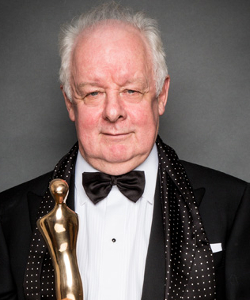
Birth of Jim Sheridan, Playwright, Director & Producer

jim-sheridan

Jim Sheridan, Irish playwright, screenwriter, film director, and film producer, is born in Dublin on February 6, 1949. In the few years from 1989 to 1993, Sheridan makes three acclaimed films set in Ireland (My Left Foot, The Field, and In the Name of the Father) that between them receive a remarkable 13 Academy Award nominations. Sheridan has personally received six Academy Award nominations. In addition to the above-mentioned films, he is also known for the films The Boxer and In America.

Sheridan is born to Anna and Peter Sheridan Snr and raised in the inner city of Dublin. He is the brother of playwright Peter Sheridan. The family runs a lodging house, while Anna Sheridan works at a hotel and Peter Sheridan Snr is a railway clerk with CIÉ. Sheridan’s early education is at a Christian Brothers school. In 1969 he attends University College Dublin to study English and History. He becomes involved in student theater there, where he meets Neil Jordan, who also is later to become an important Irish film director. After graduating from UCD in 1972, Sheridan and his brother begin writing and staging plays, and together found the Project Theatre Company.

In 1981, Sheridan emigrates to Canada, but eventually settles in the Hell’s Kitchen section of New York City. He enrolls in New York University‘s Tisch School of the Arts and becomes the artistic director of the Irish Arts Center.

Sheridan returns to Ireland in the late 1980s. In 1989, he directs My Left Foot, which becomes a critical and commercial success and wins Daniel Day-Lewis and Brenda Fricker Academy Awards. He follows that with The Field starring Richard Harris in 1990, then with In the Name of the Father in 1993, a fictionalized re-telling of the case of the Guildford Four. The film wins the Golden Bear at the 44th Berlin International Film Festival.

In 1996 he co-writes Some Mother’s Son with Terry George. The Boxer, with Daniel Day-Lewis, is nominated for a Golden Globe Award for best film drama in 1997. In 2003, he releases the semi-autobiographical In America, which tells the story of a family of Irish immigrants trying to succeed in New York. The film receives positive reviews and earns Samantha Morton and Djimon Hounsou Academy Award nominations. In 2005 he releases Get Rich or Die Tryin’, a film starring rap star 50 Cent. He is connected with the upcoming film adaptation of Artemis Fowl and is rumoured to have written the screenplay and been asked to direct it.

Sheridan helms the 2009 film Brothers, starring Tobey Maguire and Jake Gyllenhaal, which is shot in New Mexico. He also directs the thriller Dream House, which stars Daniel Craig, Naomi Watts, and Rachel Weisz.

Sheridan has a wife, Fran, and three daughters, Naomi Sheridan, Kirsten Sheridan, and Tess Sheridan, with whom he has collaborated, most notably with Naomi and Kirsten on the screenplay for In America.


Leave a comment

The M62 Coach Bombing

m62-coach-bombing

The M62 coach bombing occurs on February 4, 1974, on the M62 motorway in Northern England, when a Provisional Irish Republican Army (IRA) bomb explodes in a coach carrying off-duty British Armed Forces personnel and their family members. Twelve people, nine soldiers and three civilians, are killed by the bomb, which consists of 25 pounds of high explosive hidden in a luggage locker on the coach.

The coach has been specially commissioned to carry British Army and Royal Air Force personnel on leave with their families from and to the bases at Catterick and Darlington during a period of railway strike action. The vehicle departs from Manchester and is making good progress along the motorway. Shortly after midnight, when the bus is between junction 26 and 27, near Oakwell Hall, there is a large explosion on board. Most of those aboard are sleeping at the time. The blast, which can be heard several miles away, reduces the coach to a “tangle of twisted metal” and throws body parts up to 250 yards.

The explosion kills eleven people outright and wounds over fifty others, one of whom dies four days later. Amongst the dead are nine soldiers – two from the Royal Artillery, three from the Royal Corps of Signals, and four from the 2nd battalion Royal Regiment of Fusiliers. One of the latter is Corporal Clifford Haughton, whose entire family, consisting of his wife Linda and his sons Lee (5) and Robert (2), also die. Numerous others suffer severe injuries, including a six-year-old boy, who is badly burned.

The driver of the coach, Roland Handley, is injured by flying glass, but is hailed as a hero for bringing the coach safely to a halt. Handley dies at the age of 76 after a short illness in January 2011.

Suspicions immediately fall upon the IRA, which is in the midst of an armed campaign in Britain involving numerous operations, later including the Guildford pub bombing and the Birmingham pub bombings.

Reactions in Britain are furious, with senior politicians from all parties calling for immediate action against the perpetrators and the IRA in general. The British media are equally condemnatory. According to The Guardian, it is “the worst IRA outrage on the British mainland” at that time, whilst the BBC describes it as “one of the IRA’s worst mainland terror attacks.” The Irish newspaper The Sunday Business Post later describes it as the “worst” of the “awful atrocities perpetrated by the IRA” during this period.

IRA Army Council member Dáithí Ó Conaill is challenged over the bombing and the death of civilians during an interview and replies that the coach had been bombed because IRA intelligence indicated that it was carrying military personnel only.

Following the explosion, the British public and politicians from all three major parties call for “swift justice.” The ensuing police investigation led by Detective Chief Superintendent George Oldfield is rushed, careless, and ultimately forged, resulting in the arrest of the mentally ill Judith Ward who claims to have conducted a string of bombings in Britain in 1973 and 1974 and to have married and had a baby with two separate IRA members. Despite her retraction of these claims, the lack of any corroborating evidence against her, and serious gaps in her testimony – which is frequently rambling, incoherent, and “improbable” – she is wrongfully convicted in November 1974.

The case against Ward is almost completely based on inaccurate scientific evidence using the Griess test and deliberate manipulation of her confession by some members of the investigating team. The case is similar to those of the Guildford Four, the Birmingham Six, and the Maguire Seven, which occur at the same time and involve similar forged confessions and inaccurate scientific analysis. Ward is finally released in 1992, when three Appeal Court judges hold unanimously that her conviction was “a grave miscarriage of justice,” and that it had been “secured by ambush.”


Leave a comment

The Guildford Four Are Released From Prison

guildford-four-release

After serving 15 years in prison, the Guildford Four, Gerry Conlon, Patrick Armstrong, Carole Richardson, and Paul Hill, are released on October 19, 1989, in what is considered to be one of the biggest-ever miscarriages of justice in Britain.

On October 5, 1974, an Irish Republican Army (IRA) bomb kills four people in a Guildford pub frequented by British military personnel, while another bomb in Woolwich kills three. British investigators rush to find suspects and soon settle on Gerry Conlon and Paul Hill, two residents of Northern Ireland who are in the area at the time of the terrorist attack.

Under the recently rewritten Prevention of Terrorism Act, British investigators are allowed to hold and interrogate terrorist suspects for five days without any hard evidence. Conlon and Hill, who are nonpolitical petty criminals, are among the first suspects held under the new law. During their prison stay, investigators fabricate against them an IRA conspiracy that implicates a number of their friends and family members. The officers then force the two suspects to sign confessions under physical and mental torture. In October 1975, Gerry Conlon, Paul Hill, Paddy Armstrong, and Carole Richardson are sentenced to life in prison – mandatory for adults convicted of murder. Seven of their relatives and friends, called the Maguire Seven, are sentenced to lesser terms on the basis of questionable forensic evidence.

In 1989, detectives from Avon and Somerset Constabulary, investigating the handling of the case, find three significant pieces of evidence in relation to Surrey Police‘s handling of the Guildford Four and their statements.

Firstly, typed notes from Patrick Armstrong’s police interviews which had been heavily edited. Deletions and additions had been made, and the notes had been rearranged. These notes, and their amendments, are consistent with hand-written and typed notes presented at the trial, which suggest that the hand-written notes are made after the interviews had been conducted. The notes presented had been described in court as contemporaneous records.

Secondly, a series of manuscript notes relating to an interview with Hill, which show that Hill’s fifth statement is taken in breach of Judges’ Rules and may well have been inadmissible as evidence. The information is not made available to the Director of Public Prosecutions or the prosecution. Further, the officers involved had denied under oath that such an interview had happened.

Thirdly, detention records are inconsistent with the times and durations of the claimed interviews reported by the Surrey police.

In the face of growing public protest and after the disclosure of exonerating evidence, including the admittance of guilt in the bombings by an imprisoned IRA member, the group’s conviction is declared “unsafe and unsatisfactory.” The Guildford Four are cleared of all charges and released after 15 years in prison. The following year a British appeals court also overturns the convictions of the Maguire Seven, who were jailed on the basis of forensic evidence that is shown to have no relevant scientific basis.

(Pictured: Gerry Conlon on his release from prison in 1989)