seamus dubhghaill

Promoting Irish Culture and History from Little Rock, Arkansas, USA


Leave a comment

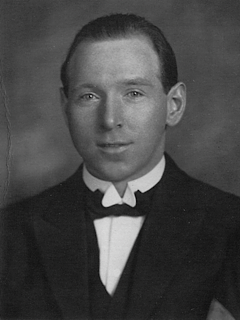
Birth of Charles McGuinness, Sailor & Adventurer

Charles John McGuinness, sailor and adventurer, is born on March 6, 1893, in Derry, County Londonderry.

McGuinness is the elder of two sons of John McGuinness, sea captain and harbourmaster who is born in the United States, and Margaret McGuinness (née Hernand) from Donegal, County Donegal.

In 1908, at the age of 15, McGuinness leaves home, stowing away in a ship and traveling extensively throughout the world for several years. At the age of 17 he is involved in the first of several shipwrecks, drifting for two weeks on a lifeboat before being rescued near Tahiti. He works as a pearl fisher in the South Seas for a year before resuming his nautical career.

In 1913, McGuinness travels through Canada, working as a panhandler and briefly joining the Canadian Militia. In August 1914, following the outbreak of World War I, he joins the British navy, serving in Admiral Reginald Bacon‘s Dover Patrol and in Cameroon. After learning of the 1916 Easter Rising, he deserts the British navy but later joins the South African Army, in which he fights in east Africa. He is captured by the German Schutztruppe of Colonel Paul von Lettow-Vorbeck but manages to escape by trekking through the jungle.

Disillusioned with the war, McGuinness resumes his travels. In 1920, he returns to Derry and joins the Irish Republican Army (IRA), leading a flying column in northwest Ireland. McGuinness, who reputedly introduces the first monkey to Derry, is viewed locally as an eccentric adventurer but is much celebrated for his instrumental role in the daring escape of Frank Carty, the IRA Sligo Brigade commander, from Derry jail.

Wanted for the murder of Inspector Robert Johnson in Glasgow, a charge he denies, McGuinness is captured by the British army in June 1921 after a failed bank raid in Glenties, County Donegal, but escapes from Derry’s Ebrington Barracks before his identity is established. Shortly after the truce in July 1921 he is sent by Liam Mellows to Germany, from where he smuggles arms to Ireland. After the treaty split, he continues to smuggle arms for the republican side but leaves the IRA, having become disillusioned with its incompetence. He claims to have been arrested in Berlin in 1922 for conspiring with Bulgarian revolutionaries, and released on condition that he leaves the state.

McGuinness emigrates to New York in 1923 where, following an alleged spell of employment by Chiang Kai-shek‘s forces in China, he establishes himself as a building contractor. In 1928, he joins Admiral Richard E. Byrd‘s expedition to the Antarctic, serving as a navigation officer. At a reception on his return in 1929, he presents the mayor of New York City, Jimmy Walker, with an Irish tricolour which, he claims, Byrd had flown over the South Pole. He is not, as he claims, awarded a congressional medal by the secretary of the navy.

In 1930, McGuinness embarks on a new career, smuggling rum between Canada and the United States (his memoirs of which are subsequently published in the American press under the pseudonym “Night-Hawk”). After losing his fortune when his boat and cargo are impounded in the summer of 1931, he travels to the Soviet Union to observe communism at first hand. He remains in the Soviet Union around two years, where he claims to work as a harbourmaster in Murmansk, and forms an unfavourable opinion of the Soviet Union.

McGuinness’s autobiography, Nomad, is published in 1934. His publisher, Methuen Publishing, is sued for considerable damages by the notorious Alderman John William Nixon, MP, as a result of McGuinness’s veiled reference to him as the former Royal Ulster Constabulary (RUC) detective inspector who led a murder gang in Belfast in 1922, believed responsible for the murder of the McMahon family.

In late 1936, McGuinness joins the International Brigades in the Spanish Civil War but soon deserts after disagreements with the authorities. He returns to Ireland, where he pens a sensational exposé of the International Brigades, I fought with the Reds, which is published by the Irish Independent. He also writes colourful accounts of life under communism, such as Behind the Iron Curtain, under the pseudonym “Peter Dawson.”

In 1942, while serving as chief petty officer in the marine service at Haulbowline, McGuinness offers to assist the German legation by smuggling spies out of Ireland. Despite his British naval service, he is virulently anti-British. According to local legend he has the sole of both feet tattooed with the Union Jack so wherever he goes he is safe in the knowledge that he is “trampling on the butcher’s apron.” He is arrested and sentenced to seven years imprisonment but is released shortly after the end of the Emergency.

McGuinness is believed to have died on December 4, 1947, when he supposedly drowns alongside four other crew members of the schooner Isaalt that he is piloting on Ballymoney Strand near GoreyCounty Wexford. Two members of the crew survive, managing to swim ashore, the ship is a mere 100 metres from land. However, members of McGuinness’ family express doubt over the years. A nephew claims to have encountered McGuinness on the London Underground in 1955. Upon their gazes meeting, McGuinness is reported to smile and say four simple words: “You never saw me.”

(From: “McGuinness, Charles John” by Fearghal McGarry, Dictionary of Irish Biography, http://www.dib.ie, October 2009)


Leave a comment

Death of Charlie Hurley, OC of the IRA’s 3rd Cork Brigade

Charles Hurley (Irish: Cathal Ó Muirthile), Officer Commanding of the 3rd Cork Brigade (West Cork) of the Irish Republican Army (IRA) during the Irish War of Independence (1919–21), is killed by British Army troops on March 19, 1921. 

Hurley is born in Baurleigh, County Cork, near the village of Kilbrittain, on March 20, 1893, and is educated in the national school and subsequently passes the civil service examinations at age fifteen. According to his brother James, he is one of seven siblings, “born and reared in a farm of 35 acres.”

In his adolescence, Hurley becomes a clerk working for the government. In 1915, he is offered a promotion and a transfer to Haulbowline Island but declines on the grounds that this entails enlisting in the Royal Navy, albeit in a purely administrative role. Returning to Cork, he becomes friends with Liam Deasy who introduces him to the Irish republican movement. In 1917, he takes a job at Castletownbere and it is there that he joins the Irish Volunteers in 1917. He is also a member of Sinn Féin, the Gaelic Athletic Association (GAA) and the Gaelic League (Conradh na Gaeilge).

In 1918, Hurley is sentenced to five years penal servitude for possession of arms and plans of the British military fortifications at Bere Island. However, he is released in 1919 following a hunger strike. In the same year, his brother Willie, also an IRA Volunteer, dies of typhoid fever. He first becomes vice-commandant of the Volunteers or IRA Bandon Battalion and then in August 1920, after the arrest and imprisonment of Tom Hales, he becomes commander of the Third Cork Brigade of the IRA. One of his most important decisions is to establish a full-time guerrilla unit or flying column, under Tom Barry.

The 3rd Cork Brigade (also known as the West Cork Brigade) goes on to be one of the most active IRA units during the guerrilla war against the British in 1919–21. According to Barry, Hurley leads an ambush of the Royal Irish Constabulary (RIC) at Ahawadda in April 1920, killing three policemen, wounding one and taking their arms and ammunition. In July of that same year, he leads a successful attack on the Coastguard station at Howes Strand, capturing a large number of weapons and ammunition. Barry remarks that Hurley is “a remarkable man and a lovable personality” and “continually urged a fighting army policy.” 

Hurley is present at the Tooreen ambush in October 1920 and subsequently is part of an assassination attempt on a judge who gives “harsh sentences” to IRA members. From December 1920 until January 1921, he takes command of the 3rd Cork Brigade’s flying column while Barry is ill. He also tours IRA units to assess the impact of the decree of excommunication on the guerrilla movement issued by Catholic Bishop of Cork, Daniel Cohalan.

In February 1921, Hurley leads the disastrous Upton train ambush on February 15, 1921, an attack on a train carrying British troops. In the action, the attacking IRA party is heavily outnumbered and the firefight results in three IRA men and six civilians being killed. He is also badly wounded in the face and ankle. Barry writes of the aftermath of the ambush that “he (Hurley) mourned deeply for his dead comrades and for the dead civilians, whom he did not know.”

Hurley is killed in action by British troops just before the Crossbarry ambush on March 19, 1921. He is staying in a house with a pro-republican family, where he is recuperating from the serious wounds he had received at Upton a month earlier. When he realises that he is surrounded by the British forces, he flees the house, as Barry comments in his book, to reduce the danger to those in the house, and is shot dead by pursuing troops. Barry remarks that he “died in the manner in which we expected.” 

The British Army places Hurley’s body at the workhouse in Bandon. However, members of Cumann na mBan surreptitiously take his body and he is given a secret republican funeral in Clogagh. A local ballad exists that commemorates him. In addition, the Gaelic Athletic Association grounds in Bandon is named after him in 1971.


Leave a comment

Death of Michael G. O’Brien, Catholic Priest & Hurling Manager

Michael G. O’Brien, Irish Roman Catholic priest and also noted hurling coach and manager, dies at Dromahane, County Cork, on November 14, 2014, following a long illness.

O’Brien is born in the parish of Innishannon/Knockavilla, County Cork. He enters St. Patrick’s College, Maynooth, and is ordained for the Diocese of Cork and Ross in the seminary chapel on June 22, 1958. He then ministers in the Irish-emigrant areas of London until 1961, when he returns to his home diocese and a curacy in the parish of Blackrock, Cork, where he helps to rebuild St. Michael’s Church which had burned to the ground.

For twelve years, from 1964 to 1976, O’Brien teaches at St. Finbarr’s Seminary, Farranferris, where he is also the hurling trainer for the school team. He is “at the helm as Farranferris wins Dr. Harty Cups in 1969, 1971, 1972, 1973 and 1974, adding All-Irelands in 1972 and 1974.”

A twelve-year stint as chaplain at the Naval Base of Haulbowline follows before O’Brien returns to parish ministry, again in Blackrock. In 1985, he starts a lengthy stay in Carrigaline where he serves as curate, administrator and finally parish priest of Carrigaline, before retiring from active ministry in 2003.

O’Brien serves as the coach of the Cork GAA senior hurling team on several occasions, guiding the team to All-Ireland titles in 1984 and 1990. At colleges’ level he also manages UCC GAA (associated with University College Cork) to Fitzgibbon Cup titles, and later manages Blackrock GAA. He also helps coaching Coláiste Chríost Rí.

O’Brien is later a resident in Nazareth House in Dromahane, County Cork. He dies there on November 14, 2014, following a long illness.

O’Brien is not to be confused with Canon Michael O’Brien of the neighbouring Roman Catholic Diocese of Cloyne.