seamus dubhghaill

Promoting Irish Culture and History from Little Rock, Arkansas, USA


Leave a comment

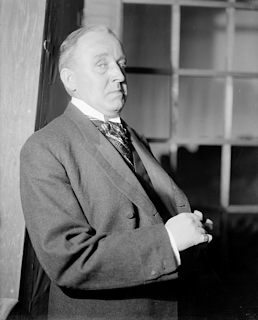
Birth of Dudley Digges, Irish Stage Actor, Director & Producer

John Dudley Digges, Irish stage actor, director, and producer as well as a film actor, is born in Ranelagh, Dublin, on June 9, 1879. Although he gains his initial theatre training and acting experience in Ireland, the vast majority of his career is spent in the United States, where over the span of 43 years he works in hundreds of stage productions and performs in over 50 films.

Digges is the child of James Digges and Catherine Forsythe. He becomes acquainted with theatre directors William and Frank Fay and takes an interest in acting. He joins W. G. Fay’s Irish National Dramatic Company, along with others including Máire Nic ShiubhlaighJames H. CousinsFrederick Ryan and Maire Quinn (who becomes his wife). Their first production, Cathleen Ni Houlihan, with Maud Gonne in the lead role, and Déirdre, is on April 2, 1902. The company, which has no funds to speak of, acquires a couple of bare rooms at 34 Lower Camden Street, which with the help of friends from Irish-revival societies they turn into a small theatre. However, this proves too small for the plays they are planning to stage. They rehearse at the Coffee Palace in Westmoreland Street and also use the Molesworth Hall for productions.

In 1903, the playwrights and most of the actors and staff from these productions go on to form the Irish National Theatre Society, which has its registered offices in Camden Street. The society founds the Abbey Theatre.

Digges goes to the United States with a group of fellow-actors in 1904, and becomes successful as both actor and producer. He is stage manager for a time to both Charles Frohman and George Arliss, and by the 1920s he has become a notable performer on Broadway. One of his best-known roles there is as Ficsur in the original 1921 production of Ferenc Molnár‘s Liliom (later adapted into the musical Carousel by Rodgers and Hammerstein). In 1924, in Woodstock, New York, he founds the Maverick Theater with the assistance of Hervey White, who had established the Maverick Arts Colony. He is also artistic director of a company that includes Helen Hayes and Edward G. Robinson.

Digges expands his career into films by 1929, and over nearly two decades he performs in more than 50 films, including the original pre-Hays Code adaptation of The Maltese Falcon (1931). He Is cast in that feature as Casper Gutman, the character later portrayed by Sydney Greenstreet in the 1941 version. In The Invisible Man (1933) he plays the Chief Detective who plots to capture the title character, opposite the unseen Claude Rains. He plays the role of the Heavenly Examiner in both the original Broadway production and the 1930 screen version of Sutton Vane‘s Outward Bound. He also works as a director on Broadway.

Digges marries only once, to Irish actress Maire Quinn. The couple wed on August 27, 1907, in New York City and remain together until Maire’s death in August 1947. On October 24, 1947, just two months after his wife’s death, he dies of a stroke in his Manhattan apartment at 1 West 64th Street. He is survived by three siblings, all living in Ireland: a sister, Mrs. Mai Gannen, and two brothers, James and Ernst. Following a requiem mass at Blessed Sacrament Roman Catholic Church on October 28, he is buried next to his wife at Gate of Heaven Cemetery in Hawthorne, New York.

(Pictured: Digges as Boss Mangan in the 1920 Broadway production Heartbreak House, which he also directs)

Leave a comment

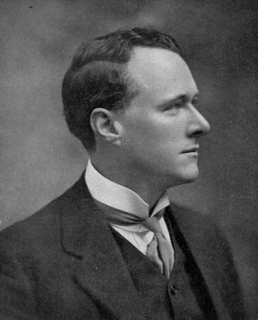
Death of James Bernard Fagan, Actor, Producer & Playwright

James Bernard Fagan, Irish-born actor, theatre manager, producer and playwright in England, dies of a heart attack in Hollywood, Los Angeles, California, on February 17, 1933, following a bout of influenza.

Fagan is born in Belfast on May 18, 1873, the eldest of the five children of Sir James Fagan, a surgeon at the Belfast Royal Hospital and an inspector of Irish reformatories, and Mary Catherine Fagan (née Hughes). He attends Clongowes Wood College near Clane, County Kildare and then moves to England. Initially interested in a career in the church, he begins studying law at Trinity College, Oxford in 1892 but leaves in 1893 without a degree. He works for a time in the Indian Civil Service but abandons this career for the stage.

Fagan begins his career as an actor with the company of Sir Frank Benson for two years, then joining, from 1895 to 1899, the company of Herbert Beerbohm Tree at Her Majesty’s Theatre. There he appears in Katherine and Petruchio, A Man’s Shadow, Julius Caesar, The Musketeers and Carnac Sahib. He starts writing plays in 1899, with The Rebels, for the time forsaking acting. In 1913, he returns to the stage touring as the Rt. Hon. Denzil Trevena in his own play, The Earth. He next writes The Fourth of August (1914) and Doctor O’Toole (1917). In 1917 he produces his first play, his own adaptation of the Eugène Brieux play Damaged Goods at St. Martin’s Theatre. He next produces The Wonder Tales and The Little Brother at the Ambassadors Theatre in London.

Fagan takes over the Court Theatre in London’s Sloane Square as a Shakespearean playhouse in 1920. The Times calls his revivals of Twelfth Night, The Merchant of Venice, Henry the Fourth (Part Two) and A Midsummer Night’s Dream “memorable for their freshness, sanity and distinction, and [deserving of] a place in theatrical history.” At the Court, he revives Damaged Goods and, in 1921, with the assistance of the author, produces George Bernard Shaw‘s Heartbreak House, with Edith Evans as “Lady Utterwood.” In 1922 he produces his play The Wheel at the Apollo Theatre. Its success allows him to repay his creditors. Even more successful is his adaptation of Treasure Island at the Savoy Theatre with Arthur Bourchier as “Long John Silver,” which opens December 26, 1922. It is revived every Christmas until the outbreak of World War II.

Fagan is persuaded by Jane Ellis, the actress who with Alfred Ballard founds the Oxford Playhouse “Red Barn” in 1923, to be its first manager. His first production at the Oxford Playhouse is a restaging of Shaw’s Heartbreak House and numbered Shaw among the audience. He produces The Cherry Orchard, at various theatres, to favourable reviews, popularising Anton Chekhov in Britain. From November 16, 1925, with Dennis Eadie, he presents Juno and the Paycock at the Royalty Theatre, thus bringing Seán O’Casey to the attention of London’s theatre-going public. O’Casey’s The Plough and the Stars follows the next year.

Fagan receives little support from the University of Oxford or the play-going public and resigns in 1929. His successor is Stanford Holme, who broadens its appeal and, despite the straitened times, makes it financially viable. In 1929, he is a director of the Festival Theatre, Cambridge, where his friend Terence Gray is director. He also produces many works for the Irish Players.

Beginning in the 1920s, several of Fagan’s plays are adapted for film. He moves to Hollywood in 1929 for the filming by Paramount Pictures of his play The Wheel as The Wheel of Life. Other film work includes his co-adaptation of the screenplay for the 1932 film Smilin’ Through, and he co-writes Paramount’s Forgotten Commandments the same year. His play Bella Donna is filmed four times, including posthumously in 1946, and a 1936 film, The Improper Duchess is based on his 1931 play of the same name.

James Bernard Fagan dies in Hollywood, California, on February 17, 1933, at the age of 59 of a heart attack following a bout of influenza.