seamus dubhghaill

Promoting Irish Culture and History from Little Rock, Arkansas, USA


Leave a comment

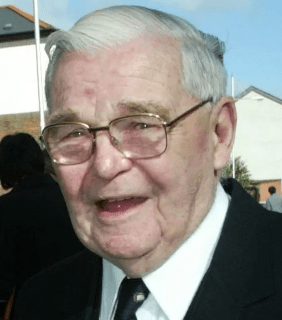
Birth of Thomas Finlay, Judge, Politician & Barrister

Thomas Aloysius Finlay, Irish judge, politician and barrister, is born on September 17, 1922, in Blackrock, Dublin. He serves as a Teachta Dála (TD) for the Dublin South-Central constituency from 1954 to 1957, a Judge of the High Court from 1971 to 1985, President of the High Court from 1974 to 1985 and Chief Justice of Ireland and a Judge of the Supreme Court from 1985 to 1994.

Finlay is the second son of Thomas Finlay, a politician and senior counsel whose career is cut short by his early death in 1932. He is educated at Clongowes Wood College, University College Dublin (UCD) and King’s Inns. While attending UCD, he is elected Auditor of the University College Dublin Law Society. His older brother, William Finlay, serves as a governor of the Bank of Ireland.

Finlay is called to the Bar in 1944, practicing on the Midlands circuit and becomes a senior counsel in 1961.

Finlay is elected to Dáil Éireann as a Fine Gael TD for the Dublin South-Central constituency at the 1954 Irish general election. He loses his seat at the 1957 Irish general election.

Following his exit from politics in 1957, having lost his Dáil seat, Finlay resumes practicing as a barrister. He successfully defends Captain James Kelly in the infamous 1970 arms trial.

In 1971, Finlay is tasked by the Fianna Fáil government with representing Ireland before the European Commission of Human Rights, when, in response to the ill treatment of detainees by security forces in Northern Ireland, they charge the British government with torture. Despite the notional recourse such prisoners would have within the British legal system, the Commission rules the complaint admissible.

Finlay is subsequently appointed a High Court judge and President of the High Court in January 1974. In 1985, Taoiseach Garret FitzGerald and his government nominates him to the Supreme Court and to the office of Chief Justice of Ireland. On October 10, 1985, he is appointed by President Patrick Hillery to both roles.

During this period Finlay presides over a number of landmark cases, including Attorney General v X in 1992, when he overturns a High Court injunction preventing a pregnant teenage rape victim travelling to the UK for an abortion.

When, in the same year, Judge Liam Hamilton of the High Court, chair of the Beef Tribunal, seeks disclosure of the cabinet’s minutes for a particular meeting, Chief Justice Finlay along with the majority of the Supreme Court deny the request ruling that the concept of collective government responsibility in the Constitution takes precedence.

Finlay announces his resignation as Chief Justice of Ireland and retirement as a judge in 1994.

After his retirement, Finlay presides over a number of public inquiries.

In 1996, Finlay oversees the inquiry into the violence by English fans at the aborted 1995 friendly soccer match versus the Republic of Ireland at Lansdowne Road. His report to Bernard Allen, Minister for Sport, is critical of security arrangements on the night and recommends improvements to ticketing, seat-allocation, fan-vetting and policing arrangements. The Irish Government shares his report with the British Home Office.

After the collapse of The Irish Press group in 1995, the Minister for Enterprise and Employment, John Bruton, receives a damming report from the Competition Authority that Independent Newspapers has abused its dominant position and acted in an anti-competitive manner by purchasing a shareholding in The Irish Press. In September 1995, Bruton announces the Commission on the Newspaper Industry with an extremely wide remit to examine diversity and ownership, competitiveness, editorial freedom and standards of coverage in Irish newspapers as well as the impact of the sales of the British press in Ireland. Minister Bruton appoints 21 people to the commission and appoints Finlay chair. Due to the wide remit and huge number of submissions, the commission’s report is delayed but is eventually published at the end of July recommending widespread reforms.

Following the discovery of the BTSB anti-D scandal, in 1996, Finlay is appointed the chair and singular member of the Tribunal of Inquiry into the Blood Transfusion Service Board. The speed and efficiency with which his BTSB Tribunal conducts its business, restores confidence in the Tribunal as a mechanism of resolving great controversies in the public interest.

Finlay also sits on an Irish Rugby Football Union (IRFU) panel to adjudicate on the cases of Rugby players accused of using banned performance-enhancing substances.

Finlay is married to Alice Blayney, who predeceases him in 2012. They have five children, two of whom follow in his family’s legal tradition: his son John being a Senior Counsel and his daughter Mary Finlay Geoghegan a former judge of the High Court, Court of Appeal and Supreme Court. Whenever his work schedule allows, he escapes to County Mayo where he indulges his passion for fishing.

Thomas Finlay dies at the age of 95 in Irishtown, Dublin, on December 3, 2017.


1 Comment

The 1973 Westminster Bombing

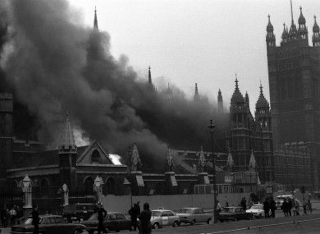
The 1973 Westminster bombing is a car bomb that explodes at about 8:50 a.m. on Thorney Street, off Horseferry Road, in Millbank, London, on December 18, 1973.

The explosion injures up to 60 people. The bomb is planted in a car, which is known to have been stolen in London the previous night. It is parked outside Horseferry House, a building occupied by the Home Office, and opposite Thames House, which is mainly occupied by the Department of Trade and Industry, when it explodes. Both buildings, and others nearby, are extensively damaged.

Two warnings are given prior to the bombing. The first is by means of an anonymous telephone call to the offices of The Evening News at 8:22 a.m. The caller says that there is a bomb in Horseferry Road and Marshall Street and that these streets should be cleared immediately. It is presumed that the caller must have meant Marsham Street and not Marshall Street. The police are informed and start their search in these streets. While the search is in progress there, the bomb explodes in Thorney Street.

The second warning, also anonymous, is received by the telephone operator in Horseferry House at 8:45 a.m., saying that there is a car bomb outside, timed to explode in half an hour. Precautionary action is being taken when the bomb explodes only about five minutes later.

The Provisional Irish Republican Army (IRA) claims responsibility for the attack, which is assumed to be in retaliation for the jailing of the Provisional IRA Belfast Brigade members who bombed the Old Bailey earlier in the year. The day before the Westminster bombing, the IRA sends two parcel bombs that target two politicians.

The Westminster bombing is one of many IRA car bombings in Northern Ireland and England during the almost 30-year conflict in Northern Ireland known as the Troubles.

In the week following the Westminster car bombing, several more IRA bombs explode in London. On December 19, the day after the Westminster bombing, one person is injured when an IRA letter bomb explodes at a London postal sorting office. Five days later, on Christmas Eve 1973, the IRA bombs two London pubs, first the North Star public house, where six people are injured, and secondly at the Swiss Cottage Tavern, in which an unspecified number of people are injured. The last bombs explode on Boxing Day, December 26, 1973, when the Stage Door public house is bombed, injuring one person, and another bomb explodes at the Sloane Square tube station where there are no injuries.


Leave a comment

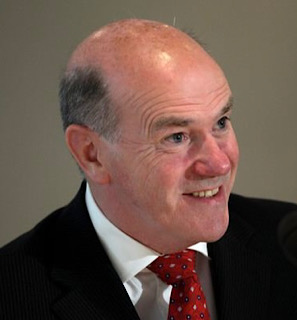
Death of Patrick Mayhew, British Barrister, Politician & Northern Ireland Secretary

Patrick Barnabas Burke Mayhew, Baron Mayhew of Twysden, PC, QC, DL, British barrister, politician and Secretary of State for Northern Ireland, who serves during a critical period in the Northern Ireland peace process, dies at his home in Kent, England, on June 25, 2016. He is a key figure in the December 1993 Downing Street Declaration which leads to the Provisional Irish Republican Army (IRA) ceasefire on August 31, 1994

Mayhew is born on September 11, 1929. His father, George Mayhew, is a decorated army officer turned oil executive. His mother, Sheila Roche, descendant of members of the Anglo-Irish Protestant ascendancy, is a relative of James Roche, 3rd Baron Fermoy, an Irish National Federation MP for East Kerry. Through his father, Mayhew is descended from the Victorian social commentator Henry Mayhew. He is educated at Tonbridge School, an all boys public school in Tonbridge, Kent.

Mayhew then serves as an officer in the 4th/7th Royal Dragoon Guards, studies law at Balliol College, Oxford, and is president of the Oxford University Conservative Association (OUCA) and of the Oxford Union. He is called to the Bar by the Middle Temple in 1955.

In 1963, Mayhew marries The Rev. Jean Gurney, and they have four sons.

Mayhew contests Dulwich at the 1970 United Kingdom general election, but the incumbent Labour Party member, Samuel Silkin, beats him by 895 votes. He is Member of Parliament (MP) for Tunbridge Wells from its creation at the February 1974 United Kingdom general election, standing down at the 1997 United Kingdom general election.

Mayhew is Under Secretary of Employment from 1979 to 1981, then Minister of State at the Home Office from 1981 to 1983. After this, he serves as Solicitor General for England and Wales from 1983 to 1987, and then Attorney General for England and Wales and simultaneously Attorney General for Northern Ireland from 1987 to 1992.

Mayhew is Secretary of State for Northern Ireland from 1992 to 1997, the longest anyone has served in this office.

Mayhew is one of only five Ministers (Tony Newton, Kenneth Clarke, Malcolm Rifkind and Lynda Chalker are the others) to serve throughout the whole 18 years of the premiership of Margaret Thatcher and John Major. This represents the longest uninterrupted Ministerial service in Britain since Henry John Temple, 3rd Viscount Palmerston, in the early 19th century.

Mayhew is knighted in 1983. On June 1997, he is given a life peerage as Baron Mayhew of Twysden, of Kilndown in the County of Kent. He retires from the House of Lords on June 1, 2015.

Mayhew suffers from cancer and Parkinson’s disease in his later years. He dies at the age of 86 on June 25, 2016, in his home in Kent.

Mayhew’s son, The Honourable Henry Mayhew, appears in the fourth episode of the series The Secret History Of Our Streets, discussing life in the Portland Road, Notting Hill, London. Another son, Tristram, co-founds the outdoor adventure company Go Ape. His son Jerome is the Conservative Party MP for the constituency of Broadland in Norfolk since December 2019.


Leave a comment

Birth of Margaret (May) Tennant, Promoter of Workers’ Rights & Public Health

Margaret Mary Edith (May) Tennant (née Abraham), promoter of workers’ rights and public health, is born April 5, 1869 at Rathgar, County Dublin, the only daughter of Dr. George Whitley Abraham, a lawyer in the civil service, and his wife, Margaret, daughter of Cornelius Curtain.

Abraham is educated at home by her father. Following his death in 1887, finding herself in financial straits, she moves to London, where she takes lodgings in Bloomsbury and works for Lady Emilia Dilke. Dilke is a social reformer and an advocate of trade unions for women, and as her secretary Margaret gains first-hand experience of the exploitative and unsanitary conditions afflicting women working in industry, a cause that she devotes the next decade to ameliorating. She is treasurer of the Womens’ Trade Union League, where she negotiates with employers on behalf of league members, organises meetings, and sends deputations to the House of Commons. From 1881 she coordinates a successful campaign to render regular government inspections of laundries mandatory (legislation is passed to this effect in 1908).

Abraham’s dedication to her work soon attracts wider recognition, and in 1891 she is appointed an assistant commissioner to undertake field inquiries for the Royal Labour Commission. In this capacity she travels incessantly throughout England and Ireland, gathering information and writing reports on often appalling working conditions. It is mainly because of this work that in 1893 the home secretary appoints her the first female factory inspector in England. Her new position marks a career shift from agitator to skillful and effective administrator. Traveling incessantly, the inspectors target illegal overtime, poor sanitation, and dangerous trades. In her first year alone she brings eighty prosecutions for illegal overtime.

In 1895 Abraham serves on a departmental committee at the Home Office on dangerous trades, where she meets Harold John Tennant, liberal MP for Berwickshire. The couple are married the following year, and have four sons and one daughter.

By 1896 Tennant is the superintending inspector of five more women inspectors, and her extensive experience in workers’ rights and public health is reflected in the book she publishes in that year, The law relating to factories and workshops, which runs to six editions. She finds it increasingly difficult to balance the pressures of her work with the demands of her private life, and she resigns her post soon after her marriage. However, she remains a committed social activist, serving as chairman of the Industrial Law Committee and on the Royal Commission on Divorce (1909). She is also an original member and treasurer of the Central Committee on Women’s Employment (1914–39).

During the World War I Tennant is chief adviser on women’s welfare to the Ministry of Munitions and director of the Women’s Department of the National Service Department. In recognition of her services the British government awards her the Companion of Honour in 1917, the same year that her eldest son, Harry, dies while on active service. Between the wars she turns her attention to women’s health, campaigning to improve maternal mortality and nursing care.

During the World War II, despite her failing health, Tennant works for the RAF Benevolent Fund. She is a member of the Central Consultative Council of Voluntary Organisations and the National Association for Prevention of Tuberculosis, chairman of the maternal health committee, governor of Bedford College, and a JP. She is also a director of the Mysore and Champion Reef Gold Mines, an enterprise of her husband’s family, and in this capacity travels to India and New Zealand in the mid-1920s.

The Tennants have homes in Edinglasserie, Aberdeenshire, and at 12 Victoria Square, London, as well as a restored country house, Great Maytham, at Rolvenden in Kent. She is a noted authority on gardening, and is director of The Gardener’s Chronicle (other interests included fishing, tennis, and gambling). After her husband’s death in 1935 she moves to a smaller house named Cornhill at Great Maytham, where she dies on July 11, 1946. Some of her correspondence is in the British Library, London.

(From: “Tennant (née Abraham), Margaret Mary Edith (May),” contributed by Sinéad Sturgeon and Georgina Clinton, Dictionary of Irish Biography, http://www.dib.ie)