seamus dubhghaill

Promoting Irish Culture and History from Little Rock, Arkansas, USA


Leave a comment

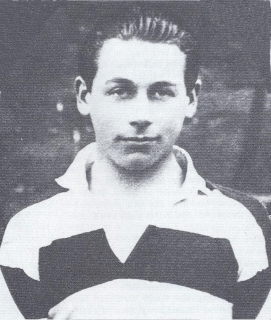
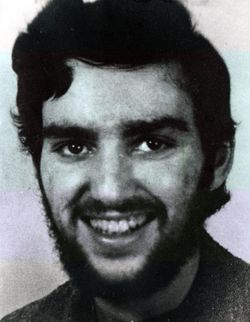
The Hanging of IRA Soldier Kevin Barry

Kevin Gerard Barry, an 18-year-old Irish Republican Army (IRA) soldier, is executed by the British Government on November 1, 1920, during the Irish War of Independence. He is sentenced to death for his part in an attack upon a British Army supply lorry which results in the deaths of three British soldiers.

Barry’s execution inflames nationalist public opinion in Ireland, largely because of his age. The timing of the execution, only seven days after the death by hunger strike of Terence MacSwiney, the republican Lord Mayor of Cork, brings public opinion to a fever-pitch. His pending death sentence attracts international attention, and attempts are made by United States and Vatican officials to secure a reprieve. His execution and MacSwiney’s death precipitate an escalation in violence as the Irish War of Independence enters its bloodiest phase, and Barry becomes an Irish republican martyr.

Barry is born on January 20, 1902, at 8 Fleet Street, Dublin, to Thomas and Mary (née Dowling) Barry. The fourth of seven children, two boys and five sisters, he is baptised in St. Andrew’s Church, Westland Row. As a child he attends the National School in Rathvilly, County Carlow, and the O’Connell Schools in Dublin, before enrolling in the Preparatory Grade at St. Mary’s College, Dublin, in September 1915. He remains at that school until May 31, 1916, when it is closed by its clerical sponsors. With the closure of St. Mary’s College, he transfers to Belvedere College, a Jesuit school in Dublin.

In October 1917, during his second year at Belvedere, Barry joins Company C, 1st Battalion of the Dublin Brigade of the Irish Volunteers. When Company C is later reorganized, he is reassigned to the newly formed Company H, under the command of Captain Seamus Kavanagh. The following year he is introduced by Seán O’Neill and Bob O’Flanagan to the Clarke Luby Club of the Irish Republican Brotherhood (IRB), and at some point in time he is sworn as a member of this secret society which is led by Michael Collins.

Two Dublin Volunteers notice that a British army lorry guarded by an armed party of soldiers makes twice weekly trips to Monk’s Bakery on Church Street to obtain bread. Based on these observations, John Joe Carroll of Company H conducts a reconnaissance of the bakery. In addition to its main entrance on Church Street, he observes that the bakery yard is also accessible by a corridor leading from a shop on North King Street. He concludes that this makes the bakery an attractive site for an ambush.

On the morning of September 20, 1920, Barry goes to Mass, then joins a party of IRA volunteers on Bolton Street in Dublin. Their orders are to ambush a British army lorry as it picks up a delivery of bread from the bakery and capture their weapons. The ambush is scheduled for 11:00 AM, which gives him enough time to take part in the operation and return to class in time for an examination he has at 2:00 PM. The truck arrives late and is under the command of Sergeant Banks.

Armed with a .38 Mauser Parabellum, Barry and members of C Company are to surround the lorry, disarm the soldiers, take the weapons and escape. He covers the back of the vehicle and, when challenged, the five soldiers comply with the order to lay down their weapons. A shot is then fired, possibly a warning shot from an uncovered soldier in the front. Barry and the rest of the ambush party then open fire. His gun jams twice and he dives for cover under the vehicle. His comrades flee and he is left behind. He is then spotted and arrested by the soldiers. One soldier is killed and two other later die of their wounds.

The War Office orders that Barry be tried by court-martial under the Restoration of Order in Ireland Act 1920, which received royal assent on August 9, 1920. Barry is charged on three counts of the murder of Private Marshall Whitehead. In accordance with military procedure the verdict is not announced in court. He is returned to Mountjoy Prison. Later that night the district court-martial officer enters his cell and reads out the sentence: death by hanging. The public learns on October 28 that the date of execution has been fixed for November 1.

Barry is hanged on November 1, 1920, after hearing two Masses in his cell. Canon Waters, who walks with him to the scaffold, writes to Barry’s mother later, “You are the mother, my dear Mrs. Barry, of one of the bravest and best boys I have ever known. His death was one of the most holy, and your dear boy is waiting for you now, beyond the reach of sorrow or trial.”

Barry’s body is buried at 1:30 PM, in a plot near the women’s prison. His comrade and fellow-student Frank Flood is buried alongside him four months later. A plain cross marks their graves and those of Patrick Moran, Thomas Whelan, Thomas Traynor, Patrick Doyle, Thomas Bryan, Bernard Ryan, Edmond Foley and Patrick Maher who are hanged in the same prison before the Anglo-Irish Treaty of July 1921 which ends hostilities between Irish republicans and the British. The men are buried in unconsecrated ground on the jail property and their graves are unidentified until 1934. They become known as the Forgotten Ten by republicans campaigning for the bodies to be reburied with honour and proper rites. On October 14, 2001, the remains of these ten men are given a state funeral and moved from Mountjoy Prison to be re-interred at Glasnevin Cemetery in Dublin.


Leave a comment

The Beginning of the 1980 Hunger Strike

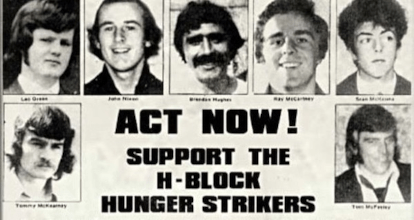
Irish political prisoners confined in the infamous H-Blocks of Long Kesh Detention Centre commence a hunger strike on October 27, 1980. The hunger strike is to continue until their demands for political status and for an end to British torture are met, or until death.

It begins with seven republican volunteers: Brendan Hughes, the IRA commanding officer in the prison, Sean McKenna, Tommy McKearney, Tommy McFeely, Leo Green, and Raymond McCartney, all of the Irish Republican Army (IRA), and John Nixon of the Irish National Liberation Army (INLA).

On December 1, three female prisoners, Mary Doyle, Mairéad Farrell and Mairéad Nugent, join the strike in Armagh Prison. Thirty more republican prisoners join later.

Despite being deceived into ending prematurely after 53 days, it sets the scene for a second hunger strike the following March, led by Bobby Sands. The first hunger strike announcement is made in a statement which is reprinted in full below.

“We the Republican POWs in the H-Blocks, Long Kesh, demand the right of political recognition and that we be accorded the status of political prisoners. We claim this right as captured combatants in the continuing struggle for national liberation and self-determination. We refute most strongly the tag of criminal with which the British have attempted to label us and our struggle, and we point to the devisive, partitionist institution of the six-county state as the sole criminal aspect of the present conflict.

“All of us were arrested under repressive laws, interrogated and often tortured in RUC barracks, and processed through special non-jury courts, where we were sentenced to lengthy terms of imprisonment. After this we were put in the H-Blocks and were expected to bow the knee before the British administration and wear their criminal uniform. Attempts to criminalise us were designed to depoliticise the Irish national struggle.

“We don’t have to recite again the widespread, almost total forms of punishment, degradations and deprivations we have been subjected to. All have failed to break our resistance.

“For the past four years we have endured this brutality in deplorable conditions. We have been stripped naked and robbed of our individuality, yet we refuse to be broken. Further repression only serves to strengthen our resolve and that of our gallant female comrades’ enduring the same hardships in Armagh jail.

“During this period many individuals, religious figures and political organisations and sections of the media have condemned the way we have been treated. Yet despite appeals for a resolution of the H-Block protest, the British government has remained intransigent and has displayed vindictive arrogance in dealing with the problem. They refuse to treat this issue in a realistic manner which is just another reflection of their attitude to the entire Irish question.

“Bearing in mind the serious implications of our final step, not only for us but for our people, we wish to make it clear that every channel has now been exhausted, and not wishing to break faith with those from whom we have inherited our principles, we now commit ourselves to a hunger strike.

“We call on the Irish people to lend us their support for our just demands and we are confident that this support will be very much in evidence in the coming days.

“We call on all solidarity and support groups to intensify their efforts and we also look forward with full confidence to the support of our exiled countrymen in America and Australia.

“We declare that political status is ours of right and we declare that from Monday, October 27th, 1980, a hunger strike by a number of men representing H- Blocks 3, 4, and 5 will commence.

“Our widely recognised resistance has carried us through four years of immense suffering, and it shall carry us through to the bitter climax of death, if necessary.”

Signed: PRO, H-Block blanket men, Long Kesh camp

(From: “The 1980 H-Block hunger strike,” Irish Republican News, http://www.republican-news.org, October 31, 2020)


2 Comments

IRA Volunteer Mick Fitzgerald Dies on Hunger Strike

Michael Fitzgerald also known as Mick Fitzgerald, dies on hunger strike in Cork County Gaol on October 17, 1920. He is among the first members of the Irish Republican Army and plays an important role in organizing it. His death is credited with bringing world-wide attention to the Irish cause for independence.

Born in December 1881 in Ballyoran, Fermoy, County Cork, Fitzgerald is educated at the Christian Brothers School in the town and subsequently finds work as a mill worker in the locality. He joins the Irish Volunteers in 1914 and plays an important role in building the local organisation which is soon to become the Irish Republican Army (IRA). He soon rises to the rank of Battalion Commandant, 1st Battalion, Cork No.2 Brigade.

On Easter Sunday, April 20, 1919, Fitzgerald leads a small group of IRA volunteers who capture Araglin, Cork Royal Irish Constabulary Barracks located on the border with County Tipperary. He is subsequently arrested and sentenced to three months imprisonment at Cork County Gaol. He is released from prison in August 1919 and immediately returns to active IRA duty. He is involved in the holding up of a party of British Army troops at the Wesleyan Church in Fermoy. The troops are disarmed although one of them is killed. Arrested and held on remand, Fitzgerald feels that the only chance he has for release is via a hunger strike.

Fitzgerald, along with Terence MacSwiney and nine other IRA volunteers, are arrested on August 8, 1920. On August 11, MacSwiney begins a hunger strike in Brixton Gaol. Fitzgerald and the other nine volunteers at Cork County Gaol join in. At the age of 24, he is the first to die on October 17, 1920 as a result of his sixty-seven day fast. His death is followed by the deaths of Joe Murphy and Terence MacSwiney. Their deaths are credited with bringing world-wide attention to the Irish cause for independence.

Fitzgerald is buried at Kilcrumper Cemetery, on the outskirts of Fermoy, County Cork. In addition, a road is named after him in Togher, Cork.

During a November 2008 visit to Fermoy, Sinn Féin Vice-President Pat Doherty lays a wreath at Fitzgerald’s grave. Doherty says Fitzgerald’s sacrifice was like that of the hunger strikers in 1981. He says it is a great honour for him to pay homage to a man “to whom we owe so much.” Also buried in the Republican Plot in Fermoy is General Liam Lynch, who was Chief of Staff of the IRA when he was shot dead by Irish Free State troops in the Knockmealdown Mountains on April 12, 1923. His last wish was to be buried with his great friend and comrade, Mick Fitzgerald.


Leave a comment

The 1923 Mountjoy Prison Hunger Strike

On October 13, 1923, following the end of the Irish Civil War, Michael Kilroy, O/C of the Irish Republican Army (IRA) prisoners in Mountjoy Prison, announces a mass hunger strike by 300 prisoners. It soon spreads to other jails and within days 7,033 republicans are on hunger strike.

On the same day, the prisoners in Kilmainham Gaol go on hunger strike, and Ernie O’Malley writes eloquently of it in his book on the Civil War, The Singing Flame. He notes that “practically all volunteered; some were exempted, including myself, but I refused this concession.”

Previously, the Irish Free State government had passed a motion outlawing the release of prisoners on hunger strike. Dan Downey had died in the Curragh on June 10, and Joseph Witty, only 19 years old, also died in the Curragh on September 2. However, because of the large numbers of Republicans on strike, at the end of October the Government sends a delegation to Newbridge Camp to speak with IRA leaders there.

It soon becomes apparent that they are not there to negotiate the strikers’ demands, but rather to give the prisoners the Government’s message: “we are not going to force-feed you, but if you die we won’t waste coffins on you; you will be put in orange boxes and you will be buried in unconsecrated ground.”

O’Malley writes, “Any action was good, it seemed, and everyone was more cheerful when the hunger strike began. We listened to the tales of men who had undergone previous strikes and we, who were novices, wondered what it would be like. We laughed and talked, but in the privacy of our cells, some, like myself, must have thought what fools we were, and have doubted our tenacity and strength of will. I looked into the future of hunger and I quailed.”

All negotiations to curtail the strike are abandoned and the strike goes forward. Poorly planned, within weeks many are going off strike, but by the end of October, there are still 5,000 on strike. O’Malley does not know what effect the strike will have, but he feels he cannot ‘let the side down.’ “Hunger striking was an unknown quantity for me. I did not approve of it. I was frankly afraid, but I could not see boys of sixteen and eighteen take their chance whilst I could eat and be excused. Now, even though one thought one’s death could be of use, there was no passive acceptance. It was a challenge, a fight, and again resistance was built up……The mind would suffer more than the body. The struggle in the end would be between body and spirit.”

On November 20, Denis “Denny” Barry dies in the Newbridge Camp, and Andrew Sullivan dies in Mountjoy on November 22.

When Barry dies, the Bishop of Cork, Daniel Cohalan, refuses to let his body lie in a Cork church. When Terence MacSwiney died on hunger strike in 1921, Bishop Cohalan had written in The Cork Examiner, “I ask the favour of a little space to welcome home to the city he laboured for so zealously the hallowed remains of Lord Mayor Terence MacSwiney. For the moment, it might appear that he has died in defeat. Was Robert Emmet’s death in vain? Did Pearse and the other martyrs for the cause of Irish freedom die in vain? We bow in respect before his heroic sacrifice. We pray the Lord may have mercy on his soul.”

At the death of Denis Barry two years later, the very same Bishop Cohalan writes, “Republicanism in Ireland for the last twelve months has been a wicked and insidious attack on the Church and on the souls of the faithful committed to the Church by the law of the Catholic Church.” Denis Barry is not afforded a Catholic burial.

With the deaths of Barry and Sullivan drawing no positive response or concessions from the Free State government, the IRA command orders the strikes ended on November 23.

O’Malley writes that the strike ended with no promises of release, “we had been defeated again.” While the strike itself fails to win releases, it does begin a slow start of a programme of release of prisoners, the State being worried about the political impact of more deaths, though some prisoners remain in jail until as late as 1932.

O’Malley, writing of Tom Derrig who is in Mountjoy, relates that one of the strikers there, on the last day of the strike, had asked a doctor, “What day of the strike is this?” The doctor replies, “The forty-first.” The striker says, “Be cripes! We bate Christ by a day!”

(From: Stair na hÉireann | History of Ireland, http://www.stairnaheireann.net)


Leave a comment

Birth of Frank Stagg, Provisional IRA Hunger Striker

Frank Stagg, Provisional Irish Republican Army (IRA) hunger striker, is born in Hollymount, County Mayo on October 4, 1941.

Stagg is the seventh child in a family of thirteen children. His father, Henry, and his uncle had both fought in the Irish War of Independence and Irish Civil War. His brother, Emmet Stagg, becomes a Labour Party politician and a Teachta Dála (TD) for Kildare North. He is educated to primary level at Newbrook Primary School and at CBS Ballinrobe to secondary level. After finishing his schooling, he works as an assistant gamekeeper with his uncle prior to emigrating to England in search of work. Once in England, he gains employment as a bus conductor in North London and later becomes a bus driver. While in England he meets and marries fellow Mayo native, Bridie Armstrong from Carnacon in 1970.

In 1972, Stagg joins the Luton cumann of Sinn Féin and soon after becomes a volunteer in the Provisional Irish Republican Army (IRA).

In April 1973, Stagg is arrested with six others alleged to comprise an IRA unit planning bombing attacks in Coventry. He is tried at Birmingham Crown Court. The jury finds three of the seven not guilty. The remaining four are all found guilty of criminal damage and conspiracy to commit arson. Stagg and English-born priest, Father Patrick Fell, are found to be the unit’s commanding officers. Stagg is given a ten-year sentence and Fell is given twelve years. Thomas Gerald Rush is given seven years and Anthony Roland Lynch, who is also found guilty of possessing articles with intent to destroy property, namely nitric acid, balloons, wax and sodium chlorate, is given ten years.

Stagg is initially sent to the top security Albany Prison on the Isle of Wight. In March 1974, having been moved to Parkhurst Prison, he and fellow Mayo man Michael Gaughan join a hunger strike begun by the sisters Marian Price and Dolours Price, Hugh Feeney and Gerry Kelly.

Following the hunger strike that results in the death of Michael Gaughan, the Price sisters, Feeney and Kelly are granted repatriation to Ireland. Stagg is denied repatriation and is transferred to Long Lartin Prison. During his time there he is subject to solitary confinement for refusing to do prison work and is also subjected, along with his wife and sisters during visits, to humiliating body searches. In protest against this, he begins a second hunger strike that lasts for thirty-four days. This ends when the prison governor agrees to an end of the strip-searches on Stagg and his visitors. He is bed-ridden for the rest of his incarceration in Long Lartin, due to a kidney complaint.

In 1975 Stagg is transferred to Wakefield Prison, where it is demanded that he again do prison work. He refuses and is placed in solitary confinement. On December 14, 1975, he embarks on a hunger strike in Wakefield, along with a number of other republican prisoners, after being refused repatriation to Ireland during the IRA/British truce. His demands are an end to solitary confinement, no prison work and repatriation to prison in Ireland. The British government refuses to meet any of these demands and Stagg dies on February 12, 1976, after 62 days on hunger strike.

Stagg’s burial causes considerable controversy. Republicans and two of his brothers seek to have him buried in the republican plot in Ballina beside the grave of Michael Gaughan, in accordance with his wishes. His widow, his brother Emmet Stagg and the Irish government wish to have him buried in the family plot in the same cemetery and to avoid republican involvement in the funeral.

In order to prevent the body from being disinterred and reburied by republicans, the grave is covered with concrete. Local Gardaí keep an armed guard by the grave for six months. However, unknown to them, the plot beside the grave is available for purchase. Stagg’s brother George purchases the plot and places a headstone over it, with it declaring that the “pro-British Irish government” had stolen Frank’s body. In November 1977, a group of republicans dig down into the plot that George had purchased, then dig sideways and recover Stagg’s coffin from the adjacent plot under cover of darkness, before reburying it in the republican plot beside the body of Michael Gaughan. The Republicans hold their own version of a funeral ceremony before disappearing back into the night.

Following the final burial, an anonymous letter is sent to Taoiseach Liam Cosgrave, Minister for Justice Patrick Cooney, Minister for Posts and Telegraphs Conor Cruise O’Brien and Minister for Foreign Affairs Garret FitzGerald, informing them each that they have been “marked out for assassination” because of their government’s involvement with Stagg’s burials. Stagg’s widow Bridie and his brother Emmett are reported to be intimidated by members of the Provisional IRA due to their opposition to his burial in a Republican plot.

The IRA swears revenge over Stagg’s death, warning the British public it is going to attack indiscriminately. They explode about 13 bombs throughout England within a month after his death.


Leave a comment

Blair & Ahern Meet in Aftermath of the Omagh Bombing

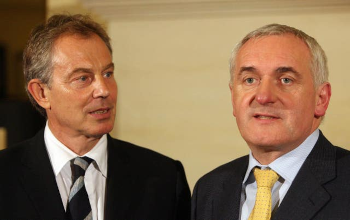
British Prime Minister Tony Blair meets with Taoiseach Bertie Ahern in Ashford Castle, County Mayo on August 26, 1998. They join forces to fight terrorism and discuss laws which will be introduced in the aftermath of the Omagh bombing, which took place eleven day earlier on August 15 in Omagh, County Tyrone, 110 kilometres west of Belfast, and resulted in 28 deaths.

Leading the way in a return to the past is Ahern’s Dublin government, which has introduced the toughest anti-terrorist legislation in the history of the Irish Republic. He concedes that the measures are draconian but says that his government is determined to do everything in its power, “working closely with the British government to defeat and suppress this murderous conspiracy against the people of Ireland.”

Prime Minister Blair promises that he too plans to introduce extreme measures. “We will bring in similar measures to those proposed by the Irish government, so we will then have the toughest anti-terrorist measures for the whole of Ireland, the Republic and Northern Ireland, that we have ever seen.”

With no plans to recall the British parliament, it is thought that existing legislation will be applied, since it already includes measures similar to those announced by the Irish government.

Oppressive British legislation has sustained British rule in Ireland for decades. This includes internment without trial, non-jury courts, entry and search of homes without a warrant, seven-day detention with unrecorded and unsupervised interrogation, denial of access to lawyers, exclusion orders and more. Most of these are still in use in 1998.

The Ahern package includes withdrawal of a suspect’s right to silence — refusal to answer questions can be used as evidence that a suspect is a member of an illegal organisation, the seizure of property that has been used for storing weapons or making bombs, and the creation of a new offence of directing an unlawful organisation. This is expected to carry the penalty of life imprisonment.

Omagh is 75% nationalist, with good cross-community relations, and has largely escaped the worst of the conflict. Although Republican dissidents have carried out a spate of similar bombings in the previous year, the towns targeted are mainly Unionist and further east.

In the wake of the Good Friday Agreement, Republican splinter groups remain on a military footing. These groups — the Irish National Liberation Army (INLA), the Continuity IRA and the Real IRA — have announced their determination to fight on.

The group that claims responsibility for the Omagh bombing is the Real IRA, which was formed in protest at the IRA’s 1997 cease-fire. Irish police have insisted that the Real IRA is the military wing of the recently formed 32 County Sovereignty Movement (32CSM), although this is denied by that organisation.

Although both the INLA and the Real IRA have declared a unilateral cease-fire since the Omagh bombing, media focus has settled on Bernadette Sands McKevitt, sister of the 1980s IRA hunger striker Bobby Sands, who is a leading figure in the 32 County Sovereignty Movement. Sands-McKevitt has condemned the Omagh bombing, but her home in Blackrock, County Louth, has since been targeted by local townspeople who have staged protests against her and her family. She has also been denied a visa to enter the United States on a speaking tour.

The Omagh bombing could not have come at a better time for Britain. With the war formally over and Sinn Féin penned, the bombing delivers an opportunity to smash the Republican left once and for all and wrench it from any semblance of ongoing support in Ireland.

All nationalist opponents of the Good Friday Agreement must now cope with being stained by the blood of Omagh. With the massive referendum vote in favour of peace to back them up, the British and Irish governments can be satisfied that the Good Friday Agreement now looks more in place than at any other time. As one nationalist describes the situation, “If the Good Friday Agreement was a defeat for the cause of Irish nationalism, the Omagh bombing has turned it into a rout.”

(From: “Blair, Ahern make the most of Omagh bomb” by Dave Riley, Green Left (www.greenleft.org), August 26, 1998)


Leave a comment

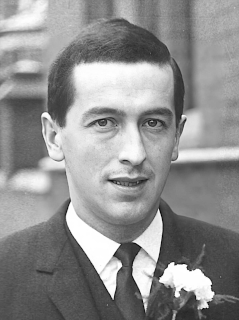
Death of Kieran Doherty, Irish Republican Hunger Striker

Kieran Doherty, Irish republican hunger striker and politician who serves as a Teachta Dála (TD) for the Cavan–Monaghan constituency from June 1981 to August 1981, dies on August 2, 1981, in HM Prison Maze (known to republicans as Long Kesh) on the 73rd day of his hunger strike. He is a volunteer in the Belfast Brigade of the Provisional Irish Republican Army (IRA).

Doherty is the third son in a family of six. He is born on October 16, 1955, in the Andersonstown area of Belfast and is educated at St. Theresa’s Primary School and Glen Road Christian Brothers School (CBS). The Doherty brothers are known cyclists and sportsmen in the Andersontown area. He wins an Antrim Gaelic football medal at minor level in 1971.

Doherty joins Fianna Éireann in 1971 and is interned by the British Government between February 1973 and November 1975. His brothers Michael and Terence are interned between 1972 and 1974.

Doherty works as an apprentice heating engineer. His girlfriend is Geraldine Scheiss and, although they never become formally engaged, they become very close toward the end of his life. Before his arrest, she had not known that he is in the IRA.

In August 1976, while he is out to set a bomb, the van in which he is riding is chased by the Royal Ulster Constabulary (RUC). During the chase Doherty manages to leave the van and hijack a car. He later ditches the car and is found one mile away from the car. He is convicted and sentenced to 18 years for possession of firearms and explosives, with another four years for the hijack.

Doherty starts his hunger strike on May 22, 1981. While on hunger strike, he is elected as an Anti H-Block TD for the Cavan–Monaghan constituency at the 1981 Irish general election, which is held on June 11. He receives 9,121 (15.1%) first preference votes and is elected on the fourth count. The two seats gained by Anti H-Block candidates denies Taoiseach Charles Haughey the chance to form a government, and the 22nd Dáil Éireann sees a Fine GaelLabour Party coalition government come to office, with Garret FitzGerald as Taoiseach.

Doherty dies at the age of 25 on August 2, 1981. He lasts 73 days on hunger strike, the longest of the 1981 hunger strikers, and only one day short of Terence MacSwiney. He is the shortest-serving Dáil deputy ever, serving as a TD for only two months.

Doherty is commemorated on the Irish Martyrs Memorial at Waverley Cemetery in Sydney, Australia. In October 2016, a painting of him is unveiled in Leinster House by Sinn Féin.


Leave a comment

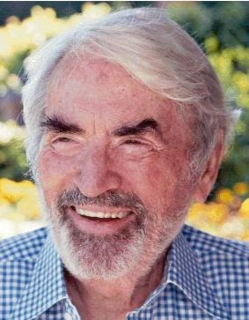
Death of Irish American Actor Gregory Peck

Actor Gregory Peck dies at his home in Los Angeles, California, from bronchopneumonia at the age of 87 on June 12, 2003.

Peck is born in La Jolla, California on April 5, 1916, to Bernice Mary (Ayres) and Gregory Pearl Peck, a chemist and pharmacist in San Diego. Through his Irish-born paternal grandmother, Catherine Ashe, Peck is related to Thomas Ashe, who takes part in the Easter Rising fewer than three weeks after Peck’s birth and dies while on hunger strike in 1917.

Peck’s parents divorce when he is five years old. An only child, he is sent to live with his grandmother. He never feels as though he has a stable childhood. His fondest memories are of his grandmother taking him to the movies every week and of his dog, which follows him everywhere.

At the age of ten Peck is sent to a Catholic military school, St. John’s Military Academy in Los Angeles. While he is a student there, his grandmother dies. At 14, he moves back to San Diego to live with his father and attends San Diego High School. After graduating he enrolls for one year at San Diego State Teacher’s College (now known as San Diego State University).

Peck studies pre-med at the University of California, Berkeley and while there is bitten by the acting bug and decides to change the focus of his studies. He enrolls in the Neighborhood Playhouse School of the Theatre in New York City and debuts on Broadway after graduation. His debut is in Emlyn Williams‘ play The Morning Star (1942). By 1943, he is in Hollywood, where he debuts in the RKO Pictures film Days of Glory (1944).

Stardom comes with Peck’s next film, The Keys of the Kingdom (1944), for which he is nominated for an Academy Award. Peck’s screen presence displays the qualities for which he becomes well known. He is tall, rugged and heroic, with a basic decency that transcends his roles. He appears in Alfred Hitchcock‘s Spellbound (1945) as an amnesia victim accused of murder. In The Yearling (1946), he is again nominated for an Academy Award and wins the Golden Globe Award. He is especially effective in westerns and appears in such varied fare as David O. Selznick‘s critically blasted Duel in the Sun (1946), the somewhat better received Yellow Sky (1948) and the acclaimed The Gunfighter (1950). He is nominated again for the Academy Award for his roles in Gentleman’s Agreement (1947), which deals with antisemitism, and Twelve O’Clock High (1949), a story of high-level stress in an Air Force bomber unit in World War II.

With a string of hits to his credit, Peck makes the decision to only work in films that interest him. He continues to appear as the heroic, larger-than-life figures in such films as Captain Horatio Hornblower R.N. (1951) and Moby Dick (1956). He works with Audrey Hepburn in her debut film, Roman Holiday (1953).

Peck finally wins the Oscar, after four nominations, for his performance as lawyer Atticus Finch in To Kill a Mockingbird (1962). In the early 1960s, he appears in two darker films than he usually makes, Cape Fear (1962) and Captain Newman, M.D. (1963), which deal with the way people live. He also gives a powerful performance as Captain Keith Mallory in The Guns of Navarone (1961), one of the biggest box-office hits of that year.

In the early 1970s, Peck produces two films, The Trial of the Catonsville Nine (1972) and The Dove (1974), when his film career stalled. He makes a comeback playing, somewhat woodenly, Robert Thorn in the horror film The Omen (1976). After that, he returns to the bigger-than-life roles he is best known for, such as MacArthur (1977) and the monstrous Nazi Dr. Josef Mengele in the huge hit The Boys from Brazil (1978). In the 1980s, he moves into television with the miniseries The Blue and the Gray (1982) and The Scarlet and the Black (1983). In 1991, he appears in the remake of his 1962 film, playing a different role, in Martin Scorsese‘s Cape Fear (1991). He is also cast as the progressive-thinking owner of a wire and cable business in Other People’s Money (1991).

In 1967, Peck receives the Academy’s Jean Hersholt Humanitarian Award. He has also been awarded the Presidential Medal of Freedom. Always politically progressive, he is active in such causes as anti-war protests, workers’ rights and civil rights. In 2003, Peck’s portrayal of Atticus Finch is named the greatest film hero of the past 100 years by the American Film Institute.

Peck dies in his sleep at his home in Los Angeles, California from bronchopneumonia at the age of 87 on June 12, 2003. He is entombed in the Cathedral of Our Lady of the Angels mausoleum in Los Angeles. His eulogy is read by Brock Peters, whose character, Tom Robinson, was defended by Peck’s Atticus Finch in To Kill a Mockingbird.


2 Comments

Irish Republican Patsy O’Hara Dies on Hunger Strike

Patsy O’Hara, Irish republican hunger striker and member of the Irish National Liberation Army (INLA), dies on hunger strike in the H Blocks of Long Kesh Prison at 11:29 PM on May 21, 1981. Earlier in the day, at 2:11 AM, he is preceded in death by his friend and fellow hunger-striker, Raymond McCreesh.

O’Hara is born on July 11, 1957, in Bishop Street, Derry, County Londonderry, Northern Ireland.

O’Hara joins Na Fianna Éireann in 1970 and, in 1971, his brother Sean is interned in Long Kesh Prison. In late 1971, at the age of 14, he is shot and wounded by a soldier while manning a barricade. Due to his injuries, he is unable to attend the civil rights march on Bloody Sunday but watches it go by him in the Brandywell Stadium, and the events of the day have a lasting effect on him.

In October 1974, O’Hara is interned in Long Kesh Prison, and upon his release in April 1975 he joins the Irish Republican Socialist Party (IRSP) and INLA. He is arrested in Derry in June 1975 and held on remand for six months. In September 1976, he is arrested again and once more held on remand for four months.

On May 10, 1978, O’Hara is arrested on O’Connell Street in Dublin under section 30 of the Offences Against the State Act and is released eighteen hours later. He returns to Derry in January 1979 and is active in the INLA. On May 14, 1979, he is arrested and is convicted of possessing a hand grenade. He is sentenced to eight years in prison in January 1980.

O’Hara becomes Officer Commanding of the INLA prisoners at the beginning of the first hunger strike in 1980, and he joins the 1981 strike on March 22.

On Thursday, May 21, 1981, at 11:29 PM, Patsy O’Hara dies at the age of 23 after 61 days on hunger strike. In accordance with his wishes, his parents do not get him the medical intervention needed to save his life. His corpse is found to be mysteriously disfigured prior to its departure from prison and before the funeral, including signs of his face being beaten, a broken nose, and cigarette burns on his body.

O’Hara’s mother, Peggy O’Hara, is a candidate in the 2007 Northern Ireland Assembly election in the Foyle constituency. She is not elected, but she is one of the more successful dissident republican candidates opposed to the new policy of the Sinn Féin leadership of working with the Police Service of Northern Ireland (PSNI) and wins 1,789 votes. On the eve of the election, over 330 former republican prisoners write a letter to the Derry Journal endorsing her campaign.


Leave a comment

Republican Prisoner Denny Barry Dies on Hunger Strike

Irish Republican prisoner Denis “Denny” Barry dies on hunger strike in Newbridge internment camp on November 20, 1923, shortly after the Irish Civil War.

Barry is born into a farming family in Riverstick, ten miles south of Cork city, on July 15, 1883. He enjoys Gaelic culture and sport and is a prominent member of the Ballymartle hurling club. He later joins the famous Blackrock National Hurling Club where he wins four senior county championships in a row during the years of 1910 to 1913.

In 1913, Barry joins the newly formed Irish Volunteers. He is a member of the first Cork brigade and has been politically active in Sinn Féin. In 1915, he moves to Kilkenny to take up employment there, where he continues his volunteer activities. Shortly after the Easter Rising in 1916, he is arrested in Kilkenny in a British Government crackdown and sent to Frongoch internment camp in North Wales. In 1917 he becomes election agent for W. T. Cosgrave in the Kilkenny by-election, one in which Cosgrave is successfully elected. However, just six years later he finds himself imprisoned by Cosgrave’s own government.

In 1922 Barry is imprisoned in Newbridge camp in Kildare and takes part in the hunger strike of 1923. On November 20, 1923, after 34 days protesting against the harsh regime and undignified conditions, he dies but even in death he is still refused dignity.

Barry’s body is not released to his family and is instead, on the orders of Minister of Defence, Richard Mulcahy, buried in the grounds of Newbridge internment camp. The Barry family takes legal action against this and eventually receives the body, but this is not the last of their troubles.

Upon their arrival in Cork with Barry’s body, the Bishop of Cork, Daniel Cohalan, instructs his priests not to allow Barry’s funeral in any church. Ironically just a few short years before, Bishop Cohalan had been a strong vocal supporter of Terence MacSwiney, Sinn Féin Lord Mayor of Cork, who died on hunger strike in Brixton Prison.

Shortly after MacSwiney’s death, Bishop Cohalan’s attitude towards the Irish Republican Army (IRA) changes and he issues a decree condemning the IRA in which he states, “Anyone who shall within the diocese of Cork organise or take part in an ambush or in kidnapping or otherwise, shall be guilty of murder or attempted murder and shall incur by the very fact the censure of excommunication.”

On December 10, 1922, Bishop Cohalan preaches publicly his support for the Anglo-Irish Treaty which establishes the Irish Free State, and he urges his flock to do the same. This leads to an even greater wedge between the Catholic Church and many IRA members, yet it is the incident with Barry that seriously taints the Bishop of Cork and the Catholic Church in republican eyes.

Because of Bishop Cohalan’s stern objection to Barry’s body being permitted into a Catholic church, his body has to lay in state in the Cork Sinn Féin headquarters on the Grand Parade in Cork city. He is then taken in a funeral procession to St. Finbarr’s Cemetery where he is buried in the Republican plot next to Terence MacSwiney, whose funeral Bishop Cohalan had presided over three years previously. In place of a priest is David Kent, Sinn Féin Teachta Dála for Cork and brother of Thomas Kent, who was executed for his part in the 1916 Rising. Kent gives an oration, recites the Rosary and sprinkles holy water on the grave.

On November 28, 1923, the day Barry is buried, Bishop Cohalan sends an open letter to The Cork Examiner publicly denying a Christian burial for Barry and urging all men of the cloth to stay away from any such attempts for such a funeral. He goes so far as to write to the Bishop of Kildare and Leighlin, Dr. Patrick Foley, to enquire about Barry getting the last sacraments. Barry did indeed receive the last rites from a Fr. Doyle who was serving as prison chaplain, and this does not impress the Bishop of Cork.

Barry’s funeral precession through Cork City draws massive crowds with people from all walks of Cork’s political, social and sporting life attending to pay their respects to this man who had been at the heart of the revolution in Cork during the last decade of his life. The IRA, Cumann na mBan and Na Fíanna Éireann march in military formations with the funeral party.

Two days after Barry’s death another IRA prisoner, Andrew O’Sullivan, from Cork dies and the strike is called off the following day. Women prisoners are then released while men remain in prison until the following year.

A memorial to Barry is unveiled in Riverstick in 1966.