seamus dubhghaill

Promoting Irish Culture and History from Little Rock, Arkansas, USA


Leave a comment

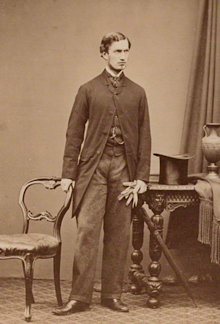
Death of Charles Owen O’Conor, Irish Politician

Charles Owen O’Conor, Irish politician, dies at Clonalis, Castlerea, County Roscommon, on June 30, 1906.

O’Conor is born on May 7, 1838, in Dublin, eldest son among seven children of Denis O’Conor, MP for Roscommon, and his wife Mary, daughter of Maj. Maurice Blake of County Mayo. The O’Conors, descended from the kings of Connacht, trace their lineage to 971. He is educated by Benedictines at Downside School in Stratton-on-the-Fosse, Somerset, England, and then proceeds to the University of London, where he matriculates in 1853 but does not graduate. He enters public life early as liberal MP for Roscommon (1860–80).

O’Conor is an active member of parliament, an effective though not an eloquent speaker, and a leading exponent of Catholic opinion. He is deeply involved in the education question, being a critic of the queen’s colleges. In 1867 he introduces a measure to extend the industrial schools act to Ireland, which becomes law the following year. He opposes William Ewart Gladstone‘s university bill of 1873, is appointed to the intermediate education board in 1878, and in May 1879 proposes the transformation of St. Patrick’s College, Maynooth, into a chartered Catholic university. He withdraws this in July, following a government bill creating the Royal University of Ireland. He is on the senate of the university for many years, and is conferred with the honorary degree of LL.D. in 1892. A leading exponent of the Irish language, in 1878 he proposes that it be introduced into secondary schools.

O’Conor is a supporter of Isaac Butt and a keen advocate of land law reform, which leads to his proposing in 1870 the extension of Ulster tenant right to the rest of the country. His brother Denis, MP for County Sligo 1868–83, is a home ruler, but Charles is only ever described as a camp follower. The Nation (October 18, 1873) observes that he “achieved the feat of speaking for two hours at a home rule meeting in Roscommon without telling his audience if he was a home ruler.” He has concrete criticisms such as the hostility of the northern counties, and wants to be allowed to take an independent stance, but Butt strongly deprecates his ambiguity. He does stand on the home rule platform in 1874 and 1880, but his tentative sympathy does nothing to protect him from the drive by Charles Stewart Parnell to establish the Irish Parliamentary Party (IPP). In March 1880, Parnell goes to Roscommon to support his candidate James O’Kelly against O’Conor, who is a popular representative. Parnell calls him a “sample of West Britonism in Ireland . . . if you deprive him of the representation of Roscommon you strike the greatest blow that has been struck against English misgovernment in Ireland since Isaac Butt was elected for the city of Limerick,” which successfully leads to O’Conor’s being ousted. Ironically, he had briefly been Parnell’s landlord when in 1860 he rented a house near Kingstown (now Dún Laoghaire) to the recently widowed Delia Parnell and her family, including the 13-year-old Charles Stewart.

Appointed to the Bessborough commission into the workings of the 1870 land act some months later, O’Conor answers Parnell by going even further than the commission’s proposal to reform land law on the basis of the “three Fs.” He supports outright peasant proprietorship as the only effective and lasting remedy. In 1883, he makes an attempt to return to parliament as a liberal candidate for Wexford Borough, but is defeated by the home ruler Willie Redmond. Always an inveterate committee member, he spends the last twenty-five years of his life on various committees, including the parliamentary committee of 1885 and the royal commission of 1894 on the financial relations between Great Britain and Ireland. He is elected to Roscommon County Council in 1899 and is Lord Lieutenant of Roscommon from 1888 until his death. In 1881 he is sworn to the Privy Council of Ireland.

An ancestor is Charles O’Conor, the noted antiquarian, and O’Conor has his own interest in this area. He is a member of the Royal Irish Academy (RIA) from 1867 and joins the Royal Society of Antiquaries of Ireland (RSAI) in 1869, is a fellow in 1888, and president 1897–9. His antiquarian research is largely confined to his own family. In 1891, he publishes The O’Conors of Connaught, an historical memoir compiled from the manuscripts of John O’Donovan. He first marries Georgina Mary, daughter of Thomas Perry of Warwickshire, England, on April 21, 1868. Secondly he marries Ellen, daughter of John Lewis More O’Ferrall of County Longford, on September 16, 1879. He has four sons by his first marriage.

O’Conor dies at Clonalis, Castlerea, County Roscommon, on June 30, 1906. He is buried in St. Joseph’s Cemetery in Castlerea.

(From: “O’Conor, Charles Owen” by Bridget Hourican, Dictionary of Irish Biography, http://www.dib.ie, October 2009)


Leave a comment

Birth of Charles Owen O’Conor, Irish Politician

Charles Owen O’Conor, Irish politician, is born on May 7, 1838 in Dublin.

O’Conor is eldest son in the Roman Catholic family of Denis O’Conor of Bellanagare and Clonallis, County Roscommon, and Mary, daughter of Major Blake of Towerhill, County Mayo. A younger brother, Denis Maurice O’Conor (1840-1883), is a Liberal Party MP in the Home Rule interest for Sligo County (1868-83).

After his education at Downside School in England, O’Conor enters London University in 1855, but does not graduate. He enters public life at an early age, being elected MP for Roscommon as a Liberal Party candidate at a by-election in 1860. In 1874 he is returned as a home ruler but, refusing to take the party pledge exacted by Charles Stewart Parnell, is ousted by Irish nationalist journalist James O’Kelly in 1880. In 1883, he is defeated by William Redmond in a contest for MP representing Wexford Borough.

An active member of parliament, O’Conor is an effective though not an eloquent speaker and a leading exponent of Roman Catholic opinion. He frequently speaks on Irish education and land tenure. He criticises unfavourably the Queen’s Colleges established in 1845 and the model schools, and advocates separate education for Roman Catholics. In 1867 he introduces a measure to extend the Industrial Schools Act to Ireland, which becomes law the following year.

O’Conor opposes William Ewart Gladstone‘s Irish University Bill of 1873, and in May 1879 brings forward a measure, which has the support of almost every section of Irish political opinion, for the creation of a new examining university, St. Patrick’s, with power to make grants based on the results of examination to students of denominational colleges affiliated to it. This is withdrawn on July 23 on the announcement of the University Education (Ireland) Act 1879 creating the Royal University of Ireland.

O’Conor steadily lurges a reform of the Irish land laws. On social and industrial questions he also speaks with authority. From 1872 onwards he professes his adherence to home rule and supports Isaac Butt in his motion for inquiry into the parliamentary relations of Great Britain and Ireland in 1874. He also acts with the Irish leader in his endeavours to mitigate the severity of coercive legislation, though declaring himself not in all circumstances opposed to exceptional laws.

Following his parliamentary career in 1880, O’Conor is a member of the Registration of Deeds Commission of 1880, and takes an active part in the Bessborough land commission of the same year. He is a member of both the parliamentary committee of 1885 and the royal commission of 1894 on the financial relations between Great Britain and Ireland, and becomes chairman of the commission on the death of Hugh Culling Eardley Childers in 1896. He is also active in local government, presiding over parliamentary committees on Irish grand jury laws and land valuation in 1868 and 1869, and being elected to the first county council of Roscommon in 1898. He is Lord-Lieutenant of the county from 1888 until his death.

O’Conor is much interested in antiquarian studies. He serves for many years as president of the Antiquarian Society of Ireland, as well as of the Royal Irish Academy. He is president of the Irish Language Society, and procures the insertion of Irish language into the curriculum of the intermediate education board.

O’Conor dies at Clonalis House, Castlerea, County Roscommon, on June 30, 1906, and is buried in the new cemetery, Castlerea.


Leave a comment

The Cavan Orphanage Fire

cavan-orphanage-fire

The Cavan Orphanage fire occurs on the night of February 23, 1943, at St. Joseph’s Orphanage in Cavan, County Cavan. Thirty-five children and one adult employee die as a result. Much of the attention after the fire surrounds the role of the Poor Clares, the order of nuns who run the orphanage and the local fire service.

The Poor Clares, an enclosed contemplative order, found a convent in Cavan in 1861 in a large premises on Main Street. In 1868, they open an orphanage. At the time young petty criminals could be educated and learn a trade in a reformatory, however, orphaned and abandoned children are not accorded the same opportunity. The Industrial Schools Act 1868 seeks to address this by the establishment of the Industrial school system. In 1869, a school, attached to the convent, is established and becomes known as the St. Joseph’s Orphanage & Industrial School.

Fire breaks out in the early morning hours of February 23, 1943, in the basement laundry and is not noticed until about 2 AM. The subsequent investigation attributes the fire to a faulty flue. The sight of smoke coming out of the building alerts people on Main Street. They go to the front entrance and attempt to gain entry. Eventually they are let in by one of the girls but, not knowing the layout of the convent, they are unable to find the girls.

By this time all of the girls have been moved into one Dormitory. At this point it would have been possible to evacuate all of the children but instead the nuns persuade the local people to attempt to extinguish the fire. Two men, John Kennedy and John McNally, go down to the laundry to try to put the fire out. The flames are now too intense for this to be possible, and McNally only survives by being carried out by Kennedy.

By now it is no longer possible for the girls to get out through the main entrance or the fire escape. The local fire brigade arrives but their equipment is not sufficient for the fire. Wooden ladders are not long enough to reach the dormitory windows. In the absence of any other solution, girls are encouraged to jump. Three do so, though with injuries, however most are too frightened to attempt it. A local electricity worker, Mattie Hand, arrives with a long ladder and a local man, Louis Blessing, brings five girls down. One child leaves by way of the interior staircase while it is still accessible. One child makes it down the exterior fire escape. One child escapes by way of a small ladder held on the roof of the shed. The fire completely engulfs the dormitory and the remaining girls perish.

cavan-orphanage-grave

Over concerns about the causes of the fire and the standard of care, a Public Inquiry is set up. The report’s findings state that the loss of life occurs due to faulty directions being given, lack of fire-fighting training, and an inadequate rescue and fire-fighting service. It also notes inadequate training of staff in fire safety and evacuation, both at the orphanage and local fire service. This finding has been disputed by many. It is alleged that the nuns prevent firefighters from entering the building for fear that they might see the girls in a state of undress.

Due to the nature of the fire, the remains of the dead girls are placed in eight coffins and buried in Cullies cemetery in Cavan. A memorial plaque is erected in 2010 just inside the convent gates at Main Street, Cavan. The plaque is anonymously donated to the Friends of the Cavan Orphanage Victims group.

(Pictured lower right: The grave containing the remains of the 36 victims)