seamus dubhghaill

Promoting Irish Culture and History from Little Rock, Arkansas, USA


Leave a comment

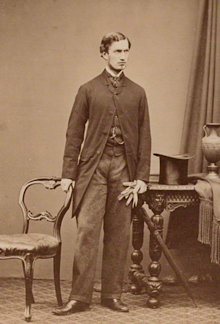
Death of Charles Owen O’Conor, Irish Politician

Charles Owen O’Conor, Irish politician, dies at Clonalis, Castlerea, County Roscommon, on June 30, 1906.

O’Conor is born on May 7, 1838, in Dublin, eldest son among seven children of Denis O’Conor, MP for Roscommon, and his wife Mary, daughter of Maj. Maurice Blake of County Mayo. The O’Conors, descended from the kings of Connacht, trace their lineage to 971. He is educated by Benedictines at Downside School in Stratton-on-the-Fosse, Somerset, England, and then proceeds to the University of London, where he matriculates in 1853 but does not graduate. He enters public life early as liberal MP for Roscommon (1860–80).

O’Conor is an active member of parliament, an effective though not an eloquent speaker, and a leading exponent of Catholic opinion. He is deeply involved in the education question, being a critic of the queen’s colleges. In 1867 he introduces a measure to extend the industrial schools act to Ireland, which becomes law the following year. He opposes William Ewart Gladstone‘s university bill of 1873, is appointed to the intermediate education board in 1878, and in May 1879 proposes the transformation of St. Patrick’s College, Maynooth, into a chartered Catholic university. He withdraws this in July, following a government bill creating the Royal University of Ireland. He is on the senate of the university for many years, and is conferred with the honorary degree of LL.D. in 1892. A leading exponent of the Irish language, in 1878 he proposes that it be introduced into secondary schools.

O’Conor is a supporter of Isaac Butt and a keen advocate of land law reform, which leads to his proposing in 1870 the extension of Ulster tenant right to the rest of the country. His brother Denis, MP for County Sligo 1868–83, is a home ruler, but Charles is only ever described as a camp follower. The Nation (October 18, 1873) observes that he “achieved the feat of speaking for two hours at a home rule meeting in Roscommon without telling his audience if he was a home ruler.” He has concrete criticisms such as the hostility of the northern counties, and wants to be allowed to take an independent stance, but Butt strongly deprecates his ambiguity. He does stand on the home rule platform in 1874 and 1880, but his tentative sympathy does nothing to protect him from the drive by Charles Stewart Parnell to establish the Irish Parliamentary Party (IPP). In March 1880, Parnell goes to Roscommon to support his candidate James O’Kelly against O’Conor, who is a popular representative. Parnell calls him a “sample of West Britonism in Ireland . . . if you deprive him of the representation of Roscommon you strike the greatest blow that has been struck against English misgovernment in Ireland since Isaac Butt was elected for the city of Limerick,” which successfully leads to O’Conor’s being ousted. Ironically, he had briefly been Parnell’s landlord when in 1860 he rented a house near Kingstown (now Dún Laoghaire) to the recently widowed Delia Parnell and her family, including the 13-year-old Charles Stewart.

Appointed to the Bessborough commission into the workings of the 1870 land act some months later, O’Conor answers Parnell by going even further than the commission’s proposal to reform land law on the basis of the “three Fs.” He supports outright peasant proprietorship as the only effective and lasting remedy. In 1883, he makes an attempt to return to parliament as a liberal candidate for Wexford Borough, but is defeated by the home ruler Willie Redmond. Always an inveterate committee member, he spends the last twenty-five years of his life on various committees, including the parliamentary committee of 1885 and the royal commission of 1894 on the financial relations between Great Britain and Ireland. He is elected to Roscommon County Council in 1899 and is Lord Lieutenant of Roscommon from 1888 until his death. In 1881 he is sworn to the Privy Council of Ireland.

An ancestor is Charles O’Conor, the noted antiquarian, and O’Conor has his own interest in this area. He is a member of the Royal Irish Academy (RIA) from 1867 and joins the Royal Society of Antiquaries of Ireland (RSAI) in 1869, is a fellow in 1888, and president 1897–9. His antiquarian research is largely confined to his own family. In 1891, he publishes The O’Conors of Connaught, an historical memoir compiled from the manuscripts of John O’Donovan. He first marries Georgina Mary, daughter of Thomas Perry of Warwickshire, England, on April 21, 1868. Secondly he marries Ellen, daughter of John Lewis More O’Ferrall of County Longford, on September 16, 1879. He has four sons by his first marriage.

O’Conor dies at Clonalis, Castlerea, County Roscommon, on June 30, 1906. He is buried in St. Joseph’s Cemetery in Castlerea.

(From: “O’Conor, Charles Owen” by Bridget Hourican, Dictionary of Irish Biography, http://www.dib.ie, October 2009)

Leave a comment

Death of Hugh Hanna, Presbyterian Minister

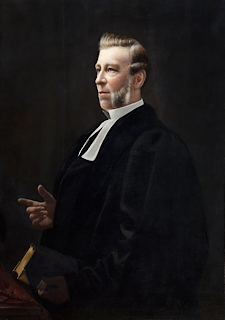
Hugh Hanna, nicknamed Roaring Hanna, a Presbyterian minister in Belfast known for his anti-Catholicism, dies in Belfast on February 3, 1892.

Hanna is born on February 25, 1821, near Dromara, County Down, the eldest among three sons and two (possibly three) daughters of Peter Hanna, of Dromara farming stock, and his wife Ellen (née Finiston), whose father served in the Black Watch regiment during the Napoleonic Wars. In the 1820s, leaving their children behind, his parents move to Belfast, where his father establishes a business turing out horse–cars. Hanna does not join them until the mid-1830s. His education reflects the modest nature of his upbringing. It is patchy and always combined with paid employment. In the 1830s he attends Bullick’s Academy, a privately run commercial college in Belfast. In the 1840s, seemingly with the intention of preparing for the Presbyterian ministry, he takes classes at Belfast Academical Institution. In 1847, he enters the general assembly’s newly established Theological College and, after some absences, obtains his licence to preach in 1851. During this time he works, first as a woolen draper‘s assistant in High Street and then, after 1844, as a teacher in the national school associated with Townsend Street Presbyterian Church, where he is a member. He resigns his teaching post in January 1852, only a month before being ordained to full-time ministry. On August 25, 1852, he marries Frances (‘Fanny’) Spence Rankin, daughter of James Rankin, a Belfast salesman. Together they have four daughters and two sons.

Hanna’s first, and only, pastorate is in a congregation that emerges out of the evangelistic efforts he and other Townsend Street members had conducted among the working people of north Belfast. In 1852, they begin meeting in the old Berry Street church and quickly grow from 75 to over 750 families. By 1869 a new building is essential and in 1870 the foundation stone for St. Enoch’s church is laid in Carlisle Circus, on property purchased from the Belfast Charitable Society. Opened in 1872 at a cost of nearly £10,000, it seats over 2,000 people and has two galleries. With 800 families and 2,500 Sunday-school scholars, it is one of the largest congregations in Belfast.

Hanna’s influence as the leader of such a large flock is not translated into advancement within the Presbyterian church. Although he serves as the Presbyterian chaplain to the Belfast garrison (1869–91) and as moderator of the presbytery (1879) and synod (1870–71) of Belfast, he does not achieve any position of note within the denomination as a whole. This is most likely because of his penchant for public controversy. Letters to the newspapers, calls for action in presbytery, and public platform debates over issues such as public-house licensing laws, Sabbath observance and property rights, brand him a destablising force. It is no doubt for this reason, rather than for his open-air preaching, of which he does very little, that he acquires his famous sobriquet, “Roaring Hugh.” His aggressive manner in debate is noted by the Belfast News Letter early in his career.

Hanna’s political views contribute to his reputation as an intolerant firebrand. He is part of a small group of Presbyterian clergy, led by the Rev. Henry Cooke, who are staunch defenders of the Protestant interest and active supporters of the conservative cause. He hosts ”anti-popery” lectures in his church and joins the Orange Order, serving briefly, in 1871, as the deputy grand chaplain for Belfast (County Grand Lodge). His determination to uphold the “right” of Protestants to preach in the open air sparks a series of violent sectarian riots and a government inquiry in Belfast in 1857. As the century progresses, and as the Presbyterian community’s political allegiances begin to shift, he becomes one of a group of prominent figures associated with two populist campaigns: opposition in the 1860s to the disestablishment of the Church of Ireland and subsequently to the introduction of home rule. In 1886, as one of the honorary secretaries of the Ulster Constitutional Club, he helps to found the Ulster Loyalist Anti-Repeal Union, a forerunner of what eventually becomes the Ulster Unionist Party.

Such activity overshadows Hanna’s impressive contribution to education. Within St. Enoch’s he establishes an enormous network of Sunday schools and evening classes, including a training institute for teachers. As a former teacher, and later as a commissioner of national education (1880–92), he is a firm advocate of the national system, and sets up six national schools in north and west Belfast.

Hanna receives only two honours: a Doctor of Divinity (DD) from the theological faculty of the Presbyterian Church in Ireland (1885) and a Doctor of Laws (LL.D.) from Galesville University in Galesville, Wisconsin (1888). In good health throughout his life, he dies suddenly of a heart attack on February 3, 1892. Buried with much fanfare in Balmoral Cemetery, Belfast, he is clearly held in high regard by surviving friends and colleagues. In 1892, the Orange Order approves the naming of LOL 1956 as the “Hanna Memorial,” and in 1894 a bronze statue depicting him in full ecclesiastical garb is erected in Carlisle Circus. Since then, his achievements have fallen on hard times. In March 1970, an Irish Republican Army bomb blast topples his statue from its plinth; several high-profile attempts to re-erect it fail. After an arson attack in 1985, and with falling numbers, the decision is taken in 1992 to demolish St. Enoch’s and unite with the neighbouring Duncairn church in a new, much smaller, building on the site.

(From: “Hanna, Hugh” by Janice Holmes, Dictionary of Irish Biography, http://www.dib.ie, October 2009 | Pictured: Portrait of Reverend Hugh Hanna by Augustus George Whichelo in 1876, which is part of the collection owned by the National Museums Northern Ireland and is located in the Ulster Museum)