seamus dubhghaill

Promoting Irish Culture and History from Little Rock, Arkansas, USA


Leave a comment

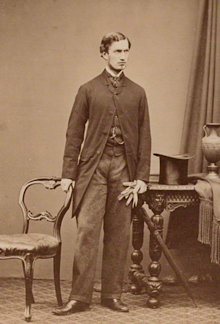
Death of Charles Owen O’Conor, Irish Politician

Charles Owen O’Conor, Irish politician, dies at Clonalis, Castlerea, County Roscommon, on June 30, 1906.

O’Conor is born on May 7, 1838, in Dublin, eldest son among seven children of Denis O’Conor, MP for Roscommon, and his wife Mary, daughter of Maj. Maurice Blake of County Mayo. The O’Conors, descended from the kings of Connacht, trace their lineage to 971. He is educated by Benedictines at Downside School in Stratton-on-the-Fosse, Somerset, England, and then proceeds to the University of London, where he matriculates in 1853 but does not graduate. He enters public life early as liberal MP for Roscommon (1860–80).

O’Conor is an active member of parliament, an effective though not an eloquent speaker, and a leading exponent of Catholic opinion. He is deeply involved in the education question, being a critic of the queen’s colleges. In 1867 he introduces a measure to extend the industrial schools act to Ireland, which becomes law the following year. He opposes William Ewart Gladstone‘s university bill of 1873, is appointed to the intermediate education board in 1878, and in May 1879 proposes the transformation of St. Patrick’s College, Maynooth, into a chartered Catholic university. He withdraws this in July, following a government bill creating the Royal University of Ireland. He is on the senate of the university for many years, and is conferred with the honorary degree of LL.D. in 1892. A leading exponent of the Irish language, in 1878 he proposes that it be introduced into secondary schools.

O’Conor is a supporter of Isaac Butt and a keen advocate of land law reform, which leads to his proposing in 1870 the extension of Ulster tenant right to the rest of the country. His brother Denis, MP for County Sligo 1868–83, is a home ruler, but Charles is only ever described as a camp follower. The Nation (October 18, 1873) observes that he “achieved the feat of speaking for two hours at a home rule meeting in Roscommon without telling his audience if he was a home ruler.” He has concrete criticisms such as the hostility of the northern counties, and wants to be allowed to take an independent stance, but Butt strongly deprecates his ambiguity. He does stand on the home rule platform in 1874 and 1880, but his tentative sympathy does nothing to protect him from the drive by Charles Stewart Parnell to establish the Irish Parliamentary Party (IPP). In March 1880, Parnell goes to Roscommon to support his candidate James O’Kelly against O’Conor, who is a popular representative. Parnell calls him a “sample of West Britonism in Ireland . . . if you deprive him of the representation of Roscommon you strike the greatest blow that has been struck against English misgovernment in Ireland since Isaac Butt was elected for the city of Limerick,” which successfully leads to O’Conor’s being ousted. Ironically, he had briefly been Parnell’s landlord when in 1860 he rented a house near Kingstown (now Dún Laoghaire) to the recently widowed Delia Parnell and her family, including the 13-year-old Charles Stewart.

Appointed to the Bessborough commission into the workings of the 1870 land act some months later, O’Conor answers Parnell by going even further than the commission’s proposal to reform land law on the basis of the “three Fs.” He supports outright peasant proprietorship as the only effective and lasting remedy. In 1883, he makes an attempt to return to parliament as a liberal candidate for Wexford Borough, but is defeated by the home ruler Willie Redmond. Always an inveterate committee member, he spends the last twenty-five years of his life on various committees, including the parliamentary committee of 1885 and the royal commission of 1894 on the financial relations between Great Britain and Ireland. He is elected to Roscommon County Council in 1899 and is Lord Lieutenant of Roscommon from 1888 until his death. In 1881 he is sworn to the Privy Council of Ireland.

An ancestor is Charles O’Conor, the noted antiquarian, and O’Conor has his own interest in this area. He is a member of the Royal Irish Academy (RIA) from 1867 and joins the Royal Society of Antiquaries of Ireland (RSAI) in 1869, is a fellow in 1888, and president 1897–9. His antiquarian research is largely confined to his own family. In 1891, he publishes The O’Conors of Connaught, an historical memoir compiled from the manuscripts of John O’Donovan. He first marries Georgina Mary, daughter of Thomas Perry of Warwickshire, England, on April 21, 1868. Secondly he marries Ellen, daughter of John Lewis More O’Ferrall of County Longford, on September 16, 1879. He has four sons by his first marriage.

O’Conor dies at Clonalis, Castlerea, County Roscommon, on June 30, 1906. He is buried in St. Joseph’s Cemetery in Castlerea.

(From: “O’Conor, Charles Owen” by Bridget Hourican, Dictionary of Irish Biography, http://www.dib.ie, October 2009)


Leave a comment

Birth of Caroline Agnes Gray, Owner of the “Freeman’s Journal”

Caroline “Carrie” Agnes Gray, English hostess and owner of the Freeman’s Journal, is born Caroline Agnes Chisholm in London, England, on May 13, 1848.

Gray is the sixth child of the eight children of the philanthropist Caroline Chisholm (née Jones) and Archibald Chisholm, an officer in the army of the East India Company.

Gray meets her husband, Edmund Dwyer Gray, in September 1868 when she witnesses him saving five people from a wrecked schooner during a storm in Killiney Bay, near Dún Laoghaire. She later meets him, and the couple are married in 1869. They had four children, with three surviving to adulthood: Edmund, Mary and Sylvia. She places both of her daughters in convents after their education and the early death of their father, supposedly as she fears they will harm her chances of remarrying.

Gray is a noted hostess during her husband’s political career, in particular while he is Lord Mayor of Dublin. Following his death in 1888, she holds over 40% of the shares in her husband’s newspaper, the Freeman’s Journal. While she is not involved in the day-to-day running of the company, she does exert influence over the newspaper. When Charles Stewart Parnell‘s party splits, the paper sides with Parnell at Gray’s consent. She is one of a number of prominent Catholic women in Dublin who continue to support Parnell. In 1891, she appears with Parnell in public, leading to the Archbishop of Dublin describing her as “a rock of scandal.”

It is only when the Freeman’s Journal‘s circulation and revenue suffers after the establishment of an anti-Parnell newspaper, the National Press, that Gray’s loyalty to Parnell wavers. Influenced by her son, she decides that the Freeman’s Journal will abandon its relationship with Parnell. This decision is formalised at a special general meeting to the Freeman company on September 21, 1891, seeing the pro-Parnell board replaced with one that includes her son and Captain Maurice O’Conor. The Freeman’s Journal and the National Press merge in March 1892, after which Gray is bought out of the company with her son and O’Conor stepping down from the board, thus ending the Gray family’s 50-year relationship with the Freeman’s Journal.

Gray marries Captain O’Conor in November 1891. A Captain, and later a Major, with the Connaught Rangers, he is a relative of Charles Owen O’Conor and George Moore. She is twelve years his senior, and the couple has no children. They live on Inisfale Island on Lough Allen, County Leitrim. She lives the last thirty years of her life there, with failing eyesight and eventual blindness. She dies there April 15, 1927. O’Conor dies in a hotel in Dún Laoghaire on January 3, 1941, in poor circumstances.


Leave a comment

Birth of Charles Owen O’Conor, Irish Politician

Charles Owen O’Conor, Irish politician, is born on May 7, 1838 in Dublin.

O’Conor is eldest son in the Roman Catholic family of Denis O’Conor of Bellanagare and Clonallis, County Roscommon, and Mary, daughter of Major Blake of Towerhill, County Mayo. A younger brother, Denis Maurice O’Conor (1840-1883), is a Liberal Party MP in the Home Rule interest for Sligo County (1868-83).

After his education at Downside School in England, O’Conor enters London University in 1855, but does not graduate. He enters public life at an early age, being elected MP for Roscommon as a Liberal Party candidate at a by-election in 1860. In 1874 he is returned as a home ruler but, refusing to take the party pledge exacted by Charles Stewart Parnell, is ousted by Irish nationalist journalist James O’Kelly in 1880. In 1883, he is defeated by William Redmond in a contest for MP representing Wexford Borough.

An active member of parliament, O’Conor is an effective though not an eloquent speaker and a leading exponent of Roman Catholic opinion. He frequently speaks on Irish education and land tenure. He criticises unfavourably the Queen’s Colleges established in 1845 and the model schools, and advocates separate education for Roman Catholics. In 1867 he introduces a measure to extend the Industrial Schools Act to Ireland, which becomes law the following year.

O’Conor opposes William Ewart Gladstone‘s Irish University Bill of 1873, and in May 1879 brings forward a measure, which has the support of almost every section of Irish political opinion, for the creation of a new examining university, St. Patrick’s, with power to make grants based on the results of examination to students of denominational colleges affiliated to it. This is withdrawn on July 23 on the announcement of the University Education (Ireland) Act 1879 creating the Royal University of Ireland.

O’Conor steadily lurges a reform of the Irish land laws. On social and industrial questions he also speaks with authority. From 1872 onwards he professes his adherence to home rule and supports Isaac Butt in his motion for inquiry into the parliamentary relations of Great Britain and Ireland in 1874. He also acts with the Irish leader in his endeavours to mitigate the severity of coercive legislation, though declaring himself not in all circumstances opposed to exceptional laws.

Following his parliamentary career in 1880, O’Conor is a member of the Registration of Deeds Commission of 1880, and takes an active part in the Bessborough land commission of the same year. He is a member of both the parliamentary committee of 1885 and the royal commission of 1894 on the financial relations between Great Britain and Ireland, and becomes chairman of the commission on the death of Hugh Culling Eardley Childers in 1896. He is also active in local government, presiding over parliamentary committees on Irish grand jury laws and land valuation in 1868 and 1869, and being elected to the first county council of Roscommon in 1898. He is Lord-Lieutenant of the county from 1888 until his death.

O’Conor is much interested in antiquarian studies. He serves for many years as president of the Antiquarian Society of Ireland, as well as of the Royal Irish Academy. He is president of the Irish Language Society, and procures the insertion of Irish language into the curriculum of the intermediate education board.

O’Conor dies at Clonalis House, Castlerea, County Roscommon, on June 30, 1906, and is buried in the new cemetery, Castlerea.


Leave a comment

Founding of the Society for the Preservation of the Irish Language

The Society for the Preservation of the Irish Language (Irish: Cumann Buan-Choimeádta na Gaeilge), a cultural organisation which is part of the Gaelic revival of the period, is formed in Dublin on December 29, 1876.

Present at the initial meeting are Charles Dawson, High Sheriff of Limerick City, Timothy Daniel Sullivan, editor of The Nation, and Bryan O’Looney. Writing in 1937, Douglas Hyde also remembers himself, George Sigerson, Thomas O’Neill Russell, J. J. McSweeney of the Royal Irish Academy, and future MP James O’Connor as being present. Its patron is John MacHale, Archbishop of Tuam, its first president is Lord Francis Conyngham, and its first vice-presidents include Isaac Butt and Charles Owen O’Conor.

Unlike similar organisations of the time, which are antiquarian in nature, the SPIL aims at protecting the status of the Irish language, which is threatened with extinction at the time. Its mission statement says that it is “possible and desirable to preserve the Irish Language in those parts of the Country where it is spoken, with a view to its further extension and cultivation.” Hyde writes that the formation of the society can truly be said to be the first attempt made to recruit the common people to the cause of the Irish language. The society succeeds in having Irish included on the curriculum of primary and secondary schools and third-level colleges in 1878.

The membership of the SPIL includes Protestant Ascendancy figures such as John Vesey, 4th Viscount de Vesci, and Colonel W. E. A. Macdonnell. Horace Plunkett represents the Society at the 1901 Pan-Celtic Congress in Dublin. It takes a conciliatory approach to the British government and civil service in pursuing its aims, in contrast to the later Gaelic League, which is anti-British in character.