seamus dubhghaill

Promoting Irish Culture and History from Little Rock, Arkansas, USA


Leave a comment

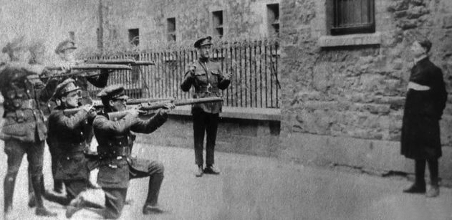
Irish Free State Suspends Executions

irish-free-state-executionsOn February 8, 1923, the Irish Free State suspends executions until February 18, offering an amnesty to anyone who surrenders before that date.

In the aftermath of the sudden death of Arthur Griffith and the killing of Michael Collins, in August 1922, William T. Cosgrave becomes chairman of the provisional government. Cosgrave and his colleagues remain wedded to a ruthless military and political strategy that ensures, by May 1923, a decisive win over the Republicans and the end of the Irish Civil War. Cosgrave’s analysis is that “the executions have had a remarkable effect. It is a sad thing to say, but it is nevertheless the case.” He could also be chilling in his resolve: “I am not going to hesitate and if the country is to live and if we have to exterminate 10,000 republicans, the 3 millions of our people are bigger than the ten thousand.”

The Free State suspends executions and offers an amnesty in the hope that anti-treaty fighters will surrender. However, the war drags for another two months and witnesses at least twenty more official executions.

Several Republican leaders narrowly avoid execution. Ernie O’Malley, captured on November 4, 1922, is not executed because he is too badly wounded when taken prisoner to face a court-martial and possibly because the Free State is hesitant about executing an undisputed hero of the recent struggle against the British. Liam Deasy, captured in January 1923, avoids execution by signing a surrender document calling on the anti-treaty forces to lay down their arms.

The Anti-Treaty side calls a ceasefire on April 30, 1923 and orders their men to “dump arms,” ending the war on May 24. Nevertheless, executions of Republican prisoners continue after this time. Four Irish Republican Army (IRA) men are executed in May after the ceasefire order and the final two executions take place on November 20, months after the end of hostilities. It is not until November 1924 that a general amnesty is offered for any acts committed in the civil war.

In highlighting the severity of the Free State’s execution policy, however, it is important not to exaggerate its extent. The Free State takes over 12,000 Republicans prisoner during the war, of whom roughly 80, less than 1%, are executed. How those who are executed are chosen from the others captured in arms is unclear, however many more men are sentenced to the death penalty than are actually shot. This is intended to act as a deterrent to anti-Treaty fighters in the field, who know that their imprisoned comrades are likely to be executed if they kept up their armed campaign.

Perhaps this realism is also beginning to affect the republican self-declared “men of faith.” Dan Breen, who leads an IRA column in Tipperary during the Civil war, tells his fellow republicans, “In order to win this war you’ll need to kill 3 out of every 5 people in the country and it isn’t worth it.”

Leave a comment

Founding of the Irish Rugby Football Union

irfu

The Irish Rugby Football Union (IRFU), the body managing rugby union in the island of Ireland, both Republic of Ireland and Northern Ireland, is founded in Dublin on February 5, 1879. The IRFU has its head office at 10/12 Lansdowne Road and home ground at Aviva Stadium, where adult men’s Irish rugby union international matches are played. In addition, the Union also owns Kingspan Stadium in Belfast, Thomond Park in Limerick and a number of grounds in provincial areas that have been rented to clubs.

Initially, there are two unions, both founded in 1874. The Irish Football Union has jurisdiction over clubs in Leinster, Munster, and parts of Ulster. The Northern Football Union of Ireland controls the Belfast area. The IRFU is formed in 1879 as an amalgamation of these two organisations and branches of the new IRFU are formed in Leinster, Munster, and Ulster. The Connacht Branch is formed in 1900.

The IRFU is a founding member of the International Rugby Football Board, now known as World Rugby, in 1886 with Scotland and Wales. England refuses to join until 1890.

Following the political partition of Ireland into separate national states, Ireland, originally the Irish Free State then Éire, and Northern Ireland, a political division of the United Kingdom, the then Committee of the Irish Rugby Football Union decides that it will continue to administer its affairs on the basis of the full 32 Irish counties and the traditional four provinces of Ireland – Leinster (12 counties), Ulster (9 counties), Munster (6 counties), and Connacht (5 counties).

This leads to the unusual, but not unique, situation among international rugby union teams, where the Irish representative teams are drawn from players from two separate political, national territories. To maintain the unity of Irish rugby union and the linkages between North and South, the IRFU purchase a new ground in 1923 in the Ravenhill district of Belfast at a cost of £2,300. The last full International at Ravenhill involving Ireland for more than a half-century takes place in 1953–54 against Scotland who are victorious by 2 tries (6 points) to nil. Australia plays Romania in the 1999 World Cup at the ground. The next full International played at Ravenhill is the Rugby World Cup warm-up match against Italy in August 2007 due to the temporary closure of Lansdowne Road for reconstruction.

The four provincial branches of the IRFU first run cup competitions during the 1880s. Although these tournaments still take place every year, their significance has been diminished by the advent of an All-Ireland League of 48 Senior Clubs in 1990.

The four provincial teams have played an Interprovincial Championship since the 1920s and continue to be the focal point for players aspiring to the international level. These are Munster, Leinster, Ulster, and Connacht . All four provinces play at the senior level as members of the Guinness Pro12.

There are currently approximately 95,000 rugby players in total in Ireland. There are 56 clubs affiliated to the Ulster Branch, 71 to the Leinster Branch, 59 to the Munster Branch, and 19 to the Connacht Branch. In addition, there are 246 schools playing rugby: Ulster (107), Leinster (75), Munster (41) and Connacht (23).

The IRFU also has an Exiles Branch tasked with developing “Ireland-qualified” players (i.e., eligible to play internationally for Ireland through ancestry) living in England, Scotland, and Wales. Volunteers provide coaching, administration and development under the supervision of a paid development manager.


Leave a comment

Death of William Butler Yeats

william-butler-yeats

William Butler Yeats, Irish poet and one of the foremost figures of 20th century literature, dies on January 28, 1939, at the Hôtel Idéal Séjour, in Menton, France.

Yeats is born in Sandymount, County Dublin, on June 13, 1865, the oldest child of John Butler Yeats and Susan Mary Pollexfen. Although John trains as a lawyer, he abandons the law for art soon after his first son is born. Yeats spends much of his early years in London, where his father is studying art, but frequently returns to Ireland as well.

In the mid-1880s, Yeats pursues his own interest in art as a student at the Metropolitan School of Art in Dublin. Following the publication of his poems in the Dublin University Review in 1885, he soon abandoned art school for other pursuits.

After returning to London in the late 1880s, Yeats meets writers Oscar Wilde, Lionel Johnson, and George Bernard Shaw. He also becomes acquainted with Maud Gonne, a supporter of Irish independence. This revolutionary woman serves as a muse for Yeats for years. He even proposes marriage to her several times, but she turns him down. He dedicates his 1892 drama The Countess Kathleen to her.

Around this time, Yeats founds the Rhymers’ Club poetry group with Ernest Rhys. He also joins the Order of the Golden Dawn, an organization that explores topics related to the occult and mysticism. While he is fascinated with otherworldly elements, Yeats’s interest in Ireland, especially its folktales, fuels much of his output. The title work of The Wanderings of Oisin and Other Poems (1889) draws from the story of a mythic Irish hero.

In addition to his poetry, Yeats devotes significant energy to writing plays. He teams with Lady Gregory to develop works for the Irish stage, the two collaborating for the 1902 production of Cathleen Ni Houlihan. Around that time, Yeats helps found the Irish National Theatre Society with Lady Gregory and John Millington Synge, serving as its president and co-director. More works soon follow, including On Baile’s Strand, Deirdre, and At the Hawk’s Well.

Following his marriage to Georgie Hyde-Lees in 1917, Yeats begins a new creative period through experiments with automatic writing. The newlyweds sit together for writing sessions they believe to be guided by forces from the spirit world, through which Yeats formulates intricate theories of human nature and history. They soon have two children, daughter Anne and son Michael.

Yeats then becomes a political figure in the new Irish Free State, serving as a senator for six years beginning in 1922. The following year, he receives an important accolade for his writing as the recipient of the Nobel Prize in Literature. According to the official Nobel Prize website, Yeats is selected “for his always inspired poetry, which in a highly artistic form gives expression to the spirit of a whole nation.”

Yeats continues to write until his death. Some of his important later works include The Wild Swans at Coole (1917), A Vision (1925), The Tower (1928) and Words for Music Perhaps and Other Poems (1932). Yeats passes away on January 28, 1939, at the Hôtel Idéal Beauséjour near Menton, France. He is buried after a discreet and private funeral at Roquebrune-Cap-Martin. The publication of Last Poems and Plays and Two Plays shortly after his death further cements his legacy as a leading poet and playwright.

In September 1948, Yeats’ body is moved to the churchyard of St. Columba’s Church, Drumcliff, County Sligo, on the Irish Naval Service corvette Macha.


Leave a comment

Birth of George Sigerson, Physician & Writer

george-sigerson

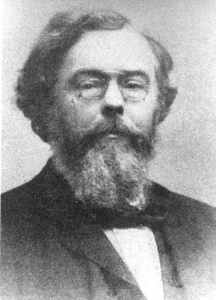
George Sigerson, Irish physician, scientist, writer, politician, and poet, is born at Holy Hill, near Strabane in County Tyrone on January 11, 1836. He is a leading light in the Irish Literary Revival of the late 19th century in Ireland.

Sigerson is the son of William and Nancy (née Neilson) Sigerson and has three brothers, James, John and William, and three sisters, Ellen, Jane, and Mary Ann. He attends Letterkenny Academy but is sent by his father, who developed the spade mill and who played an active role in the development of Artigarvan, to complete his education in France.

He studies medicine at the Queen’s College, Galway, and Queen’s College, Cork, and takes his degree in 1859. He then goes to Paris where he spends some time studying under Jean-Martin Charcot and Duchenne de Boulogne. Sigmund Freud is one of his fellow students.

Sigerson returns to Ireland and opens a practice in Dublin, specializing in neurology. He continues to visit France annually to study under Charcot. His patients included Maud Gonne, Austin Clarke, and Nora Barnacle. He lectures on medicine at the Catholic University of Ireland and is professor of zoology and later botany at the University College Dublin.

His first book, The Poets and Poetry of Munster, appears in 1860. He is actively involved in political journalism for many years, writing for The Nation. Sigerson and his wife Hester are by now among the dominant figures of the Gaelic Revival. They frequently hold Sunday evening salons at their Dublin home to which artists, intellectuals, and rebels alike attend, including John O’Leary, W.B. Yeats, Patrick Pearse, Roger Casement, and 1916 signatory Thomas MacDonagh. Sigerson is a co-founder of the Feis Ceoil and President of the National Literary Society from 1893 until his death. His daughter, Dora, is a poet who is also involved in the Irish literary revival.

Nominated to the first Seanad Éireann of the Irish Free State, Sigerson briefly serves as the first chairman on December 11-12, 1922, before the election of James Campbell, 1st Baron Glenavy. Sigerson dies at his home at 3 Clare Street, Dublin, on February 17, 1925, at the age of 89, after a short illness. On February 18, 1925, the day after his death, the Seanad Éireann pays tribute to him.

The Sigerson Cup, the top division of third level Gaelic football competition in Ireland is named in his honour. Sigerson donates the salary from his post at UCD so that a trophy can be purchased for the competition. In 2009, he is named in the Sunday Tribune‘s list of the “125 Most Influential People In GAA History.” The cup is first presented in 1911, with the inaugural winners being UCD GAA.


Leave a comment

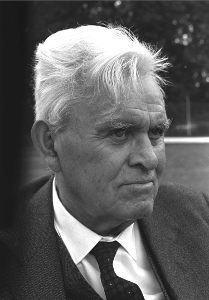
Death of Dan Breen, Irish Patriot & Politician

Irish republican Dan Breen (1967)

Daniel “Dan” Breen, volunteer in the Irish Republican Army during the Irish War of Independence and the Irish Civil War, dies in Dublin on December 27, 1969. In later years, he was a Fianna Fáil politician.

Breen is born in Grange, Donohill parish, County Tipperary, on August 11, 1894. His father dies when he is six, leaving the family very poor. He is educated locally before becoming a plasterer and later a linesman on the Great Southern Railways.

Breen is sworn into the Irish Republican Brotherhood in 1912 and the Irish Volunteers in 1914. On January 21, 1919, the day the First Dáil meets in Dublin, Breen takes part in the Soloheadbeg Ambush. The ambush party of eight men, led by Seán Treacy, attacks two Royal Irish Constabulary (RIC) men who are escorting explosives to a quarry. The two policemen, James McDonnell and Patrick O’Connell, are fatally shot during the incident. The ambush is considered to be the first incident of the Irish War of Independence.

During the conflict, the British put a £1,000 price on Breen’s head, which is later increased to £10,000. He quickly establishes himself as a leader within the Irish Republican Army (IRA). He is known for his courage. On May 13, 1919 he helps rescue his comrade Seán Hogan at gunpoint from a heavily guarded train at Knocklong station in County Limerick. Breen, who is wounded, remembers how the battalion is “vehemently denounced as a cold-blooded assassins” and roundly condemned by the Catholic Church. After the fight, Treacy, Séamus Robinson, and Breen meet Michael Collins in Dublin, where they are told to make themselves scarce although they do not necessarily agree.

Breen and Sean Treacy shoot their way out through a British military cordon in the northern suburb of Drumcondra (Fernside). They escape, only for Treacy to be killed the next day. Breen is shot at least four times, twice in the lung.

The British reaction is to make Tipperary a “Special Military Area,” with curfews and travel permits. Volunteer GHQ authorises entrerprising attacks on barracks. The British policy forces Breen and Treacy to retreat to Dublin. They join Michael Collins’ Squad of assassins, later known as the Dublin Guard, and Dublin becomes the centre of the war.

Breen is present in December 1919 at the ambush in Ashtown beside Phoenix Park in Dublin where Martin Savage is killed while trying to assassinate the Lord Lieutenant of Ireland, Viscount John French. The IRA hides behind hedges and a dungheap as the convoy of vehicles drives past. They have been instructed to ignore the first car but this contains their target, Lord French. Their roadblock fails as a policeman removes the horse and cart intended to stop the car.

Breen utterly rejects the Anglo-Irish Treaty, which makes him, like many others, angry and embittered. In the June 1922 elections Breen is nominated as a candidate by both the pro- and anti-Treaty sides, but is not elected.

Breen is elected to Dáil Éireann at the 1923 general election as a Republican anti-Treaty Teachta Dála (TD) for the Tipperary constituency. Following the Anglo-Irish Treaty, Breen joins the Anti-Treaty IRA in the civil war, fighting against those of his former comrades in arms who support the Treaty. He is arrested by the National Army of the Irish Free State and interned at Limerick Prison. He spends two months there before going on hunger strike for six days followed by a thirst strike of six days, prompting his release.

Breen writes a best-selling account of his guerrilla days, My Fight for Irish Freedom, in 1924. He represents Tipperary from the Fourth Dáil in 1923 as a Republican with Éamon de Valera and Frank Aiken. He is defeated in the June 1927 general election and travels to the United States where he opens a prohibition speakeasy. In 1932 he returns to Ireland and regains his seat as a member of Fianna Fáil in the Dáil at that year’s general election. During World War II he is said to hold largely pro-Axis views. He represents his Tipperary constituency without a break until his retirement at the 1965 election.

Breen dies in Dublin on December 27, 1969 and is buried in Donohill, near his birthplace. His funeral is the largest seen in west Tipperary since that of his close friend and comrade-in-arms Seán Treacy at Kilfeacle in October 1920. An estimated attendance of 10,000 mourners assemble in the tiny hamlet, giving ample testimony to the esteem in which he was held.

Breen is the subject of a 2007 biography Dan Breen and the IRA by Joe Ambrose.


Leave a comment

Death of IRA Chief of Staff Cathal Goulding

cathal-goulding

Cathal Goulding, former Chief of Staff of the Irish Republican Army and the Official IRA, dies in Dublin on December 26, 1998.

Goulding is born on January 2, 1923, one of seven children born on East Arran Street, north Dublin to an Irish republican family. As a teenager Goulding joins Fianna Éireann, the youth wing of the Irish Republican Army (IRA). He joins the IRA in 1939. In December of that year, he takes part in a raid on Irish Army ammunition stores in Phoenix Park, Dublin. In November 1941 he is gaoled for a year in Mountjoy Prison for membership in an unlawful organisation and possession of IRA documents. Upon his release in 1942, he is immediately interned at the Curragh Camp, where he remains until 1944.

In 1945, he is involved in the attempts to re-establish the IRA which has been badly affected by the authorities in both the Irish Free State and Northern Ireland. He is among twenty-five to thirty men who meet at O’Neill’s Pub, Pearse Street, to try to re-establish the IRA in Dublin. He organises the first national meeting of IRA activists after the World War II in Dublin in 1946 and is arrested along with John Joe McGirl and ten others and sentenced to twelve months in prison when the gathering is raided by the Garda Síochána.

Upon his release in 1947, Goulding organises IRA training camps in the Wicklow Mountains and takes charge of the IRA’s Dublin Brigade in 1951. In 1953, Goulding, along with Seán Mac Stíofáin and Manus Canning, is involved in an arms raid on the Officers Training Corps armoury at Felsted School, Essex. The three are arrested and sentenced to eight years’ imprisonment, but are released in 1959 after serving only six years at Pentonville, Wakefield, and Stafford prisons. During his time in Wakefield prison, he befriends EOKA members and Klaus Fuchs, a German-born spy who has passed information about the U.S. nuclear programme to the Soviet Union, and becomes interested in the Russian Revolution.

In 1959, Goulding is appointed IRA Quartermaster General and in 1962 he succeeds Ruairí Ó Brádaigh as IRA Chief of Staff. In February 1966, together with Sean Garland, he is arrested for possession of a revolver and ammunition. In total, Goulding spends sixteen years of his life in British and Irish jails.

Goulding is instrumental in moving the IRA to the left in the 1960s. He argues against the policy of abstentionism and develops a Marxist analysis of Irish politics. He believes the British state deliberately divides the Irish working class on sectarian grounds to exploit them and keep them from uniting and overthrowing their bourgeois oppressors. This analysis is rejected by those who later go on to form the Provisional IRA after the 1969 IRA split.

Goulding remains chief of staff of what becomes known as the Official IRA until 1972. Although the Official IRA, like the Provisional IRA, carries out an armed campaign, Goulding argues that such action ultimately divides the Irish working class. After public revulsion regarding the shooting death of William Best, a Catholic from Derry who is also a British soldier, and the bombing of the Aldershot barracks, the Official IRA announces a ceasefire in 1972.

Goulding is prominent in the various stages of Official Sinn Féin‘s development into the Workers’ Party. He is also involved in the anti-amendment campaign in opposition to the introduction of a constitutional ban on abortion along with his partner, Dr. Moira Woods. However, in 1992, he objects to the political reforms proposed by party leader Proinsias De Rossa and remains in the Workers’ Party after the formation of Democratic Left. He regards the Democratic Left as having compromised socialism in the pursuit of political office.

In his later years, Goulding spends much of his time at his cottage in Raheenleigh near Myshall, County Carlow. He dies of cancer in his native Dublin and is survived by three sons and a daughter. He is cremated and his ashes scattered, at his directive, at the site known as “the Nine Stones” on the slopes of Mount Leinster.


Leave a comment

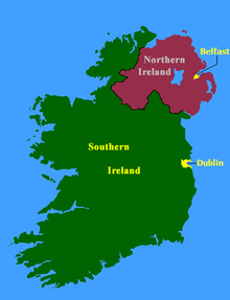
The Government of Ireland Act 1920 Becomes Law

government-of-ireland-act-1920The Government of Ireland Act 1920, an Act of the Parliament of the United Kingdom also known as the Fourth Home Rule Bill, becomes law on December 23, 1920.

The Act is intended to establish separate Home Rule institutions within two new territories of Ireland – the six northeastern counties of Antrim, Armagh, Down, Fermanagh, Londonderry, and Tyrone are to form “Northern Ireland,” while the remaining 26 counties of the country are to form “Southern Ireland.” Each territory is to be self-governing, except in areas specifically reserved to the Parliament of the United Kingdom such as defence, foreign affairs, international trade, and currency. Provision is made for their future reunification under common Home Rule institutions.

Home Rule never takes effect in Southern Ireland due to the Irish War of Independence, which results instead in the Anglo-Irish Treaty and the establishment in 1922 of the Irish Free State. However, the institutions set up under this Act for Northern Ireland continue to function until they are suspended by the British parliament in 1972 as a consequence of the Troubles.

The final provisions of the 1920 Act remaining in force are repealed under the terms of the Northern Ireland Act 1998, after the Good Friday Agreement. In the republic, the Statute Law Revision Act 2007 repeals the Act almost 85 years after Constitution of the Irish Free State replaced it as the basic constitutional law.


Leave a comment

Last British Troops Leave the Irish Free State

british-troops-leave-ireland

The last British troops leave the Irish Free State on December 17, 1922. They are the remnants of a 5,000 strong garrison maintained up to that point in Dublin, commanded by Nevil Macready.

It appears to be a friendly farewell, even while Ireland is embroiled in its own Civil War. The Union Jack is lowered at the hospital and Macready goes to review the final contingent of troops as they leave the Royal barracks, later known as the Collins barracks. He then motors to Kingstown, now Dún Laoghaire, where he receives a 17-gun salute and joins Admiral Cecil Fox, the Sligo-born naval commander in the area, on board the cruiser HMS Dragon to sail home to England and retirement.

Meanwhile, the troops, 3,500 men mostly from the Leicester, Worchester, and Border regiments, march to the port. At Beresford Place they are greeted by 500 members of the Legion of Irish Ex-Servicemen, in civilian clothes but wearing their decorations. Thousands of other people line the quays and the armoured cars and the Dublin Metropolitan Police stand by, but there is no trouble. Embarkation onto six ships begins around 1:15 PM. At 3:10 PM, the last ship to leave, the steamer Arvonia chartered from the London and North Western Railway, weighs anchor while a band on deck plays “God Save the King” and a crowd breaks into the North Wall Extension to wave a final farewell as it enters Alexandra Basin.

The armoured cars them drive north to Ulster and the evacuation of the Irish Free State, apart from the Treaty ports, is over. General Richard Mulcahy, who takes over the Royal barracks that day, claims “the incubus of occupation that has lain as a heavy hand on the country for years has been removed.”

In his memoirs, Macready expresses annoyance that a photograph of Fox and himself published in The Irish Times on December 18 has the caption “two gallant Irishmen.” Although he has an Irish grandfather, he cordially loathes Ireland.

The British leave fully outfitted barracks to the Irish Army and artifacts including a large card in the Headquarters in Parkgate Street printed with the admonition “LOVE ONE ANOTHER.”


1 Comment

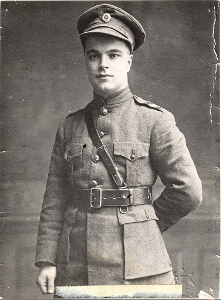
Execution of IRA Officer Joe McKelvey

joe-mckelvey

Joe McKelvey, Irish Republican Army (IRA) officer, is executed by firing squad along with three other Anti-Treaty militants, on December 8, 1922, during the Irish Civil War.

McKelvey is born into a nationalist family in Stewartstown, County Tyrone. He has a keen interest in the Gaelic Athletic Association and the Irish language. He studies as an accountant and gains some of the qualifications necessary for this profession, but never fully qualifies. He works for a time at the Income Tax Office on Queen’s Square in Belfast and later finds work in Belfast’s engineering industry with Mackies on Springfield Road. He joins the Irish Republican Brotherhood and the Irish Volunteers, which after 1919, become known as the Irish Republican Army (IRA). He is a founding member of the O’Donovan Rossa Club, Belfast, founded in 1916 on the Falls Road. Each year the club honours him with a juvenile hurling blitz, an invitational competition which is participated in by clubs throughout Ireland.

McKelvey participates in the Irish War of Independence (1919–1921) against the British, in which he commands the IRA’s Belfast Brigade. On August 22, 1920, he helps to organise the killing of Royal Irish Constabulary (RIC) Detective Oswald Swanzy in Lisburn. The killing itself is carried out by IRA men from Cork, but McKelvey arranges a taxi to carry the assassins to and from the scene and disposes of their weapons. In reprisal for this shooting, 300 Catholic homes in Lisburn are burned out. McKelvey is forced to lie low in Dublin for some time after these events.

In March 1921, the IRA is re-organised by its leadership in Dublin into Divisions and McKelvey is appointed commander of the Third Northern Division, responsible for Belfast and the surrounding area. In May 1921, McKelvey’s command suffers a severe setback, when fifty of his best men are sent to County Cavan to train and link up with the IRA units there, only to be surrounded and captured by the British Army on Lappanduff hill on May 9. In most of Ireland, hostilities are ended with a truce declared on July 11, 1921.

McKelvey is alone among the leadership of the Belfast IRA in going against the acceptance of the Anglo-Irish Treaty. Most of his comrades support Michael Collins‘ assurances that, although the Treaty accepts the partition of Northern Ireland from the rest of the country, this is only a temporary concession which will be dealt with later. McKelvey does not accept this. As a result, he leaves his command as head of the IRA Third Northern Division and joins the Anti-Treaty IRA in Dublin.

In March 1922, McKelvey participates in the anti-Treaty IRA‘s repudiation of the authority of the Dáil, the civil government of the Irish Republic declared in 1919, and is elected to the IRA Army Executive. In April 1922 he helps command the occupation of the Four Courts in defiance of the new Irish Free State. This action helps to spark the civil war between pro- and anti-Treaty factions. McKelvey is among the most hardline of the anti-Treaty republicans and briefly, in June 1922, becomes IRA Chief of Staff, replacing Liam Lynch.

On June 28, 1922, the new Irish Free State government shells the Four Courts to assert its authority over the militants defending it. The Republicans in the Four Courts surrender after two days of fighting and McKelvey is captured. He is held for the following five months in Mountjoy Prison in Dublin.

On December 8, 1922, Joe McKelvey is executed by firing squad along with three other Anti-Treaty militants, Rory O’Connor, Liam Mellows, and Richard Barrett. The executions are ordered in reprisal for the Anti-Treaty IRA’s murder of Sean Hales, a Pro-Treaty member of the Third Dáil.


Leave a comment

Free State Government Purchases Copyright to “The Soldiers Song”

amhran-na-bhfiann

The Irish Free State government purchases the copyright of Peadar Kearney‘s The Soldiers Song on October 20, 1933, which becomes the Irish national anthem Amhrán na bhFiann. The song has three verses, but only the choral refrain is officially designated the national anthem.

A Soldiers’ Song is composed in 1907, with words by Peadar Kearney and music by Kearney and Patrick Heeney. The text is first published in Irish Freedom by Bulmer Hobson in 1912. It is used as a marching song by the Irish Volunteers and is sung by rebels in the General Post Office (GPO) during the Easter Rising of 1916. Its popularity increases among rebels held in Frongoch internment camp after the Rising, and the Irish Republican Army (IRA) in the Irish War of Independence (1919–21). After the establishment of the Irish Free State in 1922, a large proportion of the IRA’s men and apparatus become the National Army. The Soldiers’ Song remains popular as an Army tune and is played at many military functions.

The Free State does not initially adopt any official anthem. The delicate political state in the aftermath of the Irish Civil War provokes a desire to avoid controversy. Ex-Unionists continue to regard God Save the King as the national anthem, as it has been for the rest of the British Empire. W. T. Cosgrave, President of the Executive Council of the Irish Free State expresses opposition to replacing The Soldiers’ Song, which is provisionally used within the State.

There is concern that the lack of an official anthem is giving Unionists an opportunity to persist with God Save the King. The Soldiers’ Song is widely if unofficially sung by nationalists. On July 12, 1926, the Executive Council of the Irish Free State decides to adopt it as the National Anthem, with Cosgrave the driving force in the decision. However, this decision is not publicised.

In 1928, the Army band establishes the practice of playing only the chorus of the song as the Anthem, because the longer version is discouraging audiences from singing along.

The anthem is played by Radio Éireann at close down from its inception in 1926. Cinemas and theatres do so from 1932 until 1972. Peadar Kearney, who has received royalties from publishers of the text and music, issues legal proceedings for royalties from those now performing the anthem. He is joined by Michael Heeney, brother of Patrick Heeney, who had died in 1911. In 1934, the Department of Finance acquires the copyright of the song for the sum of £1,200. Copyright law changes in 1959, such that the government has to reacquire copyright in 1965, for £2,500. As per copyright law, the copyright expires in December 2012, following the 70th anniversary of Kearney’s death. In 2016, three Fianna Fáil senators introduce a private member’s bill intended to restore the state’s copyright in the anthem.