It has more than 500,000 members worldwide, assets in excess of €2.6 billion, and declares total revenues of €94.8 million in 2010, with a total gross profit of €78.5 million.
Gaelic football and hurling are the most popular activities promoted by the organisation, and the most popular sports in the Republic of Ireland in terms of attendances. Gaelic football is also the largest participation sport in Northern Ireland. GAA competitions, activities, and structures are organised on an all-Ireland basis, without reference to the border drawn in 1921. The women’s version of these games, ladies’ Gaelic football and camogie, are organised by the independent but closely linked Ladies’ Gaelic Football Association and the Camogie Association respectively. GAA Handball is the Irish governing body for the sport of handball, while the other Gaelic sport, rounders, is managed by the GAA Rounders National Council.
Since its foundation in the late 19th century, the Association has grown to become a major influence in Irish sporting and cultural life with considerable reach into communities throughout Ireland and among the Irish diaspora.
Comhdháil Náisiúnta na Gaeilge, the central steering council for the Irish language community, is formed on October 26, 1943. Its mission is to “strengthen and consolidate goodwill and support for the Irish language and its usage as a living language so that it may be used freely and widely in all aspects of Irish life.”
The role of Comhdháil Náisiúnta na Gaeilge is to act as a coordinating body for voluntary Irish language organisations. The National Youth Council of Ireland and the Irish Congress of Trade Unions are similar umbrella organisations. The board of the nonprofit organisation is made up of representatives of its 24 member organisations. The secretaria of An Chomhdháil, ten employees, is responsible for the day-to-day running of the organisation.
The organisation sees its role as providing leadership to those involved in community and voluntary work on behalf of the Irish language, to provide analysis of Government policies with reference to the language, and the development and promotion of new policy measures. In practice this meant developing policies which are broadly acceptable to all member organisations and have their support, political lobbying in support of various issues and the undertaking of new and innovative projects.
The information website Gaelport.com is a project managed by staff of Comhdháil Náisiúnta na Gaeilge. The community-focused website contains information on Irish language news and events as well as Irish language classes and vacancies. It also contains information on advocacy work carried out by Comhdháil Náisiúnta na Gaeilge and other Irish language organisations. The website wins best Irish language website at the 2010 Irish Web Awards.
The last meeting of the board of management of Comhdháil Náisiúnta na Gaeilge is on the evening of July 14, 2014, due to an abrupt end of funding from Foras na Gaeilge, the inter-governmental agency established to promote the Irish language throughout the island of Ireland. The management board of Comhdháil Náisiúnta na Gaeilge thus has no choice but to cease all activities with the loss of six full-time staff.
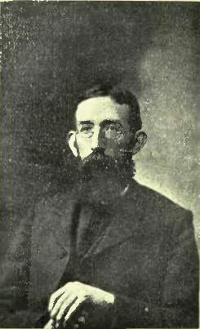
The Irish language has largely retreated from Meath when O’Growney is born, and neither of his parents speak it. He becomes interested in the language when he chances upon the Irish lessons in the nationalist newspaper Young Ireland. He has help at first from a few old people who speak the language, and while at St. Patrick’s Pontifical University, Maynooth, where he continues his studies for the priesthood. He spends his holidays in Irish-speaking areas in the north, west, and south. He gets to know the Aran Islands and writes about them in the bilingual Gaelic Journal (Irisleabhar na Gaedhilge). He is ordained in 1888. His proficiency in the language leads him to be appointed in the re-established Chair of Irish at Maynooth in 1891. He serves as editor of the Gaelic Journal between 1894 and 1899 and during his tenure ensures that more material is published in Irish.
For O’Growney, language, nationality, and religion are closely linked. In 1890, writing in the Irish Ecclesiastical Review, he describes literature in Irish as “the most Catholic literature in the world.” He is aware, however, of its other aspects, adding that “even if Irish were to perish as a spoken language, it would remain valuable from the pure literature point of view.”
O’Growney’s Simple Lessons in Irish, first published in the newspaper the Weekly Freeman, prove so popular that they are published in booklet form. There are five books in the series and, by 1903, 320,000 copies have been sold.
O’Growney is a founding member of the Gaelic League, which is created in Dublin in 1893 “for the purpose of keeping the Irish language spoken in Ireland,” and later becomes its vice-president.
In 1894, failing health causes him to go to Arizona and California, where he dies in Los Angeles in 1899. Some years later, with the aid of Irish sympathisers in the United States, his body is brought back to Ireland.
His funeral, held on September 26, 1903 at the Catholic Pro-Cathedral, Dublin, is attended by 6,000 people, including members of the trade guilds, clerics, politicians, members of the nationalist Gaelic Athletic Association, and students. Eugene O’Growney is buried at Maynooth.
Seán O’Casey, Irish dramatist and memoirist, dies of a heart attack in Torquay, Devon, England on September 18, 1964. A committed socialist, he is the first Irish playwright of note to write about the Dublin working classes.
O’Casey is born John Casey at 85 Upper Dorset Street, in the northern inner-city area of Dublin on March 30, 1880. He is a member of the Church of Ireland, baptised on July 28, 1880 in St. Mary’s parish and confirmed at St. John the Baptist Church in Clontarf. He is an active member of Saint Barnabas until his mid-twenties, when he drifts away from the church.
In 1917, his friend Thomas Ashe dies in a hunger strike and it inspires him to write. He spends the next five years writing plays. O’Casey’s first accepted play, The Shadow of a Gunman, is performed at the Abbey Theatre in 1923. This is the beginning of a relationship that is to be fruitful for both theatre and dramatist but which ends in some bitterness. It is followed by Juno and the Paycock (1924) and The Plough and the Stars (1926).
The Plough and the Stars is not well received by the Abbey audience. There is a riot reported on the fourth night of the show. His depiction of sex and religion offends some of the actors who refused to speak their lines. W.B. Yeats intervenes and describes the audience as “shaming themselves.”
In 1928, Yeats rejects O’Casey’s fourth play, The Silver Tassie, for the Abbey. It is an attack on imperialist wars and the suffering they cause. The Abbey refuses to perform it. The plays O’Casey writes after this include the darkly allegorical and highly controversial Within the Gates (1934), which is set within the gates of a busy city park based on London’s Hyde Park. It closes not long after opening and is another box office failure.
Over the next twenty years, O’Casey writes The Star Turns Red (1940), Purple Dust (1943), Red Roses for Me (1943), Oak Leaves and Lavender (1945), Cock-a-Doodle Dandy (1949), The Bishop’s Bonfire (1955), and The Drums of Father Ned (1958). In 1959, O’Casey gives his blessing to a musical adaptation of Juno and the Paycock by American composer Marc Blitzstein. The musical, retitled Juno, is a commercial failure, closing after only 16 Broadway performances. Also in 1959, George Devine produces Cock-a-Doodle Dandy at the Royal Court Theatre and it is also successful at the Edinburgh International Festival and has a West End run.
On September 18, 1964, at the age of 84, O’Casey dies of a heart attack, in Torquay, Devon. He is cremated at the Golders Green Crematorium.
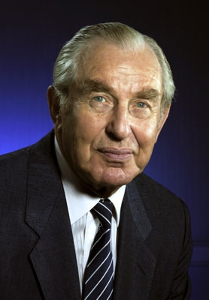
Chaim Herzog, Israeli politician, general, lawyer, and author who serves as the sixth President of Israel between 1983 and 1993, is born in Cliftonpark Avenue in Belfast on September 17, 1918.
Herzog joins the British Army during World War II, operating primarily in Germany as a tank commander in the Armoured Corps. There, he is given his lifelong nickname of “Vivian” because the British could not pronounce the name, “Chaim.” A Jewish soldier had volunteered that “Vivian” is the English equivalent of “Chaim.”
After leaving the army, Herzog opens a private law practice. He returns to public life when the Six-Day War breaks out in 1967, serving as a military commentator for Kol Israel radio news. Following the capture of the West Bank, he is appointed Military Governor of East Jerusalem, and Judea and Samaria.
Herzog enters politics in the 1981 elections, winning a Knesset seat as a member of the Alignment. Two years later, in March 1983, he is elected to the largely ceremonial role of President. He serves two five-year terms before retiring in 1993. He dies on April 17, 1997, and is buried on Mount Herzl, Jerusalem. His son, Isaac Herzog, has led the Israeli Labour Party and the parliamentary Opposition in the Knesset since 2013.
Pearse, generally known as a leader of the 1916 Easter Rising, has long been critical of the educational system in Ireland, which he believes teaches Irish children to be good Englishmen. He has for years been committed to the preservation of the Irish language, mostly through the Gaelic League, and is dearly concerned about the language’s future. A trip abroad to Belgium and his observations of bi-lingual education there inspires him to attempt a similar experiment at home.
Pearse is not a practical businessman, but he is never one to let lack of finances get in the way of his plans. With promises from prominent nationalists as proponents of Irish heritage that they will give him whatever limited financial support they can, and, when applicable, will enroll their children in his school, Pearse establishes his school, which officially opens on September 8, 1908, in Cullenswood House, Ranelagh, a suburb of Dublin.
The school proves a successful experiment but is never to fully escape the shadow of looming financial woes. In fact, the school would not have survived the crucial first few years without the devoted aid of his good friend and assistant headmaster Thomas MacDonagh, and the solid dedication of Pearse’s brother Willie.
St. Enda’s teaches many of the classes in Irish and particularly stresses the arts and dramatics. Everything is given an Irish approach. After two years the school is doing quite well. Thrilled with his creation and concerned that Cullenswood House is not a location that does St. Enda’s justice, Pearse moves the school to the Hermitage in Rathfarnham, substantially further from Dublin than Cullenswood House. In 1910 St. Enda’s opens its doors at the Hermitage but proves to be a financial disaster. With bankruptcy looming Pearse is forced to look to the United States for further funding which only keeps the school barely in solvency.
Pearse is a person who shows extreme dedication to a project once it catches his interest, but this leaves him unable to fully devote himself to multiple tasks. His involvement in the Irish Volunteers in 1913, and his active participation in the Irish Republican Brotherhood shortly thereafter, leaves St. Enda’s with a less devoted master than it had previously.
Following the execution of the Pearse brothers after the rising, their mother reopens St. Enda’s back at Cullenwood House. The school then returns to the Hermitage in 1919. The international fame the Easter Rising gives Pearse and his martyrdom makes raising funds easier than before and Margaret Pearse raises enough money to buy the property Pearse could never afford in his lifetime. However, without the leadership of either of the Pearse brothers, St. Enda’s could not last, and it eventually closes its doors for good in 1935. Today the Hermitage stands as the Pearse Museum, dedicated to the memory of the school’s founder.
The Gaelic League (Irish: Conradh na Gaeilge), a social and cultural organisation which promotes the Irish language in Ireland and worldwide is founded in Dublin on July 31, 1893.
The League encourages female participation from the start and a number of women play a prominent role. They are not restricted to subordinate roles, but play an active part in leadership, although males are in the overwhelming majority. Local notables, such as Lady Gregory in Galway, Lady Esmonde in County Wexford, and Mary Spring Rice in County Limerick, and others such as Norma Borthwick, found and lead branches in their communities. At the annual national convention in 1906 women are elected to seven of the forty-five positions on the Gaelic League executive. Executive members include Máire Ní Chinnéide, Úna Ní Fhaircheallaigh (who writes pamphlets on behalf of the League), Bean an Doc Uí Choisdealbha, Máire Ní hAodáin, Máire de Buitléir, Nellie O’Brien, Eibhlín Ní Dhonnabháin, and Eibhlín Nic Néill.
Though apolitical, the organisation attracts many Irish nationalists of different persuasions, much like the Gaelic Athletic Association. It is through the League that many future political leaders and rebels first meet, laying the foundation for groups such as the Irish Volunteers. However, Conradh na Gaeilge does not commit itself entirely to the national movement until 1915, causing the resignation of Douglas Hyde, who feels that the culture of language should be above politics. Most of the signatories of the 1916 Proclamation are members. It still continues to attract many Irish Republicans. Seán Mac Stíofáin, the first chief of staff of the Provisional IRA was a prominent member in his later life.
After the foundation of the Irish Free State in 1922, the organisation has a less prominent role in public life as Irish is made a compulsory subject in state-funded schools. It does unexpectedly bad in the Irish Seanad election of 1925, when all the candidates it endorses are defeated, including Hyde.
After his participation as a leader of the Easter Rising of 1916, de Valera is arrested and sentenced to death for his role in the uprising, but the sentence is later commuted due to his American citizenship. Following his release from prison in 1916, he quickly gains fame on the Irish political scene, ultimately becoming the leader of Sinn Féin. He also gains notoriety amongst the British political elites, which ensures his eventual re-arrest and imprisonment in Lincoln Gaol.
De Valera is sent to Lincoln Gaol presumably for his participation in a “German Plot” against the British. Once incarcerated at Lincoln, de Valera, wanting to embarrass the English, quickly begins to plan his escape with the assistance of Milroy and McGarry. Irish Republicans on the outside, including Boland and Collins, also assist in the planning.
Open fields surrounded by barbed wire are to the rear and east of the prison. The Republicans hope to use this to their advantage by sneaking de Valera through a rear door. The plans are sung in Gaelic to de Valera through a window in his cell by a fellow Irish inmate in order to confuse the guards. The first song tells him of the escape route and the second gives him instructions to obtain a copy of the master-key for the prison.
De Valera, being a deeply religious man, is active in the prison’s chapel from the beginning of his internment. Using his connections within the chapel, over time he manages to steal candles from the altar. While Mass is being read, he “borrows” the master-key of the chaplain and makes an impression of it in the candle wax. The mould is then wrapped in paper and tossed over the prison wall so a duplicate can be made.
The key is duplicated and smuggled back into the prison concealed in a cake and the escape begins on the evening of February 3, 1919. While Collins and other members of Sinn Féin cut through the barbed wire, a group of Irish girls are sent to flirt with the prison guards to ensure they are preoccupied. With the guards’ attention diverted, de Valera, wrapped in a fur coat, McGarry, and Milroy are able to walk to the back door of the prison and, after some difficulty with the key, walk away from the prison.
They stroll down Wragby Road to the Adam & Eve Pub where a taxi driver, unaware of who his passengers are, awaits them. De Valera is swiftly moved to the railway station where they split up. Collins and Boland catch a train to London from St. Mark’s while the rest drive to Worksop where another innocent taxi driver drives them to Sheffield. De Valera then returns to Ireland briefly before traveling on to the United States. The prison officials, realizing that the men will be virtually impossible to locate, concede defeat after a one-day search of the city.
The escape from Lincoln Gaol is major news and is covered in all the national papers. Prison officials blame the escape on the ability of special prisoners to interact with the general prison population. The escape proves to be an important moment in Irish history – when a cake, a wax key, and some pretty Irish girls help spring the future Irish president from Lincoln Gaol.

 The Gaelic Athletic Association (GAA) is founded on November 1, 1884, by a group of Irishmen gathered in the billiard room of the Hayes’ Hotel in Thurles, County Tipperary. The architects and founding members are Michael Cusack of County Clare, Maurice Davin, Joseph K. Bracken, Thomas St. George McCarthy, P.J. Ryan of Tipperary, John Wyse Power, and John McKay. Their goal is to to formulate a plan and establish an organisation to foster and preserve Ireland’s unique games and athletic pastimes.


 seamus dubhghaill