seamus dubhghaill

Promoting Irish Culture and History from Little Rock, Arkansas, USA


Leave a comment

Death of Leslie Mary de Barra, Irish Nationalist & Republican

Leslie Mary de Barra (née Price), Irish nationalist and republican active during the Easter Rising of 1916, the Irish War of Independence and the Irish Civil War, dies in Cork, County Cork, on April 9, 1984. She becomes Director of Cumann na mBan and goes on to be chairman and President of the Irish Red Cross.

She is born Leslie Mary Price in Dublin on January 9, 1893, to Michael and Mary Price. Her father is a blacksmith, and she is one of six children. She wants to be a teacher and by 1911 has become a Monitress, a common way for girls to get into the teaching profession. Two of her brothers are involved in the Irish Volunteers and she is a member of Cumann na mBan. In advance of the Easter Rising, with the confusion over orders and lack of information, she states that she “did not question anything” as, with all that was happening, there are often odd events in her house. But they all wait for the mobilisation orders for the Rising.

De Barra’s role during the republican rebellion in Ireland, Easter 1916, is to act as a courier carrying messages and ammunition between the main headquarters in the General Post Office (GPO) and other posts. She does her role well during the Rising and gains the respect of many Irish Republicans. On the orders of Seán Mac Diarmada, one of the principal leaders of the rising, she and fellow Cumann na mBan member Bríd Dixon are promoted in the field and treated as officers. She later admits that the job was stressful. She is stationed both in the GPO and in the Hibernian Bank. It is while she is in the bank that she comes closest to death, standing beside Captain Thomas Weafer while he is shot. Another soldier who goes to his aid is also shot. She barely has time to grab Captain Weafer before he dies. She is the person sent to fetch a priest for the dying and wounded soldiers on the Thursday. By Friday evening, she is in the GPO and is with the group evacuated with Louise Gavan Duffy. Once they reach the hospital on Jervis Street, she parts company from Duffy and heads to Jacob’s factory to see how the rebels are getting on there. She is also arrested and held in Broadstone Station but quickly released.

By 1918, de Barra represents West Cork in the Cumann na mBan convention and becomes a member of the executive committee. She leaves her teaching career to focus fully on the organisation required by the republican movement in 1918. She travels the country by train and by bicycle to get women to join the local branches of the Cumann and take part in the activities needed by the movement. She is tasked by the Irish Republican Army’s (IRA) General Headquarters to set up specific lines of communication between Dublin and the Provincial commands. Within the year the organisation has grown from 17 to over 600 branches. She is Director of the organisation during the period up to the end of the war.

De Barra marries Tom Barry on August 22, 1921, in Cork during the Truce period in the lead up to the Anglo-Irish Treaty. At the wedding are men who later end up on opposite sides. Both Éamon de Valera and Michael Collins are guests. Her husband is staunchly Anti-Treaty even though he has been friends with Collins. Although her husband is a staunch republican and a major figure in the Irish War of Independence and the Irish Civil War, while she is serving in the GPO in Dublin during the rising, he is in Mesopotamia serving in the British Army in World War I.

In later years de Barra is central to the Irish Red Cross. Initially she gets involved by organising the care of children orphaned by World War II. She represents the Irish Red Cross at conferences in Toronto, Oslo, Monaco, New Delhi, Geneva, Vienna, The Hague, Athens, Istanbul and Prague. She and her husband handle refugees from Czechoslovakia and Poland. Through the Red Cross she is able to ascertain the status of Irish held by the Spanish during the Spanish Civil War, as officially Ireland remains neutral and cannot get involved. She is Chairman of the Irish Red Cross from 1950 to 1973.

De Barra is instrumental in the setting up of the Voluntary Health Insurance organisation in the late 1950s. In 1962, with the Red Cross she launches the “Freedom from hunger” campaign in Ireland which later becomes the organisation Gorta. She serves as chairman of Gorta also.

In 1956, a memorial to 1916 is unveiled in Limerick. It is designed by Albert Power and the commemoration of the Rising is held in May 1956 and the monument is unveiled by de Barra. In 1963 she is awarded an honorary degree from University College Dublin (UCD) along with Éamon de Valera and others.

In 1971, de Barra is part of a series to look back on the events leading to Irish Independence and her story is broadcast by Raidió Teilifís Eireann. In 1979 she wins the Henry Dunant Medal which is the highest award of the Red Cross Movement.

De Barra and her husband live on St. Patrick’s Street in Cork from the 1940s until his death in 1980. She dies in Cork on April 9, 1984, and is buried with her husband in St. Finbarr’s Cemetery. She is remembered today in the Leslie Bean de Barra Trophy awarded for the Cork Area Carer of the Year.

Leave a comment

Death of Edward John Moreton Drax Plunkett, 18th Baron Dunsany

Edward John Moreton Drax Plunkett, 18th Baron of Dunsany FRSL, Anglo-Irish writer and dramatist, dies in hospital in Dublin on October 25, 1957, following an attack of appendicitis. Over 90 volumes of fiction, essays, poems and plays appear in his lifetime, and a modest amount of material is published posthumously.

Plunkett, known to his family as “Eddie,” is born in London, England, on July 24, 1878, the first son of John William Plunkett, 17th Baron of Dunsany (1853–1899), and his wife, Ernle Elizabeth Louisa Maria Grosvenor Ernle-Erle-Drax, (née Burton) (1855–1916). From a historically wealthy and famous family, he is related to many well-known Irish figures. He is a kinsman of the Catholic Saint Oliver Plunkett, the martyred Archbishop of Armagh. He is also related to the prominent Anglo-Irish unionist and later nationalist Home Rule politician Sir Horace Plunkett and George Noble Plunkett, Papal Count and Republican politician, father of Joseph Plunkett, executed for his part in the 1916 Easter Rising.

Plunkett’s only grown sibling, a younger brother, from whom he is estranged from about 1916, for reasons not fully clear but connected to his mother’s will, is the noted British naval officer Sir Reginald Drax. Another younger brother dies in infancy.

Plunkett grows up at the family properties, notably, Dunstall Priory in Shoreham, Kent, and Dunsany Castle in County Meath, but also in family homes such as in London. His schooling is at Cheam School, Eton College and the Royal Military College, Sandhurst, which he enters in 1896.

The title passes to Plunkett at his father’s death in 1899 at a fairly young age. The young Lord Dunsany returns to Dunsany Castle in 1901 after war duty. In that year he is also confirmed as an elector for the Representative Peers for Ireland in the House of Lords.

In 1903, Plunkett meets Lady Beatrice Child Villiers (1880–1970), youngest daughter of Victor Child Villiers, 7th Earl of Jersey, who is then living at Osterley Park. They marry in 1904. Their one child, Randal, is born in 1906. Lady Beatrice is supportive of her husband’s interests and helps him by typing his manuscripts, selecting work for his collections, including the 1954 retrospective short story collection, and overseeing his literary heritage after his death.

The Plunketts are socially active in Dublin and London and travel between homes in Meath, London and Kent, other than during the First and Second World Wars and the Irish War of Independence. He circulates with many literary figures of the time. To many of these in Ireland he is first introduced by his uncle, the co-operative pioneer Sir Horace Plunkett, who also helps to manage his estate and investments for a time. He is friendly, for example, with George William Russell, Oliver St. John Gogarty, and for a time, W. B. Yeats. He also socialises at times with George Bernard Shaw and H. G. Wells and is a friend of Rudyard Kipling.

In 1910 Plunkett commissions a two-story extension to Dunsany Castle, with a billiard room, bedrooms and other facilities. The billiard room includes the crests of all the Lords Dunsany up to the 18th.

Plunkett serves as a second lieutenant in the Coldstream Guards in the Second Boer War. Volunteering in World War I and appointed Captain in the Royal Inniskilling Fusiliers, he is stationed for a time at Ebrington Barracks in Derry, Northern Ireland. Hearing while on leave of disturbances in Dublin during the Easter Rising of 1916, he drives in to offer help and is wounded by a bullet lodged in his skull. After recovery at Jervis Street Hospital and what is then the King George V Hospital (now St. Bricin’s Military Hospital), he returns to duty. His military belt is lost in the episode and later used at the burial of Michael Collins. Having been refused forward positioning in 1916 and listed as valuable as a trainer, he serves in the later war stages in the trenches and in the final period writing propaganda material for the War Office with MI7b. There is a book at Dunsany Castle with wartime photographs, on which lost members of his command are marked.

During the Irish War of Independence, Plunkett is charged with violating the Restoration of Order in Ireland Act 1920, tried by court-martial on February 4, 1921, convicted, and sentenced to pay a fine of 25 pounds or serve three months in prison without labour. The Crown Forces had searched Dunsany Castle and had found two double-barreled shotguns, two rook rifles, four Very pistols, an automatic pistol and a large quantity of pistol ammunition, along with shotgun and rifle ammunition.

During World War II, Plunkett signs up for the Irish Army Reserve and the British Home Guard, the two countries’ local defence forces, and is especially active in Shoreham, Kent, the English village bombed most during the Battle of Britain.

Plunkett’s fame arises chiefly from his prolific writings. He is involved in the Irish Literary Revival. Supporting the Revival, he is a major donor to the Abbey Theatre, and he moves in Irish literary circles. He is well acquainted with W. B. Yeats, Lady Gregory, Percy French, George “AE” Russell, Oliver St. John Gogarty, Padraic Colum and others. He befriends and supports Francis Ledwidge, to whom he gives the use of his library, and Mary Lavin.

Plunkett makes his first literary tour to the United States in 1919 and further such visits up to the 1950s, in the early years mostly to the eastern seaboard and later, notably, to California. His own work and contribution to the Irish literary heritage are recognised with an honorary degree from Trinity College Dublin.

In 1940, Plunkett is appointed Byron Professor of English in the University of Athens in Greece. Having reached Athens by a circuitous route, he is so successful that he is offered a post as Professor of English in Istanbul. However, he has to be evacuated due to the German invasion of Greece in April 1941, returning home by an even more complex route, his travels forming a basis for a long poem published in book form (A Journey, in 5 cantos: The Battle of Britain, The Battle of Greece, The Battle of the Mediterranean, Battles Long Ago, The Battle of the Atlantic, special edition January 1944). Olivia Manning‘s character Lord Pinkrose in her novel sequence the Fortunes of War is a mocking portrait of Dunsany in that period.

In 1947, Plunkett transfers his Meath estate in trust to his son and heir and settles in Kent at his Shoreham house, Dunstall Priory, not far from the home of Rudyard Kipling. He visits Ireland only occasionally thereafter and engages actively in life in Shoreham and London. He also begins a new series of visits to the United States, notably California, as recounted in Hazel Littlefield-Smith’s biographical Dunsany, King of Dreams.

In 1957, Plunkett becomes ill while dining with the Earl and Countess of Fingall at Dunsany, in what proves to be an attack of appendicitis. He dies in hospital in Dublin, at the age of 79, on October 25, 1957. He is buried in the churchyard of the ancient church of St. Peter and St. Paul, Shoreham, Kent. His funeral is attended by many family members, representatives of his old regiment and various bodies in which he had taken an interest, and figures from Shoreham. A memorial service is held at Kilmessan in County Meath, with a reading of “Crossing the Bar,” which coincides with the passing of a flock of geese.

Beatrice survives Plunkett, living mainly at Shoreham and overseeing his literary legacy until her death in 1970. Their son Randal succeeds to the barony and is in turn succeeded by his grandson, the artist Edward Plunkett. Plunkett’s literary rights pass from Beatrice to Edward.


Leave a comment

Birth of Edward Plunkett, 18th Baron of Dunsany

Edward John Moreton Drax Plunkett, 18th Baron of Dunsany FRSL, Anglo-Irish writer and dramatist, is born in London, England, on July 24, 1878. Over 90 volumes of fiction, essays, poems and plays appear in his lifetime, and a modest amount of material is published posthumously.

Plunkett, known to his family as “Eddie,” is the first son of John William Plunkett, 17th Baron of Dunsany (1853–1899), and his wife, Ernle Elizabeth Louisa Maria Grosvenor Ernle-Erle-Drax (née Burton) (1855–1916). From a historically wealthy and famous family, he is related to many well-known Irish figures. He is a kinsman of the Catholic Saint Oliver Plunkett, the martyred Archbishop of Armagh. He is also related to the prominent Anglo-Irish unionist and later nationalist Home Rule politician Sir Horace Plunkett and George Noble Plunkett, Papal Count and Republican politician, father of Joseph Plunkett, executed for his part in the 1916 Easter Rising.

Plunkett’s only grown sibling, a younger brother, from whom he is estranged from about 1916, for reasons not fully clear but connected to his mother’s will, is the noted British naval officer Sir Reginald Drax. Another younger brother dies in infancy.

Plunkett grows up at the family properties, notably, Dunstall Priory in Shoreham, Kent, and Dunsany Castle in County Meath, but also in family homes such as in London. His schooling is at Cheam School, Eton College and the Royal Military College, Sandhurst, which he enters in 1896.

The title passes to Plunkett at his father’s death in 1899 at a fairly young age. The young Lord Dunsany returns to Dunsany Castle in 1901 after war duty. In that year he is also confirmed as an elector for the Representative Peers for Ireland in the House of Lords.

In 1903, Plunkett meets Lady Beatrice Child Villiers (1880–1970), youngest daughter of Victor Child Villiers, 7th Earl of Jersey, who is then living at Osterley Park. They marry in 1904. Their one child, Randal, is born in 1906. Lady Beatrice is supportive of her husband’s interests and helps him by typing his manuscripts, selecting work for his collections, including the 1954 retrospective short story collection, and overseeing his literary heritage after his death.

The Plunketts are socially active in Dublin and London and travel between homes in Meath, London and Kent, other than during the First and Second World Wars and the Irish War of Independence. He circulates with many literary figures of the time. To many of these in Ireland he is first introduced by his uncle, the co-operative pioneer Sir Horace Plunkett, who also helps to manage his estate and investments for a time. He is friendly, for example, with George William Russell, Oliver St. John Gogarty, and for a time, W. B. Yeats. He also socialises at times with George Bernard Shaw and H. G. Wells and is a friend of Rudyard Kipling.

In 1910 Plunkett commissions a two-story extension to Dunsany Castle, with a billiard room, bedrooms and other facilities. The billiard room includes the crests of all the Lords Dunsany up to the 18th.

Plunkett serves as a second lieutenant in the Coldstream Guards in the Second Boer War. Volunteering in World War I and appointed Captain in the Royal Inniskilling Fusiliers, he is stationed for a time at Ebrington Barracks in Derry, Northern Ireland. Hearing while on leave of disturbances in Dublin during the Easter Rising of 1916, he drives in to offer help and is wounded by a bullet lodged in his skull. After recovery at Jervis Street Hospital and what is then the King George V Hospital (now St. Bricin’s Military Hospital), he returns to duty. His military belt is lost in the episode and later used at the burial of Michael Collins. Having been refused forward positioning in 1916 and listed as valuable as a trainer, he serves in the later war stages in the trenches and in the final period writing propaganda material for the War Office with MI7b. There is a book at Dunsany Castle with wartime photographs, on which lost members of his command are marked.

During the Irish War of Independence, Plunkett is charged with violating the Restoration of Order in Ireland Act 1920, tried by court-martial on February 4, 1921, convicted, and sentenced to pay a fine of 25 pounds or serve three months in prison without labour. The Crown Forces had searched Dunsany Castle and had found two double-barrelled shotguns, two rook rifles, four Very pistols, an automatic pistol and a large quantity of pistol ammunition, along with shotgun and rifle ammunition.

During World War II, Plunkett signs up for the Irish Army Reserve and the British Home Guard, the two countries’ local defence forces, and is especially active in Shoreham, Kent, the English village bombed most during the Battle of Britain.

Plunkett’s fame arises chiefly from his prolific writings. He is involved in the Irish Literary Revival. Supporting the Revival, he is a major donor to the Abbey Theatre, and he moves in Irish literary circles. He is well acquainted with W. B. Yeats, Lady Gregory, Percy French, George “AE” Russell, Oliver St. John Gogarty, Padraic Colum and others. He befriends and supports Francis Ledwidge, to whom he gives the use of his library, and Mary Lavin.

Plunkett makes his first literary tour to the United States in 1919 and further such visits up to the 1950s, in the early years mostly to the eastern seaboard and later, notably, to California. His own work and contribution to the Irish literary heritage are recognised with an honorary degree from Trinity College Dublin.

In 1940, Plunkett is appointed Byron Professor of English in the University of Athens in Greece. Having reached Athens by a circuitous route, he is so successful that he is offered a post as Professor of English in Istanbul. However, he has to be evacuated due to the German invasion of Greece in April 1941, returning home by an even more complex route, his travels forming a basis for a long poem published in book form (A Journey, in 5 cantos: The Battle of Britain, The Battle of Greece, The Battle of the Mediterranean, Battles Long Ago, The Battle of the Atlantic, special edition January 1944). Olivia Manning‘s character Lord Pinkrose in her novel sequence the Fortunes of War is a mocking portrait of Dunsany in that period.

In 1947, Plunkett transfers his Meath estate in trust to his son and heir and settles in Kent at his Shoreham house, Dunstall Priory, not far from the home of Rudyard Kipling. He visits Ireland only occasionally thereafter and engages actively in life in Shoreham and London. He also begins a new series of visits to the United States, notably California, as recounted in Hazel Littlefield-Smith’s biographical Dunsany, King of Dreams.

In 1957, Plunkett becomes ill while dining with the Earl and Countess of Fingall at Dunsany, in what proves to be an attack of appendicitis. He dies in hospital in Dublin, at the age of 79, on October 25, 1957. He is buried in the churchyard of the ancient church of St. Peter and St. Paul, Shoreham, Kent. His funeral is attended by many family members, representatives of his old regiment and various bodies in which he had taken an interest, and figures from Shoreham. A memorial service is held at Kilmessan in County Meath, with a reading of “Crossing the Bar,” which coincides with the passing of a flock of geese.

Beatrice survives Plunkett, living mainly at Shoreham and overseeing his literary legacy until her death in 1970. Their son Randal succeeds to the barony and is in turn succeeded by his grandson, the artist Edward Plunkett. Plunkett’s literary rights pass from Beatrice to Edward.


Leave a comment

Birth of William Wall, Novelist, Poet & Short Story Writer

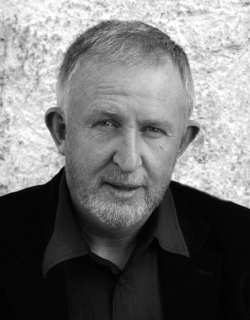
William “Bill” Wall, Irish novelist, poet and short story writer, is born in Cork, County Cork, on July 6, 1955.

Wall is raised in the coastal village of Whitegate, County Cork. He receives his secondary education at the Midleton CBS Secondary School in Midleton. He progresses to University College Cork where he graduates in Philosophy and English. He teaches English and drama at Presentation Brothers College, Cork, where he inspires Cillian Murphy to enter acting.

In 1997, Wall wins the Patrick Kavanagh Poetry Award. He publishes his first collection of poetry that same year. His first novel, Alice Falling, a dark study of power and abuse in modern-day Ireland, appears in 2000. He is the author of four novels, two collections of poetry and one of short stories.

In 2005, This Is The Country appears. A broad attack on politics in “Celtic Tiger” Ireland, as well as a rite of passage novel, it is longlisted for the Man Booker Prize, and shortlisted for the Irish Book Awards. It can be read as a satirical allegory on corruption, the link between capitalism and liberal democracy exemplified in the ‘entrepreneurial’ activities of minor drug dealers and gangsters, and reflected in the architecture of business-parks and sink estates. This political writing takes the form of “an insightful and robust social conscience”, in the words of academic John Kenny. Kenny also focuses on what he sees as Wall’s “baneful take on the Irish family, his fundamentally anti-idyllic mood” which has “not entirely endeared Wall to the more misty-eyed among his readers at home or abroad.” The political is also in evidence in his second collection of poetry Fahrenheit Says Nothing To Me. He is not a member of Aosdána, the Irish organisation for writers and artists. In 2006, his first collection of short fiction, No Paradiso, appears. In 2017, he becomes the first European to win the Drue Heinz Literature Prize.

His provocative political blog, The Ice Moon, has increasingly featured harsh criticism of the Irish government over their handling of the economy, as well as reviews of mainly left-wing books and movies. Many of his posts are satirical. He occasionally writes for literary journals, writes for Irish Left Review, and reviews for The Irish Times. His work has been translated into several languages. He has also appeared on the Irish-language channel TG4, such as in the programme Cogar.

He is one of the Irish delegates at the European Writers Conference in Istanbul in 2010.

Described by writer Kate Atkinson as “lyrical and cruel and bold and with metaphors to die for,” critics have focused on Wall’s mastery of language, his gift for “linguistic compression,” his “poet’s gift for apposite, wry observation, dialogue and character,” his “unflinching frankness” and his “laser-like … dissection of human frailties,” which is counterbalanced by “the depth of feeling that Wall invests in his work.” A review of his first novel in The New Yorker declares “Wall, who is also a poet, writes prose so charged—at once lyrical and syncopated—that it’s as if Cavafy had decided to write about a violent Irish household.” In a recent review, his long poem “Job in Heathrow,” anthologised in The Forward Book of Poetry 2010 but originally published in The SHOp, is described as “a chilling airport dystopia.” Poet Fred Johnston suggests that Wall’s poetry sets out to “list the shelves of disillusion under which a thinking man can be buried.” For Philip Coleman, “Ghost Estate is a deeply political book, but it also articulates a profound interest in and engagement with questions of aesthetics and poetics.”

Wall is a longtime sufferer of adult-onset Still’s disease (AOSD) and describes his efforts to circumvent the disabling effects of the disease using speech-to-text applications as “a battle between me and the software.”