seamus dubhghaill

Promoting Irish Culture and History from Little Rock, Arkansas, USA


Leave a comment

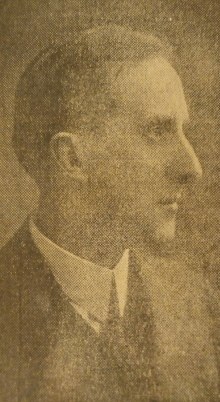
Death of George Gilmore, IRA Leader & Communist

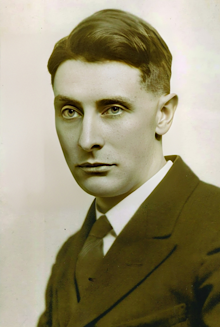
George Frederick Gilmore, a Protestant Irish republican and communist who becomes an Irish Republican Army leader during the 1920s and 1930s, dies in HowthCounty Dublin, on June 29, 1985. During his period of influence, he attempts to shift the IRA to the political left, but alongside Peadar O’Donnell and Frank Ryan he is expelled for his efforts. After leaving the IRA, he attempts to unite Irish republicanism under the banner of the Republican Congress, but ideological debates split the group apart. Afterward, he removes himself from public life.

Born at Hillside Terrace in Howth, County Dublin, on May 5, 1898, Gilmore is the second son of Philip Gilmore, an accountant originally from County Antrim, and Fanny Angus. Despite his father primarily working for Unionist landlords, and being educated at home, George and his brothers Harry and Charlie all turn toward Irish republicanism. By 1916, Gilmore has become a member of Fianna Éireann, the Republican boy scouts, and later a member of the South County Dublin battalion of the Irish Volunteers.

Gilmore fights in the Irish Republican Army in the Irish War of Independence and in the Irish Civil War on the Anti-Treaty IRA side. During the civil war he is captured and imprisoned, but manages to escape custody in August 1923, the aftermath of which causes riots as the remaining prisoners are placed in solitary confinement.

Following the end of the civil war, Gilmore serves as the secretary of future Taoiseach Seán Lemass, as well alongside Frank Aiken. During the early 1920s, he, Lemass and Aiken regularly meet with the IRA army council to represent the emerging political leadership of Irish republicanism that coalesces as Fianna Fáil in 1926. The trio regularly sits opposite IRA leaders Frank Ryan, Peadar O’Donnell, and Seán Russell.

In October 1925, Gilmore and Lemass organise the escape of nineteen IRA prisoners from Mountjoy Prison in Dublin. As part of the jailbreak, Gilmore impersonates a member of Garda Síochána. None of the nineteen escapees are subsequently recaptured, and their escape serves as a major propaganda coup. However, the following month, Gilmore is involved in a riot that takes place on Armistice Day and he is subsequently arrested and sentenced to eighteen months in prison. He resists the entire duration; first resisting the arrest and then, once imprisoned, refusing to wear a prison uniform and going on hunger strike. Early in 1928, members of the IRA attack Mountjoy Prison where he is being held and shoot the warden after a story emerges that Gilmore had previously been the victim of a vicious beating by the guards. He is released in 1929 but re-arrested and re-imprisoned almost immediately, resulting in a retaliatory beating by the guards that leaves him unconscious.

Sometime between 1929 and 1930, Gilmore is sent by the IRA to Russia to receive military training and to seek aid.

Gilmore is arrested yet again upon his return to Ireland in April 1931, charged with having resisted arrest ten months previously. In October he tries to escape with the help of his brother Charlie and almost succeeds, using a plot involving mock pistols wrapped in silver to intimidate the guards. In the aftermath of the failed escape, his treatment in Arbour Hill Prison from 1931-32 is abysmal. He once again refuses to wear prison clothing because of his political status and remains naked in a windowless cell from October 1931 until February 1932. In June 1931, of a cache of weapons are discovered near his home at Killakee in the Dublin Mountains, which results in him and his brother Charlie being placed before a military tribunal which sentences him to five years in prison and Charlie to three (in 1932 Fianna Fail comes to power and the brothers are released). Neither recognises the authority of the court, with George stating, “I do not want anybody to think I excuse myself for such a charge as having arms, I am admittedly hostile to British imperialism and international capitalism.”

Gilmore’s fortunes are dramatically altered when Fianna Fáil emerges victorious in the 1932 Irish general election. In the aftermath, Frank Aiken, former Chief of Staff of the IRA and new Minister for Defence goes to see Gilmore on March 9 and on the next day all republican prisoners are released as part of a general amnesty. Thirty thousand supporters greet the prisoners at College Green, Dublin.

Finally out of long-term imprisonment, Gilmore is eager to resume working toward a socialist Ireland. He has supported Peadar O’Donnell’s shortlived socialist republican group Saor Éire from prison, but in the aftermath of its demise, he concludes that the group has spent too much time imagining what it might do if in government, and not enough time considering what the immediate aims of the IRA should be. With his close personal ties to their leadership, Gilmore has a positive view of Fianna Fáil, and at this point in time believes their goals differ little from his own and those of the IRA. Nevertheless, He encourages the IRA to not become too closely associated with Fianna Fáil, fearing the IRA will become a subservient body. He himself has ascended to the IRA’s army council upon his release, and in March 1932 is among representatives of the Army Council that liaises with Éamon de Valera about a possible partnership between the IRA and Fianna Fáil.

On August 14, 1932, Gilmore and fellow Irish republican T. J. Ryan are beaten badly, shot and wounded by plain-clothes members the Garda Síochána (Criminal Investigation Department) in KilrushCounty Clare. This incident is blamed on the police by an official Tribunal of Inquiry report one month later.

In March 1934, Gilmore, alongside Frank Ryan and Peadar O’Donnell, refuse to continue on as members of the IRA executive as part of a deepening rift over the direction of the IRA. Left-wing members of the IRA such as Gilmore, Ryan and O’Donnell insist that the IRA needs to tie their activity to social agitation in addition to their military aims, but this is a minority viewpoint, with the majority believing the IRA should have a “strictly military” outlook. The rift ultimately spirals into Gilmore, Ryan and O’Donnell being court-martialed and expelled in April.

In the aftermath, Gilmore works with Roddy ConnollyNora Connolly O’Brien and Peadar O’Donnell to found the Republican Congress, a left-wing socialist Irish republican group. The group breaks up in 1935 over internal differences. Gilmore, Ryan and O’Donnell believe that the Republican Congress should be a united front, an alliance of all republican groups in Ireland. Roddy Connolly and other members of the Communist Party of Ireland believe that the Congress should be a vanguard party. A conference is held by the Republican Congress in Rathmines, Dublin, in September 1934 to vote on the issue. Before the vote is taken, Gilmore gives a speech in which he accuses Fianna Fáil of using republicanism as a means to promote Irish capitalism. When the votes are taken on whether the Republican Congress should be a united front or a vanguard party, Gilmore’s united front faction wins. However, supporters of the vanguard party concept such as Roddy Connolly immediately resign from the Congress in protest and walk out on the group. It proves to be a blow that the Congress never recovers from and the group is defunct by 1936. Gilmore makes a last-ditch effort to save the Congress by traveling to the United States to seek funds from Irish American groups but is not successful.

Upon the outbreak of the Spanish Civil War in July 1936, Gilmore and O’Donnell become supporters of the International Brigades. Both men travel to Spain personally, during which they are involved in a plane crash and Gilmore’s leg is broken.

Following the outbreak of World War II in September 1939, Gilmore writes an appeal pleading with the IRA to dump arms until the war in Europe is over and denounces them for flirting with fascism by seeking aid from Germany.

During the 1960s, when the republican movement once again moves to the left, Gilmore and O’Donnell are once again in demand as speakers and as writers in republican publications. In 1966, for the 50th anniversary of the Easter Rising, Gilmore releases a pamphlet entitled “Labour and the republican movement” in which he espouses the principles of James Connolly. Additionally, he appeals to young republicans not to repeat the mistake older republicans had made in being too rigid in their views and too short on policy.

Gilmore dies on June 29, 1985, at the age of 87, in a nursing home in Howth, County Dublin.

Leave a comment

Death of Máirtín Ó Direáin, Irish Poet

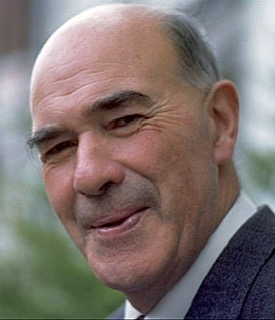
Máirtín Ó Direáin, Irish poet, dies in Dublin on March 19, 1988.

Ó Direáin is born on November 26, 1910, in Inis Mór, Aran Islands, County Galway, the eldest of the three sons and one daughter of Seán Ó Direáin, a small farmer, and Mairéad Ní Dhireáin (widow of Labhrás Mac Confhaola), both of Inis Mór. His father dies in 1917, aged forty-three, leaving his mother to rear a family of four on less than 20 acres of land. Educated at the local national school, he leaves Aran to join the post office in Galway in January 1928.

Ó Direáin is involved with the Irish language movement during the late 1920s and 1930s, during which time he is secretary of the Galway branch of the Gaelic League and writes for and acts on the stage of the Taibhdhearc Theatre. In July 1937 he moves to Dublin to work as a clerical officer in the Department of Posts and Telegraphs and later in the Department of Education. Inspired by a lecture given by the poet and Gaelic scholar Tadhg Ó Donnchadha, he begins writing poetry in Irish in the winter of 1938. Unlike Ó Donnchadha, however, who advocates and practises a poetry based on traditional Gaelic metres, he favours a rhythmically measured form of free verse. He publishes his first collection, Coinnle geala, in 1942, quickly followed by Dánta aniar (1943), both at his own expense. In 1949, a volume of selected poems, Rogha dánta, is one of the first books published by the newly founded Irish language publisher Sáirséal agus Dill.

These books herald not just a new voice, but a new generation of modern poets in Irish, distinct in outlook and ambition from most of the revivalist poets who precede them. The leading figures of this generation, Ó Direáin, Seán Ó Ríordáin and Máire Mhac an tSaoi, all publish poems in various Irish language journals during the 1940s, though the latter two poets do not produce their first collections until the 1950s. Ó Direáin’s poetry is less thematically and linguistically adventurous than that of Ó Ríordáin (whom he nevertheless defends in print against the dogmatic criticism of Ó Ríordáin’s traditionalist detractors), and less consciously indebted to tradition than that of Mhac an tSaoi.

Ó Direáin’s early lyrics celebrate the traditional virtues of island life and mourn its passing because of increasing modernisation and population shifts toward the major cities. One of the best known of these poems, “Stoite“ (“Uprooted”), sets up a gloomy contrast between a traditional life in tune with nature’s rhythms, destined to endure in communal memory, and the fruitless urban existence of the contemporary office worker. This theme of uprootedness haunts his work throughout the 1950s and early 1960s. During this period he publishes his two most significant collections, Ó Mórna agus dánta eile (1957) and Ár ré dhearóil (1962), both of which take their titles from ambitious, and uncharacteristically long, poems. Ó Mórna, a poem of which there are two published versions, charts the colourful life of a proud, amoral tyrant, a figure based loosely on traditional accounts of a hard-living nineteenth-century landlord’s agent from Aran. Ó Mórna represents, in the poet’s view, the timeless Übermensch whose will to power is boundless and awesome. Ár ré dhearóil (“Our wretched era”) is an excoriation of the loveless hedonism of a middle-class Dublin populated by lonely bachelors, bitter spinsters, and immoral, though free-spirited and well-educated, women. The poem, which ends with an ominous if oblique warning against the threat of nuclear annihilation, bears some comparison with T. S. Eliot‘s “The waste land.” Eliot, Ezra Pound and W. B. Yeats are key influences alongside the canonical figures of seventeenth- and eighteenth-century Gaelic poetry. His strong social conscience is registered early on in poems such as “An Stailc“ (“The strike“). His life-long adherence to traditional nationalist values and his scornful attitude to what he perceives as the mercenary embrace of American-style capitalism in the changing economic climate of Ireland in the 1960s is most trenchantly voiced in poems such as “Éire ina bhfuil romhainn” (“Ireland in times ahead”) and “Mar chaitheamar an choinneal” (“As we spent the candle”).

Ó Direáin is an active member of the Irish language literary groups Cumann na Scríbhneoirí and Cumann na hÉigse, and publishes essays on a variety of topics throughout the 1940s and 1950s in magazines such as Ar AghaidhAn GlórComhar and Feasta. A selection of mostly autobiographical essays, Feamainn Bhealtaine (1961), casts valuable light on the Aran of his youth and early adulthood. He is registrar for the National College of Art (1948–55), where he gets to know such prominent artists as Seán KeatingMaurice MacGonigal and Nano Reid, whose artwork adorns Rogha Dánta. From 1955 until his retirement from the civil service in 1975, he is a staff officer in the Department of Education. Cloch choirnéil appears in 1966, followed by Crainn is cairde (1970) and Ceacht an éin (1979).

The most comprehensive selection of Ó Direáin‘s poetry, Máirtín Ó Direáin: dánta 1939–1979 (1980), edited by Eoghan Ó hAnluain, covers all but two final volumes, Béasa an túir (1984) and Craobhóg dán (1986), neither of which add much of major significance to his oeuvre. A bilingual selection, Selected poems: Tacar dánta (1984), includes translations by Tomás Mac Síomóin and Douglas Sealy. In 1969, Ó Direáin delivers a series of lectures on his own work at University College Dublin (UCD), later edited by Eoghan Ó hAnluain as Ón ulán ramhar siar (2002), which provides useful background information on many individual poems. He receives the Irish American Cultural Institute (IACI) award in 1967 and is made a member of the Irish Academy of Letters in 1970. In 1977, he receives an honorary Doctor of Letters degree from the National University of Ireland and the Ossian-Preis of the Freiherr von Stein Foundation in Hamburg. He is a full-time visiting lecturer in the department of Irish at University College Galway for the academic year 1978–79. He was also a member of Aosdána.

Ó Direáin marries Áine Colivet, a Dubliner of French extraction, in 1945. Their only child, Niamh, is born in 1947. He dies in Dublin on March 19, 1988.

A selection of Ó Direáin’s essays, An chuid eile díom féin, edited by Síobhra Aiken, and a bilingual volume of poems Máirtin Ó Direáin: Selected poems/ Rogha dánta, translated by Frank Sewell, are both published in 2018.

(From: “Ó Direáin, Máirtín” by Caoimhín Mac Giolla Léith, Dictionary of Irish Biography, www dib.ie, October 2009, last revised March 2021)


Leave a comment

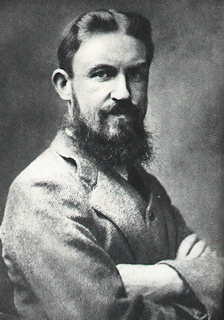
George Bernard Shaw Refuses Nobel Prize Money

On November 18, 1926, George Bernard Shaw refuses to accept the Nobel Prize in Literature prize money of £7,000 awarded to him a year earlier. He says, “I can forgive Alfred Nobel for his invention of the explosive but only the devil can think of the Nobel Prize.”

Shaw is born in Dublin on July 26, 1856, the third child of George Carr Shaw, a civil servant who later turns to a failed grain business to become an alcoholic, and Lucinda Elizabeth Shaw, a professional singer and sister of the famous opera singer Lucinda Frances. He is initially poor but is gifted with music and soon understands and loves the work of famous musicians and learns more about painting in Dublin. At the age of 15, he works as an apprentice and cashier for a real estate firm.

In 1876, Shaw follows his mother and two sisters to London. There he writes music reviews for newspapers to earn money, self-studies and actively participates in social activities. In 1884, he joins the founding of Fabian Society, an organization of British intellectuals advocating transition from capitalism to socialism by way of peace. From 1879 to 1883, he writes his first novel, Immaturity, and five other works that are not printed. An Unsocial Socialist is the first novel to be printed in 1887. Considered the father of “conceptual drama,” he begins writing plays in 1885, but achieves initial fame with Widowers’ Houses (1892). By 1903, his drama takes over the American and German stage, and in 1904 dominates the domestic stage. He becomes even more famous when Edward VII, the King of England, attends the performance of John Bull’s Other Island (1904), after which his drama spreads to European countries.

In addition, Shaw is also considered the best playwright in Britain at the time. He wants to use art to awaken people first to require changing the bourgeoisie order with all its institutions and customs. He emphasizes the educational function of the theater, but seeing the function of education is not an imposition from the playwright but arousing the aesthetic needs of the audience. The harsh problems of contemporary society such as the island’s predominant power, exploitative patterns, and the poverty of the people lead to social evils clearly reflected in his drama. His drama style tends to be satirical, sarcastic, finding its way to truth through paradoxes.

Shaw’s youngest dream is to earn a sum of money, then marry a wealthy wife. However, before becoming so wealthy that he can spend $ 35,000 on charity and enough money to travel around the world, he goes through many years of hardship. In the first nine years of his career, he receives only $30 USD in royalties. He is so poor that he does not even have the toll to get his manuscript to publishers. His clothes are tattered, his shoes open. All of his spending comes from his mother’s allowance. When he gets his name and remembers the miserable days, he often frowns, “I should have supported my family, the results are the opposite. I have never done anything for my family, and my mother has to work, raising me even though I was an adult.” Shaw, however, decides not to give up writing.

Realizing that, Shaw looks at the real royalties by publishing novels and the journey to the desired destination seems far away. He then turns to writing plays. He calculates that if the script is made public, the author will have revenue through the number of tickets issued and the number of shows. At the same time, the name of the author is also quickly known to the public. On the other hand, he says, only theater can “awaken people before the change of modern social order with all its institutions and customs.” He also judges that in addition to entertainment functions, the drama also contains the function of education, through arousing the aesthetic needs of the audience. He does not hesitate to bring to the stage all the most pressing issues of contemporary society such as the money’s inertia, the poverty of the people, and the social evils.

Saint Joan (1923) is judged to be the culmination of Shaw’s writing career. It is performed throughout European stages and is very popular. Two years after the release of Saint Joan, he is awarded the Nobel Prize for “the ideological and highly humanistic compositions, especially the spectacular satirical plays, combined with looks. Strange beauty of poetry.” When notified of his winning of the Nobel Prize, he humorously says, “The Nobel Prize for literature is like a float thrown to a swimmer.” Although he thinks he is the “swimmer to the shore,” he never leaves the pen. Thirteen years after receiving the Nobel Prize, Pygmalion, a script he wrote in 1912, is made into a film and receives the Academy Award for Best Adapted Screenplay.

In terms of scenario remuneration, Shaw receives an average of $100,000 a year, enough to spend on life, “reproduce” writing and traveling. It is only possible to marry a wealthy wife until the age of 40 years old. He always thinks that he “has no marriage status because he always worries others.” In terms of form, he is not very attractive because of his skinny body, but watching as the sisters do not allow him to carry out his intention to preserve his “absolute freedom.” Many beautiful female actors actively proclaim marriage proposal to Shaw, but he always uses humorous sentences to refuse.

Describing the George Bernard Shaw, Albert Einstein‘s physical genius after having met him has to say, “There are rare people who are so independent that they can see the weaknesses and absurdities of contemporaries. and at the same time do not let me get into it, but even so, when I encounter the hardships of life, these lonely people often lose their courage in helping humanity, with subtle humor and gentleness, can enthrall contemporaries and deserve to be torchbearers on the way of art’s unfavorable ways, today, with a passionate affection, I salute celebrate the biggest teacher on that path – the one who taught us and made us all feel happy.” It is a rare meeting of two great people in London in the fall of 1930.

(From: “November 18, 1926 – George Bernard Shaw refuses to receive a Nobel prize,” ScienceInfo.net, updated December 17, 2018)


Leave a comment

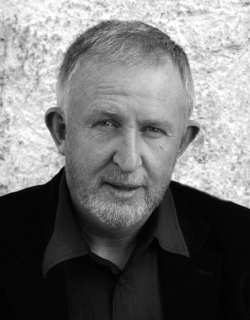
Birth of William Wall, Novelist, Poet & Short Story Writer

William “Bill” Wall, Irish novelist, poet and short story writer, is born in Cork, County Cork, on July 6, 1955.

Wall is raised in the coastal village of Whitegate, County Cork. He receives his secondary education at the Midleton CBS Secondary School in Midleton. He progresses to University College Cork where he graduates in Philosophy and English. He teaches English and drama at Presentation Brothers College, Cork, where he inspires Cillian Murphy to enter acting.

In 1997, Wall wins the Patrick Kavanagh Poetry Award. He publishes his first collection of poetry that same year. His first novel, Alice Falling, a dark study of power and abuse in modern-day Ireland, appears in 2000. He is the author of four novels, two collections of poetry and one of short stories.

In 2005, This Is The Country appears. A broad attack on politics in “Celtic Tiger” Ireland, as well as a rite of passage novel, it is longlisted for the Man Booker Prize, and shortlisted for the Irish Book Awards. It can be read as a satirical allegory on corruption, the link between capitalism and liberal democracy exemplified in the ‘entrepreneurial’ activities of minor drug dealers and gangsters, and reflected in the architecture of business-parks and sink estates. This political writing takes the form of “an insightful and robust social conscience”, in the words of academic John Kenny. Kenny also focuses on what he sees as Wall’s “baneful take on the Irish family, his fundamentally anti-idyllic mood” which has “not entirely endeared Wall to the more misty-eyed among his readers at home or abroad.” The political is also in evidence in his second collection of poetry Fahrenheit Says Nothing To Me. He is not a member of Aosdána, the Irish organisation for writers and artists. In 2006, his first collection of short fiction, No Paradiso, appears. In 2017, he becomes the first European to win the Drue Heinz Literature Prize.

His provocative political blog, The Ice Moon, has increasingly featured harsh criticism of the Irish government over their handling of the economy, as well as reviews of mainly left-wing books and movies. Many of his posts are satirical. He occasionally writes for literary journals, writes for Irish Left Review, and reviews for The Irish Times. His work has been translated into several languages. He has also appeared on the Irish-language channel TG4, such as in the programme Cogar.

He is one of the Irish delegates at the European Writers Conference in Istanbul in 2010.

Described by writer Kate Atkinson as “lyrical and cruel and bold and with metaphors to die for,” critics have focused on Wall’s mastery of language, his gift for “linguistic compression,” his “poet’s gift for apposite, wry observation, dialogue and character,” his “unflinching frankness” and his “laser-like … dissection of human frailties,” which is counterbalanced by “the depth of feeling that Wall invests in his work.” A review of his first novel in The New Yorker declares “Wall, who is also a poet, writes prose so charged—at once lyrical and syncopated—that it’s as if Cavafy had decided to write about a violent Irish household.” In a recent review, his long poem “Job in Heathrow,” anthologised in The Forward Book of Poetry 2010 but originally published in The SHOp, is described as “a chilling airport dystopia.” Poet Fred Johnston suggests that Wall’s poetry sets out to “list the shelves of disillusion under which a thinking man can be buried.” For Philip Coleman, “Ghost Estate is a deeply political book, but it also articulates a profound interest in and engagement with questions of aesthetics and poetics.”

Wall is a longtime sufferer of adult-onset Still’s disease (AOSD) and describes his efforts to circumvent the disabling effects of the disease using speech-to-text applications as “a battle between me and the software.”


Leave a comment

The Founding of Saor Éire

Saor Éire, a left-wing political organisation, is established on September 26, 1931 by communist-leaning members of the Irish Republican Army, with the backing of the IRA leadership. Notable among its founders is Peadar O’Donnell, former editor of An Phoblacht and a leading left-wing figure in the IRA. Saor Éire describes itself as “an organization of workers and working farmers.”

It is believed that the support of the then IRA chief of staff Moss (Maurice) Twomey is instrumental in the organisation’s establishment. However, Tim Pat Coogan claims that Twomey is doubtful about the organisation, worrying about involvement in electoral politics and possible communist influence.

During its short existence Saor Éire uses the republican publication An Phoblacht, under the editorship of Frank Ryan, to report on its progress and to promote its radical, left-wing republican views.

On the weekend of September 26-27, 1931, Saor Éire holds its first conference in Dublin at Iona Hall. One hundred and fifty delegates from both the Irish Free State and Northern Ireland attend the conference against a background of police raids on the houses and offices connected with Saor Éire and An Phoblacht. Seán Hayes is chairman, while David Fitzgerald acts as secretary.

The conference elects an executive of Hayes, Fitzgerald, Sean McGuinness, May Laverty, Helena Molony, Sheila Dowling, Sheila Humphreys, D. McGinley, Mick Fitzpatrick, Seán MacBride, Michael Price, Peadar O’Donnell, Mick Hallissey, M. O’Donnell, Patrick McCormack, Tom Kenny, L. Brady, Nicholas Boran, John Mulgrew and Tom Maguire. George Gilmore and Frank Ryan are also involved.

The constitution elaborates upon the aims by describing a two-phase programme. The first phase is described as being one of organisation and propagandising in order to organise a solid front for mass resistance to the oppressors. This is to build upon the day-to-day resistance and activity towards “rents, annuities, evictions, seizures, bank sales, lock-outs, strikes and wage-cuts.” This challenge, it is believed, would lead to power passing from the hands of the imperialists to the masses. The second phase is one of consolidation of power through the organisation of the economy and a workers’ and working farmers’ republic.

Ideologically Saor Éire adheres to the Irish socialist republicanism developed by James Connolly and Peadar O’Donnell. As a consequence of the heavy influence of O’Donnell, Saor Éire strongly advocates the revival of Gaelic culture and the involvement of the poorer rural working communities in any rise against the Irish capitalist institutions and British imperialism.

The organisation is attacked by the centre-right press and the Catholic Church as a dangerous communist group, and is quickly banned by the Free State government. The strength of reaction against it prevents it from becoming an effective political organisation. O’Donnell and his supporters attempt a similar initiative two years later with the establishment of the Republican Congress in 1933.


Leave a comment

The Founding of Fine Gael

fine-gael-logo

Fine Gael, a liberal-conservative political party in Ireland, is founded on September 8, 1933, following the merger of its parent party Cumann na nGaedheal, the National Centre Party and the National Guard, popularly known as the “Blueshirts.” The party’s origins lie in the struggle for Irish independence and the pro-Treaty side in the Irish Civil War. Michael Collins, in particular, is often identified as the founder of the movement.

Fine Gael is currently the third-largest party in Ireland in terms of members of Dáil Éireann and largest in terms of Irish members of the European Parliament. The party has a membership of 21,000 in 2017. Leo Varadkar succeeds Enda Kenny as party leader on June 2, 2017, and as Taoiseach on June 14. Kenny had been leader since 2002, and Taoiseach since 2011.

Fine Gael is generally considered to be more of a proponent of market liberalism than its traditional rival, Fianna Fáil. Apart from brief minority governments, Fine Gael has rarely governed Ireland without a coalition that also includes the Labour Party, a social-democratic, centre-left party. Fine Gael describes itself as a “party of the progressive centre” which it defines as acting “in a way that is right for Ireland, regardless of dogma or ideology.” The party lists its core values as “equality of opportunity, free enterprise and reward, security, integrity and hope.”

In international politics, Fine Gael is highly supportive of the European Union, along with generally supporting strengthened relations with the United Kingdom and opposition to physical force Irish republicanism. The party’s youth wing, Young Fine Gael, is formed in 1977, and has approximately four thousand members. Fine Gael is a founding member of the European People’s Party.

Having governed in coalition with the Labour Party between 2011 and 2016, and in a minority government along with Independent TDs from 2016 to 2020, Fine Gael currently forms part of an historic coalition government with its traditional rival, Fianna Fáil, and the Green Party. On June 27, 2020, Micheál Martin of Fianna Fáil is appointed as Taoiseach and forms a new government. Leo Varadkar serves as Tánaiste with both parties agreeing that in December 2022, Varadkar will serve again as Taoiseach.


Leave a comment

The Founding of Saor Éire

saor-eire

Saor Éire, a left-wing political organisation, is established on September 26, 1931 by communist-leaning members of the Irish Republican Army, with the backing of the IRA leadership. Notable among its founders is Peadar O’Donnell, former editor of An Phoblacht and a leading left-wing figure in the IRA. Saor Éire describes itself as “an organization of workers and working farmers.”

It is believed that the support of the then IRA chief of staff Moss (Maurice) Twomey is instrumental in the organisation’s establishment. However, Tim Pat Coogan claims that Twomey is doubtful about the organisation, worrying about involvement in electoral politics and possible communist influence.

During its short existence Saor Éire uses the republican publication An Phoblacht, under the editorship of Frank Ryan, to report on its progress and to promote its radical, left-wing republican views.

On the weekend of September 26-27, 1931, Saor Éire holds its first conference in Dublin at Iona Hall. One hundred and fifty delegates from both the Irish Free State and Northern Ireland attend the conference against a background of police raids on the houses and offices connected with Saor Éire and An Phoblacht. Seán Hayes is chairman, while David Fitzgerald acts as secretary.

The conference elects an executive of Hayes, Fitzgerald, Sean McGuinness, May Laverty, Helena Molony, Sheila Dowling, Sheila Humphreys, D. McGinley, Mick Fitzpatrick, Seán MacBride, Michael Price, Peadar O’Donnell, Mick Hallissey, M. O’Donnell, Patrick McCormack, Tom Kenny, L. Brady, Nicholas Boran, John Mulgrew and Tom Maguire. George Gilmore and Frank Ryan are also involved.

The constitution elaborates upon the aims by describing a two-phase programme. The first phase is described as being one of organisation and propagandising in order to organise a solid front for mass resistance to the oppressors. This is to build upon the day-to-day resistance and activity towards “rents, annuities, evictions, seizures, bank sales, lock-outs, strikes and wage-cuts.” This challenge, it is believed, would lead to power passing from the hands of the imperialists to the masses. The second phase is one of consolidation of power through the organisation of the economy and a workers’ and working farmers’ republic.

Ideologically Saor Éire adheres to the Irish socialist republicanism developed by James Connolly and Peadar O’Donnell. As a consequence of the heavy influence of O’Donnell, Saor Éire strongly advocates the revival of Gaelic culture and the involvement of the poorer rural working communities in any rise against the Irish capitalist institutions and British imperialism.

The organisation is attacked by the centre-right press and the Catholic Church as a dangerous communist group, and is quickly banned by the Free State government. The strength of reaction against it prevents it from becoming an effective political organisation. O’Donnell and his supporters attempt a similar initiative two years later with the establishment of the Republican Congress in 1933.