seamus dubhghaill

Promoting Irish Culture and History from Little Rock, Arkansas, USA


Leave a comment

Charles Blount, 8th Baron Mountjoy, Becomes Lord Deputy of Ireland

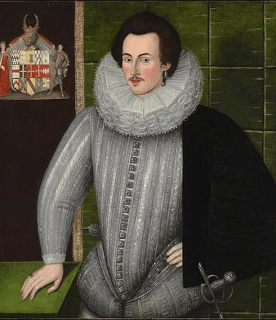
Charles Blount, 8th Baron Mountjoy, English nobleman and soldier, becomes Lord Deputy of Ireland under Queen Elizabeth I on January 21, 1600.

Blount is born in 1563, the second son of James, 6th Baron Mountjoy, and Catherine, only daughter of Sir Thomas Legh. He is among the most distinguished of the family, succeeding as 8th Baron Mountjoy on the death in 1594 of his unmarried elder brother William, 7th Baron Mountjoy. The good fortune of his youthful and handsome looks find favour with Queen Elizabeth I which arouses the jealousy of Robert Devereux, 2nd Earl of Essex, leading to a duel between the two courtiers, who later become close friends.

Blount is returned to the House of Commons as MP for St. Ives, Cornwall in 1584 and for Bere Alston in 1586 and 1593, before entering the House of Lords in 1594. Between 1586 and 1598, he spends most of his time on the Continent, serving in the Netherlands and Brittany. He joins Lord Essex and Sir Walter Raleigh in their expedition to the Azores in 1597, along with his distant cousin, Sir Christopher Blount.

The downfall of Lord Essex does not damage Blount’s career. After the failure of his rebellion, Essex shocks many by denouncing his sister Penelope, who is Blount’s mistress, as a traitor, which inevitably raises the question of his own possible involvement. But the Crown, anxious to retain Blount’s services, and also to show as much leniency as possible to the defeated rebels, simply ignore the accusation.

On February 24, 1600, Blount lands in Ireland as Lord Deputy following Lord Essex and in the ensuing years brings the Nine Years’ War to an end. The leader of the rebellion, Hugh O’Neill, Earl of Tyrone, writes about Blount’s “refined manners” that he would lose a whole season of campaigning “while waiting until breakfast is prepared to his mind!” Despite this, Blount proves that he is quite qualified to pursue the war.

In early 1600, Blount dispatches Sir Henry Docwra with an army of 4,200 troops to land at Culmore to erect a fortress commanding the shores of Lough Foyle in the northwest of Ulster. To prevent Hugh O’Neill from sending a strong force to repulse Dowcra’s forces, Blount advances in force from Dublin to Newry causing O’Neill to fear a southern advance into Tyrone.

Blount aims to avoid the mistakes of previous Lords-Deputy. After the Battle of Moyry Pass, he has it cleared, and a garrison is established there. It had long been a problem for English forces advancing into Ulster from the south. He also establishes posts with garrisons at Mountnorris and Armagh.

On July 13, 1601, Blount and his army along with Turlough McHenry O’Neill of the Fews who had recently switched to the English side in the war, have a stand-off with Hugh O’Neill’s forces at the River Blackwater. After a few shots in vain from either side, O’Neill’s forces withdraw, and Blount sends his forces to occupy the ruined Blackwater fort destroyed by O’Neill in 1595. Later O’Neill’s forces attack Blount’s camp before withdrawing. In response, the Lord-Deputy sends his forces across the river where they find strong artificially fortified fords, which would have held out against the English.

By July 15, 1601, the Lord-Deputy has secured the surrender of O’Neill’s ally Hugh Magennis. That month, he has a new fort near the old Blackwater fort erected.

Blount reports to the council in England that O’Neill is determined to prevent his forces from advancing into Tyrone and toward Dungannon. As such, he initiates a policy of burning large quantities of corn to induce a famine to drive the rebels out of their strongholds.

Blount sets about trying to entice Hugh’s forces to come out and attack by fetching some materials for the new fort from the Tyrone side of the river as well as burning more corn. Further skirmishes between Blount and O’Neill’s forces ensue during the summer of 1601.

Spanish forces land in Munster in August 1601, forcing Blount to send his forces southward leaving O’Neill remaining in his unbroken heartland of Tyrone. The Spanish arrival culminates in the Siege of Kinsale that December, which sees a major defeat of the rebels and their allies.

O’Neill during this time has also moved south to assist some of his allies, however, after some serious defeats at the hands of the forces of Richard Burke, 4th Earl of Clanricarde of Connacht, he is in no place to offer any effective resistance once Blount marches once more to Tyrone in the summer of 1602.

Blount advances to the location he found the previous summer at the River Blackwater, which commands safe and secure passage into Tyrone, previously inaccessible, and sets about erecting a new fort. Having observed this, O’Neill burns his capital at Dungannon and flees to his last refuge in Glenconkeyne.

Advancing northward through Tyrone, Blount erects a fort in the townland of Magheralamfield, afterward known as Mountjoy Castle. He also christens the new fort at the Blackwater Charlemont Fort after himself.

Once in Tyrone, Blount carries out a campaign of devastation throughout it resulting in the mass hunting of rebels, spoiling of corn, the burning of houses and the killing of churls so as to force the submission of O’Neill and his remaining allies. Most symbolically, Blount has the inauguration site of the O’Neill’s at Tullyhogue Fort destroyed.

On March 30, 1603, six days after the death of Elizabeth and the accession of James I, O’Neill makes peace with Blount, signing the Treaty of Mellifont. Blount continues in office with the more distinguished title of Lord-Lieutenant. He declares amnesty for the rebels and grants them honourable terms, which causes some severe criticism from England. He shows similar moderation in putting down the abortive risings in Cork, Waterford and Wexford, where the aldermen, apparently with some vague idea of gaining greater toleration for Roman Catholics, refuse to proclaim the new King. In Cork, three insurgents are hanged after a summary trial, but the rest are acquitted or pardoned.

As part of the Plantation of Ulster, the majority of the barony of Loughinsholin is detached from County Tyrone and made part of the newly created County Londonderry. The rest of Loughinsholin along with the northern parts of Dungannon barony are merged to create the short-lived barony of Mountjoy. It is later amalgamated with the barony of Dungannon.

On his return to England, Blount serves as one of Sir Walter Raleigh’s judges in 1603, and in the same year King James I appoints him Master-General of the Ordnance as well as creating him Earl of Devonshire, granting him extensive estates. He is one of the founder members of the Spanish Company re-founded by royal charter in 1605.

Toward the end of Blount’s life, on December 26, 1605, at Wanstead House near London, in a ceremony conducted by his chaplain William Laud, afterward Archbishop of Canterbury, he marries his long-time mistress Lady Penelope, formerly wife of Robert Rich, 3rd Baron Rich (later 1st Earl of Warwick) and sister of Robert Devereux, 2nd Earl of Essex.

Blount leaves no legitimate children, and so his hereditary titles become extinct at his death on April 3, 1606, at Savoy House, London.

Leave a comment

Murder of William de Burgh, 3rd Earl of Ulster

William Donn de Burgh, 3rd Earl of Ulster and 4th Baron of Connaught, Irish noble who is Lord Lieutenant of Ireland (1331–32), is murdered at the age of 20 on June 6, 1333. His murder leads to the Burke Civil War.

De Burgh is born on September 17, 1312, the grandson of Richard Óg de Burgh, 2nd Earl of Ulster, via his second son, John, who dies in 1313. He is also Lord of Connaught in Ireland, and holds the manor of Clare, Suffolk.

De Burgh is summoned to Parliament from December 10, 1327 to June 15, 1328 by writs addressed to Willelmo de Burgh. In 1331 he is appointed Lord Lieutenant of Ireland for a year.

De Burgh marries, before November 16, 1327 (by a Papal Dispensation dated May 1, 1327), Maud of Lancaster, daughter of Henry, 3rd Earl of Lancaster and Maud Chaworth. They have only one surviving child, Elizabeth de Burgh, 4th Countess of Ulster, who is 13 months old when her father is murdered. She marries Lionel of Antwerp, third son of Edward III of England. Maud remarries Sir Ralph Ufford, Justiciar of Ireland (1344–46), and has further issue. She is said to have great influence over her second husband.

In February 1332, at Greencastle, near the mouth of Lough Foyle, de Burgh has his cousin, Sir Walter Liath de Burgh, starved to death. In revenge, Sir Walter’s sister, Gylle de Burgh, wife of Sir Richard de Mandeville, plans his assassination.

On June 6, 1333, William de Burgh is killed by de Mandeville, Sir John de Logan, and others. The Annals of the Four Masters note that “William Burke, Earl of Ulster, was killed by the English of Ulster. The Englishmen who committed this deed were put to death, in divers ways, by the people of the King of England; some were hanged, others killed, and others torn asunder, in revenge of his death.”

De Burgh’s widow, Maud, flees to England, where she remarries, is again widowed in 1346, and then becomes an Augustinian canoness at Campsey Priory in Suffolk, where she is buried. Upon his death, the various factions of the de Burghs, now called Burke, began the Burke Civil War for supremacy.

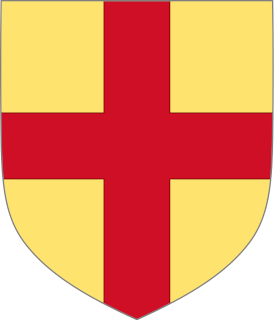
(Pictured: Arms of the House of de Burgh)


Leave a comment

The Siege of Derry Begins

siege-of-derry

The Siege of Derry, the first major event in the Williamite War in Ireland, begins on April 18, 1689. The siege lasts nearly three and a half months, ending on July 30, 1689, when relief ships bringing the English Army sail down Lough Foyle.

The Glorious Revolution of 1688 is a relatively bloodless revolution in which James II, King of England, Ireland and Scotland and a Roman Catholic convert, is ousted from power by the Parliament of England. The English throne is then offered to his Protestant daughter Mary and her husband William III of England, also known as William of Orange. In Scotland, the privy council asks William III to assume responsibility for the government in January 1689, and he and Mary are formally offered the Scottish throne in March. The situation is different in Ireland where most of the population are Catholics. Irish Catholics are hoping that James will re-grant them lands, which had been seized from them after the Cromwellian conquest of Ireland (1649–53). James thus looks to Ireland to muster support in regaining his kingdoms just as his father, Charles I, had done in the English Civil War of the 1640s.

On December 10, James flees London. He is caught but flees a second time on December 23 and makes his way to France. On March 12, James I lands in Kinsale with 6,000 French soldiers. He takes Dublin and marches north with an army of Irish and French Catholics.

In April 1689 reinforcements from England arrive under the command of Colonel John Cunningham, who is a native of the city. He is under instructions to take his orders from the Derry City Governor, Lieutenant Colonel Robert Lundy. Lundy advises Colonel Cunningham to leave as arrangements have been made for the city to be surrendered. Lundy calls a meeting with several of his most loyal supporters to discuss surrender. News of the meeting spread, angering many of the citizens. That night, Lundy and many others leave the city aboard a ship to Scotland. The city’s defence is overseen by Major Henry Baker, Colonel Adam Murray, and Major George Walker, also an Anglican priest. Their slogan is “No Surrender.”

As the Jacobite army nears, all the buildings outside the city walls are set alight by the defenders to prevent them being used as cover by the besiegers.

The Jacobite army reaches Derry on April 18. James and his retinue ride to within 300 yards of Bishop’s Gate and demand the surrender of the city. He is rebuffed with shouts of “No surrender!” and some of the city’s defenders fire at him. James asks for surrender three more times but is refused each time. This marks the beginning of the siege. Cannon and mortar fire are exchanged, and disease takes hold within the city. James returns to Dublin and leaves his forces under the command of Richard Hamilton.

Royal Navy warships under Admiral George Rooke arrive in Lough Foyle on June 11 but initially decline to ram through the heavily defended defensive boom across the River Foyle at Culmore.

On July 28, two armed merchant ships, Mountjoy and Phoenix, sail toward the boom, protected by the frigate HMS Dartmouth under Captain John Leake. Mountjoy rams and breaches the boom, and the ships move in, unloading many tons of food to relieve the siege. The city had endured 105 days of siege during which some 4,000 Protestants of a population of 8,000 are said to have died.

The siege is commemorated yearly by the Protestant Apprentice Boys of Derry who stage the week-long Maiden City Festival culminating in a parade around the walls of the city by local members, followed by a parade of the city by the full Association. Although violence has attended these parades in the past, those in recent years have been largely peaceful.

The song “Derry’s Walls” is written to commemorate the siege.


Leave a comment

Sinking of the MV Princess Victoria

mv-princess-victoria

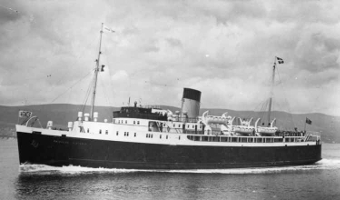
MV Princess Victoria, one of the earliest roll-on/roll-off ferries, sinks on January 31, 1953, in the North Channel during a severe European windstorm with the loss of 133 lives. It is then the deadliest maritime disaster in United Kingdom waters since World War II.

Princess Victoria is built in 1947 by William Denny and Brothers, Dumbarton. She is the first purpose-built ferry of her kind to operate in British coastal waters and could hold 1,500 passengers plus cargo and had sleeping accommodations for 54.

Captained by James Ferguson, the vessel leaves Stranraer‘s railway loading pier at 7:45 AM on January 31, 1953 with 44 tons of cargo, 128 passengers, and 51 crew. Captain Ferguson has served as master on various ferries on the same route for seventeen years. A gale warning is in force but he makes the decision to put to sea. Loch Ryan is a sheltered inlet and the immediate force of the wind and sea is not apparent, but it is noted that spray is breaking over the stern doors. A “guillotine door” has been fitted, because of a previously identified problem with spray and waves hitting the stern doors, but it is rarely used, because it takes too long to raise and lower. This would provide extra protection for the sliding stern doors but on this occasion it is not lowered.

Shortly after clearing the mouth of Loch Ryan, the ship turns west towards Larne, County Antrim, Northern Ireland and exposes her stern to the worst of the high seas. Huge waves damage the low stern doors, allowing water to enter the car deck. The crew struggles to close the doors again but they prove to be too badly damaged and water continues to flood in from the waves. The scuppers do not appear to be allowing the water to drain away. The ship takes a list to starboard and at this point Captain Ferguson decides to retreat to the safety of Loch Ryan by going astern and using the bow rudder. This proves to be impossible, because the extreme conditions prevent the deckhands from releasing the securing pin on the bow rudder. Ferguson then makes a decision to try to reach Northern Ireland by adopting a course which keeps the stern of the craft sheltered from the worst of the elements. At 9:46 AM, two hours after leaving Stranraer, a message is transmitted in Morse code (the Princess Victoria does not have a radio telephone) by radio operator David Broadfoot to the Portpatrick Radio Station: “Hove-to off mouth of Loch Ryan. Vessel not under command. Urgent assistance of tugs required.”

With a list to starboard exacerbated by shifting cargo, water continues to enter the ship. At 10:32 AM an SOS transmission is made, and the order to abandon is given at 2:00 PM. Possibly the first warship in the area is HMS Launceston Castle, commanded by Lt. Cdr J M Cowling, a frigate which is en route to Derry. Searches are carried out but Launceston Castle is forced to leave when her condensers are contaminated by salt. Upon the upgrade of the assistance message to an SOS, the Portpatrick Lifeboat the Jeannie Spiers is dispatched, as is the destroyer HMS Contest. Contest, commanded by Lt. Commander HP Fleming, leaves Rothesay at 11:09 AM but, although she comes close to her position at 1:30 PM, poor visibility prevents the crew from seeing the sinking ship. The destroyer has been trying to maintain a speed of 31 knots to reach the listing ferry but, after sustaining damage from the seas, Captain Fleming is forced to reduce speed to 16 knots.

The Princess Victoria is still reporting her position as 5 miles northwest of Corsewall Point but her engines are still turning and even at the speed of 5 knots are gradually drawing the vessel closer to Northern Ireland and away from her reported position. At 1:08 PM, the ship broadcasts that her engines have stopped. The final morse code message at 1:58 PM reports the ship “on her beam end” five miles east of the Copeland Islands.

The Court of Enquiry into the sinking, held in March 1953 at Crumlin Road Courthouse in Belfast, finds that the Princess Victoria was lost due to a combination of factors. In a 30,000 page report the enquiry finds that firstly, the stern doors are not sufficiently robust. Secondly, arrangements for clearing water from the car deck are inadequate. The report concludes “If the Princess Victoria had been as staunch as those who manned her, then all would have been well and the disaster averted.” The court also notes the failure of the duty destroyer HMS Tenacious from the 3rd Training Squadron based at HMS Sea Eagle at Londonderry Port to be able to put to sea as too many men had been released on shore leave. As a consequence of the enquiry the duty destroyer from the 3rd Squadron is subsequently based “on station” at the mouth of Lough Foyle on one hour readiness to put to sea.

The wreck lay undiscovered until 1992 when a team from Cromarty Firth Diving, led by John MacKenzie and funded by the BBC, working from data provided by a Royal Navy seabed survey carried out in 1973, are able to locate it five miles north northeast of the Copeland Islands in 90 metres of water. Video footage and stills from this expedition are transmitted on a BBC programme called Home Truths (Things Don’t Happen to Boats Like This) on the 40th anniversary of the sinking in 1993.