seamus dubhghaill

Promoting Irish Culture and History from Little Rock, Arkansas, USA


Leave a comment

Birth of Mary Field Parsons, Countess of Rosse

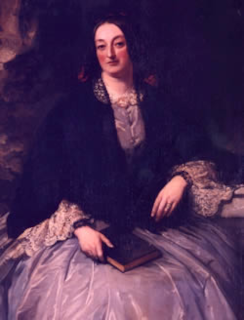
Mary Parsons (née Field), Countess of Rosse, Anglo-Irish amateur astronomer, architect, furniture designer, and pioneering photographer, is born on April 14, 1813, at Heaton Hall, Heaton, Bradford, West Yorkshire, England. Often known simply as Mary Rosse, she is one of the early practitioners of making photographs from waxed-paper negatives.

Field is the daughter of John Wilmer Field, a wealthy estate owner. She has a sister, Delia, and they are educated at home by Susan Lawson, a governess who encourages her creativity and broad interests, including astronomy. The sisters are joint heirs to their father’s fortune.

Through her family Field meets William Parsons, then Lord Oxmantown and the future 3rd Earl of Rosse, an Anglo-Irish astronomer and naturalist, and they are married on April 14, 1836, her 23rd birthday. In February 1841, Lord Oxmantown succeeds his father in the family peerage to become the 3rd Earl of Rosse. She, Baroness Oxmantown since her marriage, thus now becomes the Countess of Rosse.

In the early 1840s the couple becomes interested in astronomy, and the Countess of Rosse helps her husband build a number of giant telescopes, including the so-called Leviathan of Parsonstown, that is considered a technical marvel in its time. The author, Henrietta Heald, contends that she is not only a financial support to the building of the telescope, but is also involved in a practical and intellectual capacity. The Leviathan of Parsontown is completed in 1845 and holds the record as the world’s largest telescope for over 70 years. It is mentioned in Jules Verne’s science fiction novel, From the Earth to the Moon.

The Countess of Rosse is an accomplished blacksmith, which is very unusual for higher class women of the time, and she may have constructed some of the iron work that supports the telescope. Other metal cast items around the castle grounds are designed by her, including bronze gates.

During the Great Famine of 1845–47 in Ireland, the Countess of Rosse is responsible for keeping over five hundred men employed in work in and around Birr Castle, where she and her husband live.

The Countess of Rosse creates a huge dining room at Birr Castle in which to entertain scientific guests, which becomes increasingly used when Lord Rosse becomes President of the Royal Society of London in 1848. Guests include mathematician William Rowan Hamilton, who writes her a sonnet about his experience of gazing through the Leviathan.

In 1842, Lord Rosse begins experimenting in daguerreotype photography, possibly learning some of the art from his acquaintance William Henry Fox Talbot. In 1854, he writes to Fox Talbot saying that the Countess too has just commenced photography and sends some examples of her work. Fox Talbot replies that some of her photographs of the telescope “are all that can be desired.”

The Countess of Rosse becomes a member of the Dublin Photographic Society, and in 1859 she receives a silver medal for “best paper negative” from the Photographic Society of Ireland. Many examples of her photography are in the Birr Castle Archives. Much of the topography of Birr Castle that she portrayed has changed very little, and it is possible to compare many of her photographs with the actual places. She records the Leviathan in her photographs including one image showing her three sons, Clere, Randal and Charles along with her sister-in-law, Jane Knox, standing upright at the mouth of the telescope.

The Countess of Rosse gives birth to eleven children, but only four survive to adulthood:

Mary, Dowager Countess of Rosse, dies in 1885.


Leave a comment

Birth of Mary Ward, Astronomer, Microscopist, Author & Artist

Mary Ward (née King), Irish naturalist, astronomer, microscopist, author, and artist, is born in Ballylin near present-day Ferbane, County Offaly, on April 27, 1827. She is killed in 1869 when she falls under the wheels of an experimental steam car built by her cousins, thereby becoming the first person known to be killed by a motor vehicle.

King is the youngest child of the Reverend Henry King and his wife Harriette. She and her sisters are educated at home, as are most girls at the time. However, her education is slightly different from the norm because she is of a renowned scientific family. She is interested in nature from an early age, and by the time she is three years old she is collecting insects.

King is a keen amateur astronomer, sharing this interest with her cousin, William Parsons, 3rd Earl of Rosse, who builds the Leviathan of Parsonstown, a reflecting telescope with a six-foot mirror which remains the world’s largest until 1917. She is a frequent visitor to Birr Castle, producing sketches of each stage of the process. Along with photographs made by Parson’s wife, Mary Rosse, her sketches are used to aid in the restoration of the telescope.

King also draws insects, and the astronomer James South observes her doing so one day. She is using a magnifying glass to see the tiny details, and her drawing so impresses him that he immediately persuades her father to buy her a microscope. A compound microscope made by Andrew Ross is purchased for £48 12s 8d. This is the beginning of a lifelong passion. She begins to read everything she can find about microscopy, and teaches herself until she has an expert knowledge. She makes her own slides from slivers of ivory, as glass is difficult to obtain, and prepares her own specimens. The physicist David Brewster asks her to make his microscope specimens, and uses her drawings in many of his books and articles.

Universities and most societies do not accept women at the time, but King obtains information any way she can. She writes frequently to scientists, asking them about papers they had published. During 1848, Parsons is made president of the Royal Society, and visits to his London home allows her to meet many scientists.

King is one of only three women on the mailing list for the Royal Astronomical Society. The others are Queen Victoria and Mary Somerville, a scientist for whom Somerville College at the University of Oxford is named.

On December 6, 1854, King marries Henry Ward of Castle Ward, County Down, who in 1881 succeeds to the title of Viscount Bangor. They have three sons and five daughters, including Maxwell Ward, 6th Viscount Bangor. Her best-known descendants are her grandson, Edward Ward, the foreign correspondent and seventh viscount, and his daughter, the Doctor Who actress Lalla Ward.

When Ward writes her first book, Sketches with the microscope (privately printed in 1857), she apparently believes that no one will print it because of her gender or lack of academic credentials. She publishes 250 copies of it privately, and several hundred handbills are distributed to advertise it. The printing sells during the next few weeks, which prompts a London publisher to take the risk and contract for future publication. The book is reprinted eight times between 1858 and 1880 as A World of Wonders Revealed by the Microscope. A new full-colour facsimile edition at €20 is published in September 2019 by the Offaly Historical and Archaeological Society, with accompanying essays.

Her books are A Windfall for the Microscope (1856), A World of Wonders, Revealed by the Microscope (1857), Entomology in Sport, and Entomology in Earnest (1857, with Lady Jane Mahon), Microscope Teachings (1864), Telescope Teachings (1859). She illustrates her books and articles herself, as well as many books and papers by other scientists.

Ward is the first known automobile fatality. William Parsons’ sons had built a steam-powered car and on August 31, 1869, she and her husband are traveling in it with the Parsons boys, Richard Clere Parsons and the future steam turbine pioneer Charles Algernon Parsons, and their tutor, Richard Biggs. She is thrown from the car on a bend in the road at Parsonstown (present-day Birr, County Offaly). She falls under its wheel and dies almost instantly. A doctor who lives near the scene arrives within moments, and finds her cut, bruised, and bleeding from the ears. The fatal injury is a broken neck. It is believed that the grieving family destroys the car after the crash.

Ward’s microscope, accessories, slides and books are on display in her husband’s home, Castle Ward, County Down. William Parsons’ home at Birr Castle, County Offaly, is also open to the public.


Leave a comment

Birth of Astronomer William Parsons, 3rd Earl of Rosse

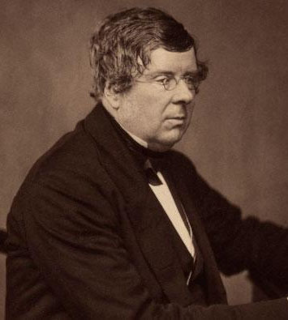
William Parsons, 3rd Earl of Rosse, Anglo-Irish astronomer, naturalist, and engineer, is born in York, England on June 17, 1800. He is President of the Royal Society (UK), the most important association of naturalists in the world in the nineteenth century. He builds several giant telescopes. His 72-inch telescope, built in 1845 and colloquially known as the “Leviathan of Parsonstown,” is the world’s largest telescope, in terms of aperture size, until the early 20th century. From April 1807 until February 1841, he is styled as Baron Oxmantown.

Parsons is the son of Lawrence Parsons, 2nd Earl of Rosse, and Alice Lloyd. He is educated at Trinity College, Dublin and Magdalen College, Oxford, graduating with first-class honours in mathematics in 1822. He inherits an earldom and a large estate in King’s County (now County Offaly) in Ireland when his father dies in February 1841.

Parsons marries Mary Field, daughter of John Wilmer Field, on April 14, 1836. They have thirteen children, of which four sons survive to adulthood: Lawrence, 4th Earl of Rosse, Rev. Randal Parsons, the Hon. Richard Clere Parsons, and the Hon. Sir Charles Algernon Parsons.

In addition to his astronomical interests, Parsons serves as a Member of Parliament (MP) for King’s County from 1821 to 1834, president of the British Science Association in 1843–1844, an Irish representative peer after 1845, president of the Royal Society (1848–1854), and chancellor of Trinity College, Dublin (1862–1867).

During the 1840s, Parsons has the Leviathan of Parsonstown built, a 72-inch telescope at Birr Castle, Parsonstown, County Offaly. He has to invent many of the techniques he uses for constructing the Leviathan, both because its size is without precedent and because earlier telescope builders had guarded their secrets or had not published their methods. Details of the metal, casting, grinding and polishing of the 3-ton ‘speculum’ are presented in 1844 at the Belfast Natural History Society. His telescope is considered a marvelous technical and architectural achievement, and images of it are circulated widely within the British commonwealth. Building of the Leviathan begins in 1842, and it is first used in 1845, with regular use waiting another two years due to the Great Famine. Using this telescope, he sees and catalogues a large number of nebulae, including a number that would later be recognised as galaxies.

Parsons performs astronomical studies and discovers the spiral nature of some nebulas, today known to be spiral galaxies. His telescope Leviathan is the first to reveal the spiral structure of M51, a galaxy nicknamed later as the “Whirlpool Galaxy,” and his drawings of it closely resemble modern photographs.

Parsons dies at the age of 67 on October 31, 1867, at Monkstown, County Dublin.

Parsons’s son publishes his father’s findings, including the discovery of 226 New General Catalogue of Nebulae and Clusters of Stars (NGC) objects in the publication Observations of Nebulae and Clusters of Stars Made With the Six-foot and Three-foot Reflectors at Birr Castle From the Year 1848 up to the Year 1878, Scientific Transactions of the Royal Dublin Society Vol. II, 1878.