seamus dubhghaill

Promoting Irish Culture and History from Little Rock, Arkansas, USA


Leave a comment

Birth of Ernesto “Che” Guevara, Revolutionary, Physician, Writer & Diplomat

Ernesto “Che” Guevara, an Argentine Marxist revolutionary, physician, writer, guerrilla leader, diplomat, and military theorist of Spanish-Irish descent, is born on June 14, 1928, in Rosario, Santa FeArgentina. After his execution by the Bolivian army, he is regarded as a martyred hero by generations of leftists worldwide, and his image becomes an icon of leftist radicalism and anti-imperialism.

Guevara is the eldest of five children in a middle-class family of Spanish-Irish descent and leftist leanings. Although suffering from asthma, he excels as an athlete and a scholar, completing his medical studies in 1953. He spends many of his holidays traveling in Latin America, and his observations of the great poverty of the masses contributes to his eventual conclusion that the only solution lay in violent revolution. He comes to look upon Latin America not as a collection of separate nations but as a cultural and economic entity, the liberation of which would require an intercontinental strategy.

In particular, Guevara’s worldview is changed by a nine-month journey he begins in December 1951, while on hiatus from medical school, with his friend Alberto Granado. That trip, which begins on a motorcycle they call “the Powerful” (which breaks down and is abandoned early in the journey), takes them from Argentina through ChilePeruColombia, and on to Venezuela, from which Guevara travels alone on to Miami, returning to Argentina by plane. During the trip he keeps a journal that is posthumously published under his family’s guidance as The Motorcycle Diaries: Notes on a Latin American Journey (2003) and adapted to film as The Motorcycle Diaries (2004).

In 1953 Guevara goes to Guatemala, where Jacobo Árbenz heads a progressive regime that is attempting to bring about a social revolution. It is about this time he acquires his nickname, from a verbal mannerism of Argentines who punctuate their speech with the interjection “che.” The overthrow of the Árbenz regime in 1954 in a coup supported by the United States Central Intelligence Agency (CIA) persuades him that the United States will always oppose progressive leftist governments. This becomes the cornerstone of his plans to bring about socialism by means of a worldwide revolution. It is in Guatemala that he becomes a dedicated Marxist.

Guevara leaves Guatemala for Mexico, where he meets the Cuban brothers Fidel and Raúl Castro, political exiles who are preparing an attempt to overthrow the dictatorship of Fulgencio Batista in Cuba. He joins Fidel Castro’s 26th of July Movement, which lands a force of 81 men (including Guevara) in the Cuban Oriente Province on December 2, 1956. Immediately detected by Batista’s army, they are almost wiped out. The few survivors, including the wounded Guevara, reach the Sierra Maestra, where they become the nucleus of a guerrilla army. The rebels slowly gain in strength, seizing weapons from Batista’s forces and winning support and new recruits. Guevara had initially come along as the force’s doctor, but he has also trained in weapons use, and he becomes one of Castro’s most-trusted aides. Indeed, the complex Guevara, though trained as a healer, also, on occasion, acts as the executioner (or orders the execution) of suspected traitors and deserters.

After Castro’s victorious troops enter Havana on January 8, 1959, Guevara serves for several months at La Cabaña prison, where he oversees the executions of individuals deemed to be enemies of the revolution. He becomes a Cuban citizen, as prominent in the newly established Marxist government as he had been in the revolutionary army, representing Cuba on many commercial missions. He also becomes well known in the West for his opposition to all forms of imperialism and neocolonialism and for his attacks on U.S. foreign policy. He serves as chief of the Industrial Department of the National Institute of Agrarian Reform, president of the National Bank of Cuba (famously demonstrating his disdain for capitalism by signing currency simply “Che”), and Minister of Industries.

During the early 1960s, Guevara defines Cuba’s policies and his own views in many speeches and writings, notably “El socialismo y el hombre en Cuba” (1965; “Man and Socialism in Cuba,” 1967), an examination of Cuba’s new brand of communism, and a highly influential manual, La guerra de guerrillas (1960; Guerrilla Warfare, 1961). The last book includes his delineation of his foco theory (foquismo), a doctrine of revolution in Latin America drawn from the experience of the Cuban Revolution and predicated on three main tenets: 1) guerrilla forces are capable of defeating the army; 2) all the conditions for making a revolution do not have to be in place to begin a revolution, because the rebellion itself can bring them about; and 3) the countryside of underdeveloped Latin America is suited for armed combat.

Guevara expounds a vision of a new socialist citizen who would work for the good of society rather than for personal profit, a notion he embodies through his own hard work. Often he sleeps in his office, and, in support of the volunteer labour program he had organized, he spends his day off working in a sugarcane field. He grows increasingly disheartened, however, as Cuba becomes a client state of the Soviet Union, and he feels betrayed by the Soviets when they remove their missiles from the island without consulting the Cuban leadership during the Cuban Missile Crisis of 1962. He begins looking to the People’s Republic of China and its leader Mao Zedong for support and as an example.

In December 1964 Guevara travels to New York City, where he condemns U.S. intervention in Cuban affairs and incursions into Cuban airspace in an address to the United Nations General Assembly. Back in Cuba, increasingly disillusioned with the direction of the Cuban social experiment and its reliance on the Soviets, he begins focusing his attention on fostering revolution elsewhere. After April 1965 he drops out of public life. His movements and whereabouts for the next two years remain secret. It is later learned that he had traveled to what is now the Democratic Republic of the Congo with other Cuban guerrilla fighters in what proved to be a futile attempt to help the Patrice Lumumba battalion, which was fighting a civil war there. During that period he resigns his ministerial position in the Cuban government and renounces his Cuban citizenship. After the failure of his efforts in the Congo, he flees first to Tanzania and then to a safe house in a village near Prague.

In the autumn of 1966 Guevara goes to Bolivia, incognito (beardless and bald), to create and lead a guerrilla group in the region of Santa Cruz. After some initial combat successes, he and his guerrilla band find themselves constantly on the run from the Bolivian army. On October 9, 1967, the group is almost annihilated by a special detachment of the Bolivian army aided by CIA advisers. Guevara, who is wounded in the attack, is captured and shot. Before his body disappears to be secretly buried, his hands are cut off. They are preserved in formaldehyde so that his fingerprints can be used to confirm his identity.

In 1995 one of Guevara’s biographers, Jon Lee Anderson, announces that he had learned that Guevara and several of his comrades had been buried in a mass grave near the town of Vallegrande in central Bolivia. In 1997 a skeleton that is believed be that of the revolutionary and the remains of his six comrades are disinterred and transported to Cuba to be interred in a massive memorial and monument in Santa Clara on the 30th anniversary of Guevara’s death. In 2007, a French and a Spanish journalist make a case that the body brought to Cuba is not actually Guevara’s. The Cuban government refutes the claim, citing scientific evidence from 1997 that, it says, proves that the remains are those of Guevara.

Guevara would live on as a powerful symbol, bigger in some ways in death than in life. He is almost always referenced simply as Che — like Elvis Presley, so popular an icon that his first name alone is identifier enough. Many on the political right condemn him as brutal, cruel, murderous, and all too willing to employ violence to reach revolutionary ends. On the other hand, his romanticized image as a revolutionary looms especially large for the generation of young leftist radicals in Western Europe and North America in the turbulent 1960s. Almost from the time of his death, his whiskered face adorns T-shirts and posters. Framed by a red-star-studded beret and long hair, his face frozen in a resolute expression, the iconic image is derived from a photo taken by Cuban photographer Alberto Korda on March 5, 1960, at a ceremony for those killed when a ship that had brought arms to Havana exploded. At first the image of Che is worn as a statement of rebellion, then as the epitome of radical chic, and, with the passage of time, as a kind of abstract logo whose original significance may even have been lost on its wearer, though for some he remains an enduring inspiration for revolutionary action.

Leave a comment

Death of Ernesto “Che” Guevara, Revolutionary, Physician, Writer & Diplomat

Ernesto “Che” Guevara, an Argentine Marxist revolutionary, physician, writer, guerrilla leader, diplomat, and military theorist of Spanish-Irish descent, dies in La Higuera, Vallegrande, Bolivia, on October 9, 1967. After his execution by the Bolivian army, he is regarded as a martyred hero by generations of leftists worldwide, and his image becomes an icon of leftist radicalism and anti-imperialism.

Guevara is born on June 14, 1928, in Rosario, Santa Fe, Argentina, the eldest of five children in a middle-class family of Spanish-Irish descent and leftist leanings. Although suffering from asthma, he excels as an athlete and a scholar, completing his medical studies in 1953. He spends many of his holidays traveling in Latin America, and his observations of the great poverty of the masses contributes to his eventual conclusion that the only solution lay in violent revolution. He comes to look upon Latin America not as a collection of separate nations but as a cultural and economic entity, the liberation of which would require an intercontinental strategy.

In particular, Guevara’s worldview is changed by a nine-month journey he begins in December 1951, while on hiatus from medical school, with his friend Alberto Granado. That trip, which begins on a motorcycle they call “the Powerful” (which breaks down and is abandoned early in the journey), takes them from Argentina through Chile, Peru, Colombia, and on to Venezuela, from which Guevara travels alone on to Miami, returning to Argentina by plane. During the trip he keeps a journal that is posthumously published under his family’s guidance as The Motorcycle Diaries: Notes on a Latin American Journey (2003) and adapted to film as The Motorcycle Diaries (2004).

In 1953 Guevara goes to Guatemala, where Jacobo Árbenz heads a progressive regime that is attempting to bring about a social revolution. It is about this time he acquires his nickname, from a verbal mannerism of Argentines who punctuate their speech with the interjection “che.” The overthrow of the Árbenz regime in 1954 in a coup supported by the United States Central Intelligence Agency (CIA) persuades him that the United States will always oppose progressive leftist governments. This becomes the cornerstone of his plans to bring about socialism by means of a worldwide revolution. It is in Guatemala that he becomes a dedicated Marxist.

Guevara leaves Guatemala for Mexico, where he meets the Cuban brothers Fidel and Raúl Castro, political exiles who are preparing an attempt to overthrow the dictatorship of Fulgencio Batista in Cuba. He joins Fidel Castro’s 26th of July Movement, which lands a force of 81 men (including Guevara) in the Cuban Oriente Province on December 2, 1956. Immediately detected by Batista’s army, they are almost wiped out. The few survivors, including the wounded Guevara, reach the Sierra Maestra, where they become the nucleus of a guerrilla army. The rebels slowly gain in strength, seizing weapons from Batista’s forces and winning support and new recruits. Guevara had initially come along as the force’s doctor, but he has also trained in weapons use, and he becomes one of Castro’s most-trusted aides. Indeed, the complex Guevara, though trained as a healer, also, on occasion, acts as the executioner (or orders the execution) of suspected traitors and deserters.

After Castro’s victorious troops enter Havana on January 8, 1959, Guevara serves for several months at La Cabaña prison, where he oversees the executions of individuals deemed to be enemies of the revolution. He becomes a Cuban citizen, as prominent in the newly established Marxist government as he had been in the revolutionary army, representing Cuba on many commercial missions. He also becomes well known in the West for his opposition to all forms of imperialism and neocolonialism and for his attacks on U.S. foreign policy. He serves as chief of the Industrial Department of the National Institute of Agrarian Reform, president of the National Bank of Cuba (famously demonstrating his disdain for capitalism by signing currency simply “Che”), and Minister of Industries.

During the early 1960s, Guevara defines Cuba’s policies and his own views in many speeches and writings, notably “El socialismo y el hombre en Cuba” (1965; “Man and Socialism in Cuba,” 1967), an examination of Cuba’s new brand of communism, and a highly influential manual, La guerra de guerrillas (1960; Guerrilla Warfare, 1961). The last book includes his delineation of his foco theory (foquismo), a doctrine of revolution in Latin America drawn from the experience of the Cuban Revolution and predicated on three main tenets: 1) guerrilla forces are capable of defeating the army; 2) all the conditions for making a revolution do not have to be in place to begin a revolution, because the rebellion itself can bring them about; and 3) the countryside of underdeveloped Latin America is suited for armed combat.

Guevara expounds a vision of a new socialist citizen who would work for the good of society rather than for personal profit, a notion he embodies through his own hard work. Often he sleeps in his office, and, in support of the volunteer labour program he had organized, he spends his day off working in a sugarcane field. He grows increasingly disheartened, however, as Cuba becomes a client state of the Soviet Union, and he feels betrayed by the Soviets when they remove their missiles from the island without consulting the Cuban leadership during the Cuban Missile Crisis of 1962. He begins looking to the People’s Republic of China and its leader Mao Zedong for support and as an example.

In December 1964 Guevara travels to New York City, where he condemns U.S. intervention in Cuban affairs and incursions into Cuban airspace in an address to the United Nations General Assembly. Back in Cuba, increasingly disillusioned with the direction of the Cuban social experiment and its reliance on the Soviets, he begins focusing his attention on fostering revolution elsewhere. After April 1965 he drops out of public life. His movements and whereabouts for the next two years remain secret. It is later learned that he had traveled to what is now the Democratic Republic of the Congo with other Cuban guerrilla fighters in what proved to be a futile attempt to help the Patrice Lumumba battalion, which was fighting a civil war there. During that period he resigns his ministerial position in the Cuban government and renounces his Cuban citizenship. After the failure of his efforts in the Congo, he flees first to Tanzania and then to a safe house in a village near Prague.

In the autumn of 1966 Guevara goes to Bolivia, incognito (beardless and bald), to create and lead a guerrilla group in the region of Santa Cruz. After some initial combat successes, he and his guerrilla band find themselves constantly on the run from the Bolivian army. On October 9, 1967, the group is almost annihilated by a special detachment of the Bolivian army aided by CIA advisers. Guevara, who is wounded in the attack, is captured and shot. Before his body disappears to be secretly buried, his hands are cut off. They are preserved in formaldehyde so that his fingerprints can be used to confirm his identity.

In 1995 one of Guevara’s biographers, Jon Lee Anderson, announces that he had learned that Guevara and several of his comrades had been buried in a mass grave near the town of Vallegrande in central Bolivia. In 1997 a skeleton that is believed be that of the revolutionary and the remains of his six comrades are disinterred and transported to Cuba to be interred in a massive memorial and monument in Santa Clara on the 30th anniversary of Guevara’s death. In 2007 a French and a Spanish journalist make a case that the body brought to Cuba is not actually Guevara’s. The Cuban government refutes the claim, citing scientific evidence from 1997 that, it says, proves that the remains are those of Guevara.

Guevara would live on as a powerful symbol, bigger in some ways in death than in life. He is almost always referenced simply as Che — like Elvis Presley, so popular an icon that his first name alone is identifier enough. Many on the political right condemn him as brutal, cruel, murderous, and all too willing to employ violence to reach revolutionary ends. On the other hand, his romanticized image as a revolutionary looms especially large for the generation of young leftist radicals in Western Europe and North America in the turbulent 1960s. Almost from the time of his death, his whiskered face adorns T-shirts and posters. Framed by a red-star-studded beret and long hair, his face frozen in a resolute expression, the iconic image is derived from a photo taken by Cuban photographer Alberto Korda on March 5, 1960, at a ceremony for those killed when a ship that had brought arms to Havana exploded. At first the image of Che is worn as a statement of rebellion, then as the epitome of radical chic, and, with the passage of time, as a kind of abstract logo whose original significance may even have been lost on its wearer, though for some he remains an enduring inspiration for revolutionary action.


Leave a comment

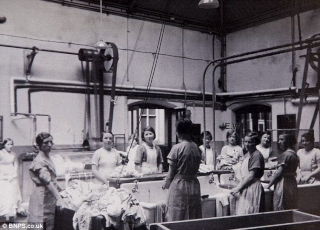
Closing of the Magdalene Laundries

magdalene-laundries

The last of the Magdalene Laundries in Ireland, also known as the Magdalene Asylums, closes on September 25, 1996.

The Magdalene Laundries are institutions usually run by Roman Catholic orders, which operate from the 18th to the late 20th centuries. They are run ostensibly to house “fallen women,” a term primarily referring to prostitutes in the late 18th century. By the end of the 19th century, Magdalene laundries are filled with many different kinds of women, including girls who are “not prostitutes at all”, but either “seduced women” or women who have yet to engage in sexual activity.

Several religious institutes establish even more Irish laundries, reformatories and industrial schools, sometimes all together on the same plot of land, with the aim to “save the souls primarily of women and children.” Examples are Sisters of Our Lady of Charity of Refuge and the Congregation of the Sisters of Mercy, who run the largest laundries in Dublin. These large complexes become a massive interlocking system, carefully and painstakingly built up over a number of decades. Consequently, Magdalene laundries become part of Ireland’s “larger system for the control of children and women.”

An estimated 30,000 women are confined in these institutions in the 19th and 20th centuries. It is unknown how many women resided in the Magdalene institutions after 1900. Vital information about the women’s circumstances, the number of women, and the consequence of their incarceration is unknown. Due to the religious institutes’ “policy of secrecy,” their penitent registers and convent annals remain closed to this day, despite repeated requests for information.

In Dublin in 1993, the Sisters of Our Lady of Charity sell part of the land in their convent to a property developer to cover money lost in share dealings on the stock exchange. This leads to the discovery of 133 corpses in a mass grave. The Sisters arrange to have the remains cremated and reburied in another mass grave at Glasnevin Cemetery, splitting the cost of the reburial with the developer who had bought the land. It later transpires that there are 22 more corpses than the sisters had applied for permission to exhume. In all, 155 corpses were exhumed and cremated.

Discovery of the mass grave leads to media revelations about the operations of the secretive institutions. A formal state apology is issued in 2013, and a £50 million compensation scheme for survivors is set up by the Irish Government. The religious orders which operate the laundries have rejected activist demands that they financially contribute to this programme.


Leave a comment

The Battle of Saintfield

battle-of-saintfield

The Battle of Saintfield, a short but bloody clash in County Down in what is now Northern Ireland, takes place on Saturday, June 9, 1798. The battle is the first major conflict of the Irish Rebellion of 1798 in County Down.

A rebel force, over a thousand strong, converge on a large house owned by the McKee family. The McKees are a family of loyalists, who are unpopular in the region because they had provided information to the authorities leading to the arrest of a radical Presbyterian minister and some members of his congregation. The McKees know that they are unpopular and are thus armed to the teeth. As the house is surrounded, shots are fired from the fortified house, hitting some of the attackers. Gunfire holds the insurgents back for a short while, until one of them, a fiddler by the name of Orr, manages to sneak around the back of the house with a ladder and sets the roof alight. The house is destroyed, and all eight members of the family inside are killed. News of this quickly reaches the British forces in the area, and a 300 strong force under Colonel Granville Staplyton, consisting of Newtownards Yeomanry cavalry and 270 York Fencibles, as well as two light cannon, march to the region.

The rebels, however, anticipate the move and are waiting in ambush. Stapylton sees the road ahead twisting into woods, and orders a pair of scouts to check for anything suspicious. The men do not seem to be particularly vigilant, as they return and declared the road ahead to be safe.

The redcoats march into the wooded area, a dense hedge snaking along the road on one side. On the opposite side, the ground steadily rises, with the areas higher up the slope dominated by demesne woods. This provides cover for the Irish. The Irish rebels are mostly armed with pikes and the terrain allows them to quickly swarm the soldiers on the road below. In the fierce hand-to-hand combat that follows the British forces are overwhelmed. One of the fencibles, a veteran of wars in Europe who manages to survive the attack later states that he had never before witnessed such fierce fighting.

Over fifty men are piked to death before Staplyton manages to order the soldiers. He then brings his cannon into play against the mass of rebels before him, inflicting enough casualties with canister and grapeshot to blunt their attack. In the meantime, Staplytons force uses the situation to march to safety.

The Battle of Saintfield is largely regarded as a victory of the United Irish rebels. Long after, in the 1950s, two skeletons, a sword and bayonet of the York fencibles are found in the area.

The rebellion in Down proves to be short lived. Only a few days later the rebel army is slaughtered at the Battle of Ballynahinch.

Many of the dead from both sides of the battle are placed in a mass grave within the grounds of the nearby Presbyterian church. Although there is a plaque signifying the location of these graves, the area seems largely neglected with what appears to be temporary vehicle access over the belligerents final resting place. In May 2010 a memorial park is finished and opened. The area has been cleared and landscaped, with several new plaques and information boards being erected. The graves have been refurbished and the headstones relaid.


Leave a comment

The Battle of Carlow

battle-of-carlow-monument

The Battle of Carlow takes place in Carlow, County Carlow on May 25, 1798, when Carlow rebels rise in support of the Irish Rebellion of 1798 which had begun the day before in County Kildare.

The Society of United Irishmen organisation in Carlow, led by a young brogue-maker named Mick Heydon who had taken over the leadership following the arrest of the previous leader, Peter Ivers, who was arrested with several other leading United Irishmen at Oliver Bond‘s house in March of that year, assemble on the night of May 24 and set off at dawn to attack the county town. Picking up more volunteers along the way, their numbers swell to around 1,200 and they march completely unopposed.

The attack on the town is planned to take place simultaneously from four different directions, through the four main streets. All are to converge on Potato Market.

As the various contingents advance, they are unaware that Colonel Mahon of the Ninth Dragoons has the military in the barracks and the town on the highest alert. Their every move is known to him. A strong party of military is stationed in the courthouse, which is now known as the Deighton Hall, situated immediately to the north of the bridge across the River Burren. Another party with two small cannon is stationed on the bridge. On Graigue bridge, there is an officer’s guard of yeomen. In Dublin Street and to the north, well-armed loyalists fill some large strong houses, but without military support, as the attack is known to be weak from that quarter. Tullow Street is left open and to all appearances undefended against what is expected to be the strongest attack of all. The trap is laid.

When the Rebels enter the town of Carlow, they are joined not only by the Catholic inhabitants but also by people who have secretly arrived there during the previous day and night. A crowd of approximately two hundred people break away and march through Tullow Street but when they reach Potato Market their fortunes change.

The forewarned garrison had prepared a deadly ambush, posting men at every window and rooftop. As the rebels relax after their apparently easy victory, the concealed soldiers pour volley after volley of gunfire into the masses of exposed rebels. Taken completely by surprise, the shocked and poorly armed rebels break and flee only to run into another army ambush. The survivors try to escape by breaking through adjoining houses and cabins which are set afire by the pursuing soldiers causing the deaths of 200 of the inhabitants.

In the meantime, the County Laois Rebels, on their way to aid the Carlow rebels having heard mixed reports of the battle and hearing the fate of their comrades, decide it is too late to help and change their plans. They are led by men called Redmond and Brennan. They proceed to Ballickmoyler instead, some miles outside Carlow in County Laois and there they set fire to many loyalist houses and attack the home of John Whitty, a Protestant clergyman. Twenty-one of the Rebels are killed in the fray but despite this they eventually overcome the loyalist inhabitants.

An estimated 500 rebels and civilians are killed in the streets of the town with no reported losses to the military. Another 150 are executed in the repression over the following ten days. A local man who becomes known as “Paddy the Pointer” is reported to have helped to identify escaped rebels to the military by riding around the town and pointing them out.

A memorial, pictured above, is located at Carlow-Graigue, or Graigue-Cullen as it is now known, where remains of many of those who perished that day were flung into a mass grave.