seamus dubhghaill

Promoting Irish Culture and History from Little Rock, Arkansas, USA


Leave a comment

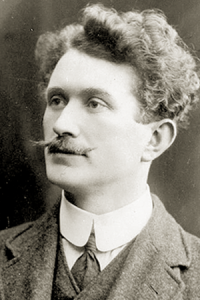
Death of Hunger Striker Thomas Patrick Ashe

Thomas Patrick Ashe, a member of the Gaelic League, the Irish Republican Brotherhood (IRB), and a founding member of the Irish Volunteers, dies on September 25, 1917, at Mater Misericordiae Hospital in Dublin following a hunger strike.

Ashe is born in Lispole, County Kerry, on January 12, 1885. He enters De La Salle Training College, Waterford in 1905 and begins a teaching career as principal of Corduff National School, Lusk, County Dublin, in 1908.

Ashe plays a major part in the 1916 Easter Rising outside the capital city commanding the Fingal battalion of the Irish Volunteers. He is commandant of the 5th battalion of the Dublin brigade, a force of 60–70 men engaging British forces around north County Dublin during the rising. They are armed only with a few rounds, about a dozen service rifles, a dozen Mausers, and a dozen Martini carbines. Some of Ashe’s men are armed only with a shotgun against the well-equipped army regulars.

Ashe’s battalion wins a major victory in Ashbourne, County Meath, where they engage a much larger force. They capture a significant quantity of arms and up to twenty Royal Irish Constabulary (RIC) vehicles. Eleven RIC members, including County Inspector Alexander Gray, and two volunteers are killed during the 5-1/2-hour battle. Twenty-four hours after the rising collapses, Ashe’s battalion surrenders on the orders of Patrick Pearse. On May 8, 1916, Ashe and Éamon de Valera are court-martialled and sentenced to death. The sentences are commuted to penal servitude for life. Ashe is imprisoned in Frongoch internment camp and Lewes Prison in Lewes, East Sussex, England.

De Valera, Ashe, and Thomas Hunter lead a prisoner hunger strike on May 28, 1917. With accounts of prison mistreatment appearing in the Irish press and mounting protests in Ireland, Ashe and the remaining prisoners are freed on June 18, 1917, by David Lloyd George as part of a general amnesty.

Upon his release, Ashe returns to Ireland and begins a series of speaking engagements. In August 1917, he is arrested and charged with sedition for a speech that he makes in Ballinalee, County Longford, where Michael Collins is also speaking. He is detained at the Curragh but is then transferred to Mountjoy Prison in Dublin. He is convicted and sentenced to two years hard labour. Ashe and other prisoners, including Fionán Lynch and Austin Stack, demand prisoner of war status.

On September 20, 1917, Ashe again goes on hunger strike. He dies at Mater Misericordiae Hospital on September 25, 1917, after being force fed by prison authorities. At the inquest into his death, the jury condemns the staff at the prison for the “inhuman and dangerous operation performed on the prisoner, and other acts of unfeeling and barbaric conduct.” His body lies in state at Dublin City Hall and is buried in Glasnevin Cemetery in Dublin.

The Ashe Memorial Hall built in 1928, housing the Kerry County Museum, in Tralee is named after him while Nelson Street, also in Tralee, is renamed Ashe Street. Ashe is a relative of Catherine Ashe, the paternal grandmother of American actor Gregory Peck, who emigrates to the United States in the 19th century.

Leave a comment

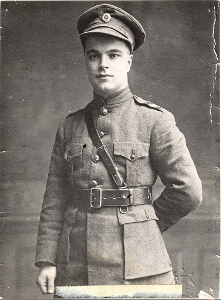
Death of IRA Chief of Staff Cathal Goulding

cathal-goulding

Cathal Goulding, former Chief of Staff of the Irish Republican Army and the Official IRA, dies in Dublin on December 26, 1998.

Goulding is born on January 2, 1923, one of seven children born on East Arran Street, north Dublin to an Irish republican family. As a teenager Goulding joins Fianna Éireann, the youth wing of the Irish Republican Army (IRA). He joins the IRA in 1939. In December of that year, he takes part in a raid on Irish Army ammunition stores in Phoenix Park, Dublin. In November 1941 he is gaoled for a year in Mountjoy Prison for membership in an unlawful organisation and possession of IRA documents. Upon his release in 1942, he is immediately interned at the Curragh Camp, where he remains until 1944.

In 1945, he is involved in the attempts to re-establish the IRA which has been badly affected by the authorities in both the Irish Free State and Northern Ireland. He is among twenty-five to thirty men who meet at O’Neill’s Pub, Pearse Street, to try to re-establish the IRA in Dublin. He organises the first national meeting of IRA activists after the World War II in Dublin in 1946 and is arrested along with John Joe McGirl and ten others and sentenced to twelve months in prison when the gathering is raided by the Garda Síochána.

Upon his release in 1947, Goulding organises IRA training camps in the Wicklow Mountains and takes charge of the IRA’s Dublin Brigade in 1951. In 1953, Goulding, along with Seán Mac Stíofáin and Manus Canning, is involved in an arms raid on the Officers Training Corps armoury at Felsted School, Essex. The three are arrested and sentenced to eight years’ imprisonment, but are released in 1959 after serving only six years at Pentonville, Wakefield, and Stafford prisons. During his time in Wakefield prison, he befriends EOKA members and Klaus Fuchs, a German-born spy who has passed information about the U.S. nuclear programme to the Soviet Union, and becomes interested in the Russian Revolution.

In 1959, Goulding is appointed IRA Quartermaster General and in 1962 he succeeds Ruairí Ó Brádaigh as IRA Chief of Staff. In February 1966, together with Sean Garland, he is arrested for possession of a revolver and ammunition. In total, Goulding spends sixteen years of his life in British and Irish jails.

Goulding is instrumental in moving the IRA to the left in the 1960s. He argues against the policy of abstentionism and develops a Marxist analysis of Irish politics. He believes the British state deliberately divides the Irish working class on sectarian grounds to exploit them and keep them from uniting and overthrowing their bourgeois oppressors. This analysis is rejected by those who later go on to form the Provisional IRA after the 1969 IRA split.

Goulding remains chief of staff of what becomes known as the Official IRA until 1972. Although the Official IRA, like the Provisional IRA, carries out an armed campaign, Goulding argues that such action ultimately divides the Irish working class. After public revulsion regarding the shooting death of William Best, a Catholic from Derry who is also a British soldier, and the bombing of the Aldershot barracks, the Official IRA announces a ceasefire in 1972.

Goulding is prominent in the various stages of Official Sinn Féin‘s development into the Workers’ Party. He is also involved in the anti-amendment campaign in opposition to the introduction of a constitutional ban on abortion along with his partner, Dr. Moira Woods. However, in 1992, he objects to the political reforms proposed by party leader Proinsias De Rossa and remains in the Workers’ Party after the formation of Democratic Left. He regards the Democratic Left as having compromised socialism in the pursuit of political office.

In his later years, Goulding spends much of his time at his cottage in Raheenleigh near Myshall, County Carlow. He dies of cancer in his native Dublin and is survived by three sons and a daughter. He is cremated and his ashes scattered, at his directive, at the site known as “the Nine Stones” on the slopes of Mount Leinster.


1 Comment

Execution of IRA Officer Joe McKelvey

joe-mckelvey

Joe McKelvey, Irish Republican Army (IRA) officer, is executed by firing squad along with three other Anti-Treaty militants, on December 8, 1922, during the Irish Civil War.

McKelvey is born into a nationalist family in Stewartstown, County Tyrone. He has a keen interest in the Gaelic Athletic Association and the Irish language. He studies as an accountant and gains some of the qualifications necessary for this profession, but never fully qualifies. He works for a time at the Income Tax Office on Queen’s Square in Belfast and later finds work in Belfast’s engineering industry with Mackies on Springfield Road. He joins the Irish Republican Brotherhood and the Irish Volunteers, which after 1919, become known as the Irish Republican Army (IRA). He is a founding member of the O’Donovan Rossa Club, Belfast, founded in 1916 on the Falls Road. Each year the club honours him with a juvenile hurling blitz, an invitational competition which is participated in by clubs throughout Ireland.

McKelvey participates in the Irish War of Independence (1919–1921) against the British, in which he commands the IRA’s Belfast Brigade. On August 22, 1920, he helps to organise the killing of Royal Irish Constabulary (RIC) Detective Oswald Swanzy in Lisburn. The killing itself is carried out by IRA men from Cork, but McKelvey arranges a taxi to carry the assassins to and from the scene and disposes of their weapons. In reprisal for this shooting, 300 Catholic homes in Lisburn are burned out. McKelvey is forced to lie low in Dublin for some time after these events.

In March 1921, the IRA is re-organised by its leadership in Dublin into Divisions and McKelvey is appointed commander of the Third Northern Division, responsible for Belfast and the surrounding area. In May 1921, McKelvey’s command suffers a severe setback, when fifty of his best men are sent to County Cavan to train and link up with the IRA units there, only to be surrounded and captured by the British Army on Lappanduff hill on May 9. In most of Ireland, hostilities are ended with a truce declared on July 11, 1921.

McKelvey is alone among the leadership of the Belfast IRA in going against the acceptance of the Anglo-Irish Treaty. Most of his comrades support Michael Collins‘ assurances that, although the Treaty accepts the partition of Northern Ireland from the rest of the country, this is only a temporary concession which will be dealt with later. McKelvey does not accept this. As a result, he leaves his command as head of the IRA Third Northern Division and joins the Anti-Treaty IRA in Dublin.

In March 1922, McKelvey participates in the anti-Treaty IRA‘s repudiation of the authority of the Dáil, the civil government of the Irish Republic declared in 1919, and is elected to the IRA Army Executive. In April 1922 he helps command the occupation of the Four Courts in defiance of the new Irish Free State. This action helps to spark the civil war between pro- and anti-Treaty factions. McKelvey is among the most hardline of the anti-Treaty republicans and briefly, in June 1922, becomes IRA Chief of Staff, replacing Liam Lynch.

On June 28, 1922, the new Irish Free State government shells the Four Courts to assert its authority over the militants defending it. The Republicans in the Four Courts surrender after two days of fighting and McKelvey is captured. He is held for the following five months in Mountjoy Prison in Dublin.

On December 8, 1922, Joe McKelvey is executed by firing squad along with three other Anti-Treaty militants, Rory O’Connor, Liam Mellows, and Richard Barrett. The executions are ordered in reprisal for the Anti-Treaty IRA’s murder of Sean Hales, a Pro-Treaty member of the Third Dáil.


Leave a comment

Birth of Constance Georgine Gore-Booth (Countess Markievicz)

countess-markievicz

Constance Georgine Gore-Booth is born on February 4, 1868, at Buckingham Gate, London, the eldest daughter of Arctic explorer and philanthropist Sir Henry Gore-Booth and Georgina May Hill.

The Gore-Booths are known as model landlords in County Sligo as they provide free food for the tenants on their estate. Perhaps being raised in this atmosphere of concern for the common man has something to do with the way Constance and her younger sister, Eva, conduct their later lives.

Gore-Booth decides to train as a painter and, in 1892, she enters the Slade School of Art in London because, at the time, only one art school in Dublin accepts female students. While in school in London Gore-Booth first becomes politically active and joins the National Union of Women’s Suffrage Societies.

She later moves to Paris and enrolls at the prestigious Académie Julian where she meets her future husband, Count Casimir Markievicz. They are married in London on September 29, 1900, making her Countess Markievicz. The Markieviczes relocate to Dublin in 1903 and move in artistic and literary circles, with Constance being instrumental in founding the United Artists Club.

In 1908, Markievicz becomes actively involved in nationalist politics in Ireland and joins Sinn Féin and Inghinidhe na hÉireann (Daughters of Ireland), a revolutionary women’s movement founded by Maud Gonne. In the same year, Markievicz plays a dramatic role in the women’s suffrage campaigners’ tactic of opposing Winston Churchill‘s election to Parliament during the Manchester North West by-election. Churchill ultimately loses the election to Conservative candidate William Joynson-Hicks.

In 1909, Markievicz founds Fianna Éireann, a para-military nationalist scouts organisation that instructs teenage boys and girls in the use of firearms. Patrick Pearse says that the creation of Fianna Éireann is as important as the creation of the Irish Volunteers in 1913. She is jailed for the first time in 1911 for speaking at an Irish Republican Brotherhood demonstration organised to protest against George V’s visit to Ireland.

Markievicz joins James Connolly‘s socialist Irish Citizen Army, a small volunteer force formed in response to the lock-out of 1913, to defend the demonstrating workers from the police. During the Howth gun-running on July 26, 1914, Irish Citizen Army members led by Markievicz, and including Thomas MacDonagh, Bulmer Hobson, Douglas Hyde and Darrell Figgis, unload arms from Erskine Childers‘ yacht Asgard in Howth harbour with hand carts and wheelbarrows.

As a member of the Irish Citizen Army, Markievicz takes part in the 1916 Easter Rising. Under Michael Mallin and Christopher Poole, she supervises the erection of barricades as the Rising begins and is in the middle of the fighting all around Stephen’s Green. Mallin and Poole and their men and women, including Markievicz, hold out for six days, ending the engagement when the British bring them a copy of Patrick Pearse’s surrender order.

They are taken to Dublin Castle and Markievicz is transported to Kilmainham Gaol, where she is the only one of 70 women prisoners who is put into solitary confinement. At her court martial on May 4, 1916, Markievicz is sentenced to death, but General Maxwell commutes this to life in prison on “account of the prisoner’s sex.” It is widely reported that she tells the court, “I do wish your lot had the decency to shoot me.” Markievicz is transferred to Mountjoy Prison and then to Aylesbury Prison in England in July 1916. She is released from prison in 1917, along with others involved in the Rising.

In the 1918 general election, Markievicz is elected for the constituency of Dublin St Patrick’s, making her the first woman elected to the British House of Commons. However, in line with Sinn Féin abstentionist policy, she does not take her seat in the House of Commons. She is re-elected to the Second Dáil in the elections of 1921. Markievicz serves as Minister for Labour from April 1919 to January 1922, holding cabinet rank from April to August 1919, becoming both the first Irish female Cabinet Minister and only the second female government minister in Europe.

Markievicz leaves government in January 1922 along with Éamon de Valera and others in opposition to the Anglo-Irish Treaty. She fights actively for the Republican cause in the Irish Civil War. She is returned in the 1923 general election for the Dublin South constituency but again, in common with other Republican candidates, she does not take her seat.

She joins Fianna Fáil on its foundation in 1926, chairing the inaugural meeting of the new party in La Scala Theatre. In the June 1927 general election, she is re-elected to the 5th Dáil as a candidate for the new Fianna Fáil party, which is pledged to return to Dáil Éireann.

Before she can take up her seat, Markievicz dies at the age of 59 on July 15, 1927, in a public ward “among the poor where she wanted to be” of complications related to appendicitis. One of the doctors attending her is her revolutionary colleague, Kathleen Lynn. Also at her bedside are Casimir and Stanislas Markievicz, Éamon de Valera, and Hanna Sheehy-Skeffington. Refused a state funeral by the Free State government, Markievicz is buried at Glasnevin Cemetery, Dublin, and de Valera gives the funeral oration.


Leave a comment

Birth of Thomas Patrick Ashe

thomas-patrick-ashe

Thomas Patrick Ashe, a member of the Gaelic League, the Irish Republican Brotherhood (IRB), and a founding member of the Irish Volunteers, is born in Lispole, County Kerry, on January 12, 1885. Ashe enters De La Salle Training College, Waterford, in 1905 and begins a teaching career as principal of Corduff National School, Lusk, County Dublin, in 1908.

Ashe plays a major part in the 1916 Easter Rising outside the capital city commanding the Fingal battalion of the Irish Volunteers. Ashe is commandant of the 5th battalion of the Dublin brigade, a force of 60–70 men engaging British forces around north County Dublin during the rising. They are armed only with a few rounds, about a dozen service rifles, a dozen Mausers, and a dozen Martini-Henry carbines. Some of Ashe’s men are armed only with a shotgun against the well-equipped army regulars.

Ashe’s battalion wins a major victory in Ashbourne, County Meath, where they engage a much larger force. They capture a significant quantity of arms and up to twenty Royal Irish Constabulary (RIC) vehicles. Eleven RIC members, including County Inspector Alexander Gray, and two volunteers are killed during the 5-1/2-hour battle. Twenty-four hours after the rising collapses, Ashe’s battalion surrenders on the orders of Patrick Pearse. On May 8, 1916, Ashe and Éamon de Valera are court-martialled and sentenced to death. The sentences are commuted to penal servitude for life. Ashe is imprisoned in Lewes Prison in Lewes, East Sussex, England.

De Valera, Ashe, and Thomas Hunter lead a prisoner hunger strike on May 28, 1917. With accounts of prison mistreatment appearing in the Irish press and mounting protests in Ireland, Ashe and the remaining prisoners are freed on June 18, 1917, by David Lloyd George as part of a general amnesty.

Upon his release, Ashe returns to Ireland and begins a series of speaking engagements. In August 1917, he is arrested and charged with sedition for a speech that he makes in Ballinalee, County Longford, where Michael Collins is also speaking. He is detained at the Curragh but is then transferred to Mountjoy Prison in Dublin. He is convicted and sentenced to two years hard labour. Ashe and other prisoners, including Austin Stack, demand prisoner of war status. On September 20, 1917, Ashe again goes on hunger strike. He dies at the Mater Hospital on September 25, 1917, after being force fed by prison authorities. At the inquest into his death, the jury condemns the staff at the prison for the “inhuman and dangerous operation performed on the prisoner, and other acts of unfeeling and barbaric conduct.” His body lies in state at Dublin City Hall and is buried in Glasnevin Cemetery in Dublin.

Ashe is a relative of Catherine Ashe, the paternal grandmother of American actor Gregory Peck, who emigrates to the United States in the 19th century. The Ashe Memorial Hall built in 1928, housing the Kerry County Museum, in Tralee, County Kerry, is named after him while Nelson Street, also in Tralee, is renamed Ashe Street.