seamus dubhghaill

Promoting Irish Culture and History from Little Rock, Arkansas, USA


Leave a comment

The 1990 Lough Nenagh Ambush

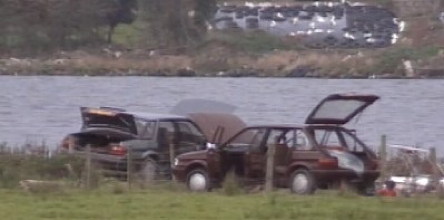
The 1990 Lough Neagh ambush is a gun attack carried out by the Provisional Irish Republican Army (IRA) on November 10, 1990, at Castor Bay, near Morrows Point, Lough Neagh, County Armagh, Northern Ireland targeting members of the security forces involved in a waterfowl hunting trip with other two men at the time. An active service unit (ASU) of the IRA’s North Armagh Brigade shoots dead a Royal Ulster Constabulary (RUC) Inspector, an RUC Reservist, a former Ulster Defence Regiment (UDR) soldier and one civilian. Some members of the wildfowling party struggle with their attackers, and one of the constables returns fire before being killed.

On September 7, 1990, UDR soldier Colin McCullough is shot dead by the IRA while in the company of his girlfriend at Oxford Island on the shore of Lough Neagh in the same area as the November 10 ambush. On October 6, in a revenge attack, the “Protestant Action Force” (a cover name for the Ulster Volunteer Force) shoots dead Catholic man Denis Carville at the same location, also while sitting in his car with his girlfriend.

At 7:30 a.m. on November 10, 1990, the four men leave home for Castor Bay on the shore of Lough Neagh for a wildfowling trip. Their early morning hunting excursions to the Department of the Environment-managed waterworks compound are routine and all of the men live in the Lurgan and Waringstown areas. It is believed the IRA team are waiting for the group inside the compound and ambush them shortly following their arrival.

The victims were David Murphy, an RUC Special Branch Inspector; Thomas Taylor, a part-time RUC Reservist; Norman Kendall, an electrician and former UDR soldier; and Keith Dowey, an employee with the Department of the Environment water service and father of two young children.

According to a 2000 report, the goal of the IRA unit, apparently members of the North Armagh Brigade led by the late Patsy Haughian, is only to abduct and interrogate Murphy about collusion between the RUC and loyalist militants, but things go wrong when Kendall and Dowey arrive at the scene in a car. Dowey, the driver, is shot and killed instantly, but there is evidence that Kendall puts up some resistance before being slain. Taylor produces his personal weapon and shoots at the assailants, but is cut down by a hail of fire. Murphy struggles and manages to avoid being bundled into the vehicle, but is eventually killed by Haughian. After the hunting party fails to appear at lunch time the alarm is raised. It is initially feared they have been kidnapped but four bodies are accounted for. The gunmen escape in one of the victim’s cars which is later found partially burned out at Brownlow Terrace, Lurgan. The IRA unit then hides in a house on the shores of the lake before returning to Lurgan the following morning.

The attack is widely condemned by politicians in Northern Ireland and the Republic of Ireland. Unionist politicians call for tougher security measures. Local Ulster Unionist Party (UUP) MP David Trimble criticises Secretary of State Peter Brooke for ruling out the introduction of internment without trial in response to the incident and other killings in the preceding weeks and links the attack to a landmark speech given by Brooke the previous day signaling to the Provisional IRA and Sinn Féin that Britain has no “selfish strategic or economic interest” in Northern Ireland. RUC Chief Constable Hugh Annesley visits the scene of the shootings and describes the attack as “repulsive, futile and cowardly murder” and says, “it is important to say yet again that the terrorists have no mandate from either Protestant or Catholic, north or south of the Irish border for such atrocities.”

Social Democratic and Labour Party (SDLP) representative Bríd Rodgers categorises the killings as part of an ongoing cycle of so-called “tit for tat” murders and urges anyone with information to contact the police. A message is read at Mass in Lurgan following the attack from the Bishop of Dromore and local priests warning Catholics to take precautions for their safety because of the risk of revenge attacks by Loyalists.

The alleged leader of the IRA squad, Patsy Haughian, dies of cancer at age 38 in October 2000. He is never formally accused of the killings.

Leave a comment

Death of Cardinal Tomás Ó Fiaich

tomas-o-fiaich

Roman Catholic Cardinal Tomás Ó Fiaich, the Primate of All Ireland and Archbishop of Armagh and an ardent Irish nationalist, dies of cardiac arrest in a hospital at Toulouse, France at the age of 66 on May 8, 1990, after falling ill on a pilgrimage to Lourdes. Lourdes is a Catholic shrine where a peasant girl reported a vision of the Virgin Mary in 1858. Miraculous cures have been reported there.

Ó Fiaich is born Thomas Fee on November 3, 1923, in Cullyhanna, County Armagh, Northern Ireland, within sight of the border with the Republic of Ireland. He changes his name to the Gaelic form as his love of the Irish language and nationalist sentiments develop.

An announcement of the death, issued by the church’s press office in both Belfast and Dublin, says Ó Fiaich had appeared unwell to doctors accompanying the group of 600 pilgrims from his seat at Armagh in Northern Ireland.

Ó Fiaich is admitted first to a hospital in Lourdes, then flown by helicopter to Toulouse. Philippe Giovanni, director of the Rangueil Hospital there, says the cardinal died of a brutal cardiac arrest soon after being admitted.

While calling for a unified Ireland and criticizing British policy in Northern Ireland, Ó Fiaich, whose name is pronounced O’Fee, also castigates the violence of the Irish Republican Army, the predominantly Catholic outlawed guerrilla army that seeks to end British rule in Northern Ireland and unite it with the Republic of Ireland.

Ó Fiaich is appointed spiritual leader of Ireland’s four million Catholics in in 1977. Two years later Pope John Paul II makes him one of the first cardinals of his papacy.

Tributes to Ó Fiaich poured in from some both sides of the Irish border. In Dublin, Taoiseach Charles Haughey says he is “devastated, … deeply grieved.” Britain’s top official in Northern Ireland, Secretary of State Peter Brooke, also expresses sadness. “We did not always agree about everything, but he treated me with the greatest possible courtesy, friendliness and warmth.”

However hardline Protestant leader Ian Paisley of Northern Ireland’s Democratic Unionist Party says Ó Fiaich is “the mallet of Rome against the Protestants of Northern Ireland.” He claims Ó Fiaich had “made an outrageous statement that the majority of bigotry in Ulster stemmed from the Protestant section of the community” and added, “He did not seem to realize that the IRA, which is carrying out the most atrocious of outrages … were the people who needed to be indicted with bigotry.”

In Belfast, Ulster Television suspends scheduled programs for an hour and airs a religious program and a news program about the cardinal.

Ó Fiaich retains close ties to Armagh, which had been dubbed “bandit country” because of the IRA activity. From the time he becomes primate, he speaks publicly of his wishes for a united Ireland. He visits IRA guerrillas in jail, calls the British Army’s fatal shooting of an Irish civilian murder, and says the border dividing Ireland is “unnatural.”

Following his death, Ó Fiaich lies in state at St. Patrick’s Cathedral, Armagh, where thousands of people line up to pay their respects.

(From: AP News, apnews.com, May 8, 1990)


Leave a comment

Death of Brendan Duddy

brendan-duddy

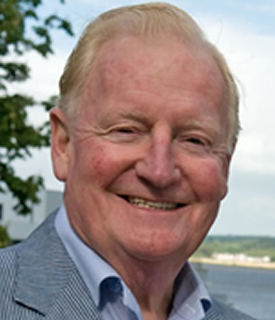
Brendan Duddy, a businessman from Derry, Northern Ireland who plays a key role in the Northern Ireland peace process, dies on May 12, 2017. A notable Catholic republican, who is a pacifist and firm believer in dialogue, he becomes known by Secret Intelligence Service (MI6) as “The Contact.” In his book Great Hatred; Little Room – Making Peace in Northern Ireland, Tony Blair‘s political advisor Jonathan Powell describes Duddy as the “key” which leads to discussions between republicans and MI6, and ultimately the Northern Ireland peace process.

Duddy runs a fish and chip shop in the late 1960s which is supplied with beef burgers from a supplier whose van driver is Martin McGuinness. He is first approached by MI6 officer Frank Steele in the early 1970s but turns the approach down.

In light of the dissolution of Stormont in 1972, Duddy’s role as an intermediary starts in January 1972, when asked by friend and Derry’s Chief Police Office Frank Lagan to persuade the Official Irish Republican Army and the Provisional Irish Republican Army to remove their weapons from the Bogside. Both sides comply, but the Official IRA retains a few weapons for defensive purposes. After thirteen unarmed civil rights marchers are shot dead by British Parachute Regiment troops in what becomes known as Bloody Sunday, Duddy warns Lagan, “This is absolutely catastrophic. We’re going to have a war on our hands.”

In the aftermath of the events and repercussions of Bloody Sunday, MI6 agent Michael Oatley arrives in Belfast in 1973 seeking to understand the situation in Northern Ireland and hopefully create a communications channel between the IRA and the British Government. Duddy becomes the go-between for the communications, and this leads to the IRA ceasefire of 1975/76.

Duddy and Oatley are the main channel of communications between the British Government and the IRA leadership during the 1981 Irish hunger strike. Duddy is codenamed “Soon” by the British. Over the period of July 4-6, 1981, they exchange many telephone calls, with Duddy urging the “utmost haste” on the part of the British because “the situation would be irreparably damaged if a hunger striker died.” He suggests steps which could be taken to give the Provisional IRA a way of ending the strike. British Prime Minister Margaret Thatcher personally amends the text of an offer which is conveyed to the IRA through Duddy, but the British consider the reply unsatisfactory and do not continue to negotiate through Duddy. Hunger striker Joe McDonnell dies the following day.

In November 1991, as his now friend Oatley is about to retire from MI6 service, Duddy calls Oatley to a diner in Derry. When dinner has finished, McGuinness enters the property. During the meeting, McGuinness and Oatley discuss options for moving the situation forward. A few weeks later, Duddy is pursued by a British businessman who wants to create jobs in Derry. In the first meeting, the businessman produces a letter from then Secretary of State for Northern Ireland Peter Brooke, introducing the “businessman” as Oatley’s MI6 successor. Duddy calls the MI6 agent “Fred,” and acting as the go-between they successfully negotiate a ceasefire. Talks between McGuinness and representatives of the British government are held secretly in his house.

After the end of The Troubles, Duddy serves as a member of the Northern Ireland Policing Board and helps broker negotiations related to the marching season. He also testifies to the Bloody Sunday Inquiry, with regards his role and actions of both sides.

On March 26, 2008, the BBC broadcasts a documentary entitled The Secret Peacemaker about Duddy, directed by Peter Norrey, and presented by Peter Taylor, a journalist who has known Duddy is “the link” for ten years.

In the spring of 2009, Duddy donates his private archives to the James Hardiman Library, NUI Galway, where they are now available to researchers. They chart his involvement in the peace process from 1972 to 1993, and his ongoing interest, and correspondence relating to Northern Ireland, until 2007. The Brendan Duddy Archive is opened in 2011.

At the age of 80, Brendan Duddy dies at Altnagelvin Area Hospital in Derry, Northern Ireland on May 12, 2017.