seamus dubhghaill

Promoting Irish Culture and History from Little Rock, Arkansas, USA


Leave a comment

Death of Freeman Wills Crofts, Engineer & Mystery Author

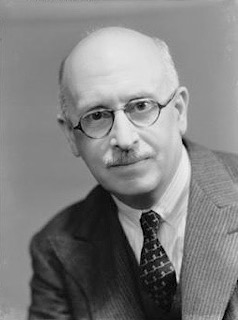
Freeman Wills Crofts FRSA, Irish engineer and mystery author, remembered best for the character of Inspector Joseph French, dies in WorthingWest Sussex, England, on April 11, 1957.

A railway engineer by training, Crofts introduces railway themes into many of his stories, which are notable for their intricate planning. Although Raymond ChandlerAgatha Christie, and authors of the so-called golden age of detective fiction are more famous, he is esteemed by those authors, and many of his books are still in print.

Crofts is born at 26 Waterloo Road, Dublin. His father, also named Freeman Wills Crofts, is a surgeon-lieutenant in the Army Medical Services but dies of fever in Honduras before the young Freeman Wills Crofts is born. In 1883, his mother, Celia Frances (née Wise), marries the Venerable Jonathan Harding, Vicar of Gilford, County Down, later Archdeacon of Dromore, and Crofts is raised in the vicarage at Gilford. He attends Methodist College and Campbell College in Belfast. In 1912, he marries Mary Bellas Canning, daughter of the manager of the Coleraine branch of the Provincial Bank. They have no children.

In 1896, at the age of seventeen, Crofts is apprenticed to his maternal uncle, Berkeley Deane Wise, who is chief engineer of the Belfast and Northern Counties Railway. In 1899, he is appointed Junior Assistant on the construction of the Londonderry and Strabane Extension of the Donegal Railway. In 1900, he becomes District Engineer at Coleraine for the London, Midland and Scottish Railway (LMS) Northern Counties Committee at a salary of £100pa, living at 11 Lodge Road in the town. In 1922, he is promoted to Chief Assistant Engineer of the railway, based in Belfast. He lives at “Grianon” in Jordanstown, a quiet village some six miles north of Belfast, where it is convenient for him to travel by train each day to the railway’s offices at York Road. One of the projects he works on is the design of the “Bleach Green Viaduct” in Whiteabbey, close to his Jordanstown home. This is a significant ten arch reinforced concrete viaduct approved in 1927 and completed in 1934. It carries a new loop line which eliminates the need for trains between Belfast and the northwest to reverse at Greenisland. He continues his engineering career until 1929. In his last task as an engineer, he is commissioned by the Government of Northern Ireland to chair an inquiry into the Bann and Lough Neagh Drainage Scheme.

In 1919, during an absence from work due to a long illness, Crofts writes his first novel, The Cask (1920), which establishes him as a new master of detective fiction. He continues to write steadily, producing a book almost every year for thirty years, in addition to a number of short stories and plays.

Crofts is remembered best for his fictional detective, Inspector Joseph French, who is introduced in his fifth book, Inspector French’s Greatest Case (1924). Inspector French always solves each of the mysteries presented him in a workmanlike, precise manner – this method sets him apart from most other fictional sleuths.

In 1929, Crofts abandones his railway engineering career and becomes a full-time writer. He settles in the village of Blackheath, near Guildford, in Surrey, and a number of his books are set in the Guildford area, including The Hog’s Back Mystery (1933) and Crime at Guildford (1935). Many of his stories have a railway theme, and his particular interest in the apparently unfalsifiable alibi often emphasizes the intricacies of railway timetables. Near the end of his life, he and his wife relocate to Worthing, West Sussex, in 1953, where they live until his death in 1957, the year in which his last book is published.

Crofts also writes one religious book, The Four Gospels in One Story, several short stories, and short plays for the BBC.

Crofts is a member, with Dorothy L. Sayers and Agatha Christie, of the Detection Club which meets in Gerrard Street. In 1939 he is elected a fellow of the Royal Society of Arts.

Crofts is not only a railway engineer and writer, but also an accomplished musician. He is organist and choirmaster in Killowen Parish Church, Coleraine, St. Patrick’s Church, Jordanstown, and the parish church of St. Martin’s in Blackheath.

Crofts is esteemed, not only by his regular readers, but also by his fellow writers of the so-called Golden Age of Detective Fiction. Agatha Christie includes parodies of Inspector French alongside Sherlock Holmes and her own Hercule Poirot in Partners in Crime (1929).

Raymond Chandler describes Crofts as “the soundest builder of them all when he doesn’t get too fancy” (in The Simple Art of Murder). His attention to detail and his concentration on the mechanics of detection makes him the forerunner of the “police procedural” school of crime fiction. However, it has also given rise to a suggestion of a certain lack of flair – Julian Symons describing him as of “the humdrum school.” This may explain why his name has not remained as familiar as other more imaginative Golden Age writers, although he has fifteen books included in the Penguin Books “green” series of the best detective novels and 36 of his books are in print in paperback in 2000.


2 Comments

Death of Seán Ó Faoláin, Short Story Writer

Seán Proinsias Ó Faoláin, short story writer of international repute and one of the most influential figures in 20th-century Irish culture, dies in Dublin on April 20, 1991. He is also a leading commentator and critic.

Ó Faoláin is born John Francis Whelan in Cork, County Cork, on February 27, 1900. He is educated at the Presentation Brothers College secondary school in Cork. He comes under the influence of Daniel Corkery, joining the Cork Dramatic Society, and increasing his knowledge of the Irish language, which he had begun in school. Shortly after entering University College Cork (UCC), he joins the Irish Volunteers and fights in the Irish War of Independence. During the Irish Civil War, he serves as censor for The Cork Examiner and as publicity director for the Irish Republican Army (IRA). After the Republican loss, he receives MA degrees from the National University of Ireland (NUI) and from Harvard University where he studies for three years. He is a Commonwealth Fellow from 1926 to 1928 and is a Harvard Fellow from 1928 to 1929.

Ó Faoláin writes his first stories in the 1920s, eventually completing ninety stories over a period of sixty years. From 1929 to 1933 he lectures at the Catholic college, St. Mary’s College, at Strawberry Hill, London, during which period he writes his first two books. His first book, Midsummer Night Madness, is published in 1932. It is a collection of stories partly based on his Civil War experiences. He afterward returns to Ireland. He publishes four novels, seven additional volumes of short stories, six biographies, three travel books, a play, a memoir, a history book, translations and literary criticism, including one of the rare full-length studies of the short story, The Short Story (1948). He also writes a cultural history, The Irish, in 1947. His last short story volume, Foreign Affairs, is published in 1976. His Collected Stories is published in 1983.

Ó Faoláin produces critical studies of the novel and the short-story form, introduces texts of historical and literary merit, and contributes scores of articles, reviews, and uncollected stories to periodicals in Ireland, Britain, and the United States.

Ó Faoláin is a founder member and editor of the Irish literary periodical The Bell from 1940 to 1946. Under his editorship, The Bell participates in many key debates of the day. It also provides a crucial outlet for established and emerging writers during the lean war years. The list of contributors to The Bell include many of Ireland’s foremost writers, among them Patrick Kavanagh, Patrick Swift, Flann O’Brien, Frank O’Connor and Brendan Behan.

A recurring thread in Ó Faoláin’s work is the idea that national identities are historically produced and culturally hybrid; an additional thesis is that Irish history should be conceived in international terms, and that it should be read, in particular, in the context of social and intellectual developments across Europe.

Ó Faoláin serves as director of the Arts Council of Ireland from 1956 to 1959.

Ó Faoláin marries Eileen Gould, a children’s book writer who publishes several books of Irish folk tales, in 1929. They have two children: Julia (1932–2020), who becomes a Booker-nominated novelist and short story writer, and Stephen (b. 1938).

Ó Faoláin dies in Dublin at the age of 91 on April 20, 1991.

Ó Faoláin is a controversial figure in his own lifetime and two of his books are banned for “indecency” in Ireland — his debut collection of short stories and his second novel, Bird Alone (1936). His legacy has proven divisive. If some consider him a social liberal cosmopolitan who challenges “proscriptive” definitions of Irish culture, others see him as a chauvinistic snob who paradoxically restricts the development of Irish writing. Proto-revisionist or nascent postcolonial, O’Faoláin has been considered both, sometimes within the same critical survey. Either way, his work is central to the evolution of a post–Literary Revival aesthetic, and his voice is one of the most prominent, and eloquent, in the fight against censorship in Ireland.

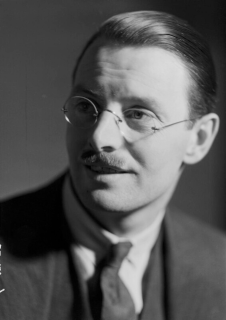
(Pictured: Portrait of Seán Ó Faoláin by Howard Coster, 1930s, National Portrait Gallery)


Leave a comment

Birth of Irish American Writer Cormac McCarthy

Cormac McCarthy, Irish American writer who authors twelve novels, two plays, five screenplays, and three short stories, spanning the Western and post-apocalyptic genres, is born in Providence, Rhode Island, on July 20, 1933. He is known for his graphic depictions of violence and his unique writing style, recognizable by a sparse use of punctuation and attribution. He is widely regarded as one of the greatest American novelists.

McCarthy is one of six children born into the Irish Catholic family of Gladys Christina McGrail and Charles Joseph McCarthy. Although he is born in Rhode Island, he is raised primarily in Tennessee where his father works as a lawyer for the Tennessee Valley Authority. He attends St. Mary’s Parochial School and Knoxville Catholic High School and is an altar boy at Knoxville‘s Church of the Immaculate Conception. In 1951, he enrolls at the University of Tennessee, but drops out to join the United States Air Force.

McCarthy’s debut novel, The Orchard Keeper, is published in 1965. Awarded literary grants, he is able to travel to southern Europe, where he writes his second novel, Outer Dark (1968). Suttree (1979), like his other early novels, receives generally positive reviews, but is not a commercial success. A MacArthur Fellowship enables him to travel to the American Southwest, where he researches and writes his fifth novel, Blood Meridian (1985). Although it initially garners a lukewarm critical and commercial reception, it has since been regarded as his magnum opus, with some labeling it the Great American Novel.

McCarthy first experiences widespread success with All the Pretty Horses (1992), for which he receives both the National Book Award and the National Book Critics Circle Award. It is followed by The Crossing (1994) and Cities of the Plain (1998), completing The Border Trilogy. His 2005 novel No Country for Old Men receives mixed reviews. His 2006 novel The Road wins the 2007 Pulitzer Prize for Fiction and the James Tait Black Memorial Prize for Fiction.

Many of McCarthy’s works have been adapted into film. The 2007 film adaptation of No Country for Old Men is a critical and commercial success, winning four Academy Awards, including Best Picture. The films All the Pretty Horses, The Road, and Child of God are also adapted from his works of the same names, and Outer Dark is turned into a 15-minute short. He has a play adapted into a 2011 film, The Sunset Limited.

McCarthy works with the Santa Fe Institute, a multidisciplinary research center, where he publishes the essay “The Kekulé Problem” (2017), which explores the human unconscious and the origin of language. He is elected to the American Philosophical Society in 2012. His final novels, The Passenger and Stella Maris, are published on October 25, 2022, and December 6, 2022, respectively.

McCarthy dies of natural causes at his home in Santa Fe, New Mexico, on June 13, 2023, aged 89. Stephen King says McCarthy is “maybe the greatest American novelist of my time … He was full of years and created a fine body of work, but I still mourn his passing.”