seamus dubhghaill

Promoting Irish Culture and History from Little Rock, Arkansas, USA


Leave a comment

Birth of Éamon de Valera, Third President of Ireland

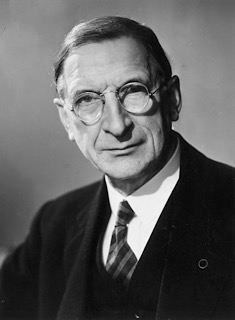
Éamon de Valera, Irish politician and patriot, is born George de Valero on October 14, 1882, in Lennox Hill, a neighborhood on the Upper East Side of Manhattan in New York City. He serves as Taoiseach (1932–48, 1951–54, 1957–59) and President of Ireland (1959–73). An active revolutionary from 1913, he becomes president of Sinn Féin in 1917 and founds the Fianna Fáil party in 1926. In 1937, he makes his country a sovereign state, renamed Ireland, or Éire. His academic attainments also inspire wide respect. He becomes chancellor of the National University of Ireland in 1921.

De Valera is the son of Catherine Coll, who is originally from Bruree, County Limerick, and Juan Vivion de Valera, described on the birth certificate as a Spanish artist born in 1853. His father dies when he is two years old. He Is then sent to his mother’s family in County Limerick, and studies at the local national school and at Blackrock College, Dublin. He graduates from the Royal University of Ireland and becomes a teacher of mathematics and an ardent supporter of the Irish language revival. In 1913, he joins the Irish Volunteers, which had been organized to resist opposition to Home Rule for Ireland.

In the 1916 Easter Rising in Dublin, de Valera commands an occupied building and is the last commander to surrender. Because of his American birth, he escapes execution by the British but is sentenced to penal servitude. Released in 1917 but arrested again and deported in May 1918 to England, where he is imprisoned, he is acclaimed by the Irish as the chief survivor of the uprising and in October 1917 is elected president of the Irish republican and democratic socialist Sinn Féin political party, which wins three-fourths of all the Irish constituencies in December 1918.

After a dramatic escape from HM Prison Lincoln in February 1919, de Valera goes in disguise to the United States, where he collects funds. He returns to Ireland before the Irish War of Independence ends with the truce that takes effect on July 11, 1921, and appoints plenipotentiaries to negotiate in London. He repudiates the Anglo-Irish Treaty of December 6, 1921, that they signed to form the Irish Free State, however, primarily because it imposes an oath of allegiance to the British crown.

After Dáil Éireann ratifies the treaty by a small majority in 1922, de Valera supports the republican resistance in the ensuing Irish Civil WarW. T. Cosgrave’s Irish Free State ministry imprisons him, but he is released in 1924 and then organizes a republican opposition party that does not sit in Dáil Éireann. In 1927, however, he persuades his followers to sign the oath of allegiance as “an empty political formula,” and his new Fianna Fáil (“Soldiers of Destiny”) party then enters the Dáil, demanding abolition of the oath of allegiance, of the governor-general, of the Seanad Éireann (senate) as then constituted, and of land-purchase annuities payable to Great Britain. The Cosgrave ministry is defeated by Fianna Fáil in 1932, and de Valera, as head of the new ministry, embarks quickly on severing connections with Great Britain. He withholds payment of the land annuities, and an “economic war” results. Increasing retaliation by both sides enables de Valera to develop his program of austere national self-sufficiency in an Irish-speaking Ireland while building up industries behind protective tariffs. In the new Constitution of Ireland, ratified by referendum in 1937, the Irish Free State becomes Ireland, a sovereign, independent democracy tenuously linked with the British Commonwealth (under the Executive Authority (External Relations) Act 1936) only for purposes of diplomatic representation.

De Valera’s prestige is enhanced by his success as president of the council of the League of Nations in 1932 and of its assembly in 1938. He also enters negotiations with British Prime Minister Neville Chamberlain in which he guarantees that he will never allow Ireland to be used as a base for attacking Britain in the event of war. This culminates in the Anglo-Irish defense agreement of April 1938, whereby Britain relinquishes the naval bases of Cobh, Berehaven, and Lough Swilly (retained in a defense annex to the 1921 treaty), and in complementary finance and trade treaties that end the economic war. This makes possible de Valera’s proclamation in September 1939, upon the outbreak of World War II, that Ireland will remain neutral and will resist attack from any quarter. In secret, however, de Valera also authorizes significant military and intelligence assistance to both the British and the Americans throughout the war. He realizes that a German victory will imperil Ireland’s independence, of which neutrality is the ultimate expression. By avoiding the burdens and destruction of the war, de Valera achieves a relative prosperity for Ireland in comparison with the war-torn countries of Europe, and he retains office in subsequent elections.

In 1948, a reaction against the long monopoly of power and patronage held by de Valera’s party enables the opposition, with the help of smaller parties, to form an interparty government under John A. Costello. Ironically, this precarious coalition collapses within three years after Ireland becomes a republic by means of the repeal of the Executive Authority (External Relations) Act 1936 and the severance of all ties with the British Commonwealth, an act de Valera had avoided. De Valera resumes office until 1954, when he appeals unsuccessfully for a fresh mandate, and Costello forms his second interparty ministry. No clearly defined difference now exists between the opposing parties in face of rising prices, continued emigration, and a backward agriculture. De Valera claims, however, that a strong single-party government is indispensable and that all coalitions must be weak and insecure. On this plea he obtains, in March 1957, the overall majority that he demands.

In 1959, de Valera agrees to stand as a candidate for the presidency. He resigns his position as Taoiseach and leader of the Fianna Fáil party. In June he is elected president, and is reelected in 1966. He retires to a nursing home near Dublin in 1973 and dies there on August 29, 1975.

De Valera’s career spans the dramatic period of Ireland’s modern cultural and national revolution. As an anticolonial leader, a skillful constitutionalist, and a symbol of national liberation, he dominates Ireland in the half century following the country’s independence.

(From: “Éamon de Valera, president of Ireland,” Encyclopedia Britannica, http://www.britannica.com, last updated August 14, 2025)


Leave a comment

Birth of Robert Stewart, 2nd Marquess of Londonderry

Robert Stewart, 2nd Marquess of Londonderry, KG, GCH, PC, PC (Ire), Anglo-Irish politician and statesman usually known as Lord Castlereagh, derived from the courtesy title Viscount Castlereagh by which he is styled from 1796 to 1821, is born in Dublin on June 18, 1769. As secretary to the Viceroy of Ireland, he works to suppress the Irish Rebellion of 1798 and to secure passage in 1800 of the Irish Act of Union. As the Foreign Secretary of the United Kingdom from 1812, he is central to the management of the coalition that defeats Napoleon and is British plenipotentiary at the Congress of Vienna. In the post-war government of Lord Liverpool, he is seen to support harsh measures against agitation for reform.

Stewart is born in 28 Henry Street, in Dublin’s Northside. He is the second and only surviving child of Robert Stewart (the elder) and his wife Sarah Frances Seymour-Conway. His parents marry in 1766. He has recurring health problems throughout his childhood, and is sent to The Royal School, Armagh, rather than to England for his secondary education. At the encouragement of Charles Pratt, 1st Earl Camden, who takes a great interest in him and treats him as if he is a grandson by blood, he later attends St. John’s College, Cambridge (1786–87), where he applies himself with greater diligence than expected from an aristocrat and excels in his first-year examinations. But he then withdraws, pleading an illness that he admits to Camden is something “which cannot be directly acknowledged before women,” i.e. something sexually transmitted.

Early in his career in Ireland, and following a visit to revolutionary France, Stewart recoils from the democratic politics of his Presbyterian constituents in Ulster. Crossing the floor of the Irish House of Commons in support of the government, he takes a leading role in detaining members of the republican conspiracy, the United Irishmen, his former political associates among them. After the 1798 Rebellion, as Chief Secretary for Ireland, he pushes the Act of Union through the Irish Parliament. But it is without the Catholic Emancipation that both he and British Prime Minister William Pitt believe should have accompanied the creation of a United Kingdom.

From 1805 Stewart serves under Pitt and then the Duke of Portland as Secretary of State for War. In 1809 he is obliged to resign after fighting a duel with the Foreign Secretary, George Canning, in a dispute over the Walcheren Campaign. In 1812 he returns to government serving Lord Liverpool as Foreign Secretary and as Leader of the House of Commons.

Stewart organises and finances the alliance that defeats Napoleon, bringing the powers together at the Treaty of Chaumont in 1814. After Napoleon’s second abdication in 1815, he works with the European courts represented at the Congress of Vienna to frame the territorial, and broadly conservative, continental order that holds until mid-century. He blocks harsh terms against France believing that a treaty based on vengeance and retaliation will upset a necessary balance of powers. France is restored to the frontiers of 1791, and her British-occupied colonies are returned. In 1820 Stewart enunciates a policy of non-intervention, proposing that Britain hold herself aloof from continental affairs.

After 1815, at home, Stewart supports repressive measures that link him in public opinion to the Peterloo Massacre of 1819. Widely reviled in both Ireland and Great Britain, overworked, and personally distressed, he commits suicide on August 12, 1822. He is found in a dressing room seconds after he has cut his own throat using a small knife. He collapses and dies almost instantly.

(Pictured: “Robert Stewart, 2nd Marquess of Londonderry,” oil on canvas by Thomas Lawrence, National Portrait Gallery)


Leave a comment

The Convening of the Second Dáil

The Second Dáil (Irish: An Dara Dáil) is Dáil Éireann as it convenes on August 16, 1921, following the dissolution of the First Dáil. The Second Dáil runs until June 8, 1922.

From 1919 to 1922, Dáil Éireann is the revolutionary parliament of the self-proclaimed Irish Republic. The Second Dáil consists of members elected at the 1921 Irish elections, but with only members of Sinn Féin taking their seats. On January 7, 1922, it ratifies the Anglo-Irish Treaty by 64 votes to 57 which ends the Irish War of Independence and leads to the establishment of the Irish Free State on December 6, 1922.

Since 1919, those elected for Sinn Féin at the 1918 Irish general election had abstained from the House of Commons and established Dáil Éireann as a parliament of a self-declared Irish Republic, with members calling themselves Teachtaí Dála or TDs. In December 1920, in the middle of the Irish War of Independence, the British Government passes the Government of Ireland Act 1920, which enacts partition by establishing two home rule parliaments in separate parts of Ireland. These provisions arise out of discussions held at the Irish Convention held in 1917, from which Sinn Féin abstains. In May 1921 the first elections to the House of Commons of Northern Ireland and the House of Commons of Southern Ireland are held, by means of the single transferable vote. On May 10, 1921, the Dáil passes a resolution that the elections scheduled to take place later in the month in both parts of the country will be “regarded as elections to Dáil Éireann.”

In the elections for Southern Ireland, all seats are uncontested, with Sinn Féin winning 124 of the 128 seats, and Independent Unionists winning the four seats representing the Dublin University. In the 1921 Northern Ireland general election, the Ulster Unionist Party (UUP) wins 40 of the 52 seats, with Sinn Féin and the Nationalist Party winning 6 seats each. Of the six seats won by Sinn Féin in Northern Ireland, five are held by people who had also won seats in Southern Ireland.

The Second Dáil responds favourably to the proposal from King George V on June 22, 1921, for a truce, which becomes effective from noon on July 11, 1921. This is upheld by nearly all of the combatants while the months-long process of arranging a treaty gets under way. The Truce allows the Dáil to meet openly without fear of arrest for the first time since September 1919, when it had been banned and driven underground.

During the Second Dáil the Irish Republic and the British Government of David Lloyd George agree to hold peace negotiations. As President of Dáil Éireann, Éamon de Valera is the highest official in the Republic at this time but is notionally only the head of government. In August 1921, to strengthen his status in the negotiations, the Dáil amends the Dáil Constitution to grant him the title President of the Republic, and he thereby becomes head of state.

On September 14, 1921, the Dáil ratifies the appointment of Arthur Griffith, Michael Collins, Robert Barton, Eamonn Duggan and George Gavan Duffy as envoys plenipotentiary for the peace conference in England. These envoys eventually sign the Anglo-Irish Treaty on December 6. The debate on the Treaty starts on December 14 and continues until January 7, 1922. On that date, the Dáil approves the treaty by 64 in favour to 57 against. As the leader of the anti-Treaty minority, de Valera resigns as President. He allows himself to be nominated again but is defeated on a vote of 60–58. He is succeeded as president by Arthur Griffith. The anti-Treaty deputies continue to attend the Dáil, with de Valera becoming the first Leader of the Opposition in the Dáil.

The ratification specified by the Treaty is by “a meeting summoned for the purpose of the members elected to sit in the House of Commons of Southern Ireland.” The Dáil vote does not fulfil this because four unionists are absent and one Northern Ireland member is present. The requisite approval comes at a separate meeting on January 14, 1922, attended by the unionists and boycotted by anti-Treaty TDs. The meeting also approves a Provisional Government led by Collins, which runs in parallel to Griffith’s Dáil government and with overlapping membership. The Government of Ireland Act 1920 requires the Commons to be summoned by the Lord Lieutenant and its members to take an oath of allegiance to the king, whereas the meeting on January 14 is summoned by Griffith and the members present do not take an oath.

Under the terms of the Treaty, a Constituent Assembly is to be elected to draft a Constitution for the Irish Free State to take effect by December 6, 1922. The assembly is also to serve as a “Provisional Parliament” to hold the Provisional Government responsible. This election is held on June 16, 1922, pursuant to both a resolution by the Second Dáil on May 20 and a proclamation by the Provisional Government on 27 May 27.

The Third Dáil is elected at the general election held on June 16, 1922. This election is required to be held under the Anglo-Irish Treaty signed on December 6, 1921.

(Pictured: Some members of the Second Dáil at the Grosvenor Hotel in London, seated (L to R) Éamon de Valera and Arthur Griffith, National Library of Ireland, NPA-RPH-10)


Leave a comment

Signing of the Anglo-Irish Treaty

anglo-irish-treatyThe Anglo-Irish Treaty, commonly known as The Treaty and officially the Articles of Agreement for a Treaty Between Great Britain and Ireland, is signed in the early morning hours of December 6, 1921 by representatives of the Irish government appointed by President Éamon de Valera and those negotiating for the government of the United Kingdom of Great Britain and Ireland, ending the Irish War of Independence against Great Britain. It is then, and remains, one of the most debated moments in Irish history.

The Treaty provides for the establishment of the Irish Free State within a year as a self-governing dominion within the “community of nations known as the British Empire“, a status “the same as that of the Dominion of Canada.” It also provides Northern Ireland, which had been created by the Government of Ireland Act 1920, an option to opt out of the Irish Free State, which it exercises.

The agreement is signed in London by representatives of the British government, which includes Winston Churchill and Prime Minister David Lloyd George, who are old masters at the game of politics, and by representatives of the Irish Republic including Michael Collins and Arthur Griffith, who have nowhere near the political acumen of the British delegation. De Valera, a shrewd, experienced politician, may have been the only man in all of Ireland who might have matched them, but he refuses to join the negotiations.

The Irish representatives have plenipotentiary status acting on behalf of the Irish Republic, though the British government declines to recognise that status. As required by its terms, the Treaty is approved by “a meeting” of the members elected to sit in the House of Commons of Southern Ireland and separately by the British Parliament. In reality, Dáil Éireann, the legislative assembly for the de facto Irish Republic, first debates then approves the treaty. Members then proceed with the “meeting.” Though the Treaty is narrowly approved, the split leads to the Irish Civil War, which is won by the pro-treaty side.

The Irish Free State as contemplated by the Treaty comes into existence when its constitution becomes law on December 6, 1922 by a royal proclamation.

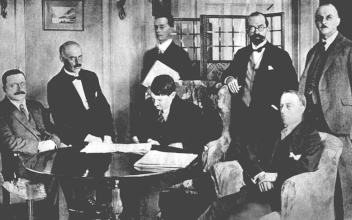
(Pictured: Michael Collins signs the Anglo-Irish Treaty on December 6, 1921)


Leave a comment

Ratification of the Anglo-Irish Treaty

anglo-irish-treaty-negotiatorsThe Anglo-Irish Treaty is ratified by the Parliament of the United Kingdom on December 16, 1921. It is ratified by the British House of Commons by a vote of 401 to 58. On the same day the House of Lords votes in favour by 166 to 47.

The Anglo-Irish Treaty, commonly known as “The Treaty” and officially the “Articles of Agreement for a Treaty Between Great Britain and Ireland,” is an agreement between the government of the United Kingdom of Great Britain and Ireland and representatives of the Irish Republic that concludes the Irish War of Independence. It provides for the establishment of the Irish Free State within a year as a self-governing dominion within the “community of nations known as the British Empire,” a status “the same as that of the Dominion of Canada.” It also provides Northern Ireland, which had been created by the Government of Ireland Act 1920, an option to opt out of the Irish Free State, which it exercises.

The agreement is signed in London on December 6, 1921, by representatives of the Government of the United Kingdom, which includes Prime Minister David Lloyd George, who is head of the British delegates, and by representatives of the Irish Republic including Michael Collins and Arthur Griffith. The Irish representatives have plenipotentiary status (negotiators empowered to sign a treaty without reference back to their superiors) acting on behalf of the Irish Republic, though the British government declines to recognise that status. As required by its terms, the agreement is ratified by “a meeting” of the members elected to sit in the House of Commons of Southern Ireland and separately by the British Parliament.

Éamon de Valera calls a cabinet meeting to discuss the treaty on December 8, where he comes out against the treaty as signed. The cabinet decides by four votes to three to recommend the treaty to Dáil Éireann on December 14. Though the treaty is narrowly ratified, the split leads to the Irish Civil War, which is won by the pro-treaty side.

The Irish Free State as contemplated by the treaty comes into existence when its constitution becomes law on December 6, 1922 by a royal proclamation giving the force of law to the Irish Free State Constitution Act 1922.

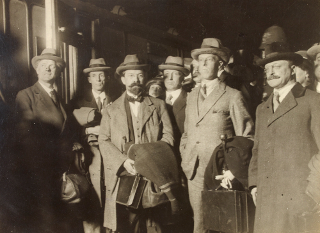
(Pictured: Members of the Irish negotiation committee returning to Ireland in December 1921)


Leave a comment

Dáil Éireann Approves the Anglo-Irish Treaty

second-all-ireland-dail

Dáil Éireann votes to approve the Anglo-Irish Treaty on January 7, 1922, following a debate through late December 1921 and into January 1922. The vote is 64 in favour, 57 against, with the Ceann Comhairle and three others not voting. The Sinn Féin party splits into opposing sides in the aftermath of the Treaty vote, which leads to the Irish Civil War from June 1922 until May 1923. The treaty is signed in London on December 6, 1921.

Two elections take place in Ireland in 1921, as a result of the Government of Ireland Act 1920 to establish the House of Commons of Northern Ireland and the House of Commons of Southern Ireland. The election is used by the Irish Republic as the basis of membership of the Second Dáil. The general election to the Northern Ireland House of Commons occurs on May 24, 1921. Of 52 seats, forty are won by unionists, six by moderate Irish nationalists, and six by Sinn Féin. No actual polling takes place in the Southern Ireland constituencies, as all 128 candidates are returned unopposed. Given the backdrop of the increasingly violent War of Independence, any candidates opposed to Sinn Féin, and their supporters can expect to be harassed by the Irish Republican Army (IRA). Supporters of the Irish Labour Party stand aside to allow the constitutional situation to run its course. Of these 128, 124 are won by Sinn Féin, and four by independent unionists representing the University of Dublin constituency. Only the Sinn Féin candidates recognise the Second Dáil and five of these have been elected in two constituencies, one in each part of Ireland, so the total number of members who assemble in the Second Dáil is 125.

During the Second Dáil, the government of the Irish Republic and the British government of David Lloyd George agree to hold peace negotiations. On September 14, 1921, the Dáil ratifies the appointment of Arthur Griffith, Michael Collins, Robert Barton, Eamonn Duggan, and George Gavan Duffy as envoys plenipotentiary for the peace conference in England. These envoys eventually sign the Anglo-Irish Treaty on December 6. After almost a month of acrimonious debate the treaty is formally ratified by Dáil Éireann on January 7, 1922.

To satisfy the requirements of the British constitution, the treaty also has to be ratified by the House of Commons of Southern Ireland. Thus, Irish nationalists end their boycott of the home rule parliament to attend the southern House of Commons as MPs. This they do alongside the four Unionist MPs who had refused to recognise the Dáil. In this way the treaty is ratified a second time in Dublin, this time unanimously as the anti-Treaty TDs refuse to attend.

Under the terms of the Anglo-Irish Treaty a provisional parliament, considered by nationalists to be the Third Dáil, is elected in the 1922 general election on June 16. Collins and Éamon de Valera agree a pact between the pro- and anti-Treaty wings of Sinn Féin, and this pact and the elections are endorsed by the Second Dáil. The new assembly is recognised both by nationalists and the British Government and so replaces both the Parliament of Southern Ireland and the Second Dáil with a single body. The anti-Treaty groups of IRA members, TDs, and their supporters are still bitterly opposed the settlement, despite the election result, and this leads to the Irish Civil War.

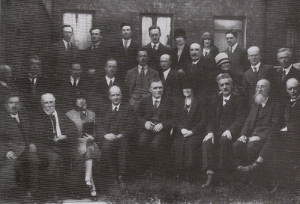
(Pictured: Second All-Ireland Dáil Éireann, elected in 1921)