seamus dubhghaill

Promoting Irish Culture and History from Little Rock, Arkansas, USA


Leave a comment

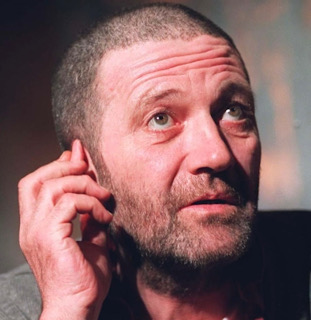
Death of Donal McCann, Stage, Film & Television Actor

Donal McCann, Irish stage, film, and television actor, dies from pancreatic cancer in Dublin on July 17, 1999. He is best known for his roles in the works of Brian Friel and for his lead role in John Huston‘s last film, The Dead (1987). In 2020, he is listed as number 45 on The Irish Times list of Ireland’s greatest film actors.

McCann is born on May 7, 1943, in Terenure, Dublin. His father is John J. McCann, a playwright and politician who serves twice as Lord Mayor of Dublin. Although he acts in a production of his father’s Give Me a Bed of Roses at Terenure College in 1962, he briefly studies architecture before taking a job as a trainee sub-editor at the Evening Press which allows him to pursue part-time acting classes at the Abbey School of Acting at the same time. He joins the Abbey Players in the late 1960s.

Among his most important early roles are Cú Chulainn in W. B. Yeats‘s On Baile Strand (1966), and as Estragon in a seminal production of Samuel Beckett‘s Waiting for Godot, partnering with Peter O’Toole as Vladimir (1969).

McCann’s career includes parts in many plays from the Irish literary canon, including Tarry FlynnThe Shaughran, and the Gate Theatre‘s highly acclaimed production of Seán O’Casey‘s classic Juno and the Paycock in the 1980s (McCann plays the “Paycock” (Captain Boyle) opposite Geraldine Plunkett as Juno and John Kavanagh as Joxer Daly) as well as a subsequent production of O’Casey’s The Plough and the Stars.

McCann develops a particularly fruitful relationship with the playwright Brian Friel. He plays the role of Gar O’Donnell, the public figure, in a film adaptation of Philadelphia, Here I Come! in 1970 and, despite popular belief, he never plays either public or private Gar on stage. He gives a landmark performance as Frank Hardy, the title character, in Faith Healer in 1980 (a role he reprised in 1994), continuing his relationship with Friel through productions of Translations (1988) and Wonderful Tennessee (1993).

Friel says that McCann’s work “contains extraordinary characteristics that go beyond acting … it is deeply spiritual.” Perhaps McCann’s most renowned role is as Thomas Dunne in Sebastian Barry‘s The Steward of Christendom. He wins the London Critics’ Circle Theatre Award (Drama Theatre) as best actor for this role in 1995. He reprises this role in a 1996 production at the Gate Theatre, Dublin and, following a twelve-week run at the Brooklyn Academy of Music in 1997, his “performance of unarguable greatness” (The New York Observer) had Newsweek hailing him as “a world-class star,” and The New York Times referring to this “astonishing Irish actor…widely regarded as the finest of them all.”

On the London stage, McCann plays in Prayer for My Daughter opposite Antony Sher (1978), and is Jean to Dame Helen Mirren‘s Julie in Miss Julie (1971). This is filmed for the BBC, and he much later plays Judge Brack with Fiona Shaw in the title role of Henrik Ibsen‘s Hedda Gabler, a production filmed for the BBC in 1993.

McCann begins his film career early, in 1966, in Walt Disney Pictures’s The Fighting Prince of Donegal (this later becomes a TV series). More significant roles include the title character’s father Shamie in Cal and one of the feuding brothers in Thaddeus O’Sullivan‘s December Bride (1990). He works a number of times with Neil Jordan (in AngelThe Miracle and High Spirits).

His best-known film role is as Gabriel Conroy in The Dead (1987), starring opposite Anjelica Huston and directed by her father, John Huston. Significant late roles include Bernardo Bertolucci‘s Stealing Beauty (1996) and in John Turturro‘s Illuminata (released in 1999, after McCann’s death).

McCann’s television work includes the featured role of Phineas Finn in the BBC’s serialised adaptation of Anthony Trollope‘s The Pallisers, Willie Burke in RTÉ‘s Prix Italia drama entry The Burke Enigma (1979) and Barney Mulhall in RTÉ’s Strumpet City (1980), as well as many one-off parts.

McCann plays in Bob Quinn‘s Irish language film Poitín (1979) and in Quinn’s somewhat experimental The Bishop’s Story (1995). After hearing that McCann is ill, Tom Collins asks Quinn to make a TV documentary about McCann for RTÉ called It Must Be Done Right (1999), after a remark by McCann on his craft. The film airs on RTÉ a week before McCann’s death.

In his private life, McCann is a quiet and unassuming man, but he battles both depression and alcoholism all his life. He has many friends in Irish theatre and artistic circles but also across all strata of life. His hobbies include sketching and he is passionate about horse racing.

Remembering McCann on the 25th anniversary of his death, Gerald Smyth writes, “In the melancholy of that life-worn voice could be heard the cadences of a lyric heart.”

Leave a comment

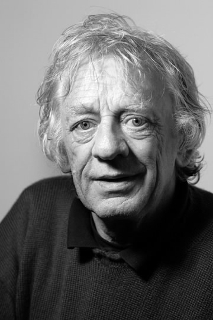
Birth of Mick Lally, Stage, Film & Television Actor

Michael “Mick” Lally, Irish stage, film and television actor, is born in the Gaeltacht village of Toormakeady, County Mayo, on November 10, 1945. He departs from a teaching career for acting during the 1970s. Though best known in Ireland for his role as Miley Byrne in the television soap Glenroe, his stage career spans several decades, and he is involved in feature films such as Alexander and the Academy Award-nominated The Secret of Kells. Many reports cite him as one of Ireland’s finest and most recognisable actors.

Lally is the eldest of a family of seven children. He goes to the local national school in Toormakeady and then to St. Mary’s College, Galway. After studying at University College Galway, he teaches history and the Irish language for six years in Archbishop McHale College in Tuam from 1969 to 1975 but quits teaching to pursue his career as a stage actor.

Lally begins his acting career with Taibhdhearc na Gaillimhe, Ireland’s national Irish language theatre, and is a founding member of the Druid Theatre Company. He receives an Irish Times/ESB Theatre Award Nomination for Best Actor for his role in Druid’s production of The Dead School. He also becomes a member of the Field Day Theatre Company, and stars in the company’s 1980 premiere of Brian Friel‘s play Translations. He first plays at the Abbey Theatre in 1977 in a production of Wild Oats and goes on to perform in many other Abbey productions.

In 1982, Lally stars in the TV series The Ballroom of Romance alongside Brenda Fricker. From 1983 he plays the role of Miley Byrne in the RTÉ soap Glenroe, reprising the character that he played earlier in Bracken in 1978. In 1979, he wins a Jacob’s Award for his performance as Miley in Bracken. He also has some musical success when “The By-road to Glenroe” goes to the top of the Irish charts in 1990. He is also involved in voice-over work, including a noted advertisement for Kilmeaden Cheese during the 1990s. Other TV appearances include roles in Tales of Kinvarna, The Year of the French and Ballykissangel.

In 1994, Lally plays the character Hugh in The Secret of Roan Inish, and in 1995 portrays Dan Hogan in the film adaptation of Maeve Binchy‘s Circle of Friends. Other film roles included Poitín, Our Boys, The Outcasts, A Man of No Importance and others. In later years, he provides the voice of Brother Aidan in the Academy Award-nominated The Secret of Kells, an animated film directed by Tomm Moore.

Lally appears in several TV advertisements encouraging elderly people to “release the equity tied up in their homes” during the Celtic Tiger.

Mick Lally dies in Dublin on the morning of August 31, 2010, after a short stay in the hospital. The cause of death is reported as heart failure, arising from an underlying emphysema condition. His funeral takes place in Dublin on September 2, 2010. The Irish Examiner comments that the “nation has lost one of its favourite uncles.” Personalities from TV, film, theatre and politics attend, while President of Ireland Mary McAleese sends a letter and Lally receives a standing ovation at the end.


2 Comments

Death of Cyril Cusack, Irish Film & Television Actor

Cyril James Cusack, Irish actor who appears in numerous films and television productions in a career lasting more than 70 years, dies in Chiswick, London, England on October 7, 1993. In 2020, he is listed at number 14 on The Irish Times‘s list of Ireland’s greatest film actors.

Cusack is born in Durban, Natal, South Africa, on November 26, 1910. His mother, Alice Violet (née Cole), is an English Cockney actress and chorus girl, and his father, James Walter Cusack, is an Irish mounted policeman in the Colony of Natal, South Africa. His parents separate when he is young and his mother takes him to England, and then to Ireland. His mother and her partner, Brefni O’Rorke, join the O’Brien and Ireland Players.

Cusack makes his first stage performance at the age of seven. He is educated at Newbridge College in Newbridge, County Kildare, then reads law at University College Dublin. He leaves without a degree and joins the Abbey Theatre in 1932. Between then and 1945, he performs in over 60 productions, particularly excelling in the plays of Seán O’Casey. He also performs Irish playwright Teresa Deevy‘s plays Katie Roche and The King of Spain’s Daughter. In 1932 he also joins the Gate Theatre company, appearing with them in many notable productions over the years. In 1947, he forms his own company and stages productions in Dublin, Paris and New York.

In 1963, Cusack joins the Royal Shakespeare Company in London and appears there for several seasons. By this stage he has established a successful career in films, which had started at the age of eight. Also in 1963, he wins a Jacob’s Award for his performance in the Telefís Éireann production of Triptych. He receives honorary degrees in 1977 and 1980 from the National University of Ireland (NUI) and the University of Dublin respectively.

Cusack, who is bilingual in English and Irish, has a leading role in the controversial Irish language film Poitín (1977). He is also offered the role of the First Doctor in Doctor Who.

Cusack’s last stage performance is in Anton Chekhov‘s Three Sisters (1990), in which three of his daughters play the sisters.

Cusack is twice married, firstly to Mary Margaret “Maureen” Kiely (1920–1977), on April 5, 1945. Together they have five children: Paul (1946), Sinéad (1948), Sorcha (1949), Niamh (1959), and Pádraig (1962). He and his second wife, Mary Rose Cunningham (1979–1993), have one daughter, Catherine (1968).

In later life, Cusack becomes a campaigner for conservative causes in Ireland, notably in his opposition to abortion, where he becomes a frequent letter-writer to the main liberal Irish newspaper, The Irish Times. Regarding his Catholic faith, he comments “Religion promotes the divine discontent within oneself, so that one tries to make oneself a better person and draw oneself closer to God.” His religious credentials come under scrutiny following his death and the revelation that he had been unfaithful in his first marriage, with a long-term mistress, Mary Rose Cunningham. He marries Cunningham following his first wife’s death.

Cusack is a longtime friend of Attorney General of Ireland, Chief Justice of Ireland and fifth President of Ireland Cearbhall Ó Dálaigh, whom he got to know when they were students at University College Dublin in the early 1930s.

On October 7, 1993, Cusack dies at the age of 82 at home in Chiswick, Greater London, from amyotrophic lateral sclerosis (ALS). His acting career had lasted 75 years.

Cusack is the maternal grandfather of Irish Socialist Workers Party Teachta Dála (TD) Richard Boyd Barrett and English actor Max Irons.


Leave a comment

Death of Mick Lally, Stage, Film & Television Actor

mick-lally

Michael “Mick” Lally, Irish stage, film and television actor, dies in Dublin on August 31, 2010. He departs from a teaching career for acting during the 1970s. Though best known in Ireland for his role as Miley Byrne in the television soap Glenroe, his stage career spans several decades, and he is involved in feature films such as Alexander and the Academy Award-nominated The Secret of Kells. Many reports cite him as one of Ireland’s finest and most recognisable actors.

Born on November 10, 1945, and reared in the Gaeltacht village of Toormakeady, County Mayo, Lally is the eldest of a family of seven children. He goes to the local national school in Toormakeady and then to St. Mary’s College, Galway. After studying at University College Galway, he teaches history and Irish for six years in Archbishop McHale College in Tuam from 1969 to 1975 but quits teaching to pursue his career as a stage actor.

Lally begins his acting career with Taibhdhearc na Gaillimhe, Ireland’s national Irish language theatre, and is a founding member of the Druid Theatre Company. He receives an Irish Times/ESB Theatre Award Nomination for Best Actor for his role in Druid’s production of The Dead School. He also becomes a member of the Field Day Theatre Company, and stars in the company’s 1980 premiere of Brian Friel‘s play Translations. He first plays at the Abbey Theatre in 1977 in a production of Wild Oats and goes on to perform in many other Abbey productions.

In 1982, Lally stars in the TV series The Ballroom of Romance alongside Brenda Fricker. From 1983 he plays the role of Miley Byrne in the RTÉ soap Glenroe, reprising the character that he played earlier in Bracken in 1978. In 1979, he wins a Jacob’s Award for his performance as Miley in Bracken. He also has some musical success when “The By-road to Glenroe” goes to the top of the Irish charts in 1990. He is also involved in voice-over work, including a noted advertisement for Kilmeaden Cheese during the 1990s. Other TV appearances include roles in Tales of Kinvarna, The Year of the French and Ballykissangel.

In 1994, Lally plays the character Hugh in The Secret of Roan Inish, and in 1995 portrays Dan Hogan in the film adaptation of Maeve Binchy‘s Circle of Friends. Other film roles included Poitín, Our Boys, The Outcasts, A Man of No Importance and others. In later years, he provides the voice of Brother Aidan in the Academy Award-nominated The Secret of Kells, an animated film directed by Tomm Moore.

Lally appears in several TV advertisements encouraging elderly people to “release the equity tied up in their homes” during the Celtic Tiger.

Mick Lally dies on the morning of August 31, 2010, after a short stay in the hospital. The cause of death is reported as heart failure, arising from an underlying emphysema condition. His funeral takes place in Dublin on September 2, 2010. The Irish Examiner comments that the “nation has lost one of its favourite uncles.” Personalities from TV, film, theatre and politics attend, while President of Ireland Mary McAleese sends a letter and Lally receives a standing ovation at the end.


Leave a comment

Birth of Comedian & Actor Niall Tóibín

Niall Tóibín, Irish comedian and actor, is born into an Irish speaking family in Cork, County Cork, on November 21, 1929. He is the sixth of seven children born to Siobhán (née Ní Shúileabháin) and Seán Tóibín.

Tóibín’s father is born in Passage West, County Cork, and his parents come from Waterford and West Cork. His father is a teacher in the School of Commerce in Cork city and the author of two books, Blátha an Bhóithrín and Troscán na mBánta, on wayside and meadowland flowers, both written in the Irish language. His mother comes from Beaufort, County Kerry.

Tóibín is born on the south side of Cork city in Friars’ Walk. He is raised with Irish and uses the language in his professional career, notably in the film Poitín. As a child he sings in the cathedral choir and the Opera House in Cork. In his teens he joins a drama society attached to the Keating Branch of the Gaelic League. He is educated by the Irish Christian Brothers at the North Monastery after which he leaves Cork in January 1947 for a job in the Civil Service in Dublin.

Tóibín starts acting in the 1950s and spends fourteen years with the Radio Éireann Players. From Ryan’s Daughter and Bracken in the 1970s, to The Ballroom of Romance, The Irish R.M., Brideshead Revisited (TV serial) and Caught in a Free State in the 1980s, and Far and Away, Ballykissangel and Veronica Guerin in the 1990s and 2000s, Toibin’s entertainment career in television, film and theatre spans over four decades.

Tóibín plays Dr. Paul O’Callaghan in the first series of the Irish TV programme The Clinic. He also plays Judge Ballaugh, alongside Cate Blanchett, in Jerry Bruckheimer‘s film Veronica Guerin. He also acts for the radio, such as his guest appearance in the BBC Radio 4 series Baldi.

In 1973, Tóibín wins a Jacob’s Award for his performance in the RTÉ comedy series, If the Cap Fits. He receives an Honorary Doctor of Arts Degree from University College Cork (UCC) on June 4, 2010, and is honoured with the Irish Film and Television Academy‘s (IFTA) Lifetime Achievement Award at a ceremony at the Irish Film Institute on November 3, 2011.