seamus dubhghaill

Promoting Irish Culture and History from Little Rock, Arkansas, USA


Leave a comment

Birth of William Thompson, Naturalist

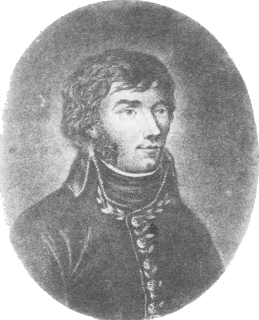
William Thompson, Irish naturalist celebrated for his founding studies of the natural history of Ireland, especially in ornithology and marine biology, is born on December 2, 1805, in the booming maritime city of Belfast.

Thompson is the eldest son of William Thompson, a prosperous linen merchant, and Elizabeth Thompson (née Callwell). He has at least two older sisters and several younger brothers. His mother’s father is Robert Callwell, a printer, book-collector, partner in the Commercial Bank, Belfast, and one of the owners of the Northern Star newspaper.

After attending the Royal Belfast Academical Institution (RBAI) from 1818, Thompson is apprenticed in the linen business of William Sinclair in 1821. When his apprenticeship ends, he goes with his cousin George Langtry, later a wealthy shipowner, on a four-month tour (May–September 1826) of the Low Countries, the Rhine, Switzerland, and Italy. On his return to Belfast, he sets up his own business in linen bleaching. Despite early success, losses are incurred. As family and economic circumstances change, he increasingly concentrates on his natural history studies. By 1831 he has given up business. A self-taught naturalist, related by ties of kinship or friendship to most of the liberal and cultivated families of the “northern Athens,” he is shy and fastidious, but is persuaded in 1826 to join the Belfast Natural History Society by its founder, his friend James Lawson Drummond. He reads his first scientific paper, The Birds of the Copeland Islands, to the society on August 13, 1827. In that year he becomes a member of the Belfast Natural History Society’s council, and in 1833 he is chosen as one of the society’s vice-presidents. He is president from 1843 until his death.

Thompson becomes the most important naturalist in mid nineteenth-century Ireland. From 1827 to 1852 he contributes almost eighty papers on Irish natural history to the Magazine of Zoology and Botany and the Proceedings of the Zoological Society of London. From 1836 to 1851 he contributes to The Magazine of Natural History. Invited to travel to the Levant and the Aegean Sea in April–July 1841 with Edward Forbes, professor of natural history at the University of Edinburgh, on HMS Beacon, he observes twenty-three species of birds on migratory flights and publishes “Notice of migratory birds” in The Annals of Natural History. His authoritative observations add considerably to knowledge of the still-to-be-ascertained details of migratory patterns. Indeed, some people refuse to believe, even at that date, that birds do migrate. He publishes other papers in the same journal during 1841–43. At a meeting of the British Association for the Advancement of Science in Glasgow in 1840 his Report on the fauna of Ireland (Vertebrata) attracts favourable notice. He presents and publishes a second and final part enumerating the invertebrates at the Cork meeting of the British Association in August 1843. The two reports form the most complete catalogue of Irish fauna yet published. Thanks to an assiduous correspondence with a network of informants, as well as his own extensive observations, he adds perhaps more than 800 species to Irish fauna lists.

Thompson’s chief work, The Natural History of Ireland, becomes the standard text in Irish zoology in the nineteenth century. The first three volumes, published between 1849 and 1851, deal with birds, particularly their habits and habitats rather than physical descriptions. He is one of the first naturalists to note the effects of industrialisation and other human activities on birdlife. He leaves instructions for his manuscripts on the remaining vertebrates and all the invertebrates to be prepared for publication by Robert Patterson and James Ramsey Garrett. Robert Ball and George Dickie also assist. His notes, though detailed and comprehensive, all require checking, and are found on tiny scraps of paper, even scribbled on the flaps of old envelopes. James Thompson of Macedon, Belfast, painstakingly gums them all into blank notebooks to facilitate the work of his brother’s literary executors, who preface the posthumous publication in 1856 with a lengthy memoir of their friend.

From about 1820 to 1852 Thompson lives with his mother at 1 Donegall Square West, Belfast, commuting from Holywood House, Holywood, County Down, during the summer. His daily routine begins with research, correspondence, or writing for publications for four hours after breakfast. After a two- or three-hour exercise period and dinner, he returns to work for a further two to three hours. He is president of the Belfast Literary Society (1837–39) and also an enthusiastic patron of the visual arts in the city. He enjoys hunting, wildfowling, shooting in Scotland, and gardening, though his health deteriorates from the 1840s.

Early in 1852 Thompson travels to London to make arrangements for that year’s Belfast meeting of the British Association. On February 15 he becomes ill, having suffered a minor stroke. He dies, unmarried, at his Jermyn Street lodgings on the day he is due to return home, February 17, 1852. He is buried in Clifton Street Cemetery, Belfast. He bequeaths his collection to the Belfast Natural History Society, and in March 1852 the Society adds a memorial Thompson Room to its museum, paid for by subscription.

Thompson is a corresponding member of natural history societies in Boston and Philadelphia and has many friends. He is known to assist many other researchers in Ireland, Britain, and the Continent. One of those who thinks highly of his work is Charles Darwin, with whom he corresponds. He also helps many local people, including the poet Francis Davis, with money and practical assistance. He is much loved, and his friends are deeply saddened by his death. His niece, Sydney Mary Thompson, later known by her married surname, Christen, who is born in Belfast, is an amateur naturalist, geologist, and artist, one of the first women to achieve distinction in geology.

(From: “Thompson, William” by Andrew O’Brien and Linde Lunney, Dictionary of Irish Biography, http://www.dib.ie, October 2009)
Leave a comment

Birth of Peter Lacy, Irish-born Officer in the Imperial Russian Army

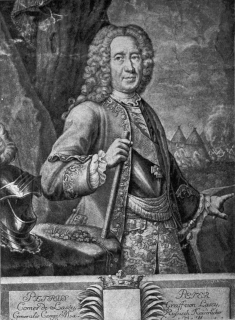
Peter Lacy, Irish-born soldier who later serves in the Imperial Russian Army, is born Pierce Edmond de Lacy into a noble Irish family on September 26, 1678, in Killeedy near Limerick, County Limerick. Considered one of the most successful Russian Imperial commanders before Pyotr Rumyantsev and Alexander Suvorov, in a military career that spans half a century, he claims to have participated in 31 campaigns, 18 battles, and 18 sieges.

At the age of 13, during the Williamite War in Ireland, Lacy is attached to the Jacobite defence of Limerick against the Williamites with the rank of Lieutenant. The Flight of the Wild Geese follows, with him, his father and his brother joining the Irish Brigade in France. After his relatives lose their lives fighting for Louis XIV in Italy, he is induced to seek his fortune elsewhere. After two years of service in the Austrian army, he follows his commander, Charles Eugène de Croÿ, into the Russian service.

Lacy’s first taste of land battle in Russia is the disastrous defeat at Narva, in which he commands a unit of musketeers, holding the rank of poruchik. During the Great Northern War he is seriously wounded on two occasions, also gaining the rank of colonel in 1706. In the same year, Peter the Great gives him command of the Polotskii regiment and three new regiments raising him to colonel status. The following year he leads his brigade at Poltava and in the ensuing battle he greatly distinguishes himself. In the 1708 battle of Rumna, he attacks and captures the headquarters of Charles XII of Sweden. He gains fame at this stage by advising the Czar that musketeers should wait until they were within a few yards of the enemy before opening fire. Prior to this, the Russians were known for uncoordinated fire. From this point begins his fame as a soldier. His next active service, still under Prince Anikita Repnin, is the siege of Riga. He is reputedly the first Russian officer to enter the capital of Livland and he is appointed the first Russian chatelain of Riga Castle in the aftermath.

In 1719, Major General Fyodor Apraksin‘s fleet lands Lacy with 5,000 infantry and 370 cavalry near Umeå in Sweden, where they proceed to devastate a dozen iron foundries and a number of mills. Two years later he leads a similar action against Sundsvall. Soon promoted to General, he enters the Military Collegium, as the Russian Ministry of Defense was then known, in 1723. Three years later, he succeeds Repnin in command of the Russian forces quartered in Livland, and in 1729 he is appointed Governor of Riga. These positions bring him in contact with the Duchess of Courland, who before long ascends the Russian throne as Empress Anna. During her reign, Lacy’s capacity for supreme command is never doubted.

Lacy is one of the first recipients of the Order of Saint Alexander Nevsky when it is established, furthermore, he is given command of all infantries in Saint Petersburg, Ingria and Novgorod. By 1728 he is ranked third of only six full generals in the Russian Army and the only foreigner. As a foreigner, his salary is 3,600 Roubles a year, 15% higher than Russian generals. Higher salaries for foreign-born generals are seen in other ranks too. His signature, even on documents in Cyrillic script, always appear in English and Latin script which suggests he never gains proficiency in the Russian language.

When Catherine is Empress, Lacy is given responsibility for removing Maurice de Saxe from Courland. Saxe had managed to gain support and was even mentioned as marrying Anna, Duchess of Courland.

Having saved her from marriage to Saxe, Anna is very familiar with Lacy, and he becomes one of her most trusted generals. The War of the Polish Succession again calls him into the field. In 1733, he and Burkhard Christoph von Münnich expel the Polish king, Stanisław I, from Warsaw to Danzig, which is besieged by them in 1734. Thereupon the Irishman is commanded to march toward the Rhine and join his 13,500-strong contingent with the forces of Eugene of Savoy. To that end, his corps advances into Germany and, meeting the Austrians on August 16, returns to winter quarters in Moravia with exemplary discipline. In 1734, he commands Russian forces at the Siege of Danzig in which French and Polish forces are defeated. Lacy leads the Russians in two other decisive battles of the conflict, Wisiczin and Busawitza. In the latter battle, he is outnumbered ten to one but nevertheless prevails. For this victory, he is awarded Order of the White Eagle. After Busawitza Lacy is ordered to reinforce the Austrians at Mannheim. however, when he reaches Mannheim peace has been declared. He is received by Emperor Charles and Viennese society. On his return from Vienna, he is met by a courier from Saint Petersburg who delivers to him his patent honouring him as Field Marshal.

With the patent of Field Marshal is the news that Russia is at war with Turkey and Lacy is ordered at once to capture Azov Fortress. This he does despite being wounded in the fray. His rival, Burkhard Christoph von Münnich, had been campaigning in the Crimea with little success. Thus, after taking Azov, Lacy is ordered to capture Crimea. He bridges the Sea of Azov at a narrow point near Perekop. Within four days, aided by favourable winds and tides, his entire army crosses it and begins marching on Arabat. The Russians meet the Khan’s much larger Crimean army and rout them in two battles, on June 12 and 14. In 1738, his corps again land in Crimea and take the fortress of Chufut-Kale near the Khan’s capital, Bakhchisaray. For his success in Poland and Crimea he is awarded the Order of St. Andrew.

As soon as peace has been restored, Lacy is reinstated as the Governor of Livland, while Emperor Charles VI confers on him the title of an imperial count. His indifference to politics prevents his downfall following Anna’s death, when other foreign commanders, most notably von Münnich, fall into disgrace and are expelled from active service.

In December 1741, Elizabeth seizes power. Lacy is roused from bed in the early hours of the morning in a test of his loyalty. He is not aware if the men sent to him are from Elizabeth or Grand Duchess Anna. He is asked what party he is of, Anne or Elizabeth, and he answers, “Of the party of the reigning Empress.” A period of unrest follows, and he is called upon to restore order. Most of what is known as the German Faction falls out of favour at this stage. The restoration of order in Saint Petersburg is largely down to the prompt actions of Lacy.

When the Russo-Swedish War breaks out in 1741, the government of Anna Leopoldovna appoints Lacy Commander-in-Chief as the most experienced among Russian generals. He quickly strikes against Finland and wins his last brilliant victory at Lappeenranta in August 1741. His force, however, is poorly supplied and he is forced to withdraw to Saint Petersburg. The following year he rallies his forces and proceeds to capture Hamina, Porvoo and Hämeenlinna, by August encircling more than 17,000 Swedes near Helsinki and effectively bringing the hostilities to an end.

The war over, Lacy withdraws to Riga and resumes the command of the Russian forces stationed in Livland. He administers what is now northern Latvia and southern Estonia until his death on his private estate in Riga on April 30, 1751. His son, Franz Moritz von Lacy, enters the Austrian service in 1743 and becomes one of the most successful imperial commanders of the 18th century and also a Count of the Holy Roman Empire. His nephew, George Browne, is also a general in the Russian army.


Leave a comment

The Battle of Ramillies

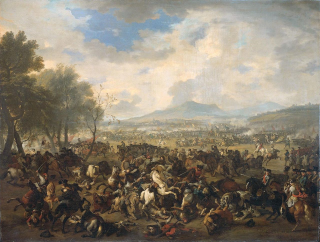
The Irish Brigade of France fights at the Battle of Ramillies in the War of the Spanish Succession on May 23, 1706. For one hundred years Irishmen are smuggled from Ireland to France, where their rights are stripped by foreign invaders to fill the ranks of the famous Irish Brigade. During those one hundred years they fight all over Europe, in North America, the Caribbean, and even India. They shed their blood freely on several hundred fields “from Dunkirk to Belgrade,” in the words of Thomas Davis.

For the Grand AllianceAustria, England, and the Dutch Republic – the Battle of Ramillies follows an indecisive campaign against the Bourbon armies of King Louis XIV of France in 1705. Although the Allies capture Barcelona that year, they are forced to abandon their campaign on the Moselle, stall in the Spanish Netherlands and suffer defeat in northern Italy. Yet despite his opponents’ setbacks Louis XIV wants peace, but on reasonable terms. Because of this, as well as to maintain their momentum, the French and their allies take the offensive in 1706.

The campaign begins well for Louis XIV’s generals. In Italy, Marshal of France Louis Joseph, Duke of Vendôme, defeats the Austrians at the Battle of Calcinato in April, while in Alsace Marshal Claude Louis Hector de Villars forces Louis William, Margrave of Baden-Baden, back across the Rhine. Encouraged by these early gains Louis XIV urges Marshal François de Neufville, Duke of Villeroy, to go over to the offensive in the Spanish Netherlands and, with victory, gain a ‘fair’ peace. Accordingly, the French Marshal sets off from Leuven at the head of 60,000 men and marches toward Tienen, as if to threaten Zoutleeuw. Also determined to fight a major engagement, John Churchill, 1st Duke of Marlborough, commander-in-chief of Anglo-Dutch forces, assembles his army of some 62,000 men near Maastricht, and marches past Zoutleeuw. With both sides seeking battle, they soon encounter each other on the dry ground between the rivers Mehaigne and Gete, close to the small village of Ramillies, Belgium.

In less than four hours Marlborough’s Dutch, English, and Danish forces overwhelm Villeroi’s and Maximilian II Emanuel‘s Franco-Spanish-Bavarian army. The Duke’s subtle moves and changes in emphasis during the battle, something his opponents fail to realise until it is too late, catches the French in a tactical vice. With their foe broken and routed, the Allies are able to fully exploit their victory. Town after town falls, including Brussels, Bruges and Antwerp. By the end of the campaign Villeroi’s army has been driven from most of the Spanish Netherlands. With Prince Eugene of Savoy‘s subsequent success at the Siege of Turin in northern Italy, the Allies impose the greatest loss of territory and resources that Louis XIV would suffer during the war. Thus, the year 1706 proves, for the Allies, to be an annus mirabilis.

(Pictured: “The Battle of Ramillies between the French and the English, 23 May 1706” by Jan van Huchtenburgh, oil on canvas painted between 1706 and 1710)


Leave a comment

The Battle of Friedlingen

battle-of-friedlingen

The Irish Brigade of France fights in the Battle of Friedlingen on October 14, 1702.

The battle is fought between France and the Holy Roman Empire. The Imperial forces are led by Louis William, Margrave of Baden-Baden, while the French are led by Claude Louis Hector de Villars. The French are victorious.

The French are seeking to expand their influence on the eastern bank of the river Rhine. In the autumn of 1702, Villars receives orders from Louis XIV to attack Swabia. The French forces need to join their Bavarian allies and defeat the Imperial troops that stand between them.

The French cross the Rhine at Weil am Rhein, just north of Basel on October 14. Villars attacks the Imperial army at Friedlingen. The future field marshal Louis William entrenches his army and manages to hold the French for some time. He then retreats in good order to the North.

It is a Pyrrhic victory for Villars with losses of 1,703 dead and 2,601 wounded. The Imperial forces loses are 3,000 dead and 742 wounded. Villars is also prevented from joining the Bavarians.

The villages on the eastern bank of the Rhine suffer much damage, especially Weil am Rhein.

(Pictured: The Battle of Friedlingen, oil on canvas, Franz Paul Findenigg)


Leave a comment

Death of General Jean Joseph Amable Humbert

jean-joseph-amable-humbert

General Jean Joseph Amable Humbert, French soldier and French Revolution participant who leads a failed invasion of Ireland to assist Irish rebels in the Irish Rebellion of 1798, dies on January 3, 1823, in New Orleans, Louisiana.

Born in the townland of La Coâre Saint-Nabord, outside Remiremont Vosges, Humbert is a sergeant in the National Guard of Lyon. He rapidly advances through the ranks to become brigadier general on April 9, 1794, and fights in the Western campaigns before being allocated to the Army of the Rhine.

In 1794, after serving in the Army of the Coasts of Brest, Humbert serves under Louis Lazare Hoche in the Army of the Rhin-et-Moselle. Charged to prepare for an expedition against Ireland, he takes command of the Légion des Francs under Hoche, sailing in the ill-fated Expédition d’Irlande against Bantry Bay in 1796, and is engaged in actions at sea against the Royal Navy. Contrary weather and enemy action force this expedition to withdraw. The trip home ends in a naval battle, the Action of 13 January 1797, during which Humbert, on the French ship Droits de l’Homme (1794), narrowly escapes death. As the ship is destroyed and sinks, hundreds of men perish, but Humbert is among the last to escape.

On his return to France, Humbert serves in the Army of the Sambre-et-Meuse, before being appointed to command the troops in another attempt to support a rising in Ireland in 1798. His command chiefly consists of infantry of the 70th demi-brigade with a few artillerymen and some cavalry of the 3rd Hussars, however by the time he arrives off the Irish coast the United Irish rising has already suffered defeat. The expedition is able to land in Ireland at Killala on Thursday August 23, 1798, meeting with initial success in the Battle of Castlebar where he routs the Irish Militia. Humbert subsequently declares a Republic of Connacht, with hopes of taking Dublin. However, Humbert’s small force is defeated at the Battle of Ballinamuck by the Irish Royal Army, and he is taken as a prisoner of war by the authorities. The British send the French officers home in two frigates and then massacre their Irish supporters. Humbert makes no attempt to save the Irish who bravely supported him.

Humbert is shortly repatriated in a prisoner exchange and appointed in succession to the Armies of Mayence, Danube and Helvetia, with which he serves at the Second Battle of Zurich. He then embarks for Santo Domingo and participates in several Caribbean campaigns for Napoleon Bonaparte before being accused of plundering by General Brunet. It is also rumored that he engages in an affair with Pauline Bonaparte, the wife of his commanding officer Charles Leclerc. He is returned to France by order of General Leclerc in October 1802, for “prevarications, and liaison relationships with organisers of the inhabitants and with leaders of brigands.” A committed Republican, his displeasure at Napoleon’s Imperial pretensions lead to him being dismissed in 1803 and he retires to Morbihan in Brittany.

In 1810, after brief service in the Army of the North, Humbert emigrates to New Orleans, where he makes his acquaintance with French pirate Jean Lafitte. In 1813, Humbert joins the revolutionary Juan Bautista Mariano Picornell y Gomila in an unsuccessful attempt to foment rebellion in Spanish Mexico, but the effort fails. In 1814, Humbert again leaves New Orleans and joins the rebelling forces of Buenos Aires, briefly commanding a corps, before returning home. Humbert last fights the British at the Battle of New Orleans, as a volunteer private soldier in U.S. ranks, in the War of 1812, wearing his Napoleonic uniform. General Andrew Jackson thanks him for his assistance there after the American victory in January 1815. Thereafter Humbert lives peacefully as a schoolteacher until his death on January 3, 1823.

A monument to General Humbert depicting Mother Ireland stands on Humbert Street, Ballina, County Mayo. In 1989, sculptor Carmel Gallagher unveils a bust of General Humbert in Killala, Ireland, to mark the upcoming bicentennial of the Irish Rebellion of 1798.


Leave a comment

Death of Saint Columbanus

saint-columbanus

Columbanus, Irish missionary notable for founding a number of monasteries on the European continent from around 590 in the Frankish and Lombard kingdoms, dies on November 21, 615. He is one of the earliest identifiable Hiberno-Latin writers.

Columbanus is born in 543 in the Kingdom of Meath, now part of Leinster. Well-born, handsome and educated, he is torn between a desire for God and easy access to the pleasures of the world. Acting on advice of a holy anchoress, he decides to withdraw from the world. His family opposes the choice, his mother going so far as to block the door. He leaves home and studies Scripture extensively under Sinell, Abbot of Cluaninis in Lough Erne. He then moves to Bangor Abbey on the coast of Down, where Saint Comgall is serving as the abbot. He stays at Bangor until his fortieth year, when he receives Comgall’s permission to travel to the continent.

In middle age, Columbanus feels a call to missionary life. With twelve companions (Saint Attala, Columbanus the Younger, Cummain, Deicolus, Eogain, Eunan, Saint Gall, Gurgano, Libran, Lua, Sigisbert and Waldoleno) he travels to Scotland, England, and then to France in 585. The area, though nominally Christian, has fallen far from the faith, but are ready for missionaries, and they have some success. They are warmly greeted at the court of King Gontram of Burgundy, and the king invites the band to stay. They choose the half-ruined Roman fortress of Annegray in the Vosges Mountains for their new home with Columbanus as their abbot.

The simple lives and obvious holiness of the group draws disciples to join them and the sick to be healed by their prayers. Columbanus, to find solitude for prayer, often lives for long periods in a cave seven miles from the monastery, using a messenger to stay in touch with his brothers. When the number of new monks over-crowds the old fortress, King Gontram gives them the Gallo-Roman castle called Luxovium in present-day Luxeuil-les-Bains, some eight miles from Annegray, in 590. Soon after, a third house called Ad-fontanas is founded at present-day Fontaine-lès-Luxeuil. Columbanus serves as master of them all, and writes a Rule for them. It incorporates many Celtic practices, is approved by the Council of Mâcon in 627, but is superseded by the Benedictine.

Problems arise early in the 7th century. Many Frankish bishops object to a foreign missionary with so much influence, to the Celtic practices he brought, especially those related to Easter, and his independence from them. In 602 he is summoned to appear before them for judgment. Instead of appearing, he sends a letter advising them to hold more synods and to concern themselves with more important things than which rite he uses to celebrate Easter. The dispute over Easter continues for years, with Columbanus appealing to multiple popes for help. It is only settled when Columbanus abandons the Celtic calender when he moves to Italy.

In addition to his problems with the bishops, Columbanus speaks out against vice and corruption in the royal household and court, which is in the midst of a series of complex power grabs. Brunhilda of Austrasia stirs up the bishops and nobilty against the abbot. Theuderic II orders him to conform to the local ways and shut up. Columbanus refuses and is briefly imprisoned at Besançon, but he escapes and returns to Luxeuil. Theuderic II and Brunhilda send an armed force to force him and his foreign monks back to Ireland. As soon as his ship sets sail, a storm drives them back to shore. The captain takes it as a sign and sets the monks free.

They make their way to King Chlothar II at Soissons, Neustria and then the court of King Theudebert II of Austrasia in 611. Columbanus travels to Metz, France, then Mainz, Germany, where he sails up the Rhine to the lands of the Suebi and Alamanni, and finally Lake Zurich. Their evangelization work there is unsuccessful and the group passes on to Arbon, then Bregenz on Lake Constance. Saint Gall, who knows the local language best, takes the lead in this region. Many are converted to the faith and the group founds a new monastery as their home and base. However, a year later political upheaval causes Columbanus to cross the Alps into Italy, arriving in Milan in 612. The Christian royal family treats him well, and he preaches and writes against Arianism and Nestorianism. In gratitude, King Agilulf, the king of the Lombards, gives him a tract of land called Bobbio between Milan and Genoa in Italy. There he rebuilds a half-ruined church of Saint Peter, and around it he founds an abbey that is to be the source for evangelization throughout northern Italy for centuries to come.

Columbanus always enjoys being in the forests and caves, and as he walks through the woods, birds and squirrels ride on his shoulders. Toward the end of his life comes word that his old enemies are dead and his brothers want him to come back north, but he declines. Knowing that his time is almost done, he retires to his cave on the mountainside overlooking the Trebbia River. Columbanus dies of natural causes at Bobbio, Italy on November 21, 615.

Columbanus’ influence continues for centuries as those he converted hand on the faith, the brothers he taught evangelize untold numbers more, and his brother monks found over one hundred monasteries to protect learning and spread the faith.

(Pictured: Saint Columbanus stained glass window, Bobbio Abbey crypt)