seamus dubhghaill

Promoting Irish Culture and History from Little Rock, Arkansas, USA


Leave a comment

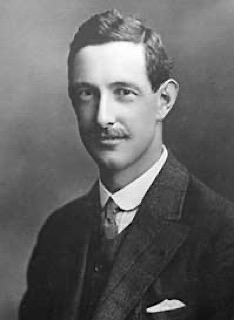
Birth of Pierce McCan

Pierce McCan, Sinn Féin politician, is born at Prospect Lodge, Ballyanne Desmesne, County Wexford, on August 2, 1882. 

McCan is the son of Francis McCan, a land agent, and Jane Power. He is the nephew of Patrick Joseph Power, MP for East Waterford from 1885 to 1913. He attends Clongowes Wood College and Downside School. He resides at Ballyowen House, Dualla, Cashel, County Tipperary, and is an “extensive farmer” and is a member of the Tipperary Hunt.

McCan is a founder member of Sinn Féin in 1905. He joins the Gaelic League in 1909 and is a member of the Irish Volunteers from 1914 onward.

After more than 2,000 German and Austrian prisoners are imprisoned at Richmond BarracksTemplemore, County Tipperary, following the first battles of World War I in 1914, he plots to engineer a mass escape but is thwarted when the prisoners are removed to Leigh, Lancashire in 1915. He is interned in 1916 after the Easter Rising for several months in Richmond Barracks, Dublin, and KnutsfordEngland. In May 1918, he is arrested under the German Plot and detained in Gloucester Gaol.

McCan is president of the East Tipperary executive of Sinn Féin. While incarcerated, he is elected as a Sinn Féin MP for the East Tipperary constituency at the 1918 United Kingdom general election in Ireland.

In January 1919, Sinn Féin MPs refuse to recognise the Parliament of the United Kingdom and instead assembles in the Mansion House, Dublin as a revolutionary parliament called Dáil Éireann. McCan never sits in Dáil Éireann, dying in prison on March 6, 1919, during the Spanish flu pandemic. On March 9, 1919, he is buried in Dualla, Cashel, County Tipperary.

No by-election is called to replace him in the UK constituency. After April 1, 1922, the Irish Free State (Agreement) Act 1922 prohibits any by-election, and the constituency is abolished when parliament is dissolved on October 26, 1922, for the general election on November 15.

The First Dáil also considers how to fill the vacancy. A select committee in April recommends that the local Sinn Féin organisation which nominated him should nominate his replacement. A June proposal to postpone action, either for six months or until a Westminster by-election is held, is referred to another committee, which recommends that “in view of the circumstances which occasioned the vacancy, it was due to the memory of the late Pierce McCann that his place should not be filled at present.”

On April 10, 1919, Cathal Brugha tells the First Dáil: “Before I formally move the motion, as I have mentioned the name of Pierce McCan, I would ask the Members of the Dáil to stand up as a mark of our respect to the first man of our body to die for Ireland, and of our sympathy with his relatives. We are sure that their sorrow is lightened by the fact that his death was for the cause for which he would have lived, and that his memory will ever be cherished in the hearts of the comrades who knew him, and will be honoured by succeeding generations of his countrymen with that of the other martyrs of our holy cause.” The McCan Barracks in Templemore, County Tipperary, is named after him.

In the 1933 Irish general election, McCan’s brother, Joseph, a member of the National Farmers’ and Ratepayers’ Association, stands unsuccessfully for the National Centre Party in the Tipperary constituency.

Leave a comment

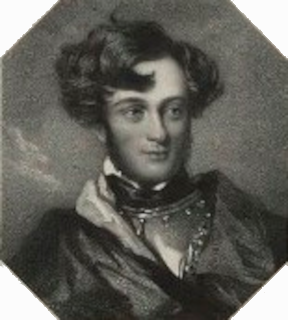
Death of Lord George Augusta Hill

Lord George Augusta Hill, Anglo-Irish military officer, politician and landowner, dies in Ramelton, County Donegal, on April 6, 1879.

Hill is the posthumous son of Arthur Hill, 2nd Marquess of Downshire, and his wife Mary, Marchioness of Downshire, granddaughter of Samuel Sandys, 1st Baron Sandys. He is born on December 9, 1801, three months after his father’s death by suicide.

Hill enters the British Army in May 1817, initially a cornet in the Royal Horse Guards, promoted to lieutenant in 1820. He transfers to the 4th Royal Irish Dragoon Guards as a captain in 1825. In April 1830, he becomes aide-de-camp to Sir John Byng, Commander-in-Chief of the forces in Ireland, at the rank of major, but on July 6 he takes half-pay.

Hill is proposed as a candidate for MP for Carrickfergus in the 1826 United Kingdom general election, but withdraws in favor of Sir Arthur Chichester, stating that he had been unaware of the nomination. In the 1830 United Kingdom general election, he is elected MP for Carrickfergus, unseating Chichester. His brother, Arthur Hill, 3rd Marquess of Downshire, is a minor landowner in Carrickfergus.

Although Hill is considered a friend of the Tory government of Arthur Wellesley, 1st Duke of Wellington, when elected, he is absent from the vote of confidence on November 15, 1830, which causes the government to fall. Thereafter he supports the government of Charles Grey, 2nd Earl Grey, and its Reform Bill, like his brothers. Due to ill health, he does not contest the 1832 United Kingdom general election, instead supporting his brother, Lord Marcus Hill, who is elected for Newry.

Hill serves as Comptroller of the Household to the Lord Lieutenant of Ireland, 1833–34, and as High Sheriff of Donegal in 1845.

In 1838, Hill purchases land in Gweedore (Irish: Gaoth Dobhair), a “district” in northwest County Donegal in the west of Ulster, and, over the next few years, he expands his holdings to 23,000 acres. He himself describes the condition of the local population as “more deplorable than can well be conceived.” According to the schoolmaster, Patrick McKye, they are in the “most needy, hungry and naked condition of any people.” Among other improvements, he builds a port, Bunbeg Harbour, to encourage fishing, improves the roads and other infrastructure, and constructs The Gweedore Hotel to attract wealthy tourists.

However, Hill’s attempts to reform local farming practices, in particular, his suppression of the rundale system of shared landholding, proves unpopular and controversial. While his reforms may have protected Gweedore from the worst effects of the Great Famine of the 1840s, as the local population did not decrease, as it did elsewhere in Ireland, his attitude to the famine is uncompromising and unsympathetic:

“The Irish people have profited much by the Famine, the lesson was severe; but so were they rooted in old prejudices and old ways, that no teacher could have induced them to make the changes which this Visitation of Divine Providence has brought about, both in their habits of life and in their mode of agriculture.”

Hill’s book Facts from Gweedore (1845) provides an account of conditions in Gweedore and seeks to explain and justify Hill’s agricultural reforms. It runs to five editions and plays a large part in the bitter public debates about the effects of Irish landlordism. In June 1858, he gives evidence to a House of Commons select committee on Irish poverty. The committee is critical of his actions.

Hill is twice married, to two sisters, daughters of Edward Austen Knight, brother of Jane Austen. On October 21, 1834, he marries Cassandra Jane Knight (1806–42). They have four children:

  • Norah Mary Elizabeth Hill (December 12, 1835 – April 24, 1920)
  • Captain Arthur Blundell George Sandys Hill (May 13, 1837 – June 16, 1923)
  • Augustus Charles Edward Hill (March 9, 1839 – December 9, 1908)
  • Cassandra Jane Louisa Hill (March 12, 1842 – August 16, 1901)

On May 11, 1847, Hill marries Louisa Knight (1804–89), niece and goddaughter of Jane Austen. She had moved to Ulster after Cassandra’s death to look after the children. The marriage prompts a parliamentary investigation into the legality of a marriage between a widower and his deceased wife’s sister. They have one son:

  • George Marcus Wandsbeck Hill (April 9, 1849 – March 22, 1911)

Hill dies at his residence, Ballyare House, in Ramelton, County Donegal, on April 6, 1879. He is buried at Conwal Parish Church in Letterkenny, alongside his first wife.


Leave a comment

Death of Isabella Tod, Women’s Rights Activist

Isabella Maria Susan Tod, Irish women’s rights activist, dies at her home at 71 Botanic Avenue in Belfast on December 8, 1896. She is a formidable lady who uses her political skills to great advantage in order to further many causes.

Tod is born on May 18, 1836, in Edinburgh into a well-known Irish Presbyterian family, her uncle being the Rev. Hope Masterton Waddell, one of the earliest Irish Presbyterian missionaries who served with the Scottish Missionary Society in Jamaica and whose great grandfather is the Rev. Charles Masterton, one of the most distinguished minsters of the General Synod of Ulster who ministers at Connor and Rosemary Street, Belfast. She is very proud of her Presbyterian heritage and of her Scottish ancestry.

The daughter of James Banks Tod, an Edinburgh merchant, Tod spends her early years in Edinburgh. She is educated at home by her mother, Maria Isabella Waddell, who comes from County Monaghan. The family moves to Belfast in the 1850s following the death of her father. She and her mother join Elmwood Presbyterian Church. Her Presbyterian background no doubt contributes to her radical views on social issues and women’s rights. She earns her living from writing and journalism, contributing, for example, to the Dublin University Magazine, an independent literary, cultural and political magazine, and to the Banner of Ulster, a Presbyterian newspaper.

Tod becomes one of the leading pioneers in the fight to improve the position of women. She is the only woman called to give evidence to a Select Committee of Enquiry on the reform of the married women’s property law in 1868 and serves on the executive of the Married Women’s Property Committee in London from 1873 to 1874. She successfully campaigns for the repeal of the Contagious Diseases Acts of 1864, 1866 and 1869 which enacted that a woman suspected of being a prostitute could be arrested and forced to undergo medical examination for venereal disease. She sees this legislation as an infringement of a woman’s civil liberties.

Tod is also a strong supporter of the temperance movement and, along with her friend Margaret Byers, forms the Belfast Women’s Temperance Association in 1874. Perhaps she is best known for her tireless campaign to extend the educational provision for middle-class women. For example, in 1878 she organises a delegation to London to put pressure on the Government to include girls in the Intermediate Education Act of 1878. The Ladies’ Collegiate School in Belfast, Alexandra College in Dublin and the Belfast Ladies Institute owe their existence largely to her. She writes a paper entitled “An Advanced Education for Girls in the Upper and Middle Classes” which is presented in 1867 at a meeting of the National Association for the Promotion of Social Science and is among the pamphlets held in the Presbyterian Historical Society of Ireland library.

Tod is also an active campaigner for women’s right to vote, embarking on her first campaign in 1872 and addressing meetings in Belfast, Carrickfergus, Coleraine and Londonderry. Following a meeting in Dublin a suffrage committee is established that later becomes the Dublin Women’s Suffrage Society and in 1873 she forms the North of Ireland Women’s Suffrage Society. She extends her meetings to London, Glasgow and Edinburgh and is a frequent visitor to London to lobby politicians during the parliamentary session.

Tod is very much a staunch opponent of Home Rule, establishing a branch of the London-based Women’s Liberal Federation in Belfast and the Liberal Women’s Unionist Association. She sees unionism as the way to progress. “I knew that all the social work in which I had taken so prominent a part for 20 years was in danger and most of it could not exist a day under a petty legislature of the character which would be inevitable,” she says. “What we dread is the complete dislocation of all society, especially in regard to commercial affairs and organised freedom of action.”

Tod suffers from ill-health in her later days and dies in Belfast of pulmonary illness on December 8, 1896. She is buried in Balmoral Cemetery in South Belfast.