seamus dubhghaill

Promoting Irish Culture and History from Little Rock, Arkansas, USA


Leave a comment

Birth of Edward Pakenham, 6th Earl of Longford

Francis Pakenham, 7th Earl of Longford

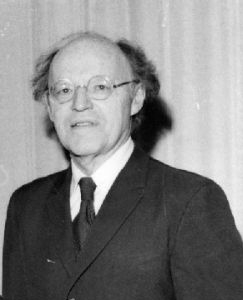
Edward Arthur Henry Pakenham, 6th Earl of Longford and an Irish peer, politician, and littérateur, is born on December 29, 1902. Also known as Eamon de Longphort, he is a member of the fifth Seanad Éireann, the upper house of the Oireachtas, in the 1940s.

Pakenham is the elder son of Thomas Pakenham, 5th Earl of Longford and Mary, Countess of Longford, née Child-Villiers. He is the only one of the Pakenham children on whom his mother dotes, apparently because he is to succeed to the earldom on his father’s death and because he is always in delicate health.

As a pupil at Eton College, where he twice received the Wilder Divinity Prize, Pakenham succeeds to the earldom when his father is killed in action at the Battle of Gallipoli on August 21, 1915. He is an Irish Nationalist since his days at Eton, taking inspiration from the Easter Rising in 1916 and the Russian Revolution of 1917. He learned Irish and adopted the name Eamon de Longphort.

Pakenham becomes an undergraduate at Christ Church, Oxford and meets his future wife, Christine Patti Trew, an Oxford “undergraduette.” They are married on July 18, 1925. His political views make him unpopular at both Eton and Christ Church, where he is famously put in “Mercury,” the pond containing a statue of Mercury in Tom Quad.

Pakenham becomes Chairman of the Gate Theatre in Dublin in 1930 and continues to work for the theatre until 1936, when he founds the Longford Players. His plays include Ascendancy, The Melians, The Vineyard, and Yahoo. An excellent linguist and Classical scholar, he translates Le Bourgeois gentilhomme, Le Malade Imaginaire, L’école des femmes, Tartuffe, Le Barbier de Séville, Agamemnon and Oedipus Rex and adapts the novella Carmilla for the stage.

Pakenham also has several volumes of poetry published, some at the expense of his mother when he is still at Eton, but he is not considered to have been a very good poet.

Pakenham is an Anglo-Catholic who never leaves the Church of Ireland. On November 13, 1946, he is nominated by the Taoiseach, Éamon de Valera, as a member of 5th Seanad Éireann, filling a vacancy caused by the death of Professor William Magennis. He is not re-appointed to the 6th Seanad.

Pakenham often collaborates with his wife with whom he is also responsible for redecorating Pakenham Hall, now Tullynally Castle, in Chinese style. Pakenham Hall is often the scene of gatherings of Oxford-educated intellectuals such as John Betjeman, Evelyn Waugh, and Maurice Bowra.

Edward Pakenham dies without issue on February 4, 1961, and is succeeded by his younger brother Frank. He is buried at Mount Jerome Cemetery in Dublin.


Leave a comment

The Downing Street Declaration

major-and-reynoldsTaoiseach of the Republic of Ireland, Albert Reynolds, and Prime Minister of the United Kingdom, John Major, sign the Downing Street Declaration (DSD) on December 15, 1993, at the British Prime Minister’s office in 10 Downing Street. The joint declaration stipulates that, if the Irish Republican Army (IRA) stops its campaign for three months, Sinn Féin will be allowed to join all-party talks.

The declaration affirms both the right of the people of Ireland to self-determination, and that Northern Ireland will be transferred to the Republic of Ireland from the United Kingdom only if a majority of its population is in favour of such a move. It also includes, as part of the prospective of the so-called “Irish dimension,” the principle of consent that the people of the island of Ireland, have the exclusive right to solve the issues between North and South by mutual consent.

The latter statement, which later becomes one of the points of the Good Friday Agreement, is key to produce a positive change of attitude by the republicans towards a negotiated settlement. The joint declaration also pledges the governments to seek a peaceful constitutional settlement, and promises that parties linked with paramilitaries, such as Sinn Féin, can take part in the talks, so long as they abandon violence.

The declaration, after a meeting between Sinn Féin President Gerry Adams and American congressman Bruce Morrison, which is followed by a joint statement issued by Adams and John Hume, is considered sufficient by the Provisional Irish Republican Army to announce a ceasefire on August 31, 1994 which is then followed on October 13 by an announcement of a ceasefire from the Combined Loyalist Military Command.

(Pictured: (L to R) John Major, Prime Minister of the United Kingdom, and Albert Reynolds, Taoiseach of the Republic of Ireland)


Leave a comment

Death of Erskine Hamilton Childers, 4th President of Ireland

Erskine Hamilton Childers, Fianna Fáil politician who serves as the 4th President of Ireland, dies on November 17, 1974. He also serves as Tánaiste and Minister for Health from 1969 to 1973, Minister for Transport and Power from 1959 to 1969, Minister for Posts and Telegraphs from 1951 to 1954 and 1966 to 1969. He served as a Teachta Dála (TD) from 1938 to 1973.

Childers is born on December 11, 1905, in the Embankment Gardens, London, to a Protestant family originally from Glendalough, County Wicklow. He is educated at Gresham’s School, Holt, and the University of Cambridge. In 1922, when Childers is sixteen, his father, Robert Erskine Childers, is executed by the new Irish Free State on politically inspired charges of gun-possession. After attending his father’s funeral, Childers returns to Gresham’s, then two years later he goes on to Trinity College, Cambridge.

After finishing his education, Childers works for a period in a tourism board in Paris. In 1931, Éamon de Valera invites him to work for his recently founded newspaper, The Irish Press, where Childers becomes advertising manager. He becomes a naturalised Irish citizen in 1938. That same year, he is first elected as a Fianna Fáil Teachta Dála (TD) for Athlone–Longford. He remains in the Dáil Éireann until 1973, when he resigns to become President.

Childers joins the cabinet in 1951 as Minister for Posts and Telegraphs in the de Valera government. He then serves as Minister for Lands in de Valera’s 1957–59 cabinet, as Minister for Transport and Power under Seán Lemass, and, successively, as Transport Minister, Posts and Telegraphs Minister, and Health Minister under Jack Lynch. He becomes Tánaiste in 1969.

Fine Gael TD Tom O’Higgins, who had almost won the 1966 presidential election, is widely expected to win the 1973 election when he is again the Fine Gael nominee. Childers is nominated by Fianna Fáil at the behest of de Valera, who pressures Jack Lynch in the selection of the presidential candidate. He is a controversial nominee, owing not only to his British birth and upbringing but to his Protestantism. However, on the campaign trail his personal popularity proves enormous, and in a political upset, Childers is elected the fourth President of Ireland on May 30, 1973, defeating O’Higgins by 635,867 votes to 578,771.

Childers quickly gains a reputation as a vibrant, extremely hard-working president, and becomes highly popular and respected. However, he has a strained relationship with the incumbent government, led by Taoiseach Liam Cosgrave of Fine Gael. Childers had campaigned on a platform of making the presidency more open and hands-on, which Cosgrave views as a threat to his own agenda as head of government. Childers considers resigning from the presidency but is convinced to remain by Cosgrave’s Minister for Foreign Affairs and Trade, Garret FitzGerald.

Though frustrated about the lack of power he has in the office, Childers’ daughter Nessa believes that he plays an important behind-the-scenes role in easing the Northern Ireland conflict, reporting that former Prime Minister of Northern Ireland Terence O’Neill meets secretly with her father at Áras an Uachtaráin on at least one occasion.

Prevented from transforming the presidency as he desired, Childers instead throws his energy into a busy schedule of official visits and speeches, which is physically taxing. On November 17, 1974, just after making a speech to the Royal College of Physicians of Ireland in Dublin, Childers suffers a heart attack. He dies the same day at Mater Misericordiae University Hospital.

Childers’s state funeral in St. Patrick’s Cathedral, Dublin is attended by world leaders including the Louis Mountbatten, 1st Earl Mountbatten of Burma (representing Queen Elizabeth II), the Prime Minister of the United Kingdom and leader of the Opposition, and presidents and crowned heads of state from Europe and beyond. He is buried in the grounds of the Church of Ireland Derralossary church in Roundwood, County Wicklow.


Leave a comment

De Valera Rejects Churchill’s Statement About Irish Ports

In a statement before Dáil Éireann on November 7, 1940, Taoiseach Éamon de Valera rejects Prime Minister of the United Kingdom Winston Churchill’s statement about Irish ports stating that there can be no question of handing over Irish ports for use by British forces while the country is partitioned. This move helps ensure Ireland’s neutrality during World War II.

In the House of Commons of the United Kingdom on November 5, Churchill bemoans the fact that the Irish ports had been returned to the Free State government in 1938:

“The fact that we cannot use the South and West Coasts of Ireland to refuel our flotillas and aircraft and thus protect the trade by which Ireland as well as Great Britain lives, is a most heavy and grievous burden and one which should never have been placed on our shoulders, broad though they be.”

De Valera responds to Churchill’s statement two days later, on November 7:

“I would have refrained from making any comment upon it were it not that it has been followed by an extensive Press campaign by Britain itself, and re-echoed in the United States of America, the purport of the campaign being that we should surrender or lease our ports to Britain for the conduct of the war…

We have chosen the policy of neutrality in this war because we believed that it was the right policy for our people. It is the policy which has been accepted, not merely by this House, but by our people as a whole, and nobody who realises what modern war means, and what it means particularly for those who have not sufficient air defences, will have the slightest doubt that that policy was the right one, apart altogether from any questions of sympathy on one side or the other…

There can be no question of the handing over of these ports so long as this State remains neutral. There can be no question of leasing these ports. They are ours. They are within our sovereignty, and there can be no question, as long as we remain neutral, of handing them over on any condition whatsoever. Any attempt to bring pressure to bear on us by any side—by any of the belligerents—by Britain—could only lead to bloodshed.”


Leave a comment

Charles Haughey Acquitted of Conspiring in the Arms Crisis

Charles Haughey, former Minister for Finance, and three others including former Minister for Agriculture Neil Blaney, are acquitted on October 23, 1970, of charges that they had conspired to illegally import arms and ammunition into Ireland for the Irish Republican Army (IRA), an incident known as the Arms Crisis.

The Garda Special Branch informs the Minister for Justice Micheál Ó Móráin and Taoiseach Jack Lynch that a plot to import arms exists and includes government members, however Lynch takes no action until the Special Branch makes opposition leader Liam Cosgrave aware of the plot. Cosgrave tells Lynch he is aware of the plot and will announce it in the Dáil the next day if he does not act. Lynch subsequently requests that Haughey and Blaney resign from the Cabinet. Both men refuse, saying they had done nothing illegal. Lynch then asks President Éamon de Valera to terminate their appointments as members of the government, a request that de Valera is required to grant by convention. Haughey and Blaney are subsequently tried in court along with Captain James Kelly, a former intelligence captain in the Irish Army, and Albert Luykx, a former Flemish Nationalist and businessman, who allegedly used his contacts to buy the arms.

The verdict, reached by jury after two hours and 10 minutes of deliberation, leads to political repercussions for the Government of Taoiseach Jack Lynch. Lynch had dismissed the Haughey from his Cabinet post the previous May on the allegation of illegal gunrunning.

Witnesses declare during the 14‐day trial that the arms, imported from the Continental Europe, were ultimately destined for the Roman Catholic minority in Northern Ireland. However, the defense contends that the arms had been brought in with the knowledge and approval of the current Minister for Agriculture, Jim Gibbons, who was serving as Minister for Defence at the time.

The jury rules that the prosecution had failed to prove its case.  Haughey is carried from the High Court after the acquittal, as are the three other defendants.

Although cleared of wrongdoing, it appears as if Haughey’s political career is finished. Blaney eventually resigns from Fianna Fáil but Haughey remains. He spends his years on the backbenches building support within the grassroots of the party. During this time, he remains loyal to the party and serves the leader but after the debacle of the Arms Crisis neither man trusts the other.

(Pictured: Charles Haughey with Neil Blaney at the 1970 at the Arms Trial)


Leave a comment

Opening of the Tipperary Rural & Business Development Institute in Thurles

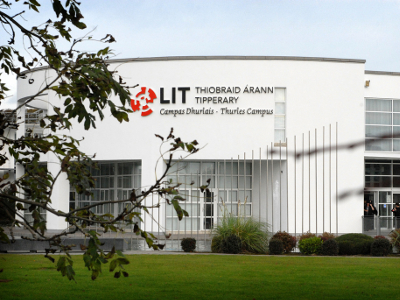
The Tipperary Rural & Business Development Institute (TRBDI), a college of higher education, development agency and research centre founded by the Irish Government in 1998, opens in Thurles, County Tipperary on September 27, 1999. It is one of the five constituent schools of Limerick Institute of Technology (LIT).

Taoiseach Bertie Ahern officially inaugurates the institute on April 7, 2000. The college uses Tipperary Institute as its trading name. In 2010 the Irish government introduces rationalization measures to cut costs of third level bodies, and commences a merger between Tipperary Institute and Limerick Institute of Technology. The formal integration of Tipperary Institute into LIT on September 1, 2011, sees the two campuses become LIT Tipperary.

The college has two academic departments: Business, Education and Social Science and Technology, Media and Science. It is fully accredited by the Higher Education and Training Awards Council (HETAC) and offers National Framework of Qualifications Level 7 and Level 8 full-time degree courses, as well as a number of part-time and evening courses. The college also facilitates the joint-run BSc (Hons) in Strength & Conditioning (level 8) in conjunction with online sports college Setanta College.


Leave a comment

The Funeral of Michael Collins

Michael Collins, soldier and politician who is a leading figure in the struggle for, and achievement of Irish independence in the early 20th century, is laid to rest in Dublin‘s Glasnevin Cemetery on August 28, 1922.

Collins is shot and killed by anti-Treaty ambushers as his Free State Army convoy approaches Béal na Bláth, an isolated crossroads in County Cork, on August 22, 1922, during the Irish Civil War.

Collins’s body is transported by sea from Cork to Dublin. He lay in state for three days in Dublin City Hall where tens of thousands of mourners filed past his coffin to pay their respects, including many British soldiers departing Ireland who had fought against him. His funeral mass on August 28, 1922, takes place at Dublin’s St. Mary’s Pro-Cathedral where a number of foreign and Irish dignitaries are in attendance. According to a report in The New York Times, the seven-mile journey from the cathedral to his final resting place in Glasnevin Cemetery is lined with half a million mourners, almost one fifth of the country’s population at the time, and many of whom likely differed with him on his Treaty vote.

No official inquiry is ever undertaken into Collins’s death and consequently there is no official version of what happened, nor are there any authoritative, detailed contemporary records.

In this vacuum, independent investigations and conspiracy theorists have put forward a number of suspects as having executed or ordered his death, including an anti-Treaty sharpshooter, members of his own escort, the British Secret Intelligence Service, or Éamon de Valera himself.

De Valera is alleged to have declared in 1966, “It is my considered opinion that in the fullness of time history will record the greatness of Michael Collins; and it will be recorded at my expense.”

An annual commemoration ceremony takes place each year in August at the ambush site at Béal na Bláth, organised by The Béal na mBláth Commemoration Committee. In 2009, former President of Ireland Mary Robinson gives the oration. In 2010, the Minister for Finance Brian Lenihan, Jnr. becomes the first Fianna Fáil person to give the oration. In 2012, on the 90th anniversary of the death of Collins, Taoiseach Enda Kenny gives the oration, the first serving head of government to do so. There is also a remembrance ceremony in Glasnevin Cemetery every year at Collins’s gravesite on the anniversary of his death.

RIP Big Fellow!


Leave a comment

Birth of Crime Reporter Veronica Guerin

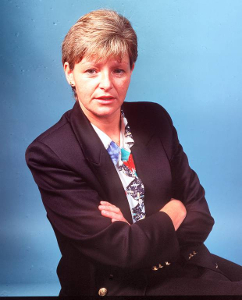
Veronica Guerin, Irish crime reporter, is born in Artane, Dublin, on July 5, 1958. Guerin attends Catholic school where she excels in athletics and later studies accountancy at Trinity College, Dublin. She plays for both the Ireland women’s national basketball team and Republic of Ireland women’s national football team, representing the latter in a match against England at Dalymount Park in May 1981.

After she graduates, her father employs her at his company but, following his death three years later, she changes professions and starts a public relations firm in 1983, which she runs for seven years. In 1983–84, she serves as secretary to the Fianna Fáil group at the New Ireland Forum. She serves as Charles Haughey‘s personal assistant, and becomes a family friend, taking holidays with his children. In 1987 she serves as election agent and party treasurer in Dublin North for Seán Haughey.

In 1990, she changes careers again, switching to journalism as a reporter with The Sunday Business Post and Sunday Tribune, working under editor Damien Kiberd. Craving first-hand information, she pursues a story directly to the source with little regard for her personal safety, to engage those she deems central to a story. This allows her to build close relationships with both the legitimate authorities, such as the Garda Síochána, and the criminals, with both sides respecting her diligence by providing highly detailed information. She also reports on Irish Republican Army activities in the Republic of Ireland.

From 1994 onwards, she begins to write about criminals for the Sunday Independent. Using her accountancy knowledge to trace the proceeds of illegal activity, she uses street names or pseudonyms for organized crime figures to avoid Irish libel laws.

When she begins to cover drug dealers, and gains information from convicted drugs criminal John Traynor, she receives numerous death threats. The first violence against her occurs in October 1994, when two shots are fired into her home after her story on murdered crime kingpin Martin Cahill is published. Guerin dismisses the “warning.” The day after writing an article on Gerry “The Monk” Hutch, on January 30, 1995, she answers her doorbell to a man pointing a revolver at her head. The gunman misses and shoots her in the leg. Regardless, she vows to continue her investigations.

On September 13, 1995, convicted criminal John Gilligan, Traynor’s boss, attacks her when she confronts him about his lavish lifestyle with no source of income. He later calls her at home and threatens to kidnap and rape her son and kill her if she writes anything about him.

On the evening of June 25, 1996, Gilligan drug gang members Charles Bowden, Brian Meehan, Kieran ‘Muscles’ Concannon, Peter Mitchell and Paul Ward meet at their distribution premises on the Greenmount Industrial Estate. The following day, while driving her red Opel Calibra, Guerin stops at a red traffic light on the Naas Dual Carriageway near Newlands Cross, on the outskirts of Dublin, unaware she is being followed. She is shot six times, fatally, by one of two men sitting on a motorcycle.

About an hour after Guerin is murdered, a meeting takes place in Moore Street, Dublin, between Bowden, Meehan, and Mitchell. Bowden later denies under oath in court that the purpose of the meeting is the disposal of the weapon but rather that it was an excuse to appear in a public setting to place them away from the incident.

At the time of her murder, Traynor is seeking a High Court order against Guerin to prevent her from publishing a book about his involvement in organised crime. Guerin is killed two days before she is due to speak at a Freedom Forum conference in London.

Guerin’s funeral is attended by Ireland’s Taoiseach John Bruton, and the head of the armed forces. It is covered live by Raidió Teilifís Éireann. On July 4, labour unions across Ireland call for a moment of silence in her memory, which is duly observed by people around the country. Guerin is buried in Dardistown Cemetery, County Dublin.


Leave a comment

Oscar Traynor Leads Anti-Treaty IRA Occupation of O’Connell Street

On June 29, 1922, during the Irish Civil War, Oscar Traynor leads Anti-Treaty members of the Irish Republican Army‘s (IRA) 1st Dublin Brigade to occupy O’Connell Street in order to help the Four Courts garrison. His men also take up positions in York Street, South Circular Road, Capel Street, Parnell Square, and Dolphin’s Barn.

Traynor is an Irish politician and republican born into a strongly nationalist family in Dublin on March 21, 1886. He serves in a number of cabinet positions, most notably as the country’s longest-serving Minister for Defence. He is educated by the Christian Brothers in Dublin. In 1899 he is apprenticed to John Long, a famous woodcarver. As a young man he is a noted footballer and tours Europe as a goalkeeper with Belfast Celtic F.C. whom he plays with from 1910 to 1912.

Traynor joins the Irish Volunteers and takes part in the Easter Rising in 1916, following which he is interned in Wales. During the Irish War of Independence, he is brigadier of the Dublin Brigade of the Irish Republican Army. He leads the attack on The Custom House in 1921 and an ambush on the West Kent Regiment at Claude Road, Drumcondra on June 16, 1921, when the Thompson submachine gun is fired for the first time in action. When the Irish Civil War breaks out in June 1922, Traynor takes the republican side.

The Dublin Brigade is split however, with many of its members following Michael Collins in taking the pro-Treaty side. On June 29, 1922, Traynor and his supporters occupy O’Connell Street in an attempt to help the republicans who have occupied the Four Courts but are under attack by Free State forces. Traynor and his men hold out for a week of street fighting before making their escape. He organises guerilla activity in south Dublin and County Wicklow, before being captured by Free State troops in September. He is then imprisoned for the remainder of the war.

On March 11, 1925, Traynor is elected to Dáil Éireann in a by-election as a Sinn Féin Teachta Dála (TD) for the Dublin North constituency, though he does not take his seat due to the abstentionist policy of Sinn Féin. He is re-elected as one of eight members for Dublin North in the June 1927 Irish general election but just one of six Sinn Féin TDs. Once again, he does not take his seat. He does not contest the second general election called that year but declares his support for Fianna Fáil. He stands again in the 1932 general election and is elected as a Fianna Fáil TD for Dublin North.

In 1936 Traynor is first appointed to the Cabinet as Minister for Posts and Telegraphs. In September 1939 he is appointed Minister for Defence and holds the portfolio until February 1948. In 1948 he becomes President of the Football Association of Ireland, a position he holds until his death. He serves as Minister for Defence in several Fianna Fáil governments and as Minister for Justice, where he is undermined by his junior minister, and later Taoiseach, Charles Haughey, before he retires in 1961.

Oscar Traynor dies on December 15, 1963, in Dublin at the age of seventy-seven. He has a road named in his memory on the Coolock to Santry stretch in North Dublin.

(Pictured: Oscar Traynor in Dublin in July 1922)


Leave a comment

Establishment of the Dublin Institute for Advanced Studies

The Dublin Institute for Advanced Studies (DIAS) is established in Dublin on June 19, 1940, by Taoiseach Éamon de Valera under the Institute for Advanced Studies Act, 1940. The Institute consists of three schools: the School of Theoretical Physics, the School of Cosmic Physics and the School of Celtic studies. The Institute under the act is empowered to “train students in methods of advanced research” but does not itself award degrees. Graduate students working under the supervision of Institute researchers can, with the agreement of the governing board of the appropriate school, be registered for a higher degree in any university worldwide.

Shortly after becoming Taoiseach, Éamon de Valera investigates the possibility of setting up an institute of higher learning. Being of mathematical background, de Valera is aware of the decline of the Dunsink Observatory, where Sir William Rowan Hamilton, regarded as Ireland’s most influential mathematician, has held the position of Royal Astronomer of Ireland. Following meetings with prominent academics in the fields of mathematics and astronomy, he comes to the conclusion that astronomy at Dunsink should be revived and an institute for higher learning should be established.

The Institute is initially located at 64 and 65 Merrion Square and consists of the School of Theoretical Physics and the School of Celtic Studies, to which the School of Cosmic Physics is added in 1947. It is modeled on the Institute for Advanced Study in Princeton, New Jersey, which was founded in 1930. Most importantly, Erwin Schrödinger is interested in coming to Ireland, and this represents an opportunity not to be missed. The School of Celtic Studies owes its founding to the importance de Valera accords to the Irish language. He considers it a vital element in the makeup of the nation, and therefore important that the nation should have a place of higher learning devoted to this subject.

The founding of the Institute is somewhat controversial, since at the time only a minority are successfully completing elementary education, and university education is for the privileged. By this reasoning, the creation of a high-level research institute is a waste of scarce resources. However, Éamon de Valera is aware of the great symbolic importance such a body would have on the international stage for Ireland. This thinking influences much of de Valera’s premiership.

Work by the Geophysics section of the School of Cosmic Physics on the formation of the North Atlantic demonstrates that the Irish continental shelf extends much further than previously thought, thereby more than doubling the area of the seabed over which Ireland can claim economic exploitation rights under the international law of the sea. Fundamental work in statistical mechanics by the School of Theoretical Physics finds application in computer switching technology and leads to the establishment of an Irish campus company to exploit this intellectual property. The Institute has also in recent years been one of the main agents helping to set up a modern e-Infrastructure in support of all Irish research.

In 1968 the Royal Society recognises de Valera’s contribution to science in establishing the Institute by electing him to honorary fellowship.

Currently the Institute has its schools located at three premises on the Southside of Dublin at 10 Burlington Road, 31 Fitzwilliam Place and 5 Merrion Square. It also maintains a presence at Dunsink Observatory in north County Dublin.

(Pictured: Dublin Institute for Advanced Studies School of Theoretical Physics, 10 Burlington Road, Dublin)