seamus dubhghaill

Promoting Irish Culture and History from Little Rock, Arkansas, USA


Leave a comment

Birth of Henry Lawes Luttrell, 2nd Earl of Carhampton

General Henry Lawes Luttrell, 2nd Earl of Carhampton PC, Anglo-Irish politician and soldier, who both in public and private life attracts scandal, is born on August 7, 1743. He is spurned by colleagues in the British House of Commons who believe that in the election of 1769 he played an underhand role in denying his seat to the popular choice, the reformer John Wilkes. In 1788 he is publicly accused in Dublin of raping a twelve-year-old girl. Ten years later, his command in the suppression of the Irish Rebellion of 1798 is criticised by fellow officers for its savagery, and not least against women. His last years in Parliament are marked by his opposition to Catholic Emancipation, and to parliamentary reform.

Luttrell is the scion of an Anglo-Irish landed family, descendants of Sir Geoffrey de Luterel, who established Luttrellstown Castle, County Dublin, in the early 13th century. His grandfather, Henry Luttrell, had been a pardoned Jacobite commander murdered on the street in Dublin in 1717 supposedly by his former comrades. His father, Simon Luttrell, is successively titled Baron Irnham, Viscount Carhampton and Earl Carhampton, all in the Peerage of Ireland. His mother, Maria, is the daughter of Sir Nicholas Lawes, Governor of Jamaica, and the eventual heir to a slave plantation on the West Indian Island which, on her husband’s death in 1787, passes to her son.

Educated at Westminster School and Christ Church, Oxford, Luttrell is commissioned into the 48th (Northamptonshire) Regiment of Foot in 1757. Two years later he becomes lieutenant of the 34th (Cumberland) Regiment of Foot.

Father and son, both accounted “notorious womanizers,” have a bitter relationship. His father once challenges him to a duel, but he declines, observing that his father is not a gentleman.

Luttrell, described as “strong in body, if not in mind,” achieves a reputation for bravery as a soldier during the Seven Years’ War, becoming Deputy Adjutant-General of the British Forces in Portugal. In 1768 he becomes a Tory Member of Parliament representing Bossiney.

With the support of the Grafton ministry and of the Court, in 1769 Luttrell stands in Middlesex against John Wilkes, the radical and popular figure who had already been the constituency’s three-time democratic choice. He loses the poll (1,143 votes to 269) but is seated in Parliament, Wilkes having once again been barred as an adjudged felon. As a result of the affair, for some months, Luttrell dares not appear in the street and is “the most unpopular man in the House of Commons.”

The government rewards Luttrell by appointing him Adjutant General for Ireland in 1770. He continues to sit in the Commons, where he describes the Whigs in their opposition to the conduct of the American War, as “the abetters of treason and rebellion combined purposely for the ruin of their country.”

Luttrell becomes active in Irish politics and between 1783 and 1787, he sits in the Irish House of Commons for Old Leighlin. On his father’s death in 1787, he succeeds to the earldom of Carhampton and other titles. He becomes Colonel of the 6th Dragoon Guards and Lieutenant-General of the Ordnance in Ireland.

In 1788, Luttrell is publicly accused in Dublin of the rape of a 12-year-old girl. Having been paid to deliver a message, Mary Neal claims she is bundled into a brothel and there assaulted throughout the night by Luttrell. The keeper of the house, Maria Llewellyn, is charged in a case marked by accusations of witness tampering, the death in prison of Mary’s mother and newborn baby sister and by the insinuation that Mary was already working as a prostitute. The affair becomes a cause célèbre with the public intervention of Archibald Hamilton Rowan, later a founding member of the Dublin Society of United Irishmen. To clear Mary’s name he brings her to Dublin Castle to see the Lord Lieutenant, John Fane, 10th Earl of Westmorland. Westmorland, unmoved, pardons Llewellyn and sets her at liberty. Luttrell is never asked to answer for raping Mary Neal. In 1790 he re-enters the British Parliament as Member for Plympton Erle.

In 1791 and 1792, Luttrell helps vote down bills to abolish the slave trade. Negroes, he proposes, only want “to murder their masters, ravish their women, and drink all their rum.” At the same time, he opposes lifting civil disabilities on Roman Catholics by abolishing the Test Act in Scotland and speaks scathingly of parliamentary reform.

In October 1793, a younger brother, Temple Simon Luttrell, is arrested in Boulogne and, until February 1795, is held in Paris where, on the strength of their sister Anne Luttrell being married to Prince Henry, Duke of Cumberland, he is publicly exhibited as the brother of the king of England.

In 1795, Luttrell is entrusted with the breakup and disarming of Defenders, the agrarian semi-insurgency, in Connacht. His proceedings and impressment of some 1,300 “rebels” into the British navy elicits criticism in otherwise loyal circles.

In 1796, with the leaders of the democratic party, the United Irishmen, preparing for a French-assisted insurrection, Luttrell is given overall command of the Crown forces in Ireland. He demonstrates still greater ruthlessness in attempting to “pacify” the country and suppress the eventual rising in the summer of 1798. His command has the unusual distinction of being upbraided by his successor as Commander in Chief, Sir Ralph Abercromby, for an army “in a state of licentiousness, which must render it formidable to everyone but the enemy.”

Luttrell is seen by his critics as having “fanned the flame of disaffection into open rebellion” by “the picketings, the free quarters, half hangings, flogging and pitch-cappings” he directs.

In July 1799, Luttrell sells his Irish property and by his own later account, he takes no part in the Acts of Union. He claims to be “disgusted at the scene that was passing before me”, and to abandon Ireland because, under a “cowardly” government, he sees “the country likely to become Catholic.” When the Dublin Post of May 2, 1811, erroneously reports his death, he demands a retraction which they print under the headline Public Disappointment.

Luttrell purchases an estate at Painshill Park in Surrey and lives for several years in relative obscurity. From 1813 he harries the government of Robert Jenkinson, 2nd Earl of Liverpool, with the claim that George III had promised him a secure seat in the Commons. In June 1817, five weeks short of his eightieth birthday, he finds his own way back to Parliament as Member for Ludgershall and revenges himself, in the four years remaining to him, by voting with the opposition. This, however, does not extend to joining in the attacks on the domestic spy system in 1818 nor to voting for parliamentary reform in 1819. Moreover, in the wake of the Peterloo Massacre, he supports the government, lauding the use of deadly force against “the Radicals and their system.”

Luttrell dies at his home at Bruton Street, London, on April 25, 1821.


Leave a comment

Execution of Oliver Plunkett, Catholic Archbishop of Armagh

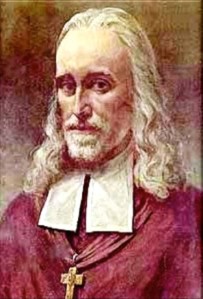
Oliver Plunkett (Irish: Oilibhéar Pluincéid), Catholic Archbishop of Armagh and Primate of All Ireland who is the last victim of the Popish Plot, is executed in Tyburn, London, England, on July 1, 1681. He is beatified in 1920 and canonised in 1975, thus becoming the first new Irish saint in almost seven hundred years.

Plunkett is born on November 1, 1625 (earlier biographers give his date of birth as November 1, 1629, but 1625 has been the consensus since the 1930s) in Loughcrew, County Meath, to well-to-do parents with Hiberno-Norman ancestors. A grandson of James Plunket, 8th Baron Killeen (c. 1542-1595), he is related by birth to a number of landed families, such as the recently ennobled Earls of Roscommon, as well as the long-established Earls of Fingall, Lords Louth, and Lords Dunsany. Until his sixteenth year, his education is entrusted to his cousin Patrick Plunkett, Abbot of St. Mary’s, Dublin, and brother of Luke Plunket, 1st Earl of Fingall, who later becomes successively Bishop of Ardagh and of Meath.

As an aspirant to the priesthood, Plunkett sets out for Rome in 1647, under the care of Father Pierfrancesco Scarampi of the Roman Oratory. At this time the Irish Confederate Wars are raging in Ireland. These are essentially conflicts between native Irish Catholics, English and Irish Anglicans and Nonconformists. Scarampi is the Papal envoy to the Catholic movement known as the Confederation of Ireland. Many of Plunkett’s relatives are involved in this organisation.

Plunkett is admitted to the Pontifical Irish College in Rome and proves to be an able pupil. He is ordained a priest in 1654 and deputed by the Irish bishops to act as their representative in Rome. Meanwhile, the Cromwellian conquest of Ireland (1649–53) had defeated the Catholic cause in Ireland. In the aftermath the public practice of Catholicism is banned, and Catholic clergy are executed. As a result, it is impossible for Plunkett to return to Ireland for many years. He petitions to remain in Rome and, in 1657, becomes a professor of theology. Throughout the period of the Commonwealth and the first years of Charles II‘s reign, he successfully pleads the cause of the Irish Catholic Church and also serves as theological professor at the College of Propaganda Fide. At the Congregation of Propaganda Fide on July 9, 1669, he is appointed Archbishop of Armagh, the Irish primatial see, and is consecrated on November 30 at Ghent by the Bishop of Ghent, Eugeen-Albert, count d’Allamont. He eventually sets foot on Irish soil again on March 7, 1670, as the Stuart Restoration of 1660 had begun on a basis of toleration. The pallium is granted him in the Consistory of July 28, 1670.

After arriving back in Ireland, Plunkett tackles drunkenness among the clergy, writing, “Let us remove this defect from an Irish priest, and he will be a saint.” The Penal Laws had been relaxed in line with the Declaration of Breda in 1660 and he is able to establish a Jesuit College in Drogheda in 1670. A year later 150 students attend the college, no fewer than 40 of whom are Protestant, making this college the first integrated school in Ireland. His ministry is a successful one and he is said to have confirmed 48,000 Catholics over a four-year period. The government in Dublin, especially under the Lord Lieutenant of Ireland, James Butler, 1st Duke of Ormond (the Protestant son of Catholic parents), extend a generous measure of toleration to the Catholic hierarchy until the mid-1670s.

On the enactment of the Test Act in 1673, to which Plunkett does not agree for doctrinal reasons, the college is closed and demolished. He goes into hiding, travelling only in disguise, and refuses a government edict to register at a seaport to await passage into exile. For the next few years, he is largely left in peace since the Dublin government, except when put under pressure from the English government in London, prefer to leave the Catholic bishops alone.

In 1678 the so-called Popish Plot, concocted in England by clergyman Titus Oates, leads to further anti-Catholic action. Archbishop of Dublin Peter Talbot is arrested, and Plunkett again goes into hiding. Despite being on the run and with a price on his head, he refuses to leave his flock. He is arrested in Dublin on December 6, 1679, and imprisoned in Dublin Castle, where he gives absolution to the dying Talbot. He is tried at Dundalk for conspiring against the state by allegedly plotting to bring 20,000 French soldiers into the country, and for levying a tax on his clergy to support 70,000 men for rebellion. Though this is unproven, some in government circles are worried about the possibility that a repetition of the Irish Rebellion of 1641 is being planned and, in any case, this is a convenient excuse for proceeding against Plunkett.

Plunkett is found guilty of high treason in June 1681 “for promoting the Roman faith,” and is condemned to death. Numerous pleas for mercy are made but Charles II, although himself a reputed crypto-Catholic, thinks it too politically dangerous to spare Plunkett.

Plunkett is hanged, drawn and quartered at Tyburn on July 1, 1681, the last Catholic martyr to die in England. His body is initially buried in two tin boxes, next to five Jesuits who had died previously, in the courtyard of St. Giles in the Fields church. The remains are exhumed in 1683 and moved to the Benedictine monastery at Lamspringe, near Hildesheim in Germany. The head is brought to Rome, and from there to Armagh, and eventually to Drogheda where since June 29, 1921, it has rested in St. Peter’s Roman Catholic Church. Most of the body is brought to Downside Abbey, England, where the major part is located today, with some parts remaining at Lamspringe. On the occasion of his canonization in 1975 his casket is opened, and some parts of his body given to the St. Peter’s Church in Drogheda.


Leave a comment

The Arrest of Oliver Plunkett, Archbishop of Armagh

Oliver Plunkett, Catholic Archbishop of Armagh and Primate of All Ireland, is accused of instigating the Popish Plot and arrested on December 6, 1679. He is the last victim of the Popish Plot.

Plunkett is born on November 1, 1625, in Loughcrew, County Meath, to parents of Hiberno-Norman ancestors. Until his sixteenth year, his education is entrusted to his cousin Patrick Plunkett, Abbot of St. Mary’s, Dublin, and brother of Luke Plunkett, 1st Earl of Fingall, who later becomes successively Bishop of Ardagh and of Meath. As an aspirant to the priesthood, he sets out for Rome in 1647.

Plunkett is admitted to the Pontifical Irish College in Rome and proves to be an able pupil. He is ordained a priest in 1654 and deputed by the Irish bishops to act as their representative in Rome. Meanwhile, the Cromwellian conquest of Ireland (1649–1653) has defeated the Roman Catholic cause in Ireland. As a result, it is impossible for Plunkett to return to Ireland for many years, so he petitions to remain in Rome. At the Congregation of Propaganda Fide on July 9, 1669, he is appointed Archbishop of Armagh and is consecrated on November 30 at Ghent. He returns to Ireland on March 7, 1670, as the English Restoration of 1660 has begun on a basis of toleration.

Plunkett sets about reorganising the ravaged Roman Church and builds schools both for the young and for clergy. The Penal Laws have been relaxed in line with the Declaration of Breda in 1660 and he is able to establish a Jesuit College in Drogheda in 1670, which becomes the first Catholic-Protestant integrated school in Ireland.

On the enactment of the Test Act in 1673, to which Plunkett does not agree for doctrinal reasons, the college is closed and demolished. Plunkett goes into hiding, traveling only in disguise, and refuses a government edict to register at a seaport to await passage into exile.

In 1678 the so-called Popish Plot, concocted in England by clergyman Titus Oates, leads to further anti-Roman Catholic action. Archbishop Peter Talbot of Dublin is arrested, and Plunkett again goes into hiding. Despite being on the run and with a price on his head, he refuses to leave his flock.

Plunkett is arrested in Dublin on December 6, 1679, and imprisoned in Dublin Castle. He is tried at Dundalk for conspiring against the state by allegedly plotting to bring 20,000 French soldiers into the country, and for levying a tax on his clergy to support 70,000 men for rebellion. The trial soon collapses as the prosecution witnesses are themselves wanted men and afraid to appear in court. Plunkett is moved to Newgate Prison in London in order to face trial at Westminster Hall. The first grand jury finds no true bill, but he is not released. The second trial is generally regarded as a serious miscarriage of justice as Plunkett is denied defending counsel.

Archbishop Plunkett is found guilty of high treason in June 1681 “for promoting the Roman faith,” and is condemned to death. Plunkett is hanged, drawn, and quartered at Tyburn on July 1, 1681, the last Roman Catholic martyr to die in England. His body is initially buried in two tin boxes in the courtyard of St. Giles in the Fields church. The remains are exhumed in 1683 and moved to the Benedictine monastery at Lamspringe, near Hildesheim in Germany. His head is brought to Rome, and from there to Armagh, and eventually to Drogheda where it has rested in St. Peter’s Church since June 29, 1921. Most of the body is brought to Downside Abbey, England, where the major part is located today, with some parts remaining at Lamspringe.

Sir Oliver Plunkett is canonised in Rome by Pope Paul VI on October 12, 1975, the first new Irish saint in almost seven hundred years, and the first of the Irish martyrs to be beatified. For the canonisation, the customary second miracle is waived.


Leave a comment

Death of Charles Leslie, Jacobite Propagandist & Non-Juror

Charles Leslie, former Church of Ireland priest who becomes a leading Jacobite propagandist after the 1688 Glorious Revolution, dies in Glaslough, County Monaghan on April 13, 1722. One of a small number of Irish Protestants to actively support the Stuarts after 1688, he is best remembered today for his role in publicising the 1692 Massacre of Glencoe.

Leslie is born on July 27, 1650, in Dublin, the sixth son and one of eight surviving children of John Leslie (1571-1671) and Katherine Conyngham (or Cunningham), daughter of Dr. Alexander Cunningham, Dean of Raphoe. He is allegedly named after the executed Charles I and educated at Enniskillen school and Trinity College, Dublin. After his father dies in 1671, he studies law in London before changing career and being ordained as an Anglican priest in 1681. Shortly afterwards, he returns to the family estate at Glaslough in County Monaghan and marries Jane Griffith. They have a daughter, Vinigar Jane, who appears to have died young and two sons, Robert (1683-1744) and Henry who are also Jacobites and spend time in exile.

Leslie is appointed assistant curate for the Church of Ireland parish of Donagh but as most of his parish is Roman Catholic or Presbyterian, he has few duties. His father had been chaplain to Charles I and a key supporter of Caroline religious reforms, first in Scotland, then in Ireland as Bishop of Raphoe in 1633, while the estate at Glaslough was granted by Charles II in 1660 as a reward for his service. With this background, Leslie is a firm supporter of the Stuart dynasty, although deeply hostile to Catholicism and soon becomes involved in political and theological disputes.

When the Catholic James II becomes King in 1685, his brother-in-law Henry Hyde, 2nd Earl of Clarendon, is appointed Lord Lieutenant of Ireland. In July 1686, Leslie’s legal training results in Clarendon making him chancellor of Connor cathedral and later Justice of the Peace. Clarendon’s authority is overshadowed by his Catholic deputy Richard Talbot, 1st Earl of Tyrconnell, who begins undermining legal restrictions on Catholics embodied in the Test Act. Clarendon employs Leslie’s polemical skills to oppose the appointment of Catholics to public office, but he is recalled in 1687. When James is deposed by the Glorious Revolution in December 1688, Leslie is in the Isle of Wight.

Shortly afterwards, Leslie becomes Clarendon’s personal chaplain and like his patron refuses to take the oath of allegiance to William III and Mary II. Like other non-jurors, he is deprived of his Church offices and becomes instead one of the most prominent Jacobite and Tory propagandists. This includes a long dispute with his Trinity College contemporary William King, who supports the Revolution. Gilbert Burnet, Bishop of Salisbury, later names him ‘the violentest Jacobite’ active in England during these years.

Much of Leslie’s early writing focuses on Scotland, where the 1690 Settlement ends Episcopacy and restores a Presbyterian kirk. He uses this to inspire concern about William’s intentions towards the Church of England. Ironically, his modern fame now rests primarily on a pamphlet written in 1695, called Gallienus Redivivus, or Murther will out, &c. Being a true Account of the De Witting of Glencoe, Gaffney. The focus of this is William’s alleged complicity in the 1672 death of Dutch Republican leader Johan de Witt, with other crimes including Glencoe included as secondary charges. During the Jacobite rising of 1745, Charles Stuart orders Leslie’s pamphlet and the 1695 Parliamentary minutes of the investigation to be reprinted in the Edinburgh Caledonian Mercury.

During the 1690s, Leslie serves as a messenger between James’ court in exile at Château de Saint-Germain-en-Laye and the Non-Juror community in England, including the non-juror bishops Jeremy Collier, Thomas Ken and George Hickes. He defends Collier and two other non-juror priests when they become involved in a furor over the execution of Sir John Friend and Sir William Parkyns for their role in the 1696 Jacobite plot to assassinate William. Immediately prior to the execution, the clergymen declare the two absolved of their sins, effectively declaring the correctness of their actions, while also performing a rite not recognised by the Church of England.

In 1702, the accession of Queen Anne, the last Stuart monarch, causes a resurgence in Jacobite activity and in 1704, Leslie begins a weekly periodical initially called The Observator, later The Rehearsal of Observator and finally The Rehearsal. Although his Tory readership shares his High Church principles, he is primarily a Jacobite and violently opposes the common practice of ‘occasional conformity.’ The Rehearsal is forced to close in 1709 and he falls out with his former allies, including Henry Sacheverell whose trial helped the Tories win a landslide victory in the 1710 British general election.

Despite his Tory allies now being in government, a warrant is issued for Leslie’s arrest for his tract The Good Old Cause, or, Lying in Truth. In 1711 he escapes to Paris, where James Francis Edward Stuart has succeeded his father as the Stuart heir in 1701. He continues to write polemics and act as a Jacobite agent. However, after the failed Jacobite rising of 1715, France withdraws support for the Stuarts who are forced to leave France, eventually being invited to settle in Rome by Pope Benedict XIV. The Spanish-sponsored 1719 Rising in Scotland is judged to have done more damage to the Jacobite cause than otherwise, one of its leaders concluding “it bid fair to ruin the King’s Interest and faithful subjects in these parts.”

Despite these failures, Leslie remains a dedicated Jacobite but his lifelong antipathy towards Catholicism makes living in Rome as a Papal pensionary difficult, while hopes of converting James to Anglicanism fades due to his devout personal Catholicism. He returns to Paris in 1717 and in 1719 publishes a two folio-volume edition of his Theological Works. It is later claimed these placed him ‘very high in the list of controversial authors, the ingenuity of the arguments being equalled only by the keenest and pertinacity with which they are pursued.’ He invites friends and supporters to subscribe to these and by 1721, over 500 members of the House of Lords and House of Commons have pledged a total of £750. Charles Spencer, 3rd Earl of Sunderland finally allows him to return home, with the stipulation he cease his political activities.

Charles Leslie dies at Glaslough on April 13, 1722. His grandchildren include Charles Leslie MP, whose son in turn is John Leslie, Bishop of Kilmore, Elphin and Ardagh.

(Pictured: Charles Leslie, mezzotint by Unknown artist, National Portrait Gallery, NPG D5066)


Leave a comment

Birth of Sir Oliver Plunkett, Archbishop of Armagh

oliver-plunkett

Sir Oliver Plunkett, Catholic Archbishop of Armagh and Primate of All Ireland who was the last victim of the Popish Plot, is born on November 1, 1625, in Loughcrew, County Meath, to parents of Hiberno-Norman ancestors.

Until his sixteenth year, Plunkett’s education is entrusted to his cousin Patrick Plunkett, Abbot of St. Mary’s, Dublin, and brother of Luke Plunkett, the first Earl of Fingall, who later becomes successively Bishop of Ardagh and of Meath. As an aspirant to the priesthood, he sets out for Rome in 1647.

Plunkett is admitted to the Pontifical Irish College in Rome and proves to be an able pupil. He is ordained a priest in 1654 and deputed by the Irish bishops to act as their representative in Rome. Meanwhile, the Cromwellian conquest of Ireland (1649–1653) has defeated the Roman Catholic cause in Ireland. As a result, it is impossible for Plunkett to return to Ireland for many years, so he petitions to remain in Rome. At the Congregation of Propaganda Fide on July 9, 1669, he is appointed Archbishop of Armagh and is consecrated on November 30 at Ghent. He returns to Ireland on March 7, 1670, as the English Restoration of 1660 has begun on a basis of toleration.

Plunkett sets about reorganising the ravaged Roman Church and builds schools both for the young and for clergy. The Penal Laws have been relaxed in line with the Declaration of Breda in 1660 and he is able to establish a Jesuit College in Drogheda in 1670, which becomes the first Catholic-Protestant integrated school in Ireland.

On the enactment of the Test Act in 1673, to which Plunkett does not agree for doctrinal reasons, the college is closed and demolished. Plunkett goes into hiding, travelling only in disguise, and refuses a government edict to register at a seaport to await passage into exile.

In 1678 the so-called Popish Plot, concocted in England by clergyman Titus Oates, leads to further anti-Roman Catholic action. Archbishop Peter Talbot of Dublin is arrested, and Plunkett again goes into hiding. Despite being on the run and with a price on his head, Plunkett refuses to leave his flock.

Plunkett is arrested in Dublin in December 1679 and imprisoned in Dublin Castle. He is tried at Dundalk for conspiring against the state by allegedly plotting to bring 20,000 French soldiers into the country, and for levying a tax on his clergy to support 70,000 men for rebellion. The trial soon collapses as the prosecution witnesses are themselves wanted men and afraid to appear in court. Plunkett is moved to Newgate Prison in London in order to face trial at Westminster Hall. The first grand jury finds no true bill, but he is not released. The second trial is generally regarded as a serious miscarriage of justice as Plunkett is denied defending counsel.

Archbishop Plunkett is found guilty of high treason in June 1681 “for promoting the Roman faith,” and is condemned to death. Plunkett is hanged, drawn, and quartered at Tyburn on July 1, 1681, the last Roman Catholic martyr to die in England. His body is initially buried in two tin boxes in the courtyard of St. Giles in the Fields church. The remains are exhumed in 1683 and moved to the Benedictine monastery at Lamspringe, near Hildesheim in Germany. His head is brought to Rome, and from there to Armagh, and eventually to Drogheda where it has rested in St. Peter’s Church since June 29, 1921. Most of the body is brought to Downside Abbey, England, where the major part is located today, with some parts remaining at Lamspringe.

Sir Oliver Plunkett is canonised in Rome by Pope Paul VI on October 12, 1975, the first new Irish saint in almost seven hundred years, and the first of the Irish martyrs to be beatified. For the canonisation, the customary second miracle is waived.


Leave a comment

Birth of Reverend John Abernethy

john-abernethy

John Abernethy, Irish Presbyterian minister and church leader, is born at Coleraine, County Londonderry on October 19, 1680. He is the grandfather of the surgeon John Abernethy.

Abernethy’s father, also named John, a Presbyterian minister, accompanies Patrick Adair on a deputation from the general committee of Ulster presbyterians, who present a congratulatory address to William III in London in 1689, and obtain from the king a letter (November 9, 1689) recommending their case to Meinhardt Schomberg, 3rd Duke of Schomberg.

At the age of 13, Abernethy enters the University of Glasgow and, upon concluding his course there, goes on to the University of Edinburgh, where he soon moves in the most cultured circles. Returning home, he is licensed to preach from his Presbytery before he is twenty-one. In 1701 he is called to accept charge of an important congregation in Antrim. After an interval of two years, mostly spent in further study in Dublin, he is ordained there on August 8, 1703. He becomes a noted debater in the synods and assemblies of his church and a leading evangelist. He has been described as being at this time “the young minister of Antrim … a man of studious habits, heretical opinions, and remarkable ability.”

In 1712, he is devastated by the loss of his wife, Susannah Jordan. Five years later, he is invited to the congregation of Usher’s Quay, Dublin, and also to what is called the Old Congregation of Belfast. The synod assigns him to Dublin. After careful consideration he refuses and remains at Antrim. This refusal arouses disapproval and a controversy follows, with Abernethy standing firm for religious freedom and repudiating the ecclesiastical courts. The controversy and quarrel bear the name of the two camps in the conflict, the “Subscribers” and the “Non-subscribers.” Abernethy and his associates sow the seeds of the struggle (1821–1840) in which, under the leadership of Dr. Henry Cooke, the Arian and Socinian elements of the Presbyterian Church in Ireland are thrown out.

Much of what Abernethy contends for, and which the “Subscribers” oppose bitterly, is silently granted in the lapse of time. In 1726, the “Non-subscribers” are cut off, with due ban and solemnity, from the Presbyterian Church of Ireland. In 1730 he moves to Wood Street, Dublin. It is said of him that, although a “Non-subscriber,” he is a Trinitarian. However, Dr. Cooke states that Arianism “made very considerable progress under the patronage of high names, as Abernethy, the author of a very excellent work upon the Attributes, who gave it a great deal of eclat.”

In 1731 comes the greatest controversy in which Abernethy is involved. It is nominally about the Test Act, but actually on the entire question of tests and disabilities. His stand is against all laws that, upon account of mere differences of religious opinions and forms of worship, exclude men of integrity and ability from serving their country.

Abernethy is nearly a century in advance of his age. He has to reason with those who deny that a Roman Catholic or Dissenter can be a “man of integrity and ability.”

John Abernethy dies on December 1, 1740.


Leave a comment

Canonisation of Sir Oliver Plunkett

oliver-plunkett

Sir Oliver Plunkett is canonised in Rome by Pope Paul VI on October 12, 1975, the first new Irish saint in almost seven hundred years, and the first of the Irish martyrs to be beatified. For the canonisation, the customary second miracle is waived.

Plunkett is born on November 1, 1625, in Loughcrew, County Meath, to parents with Hiberno-Norman ancestors. Until his sixteenth year, his education is entrusted to his cousin Patrick Plunkett, Abbot of St. Mary’s, Dublin, and brother of Luke Plunkett, the first Earl of Fingall, who later becomes successively Bishop of Ardagh and of Meath. As an aspirant to the priesthood, Plunkett sets out for Rome in 1647.

Plunkett is admitted to the Pontifical Irish College in Rome and proves to be an able pupil. He is ordained a priest in 1654 and deputed by the Irish bishops to act as their representative in Rome. Meanwhile, the Cromwellian conquest of Ireland (1649–1653) has defeated the Roman Catholic cause in Ireland. As a result, it is impossible for Plunkett to return to Ireland for many years, so he petitions to remain in Rome. At the Congregation of Propaganda Fide on July 9, 1669, he is appointed Archbishop of Armagh and is consecrated on November 30 at Ghent. He returns to Ireland on March 7, 1670, as the English Restoration of 1660 has begun on a basis of toleration.

Plunkett sets about reorganising the ravaged Roman Church and builds schools both for the young and for clergy. The Penal Laws have been relaxed in line with the Declaration of Breda in 1660 and he is able to establish a Jesuit College in Drogheda in 1670, which becomes the first Catholic-Protestant integrated school in Ireland.

On the enactment of the Test Act in 1673, to which Plunkett does not agree for doctrinal reasons, the college is closed and demolished. Plunkett goes into hiding, travelling only in disguise, and refuses a government edict to register at a seaport to await passage into exile.

In 1678 the so-called Popish Plot, concocted in England by clergyman Titus Oates, leads to further anti-Roman Catholic action. Archbishop Peter Talbot of Dublin is arrested, and Plunkett again goes into hiding. Despite being on the run and with a price on his head, Plunkett refuses to leave his flock.

Plunkett is arrested in Dublin in December 1679 and imprisoned in Dublin Castle. He is tried at Dundalk for conspiring against the state by allegedly plotting to bring 20,000 French soldiers into the country, and for levying a tax on his clergy to support 70,000 men for rebellion. The trial soon collapses as the prosecution witnesses are themselves wanted men and afraid to appear in court. Plunkett is moved to Newgate Prison in London in order to face trial at Westminster Hall. The first grand jury finds no true bill, but he is not released. The second trial is generally regarded as a serious miscarriage of justice as Plunkett is denied defending counsel.

Archbishop Plunkett is found guilty of high treason in June 1681 “for promoting the Roman faith,” and is condemned to death. Plunkett is hanged, drawn, and quartered at Tyburn on July 1, 1681, the last Roman Catholic martyr to die in England. His body is initially buried in two tin boxes in the courtyard of St. Giles in the Fields church. The remains are exhumed in 1683 and moved to the Benedictine monastery at Lamspringe, near Hildesheim in Germany. His head is brought to Rome, and from there to Armagh, and eventually to Drogheda where it has rested in St. Peter’s Church since June 29, 1921. Most of the body is brought to Downside Abbey, England, where the major part is located today, with some parts remaining at Lamspringe.


Leave a comment

Oliver Plunkett Beatified by Pope Benedict XV

oliver-plunkett

Oliver Plunkett, Roman Catholic Archbishop of Armagh and Primate of All Ireland, is beatified by Pope Benedict XV on May 23, 1920.

Plunkett is born on November 1, 1625, in Loughcrew, County Meath, to well-to-do parents with Hiberno-Norman ancestors. He is ordained a priest in 1654 and deputed by the Irish bishops to act as their representative in Rome. Meanwhile, the Cromwellian conquest of Ireland (1649–1653) has defeated the Roman Catholic cause in Ireland. In the aftermath, the public practice of Roman Catholicism is banned, and Roman Catholic clergy are executed. As a result, it is impossible for Plunkett to return to Ireland for many years.

He eventually sets foot on Irish soil again on March 7, 1670, as the English Restoration of 1660 has begun on a basis of toleration. After arriving back in Ireland, he sets about reorganising the ravaged Roman Church and builds schools both for the young and for clergy, whom he finds “ignorant in moral theology and controversies.” The Penal Laws have been relaxed in line with the Declaration of Breda in 1660 and Plunkett is able to establish a Jesuit College in Drogheda in 1670.

On the enactment of the Test Act in 1673, to which Plunkett does not agree for doctrinal reasons, the college is closed and demolished. Plunkett goes into hiding, traveling only in disguise, and refusing a government edict to register at a seaport to await passage into exile. In 1678, the so-called Popish Plot, concocted in England by clergyman Titus Oates, leads to further anti-Roman Catholic action. Archbishop Peter Talbot of Dublin is arrested, and Plunkett again goes into hiding.

Despite being on the run and with a price on his head, Plunkett refuses to leave his flock. At some point before his final incarceration, he takes refuge in a church that once stood in the townland of Killartry, in the parish of Clogherhead in County Louth, seven miles outside Drogheda. He is arrested in Dublin in December 1679 and imprisoned in Dublin Castle. Plunkett is tried at Dundalk for conspiring against the state by allegedly plotting to bring 20,000 French soldiers into the country, and for levying a tax on his clergy to support 70,000 men for rebellion.

Plunkett is found guilty of high treason in June 1681 “for promoting the Roman faith” and is condemned to death. He is hanged, drawn, and quartered at Tyburn on July 1, 1681, the last Roman Catholic martyr to die in England.

Oliver Plunkett is beatified on May 23, 1920, and canonised in 1975, the first new Irish saint for almost seven hundred years, and the first of the Irish martyrs to be beatified. For the canonisation, the customary second miracle is waived. Plunkett has since been followed by 17 other Irish martyrs who were beatified by Pope John Paul II in 1992. Among them are Archbishop Dermot O’Hurley, Margaret Ball, and the Wexford Martyrs.