seamus dubhghaill

Promoting Irish Culture and History from Little Rock, Arkansas, USA


Leave a comment

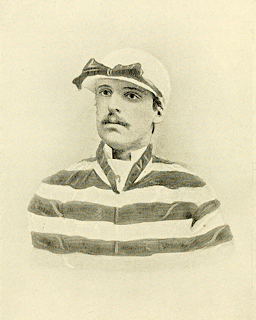
Birth of Reginald Greville-Nugent, Politician

The Honourable Reginald James Macartney Greville-Nugent, an Irish politician, is born on November 27, 1848.

Greville-Nugent is the youngest of five sons born to the former Lady Rosa Nugent and Fulke Greville-Nugent, 1st Baron Greville. His brothers are Hon. Algernon Greville-Nugent (who marries Lady Beatrice Violet Graham, a daughter of James Graham, 4th Duke of Montrose), Hon. George Greville-Nugent MP (who marries Cecil Aitcheson Hankey, a daughter of Lt. Gen. Henry Aitchison Hankey), Hon. Robert Southwell Greville-Nugent (who dies unmarried), and Hon. Patrick Greville-Nugent, of Clonyn Castle, the High Sheriff of Westmeath (who marries Ermengarde Ogilvy). His sister is Hon. Mildred Charlotte Greville-Nugent, who marries Alexis Huchet, Marquis de la Bedoyére.

Greville-Nugent’s mother is the only daughter and heir of George Nugent, 1st Marquess of Westmeath and, his first wife, Lady Emily Cecil (second daughter of James Cecil, 1st Marquess of Salisbury). His paternal grandparents are Algernon Greville, of North Lodge in Hertford and the former Caroline Graham (daughter of Sir Bellingham Graham, 6th Baronet).

Greville-Nugent holds the Irish parliamentary seat of Longford, vacated by his father on his elevation to the peerage, from December 31, 1869, defeating John Martin. He has to relinquish the seat in May 1870 due to Judge Fitzgerald overturning the election result on the grounds of voting irregularities.

On October 21, 1871, Greville-Nugent is married to Louisa Maud Yarde-Buller, sister of John Yarde-Buller, 1st Baron Churston, and daughter of Sir Francis Buller-Yarde-Buller, 2nd Baronet.

Greville-Nugent is killed on February 28, 1878, after a fall in a steeplechase at Sandown Park Racecourse.

Greville-Nugent’s illegitimate son, Reginald Charles Fulke Greville, born August 19, 1866, is better known after changing his surname to Maugham (following a close friendship with the writer W. Somerset Maugham‘s great-aunt Julia) as the author of numerous books about Africa, and his most well-known work, Jersey under the Jack Boot.


Leave a comment

Death of Patrick Mayhew, British Barrister, Politician & Northern Ireland Secretary

Patrick Barnabas Burke Mayhew, Baron Mayhew of Twysden, PC, QC, DL, British barrister, politician and Secretary of State for Northern Ireland, who serves during a critical period in the Northern Ireland peace process, dies at his home in Kent, England, on June 25, 2016. He is a key figure in the December 1993 Downing Street Declaration which leads to the Provisional Irish Republican Army (IRA) ceasefire on August 31, 1994

Mayhew is born on September 11, 1929. His father, George Mayhew, is a decorated army officer turned oil executive. His mother, Sheila Roche, descendant of members of the Anglo-Irish Protestant ascendancy, is a relative of James Roche, 3rd Baron Fermoy, an Irish National Federation MP for East Kerry. Through his father, Mayhew is descended from the Victorian social commentator Henry Mayhew. He is educated at Tonbridge School, an all boys public school in Tonbridge, Kent.

Mayhew then serves as an officer in the 4th/7th Royal Dragoon Guards, studies law at Balliol College, Oxford, and is president of the Oxford University Conservative Association (OUCA) and of the Oxford Union. He is called to the Bar by the Middle Temple in 1955.

In 1963, Mayhew marries The Rev. Jean Gurney, and they have four sons.

Mayhew contests Dulwich at the 1970 United Kingdom general election, but the incumbent Labour Party member, Samuel Silkin, beats him by 895 votes. He is Member of Parliament (MP) for Tunbridge Wells from its creation at the February 1974 United Kingdom general election, standing down at the 1997 United Kingdom general election.

Mayhew is Under Secretary of Employment from 1979 to 1981, then Minister of State at the Home Office from 1981 to 1983. After this, he serves as Solicitor General for England and Wales from 1983 to 1987, and then Attorney General for England and Wales and simultaneously Attorney General for Northern Ireland from 1987 to 1992.

Mayhew is Secretary of State for Northern Ireland from 1992 to 1997, the longest anyone has served in this office.

Mayhew is one of only five Ministers (Tony Newton, Kenneth Clarke, Malcolm Rifkind and Lynda Chalker are the others) to serve throughout the whole 18 years of the premiership of Margaret Thatcher and John Major. This represents the longest uninterrupted Ministerial service in Britain since Henry John Temple, 3rd Viscount Palmerston, in the early 19th century.

Mayhew is knighted in 1983. On June 1997, he is given a life peerage as Baron Mayhew of Twysden, of Kilndown in the County of Kent. He retires from the House of Lords on June 1, 2015.

Mayhew suffers from cancer and Parkinson’s disease in his later years. He dies at the age of 86 on June 25, 2016, in his home in Kent.

Mayhew’s son, The Honourable Henry Mayhew, appears in the fourth episode of the series The Secret History Of Our Streets, discussing life in the Portland Road, Notting Hill, London. Another son, Tristram, co-founds the outdoor adventure company Go Ape. His son Jerome is the Conservative Party MP for the constituency of Broadland in Norfolk since December 2019.


Leave a comment

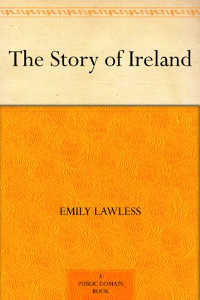
Birth of Emily Lawless, Irish Novelist & Poet

The Honourable Emily Lawless, Irish novelist and poet, is born at Lyons Demesne below Lyons Hill, Ardclough, County Kildare, on June 17, 1845. According to Betty Webb Brewer, writing in 1983 for the journal of the Irish American Cultural Institute, Éire/Ireland, “An unflagging unionist, she recognised the rich literary potential in the native tradition and wrote novels with peasant heroes and heroines, Lawless depicted with equal sympathy the Anglo-Irish landholders.”

Lawless’s grandfather is Valentine Lawless, 2nd Baron Cloncurry, a member of the Society of United Irishmen and son of a convert from Catholicism to the Church of Ireland. Her father is Edward Lawless, 3rd Baron Cloncurry, thus giving her the title of “The Honourable.” In contrast, her brother Edward Lawless is a landowner with strong Unionist opinions, a policy of not employing Roman Catholics in any position in his household, and chairman of the Property Defence Association set up in 1880 to oppose the Irish National Land League and “uphold the rights of property against organised combination to defraud.” The prominent Anglo-Irish unionist and later nationalist, Home Rule politician Horace Plunkett is a cousin. Lord Castletown, Bernard FitzPatrick, 2nd Baron Castletown is also a cousin. It is widely believed that she is a lesbian and that Lady Sarah Spencer, dedicatee of A Garden Diary (1901) is her lover.

Lawless spends part of her childhood with the Kirwans of Castle Hackett, County Galway, her mother’s family, and draws on West of Ireland themes for many of her works. She occasionally writes under the pen name “Edith Lytton.”

Lawless writes nineteen works of fiction, biography, history, nature studies and poetry, many of which are widely read at the time. She is most famous today for her Wild Geese poems (1902).

Some critics identify a theme of noble landlord and noble peasant in her fourth book, Hurrish, a Land War story set in The Burren of County Clare which is read by William Ewart Gladstone and said to have influenced his policy. It deals with the theme of Irish hostility to English law. In the course of the book a landlord is assassinated, and Hurrish’s mother, Bridget, refuses to identify the murderer, a dull-witted brutal neighbour. The book is criticised by Irish-Ireland journals for its “grossly exaggerated violence,” it’s embarrassing dialect, staid characters.

Her reputation is damaged by William Butler Yeats who accuses her in a critique of having “an imperfect sympathy with the Celtic nature” and for adopting “theory invented by political journalists and forensic historians.” Despite this, Yeats includes her novels With Essex in Ireland (1890) and Maelcho (1894) in his list of the best Irish novels.

Lawless dies at Gomshall, a village in the borough of Guildford in Surrey, England, on October 19, 1913. Her papers are preserved in Marsh’s Library in Dublin.


Leave a comment

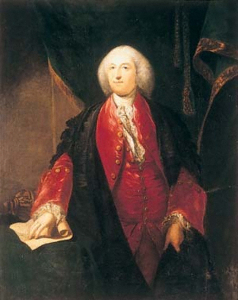
John Ponsonby Re-elected Speaker of the Irish House of Commons

John Ponsonby, Irish politician styled The Honourable from 1724, is unanimously re-elected Speaker of the Irish House of Commons on October 22, 1761.

Ponsonby is born on March 29, 1713, the second son of Brabazon Ponsonby, 1st Earl of Bessborough. In 1739, he enters the Irish House of Commons for Newtownards, becoming its speaker in 1756. He also serves as First Commissioner of the Revenue and he becomes a member of the Privy Council of Ireland in 1746. In 1761, he is elected for Kilkenny County and Armagh Borough, and sits for the first. In 1768, he stands also for Gowran and Newtownards, and in 1776 for Carlow Borough, but chooses each time Kilkenny County, which he represents until 1783. Subsequently Ponsonby is again returned for Newtownards and sits for this constituency until his death in 1787.

Belonging to one of the great families which at this time monopolizes the government of Ireland, Ponsonby is one of the principal “undertakers,” men who control the whole of the king’s business in Ireland, and he retains the chief authority until George Townshend, 1st Marquess Townshend, becomes lord-lieutenant in 1767. A struggle for supremacy follows between the Ponsonby faction and the party dependent on Townshend, one result of this being that Ponsonby resigns the speakership in 1771.

In 1743, Ponsonby marries Lady Elizabeth Cavendish, daughter of William Cavendish, 3rd Duke of Devonshire, a connection which is of great importance to the Ponsonbys. His older brother, William Ponsonby, 2nd Earl of Bessborough, had married the Duke’s eldest daughter in 1739. His sons, William Ponsonby, 1st Baron Ponsonby of Imokilly, and George Ponsonby, are also politicians of distinction. His daughter Catherine marries Richard Boyle, 2nd Earl of Shannon, and is mother to Henry Boyle, 3rd Earl of Shannon.

John Ponsonby dies on August 16, 1787.


Leave a comment

Death of Emily Lawless, Irish Novelist & Poet

The Honourable Emily Lawless, Irish novelist and poet from County Kildare, dies at Gomshall, a village in the borough of Guildford in Surrey, England, on October 19, 1913. According to Betty Webb Brewer, writing in 1983 for the journal of the Irish American Cultural Institute, Éire/Ireland, “An unflagging unionist, she recognised the rich literary potential in the native tradition and wrote novels with peasant heroes and heroines, Lawless depicted with equal sympathy the Anglo-Irish landholders.”

Lawless is born at Lyons Demesne below Lyons Hill, Ardclough, County Kildare. Her grandfather is Valentine Lawless, 2nd Baron Cloncurry, a member of the Society of United Irishmen and son of a convert from Catholicism to the Church of Ireland. Her father is Edward Lawless, 3rd Baron Cloncurry, thus giving her the title of “The Honourable.” In contrast, her brother Edward Lawless is a landowner with strong Unionist opinions, a policy of not employing Roman Catholics in any position in his household, and chairman of the Property Defence Association set up in 1880 to oppose the Irish National Land League and “uphold the rights of property against organised combination to defraud.” The prominent Anglo-Irish unionist and later nationalist, Home Rule politician Horace Plunkett is a cousin. Lord Castletown, Bernard FitzPatrick, 2nd Baron Castletown is also a cousin. It is widely believed that she is a lesbian and that Lady Sarah Spencer, dedicatee of A Garden Diary (1901) is her lover.

Lawless spends part of her childhood with the Kirwans of Castle Hackett, County Galway, her mother’s family, and draws on West of Ireland themes for many of her works. She occasionally writes under the pen name “Edith Lytton.”

Lawless writes nineteen works of fiction, biography, history, nature studies and poetry, many of which are widely read at the time. She is most famous today for her Wild Geese poems (1902).

Some critics identify a theme of noble landlord and noble peasant in her fourth book, Hurrish, a Land War story set in The Burren of County Clare which is read by William Ewart Gladstone and said to have influenced his policy. It deals with the theme of Irish hostility to English law. In the course of the book a landlord is assassinated, and Hurrish’s mother, Bridget, refuses to identify the murderer, a dull-witted brutal neighbour. The book is criticised by Irish-Ireland journals for its “grossly exaggerated violence,” it’s embarrassing dialect, staid characters.

Her reputation is damaged by William Butler Yeats who accuses her in a critique of having “an imperfect sympathy with the Celtic nature” and for adopting “theory invented by political journalists and forensic historians.” Despite this, Yeats includes her novels With Essex in Ireland (1890) and Maelcho (1894) in his list of the best Irish novels.

Emily Lawless dies at Gomshall, Surrey, on October 19, 1913. Her papers are preserved in Marsh’s Library in Dublin.