seamus dubhghaill

Promoting Irish Culture and History from Little Rock, Arkansas, USA


Leave a comment

Birth of Journalist Eoghan Corry

eoghan-corry

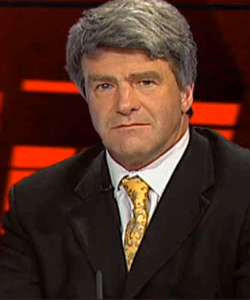
Eoghan Corry, Irish journalist and author regarded as the most extensively traveled writer in Ireland, averaging over 30 countries a year, is born in Dublin on January 19, 1961.

Corry is the third of four children of Patrick Corry (1916–1971) from Kilmacduane, Cooraclare and Anne Corry (1929–2009) from Clahanmore, Milltown Malbay, both from County Clare. He grows up in Ardclough, Straffan, County Kildare.

Corry is educated at Scoil Mhuire, Clane, at the Dublin Institute of Technology (DIT) and University College Dublin (UCD). His first published work, as a teenager, is poetry in English and the Irish language in literary magazines and the New Irish Writing section of The Irish Press.

He begins his journalistic career as a sportswriter with The Irish Times and Sunday Tribune where he wins several awards and becomes sports editor. Determined to pursue a career outside of sports journalism, he joins The Sunday Press as a feature writer in 1985 and becomes features editor of The Irish Press in 1986, bringing younger writers and a more contemporary, polemical and literary style to the paper. He revives the literary and travel sections of the paper and is an adjudicator of the Dublin Theatre Festival awards.

When The Irish Press closes in 1995, he becomes Features Editor of the short-lived Evening News, storylines the Gaelic Athletic Association (GAA) museum in Croke Park in 1998 and is founding editor of High Ball magazine. Since then, he has been a columnist, first with The Sunday Business Post and then with the Evening Herald and Irish Independent. As a journalism lecturer in the Dublin Institute of Technology he tells students that “journalism is about pissing people off.”

Since 2002 Corry has edited Ireland’s biggest circulation travel publication, Travel Extra. He has fronted travel shows broadcast in Ireland and the Middle East and is a regular commentator on travel affairs to Raidió Teilifís Éireann (RTÉ) and TG4, and an occasional guest contributor to BBC Northern Ireland. He writes the ten-part series GAA@125, screened on Irish television station TG4 in 2009. He appears on Tonight with Vincent Browne from time to time to preview the next day’s newspapers.

Corry is awarded a lifetime “contribution to the industry” award at the Irish Travel Industry Awards in Dublin on January 22, 2016. He receives the Business Travel Journalist of the year award in London in October 2015. Previous awards include Irish sportswriter of the year, young journalist of the year, Seamus Kelly award, MacNamee award for coverage of Gaelic Games and is short listed for sports book of the year.


1 Comment

Death of Actor Henry Wilfrid Brambell

henry-brambell-john-lennon

Henry Wilfrid Brambell, Irish film and television actor best known for his role in the British television series Steptoe and Son, dies of cancer in Westminster, London, on January 18, 1985.

Brambell is the youngest of three sons born to Henry Lytton Brambell, a cashier at the Guinness Brewery, and his wife, Edith Marks, a former opera singer. His first appearance is as a child, entertaining the wounded troops during World War I. Upon leaving school he works part-time as a reporter for The Irish Times and part-time as an actor at the Abbey Theatre before becoming a professional actor for the Gate Theatre. He also does repertory at Swansea, Bristol and Chesterfield. In World War II, he joins the British military forces entertainment organisation Entertainments National Service Association (ENSA).

His television career begins during the 1950s, when he is cast in small roles in three Nigel Kneale/Rudolph Cartier productions for BBC TelevisionThe Quatermass Experiment (1953), Nineteen Eighty-Four (1954), and Quatermass II (1955). All of these roles earn him a reputation for playing old men, though he is only in his forties at the time.

It is this ability to play old men that leads to his casting in his best remembered role, as Albert Steptoe, the irascible father in Steptoe and Son. This begins as a pilot on the BBC’s Comedy Playhouse, and its success leads to a full series being commissioned, running from 1962 to 1974 including a five-year hiatus. There are two feature film spin-offs, a stage show, and an American incarnation entitled Sanford and Son, some episodes of which are almost exact remakes of the original British scripts.

The success of Steptoe and Son makes Brambell a high-profile figure on British television, and earns him the supporting role of Paul McCartney‘s grandfather in The Beatles‘ first film, A Hard Day’s Night (1964). In 1965, Brambell tells the BBC that he does not want to do another series of Steptoe and Son and, in September that year, he goes to New York City to appear in the Broadway musical Kelly at the Broadhurst Theatre, however, it closes after just one performance.

Apart from his role as the older Steptoe, Brambell achieves recognition in many films. His performance in The Terence Davies Trilogy wins him critical acclaim, far greater than any achieved for Steptoe and Son. Although he appears throughout the full 94-minute piece, Brambell does not speak a single word.

After the final series of Steptoe and Son is made in 1974, Brambell has some guest roles in films and on television. He and Harry H. Corbett also undertake a tour of Australia in 1977 in a Steptoe and Son stage show.

Brambell dies of cancer in Westminster, London, on January 18, 1985, at the age of 72. He is cremated on January 25, 1985 at Streatham Park Cemetery, where his ashes are scattered.

(Pictured: Henry Wilfrid Brambell and John Lennon in The Beatles’ first motion picture, A Hard Day’s Night)


Leave a comment

Birth of Novelist & Critic John Broderick

Irish novelist and critic John Broderick is born in Athlone, County Westmeath, on July 30, 1924.

Broderick is the only child of the proprietors of a thriving local business, Broderick’s Bakery. His father dies when he is just three years old. He begins his secondary education at the Marist Brothers’ School but, at the age of 12, on his mother’s remarriage to the bakery manager in 1936, he is sent to board at St. Joseph’s College, Garbally Ballinasloe. He leaves in 1941 without sitting the Leaving Certificate and is expected to take over the bakery business, but always intends to write.

From 1951 he lives for a time in Paris where he knows some of the French and expatriate literary community, among them Gore Vidal, Truman Capote, James Baldwin and most importantly Julien Green. Green is a French Academician and highly respected novelist and diarist, who becomes a mentor and personal friend. He visits Broderick in Athlone in 1974 and 1975.

The Irish Times accepts a travel article from Broderick in 1956. In the same year, the paper publishes the first of his book reviews. He continues to review widely and to write general articles for The Irish Times and Hibernia magazine, among others, until shortly before his death. As a critic he is frequently controversial being dismissive of a number of established writers including Heinrich Boll, Seamus Heaney and most notably Edna O’Brien while he is extremely generous and encouraging to a host of young Irish writers. His first novel, The Pilgrimage (1961) is banned by the Irish Censorship of Publications Board. Broderick is elected to membership of the Irish Academy of Letters in 1968, and in 1975 receives the Academy’s Annual Award for Literature.

Broderick lives most of his life in Athlone, with his mother until her death in 1974, and alone until he moves to Bath, England in 1981. He dies in Bath in 1989. The Westmeath County Library system has a collection of his papers, manuscripts and other materials.

Most of Broderick’s family are born and reared in Athlone, and many still live there today. John Broderick is third cousins to Shauna, Cliodhna and Aisling Golden, three sisters who perform together as a singing act called “The Golden Sisters” who are quarter finalists on the RTÉ prime time show “The All Ireland Talent Show.”


Leave a comment

Birth of Poet Michael Longley

Michael Longley, one of Northern Ireland’s foremost contemporary poets, is born in Belfast on July 27, 1939. He is educated at the Royal Belfast Academical Institution and subsequently reads Classics at Trinity College, Dublin, where he edits the student literary magazine Icarus.

Longley is renowned for the quiet beauty of his compact, meditative lyrics. Known for using classical allusions to cast provocative light on contemporary concerns, including Northern Ireland’s “Troubles,” his poetry is also marked by sharp observation of the natural world, deft use of technique, and deeply felt emotion. His debut volume, No Continuing City (1969), heralds the arrival of a new talent from a region which has already produced recognized talents like Seamus Heaney and Derek Mahon. However, his early influences are English poets like Philip Larkin, Louis MacNeice, and the First World War poets, as well as masters from the classical tradition. The critic Langdon Hammer describes Longley’s poems as masterpieces of “lucidity, economy, sincerity…by means of meticulous, unpretentious technique.”

Longley’s work engages diverse subjects, including Homeric literature, the landscape of Carrigskeewaun, jazz, Walter Mitty, and the politics of Northern Ireland. On the public and political responsibilities of being a Northern Irish poet, he says, “Though the poet’s first duty must be to his imagination, he has other obligations, and not just as a citizen. He would be inhuman if he did not respond to tragic events in his own community, and a poor artist if he did not seek to endorse that response imaginatively.” Reviewing his Selected Poems (1993), critic Fran Brearton praises in particular Longley’s more political poems, noting his “use of a compassionate yet unsentimental voice, and an attention to detail which restores specificity at a point in history when it is most in danger of being lost in abstraction – numbers, dates, death-tolls counted beyond comprehension.”

After a 12-year publishing silence, Longley’s 1991 return, Gorse Fires, wins the Whitbread Poetry Prize. Subsequently, The Weather in Japan (2000) wins The Irish Times Literature Prize for Poetry, the Hawthornden Prize, and the T.S. Eliot Prize. Other publications include Snow Water (2004) and Collected Poems (2006). In 2001 Longley is awarded the Queen’s Gold Medal for Poetry. He is a fellow of the Royal Society of Literature.

Longley is Professor of Poetry for Ireland from 2007 to 2010, a cross-border academic post set up in 1998, previously held by John Montague, Nuala Ní Dhomhnaill, and Paul Durcan. He is succeeded in 2010 by Harry Clifton.


Leave a comment

Birth of Actor David Kelly

David Kelly, Irish actor who has regular roles in several film and television works from the 1950s onwards, is born in Dublin on July 11, 1929. One of the most recognisable voices and faces of Irish stage and screen, Kelly is known to Irish audiences for his role as Rashers Tierney in Strumpet City, to British audiences for his roles as Cousin Enda in Me Mammy and as the builder Mr. O’Reilly in Fawlty Towers, and to American audiences for his role as Grandpa Joe in the film Charlie and the Chocolate Factory. Another notable role is as Michael O’Sullivan in Waking Ned.

Kelly is educated at Dublin’s Synge Street CBS Christian Brothers school. He begins acting at the age of eight at the city’s Gaiety Theatre, and trains at The Abbey School of Acting. As a backup career, he additionally trains as a draughtsman and calligrapher, and also learns watercolor painting. He appears onstage in the original production of Brendan Behan‘s The Quare Fellow, and gains his first major career attention in Samuel Beckett‘s Krapp’s Last Tape at the Dublin’s Abbey Theatre in 1959. By then he has made his screen debut in a small part in director John Pomeroy’s 1958 film noir Dublin Nightmare.

He becomes a familiar face on British television beginning in the 1960s with the BBC comedy Me Mammy, opposite Milo O’Shea and Anna Manahan. He goes on to often-memorable guest roles on such series as Oh Father!, Never Mind the Quality, Feel the Width, and On the Buses, and particularly during the 1970s with a long-running role as the one-armed dishwasher Albert Riddle in the Man About the House spin-off Robin’s Nest. He also has a regular long running role alongside Bruce Forsyth in both series of the comedy Slingers Day from 1986 to 1987.

He gains some of his greatest recognition in 1975, playing inept builder Mr. O’Reilly on the second episode of Fawlty Towers. He is in the voice cast of The Light Princess, a partly animated, hour-long family fantasy that airs on the BBC in 1978.

In Ireland, he may be most famous for his portrayal of the character “Rashers” Tierney in the 1980 RTÉ miniseries Strumpet City, which stars Peter O’Toole, Cyril Cusack and Peter Ustinov. He goes on to have starring roles in television shows such as Emmerdale Farm in the 1980s and Glenroe in the 1990s, as well as playing the grandfather in Mike Newell‘s film Into the West (1992).

Following his appearance as Michael O’Sullivan in the 1998 film Waking Ned, Kelly plays roles in such films as Tim Burton‘s Charlie and the Chocolate Factory, in which he plays Grandpa Joe and Agent Cody Banks 2: Destination London. He plays title character Frank Kovak in the mystery film The Kovak Box, in a rare villainous role. Stardust, released in 2007, is his final film. He also does extensive radio work, including a guest appearance on the BBC Radio 4 series Baldi.

Kelly wins a 1991 Helen Hayes Award for Outstanding Supporting Performer, Non-Resident Production, for a Kennedy Center revival of The Playboy of the Western World. As well, he earns a Screen Actors Guild Award nomination for the 1998 film Waking Ned. In 2005, he wins the Irish Film & Television Academy‘s Lifetime Achievement Award, in addition to earning a nomination for Best Supporting Actor for the film Charlie and the Chocolate Factory.

David Kelly dies after a short illness on February 12, 2012 at age of 82. The Irish Times refers to him as the “grand old man of Irish acting.” A Catholic funeral mass takes place on February 16, 2012 at the Church of the Miraculous Medal, in his hometown of Dublin. He is cremated at Mount Jerome Cemetery and Crematorium.


Leave a comment

Birth of Bishop Eamonn Casey

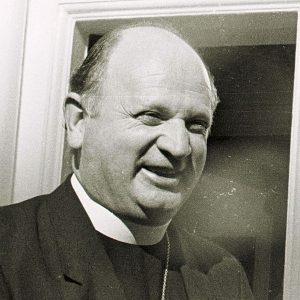
Eamonn Casey, Irish Roman Catholic prelate who serves as bishop of Galway and Kilmacduagh in Ireland from 1976 to 1992, is born in FiriesCounty Kerry on April 24, 1927.

Casey is educated in Limerick and in St. Patrick’s College, Maynooth. He is ordained a priest for the Diocese of Limerick on June 17, 1951, and appointed Bishop of Kerry on July 17, 1969. He holds this position until 1976, when he is appointed Bishop of Galway and Kilmacduagh and apostolic administrator of Kilfenora. While in Galway, he is seen as a progressive. It is a significant change in a diocese that has been led for nearly forty years by the very conservative Michael Browne.

Casey is well known for his work aiding Irish emigrants in Britain. In addition, he supports the Dunnes Stores‘ staff, who are locked out from 1982 to 1986 for refusing to sell goods from apartheid South Africa.

Casey attends the funeral of the murdered Archbishop of San SalvadorMonsignor Óscar Romero. He witnesses firsthand the massacre of those attending the funeral by government forces. He then becomes a vocal opponent of United States foreign policy in Central America, and, as a result, opposes the 1984 visit of United States President Ronald Reagan to Ireland, refusing to meet him when he comes to Galway.

Casey is highly influential in the Irish Catholic hierarchy and serves as bishop until his resignation in 1992. He is a friend and colleague of another highly prominent Irish priest, Father Michael Cleary.

In 1992, newspapers discover that Casey has had a sexual relationship with Annie Murphy, an American divorcée. Together they have a son, Peter, born in 1974 in Dublin. Murphy later claims that Casey had attempted to persuade her to give the child up for adoption at birth. She chooses not to do so and raises him with the help of her parents. When Murphy decides to go public about the relationship and informs The Irish Times, Casey tenders his resignation and leaves the country.

Casey’s resignation is regarded as a pivotal moment when the Roman Catholic hierarchy begins to lose its considerable influence over the society and politics of Ireland. He is succeeded by his Secretary, Bishop James McLoughlin, who serves in the post until his own retirement on July 3, 2005.

Casey opts to embrace the life of a foreign missionary in South America. He works with members of the Missionary Society of St. James in a rural parish in Ecuador, despite his lack of knowledge of the Spanish language. During this time, he travels long distances to reach the widely scattered members of his parish. After his missionary period is completed, instead of returning to Ireland, Casey takes a position in the parish of St. Pauls, Haywards Heath, in South East England. He returns to Ireland in 2006.

In 2005, Casey is investigated in conjunction with the sexual abuse scandal in Galway, Kilmacduagh and Kilfenora diocese. He is subsequently cleared of any wrongdoing.

Casey suffers four mini strokes in 2002 and begins to experience memory issues. In August 2011, he is admitted to a nursing home in County Clare. Eamonn Casey dies on March 13, 2017, at the age of 89.


Leave a comment

Kidnapping of Writer Brian Keenan

Irish writer Brian Keenan is taken hostage in BeirutLebanon, on April 11, 1986.

Keenan is born into a working-class family in East Belfast on September 28, 1950. He leaves Orangefield High Schoolearly and begins work as a heating engineer. However, he continues an interest in literature by attending night classes and in 1970 gains a place at the University of Ulster in Coleraine. Other writers there at the time include Gerald Dawe and Brendan Hamill. In the mid-1980s Keenan returns to the Magee College campus of the university for postgraduate study. Afterwards he accepts a teaching position at the American University of Beirut, where he works for about four months.

On the morning of April 11, 1986 Keenan is kidnapped by Islamic Jihad. After spending two months in isolation, he is moved to a cell shared with the British journalist John McCarthy. He is kept blindfolded throughout most of his ordeal, and is chained by his hands and feet when taken out of solitary.

The British and American governments at the time have a policy that they will not negotiate with terrorists and Keenan is considered by some to have been ignored. Because he is travelling on both British and Irish passports, the Irish government makes numerous diplomatic representations for his release, working closely with the Iranian government. Throughout the kidnap the government also provides support to Keenan’s two sisters, Elaine Spence and Brenda Gillham, who are spearheading the campaign for his release.

Keenan is released from captivity to Syrian military forces on August 24, 1990 and is driven to Damascus. There he is handed over by the Syrian Foreign Ministry to the care of Irish Ambassador, Declan Connolly. His sisters are flown by Irish Government executive jet to Damascus to meet him and bring him home to Northern Ireland.

An Evil Cradling is an autobiographical book by Keenan about his four years as a hostage in Beirut. The book revolves heavily around the great friendship he experiences with fellow hostage John McCarthy, and the brutality that is inflicted upon them by their captors. It is the 1991 winner of The Irish Times Literature Prize for Non-fiction and the Christopher Ewart-Biggs Memorial Prize.

Keenan returns to Beirut in 2007 for the first time since being released 17 years earlier, and describes “falling in love” with the city. He now lives in Dublin.

(Pictured: Brian Keenan arrives at Dublin Airport after his release from captivity in Beirut in August 1990)


Leave a comment

Death of Irish Hurler Christy Ring

christy-ring

Nicholas Christopher Michael Ring, better known as Christy Ring, an Irish hurler whose league and championship career with the Cork GAA senior team spans twenty-four years from 1939 to 1963, dies at Morrison’s Island, Cork, on March 2, 1979.

Ring establishes many championship records, including career appearances (65), scoring tally (33-208), and number of All-Ireland medals won (8), however, these records are subsequently bested by Brendan Cummins, Eddie Keher, and Henry Shefflin respectively. Ring is widely regarded as one of the greatest hurlers in the history of the game, with many former players, commentators, and fans rating him as the number one player of all time.

Born near Cloyne, County Cork, Ring first excels at hurling following encouragement from his local national schoolteachers Michael O’Brien and Jerry Moynihan. He first appears on the Cloyne GAA minor team at the age of twelve before later winning a county minor championship medal with the nearby St. Enda’s team. A Cork Junior Hurling Championship medal with Cloyne follows, however, a dispute with club officials sees Ring join Glen Rovers GAA in Blackpool in 1941. Over the next twenty-six years with the club, Ring wins one Munster Senior Club Hurling Championship medal and fourteen county senior championship medals. As a Gaelic footballer with the Glen’s sister club, St. Nicholas’ GAA, he also wins a county senior championship medal. He retires from club hurling at the age of forty-six following a victory over University College Cork GAA in the 1967 championship quarter final. Over the course of his senior championship career Ring estimates that he played in 1,200 games.

Ring makes his debut on the inter-county scene at the age of sixteen when he is picked on the Cork minor panel for the All-Ireland final. In spite of victory, he is denied an All-Ireland Minor Hurling Championship medal as he is Cork’s last non-playing substitute. Still eligible for the grade in 1938, Ring collects a set of All-Ireland and Munster Minor Hurling Championship medals as a member of the starting fifteen. An unsuccessful year with the Cork junior hurlers follows before he makes his senior debut during the 1939-40 league. Over the course of the next quarter century, Ring wins eight All-Ireland medals, including a record four consecutive championships from 1941 to 1944, a lone triumph in 1946 and three additional consecutive championships from 1952 to 1954. The only player to lift the Liam MacCarthy Cup three times as captain, he is denied a record-breaking ninth All-Ireland medal in 1956, his last All-Ireland final appearance. Ring also wins nine Munster medals, four National Hurling League medals, and is named Hurler of the Year at the age of thirty-eight. He plays his last game for Cork in June 1963. After indicating his willingness to line out for the team once again in 1964, Ring fails to be selected for the Cork team, a move which effectively brings his inter-county career to an end.

After being chosen as a substitute on the Munster GAA inter-provincial team in 1941, Ring is an automatic choice on the starting fifteen for the following twenty-two years. He scores 42-105 as he wins a record eighteen Railway Cup medals during that period, in an era when his skill and prowess draw crowds of up to 50,000 to Croke Park for the annual final on Saint Patrick’s Day. Ring’s retirement from the game is often cited as a contributory factor in the decline of the once prestigious championship.

In retirement from playing Ring becomes involved in team management and coaching. As a mentor to the St. Finbarr’s College senior team, he guides them to their first two All-Ireland and Harty Cup triumphs in 1963 and 1969. At club level Ring is instrumental as a selector with Glen Rovers when they claim their inaugural All-Ireland title in 1973, having earlier annexed the Munster and county senior championship titles. It is with the Cork senior team that he enjoys his greatest successes as a selector. After an unsuccessful campaign in his first season on the selection panel in 1973, Ring is dropped the following year before being reinstated in 1975. Over the next three years Cork claims three successive All-Ireland titles.

Ring is most famous for his scoring prowess, physical strength, and career longevity. He remains the only player to have competed at inter-county level in four different decades. Often the target of public attention for his hurling exploits, in private Ring is a shy and reserved individual. A teetotaller and non-smoker throughout his life, he is also a devout Roman Catholic.

On Friday, March 2, 1979, Ring has a scheduled appointment with his doctor and former teammate Dr. Jim Young in Cork city centre. As he is walking past the Cork College of Commerce on Morrisson’s Island at 3:30 PM he suffers a massive heart attack and collapses. He is taken by ambulance to the South Infirmary Hospital but is pronounced dead on arrival.

Ring’s sudden death and the scenes which follow at his funeral are unprecedented in Cork since the death of the martyred Lord Mayor of Cork Tomás Mac Curtain in 1920. He is posthumously honoured by being named on the Hurling Team of the Century in 1984 and the Hurling Team of the Millennium in 2000, while he is also named as the Century’s Best Hurler in The Irish Times.


Leave a comment

Kosovar Refugees Allowed to Stay in Ireland Permanently

kosovar-refugees-in-ireland

On February 13, 2001, Kosovar refugees living in Tralee and Waterford celebrate their right to become Irish citizens, almost two years after they first arrive in Ireland. A total of 140 Kosovar refugees, displaced as a result of an ethnic war in their homeland, are to be allowed to live in Ireland permanently on humanitarian grounds.

The Minister of State, Liz O’Donnell, says that she is delighted at the successful conclusion to the programme. She tells The Irish Times, “I have always recommended that no one should be forcibly repatriated, so I would wholeheartedly welcome this move. It is exactly as I wanted it to turn out and I am delighted that the overall programme will be coming to such a successful conclusion. This could not have been achieved without the help of the many agencies that contributed to the programme. The multi-agency approach is the key to successful integration, and I want to pay special tribute to the staff of the Refugee Agency.”

There is relief and joy at the reception centres for programme refugees from Kosovo in Waterford and Tralee with the news that they can stay here indefinitely. Many of those affected are already in full-time employment or education. In five years’ time, the Kosovars will be allowed to apply for Irish citizenship.

A thousand refugees displaced in the war in former Yugoslavia came to Ireland in June of 1999. The cost of bringing the refugees to Ireland, providing for them and resettling them comes to between £5 and £6 million.

Over the previous six months, many have gradually returned home, and now those who do not want to go back have been told that they are welcome to officially start their new lives here. However, some Kosovars, who have come into Ireland by other means also claim asylum, saying that they too should be allowed to stay on humanitarian grounds. Their cases are assessed individually.

(Pictured: Iman Sheikh Hussein Halaw, Spiritual Leader of the Muslim Community in Dublin, and Minister of State at the Department of Foreign Affairs, Liz O’Donnell TD, greet the first group of Kosovar Refugees to arrive at Dublin airport in 1999)


2 Comments

Birth of Padraic Fallon, Poet & Playwright

padraic-fallon

Padraic Fallon, Irish poet and playwright, is born in Athenry, County Galway, on January 3, 1905.

Fallon’s upbringing and his early impressions of Athenry and the surrounding landscape are intimately described in his poetry. After passing the civil service exams in 1923 he moves to Dublin to work in the Customs House. In Dublin he becomes part of the circle of George William Russell (Æ) who encourages his literary ambitions and arranges for the publication of his early poetry. His early poetry, short stories, and literary criticism are published in The Dublin Magazine and The Bell.

He forms close friendships with Seumas O’Sullivan, editor of The Dublin Magazine, the poets Austin Clarke, Robert Farren, F.R. Higgins, and Patrick McDonagh and later the novelist James Plunkett. In 1939, Fallon leaves Dublin to serve as a Customs official in County Wexford, living in Prospect House, near Wexford Town with his wife, Dorothea (née Maher) and his six sons. During this time, he becomes a close friend of the painter Tony O’Malley.

Fallon is a regular contributor to Radio Éireann in the 1940s and 1950s, serving variously as a journalist, scriptwriter, and literary critic. A number of his short stories and early dramatic pieces are broadcast by the station during the 1940s. The first of Fallon’s verse plays for radio, Diarmuid and Gráinne, is broadcast by Radio Éireann in November 1950. This is followed by The Vision of Mac Conglinne (1953), Two Men with a Face (1953), The Poplar (1953), Steeple Jerkin (1954), A Man in the Window (1955), Outpost (1955), The Wooing of Étain (1955), Deirdre’s King (1956), The Five Stations (1957), The Hags of Clough (1957), The Third Bachelor (1958), At the Bridge Inn (1960), and Lighting up Time (1961).

Three plays adapted from Irish mythology, Diarmuid and Gráinne, The Vision of Mac Conglinne, and Deirdre’s King receive particular contemporary critical acclaim. The landscape, mythology, and history of Ireland, interwoven with classical themes and religious symbolism, are frequent themes in his poetry and dramatic works.

A number of his radio plays are later broadcast on the BBC Third Programme, and, in translation, in Germany, Holland, and Hungary. A stage play, The Seventh Step, is staged at The Globe Theatre in Dublin in 1954. A second stage play, Sweet Love ’till Morn, is staged in the Abbey Theatre in 1971. Fallon also writes dramatic pieces for television such as A Sword of Steel (1966) and The Fenians (1967), the latter produced by James Plunkett.

Fallon retires from the Civil Service in 1963, returning to Dublin before moving to Cornwall in 1967 to live with his son, the sculptor Conor Fallon and his daughter-in-law, the artist Nancy Wynne-Jones. He and his wife return to Ireland in 1971. He spends his last years in Kinsale. He is visiting his son Ivan Fallon in Kent at the time of his death on October 9, 1974.

While his poetry has previously appeared in The Dublin Magazine, The Bell, The Irish Times, and a number of anthologies, his first volume of collected poetry, Poems, incorporating a number of previously unpublished poems, is not produced until 1974, months before his death. Three volumes of his poetry, edited by his son, the journalist and critic Brian Fallon, are published after his death – Poems and Versions (1983), Collected Poems (1990), with an introduction by Seamus Heaney, and A Look in the Mirror and Other Poems (2003), with an introduction by Eavan Boland. In 2005, three of Fallon’s verse plays, The Vision of Mac Conglinne, The Poplar, and The Hags of Clough are published in a single volume. A selection of his prose writings and criticism edited by Brian Fallon, A Poet’s Journal, is published in the same year.