seamus dubhghaill

Promoting Irish Culture and History from Little Rock, Arkansas, USA


Leave a comment

Birth of Pat Falvey, Mountaineer, Expedition Leader & Polar Explorer

Pat Falvey, Irish high-altitude mountaineer, expedition leader, polar explorer, entrepreneur, author, corporate/personal trainer/coach, and motivational speaker, is born in Cork, County Cork, on June 2, 1957. He is the first person to complete the Seven Summits twice, with the summiting of Mount Everest reached from both the Tibetan (1996) and Nepalese sides (2004). He is expedition leader of the team that sees Clare O’Leary become the first Irish woman to reach the summit of Mount Everest in 2004. Other extreme expeditions that he makes include walking to the South Pole, crossing South Georgia island, and traversing the Greenland ice sheet. He starts his first business at 15 years of age and has since had businesses in property development, finance, construction, insurance, tourism, and film production. He has been a motivational speaker since the 1990s.

Raised on the north side of Cork city, Falvey starts mountain climbing in his late twenties, having worked as a builder and property developer from his late teens onward. Following the economic recession of the mid-1980s in Ireland, he loses most of his wealth and discovers mountaineering in his late 20s.

Falvey begins his climbing career with hill walking and climbing on the MacGillycuddy’s Reeks in County Kerry. He then devotes himself to training to become a high-altitude mountaineer. He trains initially with the Cork Mountaineering Club, at Tiglin in County Wicklow and becomes a member of Kerry Mountain Rescue, climbing very frequently in Ireland, Scotland, France and the Himalayas.

In June 1994, Falvey climbs Denali, also known as Mount McKinley, in Alaska, reaching the first summit in his Seven Summits attempt. This is followed by Mount Kilimanjaro in Tanzania (January 1995), Mount Everest via the Northeast Ridge (June 1995), Aconcagua in Argentina (December 1995), Mount Elbrus in Russia (March 1996), Vinson Massif in Antarctica (January 1997) and Mount Kosciusko in Australia (February 1997). He is the first Irish man (and the 32nd person in the world) to complete the Seven Summits.

Falvey is the expedition leader of the first Irish team to reach the summit of Cho Oyu in China and Nepal without oxygen, on May 20, 1998. He reaches the summit of Ama Dablam in Nepal on November 3, 1999. In 2003, he is the expedition leader of the first Irish team to reach the summit of Mount Everest via the South-Southeast Ridge, with team members Ger McDonnell and Mick Murphy reaching the summit. On May 18, 2004, he reaches the summit of Everest via the South-Southeast Ridge, and leads the expedition that sees the first Irish woman, Dr. Clare O’Leary, reach the top of Everest.

Falvey and O’Leary complete the Seven Summits on December 16, 2005, when he becomes the first person to complete the Seven Summits twice by climbing Mount Everest from both the Tibetan and Nepalese sides.

In 2006, Falvey leads a group of 32 across the South Georgia Traverse on South Georgia island in honour of Polar explorers Sir Ernest Shackleton and Kerryman Tom Crean, in the Beyond Endurance Antarctic expedition. He leads the first Irish traverse of Greenland in 2006. In January 2008, he leads a four-person Irish expedition to the South Pole. In April 2009, he and O’Leary do a “symbolic” walk to the North Pole, completing the final four-day trek to the Pole.

Falvey joins the Kerry county football team as a “sports performance coach” in 2021. Manager Peter Keane says, “You take us in this country with five million people and we have had some unbelievable adventurers like Shackleton and Crean; you look at someone like Pat who has climbed Everest twice from two different sides, managed to climb the Seven Summits twice, and I am looking to see if he can bring something different in here.”

Falvey’s publications include Reach for the Sky (The Collins Press, 1997), A Journey to Adventure: Stories I never thought I’d tell (The Collins Press, 2007), The Summit: How Triumph Turned to Tragedy on K2’s Deadliest Days (Beyond Endurance Publishing with The O’Brien Press, 2013), You Have the Power: Explore the Mindset You Need to Realise Your Dreams (Beyond Endurance Publishing, 2016) and Accidental Rebel (Beyond Endurance Publishing, 2018).

Leave a comment

Birth of Joss Lynam, Civil Engineer & Mountaineer

Joss Lynam, Irish civil engineer who is well known as a mountaineer, hillwalker, orienteer, writer and sports administrator, is born James Perry O’Flaherty Lynam in London on June 29, 1924. He is one of Ireland’s most influential figures in outdoor activities.

Lynam is born to Irish parents Edward and Martha (née Perry), both Galway natives. He and his older sister, Biddy, are both raised in London where his father works as curator of maps in the British Museum. This is where he is first introduced to orienteering and cartography. The family frequently returns to the west coast of Ireland to holiday. Here he finds his love for mountaineering and climbs his first mountain, Knocknarea in County Sligo, with his aunt.

At 18, Lynam joins the British Army and trains as an officer. He is deployed to India in 1944 under the Corps of Royal Engineers where he spends the remainder of World War II. While there, he participates in his first of many Himalayan expeditions, climbing Kolahoi Peak. When he returns in 1947, he immediately moves to Dublin and enrolls in Trinity College Dublin, after encouragement from his parents, where he begins to study engineering. He graduates and receives his degree with Upper Second Class (2.1) Honours.

Lynam is a civil engineer by profession but devotes most of his life developing the sport of mountaineering in Ireland. He climbs extensively in Ireland, Great Britain, the Alps and in India. He is leader, or deputy leader, of expeditions to Greenland, the Andes, Kashmir, Tian Shan, Garhwal, Tibet and India, including the 1987 expedition to Changtse, that is the forerunner to the successful first Irish ascent of Mount Everest in 1993.

With his involvement in developing adventure sport in Ireland Lynam is active in promoting access and developing waymarked trails. He is involved in the creation and administration of the Federation of Mountaineering Clubs in Ireland (now Mountaineering Ireland), the Association for Adventure Sports, Bord Oiliúint Sléibhte (Irish Mountain Training Board), Tiglin (National Outdoor Training Centre), Outdoor Education Ireland, and Cospóir (now Sport Ireland) and the National Waymarked Ways Advisory Committee (part of Sport Ireland).

Lynam is a founder member of the Irish Mountaineering Club (IMC) serving as president from 1982-1984. He is also a founder member of both the Irish Orienteers and Three Rock Orienteering club. He is president of the Union Internationale des Associations d’Alpinisme‘s expeditions commission in the 1990s.

Lynam writes and edits many guide books on walking and climbing in Ireland and helps create and is editor of The Mountain Log (the journal of Mountaineering Ireland).

In 2001, Lynam is awarded an honorary degree from Trinity College Dublin in acknowledgment of his volunteer work and remarkable achievements. He celebrates his 80th birthday by climbing the Paradise Lost Route and then goes on to abseil down Winder’s Slab for his 82nd birthday, both routes in Dalkey Quarry. Both climbs are to raise funds for cancer research, as he had been undergoing chemotherapy for Hodgkin’s Disease.

As a result of a short illness, which is being treated at St. Vincent’s University Hospital Dublin, Lynam dies on the January 9, 2011, aged 86. His funeral is held in the Church of St. Therésè, Mount Merrion, Dublin and then continues to Mount Jerome Cemetery and Crematorium.

After Lynam’s death, his two daughters, Clodagh and Ruth, donate his papers to his alma mater, Trinity College Dublin. These papers cover a vast range of topics such as his life and career, family, childhood, experience of war, his involvement with different mountaineering clubs, and his many writings. The collection also contains photos and slides that he captures himself of landscapes and mountaineering, and consists of maps that are collected by him and his father. There is so much material in the collection that it takes a year for the collection to be catalogued by an archivist.

Lynam’s ashes are scattered by his daughters over the Knocknarea Mountain on the February 12, 2011, being the first mountain he climbed. The Lynam Lecture is introduced in 2011 by Mountaineering Ireland in his memory and his achievements in climbing, hillwalking and mountaineering in Ireland and around the world. Every December the Lynam Lecture is held by leading national and international mountaineers and discusses the development and future of mountaineering in Ireland. Past speakers include Ines Papert, Frank Nugent and Paddy O’Leary.


4 Comments

Birth of John Pitt Kennedy, Engineer & Agricultural Reformer

john-pitt-kennedy-gravesite

Lieutenant-Colonel John Pitt Kennedy, British military engineer, agricultural reformer and civil servant, is born at Carndonagh, County Donegal on May 8, 1796.

Kennedy is educated at Foyle College, Derry, and the Royal Military Academy, Woolwich, becoming lieutenant in the Royal Engineers in 1815. Four years afterwards, he is sent to Malta, and thence to Corfu. He superintends the construction of a canal at Lefkada in 1820, serves next under Sir Charles James Napier at Cephalonia building lighthouses, roads, and quays, and is sub-inspector of militia in the Ionian Islands (1828–31).

During a period in India Kennedy meets Sir Charles James Napier and when he returns to Ireland he sets up agricultural schools designed to improve the economy of the country. One is at Cloghan near Ballybofey, and another at Eglinton near Derry. He becomes a farm manager and marries Anna, daughter of Sir Charles Styles, who owns large estates around Ballybofey, in 1838. Kennedy′s methods of improving the condition of the agricultural classes are indicated by the title of his work, Instruct; Employ; Don’t Hang Them: or Ireland Tranquilized without Soldiers and Enriched without English Capital (1835). He writes several others of similar nature, and as inspector general for Irish education (1837), as secretary to the Devon Commission (1843), and to the Famine Relief Committee (1845), his labours are unceasing in behalf of his native land.

Kennedy returns to the army in 1849 as military secretary to Sir Charles Napier and accompanies him to India, where he builds the military road named after him and extending from Kalka via Shimla to Kunawur and Tibet. He publishes British Home and Colonial Empire (1865–69), as well as a number of technical works relating to his Indian career. He also serves as District Grandmaster of Bengal.

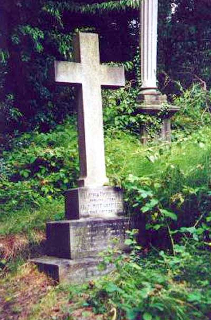
John Pitt Kennedy dies in 1879 and is buried in Highgate Cemetery (East) in Highgate, London Borough of Camden, Greater London, England.

(Pictured: John Pitt Kennedy gravesite in Highgate Cemetery, London)


Leave a comment

Mary Robinson Resigns as President of Ireland

mary-robinson

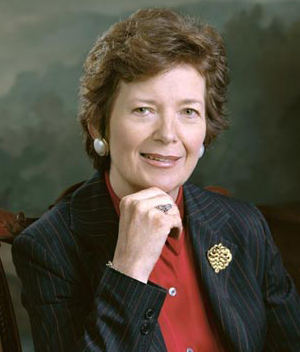
President Mary Robinson resigns on September 12, 1997, two months ahead of the end of her term, in order to take up appointment as United Nations High Commissioner for Human Rights.

On July 24, 1997, Robinson announces her intention to resign as President of Ireland. The Irish Government states that her announcement “was not unexpected” and wishes her “every success.” She resigns by addressing a message to the Ceann Comhairle of Dáil Éireann and it takes effect at 1:00 PM on September 12.

Upon her resignation as President, the role of President is transferred to the Presidential Commission, which is comprised of the Chief Justice, the Ceann Comhairle, and the Cathaoirleach of the Seanad Éireann, from September 12 until November 11, 1997, when Mary McAleese is sworn in as the new President.

Media reports suggest that Robinson has been head-hunted for the post by Secretary General of the United Nations Kofi Annan to assume an advocacy as opposed to administrative role, in other words to become a public campaigner outlining principles rather than the previous implementational and consensus-building model. The belief is that the post has ceased to be seen as the voice of general principles and has become largely bureaucratic. Robinson’s role is to set the human rights agenda within the organisation and internationally, refocusing its appeal.

Robinson is the first High Commissioner for Human Rights to visit Tibet, making her trip in 1998. During her tenure she criticises the Irish system of permits for non-EU immigrants as similar to “bonded labour” and criticises the United States’ use of capital punishment.

In 2001, Robinson chairs the Asia Regional Preparatory Meeting for the World Conference against Racism, Racial Discrimination, Xenophobia and related intolerances, which is held in Tehran, Iran. Representatives of the Simon Wiesenthal Centre, a Jewish group, and the Baha’i International Community are not permitted to attend. Robinson wears a headscarf at the meeting in conformance to the Iranians edict that all women attending the conference must wear a headscarf. Women who do not wear the headscarf are criticized, which Robinson says plays into the hands of religious conservatives.

She extends her intended single four-year term by a year following an appeal by Secretary General Annan to preside over the World Conference against Racism 2001 in Durban, South Africa. The conference proves controversial, and under continuing pressure from the United States, Robinson resigns her post in September 2002.


Leave a comment

Birth of Mary Robinson, 1st Female President of Ireland

mary-robinson

Mary Therese Winifred Robinson, seventh and first female President of Ireland (1990-1997), is born on May 21, 1944, in Ballina, County Mayo. Robinson also serves as the United Nations High Commissioner for Human Rights from 1997 until 2002.

Robinson first rises to prominence as an academic, barrister, campaigner, and member of the Irish Senate (1969–1989). Running as an Independent candidate nominated by the Labour Party, the Workers’ Party, and independent senators, Robinson defeats Fianna Fáil‘s Brian Lenihan and Fine Gael‘s Austin Currie in the 1990 presidential election becoming the first elected president in the office’s history not to have had the support of Fianna Fáil.

Robinson is widely regarded as a transformative figure for Ireland, and for the Irish presidency, revitalising and liberalising a previously conservative, low-profile political office. She resigns the presidency two months before the end of her term in office in order to take up her post in the United Nations. During her UN tenure, she visits Tibet in 1998, the first High Commissioner to do so. She criticises Ireland’s immigrant policy and criticises the use of capital punishment in the United States. She extends her intended single four-year term by a year to preside over the World Conference against Racism 2001 in Durban, South Africa. The conference proves controversial, and under continuing pressure from the United States, Robinson resigns her post in September 2002.

After leaving the UN in 2002, Robinson forms Realizing Rights: The Ethical Globalization Initiative, which comes to a planned end at the end of 2010. Its core activities are fostering equitable trade and decent work, promoting the right to health and more humane migration policies, and working to strengthen women’s leadership and encourage corporate social responsibility. The organisation also supports capacity building and good governance in developing countries. Robinson returns to live in Ireland at the end of 2010, and sets up The Mary Robinson Foundation – Climate Justice, which aims to be “a centre for thought leadership, education, and advocacy on the struggle to secure global justice for those many victims of climate change who are usually forgotten – the poor, the disempowered, and the marginalised across the world.”

Robinson is Chair of the Institute for Human Rights and Business and Chancellor of the University of Dublin. Since 2004, she has also been Professor of Practice in International Affairs at Columbia University, where she teaches international human rights. Robinson also visits other colleges and universities where she lectures on human rights. Robinson sits on the Board of the Mo Ibrahim Foundation, an organisation which supports good governance and great leadership in Africa and is a member of the Foundation’s Ibrahim Prize Committee. Robinson is an Extraordinary Professor in the Centre for Human Rights and the Centre for the Study of AIDS at the University of Pretoria. Robinson serves as Oxfam’s honorary president from 2002 until she steps down in 2012 and is the honorary president of the European Inter-University Centre for Human Rights and Democratisation EIUC since 2005. She is Chair of the International Institute for Environment and Development (IIED) and is also a founding member and Chair of the Council of Women World Leaders (2003-2009). Robinson was a member of the European members of the Trilateral Commission.

In 2004, she receives Amnesty International‘s Ambassador of Conscience Award for her work in promoting human rights.

In July 2009, Robinson is awarded the Presidential Medal of Freedom, the highest civilian honour awarded by the United States. In presenting the award to Robinson, U.S. President Barack Obama says, “Mary Robinson learned early on what it takes to make sure all voices are heard. As a crusader for women and those without a voice in Ireland, Mary Robinson was the first woman elected President of Ireland, before being appointed U.N. High Commissioner for Human Rights. When she traveled abroad as President, she would place a light in her window that would draw people of Irish descent to pass by below. Today, as an advocate for the hungry and the hunted, the forgotten and the ignored, Mary Robinson has not only shone a light on human suffering but illuminated a better future for our world.”