seamus dubhghaill

Promoting Irish Culture and History from Little Rock, Arkansas, USA


Leave a comment

Birth of Poet Charles Wolfe

charles-wolfe

Charles Wolfe, Irish poet, is born at Blackhall, County Kildare, on December 14, 1791. He is chiefly remembered for “The Burial of Sir John Moore after Corunna” which achieves popularity in 19th century poetry anthologies.

Wolfe is the youngest son of Theobald Wolfe of Blackhall and his wife Frances, who is also his cousin and daughter of the Rev. Peter Lombard of Clooncorrick Castle, Carrigallen, County Leitrim. He is a brother of Peter Wolfe, High Sheriff of Kildare. His father is the godfather, but widely believed to be the natural father, of Theobald Wolfe Tone and the first cousin of Arthur Wolfe, 1st Viscount Kilwarden.

Not long after he is born, his father dies, and the family moves to England. In 1801, Wolfe is sent to a school in Bath but is sent home a few months later due to ill health. From 1802 to 1805, he is tutored by a Dr. Evans in Salisbury before being sent to Hyde Abbey School, Winchester. In 1808, his family returns to Ireland, and the following year he enters Trinity College, Dublin, graduating in 1814.

Wolfe is ordained as a Church of Ireland priest in 1817, first taking the Curacy of Ballyclog in County Tyrone before transferring almost immediately to Donaghmore, County Tyrone. There he develops a close friendship and deep respect for the Rev. Thomas Meredith, Rector of nearby Ardtrea, and a former Fellow of Trinity College Dublin. Wolfe writes two epitaphs for Meredith, one on his memorial in the parish church of Ardtrea, and another intended for his tomb.

Wolfe is best remembered for his poem “The Burial of Sir John Moore after Corunna”, written in 1816 and much collected in 19th and 20th century anthologies. The poem first appears anonymously in the Newry Telegraph of April 19, 1817, and is reprinted in many other periodicals. But it is forgotten until after his death when Lord Byron draws the attention of the public to it. Wolfe’s only volume of verse, Poetical Remains, appears in 1825 with “The Burial of Sir John Moore” and fourteen other verses of an equally high standard.

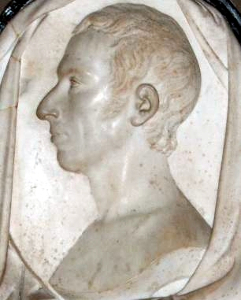
Wolfe remains at Donaghmore until 1820 but, rejected by the woman for whom he gave up his academic career, and with Meredith, his only real friend in County Tyrone, now dead, he moves to Southern France. Shortly before his death he returns to Ireland and lives at Cobh, County Cork, where he dies at the age of 31 of consumption, which he catches from a cow. He is buried in Cobh at Old Church Cemetery. There is also a plaque to his memory in the church at Castlecaulfield, the village where he lives whilst Curate at Donaghmore, as well as a marble monument to him at St. Patrick’s Cathedral, Dublin.

(Pictured: Bas-relief of Charles Wolfe in St. Patrick’s Cathedral, Dublin)


Leave a comment

Birth of James Henry, Scholar & Poet

james-henry

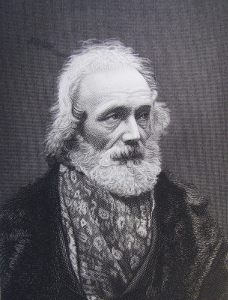
James Henry, Irish classical scholar and poet, is born in Dublin on December 13, 1798.

Henry is the son of a woolen draper, Robert Henry, and his wife Kathleen Elder. He is educated by Unitarian schoolmasters and then at Trinity College, Dublin. At age 11 he falls in love with the poetry of Virgil and gets into the habit of always carrying a copy of the Aeneid in his left breast-pocket.

Henry graduates from Trinity with the gold medal for Classics. He then turns to medicine and practises as a physician in Dublin until 1845. In spite of his unconventionality and unorthodox views on religion and his own profession, he is very successful. He marries Anne Jane Patton, from Donegal, and has three daughters, only one of whom, Katherine, born in 1830, survives infancy.

His accession to a large fortune in 1845 enables him to devote himself entirely to the absorbing occupation of his life – the study of Virgil. Accompanied by his wife and daughter, he visits all those parts of Europe where he is likely to find rare editions or manuscripts of the poet. When his wife dies in Tyrol he continues his work with his daughter, who becomes quite a Virgil expert in her own right, and crosses the Alps seventeen times. After the death of his daughter in 1872 he returns to Dublin and continues his research at Trinity College, Dublin.

As a commentator on Virgil, Henry will always deserve to be remembered, notwithstanding the occasional eccentricity of his notes and remarks. The first fruits of his researches are published at Dresden in 1853 under the quaint title Notes of a Twelve Years Voyage of Discovery in the first six Books of the Eneis. These are embodied, with alterations and additions, in the Aeneidea, or Critical, Exegetical and Aesthetical Remarks on the Aeneis (1873-1892), of which only the notes on the first book are published during Henry’s lifetime. As a textual critic Henry is exceedingly conservative. His notes, written in a racy and interesting style, are especially valuable for their wealth of illustration and references to the less-known classical authors.

Henry is also the author of five collections of verse plus two long narrative poems describing his travels, and various pamphlets of a satirical nature. At its best his poetry has something of the flavour of Robert Browning and Arthur Hugh Clough while at its worst it resembles the doggerel of William McGonagall. His five volumes of verse are all published at his own expense and receive no critical attention either during or after his lifetime.

James Henry dies at Dalkey, County Dublin, on July 14, 1876.


1 Comment

Birth of Anglican Bishop Charles Graves

charles-graves

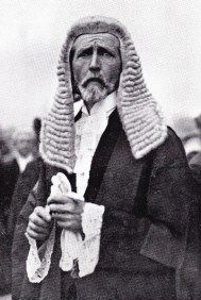
Charles Graves FRS, 19th-century Anglican Bishop of Limerick, Ardfert and Aghadoe, is born at 12 Fitzwilliam Square, Dublin, on December 6, 1812. He serves as President of the Royal Irish Academy, Dean of the Chapel Royal at Dublin Castle and is a noted mathematician.

Graves is born to John Crosbie Graves (1776–1835), Chief Police Magistrate for Dublin, and Helena Perceval, the daughter and co-heiress of the Rev. Charles Perceval (1751–1795) of Bruhenny, County Cork. Educated at Trinity College, Dublin, he wins a scholarship in Classics, and in 1834 graduates BA as Senior Moderator in mathematics, getting his MA in 1838. He plays cricket for Trinity, and later in his life does much boating and fly-fishing. It is intended that he join the 18th Royal Irish Regiment of Foot under his uncle, Major-General James William Graves (1774–1845), and in preparation he becomes an expert swordsman and rider.

After leaving Trinity College, Graves follows in the steps of his grandfather, Thomas Graves, who was appointed Dean of Ardfert in 1785 and Dean of Connor in 1802, and his great uncle, Richard Graves. He is appointed a fellow of Trinity College from 1836 to 1843 before taking the professorship of mathematics, a position he holds until 1862.

Graves is elected a member of the Royal Irish Academy in 1837 and subsequently holds various officerships, including President from 1861 to 1866. In 1860 he is appointed Dean of the Chapel Royal and, from 1864 to 1866, he is the Dean of Clonfert before being consecrated as Bishop of Limerick, Ardfert and Aghadoe, a position he holds for 33 years until his death on July 17, 1899. He is elected a Fellow of the Royal Society in 1880 and receives the honorary degree of DCL from Oxford University in 1881.

In 1841 Graves publishes an original mathematical work and he embodies further discoveries in his lectures and in papers read before and published by the Royal Irish Academy. He is a colleague of Sir William Rowan Hamilton and, upon the latter’s death, Graves gives a presidential panegyric containing a valuable account both of Hamilton’s scientific labours and of his literary attainments.

Graves is very interested in Irish antiquarian subjects. He discovers the key to the ancient Irish Ogham script which appears as inscriptions on cromlechs and other stone monuments. He also prompts the government to publish the old Irish Brehon Laws, Early Irish law. His suggestion is adopted, and he is appointed a member of the Commission to do this.

Graves’ official residence is The Palace at Limerick, but from the 1850s he takes the lease of Parknasilla House, County Kerry, as a summer residence. In 1892 he buys out the lease of the house and a further 114 acres of land that includes a few islands. In 1894 he sells it to Great Southern Hotels, who still own it to this day.


Leave a comment

Death of Poet & Revolutionary Denny Lane

Denny Lane, author, poet and member of the revolutionary Young Ireland party, dies in Cork, County Cork, on November 29, 1895.

Lane is born in Riverstown, near Glanmire in County Cork, on December 4, 1818. Although a Catholic, Lane graduates from the mainly Protestant Trinity College, Dublin, where he joins the College Historical Society, becomes a friend of Charles Gavan Duffy and Thomas Davis. He is called to the bar from Inner Temple, but soon becomes involved in the political activities surrounding Daniel O’Connell, joining the Repeal Association.

The young men become increasingly impatient with the slow pace of O’Connell’s repeal campaign and soon begin to contemplate armed insurrection. Davis, along with John Dillon and Charles Duffy, found The Nation, the newspaper of the movement in 1842. In its pages the idea of total separation from England is soon openly suggested, and Lane becomes one of the paper’s contributors. He contributes articles and later poems to the paper, his best known poems being Carrig Dhoun and Kate of Araglen which are written under the pen name “Domhnall na Glanna” or “Domhnall Gleannach.”

Finally, in 1846, the issue of physical force split the Young Irelanders from O’Connell’s Repeal Association. Lane supports the split. Davis, Lane, and small group of their friends soon become known by the name which has survived to this day: the Young Ireland Party.

Lane and his college classmate Michael Joseph Barry are the most prominent Young Irelanders in Cork, and are interned in Cork City Gaol after the Young Ireland Rebellion of 1848. Lane spends four months in prison. After his release, he returns to Cork and does not appear to have much political involvement thereafter.

Lane takes over his father’s distillery in Cork and later starts several industrial businesses near the city, with mixed success. He takes an interest in technology and industrial innovation. He is on the boards of the Macroom Railway Company and the Blackrock and Passage Railway Company, and also involved in Cork’s School of Art, School of Music, and Literary & Scientific and Historical & Archaeological societies. He stands for Parliament in the 1876 Cork City by-election, but the Home Rule vote is split with John Daly, so that unionist William Goulding is elected.

(Pictured: An 1889 bust of Denny Lane sculpted by John Lawlor)


Leave a comment

Death of Aeneas Coffey, Inventor & Distiller

Aeneas Coffey, Irish inventor and distiller, dies in England on November 26, 1852. He is born in Calais, France, to Irish parents in 1780. He is educated at Trinity College, Dublin, and enters the excise service around 1799–1800 as a gauger. He marries Susanna Logie in 1808, and they have a son, also named Aeneas, who may have been their only child.

According to British customs and excise records, Coffey is a remarkable man with widespread interests and multiple talents who rises quickly through the excise service ranks. He is appointed sub-commissioner of Inland Excise and Taxes for the district of Drogheda in 1813. He is appointed Surveyor of Excise for Clonmel and Wicklow in 1815. In 1816 he is promoted to the same post at Cork. By 1818 he is Acting Inspector General of Excise for the whole of Ireland and within two years is promoted to Inspector General of Excise in Dublin.

Coffey is a strong, determined upholder of the law, but aware of its shortcomings. He survives many nasty skirmishes with illegal distillers and smugglers, particularly in County Donegal in Ulster and in the west of Ireland, where moonshining is most rife. On several occasions he proposes to the government simple, pragmatic solutions to rules and regulations which have hampered legal distillers. Not all of his ideas are accepted. Between 1820 and 1824 he submits reports and gives evidence to Parliamentary Commissions of Inquiry on many aspects of distilling, including formalising the different spellings of Irish whiskey and Scotch whisky. His 1822 report is solidly backed by the Irish distillers. He believes in making it viable to distill legally, and illegal distilling might largely disappear.

He assists the government in the drafting of the 1823 Excise Act which makes it easier to distill legally. It sanctions the distilling of whiskey in return for a licence fee of £10, and a set payment per gallon of proof spirit. It also provides for the appointment of a single Board of Excise, under Treasury control, for the whole of the United Kingdom, replacing the separate excise boards for England, Scotland and Ireland. The 1823 Excise Act also provides for not more than four assistant commissioners of excise to transact current business in Scotland and Ireland, under the control of the board in London. Coffey resigns from government excise service at his own request in 1824.

Between his Dublin education and his work as an excise officer, Coffey has ample opportunity to observe the design and workings of whiskey stills, as Ireland is the world’s leading producer of whiskey in the 19th century, and Dublin is at the center of that global industry. This is how Coffey becomes familiar with a design differing from the traditional copper pot alembic still commonly used in Ireland, the continuous, or column, still. First patented by a Cork County distillery in 1822, the column still remains a relatively inefficient piece of equipment, although it points the way towards a cheaper and more productive way to distill alcohol. It is that last point that captures Coffey’s imagination. He makes his own modifications to existing column still designs, so as to allow a greater portion of the vapors to re-circulate into the still instead of moving into the receiver with the spirit. The result is more efficient, producing a lighter spirit at higher alcohol content. Coffey patents his design in 1830, and it becomes the basis for every column still used ever since.

On his retirement from service, Coffey goes into the Irish distilling business. For a short time he runs the Dodder Bank Distillery, Dublin and Dock Distillery in Grand Canal Street, Dublin, before setting up on his own as Aeneas Coffey Whiskey Company in 1830. The development of the Coffey still makes distillation of his own whiskey much more economical.

Nothing is known of the final years and last resting place of Aeneas Coffey. His only son, also called Aeneas Coffey, emigrates to South Africa and manages a distillery. He marries but his wife dies childless. He returns to England and spends his final years near London.


Leave a comment

Birth of Henry Charles Sirr

Henry Charles Sirr, Irish soldier, police officer, wine merchant and collector, is born in Dublin Castle on November 25, 1764. He is the founder of the Irish Society for Promoting Scriptural Education in the Irish Language.

Sirr is the son of Major Joseph Sirr, the Town Major (chief of police) of Dublin from 1762 to 1767. He serves in the British Army from 1778 until 1791 and is thereafter a wine merchant. In 1792 he marries Eliza D’Arcy, the daughter of James D’Arcy. He is the father of Rev. Joseph D’Arcy Sirr, MRIA and of Henry Charles Sirr.

In 1796 Sirr is appointed acting Town Major of Dublin. He is responsible for the arrest of Irish revolutionaries Lord Edward FitzGerald, Thomas Russell and Robert Emmet.

In 1802 Sirr is mulcted £150 damages, and costs, for the assault and false imprisonment of John Hevey. His lawyer in this case refers to his “very great exertions and laudable efforts” to crush the Irish Rebellion of 1798. The opposing lawyer, John Philpot Curran, tells a long tale of a grudge held by Sirr against Hevey, the latter a prosperous businessman and a Yeoman volunteer against the Rebellion, who has happened to be in court during a treason case brought by Sirr. Hevey recognises the witness for the prosecution, describes him in court “a man of infamous character,” and convinces the jury that no credit is due to the witness. The treason case collapses. Sirr and his colleague had then subjected Hevey to wrongful arrest, imprisonment incommunicado, extortion of goods and money, and condemnation to hanging. Curran implies that these techniques are typical of the methods used by Sirr and by others to suppress the Rebellion.

In 1808 the Dublin police is re-organised and his post is abolished, but he is allowed to retain the title. Niles’ Register of March 24, 1821 remarks that “Several persons have been arrested at a public house in Dublin, by major Sirr, charged with being engaged in a treasonable meeting, and committed to prison. We thought that this old sinner, given to eternal infamy by the eloquence of Curran, had gone home.”

Sirr is an avid collector of documents and curios. He sells McCormac’s Cross and other valuable antiquities in exchange for second-rate copied paintings. The remains are given by his older son, Joseph, to Trinity College, Dublin at some time between 1841 and 1843. It now forms the Sirr Collection of the Trinity College Library, Dublin.

Henry Charles Sirr dies in 1841 and is buried in the churchyard of St. Werburgh’s Church, while his victim, Lord Edward FitzGerald, is buried in the vaults of the same church.


Leave a comment

Birth of Oliver Goldsmith, Novelist, Playwright & Poet

Oliver Goldsmith, novelist, playwright and poet, is born on November 10, 1728. He is best known for his novel The Vicar of Wakefield (1766), his pastoral poem The Deserted Village (1770), and his plays The Good-Natur’d Man (1768) and She Stoops to Conquer (1771, first performed in 1773). He is thought to have written the classic children’s tale The History of Little Goody Two-Shoes (1765).

The location of Goldsmith’s birth is uncertain. He is born either in the townland of Pallas, near Ballymahon, County Longford, where his father is the Anglican curate of the parish of Forgney, or at the residence of his maternal grandparents, at the Smith Hill house near Elphin, County Roscommon. When Goldsmith is two years old, his father is appointed the rector of the parish of Kilkenny West in County Westmeath. The family moves to the parsonage at Lissoy, between Athlone and Ballymahon, and continues to live there until his father’s death in 1747.

In 1744 Goldsmith enters Trinity College, Dublin. Neglecting his studies in theology and law, he falls to the bottom of his class. In 1747, along with four other undergraduates, he is expelled for a riot in which they attempt to storm the Marshalsea Prison. He graduates in 1749 as a Bachelor of Arts, but without the discipline or distinction necessary to gain entry into a profession in the church or the law. He lives for a short time with his mother, tries various professions without success, studies medicine desultorily at the University of Edinburgh from 1752 to 1755, and sets out on a walking tour of Flanders, France, Switzerland and Northern Italy, living by his wits.

Goldsmith settles in London in 1756, where he briefly holds various jobs, including an apothecary‘s assistant and an usher of a school. Perennially in debt and addicted to gambling, Goldsmith produces a massive output as a hack writer on Grub Street for the publishers of London, but his few painstaking works earn him the company of Samuel Johnson, with whom he is a founding member of “The Club.” There, through fellow Club member Edmund Burke, he makes the acquaintance of Sir George Savile, who later arranges a job for him at Thornhill Grammar School. During this period, he uses the pseudonym “James Willington” to publish his 1758 translation of the autobiography of the Huguenot Jean Marteilhe.

In character Goldsmith has a lively sense of fun, is totally guileless, and never happier than when in the light-hearted company of children. The money that he sporadically earns is often frittered away or happily given away to the next good cause that presents itself so that any financial security tends to be fleeting and short-lived. His talents are unreservedly recognised by Samuel Johnson whose patronage aids his eventual recognition in the literary world and the world of drama.

Goldsmith is described by contemporaries as prone to envy, a congenial but impetuous and disorganised personality who once planned to emigrate to America but failed because he missed his ship. At some point around this time he works at Thornhill Grammar School, later basing the character Squire Thornhill in The Vicar of Wakefield on his benefactor Sir George Savile and certainly spending time with eminent scientist Rev. John Mitchell, whom he probably knows from London. Mitchell sorely misses good company, which Goldsmith naturally provides in spades.

Oliver Goldsmith’s premature death in 1774 may have been partly due to his own misdiagnosis of his kidney infection. He is buried in Temple Church in London. There is a monument to him in the centre of Ballymahon, also in Westminster Abbey with an epitaph written by Samuel Johnson.


Leave a comment

Birth of Irish Author Abraham “Bram” Stoker

Abraham “Bram” Stoker, Irish author best known today for his 1897 Gothic fiction novel Dracula, is born on November 8, 1847 in Clontarf, Dublin. During his lifetime, he is better known as the personal assistant of actor Henry Irving and business manager of the Lyceum Theatre, London, which Irving owns.

Stoker’s father, Abraham Stoker, is a civil servant and his mother, Charlotte Mathilda Blake Thornley, is a charity worker and writer. Stoker is a sickly child and is bedridden with an unknown illness until he starts school at the age of seven, when he makes a complete recovery. Growing up his mother tells him a lot of horror stories which may have influence on his later writings.

In 1864 Stoker enters Trinity College, Dublin. While attending college he begins working as an Irish civil servant. He also works part time as a free lance journalist and drama critic. In 1876 he meets Henry Irving, a famous actor, and they soon become friends. Not long after that, Stoker meets and falls in love with an aspiring actress named Florence Balcombe whom he marries on December 4, 1878 at St. Anne’s Parish Church, Dublin. In 1878 he accepts a job working in London as Irving’s personal secretary.

On December 9, Stoker and his new wife move to England to join Irving. His first book The Duties of Clerks of Petty Sessions in Ireland though written while he is still in Dublin, is published in 1879. On December 30, 1879 Stoker and his wife have their only child, a son Noel. While in England Stoker also writes several novels and short stories. His first book of fiction, Under the Sunset, is published in 1881.

Stoker visits the English coastal town of Whitby in 1890, a visit that is said to be part of the inspiration for Dracula. Before writing Dracula, he meets Ármin Vámbéry, a Hungarian writer and traveller. Dracula likely emerges from Vámbéry’s dark stories of the Carpathian Mountains. Stoker then spends several years researching European folklore and mythological stories of vampires.

Dracula is an epistolary novel, written as a collection of realistic but completely fictional diary entries, telegrams, letters, ship’s logs, and newspaper clippings, all of which add a level of detailed realism to the story, a skill which Stoker develops as a newspaper writer. At the time of its publication, Dracula is considered a “straightforward horror novel” based on imaginary creations of supernatural life.

The original 541-page typescript of Dracula is believed to have been lost until it is found in a barn in northwestern Pennsylvania in the early 1980s. It consists of typed sheets with many emendations, plus handwritten on the title page is “THE UN-DEAD.” The author’s name is shown at the bottom as Bram Stoker. The typescript is purchased by Microsoft co-founder Paul Allen.

After suffering a number of strokes, Abraham “Bram” Stoker dies at No. 26 St. George’s Square, London on April 20, 1912. Some biographers attribute the cause of death to tertiary syphilis, others to overwork. He is cremated and his ashes are placed in a display urn at Golders Green Crematorium in north London.


Leave a comment

Birth of Physicist John Joly

John Joly, Irish physicist famous for his development of radiation therapy in the treatment of cancer, is born in Bracknagh, County Offaly, on November 1, 1857. He is also known for developing techniques to accurately estimate the age of a geological period, based on radioactive elements present in minerals.

Joly is a second cousin of Charles Jasper Joly, the astronomer. He enters Trinity College, Dublin in 1876, graduating in Engineering in 1882 in first place with various special certificates in branches of engineering, at the same time obtaining a First-Class Honours in modern literature. He works as a demonstrator in Trinity’s Engineering and Physics departments before succeeding William Johnson Sollas in the Chair of Geology and Mineralogy in 1897, a position which he holds until his death in 1933.

Joly joins the Royal Dublin Society in 1881 while still a student and is a frequent contributor of papers. During his career he writes over 270 books and scientific papers.

On May 17, 1899, Joly reads his paper “An Estimate of the Geological Age of the Earth” to the Royal Dublin Society. In it, he proposes to calculate the age of the earth from the accumulation of sodium in the waters of the oceans. He calculates the rate at which the oceans should have accumulated sodium from erosion processes and determines that the oceans are about 80 to 100 million years old. The paper is quickly published, appearing four months later in the Society’s Scientific Transactions. Although this method is later considered inaccurate and is consequently superseded, it radically modifies the results of other methods in use at the time.

In 1903 he publishes an article in Nature in which he discusses the possibility of using radium to date the Earth and goes on to study the radioactive content of the Earth’s crust to formulate a theory of thermal cycles and examines the radioactive constituents of certain rocks as a means of calculating their age. Working in collaboration with Sir Ernest Rutherford, he uses radioactive decay in minerals to estimate, in 1913, that the beginning of the Devonian period could not be less than 400 million years ago, an estimate which is in line with modern calculations.

Joly serves as President of Section C (Geology) when the British Association for the Advancement of Science meets in Dublin in 1908, during which he presents his paper “Uranium and Geology” in an address to the society. This work describes radioactive materials in rocks and their part in the generation of the Earth’s internal heat.

Along with his friend Henry Horatio Dixon, Joly also puts forward the cohesion-tension theory which is now thought to be the main mechanism for the upward movement of water in plants.

In 1914 Joly develops a method of extracting radium and applies it in the treatment of cancer. As a Governor of Dr. Steevens’ Hospital in Dublin, in collaboration with Walter Stevenson, he devises radiation therapy methods and promotes the establishment by the Royal Dublin Society of the Irish Radium Institute where they pioneer the “Dublin method” of using a hollow needle for deep radiation therapy, a technique that later enters worldwide use. The Radium Institute also supplies capillary tubes containing radon to hospitals for some years for use in the treatment of tumours.

Joly is elected a Fellow of the Royal Society of London in 1892, is awarded the Boyle Medal of the Royal Dublin Society in 1911, the Royal Medal of the Royal Society of London in 1910, and the Murchison Medal of the Geological Society of London in 1923. He is also conferred honorary degrees by the National University of Ireland, the University of Cambridge, and the University of Michigan. After his death in 1933, his friends subscribe the sum of £1,700 to set up a memorial fund which is still used to promote the annual Joly Memorial Lectures at the University of Dublin, which were inaugurated by Sir Ernest Rutherford in 1935. He is also remembered by the Joly Geological Society, a student geological association established in 1960.

In 1973 a crater on Mars is named in Joly’s honour.


Leave a comment

Birth of Brigadier General James Lawlor Kiernan

James Lawlor Kiernan, Irish-born Brigadier General in the American Civil War, is born in Mountbellew, County Galway, on October 26, 1837.

Kiernan’s father is a retired British navy surgeon. Kiernan attends Trinity College, Dublin, before emigrating to the United States around 1854. He studies medicine at New York University and practices law in New York until 1861. Upon the outbreak of American Civil War in 1861 he joins the 69th New York State Infantry Regiment as Assistant Surgeon and serves as such through the First Battle of Bull Run. When the 69th returns to Manhattan, he moves west and becomes the surgeon of the 6th Missouri Volunteer Infantry.

After the Battle of Pea Ridge, Kiernan insists on joining the fighting ranks, and in that capacity is seemingly appointed a Major in the 6th Missouri Volunteer Infantry. In May 1863 at Port Gibson, Mississippi, he is wounded in the left lung and left on the battlefield for dead. Recovered and imprisoned, he effects an escape back to Union forces and resigns his commission. On August 1, 1863, he is commissioned a Brigadier General of the United States Volunteers by President Abraham Lincoln, commanding a post at Miliken’s Bend on the Mississippi River. However, ill-health as a result of his battlefield wounds forces him to resign on February 3, 1864.

In May 1865 Kiernan gains a U.S. consular post at Chinkiang, China. He manages to make the trip there, but his health does not allow him to perform the duties. He returns to New York where he becomes an examining physician for the Bureau of Pensions, a position he holds until his death.

James Lawlor Kiernan dies on November 26, 1869. The official cause of death is “congestion of the lungs.” Perhaps he is killed by that Confederate ball that wounded him six years earlier. He is buried in Green-Wood Cemetery in Brooklyn, New York.