seamus dubhghaill

Promoting Irish Culture and History from Little Rock, Arkansas, USA


Leave a comment

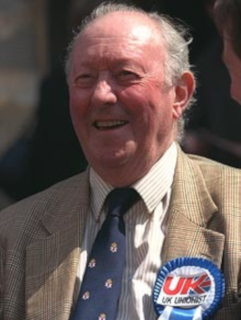
Death of Conor Cruise O’Brien, Politician, Writer & Historian

Conor Cruise O’Brien, politician, writer, historian and academic often nicknamed “The Cruiser,” dies in Howth, Dublin, on December 18, 2008.

Cruise O’Brien is born in Rathmines, Dublin on November 3, 1917. He serves as Minister for Posts and Telegraphs from 1973 to 1977, a Senator for Dublin University from 1977 to 1979, a Teachta Dála (TD) for the Dublin North-East constituency from 1969 to 1977 and a Member of the European Parliament (MEP) from January 1973 to March 1973.

Cruise O’Brien follows his cousin Owen into Sandford Park School, which has a predominantly Protestant ethos despite objections from Catholic clergy. He subsequently attends Trinity College Dublin (TCD) before joining the Irish diplomatic corps.

Although he is a fierce advocate of his homeland, Cruise O’Brien is a strong critic of Irish Republican Army (IRA) violence and of what he considers the romanticized desire for reunification with Northern Ireland. His collection of essays Maria Cross: Imaginative Patterns in a Group of Modern Catholic Writers (1952; written under the pseudonym Donat O’Donnell) impresses UN Secretary-General Dag Hammarskjöld, who in 1961 appoints him UN special representative in the Congo, later the Democratic Republic of the Congo. He orders UN peacekeeping forces into the breakaway Katanga province, and the resulting scandal forces him out of office. Despite UN objections, he writes To Katanga and Back (1963) to explain his actions.

After serving as vice-chancellor of the University of Ghana (1962–65) and Albert Schweitzer Professor of Humanities at New York University (1965–69), Cruise O’Brien enters Irish politics. He holds a Labour Party seat in Dáil Éireann from 1969 to 1977 and then in the Senate from 1977 to 1979, representing Trinity College, of which he is pro-chancellor (1973–2008).

In 1979, Cruise O’Brien is named editor in chief of the British Sunday newspaper The Observer, but he leaves after three tumultuous years. He remains an active newspaper columnist, especially for the Irish Independent until 2007. His books include States of Ireland (1972) and On the Eve of the Millennium (1995), as well as perceptive studies of Charles Stewart ParnellEdmund Burke, and Thomas Jefferson.

In early July 1996, in the period of Cruise O’Brien’s involvement as a UK Unionist Party (UKUP) representative in talks at Stormont, he suffers a mild stroke. He recovers well, but is left with anxiety about his recall of names. His last public appearance is on September 7, 2006, to deliver an address on the ninetieth anniversary of the death of Tom Kettle, in the old House of Lords chamber of the Bank of Ireland on College Green.

Cruise O’Brien dies at the age of 91 on December 18, 2008, in Howth, Dublin. His funeral is at the Church of the Assumption, Howth, and he is interred in Glasnevin Cemetery.

Leave a comment

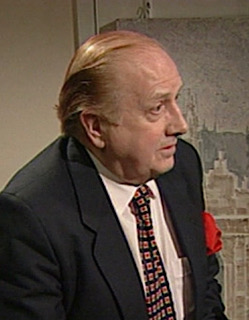
Birth of James Kilfedder, Northern Ireland Unionist Politician

Sir James Alexander Kilfedder, Northern Irish unionist politician usually known as Sir Jim Kilfedder, is born on July 16, 1928, in KinloughCounty Leitrim, in what is then the Irish Free State. He is the last unionist to represent Belfast West in the House of Commons.

Kilfedder’s family later moves to Enniskillen in neighbouring County Fermanagh in Northern Ireland, where he is raised. He is educated at Portora Royal School in Enniskillen and at Trinity College, Dublin (TCD). During his time at TCD, he acts as Auditor of the College Historical Society (CHS), one of the oldest undergraduate debating societies in the world. He becomes a barrister, called to the Irish Bar at King’s Inns, Dublin, in 1952 and to the English Bar at Gray’s Inn in 1958. He practises law in London.

At the 1964 United Kingdom general election, Kilfedder is elected as an Ulster Unionist Party (UUP) Member of Parliament for Belfast West. During the campaign, there are riots in Divis Street when the Royal Ulster Constabulary(RUC) remove an Irish flag from the Sinn Féin offices of Billy McMillen. This follows a complaint by Kilfedder in the form of a telegram to the Minister of Home Affairs, Brian McConnell. It reads, “Remove tricolour in Divis Street which is aimed to provoke and insult loyalists of Belfast.” Kilfedder loses his seat at the 1966 United Kingdom general election to Gerry Fitt. He is elected again in the 1970 United Kingdom general election for North Down, and holds the seat until his death in 1995.

Kilfedder is elected for North Down in the 1973 Northern Ireland Assembly election, signing Brian Faulkner‘s pledge to support the White Paper which eventually establishes the Sunningdale Agreement, but becoming an anti-White Paper Unionist after the election. In 1975, he stands for the same constituency in the Northern Ireland Constitutional Convention election, polling over three quotas as a UUP member of the United Ulster Unionist Council (UUUC) although he refuses to sign the UUUC’s pledge of conduct.

Kilfedder leaves the UUP in 1977 in opposition to the party’s policies tending to integrationism, preferring to advocate the restoration of the Stormont administration. For a time he sits as an “Independent Ulster Unionist.” He contests the 1979 European Parliament election under that label, finishing fourth in the count for the three seats, having overtaken the UUP leader Harry West on transfers.

In 1980, Kilfedder forms the Ulster Popular Unionist Party (UPUP) and is re-elected under that label in all subsequent elections. He again tops the poll in the 1982 Northern Ireland Assembly election and is elected as Speaker of the Assembly, serving in the position until 1986. He generally takes the Conservative whip at Westminster. While Speaker, he is paid more than the Prime Minister.

On March 20, 1995, while traveling by train into London from Gatwick Airport, Kilfedder dies of a heart attack. This is the same day that the Belfast Telegraph carries a front-page story saying that an Ulster MP has been targeted as one of twenty MPs invited by the LGBT rights organisation OutRage! in a letter to come out. He dies unmarried and is survived by two sisters.

Kilfedder is described by Democratic Unionist Party MLA Peter Weir as “the best MP North Down ever had.”

The UPUP does not outlive Kilfedder, and the by-election for his Commons seat is won by Robert McCartney, standing for the UK Unionist Party (UKUP). McCartney had fought the seat in the 1987 United Kingdom general election as a “Real Unionist” with the backing of the Campaign for Equal Citizenship. At the 1987 election count, in his victory speech, Kilfedder “attacked his rival’s supporters as ‘a rag tag collection of people who shame the name of civil rights.’ He said they included communists, Protestant paramilitaries and Gay Rights supporters and he promised to expose more in future.” McCartney loses North Down in 2001 to Sylvia Hermon of the UUP.

Kilfedder’s personal and political papers (including constituency affairs) are held at the Public Record Office of Northern Ireland, reference D4127.

Kilfedder is buried in Roselawn Cemetery in East Belfast.


Leave a comment

Sinn Féin Joins Northern Ireland Peace Process

Sinn Féin, the political wing of the Irish Republican Army (IRA), joins the Northern Ireland peace process on September 9, 1997 that aims to determine the future of Northern Ireland, after renouncing violence as a political tool.

The move paves the way for Sinn Féin’s first face-to-face talks with British Cabinet ministers since 1921, when the country was partitioned. Sinn Féin leader Gerry Adams, chief negotiator Martin McGuinness and party secretary Lucilita Bhreatnach agree behind closed doors at Stormont Castle in east Belfast to abide by the guiding principles underlying the Northern Ireland all-party talks.

These principles were set up in January 1996 by former United States Senator George J. Mitchell, former Canadian Chief of the Defence Staff Gen. John de Chastelain and former Prime Minister of Finland Harri Holkeri. They are generally referred to as the “Mitchell Principles,” and require negotiators to affirm their commitment to the tenets listed below:

  • Democratic and peaceful means of resolving political issues. Total disarmament of all paramilitary organizations. The disarmament must be verifiable to the satisfaction of an independent commission.
  • Renounce for themselves and oppose any effort by others to use force or threaten to use force to influence the course or outcome of all-party negotiations.
  • Abide by the terms of any agreement reached in all-party negotiations and to resort to democratic and exclusively peaceful methods in trying to alter any aspect of that outcome with which they may disagree.
  • Urge that “punishment” killings and beatings stop, and take effective steps to prevent such actions.

Sinn Féin pledges to honor the Mitchell Principles exactly 51 days after the IRA stopped its decades-old violent campaign against British rule of Northern Ireland. “This is a watershed. There is an expectation and understanding out there of the importance of this moment,” Adams says.

Paul Murphy, minister for political development in the province, says the Sinn Féin pledge marks a new phase in the peace process. “The significance I am sure is that we are now entering a new era … in the sense that the gun is going out of politics in Northern Ireland and that here Sinn Féin is ascribing to those principles of nonviolence, of democratic government.”

“I believe people outside these buildings, outside Stormont, are of the view that enough is enough, and that change must come,” Murphy adds. “But that change must be change which encompasses everybody’s aspirations and which will last for generations.”

The pledge to honor the Mitchell Principles means that the ten parties involved can proceed with round-table talks on the future of Northern Ireland on Monday, September 15, as planned.

However, two mainstream Protestant parties that favor continued British rule of Northern Ireland, the Democratic Unionist Party (DUP) and the UK Unionist Party (UKUP), plan to boycott the talks. In addition, the powerful Ulster Unionist Party (UUP), is expected to decide on Saturday, September 13, whether to attend the crucial new round of negotiations.

In a statement, the Ulster Unionists call Sinn Féin’s commitment “a charade.” “The subscription of Sinn Féin to the Mitchell Principles will completely lack credibility. Actions matter much more than words,” the statement says.

The London and Dublin governments agree that sovereignty in Northern Ireland can only be changed through the ballot box. While Protestants generally are determined to remain British, most Catholics favor making Northern Ireland part of Ireland.

(From: “Sinn Fein gains access to Northern Ireland talks” on CNN.com, http://www.cnn.com, September 9, 1997)