The Belfast News Letter is originally printed in Joy’s Entry in Belfast. The Joys are a family of Huguenot descent who add much to eighteenth-century Belfast, noted for their compiling materials for its history. Francis Joy, who founds the paper, had come to Belfast early in the century from the County Antrim village of Killead. In Belfast, he marries the daughter of the town sovereign and sets up a practice as an attorney. In 1737, he obtains a small printing press which is in settlement of a debt and uses it to publish the town’s first newspaper at the sign of “The Peacock” in Bridge Street. The family later purchases a paper mill in Ballymena and are able to produce enough paper not only for their own publication but for the whole province of Ulster.
Originally published three times weekly, the Belfast News Letter becomes a daily in 1855. The title is now located at two addresses – a news section in Donegall Square South in central Belfast, and a features section in Portadown, County Armagh. Before the partition of Ireland, the Belfast News Letter is distributed island wide.
The newspaper’s editorial stance and readership, while originally republican, is now strongly unionist. Its primary competitors are the Belfast Telegraph and The Irish News. The Belfast News Letter has changed hands several times since the mid-1990s, and since 2005 is owned by the Johnston Press holding company Johnston Publishing (NI). The full legal title of the newspaper is the Belfast News Letter, although the word “Belfast” no longer appears on the masthead.
Historical copies of the Belfast News Letter, dating back to 1828, are available to search and view in digitised form at the British Newspaper Archive.
Gerald FitzGerald becomes concerned that Ulick Burke’s attempt to gain supremacy in Connacht could simultaneously threaten the Crown’s interests in that province and his claim to be the paramount magnate in Ireland. He tries to persuade Ulick to acknowledge his authority by giving him his daughter Estacia in marriage. Ulick Burke, however, resists all attempts to have his power subordinated by the Earl of Kildare, forming an alliance with O’Brien of Thomond and the magnates of Munster. The Burkes of Mayo, on the other hand, join forces with Kildare with the aim of suppressing their dangerous neighbour.
In 1503, Ulick Burke attacks and destroys the castles of O’Kelly, Lord of Hymany, at Monivea, Garbally, and Castleblakeney. O’Kelly complains of this to the Lord Deputy.
For political and possibly for personal reasons, the Lord Deputy is eager to help O’Kelly weaken the prestige of Clanrickarde. Both sides gather a large contingent of lesser magnates and their armies. The Lord Deputy’s forces include contingents from Leinster, Ulster, and Connacht, among which are the armies of Red Hugh O’Donnell and Art Óg Ó Néill, the McDermotts and Morrisroes of Connacht, and a contingent provided by O’Kelly. Facing them are the forces of Burke and his allies – the O’Briens of Thomond, the McNamaras, the O’Kennedys, and the O’Carrolls.
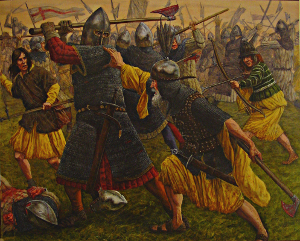
The armies meet on the slopes of Knockdoe, almost a mile to the north of Lackagh Parish Church, with heavily armed Gallowglass playing a large part on both sides. It is said that firearms are employed in the course of the battle, an early instance of their use in Ireland. The battle apparently lasts all day, with the heaviest fighting taking place along the River Clare in the townland of Ballybrone. The precise number of casualties is unknown, though contemporary observers are impressed by the extent of the slaughter. Around the summit of Knockdoe are many cairns where the dead are said to have been buried, with one in particular being pointed out as the resting place of the two sons of O’Brien of Thomond.
The Lord Deputy, though victorious, has many among the slain. His army remains the night on the field as a token of victory, then marches to Galway, looting Claregalway castle en route and taking as prisoners the two sons and daughter of Ulick Burke. They remain in Galway for a few days and then travel to Athenry.
The Clanrickarde Burkes fade into obscurity for some decades, with their rivals, the Mayo Burkes, gaining influence as a consequence.
At the start of the 20th century, the IRB is a stagnating organisation, concerned more with Dublin municipal politics than the establishment of a republic. A younger generation of Ulster republicans aim to change this and, in 1905, Denis McCullough and Bulmer Hobson found the Dungannon Clubs, whose purpose is to discourage enlistment into the British Army and encourage enlistment into the IRB.
In 1909, Michael Collins is introduced to the brotherhood by Sam Maguire. By 1914, the Supreme Council is largely purged of its older, tired leadership, and is dominated by enthusiastic men such as Hobson, McCullough, Patrick McCartan, John MacBride, Seán Mac Diarmada, and Tom Clarke. The latter two are to become the primary instigators of the Easter Rising in 1916.
Following the Rising some republicans, notably Éamon de Valera and Cathal Brugha, leave the organization as they view it as no longer necessary since the Irish Volunteers now perform its function. The IRB, during the War of Independence (1919-1921), is under the control of Michael Collins, who initially is secretary and subsequently, on June 28, 1919, is made president of the Supreme Council.
When the Anglo-Irish Treaty is signed on December 6, 1921, it is debated by the Supreme Council, which votes to accept it by an 11-4 vote. Those who oppose the Treaty include former leader Harry Boland, Austin Stack, and Liam Lynch. Anti-Treaty republicans like Ernie O’Malley, who fought during the Civil War against the Treaty, see the IRB as being used to undermine the Irish Republic.
The IRB becomes quiescent during the Irish Civil War, which ends in May 1923, but it emerges again later that year as a faction within the National Army. It supports Minister for Defence Richard Mulcahy against the “Old IRA,” which fights against the recruitment of ex-British Army personnel and the demobilization of old IRA men. This comes to a head with the Army Mutiny of 1924, in the wake of which Mulcahy resigns and other IRB members of the army are dismissed by acting President of the Executive Council Kevin O’Higgins. The IRB subsequently dissolves itself, although it is not known whether a formal decision is made, or it simply ceases to function.
The battle is allegedly the largest battle ever fought on the island of Ireland, and results in the death of Congal and the retreat of Domnall Brecc. The battle is caused as a result of the invading Gaels spreading out from Galway Bay. The Gaels have fled France and Spain to escape the Roman invasion of those areas. The Gaels are later to be known as Irish but are not native to the island. The native people of Ulster have been pushed into an area the size of two counties in what is now Antrim and Down.
Congal first establishes his power base in Dál nAraidi, where he becomes King before being recognised as King of Ulster in 627. His ambitions soon come into conflict with Domnall II, who becomes High King of Ireland in 628. Ironically, Domnall II rises to such a position because Congal has defeated and killed the previous High King, Suibne Menn, in a previous battle.
Domnall continues to press the rivalry with Congal very quickly. In 629 the two kings engage each other at the Battle of Dún Ceithirn in what is now County Londonderry. On that occasion Congal is defeated and Domnall is left unchallenged as the High King.
Throughout the 630s, Domnall continues to wage war on his rivals in the Uí Néill clan. In 637, however, Congal once again rises to challenge the Ard Rí, and enlists the help of Dál Riata to do so. The two forces meet just east of Lough Neagh.
Little is known about the actual battle itself. The armies of both Domnall II and Congal are primarily made up of warriors native to Ireland. However, Domnall I of Dál Riata brings a more varied force to the fight. His army included Scots, Picts, Anglo-Saxons, and Britons (Welshmen). At least one side has a substantial cavalry force.
There is reason to believe that the battle might have lasted a week, at the end of which the defeated force flees towards the woods of Killultagh. The forces of Ulster and Dál Riata are defeated, with Domnall of Dál Riata forced to flee north to his kingdom’s holdings. Congall is killed in the course of the battle.
The scale of the battle is confirmed in the 19th century when the railway line in Moira is being constructed. Thousands of bodies of men and horses are excavated. When one considers that the survivors probably numbered quite considerably more, then the reputation of the scale of the battle becomes obvious.
It takes its name in memory of King William of Orange of the house of Orange who fights at the Battle of the Boyne, brings about the Glorious Revolution and the Bill of Rights giving the Westminster parliament ultimate power of the country rather than the Monarch. The Independent Order is small compared to the main organisation with 1,500 to 2,000 members. It is largely based around north County Antrim in Northern Ireland but has lodges around the world, including England, Scotland, and Australia. Its annual main Twelfth of July demonstration is held in a north Antrim town or village.
The first notable effect after the formation of the Independent Order is a more liberal interpretation of the rules of the “Old Order.” In the early years of the Institution, many suffer the full wrath of the “powers that be,” who are opposed to any splitting of the Orange Order. Jobs are lost, homes are burned, and their headquarters in Belfast is bombed.
Independent Orangeism today maintains that it is essential for the Orange Institution to be kept free from politics and to guard the principles of Reformation Protestantism. They often express alarm when they believe these principles are endangered by conciliatory politicians. They are opposed to ecumenism and, while being opposed to Orangeism being linked to the Ulster Unionist Party, they are not apolitical and tend to work alongside unionist politicians and parties.
The Institution also promotes Ulster Protestant history and proclaims the principle of “Liberty of Conscience.” They declare their right to think and act independently without direction from political or clerical masters, they seek to strengthen the position of Orangeism, and they often warn of the danger of the development of a social and cultural Orangeism devoid of Protestant principle.
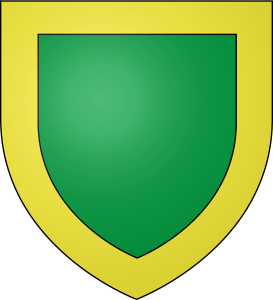
Circa 1189 de Lacy is appointed Viceroy of Ireland, a position previously held by his father, Hugh de Lacy, Lord of Meath. He is replaced in 1190 by Guillaume le Petil. He is later reappointed to serve as viceroy from 1205 to 1210.
In 1199, King John authorises de Lacy to wage war on John de Courcy, who has conquered much of Ulster without help or permission from the King. Hugh captures de Courcy in 1204. An account of the capture appears in the Book of Howth.
After King John creates him Earl of Ulster in 1205, he makes what was de Courcy’s territory in Ulster the Earldom of Ulster. He grants Drogheda its charter and continues the conquest of the northeastern over-kingdom of Ulaid, building on de Courcy’s success, with the earldom spanning across the modern counties of Antrim and Down and parts of Londonderry.
In 1207, war breaks out between the Earl of Ulster and the justiciar. This brings King John to Ireland, where he expels the earl’s brother, Walter de Lacy, from Meath, and compels the earl himself to flee to Scotland.
For several years Ulster takes part in the wars in France, and de Lacy does not return to Ireland until 1221, when he allies himself with the O’Neills against the English. In 1226, his lands in Ulster are handed over to his brother Walter, but they are restored to him in the following year, after which date, he appears to loyally serve the king, being more than once summoned to England to give advice about Irish affairs.
De Lacy purportedly separates from his first wife and lives in adultery. He has legitimate and natural children. In 1226, his daughter by his first wife marries Alan, Lord of Galloway. He marries his second wife, Emmeline de Riddlesford, the daughter of Walter de Riddlesford around 1242. Hugh de Lacy dies shortly thereafter in 1242 or 1243. Emmeline’s second marriage takes place around 1243 with Stephen Longespee, grandson of Henry II of England, by whom she has two daughters, Ela Longespee, Lady of Ashby, and Emmeline Longespee, Lady of Offaly.
Left with no surviving legitimate children, the earldom of Ulster reverts to the crown upon de Lacy’s death.
The Bill, like his Landlord and Tenant (Ireland) Act 1870, is very much the work of Gladstone, who excludes both the Irish MPs and his own ministers from participation in the drafting.
If passed, the 1886 Bill would create a unicameral assembly consisting of two Orders which could meet either together or separately. The first Order would consist of the 28 Irish representative peers plus 75 members elected through a highly restricted franchise. It could delay the passage of legislation for up to 3 years. The second Order would consist of either 204 or 206 members. All Irish MPs would be excluded from Westminster altogether.
Executive power would be possessed by the Lord Lieutenant of Ireland whose executive would not be responsible to either Order.
Britain would still retain control over a range of issues including peace, war, defence, treaties with foreign states, trade, and coinage. No special provision would be made for Ulster. Britain would retain control of the Royal Irish Constabulary (RIC) until it deems it safe for control to pass to Dublin. The Dublin Metropolitan Police would pass to Irish control.
When the bill is introduced, Charles Stewart Parnell has mixed reactions. He says that it has great faults but is prepared to vote for it. In his famous Irish Home Rule speech, Gladstone beseeches Parliament to pass it and grant Home Rule to Ireland in honour rather than being compelled to one day in humiliation. Unionists and the Orange Order are fierce in their resistance. For them, any measure of Home Rule is denounced as nothing other than Rome Rule.
The vote on the Bill takes place on 8 June 1886, after two months of debate. The Government of Ireland Bill is defeated by a vote of 341-311. In the staunchly loyalist town of Portadown, the so-called “Orange Citadel” where the Orange Order is founded in 1795, Orangemen and their supporters celebrate the Bill’s defeat by “Storming the Tunnel.”
Parliament is dissolved on June 26 and the U.K. general election of 1886 is called. Historians have suggested that the 1886 Home Rule Bill was fatally flawed by the secretive manner of its drafting, with Gladstone alienating Liberal figures like Joseph Chamberlain who, along with a colleague, resigned in protest from the ministry, while producing a Bill viewed privately by the Irish as badly drafted and deeply flawed.
Healy is born in Bantry, County Cork, the second son of Maurice Healy, clerk of the Bantry Poor Law Union, and Eliza Healy (née Sullivan). His father is transferred in 1862 to a similar position in Lismore, County Waterford. Timothy is educated at the Christian Brothers school in Fermoy, and is otherwise largely self-educated, in 1869, at the age of fourteen, he goes to live with his uncle Timothy Daniel Sullivan in Dublin.
Healy then moves to England in 1871, working first as a railway clerk and then from 1878 in London as parliamentary correspondent of The Nation, writing numerous articles in support of Charles Stewart Parnell, the newly emergent and more militant home rule leader, and his policy of parliamentary obstructionism. Healy takes part in Irish politics and becomes associated with Parnell and the Irish Parliamentary Party. After being arrested for intimidation in connection with the Irish National Land League, he is promptly elected as member of Parliament for Wexford Borough in 1880.
In Parliament, Healy becomes an authority on the Irish land question. The “Healy Clause” of the Land Act of 1881, which protects tenant farmers’ agrarian improvements from rent increases imposed by landlords, not only makes him popular throughout nationalist Ireland but also wins his cause seats in Protestant Ulster. He breaks with Parnell in 1886 and generally remains at odds with subsequent leaders of the Irish Parliamentary Party, though he is a strong supporter of proposals for Irish Home Rule. Meanwhile, he is called to the Irish bar in 1884 and becomes a queen’s counsel in 1899.
Healy believes that he has been awarded the Governor-Generalship for life. However, the Executive Council of the Irish Free State decides in 1927 that the term of office of Governors-General will be five years. As a result, he retires from the office and public life in January 1928 and publishes his extensive two volume memoirs later in that year. Throughout his life he is formidable because he is ferociously quick-witted, because he is unworried by social or political convention, and because he knows no party discipline. Towards the end of his life, he becomes more mellowed and otherwise more diplomatic.
Healy dies on March 26, 1931, at the age of 75, in Chapelizod, County Dublin. He is buried in Glasnevin Cemetery in Dublin.
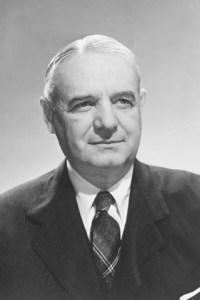
Of Irish descent, Donovan is born in Buffalo, New York, to first generation immigrants Anna Letitia “Tish” Donovan (née Lennon) of Ulster and Timothy P. Donovan of County Cork. His grandfather, Timothy O’Donovan, Sr., is from the town of Skibbereen, and marries Mary Mahoney, who belongs to a propertied family of substantial means who disapprove of him. They move first to Canada and then to New York, where their son Timothy, Jr., Donovan’s father, attempts to engage in a political career but with little success.
William attend St. Joseph’s Collegiate Institute and Niagara University before starring on the football team at Columbia University, where he earns the nickname “Wild Bill”, which remains with him for the rest of his life. He graduates from Columbia in 1905. He then attends and graduates from Columbia Law School, after which he becomes an influential Wall Street lawyer.
In 1912, Donovan forms and leads a troop of cavalry of the New York National Guard, which is mobilized in 1916 and serves on the U.S.-Mexico border during the American government’s campaign against Pancho Villa.
During World War I, Major Donovan organizes and leads the 1st battalion of the 165th Regiment of the 42nd Division. For his service near Landres-et-St. Georges, France, on October 14-15, 1918, he receives the Medal of Honor. By the end of the war, he receives a promotion to colonel, as well as the Distinguished Service Cross and Purple Heart.
Donovan serves as U.S. Attorney for the Western District of New York from 1922 to 1924. Due to his energetic enforcement of Prohibition in the United States, there are a number of threats to assassinate him and to dynamite his home, but he is not deterred. In 1924, President Calvin Coolidge names Donovan to the United States Department of Justice’s Antitrust Division as a deputy assistant to Attorney General Harry M. Daugherty. Donovan runs unsuccessfully for Lieutenant Governor of New York (1922) and for Governor of New York (1932) as a Republican.
During the years between the world wars, Donovan earns the attention and friendship of President Franklin D. Roosevelt. Although the two men were from opposing political parties, they were very similar in personality. In 1940 and 1941, Donovan traveled as an informal emissary to Britain, where he is urged by U.S. Secretary of the Navy Frank Knox and Roosevelt to gauge Britain’s ability to withstand Germany’s aggression. During these trips Donovan meets with key officials in the British war effort, including Winston Churchill and the directors of Britain’s intelligence services. Donovan returns to the U.S. confident of Britain’s chances and enamored of the possibility of founding an American intelligence service modeled on that of the British.
On July 11, 1941, Donovan is named Coordinator of Information (COI) where he is to oversee America’s foreign intelligence organizations which, at the time are fragmented and isolated from each other. He is plagued over the course of the next year with jurisdictional battles as few of the leaders in the intelligence community are willing to part with any of their power. Nevertheless, Donovan begins to lay the groundwork for a centralized intelligence program.
In 1942, the COI becomes the Office of Strategic Services (OSS) and Donovan is returned to active duty in the U.S. Army. He is promoted to brigadier general in March 1943 and to major general in November 1944. Under his leadership the OSS eventually conducts successful espionage and sabotage operations in Europe and parts of Asia. By 1943, relations with the British are becoming increasingly strained, partly due to British concerns that OSS operations are sometimes regarded as ill-disciplined and irresponsibly managed. MI6 chief Stewart Menzies is extremely hostile towards the idea of OSS operations anywhere in the British Empire and categorically forbids them to operate within the U.K.
After the end of World War II and the death of President Roosevelt in early April 1945, Donovan’s political position is substantially weakened as he finds himself opposed by President Harry S. Truman, J. Edgar Hoover, and others. Truman disbands the OSS in September 1945 and Donovan returns to civilian life. Several departments of the OSS survive the dissolution and, less than two years later, the Central Intelligence Agency is founded.
Donovan does not have an official role in the newly formed CIA, but he is instrumental in its formation. His opinions meet strong opposition from the State, War, and Navy Departments, as well as J. Edgar Hoover. President Truman is also unenthusiastic about some of Donovan’s arguments, but he prevails, and they are reflected in the National Security Act of 1947 and the Central Intelligence Agency Act of 1949.
After the end of the war ended, Donovan returns to his lifelong role as a lawyer and serves as special assistant to chief prosecutor Robert H. Jackson at the Nuremberg War Crimes Tribunal in Germany. On August 3, 1953, President Dwight Eisenhower appoints Donovan Ambassador to Thailand, and he serves in that capacity from September 4, 1953, until his resignation on August 21, 1954.
Donovan dies from complications of vascular dementia on February 8, 1959, at the age of 76, at Walter Reed Army Medical Center in Washington, D.C. He is buried in Section 2 of Arlington National Cemetery. President Eisenhower remarks, “What a man! We have lost the last hero.”
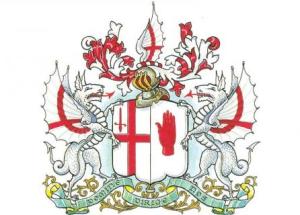
On January 28, 1613, The Honourable The Irish Society, a consortium of livery companies of the City of London, is created by Royal Charter of James I of England to undertake the Plantation in the North West of Ulster that is then being driven by the English Crown.
Following the Gaelic defeat in the Nine Years’ War in 1603 and the Flight of the Earls in 1607, northwest Ulster is left open to colonisation. James I sets out to defend against a future attack from within or without. He finds that the town of Derry can become either a great asset as a control over the River Foyle and Lough Swilly, or it can become an inviting back door should the people of the area turn against him. He pressures the guilds of the City of London to fund the resettlement of the area, including the building of a new walled city. This results in the creation of the Society.
The city of Derry is renamed Londonderry in recognition of the London origin of the Irish Society. County Coleraine is enlarged and renamed County Londonderry after its new county town. The rural area of the county is subdivided between the Great Twelve livery companies, while the towns and environs of Londonderry and Coleraine are retained by the Irish Society.
In January 1635, the Irish Society, as well as the City of London, are found guilty of mismanagement and neglect of Derry plantation. They are sentenced to a fine of £70,000 and forfeiture of Derry property. The Society is suppressed in 1637 but is revived by Oliver Cromwell in 1650 and again after the Restoration by Londonderry’s 1662 royal charter.
The Society is involved in several controversies over the years including a dispute over fishing rights with the Church of Ireland and Bishop of Derry and a lawsuit brought by The Skinners’ Company in 1832 over the distribution of profits. The Society also has some disputes with the corporations over ownership and development of property. During the 17th and 18th centuries, four of the twelve livery companies sell their estates, with the Irish Society requiring a bond of indemnity in each case. Leases to middlemen granted by the remaining companies expire at various times during the nineteenth century, after which the companies “enormously increased the rental.”
The Society finances the building of the Guildhall in Derry. Construction begins in 1887 and it is opened in July 1890, at a cost of £19,000.
The Society remains in existence today as a relatively small grant-giving charitable body. Its educational grants are funded by its remaining property, including the Walls of Derry, a tourist attraction and heritage site, and fisheries on the River Bann. The Society is based in London, but maintains a “representative” resident in County Londonderry.


 The
The