seamus dubhghaill

Promoting Irish Culture and History from Little Rock, Arkansas, USA


Leave a comment

Birth of Frank McGuinness, Playwright & Poet

Frank McGuinness, award-winning Irish playwright and poet, is born in Buncrana, a town located on the Inishowen peninsula of County Donegal on July 29, 1953. As well as his own works, which include The Factory Girls, Observe the Sons of Ulster Marching Towards the Somme, Someone Who’ll Watch Over Me and Dolly West’s Kitchen, he is recognised for a “strong record of adapting literary classics, having translated the plays of Jean Racine, Sophocles, Henrik Ibsen, Federico García Lorca, and August Strindberg to critical acclaim.”

McGuinness is educated locally and at University College Dublin, where he studies Pure English and medieval studies to postgraduate level.

He first comes to prominence with his play The Factory Girls but establishes his reputation with his play about World War I, Observe the Sons of Ulster Marching Towards the Somme, which is staged in Dublin‘s Abbey Theatre and internationally. The play makes a name for him when it is performed at Hampstead Theatre, drawing comments about McGuinness’s Irish Catholic background. It wins numerous awards including the London Evening Standard Award for Most Promising Playwright for McGuinness and the Christopher Ewart-Biggs Memorial Prize. He has also written new versions of classic dramas, including works by Henrik Ibsen, Anton Chekhov, and Euripides, adapting the literal translations of others. In addition, he writes the screenplay for the film Dancing at Lughnasa, adapting the stage play by fellow Ulsterman Brian Friel.

McGuinness’s first poetry anthology, Booterstown, is published in 1994. Several of his poems have been recorded by Marianne Faithfull, including Electra, After the Ceasefire and The Wedding.

McGuinness previously lectured in Linguistics and Drama at the University of Ulster, Medieval Studies at University College, Dublin and English at the National University of Ireland, Maynooth. Then he is a writer-in-residence lecturing at University College Dublin before being appointed Professor of Creative Writing in the School of English, Drama and Film there in 2007.


Leave a comment

Birth of Mary McAleese, 8th President of Ireland

Mary Patricia McAleese, Irish Independent politician who serves as the 8th President of Ireland from November 1997 to November 2011, is born in Belfast, Northern Ireland on June 27, 1951. She is the second female president and is first elected in 1997 succeeding Mary Robinson, making McAleese the world’s first woman to succeed another as president. She is re-elected unopposed for a second term in office in 2004 and is the first President of Ireland to have come from either Northern Ireland or Ulster.

Born Mary Patricia Leneghan, McAleese is the eldest of nine children in a Roman Catholic family. Her family is forced to leave the area by loyalists when The Troubles break out. Educated at St. Dominic’s High School, she also spends some time when younger with the Poor Clares, Queen’s University Belfast, from which she graduates in 1973, and Trinity College, Dublin. She is called to the Bar of Northern Ireland in 1974 and remains a member of the Bar Council of Ireland. She opposes abortion and divorce.

In 1975, McAleese is appointed Professor of Criminal Law, Criminology and Penology at Trinity College, Dublin and in 1987, she returns to her Alma Mater, Queen’s, to become Director of the Institute of Professional Legal Studies. In 1994, she becomes the first female Pro-Vice-Chancellor of Queen’s University. She works as a barrister and also works as a journalist with RTÉ.

McAleese uses her time in office to address issues concerning justice, social equality, social inclusion, anti-sectarianism and reconciliation. She describes the theme of her Presidency as “Building Bridges.” This bridge-building materialises in her attempts to reach out to the unionist community in Northern Ireland. These steps include celebrating The Twelfth at Áras an Uachtaráin and she even incurs criticism from some of the Irish Catholic hierarchy by taking communion in a Church of Ireland cathedral in Dublin. Despite being a practising Roman Catholic, she holds liberal views regarding homosexuality and women priests. She is a member of the Council of Women World Leaders and is ranked the 64th most powerful woman in the world by Forbes. In spite of some minor controversies, McAleese remains popular, and her Presidency is regarded as successful.

McAleese receives awards and honorary doctorates throughout her career. On May 3, 2007, she is awarded The American Ireland Fund Humanitarian Award. On October 31, 2007, she is awarded an honorary Doctor of Laws from the University of Otago, New Zealand. On May 19, 2009, she becomes the third living person to be awarded the freedom of Kilkenny, succeeding Brian Cody and Séamus Pattison. The ceremony, at which she is presented with two hurleys, takes place at Kilkenny Castle. On May 24, 2009, she is awarded an honorary Doctor of Laws from Mount Holyoke College in South Hadley, Massachusetts. On May 22, 2010, she is awarded an honorary Doctor of Law from Fordham University, in the Bronx, New York City, where she delivers the commencement speech to the class of 2010. On November 8, she is awarded an honorary doctorate at University of Massachusetts Lowell in Lowell, Massachusetts.

On June 8, 2013, a ceremony is held to rename a bridge on the M1 motorway near Drogheda as the Mary McAleese Boyne Valley Bridge to honour McAleese’s contribution to the Northern Ireland peace process.


Leave a comment

Birth of Dramatist George Shiels

George Shiels, Irish dramatist whose plays are a success both in his native Ulster and at the Abbey Theatre in Dublin, is born in Ballymoney, County Antrim on June 24, 1881. His most famous plays are The Rugged Path, The Passing Day, and The New Gossoon.

Shiels is born to Robert Shiels and Eileen (née MacSweeney). He emigrates to Canada as a young man. While working on the building of the Canadian Pacific Railway in 1913, he is involved in a serious accident that leaves him in a wheelchair for the rest of his life. He returns to Ballymoney and starts a shipping company with his brother and also begins writing. Starting with poems and short stories, he soon progresses to plays, which he provides to the Ulster Literary Theatre under the pen name of George S. Morsheils.

Starting with Bedmates (1921), his plays begin to be regularly accepted by the Abbey Theatre for production. His 1930 work The New Gossoon is so well-received that the Abbey’s touring company, The Abbey Theatre Irish Players, bring the play to Broadway for limited runs three times, in 1932, 1934, and 1937. In 1940, a production of Shiels’ The Rugged Path sets an Abbey record by attracting a total audience of 25,000 people over eight weeks.

When his success as a playwright allows him, he leaves the shipping business and moves to Carnlough on the coast of County Antrim, where he lives from 1932 until his death on September 19, 1949.


Leave a comment

Birth of Artist William Conor

Artist William Conor is born on May 6, 1881, in the Old Lodge Road area of north Belfast, the son of a wrought-iron worker.

Celebrated for his warm and sympathetic portrayals of working-class life in Ulster, Conor studies at the Government School of Design in Belfast in the 1890s. His artistic talents are recognized at the early age of ten when a teacher of music, Louis Mantell, notices the merit of his chalk drawings and arranges for him to attend the College of Art.

Conor initially works as a commercial artist, before being commissioned during World War I by the British government to produce official records of soldiers and munitions workers.

Conor moves to London in 1920 and there meets and socialises with such artists as Sir John Lavery and Augustus John. He exhibits at the Royal Academy of Arts in 1921 and in Dublin at the Royal Hibernian Academy (RHA) from 1918–1967, showing nearly 200 works.

Conor is one of the first Academicians when the Belfast Art Society becomes the Ulster Academy of Arts in 1930. He becomes an Associate RHA in 1938 and a full member in 1946. Exhibitions at the Victor Waddington Galleries are held in 1944 and 1948. In 1952 he is awarded the Order of the British Empire (OBE) and in 1957 he is elected President of the Royal Ulster Academy, an office he holds until 1964.

More than 50 works of his in crayon and watercolour are in the permanent collections of the Ulster Museum.

(Pictured: Bronze statue of William Conor at Conor’s Corner, Shankill Road, Belfast)


Leave a comment

Founding of the Irish Rugby Football Union

irfu

The Irish Rugby Football Union (IRFU), the body managing rugby union in the island of Ireland, both Republic of Ireland and Northern Ireland, is founded in Dublin on February 5, 1879. The IRFU has its head office at 10/12 Lansdowne Road and home ground at Aviva Stadium, where adult men’s Irish rugby union international matches are played. In addition, the Union also owns Kingspan Stadium in Belfast, Thomond Park in Limerick and a number of grounds in provincial areas that have been rented to clubs.

Initially, there are two unions, both founded in 1874. The Irish Football Union has jurisdiction over clubs in Leinster, Munster, and parts of Ulster. The Northern Football Union of Ireland controls the Belfast area. The IRFU is formed in 1879 as an amalgamation of these two organisations and branches of the new IRFU are formed in Leinster, Munster, and Ulster. The Connacht Branch is formed in 1900.

The IRFU is a founding member of the International Rugby Football Board, now known as World Rugby, in 1886 with Scotland and Wales. England refuses to join until 1890.

Following the political partition of Ireland into separate national states, Ireland, originally the Irish Free State then Éire, and Northern Ireland, a political division of the United Kingdom, the then Committee of the Irish Rugby Football Union decides that it will continue to administer its affairs on the basis of the full 32 Irish counties and the traditional four provinces of Ireland – Leinster (12 counties), Ulster (9 counties), Munster (6 counties), and Connacht (5 counties).

This leads to the unusual, but not unique, situation among international rugby union teams, where the Irish representative teams are drawn from players from two separate political, national territories. To maintain the unity of Irish rugby union and the linkages between North and South, the IRFU purchase a new ground in 1923 in the Ravenhill district of Belfast at a cost of £2,300. The last full International at Ravenhill involving Ireland for more than a half-century takes place in 1953–54 against Scotland who are victorious by 2 tries (6 points) to nil. Australia plays Romania in the 1999 World Cup at the ground. The next full International played at Ravenhill is the Rugby World Cup warm-up match against Italy in August 2007 due to the temporary closure of Lansdowne Road for reconstruction.

The four provincial branches of the IRFU first run cup competitions during the 1880s. Although these tournaments still take place every year, their significance has been diminished by the advent of an All-Ireland League of 48 Senior Clubs in 1990.

The four provincial teams have played an Interprovincial Championship since the 1920s and continue to be the focal point for players aspiring to the international level. These are Munster, Leinster, Ulster, and Connacht . All four provinces play at the senior level as members of the Guinness Pro12.

There are currently approximately 95,000 rugby players in total in Ireland. There are 56 clubs affiliated to the Ulster Branch, 71 to the Leinster Branch, 59 to the Munster Branch, and 19 to the Connacht Branch. In addition, there are 246 schools playing rugby: Ulster (107), Leinster (75), Munster (41) and Connacht (23).

The IRFU also has an Exiles Branch tasked with developing “Ireland-qualified” players (i.e., eligible to play internationally for Ireland through ancestry) living in England, Scotland, and Wales. Volunteers provide coaching, administration and development under the supervision of a paid development manager.


Leave a comment

Last British Troops Leave the Irish Free State

british-troops-leave-ireland

The last British troops leave the Irish Free State on December 17, 1922. They are the remnants of a 5,000 strong garrison maintained up to that point in Dublin, commanded by Nevil Macready.

It appears to be a friendly farewell, even while Ireland is embroiled in its own Civil War. The Union Jack is lowered at the hospital and Macready goes to review the final contingent of troops as they leave the Royal barracks, later known as the Collins barracks. He then motors to Kingstown, now Dún Laoghaire, where he receives a 17-gun salute and joins Admiral Cecil Fox, the Sligo-born naval commander in the area, on board the cruiser HMS Dragon to sail home to England and retirement.

Meanwhile, the troops, 3,500 men mostly from the Leicester, Worchester, and Border regiments, march to the port. At Beresford Place they are greeted by 500 members of the Legion of Irish Ex-Servicemen, in civilian clothes but wearing their decorations. Thousands of other people line the quays and the armoured cars and the Dublin Metropolitan Police stand by, but there is no trouble. Embarkation onto six ships begins around 1:15 PM. At 3:10 PM, the last ship to leave, the steamer Arvonia chartered from the London and North Western Railway, weighs anchor while a band on deck plays “God Save the King” and a crowd breaks into the North Wall Extension to wave a final farewell as it enters Alexandra Basin.

The armoured cars them drive north to Ulster and the evacuation of the Irish Free State, apart from the Treaty ports, is over. General Richard Mulcahy, who takes over the Royal barracks that day, claims “the incubus of occupation that has lain as a heavy hand on the country for years has been removed.”

In his memoirs, Macready expresses annoyance that a photograph of Fox and himself published in The Irish Times on December 18 has the caption “two gallant Irishmen.” Although he has an Irish grandfather, he cordially loathes Ireland.

The British leave fully outfitted barracks to the Irish Army and artifacts including a large card in the Headquarters in Parkgate Street printed with the admonition “LOVE ONE ANOTHER.”


Leave a comment

Death of Open Champion Fred Daly

fred-daly

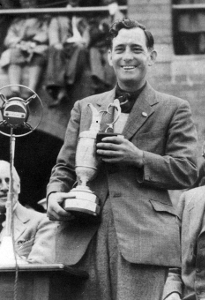
Frederick J. Daly, Northern Irish professional golfer best known for winning The Open Championship in 1947 at the Royal Liverpool Golf Club, Hoylake, dies on November 18, 1990.

Born in Portrush, County Antrim, Daly is the only Irishman from either side of the border to have won The Open until Pádraig Harrington wins it in 2007 and the only Northern Irish major winner until Graeme McDowell wins the U.S. Open in 2010. Daly wins the Open in 1947 while professional to the Balmoral Club in Belfast. He wins with a score of 293, a single stroke ahead of runners-up Reg Horne and amateur Frank Stranahan.

During his acceptance speech at Royal Liverpool, Daly says he is very honoured to receive the Claret Jug and take it back to Northern Ireland. He goes on to say that the trophy has never been to Ireland and that he is hoping that the change of air will help it. There is much applause and laughter at his humorous comments.

In addition, he adds the News of the World Match Play tournament, which is the main British Match Play Championship, becoming the first since James Braid (1905) to win both the Open and the Match Play title in the same year.

Daly is the only Ulsterman to win the Irish Open until 2016, when Rory McIlroy wins at The K Club. Daly wins in 1946 at Portmarnock, and plays on four Ryder Cup teams, in 1947, 1949, 1951, and 1953. Daly is awarded the MBE in the 1984 New Year Honours “for services to golf.”

Fred Daly, age 79, dies in Belfast on November 18, 1990, of a heart attack.


Leave a comment

Birth of Sir Charles Brett, Solicitor & Journalist

long-shadows-cast-before

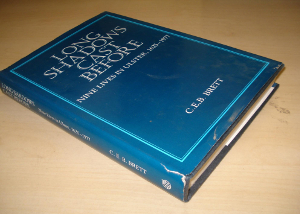
Sir Charles Edward Bainbridge Brett, Northern Irish solicitor, journalist, author and founding member, and first chairman, of the Ulster Architectural Heritage Society (UAHS), is born in Holywood, County Down, on October 30, 1928. He is known to many simply as Charlie Brett.

Brett is born into a long line of solicitors, the family firm being L’Estrange and Brett, based in Belfast. He is a partner there from 1954 until 1994. He is educated at Rugby School and New College, Oxford, where he is President of the Poetry Society and a friend of Dylan Thomas and attends lectures by Lord Clark.

Between 1949 and 1950 he works in France as a journalist with the Continental Daily Mail, where he is said to have mixed in anarchist and Trotskyite circles.

In 1956, the Earl of Antrim invites Brett to join the Northern Ireland Committee of the National Trust. On finding there are no books written to prepare himself for this, he resolves to write the necessary volumes. In 1957 he becomes the first chairman of the Ulster Architectural Heritage Society, founded alongside, amongst others Lady Dunleath. Brett serves as chairman for ten years and then as President from 1979 until his death.

With the National Trust he puts his legal skill to use in order to establish a public footpath along the cliffs of the North Coast of Ulster. He also sits on the board of the Irish Architectural Archive in Dublin.

In 1971, he is appointed to the board of the newly created Northern Ireland Housing Executive. He serves as Chairman for five years from 1979, during which time 50,000 dwellings are built. He is asked to compile a list of historic buildings in Jersey in 1975. In 1986, Brett becomes the first chairman of the International Fund for Ireland, established to encourage investment in Ireland.

Brett is also involved in Northern Irish politics, being chairman of the Northern Ireland Labour Party for a time. In 1981 he receives a CBE, this is followed by a Knighthood in 1990.

Brett dies on December 19, 2005. His church memorial is located along those of his family in the Comber Church of Ireland Parish Church of St. Mary, in Comber, North County Down.


Leave a comment

Founding of the “Belfast News Letter”

belfast-news-letter

The Belfast News Letter, one of Northern Ireland‘s main daily newspapers and the oldest English language general daily newspaper still in publication, is founded on September 1, 1737.

The Belfast News Letter is originally printed in Joy’s Entry in Belfast. The Joys are a family of Huguenot descent who add much to eighteenth-century Belfast, noted for their compiling materials for its history. Francis Joy, who founds the paper, had come to Belfast early in the century from the County Antrim village of Killead. In Belfast, he marries the daughter of the town sovereign and sets up a practice as an attorney. In 1737, he obtains a small printing press which is in settlement of a debt and uses it to publish the town’s first newspaper at the sign of “The Peacock” in Bridge Street. The family later purchases a paper mill in Ballymena and are able to produce enough paper not only for their own publication but for the whole province of Ulster.

Originally published three times weekly, the Belfast News Letter becomes a daily in 1855. The title is now located at two addresses – a news section in Donegall Square South in central Belfast, and a features section in Portadown, County Armagh. Before the partition of Ireland, the Belfast News Letter is distributed island wide.

The newspaper’s editorial stance and readership, while originally republican, is now strongly unionist. Its primary competitors are the Belfast Telegraph and The Irish News. The Belfast News Letter has changed hands several times since the mid-1990s, and since 2005 is owned by the Johnston Press holding company Johnston Publishing (NI). The full legal title of the newspaper is the Belfast News Letter, although the word “Belfast” no longer appears on the masthead.

Historical copies of the Belfast News Letter, dating back to 1828, are available to search and view in digitised form at the British Newspaper Archive.


Leave a comment

The Battle of Knockdoe

battle-of-knockdoe

The Battle of Knockdoe, a battle between the forces of two Anglo-Irish lords — Gerald FitzGerald, Earl of Kildare, the Lord Deputy of Ireland, and Ulick Fionn Burke, lord of Clanricarde, takes place on August 19, 1504, at Knockdoe, County Galway.

Gerald FitzGerald becomes concerned that Ulick Burke’s attempt to gain supremacy in Connacht could simultaneously threaten the Crown’s interests in that province and his claim to be the paramount magnate in Ireland. He tries to persuade Ulick to acknowledge his authority by giving him his daughter Estacia in marriage. Ulick Burke, however, resists all attempts to have his power subordinated by the Earl of Kildare, forming an alliance with O’Brien of Thomond and the magnates of Munster. The Burkes of Mayo, on the other hand, join forces with Kildare with the aim of suppressing their dangerous neighbour.

In 1503, Ulick Burke attacks and destroys the castles of O’Kelly, Lord of Hymany, at Monivea, Garbally, and Castleblakeney. O’Kelly complains of this to the Lord Deputy.

For political and possibly for personal reasons, the Lord Deputy is eager to help O’Kelly weaken the prestige of Clanrickarde. Both sides gather a large contingent of lesser magnates and their armies. The Lord Deputy’s forces include contingents from Leinster, Ulster, and Connacht, among which are the armies of Red Hugh O’Donnell and Art Óg Ó Néill, the McDermotts and Morrisroes of Connacht, and a contingent provided by O’Kelly. Facing them are the forces of Burke and his allies – the O’Briens of Thomond, the McNamaras, the O’Kennedys, and the O’Carrolls.

The armies meet on the slopes of Knockdoe, almost a mile to the north of Lackagh Parish Church, with heavily armed Gallowglass playing a large part on both sides. It is said that firearms are employed in the course of the battle, an early instance of their use in Ireland. The battle apparently lasts all day, with the heaviest fighting taking place along the River Clare in the townland of Ballybrone. The precise number of casualties is unknown, though contemporary observers are impressed by the extent of the slaughter. Around the summit of Knockdoe are many cairns where the dead are said to have been buried, with one in particular being pointed out as the resting place of the two sons of O’Brien of Thomond.

The Lord Deputy, though victorious, has many among the slain. His army remains the night on the field as a token of victory, then marches to Galway, looting Claregalway castle en route and taking as prisoners the two sons and daughter of Ulick Burke. They remain in Galway for a few days and then travel to Athenry.

The Clanrickarde Burkes fade into obscurity for some decades, with their rivals, the Mayo Burkes, gaining influence as a consequence.