seamus dubhghaill

Promoting Irish Culture and History from Little Rock, Arkansas, USA


Leave a comment

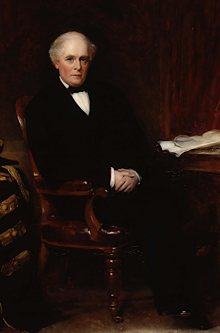
Birth of Physician Sir Dominic Corrigan, 1st Baronet

Sir Dominic John Corrigan, 1st Baronet, Irish physician known for his original observations in heart disease, is born in Thomas Street, Dublin, on December 2, 1802. The abnormal “collapsing” pulse of aortic valve insufficiency is named Corrigan’s pulse after him.

Corrigan is the son of a dealer in agricultural tools. He is educated in St. Patrick’s College, Maynooth, which then has a department for secular students apart from the ecclesiastical seminary. He is attracted to the study of medicine by the physician in attendance, and spends several years as an apprentice to the local doctor, Edward Talbot O’Kelly. He studies medicine in Dublin later transferring to Edinburgh Medical School where he receives his degree as MD in August 1825.

Corrigan returns to Dublin in 1825 and sets up a private practice at 11 Ormond Street. As his practice grows, he moves to 12 Bachelors Walk in 1832, and in 1837 to 4 Merrion Square West. Apart from his private practice, he holds many public appointments. He is a physician to St. Patrick’s College, Maynooth, the Sick Poor Institute, the Charitable Infirmary Jervis Street (1830–43) and the House of Industry Hospitals (1840–66). His work with many of Dublin’s poorest inhabitants leads to him specialising in diseases of the heart and lungs, and he lectures and published extensively on the subject. He is known as a very hard-working physician, especially during the Great Famine of Ireland. At the 1870 Dublin City by-election he is elected a Liberal Member of Parliament for Dublin City. In parliament he actively campaigns for reforms to education in Ireland and the early release of Fenian prisoners. He does not stand for re-election in 1874. His support for temperance and Sunday closing (of pubs) antagonises his constituents and alcohol companies

In 1847, Corrigan is appointed physician-in-ordinary to the Queen in Ireland. Two years later he is given an honorary MD from Trinity College Dublin (TCD). In 1846, his application to become a fellow of the Royal College of Physicians of Ireland (RCPI) is blocked. In 1855, he gets around this opposition by sitting the college’s entrance exam with the newly qualified doctors. He becomes a fellow in 1856, and in 1859 is elected president, the first Catholic to hold the position. He is re-elected president an unprecedented four times. There is a statue of Corrigan in the Graves’ Hall of the college by John Henry Foley.

Corrigan is President of the Royal Zoological Society of Ireland, the Dublin Pathological Society, and the Dublin Pharmaceutical Society. From the 1840s he is a member of the senate of the Queen’s University and in 1871 becomes its vice-chancellor. In 1866, he is created a baronet, of Cappagh and Inniscorrig in County Dublin and of Merrion Square in the City of Dublin, partly as a reward for his services as Commissioner of Education for many years. He is a member of the board of Glasnevin Cemetery and a member of the Daniel O’Connell Memorial Committee. Armand Trousseau, the French clinician, proposes that aortic heart disease should be called Corrigan’s disease.

The Corrigan Ward, a cardiology ward in Beaumont Hospital, Dublin is named in his honour. Part of his family crest is also part of the Beaumont Hospital crest.

Corrigan marries Joanna Woodlock, the daughter of a wealthy merchant, and sister of the Bishop Dr. Bartholomew Woodlock, in 1827. They have six children, three girls and three boys. Hus eldest son, Captain John Joseph Corrigan, Dragoon Guards, dies on January 6, 1866, aged 35 years and is interred at the Melbourne General Cemetery, Melbourne, Australia.

Corrigan dies at Merrion Square, Dublin, on February 1, 1880, having suffered a stroke the previous December. He is buried in the crypt of St. Andrews Church on Westland Row, Dublin. His grandson succeeds him to the baronetcy.

Leave a comment

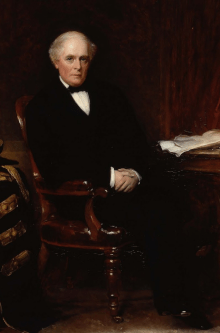
Death of Sir Dominic Corrigan, 1st Baronet, Irish Physician

Sir Dominic John Corrigan, 1st Baronet, an Irish physician known for his original observations in heart disease, dies in Dublin on February 1, 1880, following a stroke. The abnormal “collapsing” pulse of aortic valve insufficiency is named Corrigan’s pulse after him.

Corrigan is born in Thomas Street, Dublin, on December 2, 1802, the son of a dealer in agricultural tools. He is educated in St. Patrick’s College, Maynooth, which then has a department for secular students apart from the ecclesiastical seminary. He is attracted to the study of medicine by the physician in attendance and spends several years as an apprentice to the local doctor, Edward Talbot O’Kelly. He studies medicine in Dublin later transferring to Edinburgh Medical School where he receives his degree as MD in August 1825.

Corrigan returns to Dublin in 1825 and sets up a private practice at 11 Ormond Street. As his practice grows, he moves to 12 Bachelors Walk in 1832, and in 1837 to 4 Merrion Square West. Apart from his private practice, he holds many public appointments; he is a physician to St. Patrick’s College, Maynooth, the Sick Poor Institute, the Charitable Infirmary Jervis Street (1830–43) and the House of Industry Hospitals (1840–66). His work with many of Dublin’s poorest inhabitants leads to him specialising in diseases of the heart and lungs, and he lectures and publishes extensively on the subject. He is known as a very hard-working physician, especially during the Great Famine. At the 1870 Dublin City by-election he is elected a Liberal Member of Parliament for Dublin City. In parliament he actively campaigns for reforms to education in Ireland and the early release of Fenian prisoners. He does not stand for re-election in 1874. His support for temperance and Sunday closing of pubs apparently antagonises his constituents and alcohol companies.

In 1847, Corrigan is appointed physician-in-ordinary to the Queen in Ireland. Two years later he is given an honorary MD from Trinity College Dublin (TCD). In 1846 his application to become a fellow of the Royal College of Physicians of Ireland (RCPI) is blocked. In 1855 he gets around this opposition by sitting the college’s entrance exam with the newly qualified doctors. He becomes a fellow in 1856, and in 1859 is elected president, the first Catholic to hold the position. He is re-elected president an unprecedented four times. There is a statue of him in the Graves’ Hall of the college by John Henry Foley.

Corrigan is President of the Royal Zoological Society of Dublin, the Dublin Pathological Society, and the Dublin Pharmaceutical Society. From the 1840s he is a member of the senate of the Queen’s University and in 1871 becomes its vice-chancellor. In 1866 he is created a baronet, of Cappagh and Inniscorrig in the County of Dublin and of Merrion Square in the City of Dublin, partly as a reward for his services as Commissioner of Education for many years. He is a member of the board of Glasnevin Cemetery and a member of the Daniel O’Connell Memorial Committee. Armand Trousseau, the French clinician, proposes that aortic heart disease should be called Corrigan’s disease.

Corrigan marries Joanna Woodlock, the daughter of a wealthy merchant, and sister of the Bishop Dr. Bartholomew Woodlock, in 1827. They have six children, three girls and three boys. His eldest son, Captain John Joseph Corrigan, Dragoon Guards, dies on January 6, 1866, and is interred at the Melbourne General Cemetery, Melbourne, Australia.

Corrigan dies at Merrion Square, Dublin, on February 1, 1880, having suffered a stroke the previous December. He is buried in the crypt of St. Andrew’s Church, Westland Row, Dublin. His grandson succeeds him to the baronetcy.
The Corrigan Ward, a cardiology ward in Beaumont Hospital, Dublin, is named in his honour. Part of his family crest is also part of the Beaumont Hospital crest.


Leave a comment

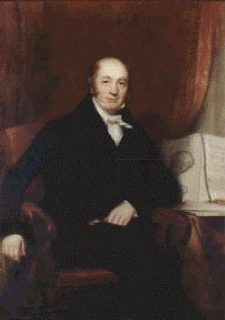
Birth of Abraham Colles, Professor & President of the RCSI

Abraham Colles, Professor of Anatomy, Surgery and Physiology at the Royal College of Surgeons in Ireland (RCSI) and the President of RCSI in 1802 and 1830, is born in Millmount, County Kilkenny, on July 23, 1773. A prestigious Colles Medal & Travelling Fellowship in Surgery is awarded competitively annually to an Irish surgical trainee embarking on higher specialist training abroad before returning to establish practice in Ireland.

Descended from a Worcestershire family, some of whom had sat in Parliament, Colles is born to William Colles and Mary Anne Bates of Woodbroak, County Wexford. The family lives near Millmount, a townland near Kilkenny, County Kilkenny, where his father owns and manages his inheritance which is the extensive Black Quarry that produces the famous Kilkenny black marble. His father dies when he is 6 years old, but his mother takes over the management of the quarry and manages to give her children a good education. While at Kilkenny College, a flood destroys a local physician’s house. He finds an anatomy book belonging to the doctor in a field and returns it to him. Sensing the young man’s interest in medicine, the physician lets him keep the book.

Colles goes on to enroll in Trinity College Dublin in 1790 and is indentured to Philip Woodroffe, studying at Dr. Steevens’ Hospital, The Foundlings’ Hospital and the House of Industry hospitals. He receives the Licentiate Diploma of the Royal College of Surgeons in 1795 and goes on to study medicine at the University of Edinburgh Medical School, receiving his MD degree in 1797. Afterward, he lives in London for a short period, working with the famous surgeon Sir Astley Cooper in his dissections of the inguinal region.

Following his return to Dublin, in 1799, Colles is elected to the staff at Dr. Steevens’ Hospital where he serves for the next 42 years. In October 1803, he is appointed Surgeon to Cork-street Fever Hospital, and subsequently becomes Consulting Surgeon to the Rotunda Hospital, City of Dublin Hospital, and Victoria Lying-in Hospital. He is a well-regarded surgeon and is elected as president of the Royal College of Surgeons in Ireland (RCSI) in 1802 at the age of 28 years, subsequently also serving as president in 1830. In 1804, he is appointed Professor of Anatomy, Physiology, and Surgery at RCSI.

In 1811, Colles writes an important treatise on surgical anatomy and some terms he introduces have survived in surgical nomenclature until today. He is remembered as a skillful surgeon and for his 1814 paper On the Fracture of the Carpal Extremity of the Radius. This injury continues to be known as Colles’ fracture. This paper, describing distal radial fractures, is far ahead of its time, being published decades before X-rays come into use. He also describes the membranous layer of subcutaneous tissue of the perineum, which comes to be known as Colles’ fascia. He also extensively studies the inguinal ligament, which is sometimes called Colles’ ligament. He is regarded as the first surgeon to successfully ligate the subclavian artery.

In 1837, Colles writes “Practical observations on the venereal disease, and on the use of mercury” in which he introduces the hypothesis of maternal immunity of a syphilitic infant when the mother has not shown signs of the disease. His principal textbook is the two-volume Lectures on the theory and practice of surgery. His writings are important, though not voluminous. Some of his papers are collected and edited by his son, William Colles, and published in the Dublin Journal of Medical Science. Selections from the works of Abraham Colles, chiefly relative to the venereal disease and the use of mercury, comprise Volume XOII. of the Library of the New Sydenham Society, published in 1881. They are edited and annotated by one of the most distinguished Fellows of the RCSI, Robert McDonnell. His Lectures on Surgery are edited by Simon M’Coy and published in 1850. In tribute to his distinguished career, he is awarded a baronetcy in 1839, which he refuses.

Upon Colles’s retirement as Professor of Surgery, the Members of RCSI pass a resolution which includes “We have also to assure you that it is the unanimous feeling of the College, that the exemplary and efficient manner in which you have filled this chair for thirty-two years, has been a principal cause of the success and consequent high character of the School of Surgery in this country.”

Colles dies on November 16, 1843, from gout. He is buried in Mount Jerome Cemetery, Dublin.

In 1807, Colles marries Sophia Cope. His son William follows in his footsteps, being elected to the Chair of Anatomy in the Royal College of Surgeons in Ireland in 1863. Another of his sons, Henry, marries Elizabeth Mayne, a niece of Robert James Graves. His grandson is the eminent music critic and lexicographer H. C. Colles. His granddaughter Frances marries the judge Lord Ashbourne, and her sister Anna marries his colleague Sir Edmund Thomas Bewley.


Leave a comment

Death of Abraham Colles, Professor & President of the RCSI

Abraham Colles, Professor of Anatomy, Surgery and Physiology at the Royal College of Surgeons in Ireland (RCSI) and the President of RCSI in 1802 and 1830, dies on November 16, 1843. A prestigious Colles Medal & Travelling Fellowship in Surgery is awarded competitively annually to an Irish surgical trainee embarking on higher specialist training abroad before returning to establish practice in Ireland.

Descended from a Worcestershire family, some of whom had sat in Parliament, Colles is born to William Colles and Mary Anne Bates of Woodbroak, County Wexford, on July 23, 1773. The family lives near Millmount, a townland near Kilkenny, County Kilkenny, where his father owns and manages his inheritance which is the extensive Black Quarry that produces the famous Kilkenny black marble. His father dies when he is 6 years old, but his mother takes over the management of the quarry and manages to give her children a good education. While at Kilkenny College, a flood destroys a local physician’s house. He finds an anatomy book belonging to the doctor in a field and returns it to him. Sensing the young man’s interest in medicine, the physician lets him keep the book.

Colles goes on to enroll in Trinity College Dublin in 1790 and is indentured to Philip Woodroffe, studying at Dr. Steevens’ Hospital, The Foundlings’ Hospital and the House of Industry hospitals. He receives the Licentiate Diploma of the Royal College of Surgeons in 1795 and goes on to study medicine at the University of Edinburgh Medical School, receiving his MD degree in 1797. Afterward, he lives in London for a short period, working with the famous surgeon Sir Astley Cooper in his dissections of the inguinal region.

Following his return to Dublin, in 1799, Colles is elected to the staff at Dr. Steevens’ Hospital where he serves for the next 42 years. In October 1803, he is appointed Surgeon to Cork-street Fever Hospital, and subsequently becomes Consulting Surgeon to the Rotunda Hospital, City of Dublin Hospital, and Victoria Lying-in Hospital. He is a well-regarded surgeon and is elected as president of the Royal College of Surgeons in Ireland (RCSI) in 1802 at the age of 28 years, subsequently also serving as president in 1830. In 1804, he is appointed Professor of Anatomy, Physiology, and Surgery at RCSI.

In 1811, Colles writes an important treatise on surgical anatomy and some terms he introduces have survived in surgical nomenclature until today. He is remembered as a skillful surgeon and for his 1814 paper On the Fracture of the Carpal Extremity of the Radius. This injury continues to be known as Colles’ fracture. This paper, describing distal radial fractures, is far ahead of its time, being published decades before X-rays come into use. He also describes the membranous layer of subcutaneous tissue of the perineum, which comes to be known as Colles’ fascia. He also extensively studies the inguinal ligament, which is sometimes called Colles’ ligament. He is regarded as the first surgeon to successfully ligate the subclavian artery.

In 1837, Colles writes “Practical observations on the venereal disease, and on the use of mercury” in which he introduces the hypothesis of maternal immunity of a syphilitic infant when the mother has not shown signs of the disease. His principal textbook is the two-volume Lectures on the theory and practice of surgery. His writings are important, though not voluminous. Some of his papers are collected and edited by his son, William Colles, and published in the Dublin Journal of Medical Science. Selections from the works of Abraham Colles, chiefly relative to the venereal disease and the use of mercury, comprise Volume XOII. of the Library of the New Sydenham Society, published in 1881. They are edited and annotated by one of the most distinguished Fellows of the RCSI, Robert McDonnell. His Lectures on Surgery are edited by Simon McCoy and published in 1850. In tribute to his distinguished career, he is awarded a baronetcy in 1839, which he refuses.

Upon Colles’s retirement as Professor of Surgery, the Members of RCSI pass a resolution which includes “We have also to assure you that it is the unanimous feeling of the College, that the exemplary and efficient manner in which you have filled this chair for thirty-two years, has been a principal cause of the success and consequent high character of the School of Surgery in this country.”

Colles dies on November 16, 1843, from gout. He is buried in Mount Jerome Cemetery, Dublin.

In 1807, Colles marries Sophia Cope. His son William follows in his footsteps, being elected to the Chair of Anatomy in the Royal College of Surgeons in Ireland in 1863. Another of his sons, Henry, marries Elizabeth Mayne, a niece of Robert James Graves. His grandson is the eminent music critic and lexicographer H. C. Colles. His granddaughter Frances marries the judge Lord Ashbourne, and her sister Anna marries his colleague Sir Edmund Thomas Bewley.


Leave a comment

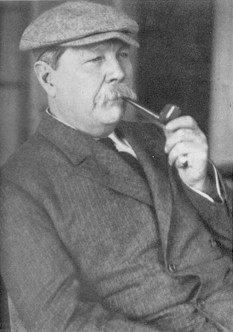
Death of Sir Arthur Conan Doyle

Sir Arthur Ignatius Conan Doyle, British writer and physician, most noted for creating the fictional detective Sherlock Holmes and writing stories about him which are generally considered milestones in the field of crime fiction, dies of a heart attack in CrowboroughEast SussexEngland, at the age of 71, on July 7, 1930.

Doyle is born at 11 Picardy Place, EdinburghScotland, on May 22, 1859. His father, Charles Altamont Doyle, is an Englishman of Irish Catholic descent and his mother, Mary (née Foley), is Irish Catholic. Charles dies in 1893, in the Crichton Royal HospitalDumfries, after many years of psychiatric illness. Supported by wealthy uncles, Doyle is sent to the Jesuit preparatory school Hodder PlaceStonyhurst, at the age of nine. He then goes on to Stonyhurst College until 1875. From 1875 to 1876, he is educated at the Jesuit school Stella Matutina in FeldkirchAustria. Doyle later rejects the Catholic faith and becomes an agnostic. He also later becomes a spiritualist mystic.

From 1876 to 1881 Doyle studies medicine at the University of Edinburgh Medical School. While studying, he begins writing short stories. His first published piece, The Mystery of Sasassa Valley, is printed in Chambers’s Edinburgh Journal on September 6, 1879. After stints as a ship’s doctor and a failed medical practice with former classmate George Turnavine Budd, Doyle arrives in Portsmouth in June 1882 and sets up a medical practice at 1 Bush Villas in Elm Grove, Southsea. The practice is slow to develop and while waiting for patients, Doyle again begins writing fiction. In 1890, Doyle studies ophthalmology in Vienna and moves to London.

Doyle’s first work featuring Sherlock Holmes and Dr. Watson, A Study in Scarlet, is published by Ward Lock & Co. in November 1886. The piece appears one year later in the Beeton’s Christmas Annual and receives good reviews in The Scotsman and the Glasgow Herald.

A sequel to A Study in Scarlet is commissioned and The Sign of the Four appears in Lippincott’s Magazine in February 1890, the last under agreement with the Ward Lock company. Short stories featuring Sherlock Holmes are published in The Strand Magazine.

In December 1893, wanting to dedicate more time to historical novels, Doyle has Holmes and Professor Moriarty plunge to their deaths together down the Reichenbach Falls in the The Final Problem. Public outcry, however, leads him to feature Holmes in 1901 in the novel The Hound of the Baskervilles. Holmes is ultimately featured in a total of 56 short stories, the last published in 1927, and four novels by Doyle.

Between 1888 and 1906, Doyle writes seven historical novels, which many critics regard as his best work. He also authors nine other novels and, later in his career between 1912 and 1929, five stories, two of novella length, featuring the irascible scientist Professor Challenger.

He twice stands for Parliament as a Liberal Unionist, in 1900 in Edinburgh Central and in 1906 in the Hawick Burghs, but he is not elected. In May 1903, he is appointed a Knight of Grace of the Order of the Hospital of Saint John of Jerusalem.

Doyle is a supporter of the campaign for the reform of the Congo Free State, led by the journalist E. D. Morel and diplomat Roger Casement. He becomes acquainted with Morel and Casement and, together with Bertram Fletcher Robinson, they inspire several characters in the 1912 novel The Lost World. When Casement is found guilty of treason against the Crown during the 1916 Easter Rising, Doyle tries unsuccessfully to save him from facing the death penalty, arguing that Casement has been driven mad and cannot be held responsible for his actions.

Found clutching his chest in the hall of Windlesham Manor, his house in Crowborough, East Sussex, on July 7, 1930, Doyle dies of a heart attack at the age of 71. At the time of his death there is some controversy concerning his burial place, as he is avowedly not a Christian, but rather considers himself a Spiritualist. He is first buried on July 11, 1930, in Windlesham rose garden. He is later reinterred together with his wife in Minstead churchyard in the New ForestHampshire.


Leave a comment

Birth of Sir Arthur Conan Doyle, Creator of Sherlock Holmes

Sir Arthur Ignatius Conan Doyle, British writer and physician, most noted for creating the fictional detective Sherlock Holmes and writing stories about him which are generally considered milestones in the field of crime fiction, is born at 11 Picardy Place, EdinburghScotland, on May 22, 1859.

Doyle’s father, Charles Altamont Doyle, is an Englishman of Irish Catholic descent and his mother, Mary (née Foley), is Irish Catholic. Charles dies in 1893, in the Crichton Royal HospitalDumfries, after many years of psychiatric illness. Supported by wealthy uncles, Doyle is sent to the Jesuit preparatory school Hodder PlaceStonyhurst, at the age of nine. He then goes on to Stonyhurst College until 1875. From 1875 to 1876, he is educated at the Jesuit school Stella Matutina in FeldkirchAustria. Doyle later rejects the Catholic faith and becomes an agnostic. He also later becomes a spiritualist mystic.

From 1876 to 1881 Doyle studies medicine at the University of Edinburgh Medical School. While studying, he begins writing short stories. His first published piece, The Mystery of Sasassa Valley, is printed in Chambers’s Edinburgh Journal on September 6, 1879. After stints as a ship’s doctor and a failed medical practice with former classmate George Turnavine Budd, Doyle arrives in Portsmouth in June 1882 and sets up a medical practice at 1 Bush Villas in Elm Grove, Southsea. The practice is slow to develop and while waiting for patients, Doyle again begins writing fiction. In 1890, Doyle studies ophthalmology in Vienna and moves to London.

Doyle’s first work featuring Sherlock Holmes and Dr. Watson, A Study in Scarlet, is published by Ward Lock & Co. in November 1886. The piece appears one year later in the Beeton’s Christmas Annual and receives good reviews in The Scotsman and the Glasgow Herald.

A sequel to A Study in Scarlet is commissioned and The Sign of the Four appears in Lippincott’s Magazine in February 1890, the last under agreement with the Ward Lock company. Short stories featuring Sherlock Holmes are published in The Strand Magazine.

In December 1893, wanting to dedicate more time to historical novels, Doyle has Holmes and Professor Moriarty plunge to their deaths together down the Reichenbach Falls in the The Final Problem. Public outcry, however, leads him to feature Holmes in 1901 in the novel The Hound of the Baskervilles. Holmes is ultimately featured in a total of 56 short stories, the last published in 1927, and four novels by Doyle.

Between 1888 and 1906, Doyle writes seven historical novels, which many critics regard as his best work. He also authors nine other novels and, later in his career between 1912 and 1929, five stories, two of novella length, featuring the irascible scientist Professor Challenger.

He twice stands for Parliament as a Liberal Unionist, in 1900 in Edinburgh Central and in 1906 in the Hawick Burghs, but he is not elected. In May 1903, he is appointed a Knight of Grace of the Order of the Hospital of Saint John of Jerusalem.

Doyle is a supporter of the campaign for the reform of the Congo Free State, led by the journalist E. D. Morel and diplomat Roger Casement. He becomes acquainted with Morel and Casement and, together with Bertram Fletcher Robinson, they inspire several characters in the 1912 novel The Lost World. When Casement is found guilty of treason against the Crown during the 1916 Easter Rising, Doyle tries unsuccessfully to save him from facing the death penalty, arguing that Casement has been driven mad and cannot be held responsible for his actions.

Found clutching his chest in the hall of Windlesham Manor, his house in CrowboroughEast Sussex, on July 7, 1930, Doyle dies of a heart attack at the age of 71. At the time of his death there is some controversy concerning his burial place, as he is avowedly not a Christian, but rather considers himself a Spiritualist. He is first buried on July 11, 1930, in Windlesham rose garden. He is later reinterred together with his wife in Minstead churchyard in the New ForestHampshire.