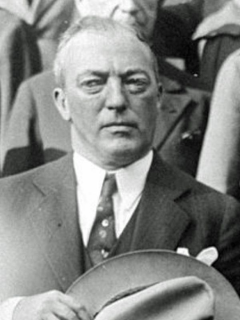
Deegan studies architecture at Cooper Union. He marries Violet Secor (1889-1969) and has one son, William Secor Deegan (1909-85). At the age of 35 he serves in World War I as a staff officer in the 105th Field Artillery, rising to the rank of major.
Deegan later joins the United States Army Corps of Engineers as a major, where he supervises the construction of military bases in the New York area under the command of GeneralGeorge Washington Goethals. After the war he helps organize the American Legion in 1919, advancing to State Commander in 1921. In 1922 he is considered a strong candidate to become national commander of the Legion at their convention in New Orleans but is defeated due to his strong advocacy for admitting Black veterans into the organization. Advocacy for the rights of Black people is a strong theme throughout Deegan’s career, including during his position as Tenement House Commissioner.
Deegan works as an architect at a number of distinguished firms, including McKim, Mead & White, Post, Magnicke and Franke, and Starrett and van Vleck. Later in life he holds a number of political positions, most of them in the Bronx. He is President of the Bronx Chamber of Commerce until the chamber grows critical of MayorJimmy Walker, at which point he resigns. In 1928, Mayor Walker appoints him Tenement House Commissioner of New York City, a post he holds for the rest of his life, and in 1930, chairman of the Mayor’s Committee on Receptions to Distinguished Guests, or “official greeter,” a job in which he is preceded by his friend Rodman Wanamaker and eventually succeeded by Grover Whalen.
Patterson is born on October 5, 1938, in Clonmel, County Tipperary. As a boy Patterson performs with his local parish choir and is involved in maintaining the annual tradition of singing with the “Wrenboys.” He sings in the local St. Mary’s Choral Society and at a production of The Pirates of Penzance performed with both his parents. His interests extend beyond music and as a boy he represents Marlfield GAAhurling club, plays tennis at Hillview and golf at the Mountain Road course. He quits school at an early stage to work in the printing business of his mother’s family. He moves to Dublin in 1961 to enroll at the National Academy of Theatre and Allied Arts where he studies acting while at the same time receiving vocal training from Hans Waldemar Rosen. In 1964, he enters the Feis Ceoil, a nationwide music competition, in which he wins several sections including oratorio, lieder and the German Gold Cup.
Patterson gives classical recitals around Ireland and wins scholarships to study in London, Paris and in the Netherlands. While in Paris, he signs a contract with Philips Records and releases his first record, My Dear Native Land. He works with conductors and some of the most prestigious orchestras in Europe including the London Symphony Orchestra and Orchestre de Paris. He also gains a reputation as a singer of Handel, Mozart, and Bach oratorios and German, Italian and French song. He has a long-running programme on RTÉ titled For Your Pleasure.
In the early 1980s Patterson moves to the United States, making his home in rural Westchester County, New York. A resurgence of interest in Irish culture encourages him to turn towards a more traditional Irish repertoire. He adds hymns, ballads, and traditional as well as more popular tunes to his catalogue. In March 1988, he is featured host in a Saint Patrick’s Day celebration of music and dance at New York City’s famous Radio City Music Hall. He also gives an outdoor performance before an audience of 60,000 on the steps of the United States Capitol in Washington, D.C. with the National Symphony Orchestra.
Patterson is equally at home in more intimate settings. His singing in the role of the Evangelist in Bach’s St. John Passion is given fine reviews. Further recordings follow, of Beethoven arrangements, Irish songs, Berlioz songs, Purcell songs and others, all on the Philips label.
Patterson performs sold-out concerts from London’s Royal Albert Hall to New York’s Carnegie Hall, and with his family he presents two concerts at the White House, for presidents Ronald Reagan in 1982 and Bill Clinton in 1995. He records over thirty albums in six languages, wins silver, gold and platinum discs and is the first Irish singer to host his own show in Radio City Music Hall in New York.
Rising to greater prominence with the new popularity of Celtic music in the 1990s, Patterson sees many of his past recordings reissued for American audiences, and in 1998 he stars in the PBS special Ireland in Song. His last album outsells Pavarotti.
In 1999, Patterson learns he has a brain tumor. He has several operations in the following year and his condition appears to stabilise. He is diagnosed with a recurrence of his illness on May 7, 2000. He briefly recuperates and resumes performing. His last performance is on June 4, 2000, at Regis College in the Boston suburb of Weston, Massachusetts. Shortly thereafter he is admitted to the Memorial Sloan Kettering Cancer Center in New York where he lapses into a coma and dies on June 10, 2000, at the age of 61.
Deegan is born in the Bronx, Bronx County, New York, on December 28, 1882, to Irish immigrants. He studies architecture at Cooper Union. He marries Violet Secor (1889-1969) and has one son, William Secor Deegan (1909-85). At the age of 35 he serves in World War I as a staff officer in the 105th Field Artillery, rising to the rank of major.
Deegan later joins the United States Army Corps of Engineers as a major, where he supervises the construction of military bases in the New York area under the command of GeneralGeorge Washington Goethals. After the war he helps organize the American Legion in 1919, advancing to State Commander in 1921. In 1922 he is considered a strong candidate to become national commander of the Legion at their convention in New Orleans but is defeated due to his strong advocacy for admitting Black veterans into the organization. Advocacy for the rights of Black people is a strong theme throughout Deegan’s career, including during his position as Tenement House Commissioner.
Deegan works as an architect at a number of distinguished firms, including McKim, Mead & White, Post, Magnicke and Franke, and Starrett and van Vleck. Later in life he holds a number of political positions, most of them in the Bronx. He is President of the Bronx Chamber of Commerce until the chamber grows critical of MayorJimmy Walker, at which point he resigns. In 1928, Mayor Walker appoints him Tenement House Commissioner of New York City, a post he holds for the rest of his life, and in 1930, chairman of the Mayor’s Committee on Receptions to Distinguished Guests, or “official greeter,” a job in which he is preceded by his friend Rodman Wanamaker and eventually succeeded by Grover Whalen.
As a boy Patterson performs with his local parish choir and is involved in maintaining the annual tradition of singing with the “Wrenboys.” He sings in the local St. Mary’s Choral Society and at a production of The Pirates of Penzance performed with both his parents. His interests extend beyond music and as a boy he represents Marlfield GAAhurling club, plays tennis at Hillview and golf at the Mountain Road course. He quits school at an early stage to work in the printing business of his mother’s family. He moves to Dublin in 1961 to enroll at the National Academy of Theatre and Allied Arts where he studies acting while at the same time receiving vocal training from Hans Waldemar Rosen. In 1964, he enters the Feis Ceoil, a nationwide music competition, in which he wins several sections including oratorio, lieder and the German Gold Cup.
Patterson gives classical recitals around Ireland and wins scholarships to study in London, Paris and in the Netherlands. While in Paris, he signs a contract with Philips Records and releases his first record, My Dear Native Land. He works with conductors and some of the most prestigious orchestras in Europe including the London Symphony Orchestra and Orchestre de Paris. He also gains a reputation as a singer of Handel, Mozart, and Bach oratorios and German, Italian and French song. He has a long-running programme on RTÉ titled For Your Pleasure.
Patterson is equally at home in more intimate settings. His singing in the role of the Evangelist in Bach’s St. John Passion is given fine reviews. Further recordings follow, of Beethoven arrangements, Irish songs, Berlioz songs, Purcell songs and others, all on the Philips label.
Patterson performs sold-out concerts from London’s Royal Albert Hall to New York’s Carnegie Hall, and with his family he presents two concerts at the White House, for presidents Ronald Reagan in 1982 and Bill Clinton in 1995. He records over thirty albums in six languages, wins silver, gold and platinum discs and is the first Irish singer to host his own show in Radio City Music Hall in New York.
Rising to greater prominence with the new popularity of Celtic music in the 1990s, Patterson sees many of his past recordings reissued for American audiences, and in 1998 he stars in the PBS special Ireland in Song. His last album outsells Pavarotti.
In 1999, Patterson learns he has a brain tumour. He has several operations in the following year and his condition appears to stabilise. He is diagnosed with a recurrence of his illness on May 7, 2000. He briefly recuperates and resumes performing. His last performance is on June 4, 2000, at Regis College in the Boston suburb of Weston, Massachusetts. Shortly thereafter he is admitted to the Memorial Sloan Kettering Cancer Center in New York where he lapses into a coma and dies on June 10, 2000, at the age of 61.
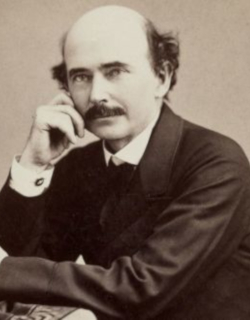
Educated in England, Boucicault begins acting in 1837 and in 1840 submits his first play to Lucia Elizabeth Vestris at Covent Garden, however it is rejected. His second play, London Assurance (1841), which foreshadows the modern social drama, is a huge success and is frequently revived into the 20th century. Other notable early plays were Old Heads and Young Hearts (1844) and The Corsican Brothers (1852).
In 1853 Boucicault and his second wife, Agnes Robertson, arrive in New York City, where his plays and adaptations are long popular. He leads a movement of playwrights that produces in 1856 the first copyright law for drama in the United States. His play The Poor of New York, based on the panics of 1837 and 1857, has a long run at Wallack’s Theatre in 1857 and is presented elsewhere as, for example, The Poor of Liverpool. The Octoroon (1859) causes a sensation with its implied attack on slavery.
Boucicault and his actress wife join Laura Keene’s theatre in 1860 and begin a series of his popular Irish plays — The Colleen Bawn, or The Brides of Garryowen (1860), Arrah-na-Pogue (1864), The O’Dowd (1873), andThe Shaughraun (1874). Returning to London in 1862, he provides Joseph Jefferson with a successful adaptation of Rip Van Winkle (1865). In 1872 he returns to the United States, where he remains, except for a trip to Australia that results in his third marriage (for which he renounced the legitimacy of his second marriage). Among his associates in the 1870s is the young David Belasco. At the time of his death on September 18, 1890, in New York City, he is a poorly paid teacher of acting. He is buried in Mount Hope Cemetery, Hastings, Westchester County, New York.
About 150 plays are credited to Boucicault, who, as both writer and actor, raises the stage Irishman from caricature to character. To the American drama he brings a careful construction and a keen observation and recording of detail. His concern with social themes prefigures the future development of drama in both Europe and America.
(Pictured: Dionysius Boucicault, taken 1890 or before. Photograph: Harvard Theatre Collection/Wikimedia Commons)
Warren is born on March 10, 1703, in Warrenstown, County Meath, the youngest son of Michael Warren and Catherine Plunkett, née Aylmer, who was the first wife of Sir Nicholas Plunkett.
In 1716, when he is 13 years old, Warren signs on as an ordinary seaman in Dublin and he and his brother initially serve together. He rapidly rises in the ranks, becoming a Captain in 1727. His ship patrols American colonial waters to provide protection from French forces. He becomes involved in colonial politics and land speculation.
In 1744, Warren is made commodore and commands a 16-ship squadron off the Leeward Islands, capturing 24 ships in four months. In 1745, he commands a group of ships that support the Massachusetts forces in the capture of the Fortress of Louisbourg. The prize system of the time allows naval officers to profit from the capture of enemy ships, and this expedition earns Warren a fortune, a promotion to the rank of Rear Admiral of the Blue, and a knighthood.
Warren’s lands include several thousand acres on the south side of the Mohawk River west of Schenectady, New York, now known as Florida, Montgomery County, New York, roughly across from present day Amsterdam. He brings two nephews, William Johnson, eventually Sir William Johnson, and Michael Tyrrell to clear and manage the land. Tyrrell soon leaves, asking his uncle for support with a naval appointment. Tyrrell has a very distinguished naval career, rising to Admiral. He becomes sick while headed to London from the West Indies and is buried at sea. In 1741, Warren builds Warren House, a mansion overlooking the Hudson River on his 300-acre estate in Greenwich Village. He also owns property on Long Island, the van Cortland Estate in Westchester County, New York and South Carolina.
While on a visit to Ireland in 1752, Peter Warren dies suddenly in Dublin on July 29, 1752 “of a most violent fever.” The towns of Warren, Rhode Island and Warren, New Hampshire are named after him, as well as Warren Street in Lower Manhattan.




 seamus dubhghaill