seamus dubhghaill

Promoting Irish Culture and History from Little Rock, Arkansas, USA


Leave a comment

Birth of Andrew O’Connor, American-Irish Sculptor

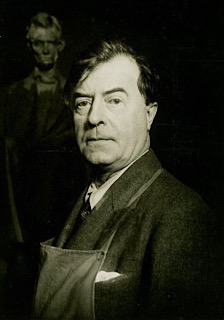
Andrew O’Connor, an American-Irish sculptor, is born in Worcester, Massachusetts, on June 7, 1874. His work is represented in museums in the United States, Ireland, Britain, and France.

O’Connor’s father, Andrew O’Connor (1846–1924), of Lanarkshire, Scotland, is a stonecutter who becones a professional sculptor. As a teenager, he apprentices to his father, helping him to design monuments for cemeteries.

For a time, O’Connor is in the London studio of the painter John Singer Sargent, and later works for the architects McKim, Mead & White in America and with the sculptor Daniel Chester French. Settling in Paris in the early years of the 20th century, he exhibits annually at the Paris Salon. In 1906 he is the first foreign sculptor to win the Second Class medal for his statue of General Henry Ware Lawton, now in Garfield Park in Indianapolis, Indiana. In 1928 he achieves a similar distinction by being awarded the Gold Medal for his Tristan and Iseult, a marble group now in the Brooklyn Museum. His work is also part of the sculpture event in the art competition at the 1928 Summer Olympics in Amsterdam.

A number of his plaster casts are in the Hugh Lane Gallery, Dublin, and there are works in Tate Britain, the Walters Art Museum, Baltimore, the Corcoran Gallery of Art, the Metropolitan Museum of Art and the Musée d’Art Moderne, Paris.

O’Connor is involved in a minor controversy in 1909 when he is commissioned to design a statue for Commodore John Barry, of the American Revolutionary-era navy. His first design is heatedly attacked by Irish American groups. He submits a second version, but it too is ultimately rejected, and the sculptor John J. Boyle received the commission.

O’Connor dies in Dublin on June 9, 1941.


Leave a comment

Birth of William Francis Deegan, Architect & American Legion Organizer

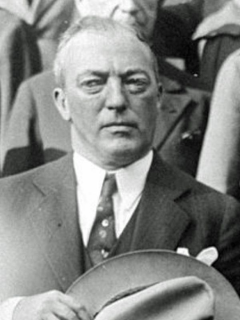
William Francis Deegan, architect, organizer of the American Legion, major in the United States Army Corps of Engineers (USACE), and Democratic political leader in New York City, is born in the Bronx, Bronx County, New York, on December 28, 1882, to Irish immigrants.

Deegan studies architecture at Cooper Union. He marries Violet Secor (1889-1969) and has one son, William Secor Deegan (1909-85). At the age of 35 he serves in World War I as a staff officer in the 105th Field Artillery, rising to the rank of major.

Deegan later joins the United States Army Corps of Engineers as a major, where he supervises the construction of military bases in the New York area under the command of General George Washington Goethals. After the war he helps organize the American Legion in 1919, advancing to State Commander in 1921. In 1922 he is considered a strong candidate to become national commander of the Legion at their convention in New Orleans but is defeated due to his strong advocacy for admitting Black veterans into the organization. Advocacy for the rights of Black people is a strong theme throughout Deegan’s career, including during his position as Tenement House Commissioner.

Deegan works as an architect at a number of distinguished firms, including McKim, Mead & White, Post, Magnicke and Franke, and Starrett and van Vleck. Later in life he holds a number of political positions, most of them in the Bronx. He is President of the Bronx Chamber of Commerce until the chamber grows critical of Mayor Jimmy Walker, at which point he resigns. In 1928, Mayor Walker appoints him Tenement House Commissioner of New York City, a post he holds for the rest of his life, and in 1930, chairman of the Mayor’s Committee on Receptions to Distinguished Guests, or “official greeter,” a job in which he is preceded by his friend Rodman Wanamaker and eventually succeeded by Grover Whalen.

Deegan dies in Manhattan, New York County, New York, on April 3, 1932, of complications following an appendectomy. He is buried at Gate of Heaven Cemetery, Hawthorne, Westchester County, New York. After his death, his widow, Violet, marries Albert W. Crouch (1882-1954).

At the time of his death, a new road is being built from the Triborough Bridge (now the Robert F. Kennedy Bridge) to the Grand Concourse. This is renamed and expanded in 1956 into the Major Deegan Expressway section of Interstate 87 in the Bronx, which retains his name.


Leave a comment

Death of William Francis Deegan, Architect & American Legion Organizer

William Francis Deegan, architect, organizer of the American Legion, major in the United States Army Corps of Engineers (USACE), and Democratic political leader in New York City, dies in Manhattan, New York County, New York, on April 3, 1932.

Deegan is born in the Bronx, Bronx County, New York, on December 28, 1882, to Irish immigrants. He studies architecture at Cooper Union. He marries Violet Secor (1889-1969) and has one son, William Secor Deegan (1909-85). At the age of 35 he serves in World War I as a staff officer in the 105th Field Artillery, rising to the rank of major.

Deegan later joins the United States Army Corps of Engineers as a major, where he supervises the construction of military bases in the New York area under the command of General George Washington Goethals. After the war he helps organize the American Legion in 1919, advancing to State Commander in 1921. In 1922 he is considered a strong candidate to become national commander of the Legion at their convention in New Orleans but is defeated due to his strong advocacy for admitting Black veterans into the organization. Advocacy for the rights of Black people is a strong theme throughout Deegan’s career, including during his position as Tenement House Commissioner.

Deegan works as an architect at a number of distinguished firms, including McKim, Mead & White, Post, Magnicke and Franke, and Starrett and van Vleck. Later in life he holds a number of political positions, most of them in the Bronx. He is President of the Bronx Chamber of Commerce until the chamber grows critical of Mayor Jimmy Walker, at which point he resigns. In 1928, Mayor Walker appoints him Tenement House Commissioner of New York City, a post he holds for the rest of his life, and in 1930, chairman of the Mayor’s Committee on Receptions to Distinguished Guests, or “official greeter,” a job in which he is preceded by his friend Rodman Wanamaker and eventually succeeded by Grover Whalen.

Deegan dies of complications following an appendectomy on April 3, 1932. He is buried at Gate of Heaven Cemetery, Hawthorne, Westchester County, New York. After his death, his widow, Violet, marries Albert W. Crouch (1882-1954).

At the time of his death, a new road is being built from the Triborough Bridge (now the Robert F. Kennedy Bridge) to the Grand Concourse. This is renamed and expanded in 1956 into the Major Deegan Expressway section of Interstate 87 in the Bronx, which retains his name.