seamus dubhghaill

Promoting Irish Culture and History from Little Rock, Arkansas, USA


Leave a comment

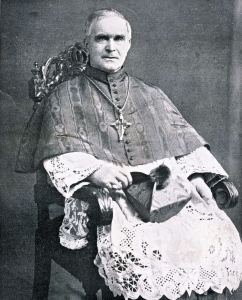
John Comyn Elected Archbishop of Dublin

John Comyn is elected Archbishop of Dublin and consecrated by the pope at Velletri on March 21, 1181. He is the first Englishman to be appointed to an Irish see.

He is chaplain to King Henry II of England and on his “urgent” recommendation is elected Archbishop of Dublin following the death of St. Laurence O’Toole in 1180. He has been a Benedictine monk at the Evesham Abbey.

In 1181, some of the clergy of Dublin assemble at Evesham and Comyn is elected to the archbishopric of Dublin. He is not then a priest but is subsequently ordained such later in the year at Velletri and on Palm Sunday, March 21, is consecrated archbishop by Pope Lucius III. The following year the pope grants him manors and lands in and around Dublin, which subsequently form the Manor of St. Sepulchre which remains under the authority of the Archbishop of Dublin until the 19th century. The pope also, in an effort to protect the Dublin archbishopric from claims from Canterbury, extends certain privileges to Comyn, which intensifies the rivalry between the sees of Dublin and Armagh for the Primacy of Ireland.

Comyn waits three years before visiting Ireland, until he is sent there by King Henry to prepare the reception of his son, Prince John. The king grants him lands and privileges which make him a Lord of Parliament. After his arrival in Ireland, John grants Comyn the Bishopric of Glendalough, although Comyn never has an opportunity to take this up in his lifetime. Under Pope Urban III, Comyn carries out a number of reforms of the Irish church to bring it into line with the church in England and in continental Europe.

In 1189, Archbishop Comyn assists at the coronation of King Richard I. The following year he demolishes the old parish church of St. Patrick, south of Dublin. He then erects a new building, next to his Palace of St. Sepulchre, which he elevates to the status of a collegiate church and later becomes St. Patrick’s Cathedral. This enables him to rule in his own Liberty, without the interference of mayor and citizens. Around this time, he enlarges the choir of Christ Church Cathedral.

Prince John grants Comyn further legal rights throughout the country of Ireland, while Comyn also receives the church and lands of All Hallows to the northeast of Dublin. Between Lusk and Swords, he founds the convent of Grace Dieu Abbey, which later becomes wealthy through grants from the Anglo-Norman prelates and magnates. However, when Hamo de Valoniis is appointed Justiciar of Ireland he seizes some of these lands for the treasury and himself. A dispute arises which causes Comyn to flee for his own safety to Normandy. Comyn appeals to Pope Innocent III, who settles the dispute, but John is angered by the actions of Comyn and does not reconcile himself with him until 1206.

Comyn dies six years later on October 25, 1212, and is buried in Christ Church Cathedral, where a marble monument is erected to his memory. Two years later William Piro, Bishop of Glendalough, dies whereupon the union of the sees granted by King John takes place.

Leave a comment

The Curragh Incident

curragh-incident

The Curragh Incident occurs in the Curragh, County Kildare, on March 20, 1914. The Curragh Camp is the main base for the British Army in Ireland, which at the time forms part of the United Kingdom of Great Britain and Ireland. Ireland was about to receive a measure of devolved government, which included Ulster.

In early 1912, the Liberal British government of H. H. Asquith introduces the Third Home Rule Bill for Ireland, which proposes the creation of an autonomous Irish Parliament in Dublin. Unionists have objected to being under the jurisdiction of the proposed Dublin Parliament. Ulster Unionists found the Ulster Volunteers (UVF) paramilitary group in 1912, aided by a number of senior retired British officers, to fight against the British government and/or against a future Irish Home Rule government proposed by the Bill.

In September 1913, with Irish Home Rule due to become law in 1914, the Chief of the Imperial General Staff (CIGS) Sir John French expresses his concerns to the government and to the King that the British Army, if ordered to act against the UVF, might split. The British Cabinet contemplates some kind of military action against the Ulster Volunteers who threaten to rebel against Home Rule. Many officers, especially those with Irish Protestant connections, of whom the most prominent is Hubert Gough, threaten to resign rather than obey, privately encouraged from London by senior officers including Major-General Henry Hughes Wilson.

Although the Cabinet issues a document claiming that the issue has been a misunderstanding, the Secretary of State for War J.E.B. Seely and French are forced to resign after amending it to promise that the British Army will not be used against the Ulster loyalists.

The event contributes both to unionist confidence and to the growing Irish separatist movement, convincing Irish nationalists that they cannot expect support from the British army in Ireland. In turn, this increases renewed nationalist support for paramilitary forces. The Home Rule Bill is passed but postponed, and the growing fear of civil war in Ireland leads on to the British government considering some form of partition of Ireland instead, which eventually takes place.

The event is also notable in being one of the few incidents since the English Civil War in which elements of the British military openly intervene, as it turns out successfully, in politics.


Leave a comment

Birth of Cardinal Joseph MacRory in County Tyrone

cardinal-joseph-macrory

Joseph MacRory, an Irish Cardinal of the Roman Catholic Church who serves as Archbishop of Armagh from 1928 until his death in 1945, is born in Ballygawley, County Tyrone, on March 19, 1861.

MacRory is one of ten children of Francis MacRory, a farmer, and his wife, Rose Montague. He studies at St. Patrick’s College, Armagh, and St. Patrick’s Pontifical University, Maynooth. He is ordained to the priesthood on September 13, 1885, and serves as the first president of St. Patrick’s Academy, Dungannon from 1886 to 1887. MacRory teaches Scripture and Modern Theology at St. Mary’s College, Oscott in England until 1889, when he is appointed Professor of Scripture and Oriental Languages at his alma mater of Maynooth College. In 1906, he co-founds the Irish Theological Quarterly. In 1912, he is made Vice-President of Maynooth.

On August 9, 1915, MacRory is appointed Bishop of Down and Connor by Pope Benedict XV and receives his episcopal consecration on November 14 from Cardinal Michael Logue. During his tenure, his life is threatened repeatedly due to the turbulent atmosphere in Belfast. He is a member of the Irish Convention from 1917 to 1918.

MacRory is promoted to Archbishop of Armagh and thus Primate of All Ireland on June 22, 1928, in succession to Patrick O’Donnell. He is elevated to the cardinalate on December 16, 1929, by Pope Pius XI.

MacRory is the papal legate at the 1933 laying of the foundation stone of Liverpool Metropolitan Cathedral in England. He also serves as one of the cardinal electors who participate in the 1939 papal conclave which ultimately selects Pope Pius XII.

MacRory is a strenuous opponent of social injustice, National Socialism, Protestantism, and the Partition of Ireland. It is MacRory who suggests to Eoin O’Duffy that he raise an Irish Brigade to aid Generalissimo Francisco Franco during the Spanish Civil War. In 1940, he voices strong objections to conscription in the North.

MacRory is a supporter of the Gaelic League. Errigal Ciarán GAC, one of the most famous GAA clubs in Ireland, plays at Cardinal MacRory Park in Dunmoyle, County Tyrone, which is built in 1956 in his honour.

After a brief illness, Cardinal MacRory dies on October 13, 1945, at the age of 84 from a heart attack at Ara Coeli, the residence in Armagh. He is interred in St. Patrick’s Cathedral Cemetery, Armagh.


Leave a comment

The Burgery Ambush in County Waterford

burgery-ambush

The Burgery Ambush takes place during the Irish War of Independence on the night of March 18, 1921 near Dungarvan, County Waterford.

A British military convoy of Black and Tans and including a Royal Irish Constabulary Sergeant named Michael Hickey, sets off from Dungarvan Castle on the night of March 18, heading east for the coastal village of Clonea. Their goal that night is the arrest of Irish Republican Army (IRA) volunteer John Murphy, who has been involved in gun running between Clonmel, County Tipperary, and Dungarvan.

Irish Republican Army volunteers of the West Waterford flying column have plans that night to demolish Tarr’s Bridge over the Colligan River between Dungarvan and the Abbeyside. However, when they receive word of the British convoy heading east out of Dungarvan, a last-minute action is organized by the Active Service Unit (ASU) to intercept it on its way back to Dungarvan.

The IRA volunteers ambush the convoy at the Burgery, about a mile and a half northeast of Dungarvan. In overall command of the IRA unit is IRA General Headquarters (GHQ) Officer George Plunkett. Also present are West Waterford Brigade Commandant Pax Whelan, Active Service Unit (ASU) leader George Lennon, and Mick Mansfield.

A British Crossley tender is set on fire and prisoners are taken by the IRA, including Sergeant Hickey. Early on the morning of March 19, Hickey is executed by an IRA firing squad with a sign reading “police spy” affixed to his tunic. Hickey is later buried in an unmarked grave. Other prisoners, including Captain DV Thomas, the commander of the British garrison, are released.

After the ambush, a group of volunteers under Plunkett return to search for any armaments left behind by the British forces. Crown forces who are now searching the area engage the IRA party. IRA volunteers Seán Fitzgerald and Pat Keating are shot dead. Constable Sydney R. Redman, a Black and Tan, is shot dead during the return fire.


Leave a comment

The First Recorded St. Patrick’s Day Parade

nyc-st-patricks-day-parade

The first recorded parade honoring the Catholic feast day of St. Patrick, the patron saint of Ireland, is held in New York City on March 17, 1762 – fourteen years before the signing of the Declaration of Independence. The parade is comprised of a band of homesick, Irish ex-patriots and Irish military members serving with the British Army stationed in the colonies in New York. They march to an inn of one John Marshall located near the present-day intersection of Barclay and Church streets in lower Manhattan.

Early Irish settlers to the American colonies, many of whom are indentured servants, bring the Irish tradition of celebrating St. Patrick’s feast day to America. This is at a time when the wearing of green is a sign of Irish pride but is banned in Ireland. In the 1762 parade, participants revel in the freedom to speak Irish, wear green, sing Irish songs, and play the pipes to Irish tunes that are meaningful to the Irish immigrants of the time.

With the dramatic increase of Irish immigrants to the United States in the mid-19th century, the March 17th celebration becomes widespread. Today, across the United States, millions of Americans of Irish ancestry celebrate their cultural identity and history by enjoying Saint Patrick’s Day parades and engaging in general revelry.

Saint Patrick, born in the late 4th century, is one of the most successful Christian missionaries in history. Born in Britain to a Christian family of Roman citizenship, he is taken prisoner at the age of sixteen by a group of Irish raiders during an attack on his family’s estate. They transport him to Ireland where he spends six years in captivity before escaping back to Britain. Believing he has been called by God to Christianize Ireland, he joins the Catholic Church and studies for 15 years before being consecrated as the church’s second missionary to Ireland. Patrick begins his mission to Ireland in 432 and the island is almost entirely Christian at the time of his death in 461.


Leave a comment

LGBT Group Marches in 1991 NYC St. Patrick’s Day Parade

For the first time in the 230-year history of the New York City St. Patrick’s Day parade, members of an LGBT group, the Irish Lesbian & Gay Organisation, are allowed to march in the parade on March 16, 1991.

New York Mayor David N. Dinkins gives up the traditional lead-off position in the parade and instead marches with the Irish gay group more than two hours later. It marks the first time in memory that a New York City mayor has declined to lead a St. Patrick’s Day Parade.

On March 14, Dinkins agrees to march with the gay group “for reasons we all understand” as part of a compromise to get the group into the parade. The mayor and the 135-member gay group are guests of Division 7 of the Ancient Order of Hibernians, the midtown Manhattan chapter of the fraternal order that sponsors and organizes the parade.

Normally, politicians jockey for high-profile spots in the parade, which is billed as the world’s largest civilian parade. No mayor has ever been in the difficult spot of trying to resolve such a public dispute between Irish American groups, which have long been political powers in New York City, and gay groups, which have gained strength and are an important part of the coalition that helped bring Dinkins to office.

Police officials have 3,100 officers along the parade route to provide security for the estimated one million spectators and 150,000 people marching in the parade. The parade costs the city more than $500,000 in overtime for police, sanitation, traffic, and other employees.

Dinkins is booed for nearly 40 blocks, briefly showered with beer, and dodges two thrown beer cans as he and other elected officials march up Fifth Avenue with the gay Irish group.

Governor Mario M. Cuomo also gives up a place at the front of the parade, marching with a group of handicapped children in wheelchairs that had been denied a place among the bands and bagpipes until they threatened to sue the parade organizers.

Cardinal John O’Connor, who in past parades has come down the steps of St. Patrick’s Cathedral to greet passing dignitaries, makes most of them come to him.

As in previous years, some marchers wear green sashes reading, “Free Joe Doherty,” referring to the Irish Republican Army soldier jailed in New York City. Others wear yellow ribbons to honor soldiers returning home from the Persian Gulf war. But the dispute about the homosexuals is the focus for much of the march.

After the parade, Dinkins says although he expected to draw protests for marching with the lesbian and gay group, he is surprised by the depth of anger directed against him and the homosexual marchers. “It was like marching in Birmingham, Alabama during the civil rights movement,” he said. “I knew there would be deep emotions, but I did not anticipate the cowards in the crowd. There was far, far too much negative comment.”


Leave a comment

Bridget Cleary Burned to Death by Husband

bridget-cleary

Bridget Cleary is burned to death on March 15, 1895, by her husband who believes her spirit has been taken by bad faeries and replaced with a changeling.

Cleary is born Bridget Boland around 1869 in Ballyvadlea, County Tipperary. Bridget meets Michael Cleary in Clonmel in August 1887, where he works as a cooper and she serves as a dressmaker’s apprentice, and they marry a short time later.

After the marriage, she returns to her townland of Ballyvadlea to live with her parents while Michael continues to work as a cooper in Clonmel. During this period of living apart, Bridget’s independence grows and she begins keeping her own flock of chickens and selling the eggs to neighbours. She is also a professional woman which is somewhat unusual for the era and area. She obtains a Singer sewing machine, which is state-of-the-art at the time, and is variously described as a dressmaker and a milliner.

Despite their eight years of marriage, the couple has no children by the time of Bridget’s death. Following the death of Bridget’s mother, the Clearys find themselves responsible for Bridget’s elderly father, Patrick Boland. His residence with the couple enables them to secure a house reserved for labourers. Neither Bridget nor Michael is entitled to this cottage, but as Patrick had been a labourer in his youth, they are able to acquire the best house in the village. However, there is no widespread interest in the house as it is built on the site of a supposed fairy ringfort.

In early March 1895, Bridget becomes ill although her specific diagnosis is unknown. On March 13, more than a week into her illness, a physician visits her home. Her condition is considered sufficiently grave that a priest soon follows to administer last rites. Several friends and family members attend her over the next two days and a number of home remedies are administered including one ritual that anticipates her later demise. Her father and her husband accuse her of being a fairy sent to take Bridget’s place. Urine is thrown on her and she is carried before the fireplace to cast the fairy out. By March 16, rumours begin to circulate that Bridget is missing and the local police begin searching for her. Michael is quoted as claiming that his wife has been taken by fairies. Witness statements are gathered over the ensuing week and, by the time Bridget’s burned corpse is found in a shallow grave on March 22, nine people have been charged in her disappearance, including her husband. A coroner‘s inquest the next day returns a verdict of death by burning.

Legal hearings take place from April 1 to April 6, 1895. The court session begins on July 3. Evidence indicates that Michael attempted to force-feed his wife, throwing her down on the ground before the kitchen fireplace. Bridget’s chemise catches fire and Michael then throws lamp oil on Bridget. Witnesses are unclear as to whether she is already dead by this point. Michael keeps the others away from her body as it burns, insisting that she is a changeling and has been for a week. Michael believes that this will allow him to get his wife back from the fairies.

Michael Cleary is found guilty of manslaughter and spends 15 years in prison.


Leave a comment

Gerry Adams Assassination Attempt

adams-assassination-attempt

Sinn Féin president Gerry Adams is seriously wounded in an assassination attempt in central Belfast on March 14, 1984. As the car containing Adams and four other leading Sinn Féin members leaves Belfast Magistrate’s Court, a vehicle pulls alongside and three Ulster Defence Association (UDA) gunmen fire approximately 20 shots into the car. Adams is shot in the neck and shoulder, Seán Keenan in the face, Joe Keenan in the body and hands, and Kevin Rooney in the body. Bob Murray is the only person in the car to escape without injury.

The republicans are in Belfast facing charges of obstruction after the Royal Ulster Constabulary (RUC) attempt to remove an Irish tricolour from a Sinn Féin election cavalcade. After the shooting, Adams is rushed to the Royal Victoria Hospital, where he undergoes surgery to remove the three bullets.

The three loyalist death squad members who carry out the assassination attempt are arrested shortly after the attack by off-duty RUC and British soldiers who open fire on them before ramming their car. One of the UDA gunmen accidentally shoots himself in the foot during the escape attempt.

Following his release from the hospital later in the month, Gerry Adams says it is “quite obvious that British Intelligence were aware” of the operation and that “they wanted myself and my comrades out of the way.” Democratic Unionist Party (DUP) Stormont Assembly member George Seawright expresses regret that Adams has not been killed. The Ulster Unionist Party (UUP) and the British Government remain tight-lipped while Will Glendinning of the Alliance Party of Northern Ireland uses the attack to remind voters he was “totally opposed to the politics of Gerry Adams.”

A Sinn Féin statement released just hours after the attack says, “If the shooting was an attempt to drive us off the streets or underground, it has already failed.” The party says that such attacks are a constant danger, and that it is a testament to Sinn Féin that they continue their work despite such threats.


6 Comments

The Ballinglass Incident

ballinglass-evictionsDuring the Great Famine (An Gorta Mór) in Ireland, the Ballinglass incident occurs in Ballinglass, County Galway, on March 13, 1846, when 300 tenants are evicted by their landlord, a Mrs. Gerrard who wants to use the land for grazing purposes.

During this period, Ireland is part of the United Kingdom of Great Britain and Ireland, governed directly by its parliament in London. Many working class Irish farmers are tenants under landlords, producing cereals, potatoes, and livestock. But only the potatoes remain as food for the farmers themselves. A portion of the other products are used for paying the rent while the remainder is exported from Ireland to Great Britain. These exports continue even after the potato crop fails in 1845.

Farmers who are not able to pay the rent during this period are evicted from their homes and land. It is estimated that tens of thousands are evicted during the famine.

The 300 inhabitants of the townland of Ballinglass in Galway County, in the Barony of Killian, northeast of Mountbellew, are relatively “wealthy” and able to pay their rent. But despite this fact, they are evicted because their landlord intends to establish a grazing farm where the village is situated.

The houses of Ballinglass are demolished by army and police. The evicted tenants sleep in the ruins that night. The next day, police and army return to evict them permanently and their neighbours are not allowed to take them in.

The eviction of the entire village receives wide publicity. Even the London Times, never a supporter of Irish rights, rails against this particular injustice. Lord Londonderry “personally investigates” the evictions and issues a statement on March 30, 1846 saying, “I am deeply grieved, but there is no doubt concerning the truth of the evictions at Ballinglass. Seventy-six families, comprising 300 individuals had not only been turned out of their houses, but had even – the unfortunate wretches – been mercilessly driven from the ditches to which they had been taken themselves for shelter…these unfortunate people had their rents actually ready…” Despite widespread condemnation, the eviction order is not rescinded.


Leave a comment

The Beginning of the Williamite War

battle-of-the-boyne

The Williamite War in Ireland begins on March 12, 1688. It is a conflict between Jacobites, who support the English Catholic King James II, and Williamites, who support the Dutch Protestant Prince William of Orange, over who would be King of England, Scotland, and Ireland.

The cause of the war is the deposition of James II as King of the Three Kingdoms in the “Glorious Revolution” of 1688. James is supported by the mostly Catholic Jacobites in Ireland and hopes to use the country as a base to regain his Three Kingdoms. He is given military support by France. For this reason, the war becomes part of a wider European conflict known as the Nine Years’ War, or War of the Grand Alliance. Some Protestants of the established Church in Ireland also fight on the side of King James.

James is opposed in Ireland by the mostly Protestant Williamites, who are concentrated in the north of the country. William lands a multi-national force in Ireland, composed of English, Scottish, Dutch, Danish, and other troops, to put down Jacobite resistance. James leaves Ireland after a reverse at the Battle of the Boyne in 1690 and the Irish Jacobites are finally defeated after the Battle of Aughrim in 1691.

The Treaty of Limerick, signed on October 3, 1691, offers favourable terms to Jacobites willing to stay in Ireland and give an oath of loyalty to William III. Peace is concluded on these terms between Patrick Sarsfield and Godert de Ginkell, giving toleration to Catholicism and full legal rights to Catholics that swear an oath of loyalty to William and Mary. Part of the treaty agreed to Sarsfield’s demand that the Jacobite army be allowed to leave Ireland as a body and go to France. This event is popularly known in Ireland as the “Flight of the Wild Geese.” Around 14,000 men with around 10,000 women and children leave Ireland with Patrick Sarsfield in 1691.

The Williamite victory in the war in Ireland has two main long-term results. The first is that it ensures James II will not regain his thrones in England, Ireland, and Scotland by military means. The second is that it ensures closer British and Protestant dominance over Ireland. Until the 19th century, Ireland is ruled by what becomes known as the “Protestant Ascendancy,” the mostly Protestant ruling class. The majority of the Irish Catholic community and the Ulster-Scots Presbyterian community are systematically excluded from power, which is based on land ownership.

For over a century after the war, Irish Catholics maintain a sentimental attachment to the Jacobite cause, portraying James and the Stuarts as the rightful monarchs who would have given a just settlement to Ireland, including self-government, restoration of confiscated lands and tolerance for Catholicism. Thousands of Irish soldiers leave the country to serve the Stuart monarchs in the Irish Brigade (Spanish) and Irish Brigade of the French Army. Until 1766, France and the Papacy remain committed to restoring the Stuarts to their British Kingdoms. At least one composite Irish battalion drawn from Irish soldiers in the French service fight on the Jacobite side in the Scottish Jacobite uprisings leading up to the Battle of Culloden in 1746.

Protestants, on the other hand, portray the Williamite victory as a triumph for religious and civil liberty where triumphant murals of King William still controversially adorn the gable walls in Ulster. The defeat of the Catholics in the Williamite war is still commemorated by Protestant Unionists in Ulster on the Twelfth of July by the Orange Order.