seamus dubhghaill

Promoting Irish Culture and History from Little Rock, Arkansas, USA


2 Comments

Irish Free State Admitted to League of Nations

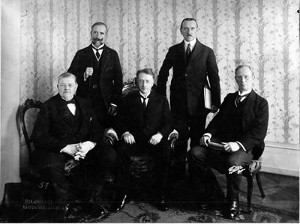
league-of-nations-delegationThe Irish Free State is admitted into the League of Nations on September 10, 1923.

In 1922, Éamon de Valera speaks at a League of Nations meeting and is critical of Article 10 of the League Covenant which preserves the existing of territorial integrity of member states. This article prevents Ireland from gaining membership in the League of Nations, because it is a territory of the United Kingdom, who is a member state. However, it does not clarify what rights dominion states have and if they can have their own seat. This means that when the Constitution of the Irish Free State goes into effect, the Irish government does not know what type of role it can play in the League of Nations and if, at that point, it is possible to become a member. The League of Nations final decision is that Ireland can not become a member until it’s constitution is officially enacted and it officially becomes a free state.

The Constitution of the Irish Free State is enacted on December 6, 1922, and is recognized as an official international instrument. This allows Ireland to submit an application for entry into the League of Nations.

The applications process goes smoothly until the spring of 1923 when the Seanad Éireann, the upper house of the Oireachtas, complains that only Dáil Éireann, the lower house, has approved the application. A previous decision has made the application an Executive Council decision, and under the Provisional Government, the Seanad has approved the application process. With this approval, the Executive Council continues the application process, however, the new Seanad is upset about their lack of input. This problem is settled when the Attorney-General creates the League of Nations (Guarantee) Bill, which gives both Houses an opportunity to discuss and approve the application.

With this approval in September, Ireland is admitted as a full and equal member to the League of Nations on September 10, 1923, giving it access to the rest of the world. This membership means that Ireland now has representatives in one place, who can meet with other representatives, instead of sending delegates to each country. One location not only saves time, but money. Early Irish foreign policy is driven by the need to stress the country’s legal status as a platform from which to pursue a fuller foreign policy. With admission to the League of Nations this is now possible. Ireland’s acceptance into the League of Nations helps create legitimacy for the new nation.

(Pictured: Irish Delegation to the League of Nations, 1923)


Leave a comment

First Effects of An Gorta Mór, the Great Famine

great-famine

The first effects of a potato blight are reported around Ireland on September 9, 1845. An Gorta Mór, also known as the Great Famine or the Great Hunger, is a period of mass starvation, disease, and emigration in Ireland between 1845 and 1852. It is sometimes referred to, mostly outside Ireland, as the Irish Potato Famine, because about forty percent of the Irish population is solely reliant on this inexpensive crop for a number of historical reasons. During the famine, approximately 1 million people die and a million more emigrate from Ireland, causing the island’s population to fall by between 20% and 25%.

The proximate cause of famine is Phytophthora infestans, a potato disease commonly known as potato blight, which ravages potato crops throughout Europe during the 1840s. However, the impact in Ireland is disproportionate, as so much of the population is dependent on the potato for a range of ethnic, religious, political, social, and economic reasons, such as land acquisition, absentee landlords, and the Corn Laws, which all contribute to the disaster to varying degrees and remain the subject of intense historical debate.

The potato is introduced to Ireland as a garden crop of the gentry. By the late 17th century, it has become widespread as a supplementary rather than a principal food because the main diet still revolves around butter, milk, and grain products. However, in the first two decades of the 18th century, it becomes a base food of the poor, especially in winter. Furthermore, a disproportionate share of the potatoes grown in Ireland are of a single variety, the Irish Lumper. The expansion of the economy between 1760 and 1815 sees the potato make inroads into the diet of the people and become a staple food year round for farmers. The large dependency on this single crop, and the lack of genetic variability among the potato plants in Ireland, are two of the reasons why the emergence of Phytophthora infestans has such devastating effects in Ireland and less severe effects elsewhere in Europe.

It is not known exactly how many people die during the period of the famine, although it is believed that more die from diseases than from starvation. State registration of births, marriages, or deaths have not yet begun, and records kept by the Roman Catholic Church are incomplete. One possible estimate has been reached by comparing the expected population with the eventual numbers in the 1850s. A census taken in 1841 records a population of 8,175,124. A census immediately after the famine in 1851 counts 6,552,385, a drop of over 1.5 million in 10 years. The census commissioners estimate that at the normal rate of increase the population in 1851 should have been just over 9 million.

The famine is a watershed in the history of Ireland. Its effects permanently change the island’s demographic, political, and cultural landscape. For both the native Irish and those in the resulting diaspora, the famine enters folk memory and becomes a rallying point for various Irish Home Rule and United Ireland movements, as the whole island is then part of the United Kingdom of Great Britain and Ireland.

The massive famine sours the already strained relations between many of the Irish people and the British Crown, heightening Irish republicanism, which eventually leads to Irish independence in the next century.


Leave a comment

Patrick Pearse Opens St. Edna’s School

pearse-museum

St. Enda’s School, or Scoil Éanna, a secondary school for boys set up in Ranelagh, Dublin, by Irish nationalist Patrick Pearse, is opened on September 8, 1908.

Pearse, generally known as a leader of the 1916 Easter Rising, has long been critical of the educational system in Ireland, which he believes teaches Irish children to be good Englishmen. He has for years been committed to the preservation of the Irish language, mostly through the Gaelic League, and is dearly concerned about the language’s future. A trip abroad to Belgium and his observations of bi-lingual education there inspires him to attempt a similar experiment at home.

Pearse is not a practical businessman, but he is never one to let lack of finances get in the way of his plans. With promises from prominent nationalists as proponents of Irish heritage that they will give him whatever limited financial support they can, and, when applicable, will enroll their children in his school, Pearse establishes his school, which officially opens on September 8, 1908, in Cullenswood House, Ranelagh, a suburb of Dublin.

The school proves a successful experiment but is never to fully escape the shadow of looming financial woes. In fact, the school would not have survived the crucial first few years without the devoted aid of his good friend and assistant headmaster Thomas MacDonagh, and the solid dedication of Pearse’s brother Willie.

St. Enda’s teaches many of the classes in Irish and particularly stresses the arts and dramatics. Everything is given an Irish approach. After two years the school is doing quite well. Thrilled with his creation and concerned that Cullenswood House is not a location that does St. Enda’s justice, Pearse moves the school to the Hermitage in Rathfarnham, substantially further from Dublin than Cullenswood House. In 1910 St. Enda’s opens its doors at the Hermitage but proves to be a financial disaster. With bankruptcy looming Pearse is forced to look to the United States for further funding which only keeps the school barely in solvency.

Pearse is a person who shows extreme dedication to a project once it catches his interest, but this leaves him unable to fully devote himself to multiple tasks. His involvement in the Irish Volunteers in 1913, and his active participation in the Irish Republican Brotherhood shortly thereafter, leaves St. Enda’s with a less devoted master than it had previously.

Following the execution of the Pearse brothers after the rising, their mother reopens St. Enda’s back at Cullenwood House. The school then returns to the Hermitage in 1919. The international fame the Easter Rising gives Pearse and his martyrdom makes raising funds easier than before and Margaret Pearse raises enough money to buy the property Pearse could never afford in his lifetime. However, without the leadership of either of the Pearse brothers, St. Enda’s could not last, and it eventually closes its doors for good in 1935. Today the Hermitage stands as the Pearse Museum, dedicated to the memory of the school’s founder.

(Pictured: The Pearse Museum in Rathfarnham)


Leave a comment

Eighth Amendment of the Constitution of Ireland Approved

eighth-amendment

The Eighth Amendment of the Constitution of Ireland, which introduces a constitutional ban on abortion by recognizing a right to life of an unborn child, is approved by referendum on September 7, 1983, and signed into law on October 7 of the same year. It is often referred to as the Irish Pro-Life Amendment.

The amendment is adopted during the Fine GaelLabour Party coalition government led by Garret FitzGerald but is drafted and first suggested by the previous Fianna Fáil government of Charles Haughey. The amendment is supported by Fianna Fáil and some of Fine Gael and is generally opposed by the political left. Most of those opposed to the amendment, however, insist that they are not in favour of legalising abortion. The Roman Catholic hierarchy supports the amendment, but it is opposed by the other mainstream churches. After an acrimonious referendum campaign, the amendment is passed by 67% voting in favour to 33% voting against.

Under sections 58 and 59 of the Offences against the Person Act 1861, abortion is already illegal in Ireland. However, anti-abortion campaigners fear the possibility of a judicial ruling in favour of allowing abortion. In McGee v. Attorney General (1973), the Supreme Court of Ireland had ruled against provisions of the Criminal Law Amendment Act 1935 prohibiting the sale and importation of contraception on the grounds that the reference in Article 41 to the “imprescriptable rights, antecedent and superior to all positive law” of the family conferred upon spouses a broad right to privacy in marital affairs. In the same year, the Supreme Court of the United States ruled on similar grounds in Roe v. Wade to find a right to an abortion grounded on privacy.

The Pro-Life Amendment Campaign (PLAC) is founded in 1981 to campaign against a ruling in in Ireland similar to Roe. Prior to the 1981 general election, PLAC lobbies the major Irish political parties – Fianna Fáil, Fine Gael, and the Labour Party – to urge the introduction of a Bill to allow the amendment to the constitution to prevent the Irish Supreme Court so interpreting the constitution as giving a right to abortion. The leaders of the three parties – respectively Charles Haughey, Garret FitzGerald, and Frank Cluskey – agree although there is little consultation with any of their parties’ ordinary members. All three parties are in government over the following eighteen months, but it is only in late 1982, just before the collapse of a Fianna Fáil minority government, that a proposed wording for the amendment is produced.

The referendum is supported by PLAC, Fianna Fáil, some members of Fine Gael, and the Roman Catholic hierarchy and opposed by various groups under the umbrella name of the Anti-Amendment Campaign (AAC), including Labour senator, and future President of Ireland, Mary Robinson, feminist campaigners, and trade unions.

There is currently a campaign for repeal of the Eighth Amendment in Ireland. This is led by both a coalition of human rights and pro-choice groups and has widespread support from a number of legal academics and members of the medical profession. In the run up to the 2016 general election, a number of parties commit to a referendum to repeal the Eighth Amendment and a group of feminist law academics publish model legislation to show what a post-Eighth Amendment abortion law could look like. In June 2016, Minister for Health Simon Harris states his support for a referendum on repealing the 8th.

On July 27, 2016, the government appoints Supreme Court judge Mary Laffoy as chair of a Citizens’ Assembly to consider a number of topics, including the Eighth Amendment.


Leave a comment

The Death of Bobby Clancy of The Clancy Brothers

bobby-clancy

Robert Joseph “Bobby” Clancy, Jr., singer and musician best known as a member of The Clancy Brothers, one of the most successful and influential Irish folk groups, dies on September 6, 2002, in Carrick-on-Suir, County Tipperary. He plays the five-string banjo, guitar, bodhrán, and harmonica.

Bobby Clancy is born on May 11, 1927, in Carrick-on-Suir. He leaves home in the late 1940s to join the Royal Air Force (RAF) where he travels all over Europe, including Greece and Egypt where he learns many folk songs. He later joins his older brothers Paddy Clancy and Tom Clancy in New York City, where they work as actors. The trio sometimes sing, informally beginning the group later known as The Clancy Brothers.

In 1955, Bobby returns to Ireland to settle down and run his father’s insurance business. His youngest brother Liam Clancy takes his place in America and officially forms The Clancy Brothers and Tommy Makem with Paddy, Tom Clancy, and friend Tommy Makem. Bobby forges his own solo career, as well as performing the other half of two duos with sister Peg Clancy and an American folk singer named Sharon Collen. As a solo artist, Bobby brings his show to the small screen with his own TV series, When Bobby Clancy Sings, on Irish television.

When Tommy Makem leaves in 1969, Bobby takes his place and becomes a member of The Clancy Brothers. The four brothers, Paddy, Tom, Bobby, and Liam release three studio albums, Clancy Brothers Christmas, Flowers in the Valley, and Welcome to Our House.

Bobby’s initial tenure with The Clancy Brothers was short-lived. Bobby resumes his solo work, releasing a solo album Good Times When Bobby Clancy Sings and appearing live on a compilation album from a 1974 German Folk Festival, both in 1974.

In 1976, The Clancy Brothers disband for a few months. Liam Clancy and Louis Killen leave the group and remaining brothers Paddy and Tom decide to go on a hiatus. In 1977, plans are set into motion to regroup and Paddy and Tom ask Bobby to join. The three brothers recruit their nephew, singer-songwriter Robbie O’Connell.

The quartet tours part-time, performing three-month-long tours each year in March, August, and November only in the United States. They release two live albums, one in 1982 and the other in 1988. During the remaining part of the year, Bobby continues running the insurance business in Carrick-on-Suir and continues his solo career in Ireland.

Youngest brother Liam Clancy rejoins Bobby, Paddy, and Robbie in 1990 when brother Tom is diagnosed with stomach cancer and dies in November 1990. The Clancy Brothers now perform more frequently than they had in the 1970s and 1980s, appearing on numerous TV shows in America and Ireland. The quartet releases the group’s first studio album in over 20 years, Older But No Wiser, in late 1995, an title coined by Bobby’s wife Moira. Soon after the album’s release, Liam Clancy and Robbie O’Connell leave the group. Bobby and Paddy continue performing with Bobby’s son Finbarr Clancy and friend Eddie Dillon from Boston. This new line-up tours until November 1998 when Paddy dies from lung cancer. Now as a trio, the Clancys and Eddie Dillon record two live albums and Bobby Clancy releases an additional two solo albums.

In 1999 Bobby is diagnosed with pulmonary fibrosis and by 2000 he is unable to perform on his feet and the trio performs while sitting down. By March 2002, Bobby is unable to perform and has to quit a scheduled tour. On September 6, 2002, Bobby Clancy dies at the age of 75. At the time of his death he is back home in Ireland, long since living at the home of his parents on William Street in Carrick-on-Suir, the home where he was born.


7 Comments

The Crash of KLM Flight 633

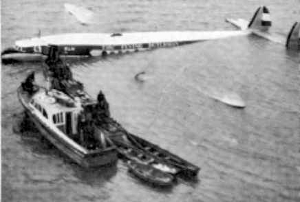
klm-flight-633KLM Flight 633, a Lockheed Constellation Triton passenger flight from Amsterdam to New York City, ditches on a mudbank in the River Shannon immediately after takeoff from Shannon Airport on September 5, 1954. Twenty-eight people are killed in the accident which is caused by an unexpected re-extension of the landing gear, possibly compounded by pilot error.

The Lockheed Super Constellation Triton is piloted by Adriaan Viruly, one of the airline’s most senior pilots. After a refueling stop at Shannon, the plane takes off for the transatlantic leg of the flight at 2:40 AM. There are 46 passengers and ten crew on board. Shortly after takeoff the pilot reduces power from maximum to METO (Maximum Except Take Off). The pilot is unaware that the landing gear is not retracted, and as result the aircraft descends to land in the Shannon. It turns around on impact and breaks into two sections.

The aircraft is partially submerged and at least one of the fuel tanks ruptures during the crash. The fuel fumes render many passengers and crew unconscious, who then drown in the rising tide. In the end, three members of the cabin crew and 25 passengers perish.

Even though the crash occurs less than one minute after the plane takes off from Shannon Airport, airport authorities remain unaware of the disaster until the mud-caked navigator of the craft, Johan Tieman, stumbles into the airport two and a half hours after the crash and reports, “We’ve crashed!” Tieman had swum ashore and floundered painfully across the marshes to the airport, whose lights are clearly visible from the scene of the crash. It is not until 7:00 in the morning that the first launch reaches the survivors, who are huddled on a muddy flat in the river.

The official investigation concludes that the accident is caused by an unexpected re-extension of the landing gear and the captain’s incorrect behaviour in this situation. Viruly, who is only one year from retirement, rejects the responsibility for the crash and is bitter about his subsequent treatment by KLM. In an interview he later states that there simply had not been enough time to react.


Leave a comment

Final Concert by Phil Lynott & Thin Lizzy

thin-lizzy-1983

Although a version of the band still tours today, the definitive Thin Lizzy lineup, according to the official Thin Lizzy website, plays its last concert at the Monsters Of Rock festival in Nuremburg, Germany, on September 4, 1983. Afterwards the band members go their separate ways.

Formed in 1969 featuring bass guitarist and lead vocalist Phil Lynott and drummer Brian Downey, the band goes through various members including Gary Moore before Scott Gorham and Brian Robertson join the band in the mid-1970s. Thin Lizzy’s big breakthrough comes with the Jailbreak album in 1976 featuring the hit single The Boys Are Back In Town.

After the success of the Jailbreak album, Thin Lizzy’s popularity begins to subside in the United States, with each successive album finding less success. They manage, however, to maintain a presence in the United Kingdom. Another problem contributing to the band’s demise is Lynott’s drug use, which begins to escalate around this time and eventually ruins his marriage.

Two more Thin Lizzy albums, Renegade and Thunder and Lightning, follow over the next two and half years, as does a second solo offering by Lynott, The Phillip Lynott Album. Despite this, things continue to unravel for Lynott and company.

They plan a farewell tour to coincide with the March 1983 release of Thunder and Lightning, which features a heavier approach and proves to be their most popular album in some time. This ends up being a year-long adventure whose high point is a special performance at the legendary Hammersmith Odeon. For the show, Lynott brings in former band members Brian Robertson, Eric Bell, and Gary Moore as special guests.

The final concert in the United Kingdom takes place on August 28, 1983, at the Reading Festival, while their final concert with Lynott in the lineup finds them in Nuremberg on a bill that includes Whitesnake, Ozzy Osbourne, Blue Öyster Cult, Motörhead, and others. Lizzy’s set features old favorites along with a few new songs.

Lynott dies on January 4, 1986, of heart failure and pneumonia. Although the band eventually regroups with various ex-members trying to sail the ship, it never rekindles its past success without their leader.


Leave a comment

Birth of Irish Rebel Leader John Devoy

john-devoy

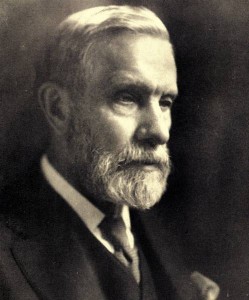
John Devoy, one of the most devoted revolutionaries the world has ever seen, is born in Kill, County Kildare, on September 3, 1842. Dedicating over 60 years of his life to the cause of Irish freedom, he is one of the few people to have played a leading role in the Fenian Rising of 1867, the 1916 Easter Rising, and the Irish War of Independence (1919 – 1921).

After the Great Famine, the family moves to Dublin where Devoy’s father obtains at job at Watkins’ brewery. Devoy attends night school at the Catholic University before joining the Fenians. In 1861 he travels to France with an introduction from Timothy Daniel Sullivan to John Mitchel. Devoy joins the French Foreign Legion and serves in Algeria for a year before returning to Ireland to become a Fenian organiser in Naas, County Kildare.

In 1865, when many Fenians are arrested, James Stephens, founder of the Irish Republican Brotherhood (IRB), appoints Devoy Chief Organiser of Fenians in the British Army in Ireland. His duty is to enlist Irish soldiers in the British Army into the IRB. In November 1865 Devoy orchestrates Stephens’ escape from Richmond Prison in Dublin.

In February 1866 an IRB Council of War calls for an immediate uprising but Stephens refuses, much to Devoy’s annoyance, as he calculated the Fenian force in the British Army to number 80,000. The British get wind of the plan through informers and move the regiments abroad, replacing them with regiments from Britain. Devoy is arrested in February 1866 and interned in Mountjoy Gaol, then tried for treason and sentenced to fifteen years penal servitude. In Portland Prison Devoy organises prison strikes and, as a result, is moved to Millbank Prison in Pimlico, London.

In January 1871, he is released and exiled to the United States as one of the “Cuba Five.” He receives an address of welcome from the House of Representatives. Devoy becomes a journalist for the New York Herald and is active in Clan na Gael. Under Devoy’s leadership, Clan na Gael becomes the central Irish republican organisation in the United States. In 1877 he aligns the organisation with the Irish Republican Brotherhood in Ireland.

In 1875, Devoy and John Boyle O’Reilly organise the escape of six Fenians from Fremantle Prison in Western Australia aboard the ship Catalpa. Devoy returns to Ireland in 1879 to inspect Fenian centres and meets Charles Kickham, John O’Leary, and Michael Davitt en route in Paris. He convinces Davitt and Charles Stewart Parnell to co-operate in the “New Departure” during the growing Land War.

Devoy’s fundraising efforts and work to sway Irish Americans to physical force nationalism makes possible the Easter Rising in 1916. In 1914, Patrick Pearse visits the elderly Devoy in America, and later the same year Roger Casement works with Devoy in raising money for guns to arm the Irish Volunteers. Though he is skeptical of the endeavor, he finances and supports Casement’s expedition to Germany to enlist German aid in the struggle to free Ireland from English rule. Also, before and during World War I, Devoy is also identified closely with the Ghadar Party, and is accepted to have played a major role in supporting Indian Nationalists, as well as playing a key role in the Hindu-German Conspiracy which leads to the trial that is the longest and most expensive trial in the United States at the time.

In 1916 Devoy plays an important role in the formation of the Clan-dominated Friends of Irish Freedom, a propaganda organization whose membership totals 275,000 at one point. The Friends fail in their efforts to defeat Woodrow Wilson for the presidency in 1916. Fearful of accusations of disloyalty for their cooperation with Germans and opposition to the United States’ entering the war on the side of Great Britain, the Friends significantly lower their profile after April 1917. Sinn Féin‘s election victories and the British government’s intentions to conscript in Ireland in April 1917 help to revitalize the Friends.

With the end of the war, Devoy plays a key role in the Friends’ advocacy for not the United States’ recognition of the Irish Republic but, in keeping with President Wilson’s war aims, self-determination for Ireland. The latter does not guarantee recognition of the Republic as declared in 1916 and reaffirmed in popular election in 1918. American Irish republicans challenge the Friends’ refusal to campaign for American recognition of the Irish Republic. Not surprisingly, Devoy and the Friends’ Daniel F. Cohalan become the key players in a trans-Atlantic dispute with de facto Irish president Éamon de Valera, touring the United States in 1919 and 1920 in hopes of gaining U.S. recognition of the Republic and American funds. Believing that the Americans should follow Irish policy, de Valera forms the American Association for the Recognition of the Irish Republic in 1920 with help from the Philadelphia Clan na Gael.

Devoy returns to Ireland and in 1919 addresses Dáil Éireann. He later supports the Anglo-Irish Treaty of 1921. Devoy is editor of The Gaelic American from 1903 until his death in Atlantic City on September 29, 1928. His body is returned to Ireland and buried in Glasnevin Cemetery. A large memorial to him stands on the road between his native Kill and Johnstown.


Leave a comment

Death of Máel Sechnaill mac Domnaill

máel_seachnaill_II_sculpture

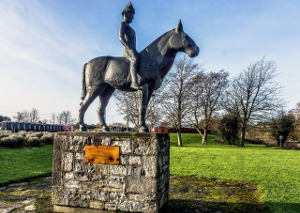
Máel Sechnaill mac Domnaill, King of Mide and High King of Ireland, dies on September 2, 1022, at Lough Ennell, County Westmeath. His great victory at the Battle of Tara against Amlaíb Cuarán in 980 results in Gaelic control of the Kingdom of Dublin.

Máel Sechnaill belongs to the Clann Cholmáin branch of the Uí Néill dynasty. He is the grandson of Donnchad Donn, great-grandson of Flann Sinna and great-great-grandson of the first Máel Sechnaill, Máel Sechnaill mac Máele Ruanaid. The Kings of Tara or High Kings of Ireland have for centuries alternated between the various Uí Néill branches. By Máel Sechnaill’s time this alternating succession passes between Clann Cholmáin in the south and the Cenél nEógain in the north, so that he succeeds Domnall ua Néill in 980.

In 980, Amlaíb Cuarán, King of Dublin, summons auxiliaries from Norse-ruled Scottish Isles and from Man and attacks Meath, but is defeated by Máel Sechnaill at Tara. Reginald, Olaf’s heir, is killed. Máel Sechnaill follows up his victory with a siege of Dublin which surrenders after three days and nights. When Maél Sechnaill takes Dublin in 980 he frees all the slaves then residing in the town.

In 997, at a royal meeting near Clonfert, Máel Sechnaill meets with his long-time rival Brian Boru, King of Munster. The two kings make a truce, by which Brian is granted rule over the southern half of Ireland, while Máel Sechnaill retains the northern half and high kingship. In honour of this arrangement, Máel Sechnaill hands over to Brian the hostages he has taken from Dublin and Leinster. The following year Brian hands over to Máel Sechnaill the hostages of Connacht. In the same year, Brian and Máel Sechnaill begin co-operating against the Norse of Dublin for the first time.

Late in 999, however, the Leinstermen, historically hostile to domination by either the Uí Néill overkings or the King of Munster, ally themselves with the Norse of Dublin and revolt against Brian. The Annals of the Four Masters records that Brian and Máel Sechnaill unite their forces and, according to the Annals of Ulster, they meet the Leinster-Dublin army at Glenmama on Thursday, December 30, 999. Glenmama, near Lyons Hill in Ardclough, County Kildare, is the ancient stronghold of the Kings of Leinster. The Munster-Meath army defeats the Leinster-Dublin army. Ó Corráin refers to it as a “crushing defeat” of Leinster and Dublin, while The dictionary of English history says the battle effectively “quelled” the “desperate revolt” of Leinster and Dublin. Most importantly, the defeat leaves the road to Dublin “free and unimpeded for the victorious legions of Brian and Mael Sechlainn.”

The system of alternating succession between the various Uí Néill branches is ended by Brian Boru’s so-called overthrow of Máel Sechnaill in 1002. It is a bloodless shift resulting from the failure of the Northern Uí Néill to support Máel Sechnaill against the aspirations of the extremely militarized overlord of Munster.

With the deaths of Brian Boru, his son, grandson, and many other Munster nobles at Clontarf in 1014, Máel Sechnaill succeeds in regaining the titular High Kingship, but the High Kingship, albeit with opposition, does not reappear until Diarmait mac Maíl na mBó of Leinster rises to power.

(Pictured: Sculpture of Máel Seachnaill in Trim, County Meath, by James McKenna)


Leave a comment

Founding of the “Belfast News Letter”

belfast-news-letter

The Belfast News Letter, one of Northern Ireland‘s main daily newspapers and the oldest English language general daily newspaper still in publication, is founded on September 1, 1737.

The Belfast News Letter is originally printed in Joy’s Entry in Belfast. The Joys are a family of Huguenot descent who add much to eighteenth-century Belfast, noted for their compiling materials for its history. Francis Joy, who founds the paper, had come to Belfast early in the century from the County Antrim village of Killead. In Belfast, he marries the daughter of the town sovereign and sets up a practice as an attorney. In 1737, he obtains a small printing press which is in settlement of a debt and uses it to publish the town’s first newspaper at the sign of “The Peacock” in Bridge Street. The family later purchases a paper mill in Ballymena and are able to produce enough paper not only for their own publication but for the whole province of Ulster.

Originally published three times weekly, the Belfast News Letter becomes a daily in 1855. The title is now located at two addresses – a news section in Donegall Square South in central Belfast, and a features section in Portadown, County Armagh. Before the partition of Ireland, the Belfast News Letter is distributed island wide.

The newspaper’s editorial stance and readership, while originally republican, is now strongly unionist. Its primary competitors are the Belfast Telegraph and The Irish News. The Belfast News Letter has changed hands several times since the mid-1990s, and since 2005 is owned by the Johnston Press holding company Johnston Publishing (NI). The full legal title of the newspaper is the Belfast News Letter, although the word “Belfast” no longer appears on the masthead.

Historical copies of the Belfast News Letter, dating back to 1828, are available to search and view in digitised form at the British Newspaper Archive.