seamus dubhghaill

Promoting Irish Culture and History from Little Rock, Arkansas, USA


Leave a comment

The Dunmurry Train Bombing

The Dunmurry train bombing, a premature detonation of a Provisional Irish Republican Army (IRA) incendiary bomb aboard a Ballymena to Belfast passenger train, takes place on January 17, 1980.

The blast engulfs a carriage of the train in flames, killing three and injuring five others. One of the dead and the most seriously injured survivor are volunteers of the IRA. After the blast, the organisation issues a statement acknowledging responsibility, apologising to those who were harmed and state that it was ‘grave and distressing’ but an ‘accident’ caused by the ‘war situation.’

The train is a Northern Ireland Railways afternoon service carrying passengers between Ballymena railway station and Belfast Central railway station. The train is largely empty as it leaves Dunmurry railway station and enters the outskirts of Belfast, crossing under the M1 motorway on its way to Finaghy railway station shortly before 4:55 PM. A large fireball erupts in the rear carriage, bringing the train to a standstill and forcing panicked passengers to evacuate urgently as the smoke and flames spread along the train. The survivors then move down the track in single file to safety while emergency services fight the blaze. After several hours and combined efforts from fire, police and military services the blaze is contained. One fireman is treated for minor injuries. The two damaged carriages are transported to Queen’s Quay in Belfast for forensic examination and are subsequently rebuilt, one remaining in service until 2006 and the other until 2012.

Of the four persons occupying the carriage, three are killed with burns so severe that it is not possible to identify them by conventional means. Rail chief Roy Beattie describes the human remains as “three heaps of ashes.” The fourth, later identified as Patrick Joseph Flynn, is an IRA member and one of the men transporting the bombs. He suffers very serious burns to his face, torso and legs, and is reported to be close to death upon arrival at the hospital. Of the dead, two are eventually named as 17-year-old Protestant student Mark Cochrane from Finaghy and the other a 35-year-old Belfast-based accountant and recent immigrant from Lagos, Nigeria, Max Olorunda, who had been visiting a client in Ballymena. The identity of the third is harder to ascertain, but it is eventually confirmed by the IRA by their statement that he is 26-year-old IRA member Kevin Delaney. In addition to the fireman, four people are injured, including Flynn, two teenagers treated for minor injuries and an older man who suffers much more serious burns.

Further bomb alerts are issued across the region and two similar devices are discovered on trains, at York Road railway station in Belfast and at Greenisland railway station. Both are removed safely, and control detonated. The devices are simple incendiary bombs similar to that which exploded south of Befast, consisting of a 5-lb. block of explosives attached to a petrol can with a simple time device intended to delay the explosion until the train is empty that evening. Later testimony indicates that Delaney armed the first of two bombs and placed it beside him as he picked up the second one. As he arms this device, the first bomb suddenly detonates for reasons that remain unknown. Delaney is killed instantly and his accomplice, Patrick Joseph Flynn, is forced to leap from the train in flames. Flynn is guarded by police in hospital and arrested once his wounds heal sufficiently.

The IRA releases a lengthy statement about the event, terming it a ‘bombing tragedy,’ blaming the Royal Ulster Constabulary for their ‘sickening and hypocritical … collective activity of collaboration with the British forces.’ In Britain, Conservative MP Winston Churchill calls for the death penalty to be reinstated for terrorists as a result of the incident.

Patrick Flynn is tried at Belfast Crown Court for double manslaughter and possession of explosives after he recovers from his injuries. He is severely disfigured and badly scarred from the extensive burns the incendiary device had inflicted upon him. The judge is asked and agrees to take this into account for sentencing after reviewing the evidence and finding Flynn guilty due to his proximity to the explosion, his known IRA affiliation and the discovery of telephone numbers for the Samaritans and Belfast Central railway station in his jacket, to be used to telephone bomb warnings. Justice Kelly sentences Flynn to ten years in prison for each manslaughter as well as seven years for the explosives offences, to be served concurrently.

(Pictured: Dunmurry Railway Station)


1 Comment

Bernadette Devlin McAliskey Assassination Attempt

Bernadette Devlin McAliskey, Northern Ireland civil rights campaigner and former Westminster Member of Parliament (MP), is shot by members of the Ulster Freedom Fighters, a cover name of the Ulster Defence Association (UDA), who burst into her home at Coalisland, County Tyrone on January 16, 1981. She survives the assassination attempt.

The three men shoot McAliskey nine times in the chest, arm and thigh as she goes to wake up one of her three children. Her husband, Michael, is also shot twice at point blank range. British soldiers are watching the McAliskey home at the time but fail to prevent the assassination attempt. It is claimed that Devlin’s assassination was ordered by British authorities, and that collusion was a factor. An army patrol of the 3rd Battalion, Parachute Regiment enter the house and wait for half an hour. McAliskey claims they are waiting for the couple to die.

Another group of soldiers then arrive and transport them by helicopter to a nearby Dungannon hospital for emergency treatment and then to the Musgrave Park Hospital, Military Wing, in Belfast, under intensive care. Their condition is initially said to be serious, but not life-threatening.

The attackers, Ray Smallwoods, Tom Graham, both from Lisburn, and Andrew Watson from Seymour Hill, Dunmurry, are captured by members of the Parachute Regiment, who are on patrol nearby when they hear the shots and are taken in for questioning by the police and subsequently jailed. All three are members of the South Belfast UDA. Smallwoods is the driver of the getaway car. Police say it is a professional attack. The gunmen cut the telephone wires to the house before breaking down the front door with a sledgehammer.

McAliskey had played a leading role in the campaign for Republican prisoners in the HM Prison Maze, who are demanding “prisoner of war” or political status. They want to be held separately from loyalist supporters in the Maze. Four other members of the campaign for the H-block inmates have been murdered.

Seven Maze prisoners went on hunger strike before Christmas in support of their demands for political status. The strike is called off on December 12 after Taoiseach Charles Haughey convinces the inmates their families want them to start eating again.


Leave a comment

The Greysteel Massacre

The Greysteel massacre is a mass shooting that takes place on the evening of October 30, 1993 in Greysteel, County Londonderry, Northern Ireland.

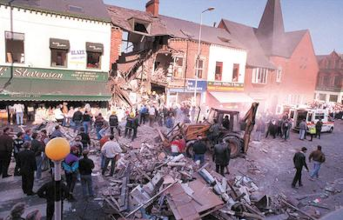
On October 23, 1993, an Irish Republican Army (IRA) bomb prematurely explodes as the bombers carry it into a fishmongers on the Shankill Road in Belfast. The IRA’s intended target is a meeting of Ulster Defence Association (UDA) leaders, including brigadier Johnny Adair, which is to take place in a room above the shop. Unknown to the IRA, the meeting had been rescheduled. Eight Protestant civilians, a UDA member and one of the IRA bombers are killed in the blast. This became known as the Shankill Road bombing.

The UDA launches a number of “revenge attacks” for the bombing. Later that day, it fatally shoots a Catholic delivery driver after luring him to a bogus call at Vernon Court, Belfast. On October 26, the UDA shoots dead another two Catholic civilians and wounds five in an attack at the Council Depot at Kennedy Way, Belfast.

The massacre is carefully planned. The order for the attack comes from the UDA leadership and it is believed Greysteel is chosen partly because it is well away from Belfast, where security force activity is intense after the Shankill bombing. Those involved in planning and organising it include Billy McFarland, ‘Brigadier’ of the UDA’s North Antrim & Londonderry Brigade. Stephen Irwin, Geoffrey Deeney and Torrens Knight, all members of the brigade, are to carry out the shooting. The gunmen are first briefed on the plans for the massacre on October 27 in an office owned by the Ulster Democratic Party at Bond’s Place, Londonderry. Before the massacre, the gunmen go to the pub to familiarise themselves with the layout and choose the best positions to shoot from.

On Saturday, October 30, the gunmen drive to the pub in an Opel Kadett, with UDA member Brian McNeill driving a ‘scout car’ in front. Just before 10:00 PM the three gunmen, wearing blue boilersuits and balaclavas, enter the “Rising Sun Bar” in Greysteel. There are at least 70 people inside attending a Halloween party and at first some believe the men are playing a Halloween prank. Stephen Irwin yells “trick or treat” as he opens fire with a vz. 58 assault rifle on the packed crowd in the lounge. He keeps shooting until the magazine empties, quickly reloads and continues shooting. Geoffrey Deeney opens fire with a 9mm handgun at a fleeing woman, but it jams after one shot. Torrens Knight, armed with a shotgun, guards the entrance while the shooting is taking place. There is panic and screaming as people scramble for cover and women plead for mercy. The scene in the Rising Sun is described as “hell-like”; bodies lay everywhere and the lounge and dancefloor are covered with blood and broken glass. The gunmen, laughing, then make their escape in the Opel Kadett driven by Knight. While driving away from Greysteel, the getaway car’s wing mirror is hit by a police car speeding towards the scene. The gunmen drive the Kadett to a pick-up point near Eglinton, where they meet McNeill and burn the car.

Seven people are killed outright and nineteen are wounded, with another later dying of his wounds. The dead are Karen Thompson (19), Steven Mullan (20), Moira Duddy (59), Joseph McDermott (60), James Moore (81), John Moyne (50), John Burns (54) and Victor Montgomery (76). Six of those killed are Catholic civilians and two are Protestant civilians.

The following day, the UDA claims responsibility for the attack using the cover name “Ulster Freedom Fighters” (UFF). Its statement says that the “Greysteel raid” is “the continuation of our threats against the nationalist electorate that they would pay a heavy price for last Saturday’s slaughter of nine Protestants.” A UDA West Belfast Brigade member claims that his organisation “had information that senior IRA men drank in the Rising Sun… Unfortunately they were not there on Halloween but our boys acted on the briefing they had been given.” Afterwards, the gunmen are said to have boasted about the killings.

The UDA members involved are arrested shortly after the massacre. During their first court appearance, Knight is filmed laughing, taunting and shouting abuse at the victims’ relatives as he is led from the building. In February 1995, Irwin, Deeney, Knight and McNeill are sentenced to life imprisonment for their involvement in the attack. Knight is also convicted for the Castlerock killings. In 2000, they are released early, along with other paramilitary prisoners, under the terms of the Good Friday Agreement.

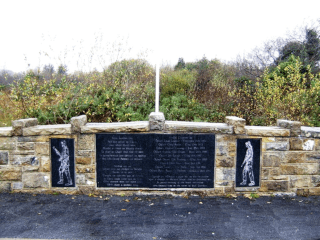
The pub is still open in Greysteel. There is a memorial to the victims outside the building that says: “May their sacrifice be our path to peace.”


Leave a comment

Death of Hunger Striker Michael “Mickey” Devine

michael-devine

Michael James “Mickey” Devine, a founding member of the Irish National Liberation Army (INLA) and participant in the 1981 Irish hunger strike, dies in Maze Prison on August 20, 1981, the tenth and last of the hunger strikers to die.

Devine, also known as “Red Mickey” because of his red hair, is born into a family from the Springtown Camp, on the outskirts of Derry, a former United States military base from the World War II. In 1960, when he is six years of age, the Devine family, including his grandmother, sister Margaret and parents Patrick and Elizabeth, move to the then newly built Creggan estate to the north of Derry city centre. He is educated at Holy Child Primary School and St. Joseph’s Boy’s School, both in the Creggan.

After British soldiers shoot dead two unarmed civilians, Dessie Beattie and Raymond Cusack, Devine joins the James Connolly Republican Club in Derry in July 1971. Bloody Sunday has a deep impact on him. In the early 1970s, he joins the Irish Labour Party and Young Socialists.

Devine helps found the Irish National Liberation Army (INLA) in 1975. In 1976, after an arms raid in County Donegal in the Republic of Ireland, he is arrested in Northern Ireland. He is convicted and sentenced to twelve years in prison. He joins the blanket protest before joining the hunger strike.

Devine participates in a brief hunger strike in 1980, which is called off without fatalities. On June 22, 1981, he joins Joe McDonnell, Kieran Doherty, Kevin Lynch, Martin Hurson, Thomas McElwee and Paddy Quinn on hunger strike at the Maze Prison. He dies on August 20, after sixty days on hunger strike.


Leave a comment

The Drumcree Conflict of 1998

orangemen-drumcree-march

The Drumcree conflict or Drumcree standoff is a dispute over yearly Orange Order parades in the town of Portadown, County Armagh, Northern Ireland. The town is mainly Protestant and hosts numerous Protestant/loyalists marches each summer but has a significant Catholic minority. The Orange Order, a Protestant unionist organization, insists that it should be allowed to march its traditional route to and from Drumcree Church on the Sunday before The Twelfth. However, most of the route is through the mainly Catholic/Irish nationalist section of town. The residents, who see the march as sectarian, triumphalist and supremacist, seek to ban it from their area. The Orangemen see this as an attack on their traditions as they have marched the route since 1807, when the area was mostly farmland.

In 1995 and 1996, residents succeed in stopping the march. This leads to a standoff at Drumcree between the security forces and thousands of Orangemen/loyalists. Following a wave of loyalist violence, police allow the march through. In 1997, security forces lock down the Catholic area and let the march through, citing loyalist threats to kill Catholics if they are stopped. This sparks widespread protests and violence by Irish nationalists. From 1998 onward, the march is banned from Garvaghy Road and the army seals off the Catholic area with large steel, concrete and barbed wire barricades. Each year there is a major standoff at Drumcree and widespread loyalist violence. Since 2001 things have been relatively calm but moves to get the two sides into face-to-face talks have failed.

Early in 1998 the Public Processions (Northern Ireland) Act 1998 is passed, establishing the Parades Commission. The Commission is responsible for deciding what route contentious marches should take. On June 29, 1998, the Parades Commission decides to ban the march from Garvaghy Road.

On Friday, July 3, about 1,000 soldiers and 1,000 police are deployed in Portadown. The soldiers build large barricades made of steel, concrete and barbed wire across all roads leading into the nationalist area. In the fields between Drumcree Church and the nationalist area they dig a trench, fourteen feet wide, which is then lined with rows of barbed wire. Soldiers also occupy the Catholic Drumcree College, St. John the Baptist Primary School and some properties near the barricades.

On Sunday, July 5, the Orangemen march to Drumcree Church and state that they will remain there until they are allowed to proceed. About 10,000 Orangemen and loyalists arrive at Drumcree from across Northern Ireland. A loyalist group calling itself “Portadown Action Command” issues a statement which reads, “As from midnight on Friday 10 July 1998, any driver of any vehicle supplying any goods of any kind to the Gavaghy Road will be summarily executed.”

Over the next ten days, there are loyalist protests and violence across Northern Ireland in response to the ban. Loyalists block roads and attack the security forces as well as Catholic homes, businesses, schools and churches. On July 7, the mainly Catholic village of Dunloy is “besieged” by over 1,000 Orangemen. The County Antrim Grand Lodge says that its members have “taken up positions” and “held” the village. On July 8, eight blast bombs are thrown at Catholic homes in the Collingwood area of Lurgan. There are also sustained attacks on the security forces at Drumcree and attempts to break through the blockade. On July 9, the security forces at Drumcree are attacked with gunfire and blast bombs. They respond with plastic bullets. The police recorded 2,561 “public order incidents” throughout Northern Ireland.

On Sunday, July 12, brothers Jason (aged 8), Mark (aged 9) and Richard Quinn (aged 10) are burned to death when their home is petrol bombed by loyalists. The boys’ mother is a Catholic and their home is in a mainly-Protestant section of Ballymoney. Following the murders, William Bingham, County Grand Chaplain of Armagh and member of the Orange Order negotiating team, says that “walking down the Garvaghy Road would be a hollow victory, because it would be in the shadow of three coffins of little boys who wouldn’t even know what the Orange Order is about.” He says that the Order has lost control of the situation and that “no road is worth a life.” However, he later apologizes for implying that the Order is responsible for the deaths. The murders provoke widespread anger and calls for the Order to end its protest at Drumcree. Although the number of protesters at Drumcree drops considerably, the Portadown lodges vote unanimously to continue their standoff.

On Wednesday, July 15, the police begin a search operation in the fields at Drumcree. A number of loyalist weapons are found, including a homemade machine gun, spent and live ammunition, explosive devices, and two crossbows with more than a dozen homemade explosive arrows.


Leave a comment

The Loughinisland Massacre

CREATOR: gd-jpeg v1.0 (using IJG JPEG v80), quality = 90

The Loughinisland massacre takes place on June 18, 1994, in the small village of Loughinisland, County Down, Northern Ireland. Members of the Ulster Volunteer Force (UVF), a loyalist paramilitary group, burst into a pub with assault rifles and fire on the customers, killing six civilians and wounding five. The pub is targeted because it is frequented mainly by Catholics. The UVF claims the attack is retaliation for the killing of three UVF members by the Irish National Liberation Army (INLA) two days earlier.

About 24 people are gathered in The Heights Bar, also known as O’Toole’s Pub, watching the Republic of Ireland vs. Italy in the 1994 FIFA World Cup. It is thus sometimes referred to as the “World Cup massacre.”

At 10:10 PM, two UVF members wearing boilersuits and balaclavas walk into the bar. One shouts “Fenian bastards!” and opens fire on the crowd with a vz. 58 assault rifle, spraying the small room with more than sixty bullets. Six men are killed outright, and five other people are wounded. Witnesses say the gunmen then run to a getaway car, “laughing.” One witness describes “bodies … lying piled on top of each other on the floor.” The dead were Adrian Rogan (34), Malcolm Jenkinson (52), Barney Green (87), Daniel McCreanor (59), Patrick O’Hare (35) and Eamon Byrne (39), all Catholic civilians. O’Hare is the brother-in-law of Eamon Byrne and Green is one of the oldest people to be killed during the Troubles.

The UVF claims responsibility within hours of the attack. It claims that an Irish republican meeting was being held in the pub and that the shooting was retaliation for the INLA attack. Police say there is no evidence the pub had links to republican paramilitary activity and say the attack is purely sectarian. Journalist Peter Taylor writes in his book Loyalists that the attack may not have been sanctioned by the UVF leadership. Police intelligence indicates that the order to retaliate came from the UVF leadership and that its ‘Military Commander’ had supplied the rifle used. Police believe the attack was carried out by a local UVF unit under the command of a senior member who reported to the leadership in Belfast.

The attack receives international media coverage and is widely condemned. Among those who send messages of sympathy are Pope John Paul II, Queen Elizabeth II and United States President Bill Clinton. Local Protestant families visit their wounded neighbours in the hospital, expressing their shock and disgust.

There have been allegations that police (Royal Ulster Constabulary) double agents or informants in the UVF were linked to the massacre and that police protected those informers by destroying evidence and failing to carry out a proper investigation. At the request of the victims’ families, the Police Ombudsman for Northern Ireland investigate the police. In 2011 the Ombudsman concludes that there were major failings in the police investigation, but no evidence that police colluded with the UVF. The Ombudsman does not investigate the role of informers and the report is branded a whitewash. The Ombudsman’s own investigators demand to be disassociated from it. The report is quashed, the Ombudsman replaced, and a new inquiry ordered.

In 2016, a new Ombudsman report concludes that there had been collusion between the police and the UVF, and that the investigation was undermined by the wish to protect informers but found no evidence police had foreknowledge of the attack. A documentary film about the massacre, No Stone Unturned, is released in 2017. It names the main suspects, one of whom is a member of the British Army and claims that one of the killers was an informer.


Leave a comment

Terence O’Neill Becomes Fourth Prime Minister of Northern Ireland

File source: http://en.wikipedia.org/wiki/File:Captain_Terence_O%27Neill.jpg

Terence O’Neill becomes the fourth Prime Minister of Northern Ireland on March 25, 1963, following the resignation of Basil Brooke, 1st Viscount Brookeborough. He plays a significant role in the first year of the Troubles, trying unsuccessfully to stem growing sectarian violence.

O’Neill is born on September 10, 1914, at 29 Ennismore Gardens, Hyde Park, London, the son of Captain Arthur O’Neill of Shane’s Castle, Randalstown, the first member of parliament (MP) to be killed in action in World War I five months later. He is educated in the English public school system at West Downs SchoolWinchester and Eton College, spending his summer holidays at the family estate in Ulster. He is later commissioned in the British Army, rising to the rank of captain and serving with the Irish Guards in World War II. He is wounded in 1944 and opts to resettle permanently in Northern Ireland.

In 1946, O’Neill is elected to the Parliament of Northern Ireland, representing the Unionist stronghold of Bannside. He remains in the parliament at Stormont for almost 25 years. He becomes Northern Ireland’s Minister of Home Affairs in April 1956, Minister of Finance in September 1956 and Prime Minister in March 1963.

As Prime Minister, O’Neill introduces economic reforms to stimulate industrial growth and employment, with mixed results. He also tries narrowing the divide between Protestants and Catholics. He does this with important gestures, like visiting Catholic schools and expressing condolences on the death of Pope John XXIII.

O’Neill also seeks better relations with the Republic of Ireland, and in January 1965 invites Taoiseach Seán Lemass to Belfast. Catholics and moderate Unionists welcome this reconciliation but many conservative Loyalists, like Ian Paisley, condemn it as treachery.

When the civil rights movement erupts in the late 1960s, O’Neill offers a package of reforms and concessions, including changes to the allocation of housing. These proposals, however, anger staunch Unionists and fail to satisfy many Republicans.

In December 1969, O’Neill appears on Northern Ireland television and makes an impassioned plea for unity, warning that “Ulster stands at the crossroads.” His government is reelected in February 1969, though O’Neill himself is almost voted out of his own seat.

With the situation worsening, O’Neill is further embarrassed by Loyalist attempts to sabotage Belfast’s water supply. Fast losing the confidence of his own party, he resigns the prime ministership in April 1969. He remains in the parliament until January 1970.

O’Neill is made Baron O’Neill of the Maine and spends the last decade of his life in Britain’s House of Lords. He dies of cancer on June 12, 1990.


Leave a comment

Birth of Mairéad Farrell, Provisional IRA Member

mairead-farrell

Mairéad Farrell, member of the Provisional Irish Republican Army (IRA), is born in Belfast on March 3, 1957. She is shot dead by the British Army in Gibraltar on March 6, 1988.

Farrell is born into a middle-class family with no link to militant Irish republicanism other than a grandfather who had been interned during the Irish War for Independence. She is educated at Rathmore Grammar School, Belfast. At the age of 14 she is recruited into the Provisional IRA by Bobby Storey. After leaving school at the age of 18, she is hired as a clerical worker for an insurance broker’s office.

On March 1, 1976, the British government revokes Special Category Status for prisoners convicted from this date under anti-terrorism legislation. In response, the IRA instigates a wave of bombings and shootings across Northern Ireland and younger members such as Farrell are asked to participate. On April 5, 1976, along with Kieran Doherty and Sean McDermott, she attempts to plant a bomb at the Conway Hotel in Dunmurry, as that hotel had often been used by British soldiers on temporary duty in Northern Ireland. She is arrested by Royal Ulster Constabulary (RUC) officers within an hour of planting the bomb. McDermott, her boyfriend, is shot dead by a RUC reservist at a nearby housing estate.

At her trial, Farrell refuses to recognise the court as it is an institution of the British state. She is sentenced to fourteen years in prison for explosives offences, firearms offences, and belonging to an illegal organisation.

When Farrell arrives at Armagh Prison, she refuses to wear a prison uniform in protest at the designation of republican prisoners as criminals and becomes the official Officer Commanding of the female IRA prisoners. After 13 months, she, along with Mary Doyle and Mairead Nugent, begin a hunger strike to coincide with the one already taking place in Long Kesh Prison. It ends on December 19, a day after the men’s strike. In March 1981 the prisoners’ rights campaign is focused on the hunger strike being undertaken by Bobby Sands, leader of IRA prisoners in the H-Blocks. She was one of the H-Block/Armagh prisoners to stand for election in the Republic of Ireland in the 1981 Irish general election, standing in Cork North-Central and polling 2,751 votes (6.05%).[17]

Upon her release from prison in October 1986, Farrell enrolls at Queen’s University, Belfast for a course in Political Science and Economics. However, she drops out to re-engage in IRA activity. The IRA sends her with Seán Savage and Daniel McCann to the British overseas territory of Gibraltar to plant a car bomb in a heavily populated town area. The target is the band and guard of the 1st Battalion of the Royal Anglian Regiment during a weekly ceremonial changing of the guard in front of Governors’ residence, on March 8, 1988. According to interrogated IRA members, Gibraltar is selected as a target because it is a British possession that is in dispute, and that it is an area with lighter security measures than had become endemic at British military installations elsewhere due to the IRA’s campaign.

The British Government’s domestic intelligence service MI5 becomes aware of their plan and a detachment from the British Army is specifically deployed to Gibraltar to intercept the IRA team and prevent the attack. Farrell, Savage and McCann are confronted by plainclothes soldiers from the Special Air Service regiment while they are engaged in a reconnaissance in Gibraltar pending the delivery of the car bomb. Farrell is shot three times in the back and once in the face. Her two accomplices are also killed in an operation code-named Operation Flavius by the British Government. Some witnesses to the shooting state that Farrell and McCann were shot while attempting to surrender, and while lying wounded on the ground. The three IRA members are all found afterwards to be unarmed.

Keys to a hire car found in Farrell’s handbag lead the Spanish Police to the discovery across the border in Spain of five packages totaling 84 kg of Semtex explosive in a car which the IRA team intended to subsequently drive into Gibraltar for the attack. These packages have four separate detonators attached. Around this is packed 200 rounds of ammunition as shrapnel. There are two timers but they were not primed or connected.

At the funeral of the ‘Gibraltar Three’ on March 16, three mourners are killed in a gun and grenade attack by loyalist paramilitary Michael Stone in the Milltown Cemetery attack.


Leave a comment

The Murder of Benedict Hughes

File written by Adobe Photoshop? 4.0

Northern Ireland is plunged into a new crisis after Benedict Hughes, a Catholic, is shot dead on January 21, 1998, as he is getting into his car after finishing his work in a loyalist area of south Belfast. It is the latest murder aimed at wrecking the peace process and the eighth sectarian killing since Christmas.

Hughes, age 55, dies in a hail of bullets in Sandy Row shortly after 5:00 PM, as he is preparing to travel back to his Suffolk Crescent home in west Belfast. The father of three is shot at least five times in the neck and chest as he tries to get into his car which is parked in Utility Street off the Donegall Road. He is taken to the Royal Victoria Hospital where he later dies. The lone gunman makes off on foot in the direction of Felt Street.

The attack comes after the funeral of Fergal McCusker, a Catholic shot dead by the Loyalist Volunteer Force (LVF) just days earlier and ahead of the funerals of Catholic taxi driver Larry Brennan and prominent loyalist Jim Guiney held on January 22.

When forensic people arrive on the scene soon after the shooting, the area is packed with onlookers who believe the shot man is a Protestant.

As a recovery truck comes to remove Hughes’s car later that night, small groups of people are still watching the scene. The Rev. Richard Darmody, the rector of nearby St. Aidan’s Church in Sandy Row, who went to the scene thinking the victim was one of his parishioners, condemns the murder. “I’m shocked and horrified that the life of an innocent person has been taken and that another family has been plunged into grief and pain. I feel very concerned about where this is going to lead, and the possibility of more lives being taken, and more families being bereaved.”

There is no immediate admission of responsibility. However, the blame is placed firmly on loyalists, either the LVF, which has admitted being behind a series of recent killings, or the Ulster Freedom Fighters, which has remained silent, but which is suspected by the security forces of having joined the killings.

Social Democratic and Labour Party (SDLP) councillor Alex Attwood calls on mainstream loyalists to “clarify whether they are really on a ceasefire” because it is clear, he says, the LVF has received help from other loyalist groups, the Ulster Volunteer Force (UVF) or the Ulster Defence Association (UDA).

SDLP councillor Alastair McDonnell says the peace process is not in crisis. Hughes was “an innocent Catholic who was just trying to earn a living, who has no connections with any political or paramilitary grouping. If he had he wouldn’t have worked here.” He adds that there is a “small handful of evil people” who do not want to see peace.

Alliance spokesman Dr. Philip McGarry says there is “no excuse, no justification for causing pain to yet another family.”

(From: “Catholic shot dead leaving work in loyalist Sandy Row” by Louise McCall, The Irish Times, January 22, 1998)


Leave a comment

Hume & Trimble Receive 1998 Nobel Peace Prize

hume-trimble-noble-prize-1998

The 1998 Nobel Peace Prize is awarded on October 16, 1998, to John Hume and David Trimble, leaders of the largest Roman Catholic and Protestant political parties in Northern Ireland, for their efforts to bring peace to the long-polarized British province. The two men share the prize money of $960,000.

Hume, 61, the Catholic head of the Social Democratic and Labor Party, is cited by the Nobel Committee in Oslo for having been the “clearest and most consistent of Northern Ireland’s political leaders in his work for a peaceful solution.”

Trimble, 54, the Protestant leader of the Ulster Unionist Party, is honored for having demonstrated “great political courage when, at a critical stage in the process, he advocated solutions which led to the peace agreement.”

The leader of a third prominent party, Gerry Adams of Sinn Féin, the political wing of the Irish Republican Army (IRA), is not named as a prize winner. While it does not honor Adams, the committee says it wishes to “emphasize the importance of the positive contributions to the peace process made by other Northern Irish leaders.” Nor are several other figures mentioned as possibilities, including former Senator George Mitchell, who led the talks, British Prime Minister Tony Blair and Irish Taoiseach Bertie Ahern, United States President Bill Clinton, and Mo Mowlam, the British Government’s Secretary of State for Northern Ireland.

The accord, signed on April 10 and known as the Good Friday Agreement, gives the 1.7 million residents of Northern Ireland a respite from the sectarian violence that has claimed more than 3,200 lives in the previous 30 years. It also opens the possibility of lasting stability for the first time since the establishment of Northern Ireland with partition from Ireland in 1921.

Forging concessions from fiercely antagonistic populations, the accord seeks to balance the Protestant majority’s wish to remain part of Britain with Catholic desires to strengthen ties to the Republic of Ireland to the south. The committee, seeing in Northern Ireland’s two warring groups a dispute with notable similarities to violent tribal confrontations elsewhere, expresses the hope that the accord will serve “to inspire peaceful solutions to other religious, ethnic and national conflicts around the world.”

Adams, in New York on a fund-raising trip for Sinn Féin, welcomes the Oslo announcement and particularly praises Hume, who is widely seen as having helped persuade the IRA to adopt a cease-fire and having eased Sinn Féin’s entry into the talks. “Indeed, there would be no peace process but for his courage and vision,” Adams says, adding, “No one deserves this accolade more.” He also wishes Trimble well and says the prize imposes on everyone the responsibility to “push ahead through the speedy implementation of the agreement.”

In the unforgiving politics of Northern Ireland, the Unionist dissidents and members of other Protestant parties who do not join in the peace talks attack both Trimble and Hume. Ian Paisley Jr., son of the head of the Democratic Unionist Party, calls the Nobel Committee’s decision a “farce” and says of the winners, “These people have not delivered peace, and they are not peacemakers.”

Trimble says he is “slightly uncomfortable” with the award because so many other people have been involved beside him in reaching the settlement and much remains to be done to put it in place. “We know that while we have the makings of peace, it is not wholly secure yet,” he tells the BBC from Denver, where he is on an 11-city North American tour to spur foreign investment in Ulster. “I hope it does not turn out to be premature.”

Hume receives word of the prize at his home in Londonderry and terms it “an expression of the total endorsement of the work of very many people.” He adds, “This isn’t just an award to David Trimble and myself. It is an award to all the people in Northern Ireland.”

In Washington, D.C., President Clinton says “how very pleased” he is, “personally and as President, that the Nobel Prize Committee has rewarded the courage and the people of Northern Ireland by giving the Nobel Peace Prize to John Hume and to David Trimble.” He adds “a special word of thanks” to George Mitchell, who issues a statement praising Hume and Trimble as “fully deserving of this honor.”

The peace talks began in the summer of 1996. They eventually draw the participation of 8 of the 10 Northern Irish parties, with many of the men around the table convicted murderers and bombers who had emerged from prison with a commitment to peaceful resolution to what for nearly a century have been referred to wearily as “the Troubles.” The paramilitary groups had also made the tactical decision that violence would not secure their goals; a shared conviction that gives these talks a chance for success that past fitful attempts at settlement lacked.

The peace talks move in a desultory manner until Blair takes office in May 1997 and highlights the cause of peace in Northern Ireland as an early commitment. At his and Ahern’s urging, the IRA declares a cease-fire in July, and by September Sinn Féin is permitted to join the talks.

Blair also gives Trimble and Adams unprecedented access to 10 Downing Street, and the Ulster Protestants report that they obtained from Clinton the most sympathetic hearing they ever had from an American President, allaying their longtime suspicions of Washington’s bias in favor of the Catholic minority.

(From: “2 Ulster Peacemakers Win the Nobel Prize,” The New York Times, Warren Hoge, October 17, 1998)