seamus dubhghaill

Promoting Irish Culture and History from Little Rock, Arkansas, USA


Leave a comment

The Murder of Joseph “Jo Jo” O’Connor

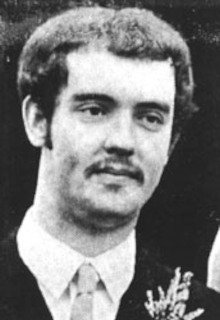
Joseph “Jo Jo” O’Connor, a leading member of the Continuity Irish Republican Army according to security sources in Northern Ireland, is shot to death in west Belfast on October 13, 2000. Provisional Irish Republican Army (PIRA) gunmen are blamed for the murder.

The 26-year-old O’Connor is shot dead as he sits in a car outside his mother’s house in Whitecliffe Parade in Ballymurphy. He comes from a well-known republican family and is understood to have been involved in welfare work for “Real IRA” prisoners. Royal Ulster Constabulary (RUC) sources do not suggest a motive for the shooting, except to say it is not sectarian and they believe it is a result of an inter-republican dispute. Continuity IRA sources deny their organisation is involved and the killing is condemned by Republican Sinn Féin.

O’Connor had just left his mother’s home and got into the passenger seat of a car when two hooded gunmen approach on foot and shoot him at point-blank range. He is hit in the head and dies instantly. A relative who is in the driver’s seat is uninjured.

O’Connor’s cousin, who lives nearby, says, “I heard one shot, then a silence, and then four more shots in quick succession.” Tensions between mainstream and dissident republicans at the time are high in Belfast but without serious violence.

O’Connor, who lives nearby in the Springhill Estate, is married with two young sons. His grandfather, Francisco Notarantonio, was shot dead by the Ulster Defence Association (UDA) in highly controversial circumstances at the same house 13 years earlier. That killing is at the centre of a legal battle between the British Ministry of Defence and the Sunday People over allegations of security force involvement.

O’Connor’s killing is condemned by First Minister of Northern Ireland David Trimble. He calls on the RUC Chief Constable, Ronnie Flanagan, to state who he believes is responsible. “I understand a police operation is still ongoing and there may very well be further developments, but the question we will all ask is who was responsible for this murder.”

The killing is condemned by Republican Sinn Féin. A Sinn Féin councillor, Sean McKnight, says local people are “shocked” by the killing. “We call on those responsible for this deliberate shooting to declare themselves and spell out to the people what their motives are,” a spokesman says. “Local sources indicate the deceased man was associated with the 32 County Sovereignty Movement. Republican Sinn Féin has no hesitation in condemning this action and points out the obvious dangers that lie ahead.”

The Social Democratic and Labour Party (SDLP) representative for Belfast West, Alex Attwood, condemns the murder as pointless but says no one should “rush to premature judgment” about who is responsible. “The overwhelming mass of political and wider opinion is determined to consolidate the political and peace process and no words, no acts and no narrow politics will destabilise it.”

(From “Leading ‘Real IRA’ member is shot dead in Ballymurphy” by Suzanne Breen, The Irish Times, October 14, 2000)


Leave a comment

Death of Michael Flannery, Irish Republican Founder of NORAID

Michael Flannery, Irish republican who fought in the Irish War of Independence and the Irish Civil War, dies in New York City on September 30, 1994. He supports the Provisional Irish Republican Army during The Troubles and is a founder of the Irish Northern Aid Committee (NORAID).

Flannery is born in Cangort, near Brosna, on the border of County Offaly and County Tipperary, on January 7, 1903.

In 1916 Flannery joins the Irish Volunteers alongside his brother Peter, although he does not take part in the Easter Rising. However, he does participate in the Irish War of Independence. Following the outbreak of the Irish Civil War, he fights as part of the Anti-Treaty IRA until his capture by the National Army on November 11, 1922, in Roscrea, County Tipperary. He is imprisoned for nearly a year and a half in Dublin’s Mountjoy Prison (C Wing). While there he witnesses the execution of Anti-Treaty IRA leaders Richard Barrett, Joe McKelvey, Liam Mellows and Rory O’Connor from his cell window. Following a 28-day hunger strike, he is placed in the Curragh Camp until May 1, 1924, when he is finally released, a full year after the end of the civil war.

In February 1927 Flannery immigrates to the United States, settling in Jackson Heights, Queens, New York City. In 1928 he marries Margaret Mary Egan, a Tipperary-born research chemist, who had been educated at University College Dublin and University of Geneva.

Following the creation of Fianna Fáil and their entry into the Irish Parliament Dáil Éireann, Flannery becomes affiliated with Sinn Féin, who had voted to retain their abstentionist policy towards the Dáil and their refusal to acknowledge it as the legitimate government of Ireland. Sinn Féin tasks him with drumming up support for the party in New York. However, following the start of the Great Depression he finds it difficult to focus on politics in the face of mounting poverty. By 1933 finding support for Sinn Féin and the IRA becomes particularly tough when Fianna Fáil expands greatly the range of people eligible for military pensions, which under the previous government had been biased against members of the Anti-Treaty IRA. For the next 40 years Flannery works for the Metropolitan Life Insurance Company.

Upon the onset of The Troubles in Northern Ireland, Flannery is once again drawn into the world of Irish Republicanism. In a response to the mounting violence, he sets up the Irish Northern Aid Committee, or as it became better known as, NORAID. The official purpose of NORAID is to provide funds to the families of imprisoned Irish Republicans and victims of violence. However, opponents level the accusation against the organisation that it is also providing funding directly to the Provisional Irish Republican Army, and perhaps even also supplying firearms.

In 1970 Flannery travels around America and sets up 62 chapters of NORAID. In 1971 he says, “The more coffins sent back to Britain, the sooner this will be all over,” referring to British soldiers.

In 1982 Flannery is indicted, with four other members of NORAID, for arms smuggling, but all defendants are acquitted after their legal defence is able to successfully argue their actions had been sanctioned the CIA.

Four months after the verdict of the arms trial, Flannery is named as Grand Marshal of the Saint Patrick’s Day Parade in New York City. His appointment causes considerable controversy within the Irish American community and several high-profile figures boycott the parade that year, including the Archbishop of New York Terence Cooke.

In 1986 Flannery quietly resigns from NORAID following the decision by Sinn Féin to drop its abstentionist policy in the Republic of Ireland and to recognise Dáil Éireann as the legitimate governing body of Ireland.

Flannery opposes the Northern Ireland peace process, believing that Sinn Féin and the Provisionals have “sold out,” and believes the removal of British troops from Northern Ireland is the only starting point upon which negotiations can begin.

Flannery dies at the age of 92 in New York City on September 30, 1994. He is buried in Mount Saint Mary’s Cemetery in Flushing, Queens, New York.


Leave a comment

The Founding of Saor Éire

Saor Éire, a left-wing political organisation, is established on September 26, 1931 by communist-leaning members of the Irish Republican Army, with the backing of the IRA leadership. Notable among its founders is Peadar O’Donnell, former editor of An Phoblacht and a leading left-wing figure in the IRA. Saor Éire describes itself as “an organization of workers and working farmers.”

It is believed that the support of the then IRA chief of staff Moss (Maurice) Twomey is instrumental in the organisation’s establishment. However, Tim Pat Coogan claims that Twomey is doubtful about the organisation, worrying about involvement in electoral politics and possible communist influence.

During its short existence Saor Éire uses the republican publication An Phoblacht, under the editorship of Frank Ryan, to report on its progress and to promote its radical, left-wing republican views.

On the weekend of September 26-27, 1931, Saor Éire holds its first conference in Dublin at Iona Hall. One hundred and fifty delegates from both the Irish Free State and Northern Ireland attend the conference against a background of police raids on the houses and offices connected with Saor Éire and An Phoblacht. Seán Hayes is chairman, while David Fitzgerald acts as secretary.

The conference elects an executive of Hayes, Fitzgerald, Sean McGuinness, May Laverty, Helena Molony, Sheila Dowling, Sheila Humphreys, D. McGinley, Mick Fitzpatrick, Seán MacBride, Michael Price, Peadar O’Donnell, Mick Hallissey, M. O’Donnell, Patrick McCormack, Tom Kenny, L. Brady, Nicholas Boran, John Mulgrew and Tom Maguire. George Gilmore and Frank Ryan are also involved.

The constitution elaborates upon the aims by describing a two-phase programme. The first phase is described as being one of organisation and propagandising in order to organise a solid front for mass resistance to the oppressors. This is to build upon the day-to-day resistance and activity towards “rents, annuities, evictions, seizures, bank sales, lock-outs, strikes and wage-cuts.” This challenge, it is believed, would lead to power passing from the hands of the imperialists to the masses. The second phase is one of consolidation of power through the organisation of the economy and a workers’ and working farmers’ republic.

Ideologically Saor Éire adheres to the Irish socialist republicanism developed by James Connolly and Peadar O’Donnell. As a consequence of the heavy influence of O’Donnell, Saor Éire strongly advocates the revival of Gaelic culture and the involvement of the poorer rural working communities in any rise against the Irish capitalist institutions and British imperialism.

The organisation is attacked by the centre-right press and the Catholic Church as a dangerous communist group, and is quickly banned by the Free State government. The strength of reaction against it prevents it from becoming an effective political organisation. O’Donnell and his supporters attempt a similar initiative two years later with the establishment of the Republican Congress in 1933.


Leave a comment

Northern Ireland Forensic Science Laboratory Bombing

A Provisional Irish Republican Army (IRA) van bomb explodes outside the Northern Ireland Forensic Science Laboratory (NIFSL) on the Newtownbreda Road on the outskirts of Belfast late in the evening of September 23, 1992. It is one of the biggest bombs detonated in a residential area of Northern Ireland. The blast comes after a temporary lull in an IRA bombing campaign.

The 2,000 lb. (900kg) bomb goes off outside the laboratory at Newtownbreda while Army bomb disposal experts are moving in to investigate a large, abandoned van. The alarm is raised when the IRA makes a telephone warning saying that it has planted a “massive van bomb.”

The device reduces every room to rubble. It also causes damage, in some cases severe, to more than 700 homes and other premises. One estimate puts repair costs after the blast at about £20 million.

The wrecking of the laboratory is a blow to the authorities, because the blast destroys valuable forensic evidence for use in the prosecution of terrorist suspects. But on a personal level it is a traumatic night for hundreds of families who live through the explosion and face the task of repairing their homes.

The blast is unusually loud and destructive. It shakes Belfast and is heard for miles around. Many people living some distance away are convinced the explosion had been outside their door. One man who lives 10 miles away believes his home is under attack and goes outside with a golf club to investigate.

Emergency staff say the area affected is one of the largest they had ever known, with damage reported up to a radius of a mile and a half. But the brunt of the damage is suffered by Belvoir Park, a model and almost incident-free largely Protestant housing estate built by a public authority but now largely privately owned, which is separated from the laboratory by a dual carriageway.

Up to 50 homes are demolished. In one experience which is typical of many, a 65-year-old widow who lives alone is watching television when the bomb goes off. Much of the plaster ceiling collapses while the window shatters into fragments and showers the room. An immediate power cut plunges the house into darkness. She escapes with only a slight cut to the head.

After the explosion people roam the darkened estate in cars and on foot, checking for relatives and friends while police officers help tend those suffering from shock and injuries. No one is seriously hurt. A number of pet cats and dogs panic and run off into the night.

In the early hours of September 24, rain pours through damaged roofs, making life even more difficult for families involved in immediate repair work. At 5:00 AM, almost eight hours after the blast, workmen are still engaged in boarding up broken windows.

(From: “Damage in huge blast put at 20m pounds: A Belfast housing estate counts the cost of an IRA bomb which may have destroyed vital criminal evidence” by David McKittrick, Ireland Correspondent, The Independent, http://www.independent.co.uk)


Leave a comment

Birth of Joe McDonnell, Irish Hunger Striker

joseph-mcdonnell

Joseph (Joe) McDonnell, a volunteer in the Provisional Irish Republican Army (IRA), is born on Slate Street in the lower Falls Road of Belfast, Northern Ireland on September 14, 1951. He dies after 61 days on hunger strike during the 1981 Irish hunger strike.

McDonnell is one of ten children. He attends a nearby Roman Catholic school. He marries Goretti in 1970 and moves into her sister’s house in Lenadoon. There are only two Catholic houses in this predominantly Ulster Protestant housing estate, and their house is attacked on numerous occasions.

McDonnell is arrested in Operation Demetrius and, along with Gerry Adams and others, is interned on the prison ship HMS Maidstone. He is later moved to HM Prison Maze in County Down for several months. Upon release, he joins the Provisional IRA Belfast Brigade. He meets Bobby Sands during the preparation for a firebomb attack on the Balmoral Furnishing Company’s premises in Dunmurry. During the ensuing shoot-out between the IRA and the Royal Ulster Constabulary (RUC) and British Army, both men, along with Séamus Finucane and Seán Lavery, are arrested. McDonnell and the others are sentenced to 14 years in prison for possession of a firearm. None of the men accept the jurisdiction of the court.

McDonnell agrees with the goals of the 1981 Irish hunger strike, namely: the right not to wear a prison uniform; the right not to do prison work; the right of free association with other prisoners; the right to organise their own educational and recreational facilities and the right to one visit, one letter and one parcel per week.

Although McDonnell is not involved in the first hunger strike in 1980, he joins Bobby Sands and the others in the second hunger strike the following year. During the strike he fights the general election in the Republic of Ireland, and only narrowly misses election in the Sligo–Leitrim constituency. He goes 61 days without food before dying on July 8, 1981. He has two children. His wife takes an active part in the campaign in support of the hunger strikers.

McDonnell is buried in the grave next to Bobby Sands at Milltown Cemetery in west Belfast. John Joe McGirl, McDonnell’s election agent in Sligo–Leitrim, gives the oration at his funeral. Quoting Patrick Pearse, he states, “He may seem the fool who has given his all, by the wise men of the world; but it was the apparent fools who changed the course of Irish history.”

McDonnell is commemorated on the Irish Martyrs Memorial at Waverley Cemetery in Sydney, Australia and is also commemorated in The Wolfe Tones song, “Joe McDonnell.”


Leave a comment

Mitchell Returns to Belfast to Save the Peace Process

george-mitchellFormer United States Senator George Mitchell returns to Belfast on September 13, 1999 in a bid to prevent the Northern Ireland peace process from coming apart at the seams.

The soft-spoken but firm Mitchell leads a review of the 1998 Good Friday Agreement, which he played a crucial part in brokering. The aim is to halt a renewed drift to violence by pro-British Protestant and pro-Irish Catholic paramilitaries, and to persuade the two communities to begin cooperating in the province’s elected assembly.

“The peace process is mired in mistrust on both sides of the sectarian divide,” says a British government official, who declines to be identified. “It will need somebody of Mr. Mitchell’s political caliber and neutrality to find a way forward.” The future role of the Northern Ireland police force, the Royal Ulster Constabulary (RUC), will be “part of the tangle [Mitchell] has to unravel,” the official adds. The 92% Protestant force, in a society where Catholics make up 42% of the population, is widely seen as requiring urgent attention.

The Protestant political leaders are unwilling to accept the good faith of Sinn Féin, the political ally of the Irish Republican Army (IRA). They are also attacking Northern Ireland Secretary of State Mo Mowlam for having refused to acknowledge that republican paramilitaries have breached the cease-fire despite several violent incidents and the discovery of an alleged plot to send arms to the IRA from the United States.

Mowlam’s decision enraged David Trimble, leader of the Ulster Unionist Party, Northern Ireland’s main Protestant political party and first minister-designate in a devolved Belfast government. Trimble and his senior lieutenants called for her to be fired. Trimble also launches a bitter attack on the Patten Commission after a leaked report indicates it would recommend allowing active IRA members to join the RUC police force.

Mitchell’s main contribution to the peace process has been to insist that the issue of decommissioning terrorist arms must be addressed in parallel with talks on future political structures in Northern Ireland. But he still has to find a formula that will satisfy Unionists for the IRA to begin handing in its weapons and explosives. Trimble and other Protestant leaders insist the IRA must agree to decommission before Sinn Féin is allowed to join a devolved Belfast government. Sinn Féin says that was not part of the 1998 peace accord.

Most worrying for Mitchell is the recent outcry over IRA tactics that makes a solution to the problem of law and order all the more important. The IRA is known to use threats and so called “punishment beatings” to maintain law and order in areas under its control, where RUC forces dare not tread. Six Catholic youths are in hiding in Britain after being threatened with violence, even death, if they remained in Northern Ireland.

According to the RUC, the youths have been targeted because of their refusal to accept the authority of sectarian paramilitaries in the areas where they live. Vincent McKenna, spokesman for the Northern Ireland Human Rights Bureau, says, “The IRA thinks it has the right to police its own areas, and it is determined to punish anyone critical of the political direction of the Sinn Féin leadership.” He adds that since the Belfast agreement was signed 16 months earlier, 757 young people have been “exiled” by the IRA and Protestant paramilitary groups.

Mowlam reportedly says that if the Patten Commission can come up with a blueprint for the police that gives Catholics a larger role in legitimate law enforcement, the scope for policing by paramilitary groups will be reduced.

(From: “Mitchell returns to N. Ireland tinderbox,” The Christian Science Monitor, September 2, 1999)


Leave a comment

The Storming of Ballina

michael-kilroy

During the Irish Civil War, the Irish Republican Army (IRA) under Michael Kilroy take Ballina, County Mayo, in a surprise attack on September 12, 1922, while the National Army troops there are at a Mass service for a comrade killed in the fighting.

In Mayo, Republicans organise themselves into Flying Columns of thirty-five men. The Columns are usually named after their Commanders such as Dr. John Madden in the West, Frank Carty in the Ox Mountains or Tom Carney in East Mayo. Each Column contains an explosives specialist, machine gunners, signalers, first aiders and riflemen. The field of operations is considerably wide. This causes considerable confusion among National Army Garrisons in the main towns of County Mayo. When they eventually reach the sites of ambushes, railways blown up or outposts attacked, the Republican Columns are long gone.

The Republicans also undertake large-scale operations such as “The Storming of Ballina” which occurs on Tuesday, September 12, 1922. The Republicans attack while the majority of the National Army Garrison is at a funeral Mass. Using a captured armoured car, the Republicans fight their way through the town clearing key buildings as they go. A large mine is detonated at the town post office with the resulting shockwave throwing people through the air and shattering windows in the nearby streets. The Republicans celebrate their victory by relieving many of the shops of their goods. The Republicans then divide their forces in two. One Unit under Michael Kilroy heads west out towards Belmullet. The other Unit heads to a Republican HQ and supply dump at Lough Talt.

Brigadier-General Lawlor gathers all available National Army Forces in County Mayo for a counter strike against the Republicans. Two separate National Army Columns set out from Ballina. The first, under Brigadier-General Lawlor pursues the Republicans heading for Lough Talt. The Republicans fight a strong rearguard action through the Ox Mountains as they withdraw from Lough Talt. The fighting, which continues throughout the day, sees Lawlor wounded twice and one of Mayo’s own heroes of the War of Independence, Commandant-General Joe Ring, killed in action.

Meanwhile, Brigadier-General Neary leads a second National Army Column after General Kilroy’s retreating Column across north Mayo. Neary’s men run straight into a classic IRA ambush at Glenamoy. Six National Army troops are killed, and many captured along with forty-five to fifty rifles. The National Army troops are in such a disheveled state Kilroy orders them fed and released. It is a valuable insight into the morale of the army facing the Republicans. Uniforms including underwear, boots and food are in short supply. Many have not been paid for weeks.

The Republican operations at Ballina, Lough Talt and Glenamoy boost their morale but leaves the National Army Commanders bitter and out for revenge. This bitterness is soon reflected in combat. National Army troops begin mixing ground glass with the gunpowder in their rifle rounds. In response, the Republicans began using “dum-dum” or expanding bullets.

(From: Stair na hÉireann | History of Ireland, http://www.stairnaheireann.net, September 12, 2017 | Pictured: Michael Kilroy)


Leave a comment

The Tullyvallen Massacre

tullyvallen-orange-hall

The Tullyvallen massacre takes place on September 1, 1975, when Irish republican gunmen attack an Orange Order meeting hall at Tullyvallen, near Newtownhamilton in County Armagh, Northern Ireland. The Orange Order is an Ulster Protestant and unionist brotherhood. Five Orangemen are killed and seven wounded in the shooting. The “South Armagh Republican Action Force” claims responsibility, saying it is retaliation for a string of attacks on Catholic civilians by Loyalists. It is believed members of the Provisional Irish Republican Army (IRA) carried out the attack, despite the organisation being on ceasefire.

On February 10, 1975, the Provisional IRA and British government enter into a truce and restart negotiations. The IRA agrees to halt attacks on the British security forces, and the security forces mostly end their raids and searches. There is a rise in sectarian killings during the truce. Loyalists, fearing they are about to be forsaken by the British government and forced into a united Ireland, increase their attacks on Irish Catholics/nationalists. They hope to force the IRA to retaliate and thus end the truce. Some IRA units concentrate on tackling the loyalists. The fall-off of regular operations causes unruliness within the IRA and some members, with or without permission from higher up, engage in tit-for-tat killings.

On August 22, loyalists kill three Catholic civilians in a gun and bomb attack on a pub in Armagh. Two days later, loyalists shoot dead two Catholic civilians after stopping their car at a fake British Army checkpoint in the Tullyvallen area. Both of these attacks are linked to the Glenanne gang. On August 30, loyalists kill two more Catholic civilians in a gun and bomb attack on a pub in Belfast.

On the night of September 1, a group of Orangemen are holding a meeting in their isolated Orange hall in the rural area of Tullyvallen. At about 10:00 PM, two masked gunmen burst into the hall armed with assault rifles and spray it with bullets while others stand outside and fire through the windows. The Orangemen scramble for cover. One of them is an off-duty Royal Ulster Constabulary (RUC) officer. He returns fire with a pistol and believes he hit one of the attackers. Five of the Orangemen, all Protestant civilians, are killed while seven others are wounded. Before leaving, the attackers also plant a two-pound bomb outside the hall, but it fails to detonate.

The victims are John Johnston (80), James McKee (73) and his son William McKee (40), Nevin McConnell (48), and William Herron (68) who dies two days later. They all belong to Tullyvallen Guiding Star Temperance Orange Lodge. Three of the dead are former members of the Ulster Special Constabulary.

A caller to the BBC claims responsibility for the attack on behalf of the “South Armagh Republican Action Force” or “South Armagh Reaction Force,” saying it is retaliation for “the assassinations of fellow Catholics.” The Irish Times reports on September 10: “The Provisional IRA has told the British government that dissident members of its organisation were responsible” and “stressed that the shooting did not have the consent of the organisation’s leadership.”

In response to the attack, the Orange Order calls for the creation of a legal militia, or “Home Guard,” to deal with republican paramilitaries.

Some of the rifles used in the attack are later used in the Kingsmill massacre in January 1976, when ten Protestant workmen are killed. Like the Tullyvallen massacre, it is claimed by the “South Armagh Reaction Force” as retaliation for the killing of Catholics elsewhere.

In November 1977, 22-year-old Cullyhanna man John Anthony McCooey is convicted of driving the gunmen to and from the scene and of IRA membership. He is also convicted of involvement in the killings of Ulster Defence Regiment (UDR) soldier Joseph McCullough, chaplain of Tullyvallen Orange lodge, in February 1976, and UDR soldier Robert McConnell in April 1976.


Leave a comment

Assassination of Lord Louis Mountbatten

assassination-of-lord-mountbatten

Lord Louis Mountbatten is killed on August 27, 1979, when Provisional Irish Republican Army (IRA) terrorists detonate a 50-pound bomb hidden on his fishing vessel, Shadow V. Mountbatten, a war hero, elder statesman, and second cousin of Queen Elizabeth II, is spending the day with his family in Donegal Bay off Ireland’s northwest coast when the bomb explodes. Three others are killed in the attack, including Mountbatten’s 14-year-old grandson, Nicholas. Later that day, an IRA bombing attack on land kills 18 British paratroopers in County Down, Northern Ireland in what becomes known as the Warrenpoint ambush.

The assassination of Mountbatten is the first blow struck against the British royal family by the IRA during its long terrorist campaign to drive the British out of Northern Ireland and unite it with the Republic of Ireland to the south. The attack hardens the hearts of many British against the IRA and convinces Prime Minister Margaret Thatcher’s government to take a hardline stance against the terrorist organization.

Mountbatten, the son of Prince Louis of Battenberg and a great-grandson of Queen Victoria I, enters the Royal Navy in 1913, when he is in his early teens. He sees service during World War I and at the outbreak of World War II is commander of the 5th Destroyer Flotilla. His destroyer, the HMS Kelly, is sunk during the Battle of Crete early in the war. In 1941, he commands an aircraft carrier, and in 1942 he is named Chief of Combined Operations Headquarters. From this position, he is appointed Supreme Allied Commander for South East Asia Command in 1943 and successfully conducts the campaign against Japan that leads to the recapture of Burma.

In 1947, Mountbatten is appointed the last Viceroy of India, and he conducts the negotiations that lead to independence for India and Pakistan later that year. He holds various high naval posts in the 1950s and serves as chief of the United Kingdom Defense Staff and chairman of the Chiefs of Staff Committee. Meanwhile, he is made Viscount Mountbatten of Burma and a first earl. He is the uncle of Philip Mountbatten and introduces Philip to the future Queen Elizabeth. He later encourages the marriage of the two distant cousins and becomes godfather and mentor to their first born, Charles, Prince of Wales.

Made Governor and then Lord-Lieutenant of the Isle of Wight in his retirement, Mountbatten is a respected and beloved member of the royal family. His assassination is perhaps the most shocking of all horrors inflicted by the IRA against the United Kingdom. In addition to his grandson Nicholas, 15-year-old boat hand Paul Maxwell and the Dowager Lady Brabourne, Nicholas’ grandmother, are also killed. Mountbatten’s grandson Timothy, Nicholas’ twin brother, is injured as is his daughter, Lady Brabourne, and the twins’ father, Lord Brabourne.

The IRA immediately claims responsibility for the attack, saying it detonated the bomb by remote control from the coast. It also takes responsibility for the same-day bombing attack against British troops in County Down, which claims eighteen lives.

IRA member Thomas McMahon is later arrested and convicted of preparing and planting the bomb that destroyed Mountbatten’s boat. A near-legend in the IRA, he is a leader of the IRA’s notorious South Armagh Brigade, which kills more than 100 British soldiers. He is one of the first IRA members to be sent to Libya to train with detonators and timing devices and is an expert in explosives. Authorities believe the Mountbatten assassination is the work of many people, but McMahon is the only individual convicted. Sentenced to life in prison, he is released in 1998 along with other IRA and Unionist terrorists under a controversial provision of the Good Friday Agreement.

(From: This Day In History: Mountbatten killed by IRA, by the editors of History.com, July 21, 2010, http://www.history.com)


Leave a comment

20th Anniversary of the 1981 IRA Hunger Strikes

hunger-strike-20th-anniversary

On August 12, 2001, loyalist protesters block a main road in north Belfast to prevent the republican Wolfe Tone Flute band from joining a parade in the Ardoyne district commemorating the 20th anniversary of the 1981 Irish Republican Army (IRA) hunger strikes.

The 20-minute blockade of the Ligoniel Road is in response to the local branch of the loyalist Apprentice Boys of Derry organisation being refused permission to drive their bus past the nationalist Ardoyne the previous day.

Billy Hutchinson, the Progressive Unionist Party Assembly member for Belfast North says, “Nationalists are saying that the Apprentice Boys can’t come down the Crumlin Road on a bus because it is seen to be a parade.” He adds further, “I think loyalists are saying if the Apprentice Boys can’t go down on a bus why should the Wolfe Tone band be allowed to go down on a bus?”

On August 11, police officers prevent the Ligoniel Walker Club of the Apprentice Boys of Derry from driving their bus down the Crumlin Road past the Ardoyne shops because it constitutes a parade and breaches a ruling by the Parades Commission. The club is prevented by the Commission from marching through the area and tries in vain to broker a last minute compromise to use their bus.

Gerry Kelly, Sinn Féin Assembly member for Belfast North, describes the loyalist protest as a “nonsense,” adding he does not believe that nationalist residents had objected to the organisation using their bus. “That is a decision the RUC (Royal Ulster Constabulary) took on the ground. I don’t think there would have been a problem from the people of Ardoyne,” he adds.

The Apprentice Boys vow to seek a judicial review into the decision to prevent them from traveling through the area to get to their main parade in Derry.

After a six and a half hour stand-off, Apprentice Boys representative Tommy Cheevers brands the Parades Commission a “farce.”

(From: “Hunger strike march blocked by loyalists” from The Irish Times, Sunday, August 12, 2001 | Photo credit: PA:Press Association)