seamus dubhghaill

Promoting Irish Culture and History from Little Rock, Arkansas, USA


Leave a comment

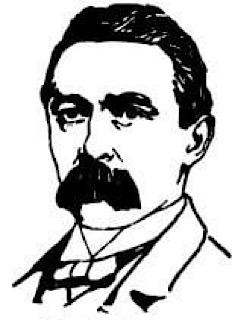
Death of David Sheehy, Irish Nationalist Politician

David SheehyIrish nationalist politician, dies in Dublin on December 17, 1932. He is a member of parliament (MP) from 1885 to 1900 and from 1903 to 1918, taking his seat as a member of the Irish Parliamentary Party (IPP) in the House of Commons of the United Kingdom of Great Britain and Ireland.

Born in Limerick in 1844, Sheehy is the son of Richard Sheehy and Johanna Shea, and is the brother of Mary Sheehy and Fr. Eugene Sheehy. He is a student for the priesthood at the Irish College in Paris, but leaves due to a cholera epidemic and later marries Bessie McCoy. In his youth he is a member of the Irish Republican Brotherhood (IRB) and is active in the Irish National Land League. He is imprisoned on six occasions for his part in the Land War.

At the 1885 United Kingdom general election in Ireland, Sheehy is elected unopposed as MP for South Galway and holds that seat until the 1900 United Kingdom general election in Ireland. His re-election in Galway is unopposed in 1886 and 1895. When the Irish Party splits over the leadership of Charles Stewart Parnell, he joins the anti-Parnellite Irish National Federation majority. At the 1892 United Kingdom general election in Ireland, he is opposed by a Parnellite Irish National League candidate, whom he defeats with a majority of nearly two to one. In the same election he stands in Waterford City, but fails to unseat the Parnellite John Redmond.

The two factions of the Irish Parliamentary Party reunite for the general election in 1900, but Sheehy does not stand again and is out of parliament for the next three years. After the death in August 1903 of James Laurence Carew, the Independent Nationalist MP for South Meath, he is selected as the Irish Parliamentary Party candidate in the resulting by-election in October 1903. Carew had allegedly been elected in 1900 as a result of a series of errors in nominations, and his predecessor John Howard Parnell stands again, this time as an Independent Nationalist. Sheehy wins with a majority of more than two to one, and holds the seat until he stands down at the 1918 United Kingdom general election in Ireland.

Sheehy and his wife, Bessie, have seven children, of whom six survive to adulthood. One of his daughters, Mary (born 1884), marries the MP Tom Kettle and has one daughter, Betty (1913–1996). Hanna (born 1877), becomes a teacher and marries the writer Francis Skeffington. They have one son, Owen, who is seven years old when his father is murdered by the Captain Bowen-Colthurst in Portobello BarracksRathmines, during the 1916 Easter Rising. Kathleen marries Freeman’s Journal and Irish Independent journalist Frank Cruise O’Brien. The contrarian politician and writer Conor Cruise O’Brien is their son. Margaret (born 1879), an elocutionist, actress and playwright, marries solicitor Frank Culhane. They have four children. After his death she marries her godson, the poet Michael Casey. Sheehy’s two sons, Richard and Eugene, are barristers.

The writer James Joyce, who lives nearby as a youth, often visits the family home, 2 Belvedere Place, where musical evenings and theatricals take place every Sunday evening. Joyce entertains the family with Italian songs. In 1900, Margaret writes a play in which the Sheehys and their friends, including Joyce, act. Joyce takes a particular liking to Eugene and has a long-lasting but unrequited crush on Mary. Joyce’s novel Ulysses wittily describes an encounter between Sheehy’s wife, Bessie, and Father John Conmee, SJ, rector of Clongowes Wood College. Their daughter Mary is the spéirbhean longingly pursued by the protagonist in the story “Araby” in Joyce’s collection Dubliners. Another daughter, Kathleen, is possibly the model for the mockingly nationalist Miss Ivors in the story “The Dead“, which concludes Dubliners.

When Sheehy dies at the age of 88 in Dublin on December 17, 1932, it is reported that he has been the oldest surviving member of the Irish Parliamentary Party.


Leave a comment

Birth of Edmund Dwyer Gray, Journalist & Politician

Edmund William Dwyer Gray, Irish newspaper proprietor, politician and MP in the House of Commons of the United Kingdom of Great Britain and Ireland, is born on December 29, 1845, in Dublin. He is also Lord Mayor of Dublin and later Sheriff of Dublin City and becomes a strong supporter of Charles Stewart Parnell.

Gray is the second son of Sir John Gray and his wife, Anna Dwyer. He has three brothers and two sisters. After receiving his education, he joins his father in managing the Freeman’s Journal, the oldest nationalist newspaper in Ireland. When his father dies in 1875, he takes over proprietorship of the Journal, and his family’s other newspaper properties such as the Belfast Morning News and the Dublin Evening Telegraph.

In 1868, Gray saves five people from drowning in a wrecked schooner at Killiney Bay, an action for which he receives the Tayleur Fund Gold Medal for bravery from the Royal Humane Society. By coincidence, the rescue is witnessed by his future wife, Caroline Agnes Gray, whom he meets shortly afterwards. Agnes is the daughter of Caroline Chisholm, an English humanitarian renowned for her work in female immigrant welfare in Australia, and although Gray is descended from a Protestant family, he converts to Catholicism to marry her. The wedding in London on July 17, 1869, is conducted by the Bishop of Northampton, Francis Amherst. The couple has one son, Edmund Dwyer-Gray, who eventually takes over from his father as proprietor of his newspapers and goes on to become Premier of Tasmania.

From 1875 to 1883, Gray serves as a member of the Dublin Corporation, and in 1880 serves a term as Lord Mayor of Dublin. Unusual for an Irish nationalist politician, he is very much focused on urban rather than rural affairs, and like his father is heavily involved in public health and water provision for Dublin. He also promotes reform in the municipal health system.

Gray unsuccessfully runs for his father’s seat of Kilkenny City at Westminster in the 1875 by-election that follows Sir John Gray’s death. He wins a later by-election in 1877, becoming a Member of Parliament representing Tipperary for the Home Rule League. At the 1880 United Kingdom general election, he is elected for County Carlow. At the 1885 United Kingdom general election, as a member of the Irish Parliamentary Party (IPP), he wins representation of both County Carlow and the new constituency of Dublin St. Stephen’s Green and chooses to represent the latter.

Gray is imprisoned for six weeks in 1882 for remarks made in the Freeman’s Journal with regard to the composition of the jury in the case of a murder trial. He is actually Sheriff of Dublin City at the time of his imprisonment and, because of the conflict of office, is taken into custody by the city coroner. The defendant in the case in question is later hanged.

A heavy drinker and asthma sufferer, Gray dies at his home, Pembroke House, Upper Mount Street, Dublin, on March 27, 1888, at the age of 42 following a short illness. He is buried at Glasnevin Cemetery in Dublin.


Leave a comment

Birth of T. P. O’Connor, Politician & Journalist

Thomas Power O’Connor, PC, Irish nationalist politician and journalist known as T. P. O’Connor and occasionally as Tay Pay (mimicking his own pronunciation of the initials T. P.), is born in Athlone, County Westmeath, on October 5, 1848. He serves as a Member of Parliament (MP) in the House of Commons of the United Kingdom of Great Britain and Ireland for nearly fifty years.

O’Connor is the eldest son of Thomas O’Connor, an Athlone shopkeeper, and his wife Teresa (née Power), the daughter of a non-commissioned officer in the Connaught Rangers. He is educated at The College of the Immaculate Conception in Athlone, and Queen’s College Galway, where he wins scholarships in history and modern languages and builds up a reputation as an orator, serving as auditor of the college’s Literary and Debating Society.

O’Connor enters journalism as a junior reporter on Saunders’ Newsletter, a Dublin journal, in 1867. In 1870, he moves to London and is appointed a sub-editor on The Daily Telegraph, principally on account of the utility of his mastery of French and German in reportage of the Franco-Prussian War. He later becomes London correspondent for the New York Herald. He compiles the society magazine Mainly About People (M.A.P.) from 1898 to 1911.

O’Connor is elected Member of Parliament for Galway Borough in the 1880 United Kingdom general election, as a representative of the Home Rule League, which is under the leadership of William Shaw, though virtually led by Charles Stewart Parnell, who wins the party’s leadership a short time later. At the next general election in 1885, he is returned both for Galway Borough and for the Liverpool Scotland constituencies, which has a large Irish population. He chooses to sit for Liverpool and represents that constituency in the House of Commons from 1885 until his death in 1929. He remains the only British MP from an Irish nationalist party ever to be elected to a constituency outside of the island of Ireland. He continues to be re-elected in Liverpool under this label unopposed in the 1918, 1922, 1923, 1924 and 1929 general elections, despite the declaration of a de facto Irish Republic in early 1919, and the establishment by the 1921 Anglo-Irish Treaty of a quasi-independent Irish Free State in late 1922.

From 1905, O’Connor belongs to the central leadership of the United Irish League. During much of his time in parliament, he writes a nightly sketch of proceedings there for The Pall Mall Gazette. He becomes “Father of the House,” with unbroken service of 49 years, 215 days. The Irish Nationalist Party ceases to exist effectively after the Sinn Féin landslide of 1918, and thereafter he effectively sits as an independent. On April 13, 1920, he warns the House of Commons that the death on hunger strike of Thomas Ashe will galvanise opinion in Ireland and unite all Irishmen in opposition to British rule.

O’Connor founds and is the first editor of several newspapers and journals: The Star, the Weekly Sun (1891), The Sun (1893), M.A.P. and T.P.’s Weekly (1902). In August 1906, he is instrumental in the passing by Parliament of the Musical Copyright Act 1906, also known as the T.P. O’Connor Bill, following many of the popular music writers at the time dying in poverty due to extensive piracy by gangs during the piracy crisis of sheet music in the early 20th century. The gangs often buy a copy of the music at full price, copy it, and resell it, often at half the price of the original. The film I’ll Be Your Sweetheart (1945), commissioned by the British Ministry of Information, is based on the events of the day.

O’Connor is appointed as the second president of the British Board of Film Censors (BBFC) in 1916 and appears in front of the Cinema Commission of Inquiry (1916), set up by the National Council of Public Morals where he outlines the BBFC’s position on protecting public morals by listing forty-three infractions, from the BBFC 1913–1915 reports, on why scenes in a film may be cut. He is appointed to the Privy Council by the first Labour government in 1924. He is also a Fellow of the Chartered Institute of Journalists, the world’s oldest journalists’ organisation. It continues to honour him by having a T.P. O’Connor charity fund.

In 1885, O’Connor marries Elizabeth Paschal, the daughter of a judge of the Supreme Court of Texas.

O’Connor dies in London on November 18, 1929, and is buried at St. Mary’s Catholic Cemetery, Kensal Green, in north-west London. He is the last Father of the House to die as a sitting MP until Sir Gerald Kaufman in 2017.