seamus dubhghaill

Promoting Irish Culture and History from Little Rock, Arkansas, USA


Leave a comment

Birth of Eamonn Andrews, Radio & Television Presenter

eamonn-andrews

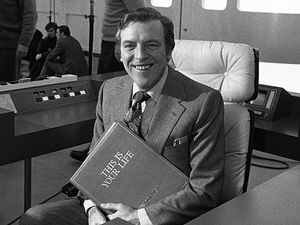
Eamonn Andrews, radio and television presenter considered to be Ireland’s first media superstar, is born in Synge Street, Dublin, on December 19, 1922.

Andrews is educated at Synge Street CBS and begans his career as a clerk in an insurance office. He is a keen amateur boxer and wins the Irish junior middleweight title in 1944.

In 1946, he becomes a full-time freelance sports commentator, working for Radio Éireann, Ireland’s national broadcaster. In 1950, he begins presenting programmes for the BBC, being particularly well known for boxing commentaries, and soon becomes one of television’s most popular presenters. He begins hosting the game show What’s My Line? in 1951.

Throughout the 1950s, he commentates on the major British heavyweight fights on the BBC Light Programme, with inter-round summaries by W. Barrington Dalby. On January 20, 1956, he reaches No. 18 in the UK Singles Chart with a “spoken narrative” recording named “The Shifting Whispering Sands (Parts 1 & 2),” which is produced by George Martin with musical backing by the Ron Goodwin Orchestra. The song later reappears on Kenny Everett‘s compilation album The World’s Worst Record Show, which is released in June 1978.

Between 1955 and 1964, Andrews presents the long-running Sports Report on BBC’s Light Programme, now Radio 2. In 1965, he leaves the BBC to join the ITV contractor ABC, where he pioneers the talk show format in the UK. He hosts a chat show on ITV, The Eamonn Andrews Show, for five years. He is known for coming up with off-the-cuff linkings that do not work such as, “Speaking of cheese sandwiches, have you come far?” This is parodied by the character Seamus Android on Round the Horne in the 1960s, performed by Bill Pertwee. In the 1960s he presents Thames Television‘s Today news magazine programme.

Andrews is probably best known as the presenter of the UK’s version of This Is Your Life, between its inception in 1955 and his death in 1987, when he is succeeded by Michael Aspel, who had also succeeded Andrews as host of Crackerjack more than two decades earlier. Andrews becomes the very first This Is Your Life subject on British television when he is surprised by the show’s creator, Ralph Edwards. Andrews also creates a long-running panel game called Whose Baby? that originally runs on the BBC and later on ITV. He is a regular presenter of the early Miss World pageants.

Andrews’ chairs the Radio Éireann Authority, now the RTÉ Board, between 1960 and 1964, overseeing the introduction of State television to Ireland and establishing the Irish State broadcaster as an independent semi-state body. About this time, he also acquires a number of business interests in Ireland, including recording studios and a dance hall.

After months of illness during 1987, originally caused by a virus contracted during an airline flight, but which is not recognised at the time, he dies from heart failure on November 5, 1987, at the age of 64, at Cromwell Hospital, London. He had recorded his last edition of This Is Your Life six days previously on October 30, 1987, surprising Crossroads actress Jane Rossington. After his death, the show, and two others that have yet to be broadcast, are postponed until, with his widow’s permission, they are broadcast in January 1988. His widow, Gráinne, whom he married in 1951, dies 18 months later. They had three adopted children.

His contribution to U.K. radio is commemorated in The Radio Academy Hall of Fame. Andrews appears as the linking narrator who introduces the unrelated segments that comprise the portmanteau film, Three Cases of Murder (1955).


Leave a comment

Birth of Pianist Charles Lynch

charles-lynch

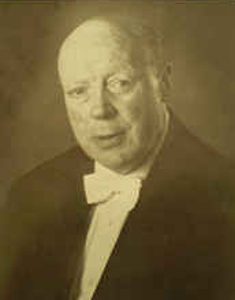
Charles Edgeworth Cagney Lynch, Irish pianist who premiers works by several important 20th-century composers, is born in Parkgariff, County Cork, on October 22, 1906.

Lynch’s father is a British army colonel and his mother comes from a well-known Cork business dynasty, the Suttons. While still a young boy, the family moves to Greenock in western Scotland and it is there, at the Tontine Hotel, that the young pianist gives his first public recital at the age of nine. When he is fifteen, he wins a scholarship to the Royal Academy of Music in London, where he studies under York Bowen and, later, Egon Petri.

Lynch becomes a popular recitalist in London during the 1920s and 1930s. He gives the first performance in England of Sergei Rachmaninoff‘s Piano Sonata No. 2 in B flat minor, having been coached beforehand by the composer. Sir Arnold Bax‘s Fourth Piano Sonata (1932) is dedicated to the 26-year-old Lynch, whom Bax later describes as “Ireland’s most imaginative pianist.” In addition to concert recitals he broadcasts regularly with the BBC and, in 1937, acts as assistant to Sir Thomas Beecham at Covent Garden. Lynch is the Ballet Rambert‘s pianist for many years, having helped Marie Rambert form the company.

A pacifist, Lynch returns to Ireland following the outbreak of World War II, where he becomes the country’s premier concert pianist. During this phase of his career he premiers a number of works by leading Irish composers, including Brian Boydell‘s Sonata for Cello and Piano (1945) and Sean Ó Riada‘s Nomos No. 4 (1959). Lynch also performs in the world première of English composer Ernest John Moeran‘s Cello Sonata in A minor, given in Dublin in May 1947. He is joined by the composer’s wife, cellist Peers Coetmore.

In February 1971 at Trinity College, Dublin, he plays the entire set of Franz Liszt‘s transcriptions of Beethoven’s symphonies over four successive Saturday evenings.

Lynch continues to give public recitals throughout Ireland until shortly before his death at the age of 77. He also lectures in music at University College Cork and gives masterclasses at the Cork School of Music. In 1982, Lynch receives a doctorate in music from the National University of Ireland.

Lynch’s technique is remarkable for the stillness with which he sits, making the most difficult of music seem almost technically unremarkable. His recorded legacy is small, but includes music by Samuel Barber, Ernest John Moeran‘s Violin Sonata (with Geraldine O’Grady, violin) as well as music by Irish composers such as Aloys Fleischmann.

Toward the end of his life he lives in very reduced circumstances. He dies in Cork on September 15, 1984 at St. Finbarr’s Hospital and is buried near Sir Arnold Bax in St. Finbarrs Cemetery, Glasheen Road, Cork.