seamus dubhghaill

Promoting Irish Culture and History from Little Rock, Arkansas, USA


Leave a comment

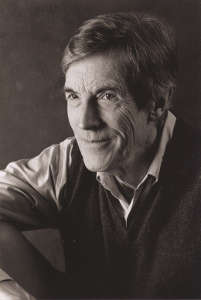
Funeral of Actor Tony Doyle

tony-doyle

Actors from every genre of stage and screen show come together in the chapel at Terenure College in Dublin on February 4, 2000, for the funeral of Irish television and film actor Tony Doyle.

Doyle is born on January 16, 1942, in Ballyfarnon, County Roscommon. He attends Belcamp College, Dublin as a boarder before going on to University College Dublin, which he does not finish.

Doyle first comes to prominence playing a liberal Catholic priest, Father Sheehy, in RTÉ‘s iconic rural drama The Riordans. He appears in such popular shows as Coronation Street, Between the Lines, 1990, Children of the North and Ballykissangel. He wins an Irish Film and Television Academy award for best leading performance for his role in the 1998 miniseries Amongst Women. He also appears in the first Minder episode, “Gunfight at the OK Laundrette,” playing a drunken Irishman.

Doyle’s most famous film role is as the head of the Special Air Service (SAS), Colonel Hadley, in the 1982 British film Who Dares Wins. His other film roles include appearances in Ulysses (1967), Quackser Fortune Has a Cousin in the Bronx (1970), Loophole (1981), Eat the Peach (1986), Secret Friends (1991), Damage (1992), Circle of Friends (1995), and as Tom French in I Went Down (1997).

Tony Doyle collapses at his home and is taken to St. Thomas’ Hospital in Lambeth, London, England where he dies around 2:00 AM on January 28, 2000.

Brian Quigley, Doyle’s Ballykissangel character, is written out of the show after Doyle’s death in the first episode of the final series where Quigley fakes his own suicide and flees to Brazil.

The Tony Doyle Bursary for New Writing is launched by the BBC following his death. Judges include his friend and Ballykissangel co-star Lorcan Cranitch. Cranitch subsequently stars in the BBC detective series McCready and Daughter, which had been written with Doyle in mind.


Leave a comment

The Brighton Hotel Bombing

The Brighton hotel bombing, a Provisional Irish Republican Army (IRA) assassination attempt against the top tier of the British government, takes place on October 12, 1984, at the Grand Brighton Hotel in Brighton, England. A long-delay time bomb is planted in the hotel by IRA member Patrick Magee, with the intent of killing Prime Minister Margaret Thatcher and her cabinet, who are staying at the hotel for the Conservative Party conference. Although Thatcher narrowly escapes injury, five people are killed including a sitting Conservative MP, and 31 are injured.

Patrick Magee stays in the hotel under the pseudonym Roy Walsh during the weekend of September 14-17, 1984. During his stay, he plants the bomb under the bath in his room, number 629. The device, described as a “small bomb by IRA standards,” is fitted with a long-delay timer made from videocassette recorder components and a Memo Park Timer safety device. The device may have avoided detection by sniffer dogs due to it being wrapped in cling film to mask the smell of the explosive.

The bomb detonates at approximately 2:54 AM (BST) on October 12. The midsection of the building collapses into the basement, leaving a gaping hole in the hotel’s facade. Firemen say that many lives are likely saved because the well-built Victorian hotel remained standing. Margaret Thatcher is still awake at the time, working on her conference speech for the next day in her suite. The blast badly damages her bathroom but leaves her sitting room and bedroom unscathed. Both she and her husband escape injury. She changes her clothes and is led out through the wreckage along with her husband and her friend and aide Cynthia Crawford and driven to Brighton police station.

At about 4:00 AM, as Thatcher leaves the police station, she gives an impromptu interview to the BBC‘s John Cole, saying that the conference would go on as scheduled. Alistair McAlpine persuades Marks & Spencer to open early at 8:00 AM so those who have lost their clothes in the bombing can purchase replacements. Thatcher goes from the conference to visit the injured at the Royal Sussex County Hospital.

Five people are killed, none of whom are government ministers. But a Conservative MP, Sir Anthony Berry, is killed, along with Eric Taylor, North-West Area Chairman of the Conservative Party, Lady Jeanne Shattock, wife of Sir Gordon Shattock, Western Area Chairman of the Conservative Party, Lady Muriel Maclean, wife of Sir Donald Maclean, President of the Scottish Conservatives, and Roberta Wakeham, wife of Parliamentary Treasury Secretary John Wakeham. Donald and Muriel Maclean are in the room in which the bomb explodes, but Mr. Maclean survives.

Several more, including Walter Clegg, whose bedroom is directly above the blast, and Margaret Tebbit, the wife of Norman Tebbit, who is then President of the Board of Trade, are left permanently disabled. Thirty-four people are taken to the hospital and recover from their injuries. When hospital staff asks Norman Tebbit, who is less seriously injured than his wife, whether he is allergic to anything, he is said to answer “bombs.”


Leave a comment

Birth of Anglo-Irish Poet Richard Murphy

Richard Murphy, Anglo-Irish poet, is born on August 6, 1927, in County Mayo. He is a member of Aosdána and currently lives in Sri Lanka.

Murphy is born to an Anglo-Irish family at Milford House, near the Mayo-Galway border. His childhood in Ireland is documented in the film The Other Irish Travellers made by his niece, Fiona Murphy.

He spends much of his early childhood in Ceylon, now Sri Lanka, where his father, William Lindsay Murphy, serves in the Colonial Service and is active as mayor of Colombo and Governor-General of the Bahamas, in succession to the Duke of Windsor. He first receives his education at Canterbury School and Wellington College, Berkshire. He wins a scholarship to Magdalen College, Oxford, at 17, where he studies English under C.S. Lewis. He is later educated at the Sorbonne, and between 1953 and 1954, he runs a school in Crete. In his Archaeology of Love (1955), Murphy reflects on his experiences in England and the Continent.

In 1954, Murphy settles at Cleggan, a village on the coast of Galway where fishing has been abandoned after a famous sailing disaster. Several years later, in 1959, he purchases and renovates the Ave Maria, a traditional Galway hooker type boat, from Inishbofin fisherman, Michael Schofield, which he uses to ferry visitors to the island. Taking the first-hand accounts of survivors of the sailing disaster, he weaves the material into a long tour de force poem which closes his first collection Sailing to an Island, published in the early 1960s by Faber & Faber. In 1969, he purchases Ardoileán (High Island), a small island in the vicinity of Inishbofin.

Murphy enjoys commissions for his poems from the BBC which prompts him to start on his long book-length sequence The Battle of Aughrim. Ostensibly about the 18th century triumph of Dutch-led Protestant forces over the Irish and French Catholic forces, the poem deals obliquely not only with the brewing strife in Ulster of the 1960s, but also with the issues of the Vietnam War. Its episodic structure is highly influential on poetic sequences subsequently published by Montague and Heaney.

Since 1971 Murphy has been a poet-in-residence at nine American universities. He lives in Sri Lanka, having previously divided his time between Dublin and Durban, South Africa, where his daughter and her family reside. He is the maternal grandfather of YouTuber Caspar Lee. In 2002, a memoir of his life and times, The Kick, is published by Granta, constructed from detailed diaries kept over the course of five decades.


Leave a comment

Birth of Thomas Bodkin, Art Historian & Collector

Professor Thomas Patrick Bodkin, lawyer, art historian, art collector and curator, is born in Dublin on July 21, 1887. He serves as Director of the National Gallery of Ireland in Dublin from 1927 to 1935 and founding Director of the Barber Institute of Fine Arts in Birmingham, England from 1935 until 1952, where he acquires the nucleus of the collection described by The Observer as “the last great art collection of the twentieth century.”

Bodkin is the eldest son of Matthias McDonnell Bodkin, a nationalist journalist, judge and Member of Parliament. Graduating from the Royal University of Ireland in 1908 he practises law from 1911 until 1916 while collecting art privately, influenced by his uncle Sir Hugh Lane. With the death of Lane in the sinking of the RMS Lusitania in 1915, Bodkin is charged with ensuring that Lane’s collection of art is displayed in Dublin, a dispute that would only finally be settled in 1957 and about which Bodkin is to write Hugh Lane and his Pictures in 1932.

Bodkin leaves the legal profession in 1916 to become a Governor of the National Gallery of Ireland, being appointed Director in 1927. He also serves in 1926 on the committee that commissions the design of the new coinage of the Republic of Ireland from Percy Metcalfe.

In 1935 Bodkin leaves Ireland upon being appointed Director of the newly established Barber Institute of Fine Arts and Barber Professor of Fine Art at the University of Birmingham. The funds available to the Barber Institute for the purchase of new works compare favourably even to some national museums and Bodkin is able to make a string of exceptional purchases in the depressed art market around the time of World War II. The collection that in 1935 numbers just seven works, by 1939 holds major pieces such as Tintoretto‘s Portrait of a Youth (1554), Simone Martini‘s St. John the Evangelist (1320), Nicolas Poussin‘s Tancred and Erminia (1634) and James Abbott McNeill Whistler‘s Symphony in White No. III (1867). Bodkin retires in 1952 but retains control over acquisitions until 1959. His successor as Director and Professor, Ellis Waterhouse, wistfully refers to Bodkin’s wayward later purchases as “Acts of Bod.”

Bodkin is also an active broadcaster and author, publishing personal reminiscences and translations of modern French poetry as well as works of art history and criticism. In particular, his The Approach to Painting (1927), an introduction for a popular audience, runs through many editions over the succeeding thirty years.

A few years before his death Bodkin appears on the BBC panel show Animal, Vegetable or Mineral? identifying curiosities from around the world, along with museum curator Hugh Shortt and archaeologist Mortimer Wheeler.

Bodkin is awarded the Civil Division of the Order of St. Gregory the Great for services to his church. A bust of Bodkin, previously exhibited at the Royal Academy in 1958, is donated to the Barber Institute of Fine Arts by its sculptor, Sir Charles Wheeler, President of the Royal Academy and a personal friend of Bodkin’s, on the latter’s death.

Bodkin is the subject of This Is Your Life in March 1960 when he was surprised by Eamonn Andrews at the BBC’s Costa Green Studios in Birmingham.

Thomas Bodkin dies in Birmingham, England on April 24, 1961. His remains are interred in Glasnevin Cemetery, Dublin.


Leave a comment

Birth of Actor David Kelly

David Kelly, Irish actor who has regular roles in several film and television works from the 1950s onwards, is born in Dublin on July 11, 1929. One of the most recognisable voices and faces of Irish stage and screen, Kelly is known to Irish audiences for his role as Rashers Tierney in Strumpet City, to British audiences for his roles as Cousin Enda in Me Mammy and as the builder Mr. O’Reilly in Fawlty Towers, and to American audiences for his role as Grandpa Joe in the film Charlie and the Chocolate Factory. Another notable role is as Michael O’Sullivan in Waking Ned.

Kelly is educated at Dublin’s Synge Street CBS Christian Brothers school. He begins acting at the age of eight at the city’s Gaiety Theatre, and trains at The Abbey School of Acting. As a backup career, he additionally trains as a draughtsman and calligrapher, and also learns watercolor painting. He appears onstage in the original production of Brendan Behan‘s The Quare Fellow, and gains his first major career attention in Samuel Beckett‘s Krapp’s Last Tape at the Dublin’s Abbey Theatre in 1959. By then he has made his screen debut in a small part in director John Pomeroy’s 1958 film noir Dublin Nightmare.

He becomes a familiar face on British television beginning in the 1960s with the BBC comedy Me Mammy, opposite Milo O’Shea and Anna Manahan. He goes on to often-memorable guest roles on such series as Oh Father!, Never Mind the Quality, Feel the Width, and On the Buses, and particularly during the 1970s with a long-running role as the one-armed dishwasher Albert Riddle in the Man About the House spin-off Robin’s Nest. He also has a regular long running role alongside Bruce Forsyth in both series of the comedy Slingers Day from 1986 to 1987.

He gains some of his greatest recognition in 1975, playing inept builder Mr. O’Reilly on the second episode of Fawlty Towers. He is in the voice cast of The Light Princess, a partly animated, hour-long family fantasy that airs on the BBC in 1978.

In Ireland, he may be most famous for his portrayal of the character “Rashers” Tierney in the 1980 RTÉ miniseries Strumpet City, which stars Peter O’Toole, Cyril Cusack and Peter Ustinov. He goes on to have starring roles in television shows such as Emmerdale Farm in the 1980s and Glenroe in the 1990s, as well as playing the grandfather in Mike Newell‘s film Into the West (1992).

Following his appearance as Michael O’Sullivan in the 1998 film Waking Ned, Kelly plays roles in such films as Tim Burton‘s Charlie and the Chocolate Factory, in which he plays Grandpa Joe and Agent Cody Banks 2: Destination London. He plays title character Frank Kovak in the mystery film The Kovak Box, in a rare villainous role. Stardust, released in 2007, is his final film. He also does extensive radio work, including a guest appearance on the BBC Radio 4 series Baldi.

Kelly wins a 1991 Helen Hayes Award for Outstanding Supporting Performer, Non-Resident Production, for a Kennedy Center revival of The Playboy of the Western World. As well, he earns a Screen Actors Guild Award nomination for the 1998 film Waking Ned. In 2005, he wins the Irish Film & Television Academy‘s Lifetime Achievement Award, in addition to earning a nomination for Best Supporting Actor for the film Charlie and the Chocolate Factory.

David Kelly dies after a short illness on February 12, 2012 at age of 82. The Irish Times refers to him as the “grand old man of Irish acting.” A Catholic funeral mass takes place on February 16, 2012 at the Church of the Miraculous Medal, in his hometown of Dublin. He is cremated at Mount Jerome Cemetery and Crematorium.


Leave a comment

Birth of Denis Johnston, Writer & Playwright

Irish writer William Denis Johnston is born in Ballsbridge, Dublin on June 18, 1901. He primarily writes plays, but also works of literary criticism, a book-length biographical essay of Jonathan Swift, a memoir and an eccentric work on cosmology and philosophy.

Johnston is a protégé of William Butler Yeats and George Bernard Shaw, and has a stormy friendship with Seán O’Casey. He is a pioneer of television and war reporting. He works as a lawyer in the 1920s and 1930s before joining the BBC as a writer and producer, first in radio and then in the fledgling television service. His broadcast dramatic work include both original plays and adaptation of the work of many different writers.

Johnston’s first play, The Old Lady Says “No!”, helps establish the worldwide reputation of the Dublin Gate Theatre. His second, The Moon in the Yellow River, has been performed around the globe in numerous productions featuring such actors as Jack Hawkins, Claude Rains and Errol Flynn, although not all in the same production. He plays a role in the 1935 film version of John Millington Synge‘s Riders to the Sea.

During World War II Johnston serves as a BBC war correspondent, reporting from El Alamein to Buchenwald. For this he is awarded an OBE, a Mentioned in Despatches and the Yugoslav Partisans Medal. He then becomes Director of Programmes for the television service.

Johnston later moves to the United States and teaches at Mount Holyoke College, Smith College and other universities. He keeps extensive diaries throughout his life, now deposited in the Library of Trinity College, Dublin. These, together with his many articles and essays, give a distinctive picture of his times and the people he knows. Another archive of his work is held at the library of Ulster University at Coleraine. He receives honorary degrees from the Ulster University and Mount Holyoke College and is a member of Aosdána.

The Denis Johnston Playwriting Prize is awarded annually by Smith College Department of Theatre for the best play, screen play, or musical written by an undergraduate at Smith, Mount Holyoke, Amherst College, Hampshire College and the University of Massachusetts Amherst.

Johnston’s war memoir Nine Rivers from Jordan reaches The New York Times Bestseller List and is cited in the World Book Encyclopedia‘s 1950s article on World War II under “Books to Read”, along with Churchill, Eisenhower et al. Joseph Ronsley cites an unnamed former CBS Vietnam correspondent who calls the book the “Bible”, carrying it with him constantly, “reading it over and over in the field during his tour of duty.”

Denis Johnston dies on August 8, 1984, in Ballybrack, Dublin. His daughter Jennifer Johnston is a respected novelist and playwright.


Leave a comment

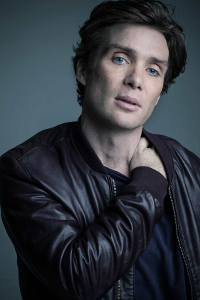
Birth of Cillian Murphy, Stage & Screen Actor

Cillian Murphy, actor of stage and screen, is born in Douglas, County Cork, on May 25, 1976.

Since making his debut in his home country in the late 1990s, Murphy has also become a presence in British and American cinemas noted by critics for his performances in many independent and mainstream films. He is best known as Jim in 28 Days Later (2002), the Scarecrow in The Dark Knight Trilogy (2005–12), Jackson Rippner in Red Eye (2005), Robert Capa in Sunshine (2007), Robert Fischer in Inception (2010) and Thomas Shelby in the BBC series Peaky Blinders.

Murphy begins his performing career as a rock musician. After turning down a record deal, he makes his professional acting debut in the play Disco Pigs in 1996. While continuing with stage work, he also begins appearing in independent films, first coming to international attention in 2002 as the hero of Danny Boyle‘s post-apocalyptic film 28 Days Later. Murphy’s profile continues to grow in 2005 when he appears in a series of successful films including as the Scarecrow in Christopher Nolan‘s 2005 blockbuster Batman Begins, a role he reprises in The Dark Knight (2008) and The Dark Knight Rises (2012), and in the action-thriller Red Eye (2005). For his performance as a transgender woman in Breakfast on Pluto (2005), Murphy receives a Golden Globe award nomination for Best Actor in a Musical or Comedy.

In 2006, Murphy plays the lead role in Ken Loach‘s Palme d’Or-winning film The Wind That Shakes the Barley. He teams up again with Boyle for the science-fiction film Sunshine (2007), and with Nolan for the highly successful thriller Inception (2010). Since 2013, Murphy has played the lead in the BBC gangster series Peaky Blinders. He continues to work on stage and wins the Drama Desk Award for Outstanding Solo Performance for Misterman in 2011.

In 2011 Murphy becomes patron of the UNESCO Child and Family Research Centre at the National University of Ireland Galway. He is closely associated with the work of Professor Pat Dolan Director UCFRC and UNESCO Chair in Children, Youth and Civic Engagement.

Murphy lives with his wife, Yvonne McGuinness, and two children in Monkstown, County Dublin.


Leave a comment

Birth of Enya, Singer & Songwriter

Eithne Pádraigín Ní Bhraonáin, singer, songwriter, musician, and producer better known professionally as Enya, is born into a musical family in Dore, GweedoreCounty Donegal on May 17, 1961.

Enya’s father, Leo Brennan, is the leader of the Slieve Foy Band, an Irish showband, and runs Leo’s Tavern in Meenaleck. Her mother, Máire Brennan (née Duggan), who has Spanish roots, is an amateur musician who plays in Leo’s band and teaches music at Gweedore Community School. Her maternal grandfather, Aodh, is the founder of the Gweedore Theatre company.

Enya begins her music career when she joins her family’s Celtic band Clannad in 1980 on keyboards and backing vocals. She leaves in 1982 with their manager and producer Nicky Ryan to pursue a solo career, with Ryan’s wife Roma Ryan as her lyricist. Enya develops her distinct sound over the following four years with multi-tracked vocals and keyboards with elements of new age, Celtic, classical, church, and folk music. She sings in ten languages.

Enya’s first projects as a solo artist include soundtrack work for The Frog Prince (1984) and the 1987 BBC documentary series The Celts, which is released as her debut album, Enya (1987). She signs with Warner Music UK which grants her considerable artistic freedom and minimal interference from the label. The commercial and critical success of Watermark (1988) propels her to worldwide fame, helped by its international top 10 hit single Orinoco Flow. This is followed by the multi-million selling albums Shepherd Moons (1991), The Memory of Trees (1995), and A Day Without Rain (2000). Sales of the latter and its lead single, Only Time, surge in the United States following its use in the media coverage of the September 11 attacks. Following Amarantine (2005) and And Winter Came… (2008), Enya takes an extended break from music. She returns in 2012 and releases Dark Sky Island (2015).

Enya is known for her private lifestyle and has yet to undergo a concert tour. She is Ireland’s biggest selling solo artist and second overall behind U2, with a discography that has sold 26.5 million certified albums in the United States and an estimated 80 million albums worldwide, making her one of the best-selling music artists of all time. A Day Without Rain (2000) remains the best-selling new age album with an estimated 16 million copies sold worldwide.

Enya has won several awards throughout her career, including seven World Music Awards, four Grammy Awards for Best New Age Album, and an Ivor Novello Award. She is nominated for an Academy Award and a Golden Globe Award for May It Be, a song she writes for the film The Lord of the Rings: The Fellowship of the Ring (2001).


Leave a comment

Sinn Féin Votes to Accept the Good Friday Agreement

Members of Sinn Féin, the political wing of the republican Irish Republican Army (IRA), vote to accept the Good Friday Agreement on May 10, 1998, effectively acknowledging the north-south border. This marks a major shift in modern republicanism as, up until now, Sinn Féin has regarded participation in a Northern Ireland body as a tacit acceptance of partition.

The agreement comes at the party’s annual conference, which includes about thirty IRA prisoners granted special leave in order to vote.

The British and Irish governments welcome the decision to formally approve the peace agreement signed at Stormont in April to create the Northern Ireland Assembly and new cross-border institutions. Taoiseach Bertie Ahern says he now looks forward to an overwhelming “yes” vote in referendums on the deal later in the month. The British government praises Sinn Féin leader Gerry Adams saying the decision marks a final realisation that violence does not pay.

Secretary of State for Northern Ireland Mo Mowlam expresses her delight at the outcome, “I recognise how significant this decision is for republicans and pay tribute to the leadership of Gerry Adams in bringing his party to support the agreement, north and south of the border.” In what she describes as an “exceptional decision,” the IRA’s commanding officer, Patrick Wilson, who is confined in HM Prison Maze, is among the 30 republican inmates freed for the conference in an effort to bring about a “Yes” vote.

Sinn Féin also votes to amend its constitution to allow members to sit in a new Northern Ireland Assembly after Adams tells his members they have a real chance to influence the strategy of the party and the way towards a united Ireland.

Martin McGuinness, one of Sinn Féin’s UK Members of Parliament (MP), tells the BBC he is optimistic about achieving a “Yes” vote in the referendum due to be held on May 22. “I think there are concerns naturally among a small section of the Sinn Féin membership, but I have to say I think the mood all over the island is that moving into the assembly to further our republican objectives towards our ultimate goal of a united Ireland is at this moment in time the sensible thing to do,” he says.

(Pictured: Sinn Féin MP Martin McGuinness and Sinn Féin president Gerry Adams)


Leave a comment

Birth of Sir Kenneth Percy Bloomfield in Belfast

Sir Kenneth Percy Bloomfield, former head of the Northern Ireland Civil Service who is later a member of the Independent Commission for the Location of Victims’ Remains and for a time Northern Ireland Victims Commissioner, is born in Belfast on April 15, 1931. He has also held a variety of public sector posts in Northern Ireland and elsewhere.

Bloomfield is born to English parents and grows up close to Neill’s Hill railway station. Between the years of 1943 and 1949, he attends the Royal Belfast Academical Institution and later goes on to read Modern History at St. Peter’s College, Oxford. On September 12, 1988, he and his wife are the targets of an Irish Republican Army (IRA) attack on their home in CrawfordsburnCounty Down. Neither Bloomfield nor his wife are injured in the blast.

Having joined the Civil Service in 1952, Bloomfield is appointed Permanent Secretary to the power sharing executive in 1974. After the collapse of the executive, he goes on to become Permanent Secretary for the Department of the Environment and the Department of Economic Development, and finally Head of the Northern Ireland Civil Service on December 1, 1984. In that capacity he is the most senior advisor to successive Secretaries of State for Northern Ireland and other Ministers on a wide range of issues. He retires from the post in April 1991.

Since retiring from the Civil Service, Bloomfield has embarked on a life of involvement in a diverse range of organisations. He has taken up roles such as Chairman for the Northern Ireland Legal Services Commission and his alma mater, the Royal Belfast Academical Institution. He has also been involved in the political reform of the States of Jersey and spearheaded the Association for Quality Education, which is fighting to retain academic selection in the Northern Ireland education system. In December 1997 he is asked by the Secretary of State for Northern Ireland, Mo Mowlam, to become the Northern Ireland Victims Commissioner for a fixed term. His role is to produce a report on the way forward for Victims issues in Northern Ireland. His report entitled We Will Remember Them is published in April 1998. From 1991 to 1999 he serves as the BBC‘s National Governor for Northern Ireland.

Bloomfield receives a Knighthood in the 1987 Queen’s Birthday Honours and honorary doctorates from Queen’s University, Belfast, the Open University and the Ulster University. He is also a Member of the Royal Irish Academy.