seamus dubhghaill

Promoting Irish Culture and History from Little Rock, Arkansas, USA


1 Comment

Birth of Edward Martyn, Playwright & Activist

edward-martyn

Edward Martyn, Irish playwright and early republican political and cultural activist, is born in County Galway on January 30, 1859. He serves as the first president of Sinn Féin from 1905 to 1908.

Martyn is the elder son of John Martyn of Tullira Castle, Ardrahan and Annie Mary Josephine (née Smyth) of Masonbrook, Loughrea, both of County Galway. He is educated at Belvedere College, Dublin, and Wimbledon College, London, both Jesuit schools, after which he enters Christ Church, Oxford in 1877, but leaves without taking a degree in 1879. His only sibling, John, dies in 1883.

Martyn begins writing fiction and plays in the 1880s. While his own output is undistinguished, he acquires a well-earned reputation as a noted connoisseur of music, both European classical and Irish traditional. He is a fine musician in his own right, giving memorable performances for guests on an organ he has installed at Tullira. He uses his wealth to benefit Irish culture.

Martyn is reportedly pivotal in introducing William Butler Yeats and Lady Gregory to each other in 1896. The three found the Irish Literary Theatre, for whom Martyn writes his best and most popular plays, The Heather Field and A Tale of a Town. He covers the costs of the company’s first three seasons, which proves crucial to establishing the company and the future of the Abbey Theatre. He later parts ways with Yeats and Gregory, something he later regrets, but remains on warm terms with Lady Gregory until the end of his life.

Martyn is a cousin and friend to George Moore (1852–1933). The two make frequent trips all over Europe, where Moore influences Martyn’s views on modern art, which result in the latter purchasing several works by Edgar Degas, Claude Monet, Jean-Baptiste-Camille Corot and Kitagawa Utamaro, all later donated to the National Gallery of Ireland. Moore does not share Martyn’s fenian ideas nor espousal of violent means to achieve national sovereignty. Their different political opinions eventually drive their friendship apart.

Martyn is descended from Richard Óge Martyn, a leading Irish Confederate, and Oliver Óge Martyn, a Jacobite who fights in the Williamite War in Ireland. Yet by his lifetime, the family are unionists. Martyn’s outlook begins to change in the 1880s after studying Irish history, as well as living through the events of the Irish Land War. He comes out as an Irish republican when he famously refuses to allow “God Save The Queen” to be sung after a dinner party at Tullira. By this stage he is involved with the political work of Maude Gonne and Arthur Griffith and is a vocal opponent of the visit of Queen Victoria to Ireland in 1897. He also protests the visit by Edward VII in 1903, this time as chairman of the People’s Protection Committee. He is the first president of Sinn Féin from 1905 to 1908. In 1908 he resigns from the party and politics in general to concentrate on writing and his other activities.

He is on close personal terms with Thomas MacDonagh, Joseph Mary Plunkett and Patrick Pearse, and deeply mourns their executions in the aftermath of the Easter Rising. A parish hall and church that he founded at Labane, near Tullira, are burned by the Black and Tans. He supports the Anglo-Irish Treaty of 1921.

Martyn dies at Tullira on December 5, 1923, after years of ill health. Friends and family are shocked at a provision in his will that directs that his body be donated for the use of medical science and, after dissection, be buried in an unmarked pauper’s grave. The Palestrina Choir sings at his graveside. He bequeaths his papers to the Carmelites of Clarendon Street in Dublin, who subsequently misplace and lose them. Portraits of Martyn exist by, among others, John Butler Yeats and Sarah Purser. On his death the senior line of the Martyn family dies out. His property is inherited by his cousins, the Smyths of Masonbrook and Lord Hemphill. Tullira is sold by the latter forty years later changing ownership several times since.
Leave a comment

Founding of the American Committee for Relief in Ireland

american-committee-for-relief-in-ireland

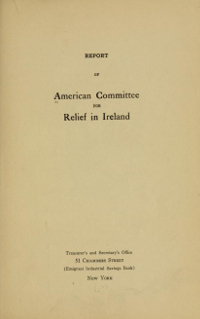
The American Committee for Relief in Ireland (ACRI) is founded through the initiative of Dr. William J. Maloney and others on December 16, 1920, with the intention of giving financial assistance to civilians in Ireland who have been injured or suffer severe financial hardship due to the ongoing Irish War of Independence.

The Committee is only one of several U.S. based philanthropic organisations that emerge following World War I with a view to influencing the post-war settlement from their perspective of social justice, economic development and long term stability in Europe. Some of them concentrate their efforts on events in Ireland, and while activists of Irish ethnicity are well represented, membership is far from confined to Americans of Irish heritage. Apart from the ACRI, bodies such as the American Commission on Irish Independence and the American Commission on Conditions in Ireland raise money and attempt to influence U.S. foreign policy in a manner sympathetic to the goal of Irish secession from the United Kingdom.

This period of Irish political radicalism coincides with a Red Scare in the United States. Jim Larkin, an Irish trade unionist, who has been closely associated with James Connolly in Ireland and with the Wobblies in the U.S., is serving a five-year sentence in Sing Sing prison for promoting his socialist agenda. While his political views differ fundamentally from most of the Sinn Féin leadership, Irish republicanism is seen by many of the American establishment as based on a questionable ideology. During the Irish War of Independence, the activities of Irish-American fund-raising organisations are viewed with suspicion and kept under close scrutiny by the intelligence services including J. Edgar Hoover, head of the General Intelligence Division of the Federal Bureau of Investigation. U.S. policy towards Irish concerns, initially hostile or at best indifferent, become somewhat less so following the 1920 U.S. presidential election and the landslide victory of Warren G. Harding over James M. Cox.

Following the burning of parts of Cork on December 11, 1920 by elements of the British security forces known as the Black and Tans, approaches are made by the city’s Lord Mayor, Donal O’Callaghan, to the American Red Cross for humanitarian assistance. The society, having taken advice from President Woodrow Wilson, the British embassy, the Foreign Office and the British Red Cross, decline at this time to act on his appeal. Numerous organisations and committees across the United States, operating independently in raising humanitarian aid money for Ireland realise that their funds will not be channelled through the U.S. Committee of the Red Cross and so another distribution channel is needed.

Five days after the inferno at Cork, a widely publicised meeting takes place at the Banker’s Club in New York City. It is organised by William Maloney with the intention of establishing a single nationwide organisation. It will have as its goal, explicitly and solely for the purpose of humanitarian relief, the raising and distribution in Ireland of $10 million. The body which soon emerges styles itself “The American Committee for Relief in Ireland.” One of its founding members, Levi Hollingsworth Wood, approaches a Dublin-based businessman and fellow Quaker, James Douglas, requesting his assistance in the local distribution of the funds on a non-partisan basis. In Ireland, Douglas speaks with Laurence O’Neill, the Lord Mayor of Dublin, who in turn contacts senior members of Sinn Féin to inform them of the wishes of the American Committee. These meetings culminate in the establishment of the Irish White Cross, for the purpose of local distribution of the Committee’s funds.


Leave a comment

Assassination of Field Marshal Sir Henry Hughes Wilson

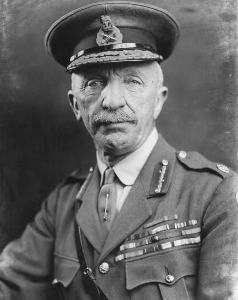
Field Marshal Sir Henry Hughes Wilson is shot and killed by two Irish Republican Army (IRA) men in London on June 22, 1922.

Wilson is born in County Longford and a long-time opponent of the Irish Home Rule movement. He joins the British army in 1884 and sees action during the Boer War. He is assigned to British army headquarters during the infamous Curragh incident and supports the near-mutiny of British officers who refuse to lead troops against Ulster opponents of home rule. He serves in France during the World War I and, when the war ends, continues his staunch support of the Unionist cause while serving as Chief of General Staff. He is a strong supporter of the coercion tactics of the British in Ireland during the Irish War of Independence, even suggesting that the leaders of Sinn Féin be executed. He leaves the army when David Lloyd George decides not to renew his term as chief of staff and is elected Member of Parliament (MP) for North Down as a Conservative in 1922. In Parliament, he urges even stronger coercion methods than those then being carried out by the Black and Tans.

On June 22, 1922, two London-based volunteers of the Irish Republican Army, Reginald Dunne and Joseph O’Sullivan, assassinate Wilson outside his house at 36 Eaton Place at approximately 2:20 PM. He is in full uniform as he is returning from unveiling the Great Eastern Railway War Memorial at Liverpool Street station at 1:00 PM. He has six wounds, two of them fatal wounds to the chest.

Stories later circulate that the first shot misses but rather than taking shelter in the house, he draws his sword and advances on his attackers, who are able to shoot and kill him. These stories often stress that he dies a martyr. His housemaid testifies that she found his drawn sword lying by his side. These details do not feature in the witness accounts by Reginald Dunne, which is smuggled out of prison, the inquest testimony of one of two road menders working nearby, and the taxi driver who had just dropped Wilson off. One of the road mender’s accounts, as published in the Daily Mail, mentions Wilson turning on his attackers with the words “you cowardly swine!” but this is believed to be a possible embellishment by the newspaper.

Two police officers and a chauffeur are also shot as the men attempt to avoid capture. They are then surrounded by a crowd and arrested by other policemen after a struggle. Dunne and O’Sullivan are convicted of murder and hanged on August 10, 1922. On the day Wilson’s killers were hanged, Currygrane, the family homesite in Ballinalee, County Longford is burned to the ground, possibly as a reprisal although possibly as an unrelated part of the unrest in that county.

Wilson’s widow blames the government for his death and is only persuaded to allow government representation at the funeral on the grounds that not to do so would be disrespectful to the King. Wilson’s funeral is a public affair attended by David Lloyd George and the cabinet, Ferdinand Foch, Robert Nivelle and Maxime Weygand from France as well as many of his former army colleagues including John French, Nevil Macready, Douglas Haig and William Robertson. He is buried in the crypt of St. Paul’s Cathedral in London.


4 Comments

Founding of “The Squad” (“The Twelve Apostles”)

the-squad

The Squad, originally nicknamed the Twelve Apostles, an Irish Republican Army (IRA) unit founded by Michael Collins to counter British intelligence efforts during the Irish War of Independence, is officially established on September 19, 1919, at 46 Rutland Square although by this time it has already been in operation for two months and has already carried out two killings.

On April 10, 1919, the First Dáil announces a policy of ostracism of Royal Irish Constabulary men. At the time Sinn Féin official policy is against acts of violence. Boycotting, persuasion, and mild intimidation succeed against many officers. However, others escalate their activities against republicans and in March 1920 Collins asks Dick McKee to select a small group to form an assassination unit.

When the squad is formed, it comes directly under the control of the Director of Intelligence or his deputy and under no other authority. The Squad is commanded by Mick McDonnell.

The original ‘Twelve Apostles’ are Mick McDonnell, Tom Keogh, Jimmy Slattery, Paddy Daly, Joe Leonard, Ben Barrett, Vincent Byrne, Sean Doyle, Paddy Griffin, Eddie Byrne, Mick Reilly, and Jimmy Conroy. After some time, the Squad is strengthened with the addition of Ben Byrne, Frank Bolster, Mick Keogh, Mick Kennedy, Bill Stapleton, and Sam Robinson. They are employed full-time and receive a weekly wage.

Sometimes the squad is strengthened as occasion demands by members of the Intelligence staff, the Active Service Unit, munition workers, and members of the Dublin Brigade.

On July 30, 1919, the first assassination authorised by Michael Collins is carried out when Detective Sergeant “the Dog” Smith is shot near Drumcondra, Dublin. The Squad continues targeting plainclothes police, members of the G Division of the Dublin Metropolitan Police, and occasionally, problematic civil servants. Organisationally it operates as a subsection of Collins’ Intelligence Headquarters. Two of the executions by The Squad are the killing on January 21, 1920, of RIC Inspector William Redmond of the DMP “G” Division and on March 2, 1920, of British double agent John Charles Byrnes.

One of the Apostles’ particular targets is the Cairo Gang, a deep-cover British intelligence group, so called since it has either been largely assembled from intelligence officers serving in Cairo or from the Dublin restaurant called The Cairo, which the gang frequents. Sir Henry Wilson brings in the Cairo Gang in mid-1920, explicitly to deal with Michael Collins and his organization. Given carte blanche in its operations by Wilson, the Cairo Gang adopts the strategy of assassinating members of Sinn Féin unconnected with the military struggle, assuming that this would cause the IRA to respond and bring its leaders into the open.

The most well-known operation executed by the Apostles occurs on Bloody Sunday, November 21, 1920, when British MI5 officers, linked to the Cairo Gang and significantly involved in spying, are shot at various locations in Dublin. Fourteen are killed and six are wounded. In addition to the Twelve Apostles, a larger number of IRA personnel are involved in this operation. The only IRA man captured during the operation is Frank Teeling. In response to the killings, the Black and Tans retaliate by shooting up a Gaelic football match between Dublin and Tipperary at Croke Park, killing fourteen civilians including one of the players, Michael Hogan, and wounding sixty-eight. The Hogan stand at Croke Park is named after him.

In May 1921, after the IRA’s Dublin Brigade takes heavy casualties during the burning of the Custom House, the Squad and the Brigade’s Active Service Unit are combined into the Dublin Guard, under the direction of Paddy Daly. Under the influence of Daly and Michael Collins, most of the Guard takes the Free State side and joins the Irish Army in the Irish Civil War of 1922-23. During this conflict some of them are attached to the Criminal Investigation Department and are accused of multiple assassinations of Anti-Treaty fighters.

(Pictured: Squad Members Mick McDonnell, Liam Tobin, Vinny Byrne, Paddy Daly, and Jim Slattery)


3 Comments

The Carrowkennedy Ambush

carrowkennedy-ambush

The Carrowkennedy Ambush is carried out at Carrowkennedy, near Westport, County Mayo, by the Irish Republican Army (IRA) West Mayo Flying Column on June 2, 1921, during the Irish War of Independence.

The ambush is organized by Major General Michael Kilroy, later Commandant of the 4th Western Battalion of the IRA. He and his flying column of volunteers take up position between Widow Sammon’s House and that of Widow McGreal in Carrowkennedy and await a Royal Irish Constabulary patrol.

At 6:30 PM, a scout signals the approach of the patrol, which includes two Crossley tenders and a Ford motorcar. Jimmy O’Flaherty, a former Connaught Ranger, lines up his sights on District Inspector Edward J. Stevenson in the lead vehicle. Stevenson is killed by a bullet through the centre of his forehead. The lorry lurches forward and stops in the middle of the road and comes under heavy fire from the hillside above. Police tumble out quickly and get down behind a bank which gives them some cover. A Lewis gun is thrown out and trained on the third section of IRA men. After two short bursts of fire, the gunner lay dead beside his gun. A second gunner fires a burst of shots from the Lewis in the direction of the third section, then he swings the muzzle in the air to protect himself from the riflemen above. This is unsuccessful and he also falls dead beneath the gun. Four men in the lorry are now dead and the remaining men are led by Sergeant Creegan. They attach a grenade launcher to a Lee–Enfield rifle and keep the IRA at bay.

The second lorry is stopped by gunfire from both sides of the road as soon as shots are heard from the direction of the first lorry, killing the second driver. This lorry coasts to the ditch at the side of the road. After a while the men run towards McGrale’s thatched cottage facing the road. They poke rifles through the front windows and through a window high in the gable which looks down on the Westport road. They use up a lot of ammunition unnecessarily and then realize that they have left their spare ammunition in the lorry. They unsuccessfully try to persuade the Widow McGrale and her young son to fetch the ammunition.

The motorcar is some distance behind the second lorry and stops beyond the cottage. Three men jump off the exposed side and two remain on the sheltered side of the road which has a thicket beside it next to the cottage. One of the policemen advances towards the rebel position but is badly wounded.

Two hours later, Michael Kilroy is worried that if the first lorry does not surrender soon, the column might not have time to concentrate on the police in the McGrale cottage as enemy reinforcements could arrive at any time. A fresh assault on the lorry is made by Johnny Duffy and Tommy Heavey who have bayonets. A rifle grenade, which is hurled by the police, falls back into the lorry and explodes, killing the man who threw it and fatally wounding other police beside him. A handkerchief of surrender is hoisted on a rifle by Sergeant Creegan, who is fatally wounded in the legs and abdomen.

The captured Lewis gun is fired on the McGreal house from a covered position by O’Flaherty. The men inside come out with their hands above their heads.

The IRA column captures 22 rifles, eight drums for the Lewis gun, several boxes of grenades, 21 revolvers, and approximately 6,000 rounds of rifle ammunition. Petrol is poured over the two lorries and the motorcar and they are set ablaze.

Eight of the British are killed outright or die of their wounds and sixteen surrender. The Black and Tans who surrender are not killed, even though this policy has been endorsed by IRA General Headquarters due to the terror and mayhem they inflict on civilians. Many of the local people go into hiding to avoid the retribution of the Tans. The IRA volunteers escape arrest by sheltering in safe houses.


Leave a comment

The Burgery Ambush in County Waterford

burgery-ambush

The Burgery Ambush takes place during the Irish War of Independence on the night of March 18, 1921 near Dungarvan, County Waterford.

A British military convoy of Black and Tans and including a Royal Irish Constabulary Sergeant named Michael Hickey, sets off from Dungarvan Castle on the night of March 18, heading east for the coastal village of Clonea. Their goal that night is the arrest of Irish Republican Army (IRA) volunteer John Murphy, who has been involved in gun running between Clonmel, County Tipperary, and Dungarvan.

Irish Republican Army volunteers of the West Waterford flying column have plans that night to demolish Tarr’s Bridge over the Colligan River between Dungarvan and the Abbeyside. However, when they receive word of the British convoy heading east out of Dungarvan, a last-minute action is organized by the Active Service Unit (ASU) to intercept it on its way back to Dungarvan.

The IRA volunteers ambush the convoy at the Burgery, about a mile and a half northeast of Dungarvan. In overall command of the IRA unit is IRA General Headquarters (GHQ) Officer George Plunkett. Also present are West Waterford Brigade Commandant Pax Whelan, Active Service Unit (ASU) leader George Lennon, and Mick Mansfield.

A British Crossley tender is set on fire and prisoners are taken by the IRA, including Sergeant Hickey. Early on the morning of March 19, Hickey is executed by an IRA firing squad with a sign reading “police spy” affixed to his tunic. Hickey is later buried in an unmarked grave. Other prisoners, including Captain DV Thomas, the commander of the British garrison, are released.

After the ambush, a group of volunteers under Plunkett return to search for any armaments left behind by the British forces. Crown forces who are now searching the area engage the IRA party. IRA volunteers Seán Fitzgerald and Pat Keating are shot dead. Constable Sydney R. Redman, a Black and Tan, is shot dead during the return fire.