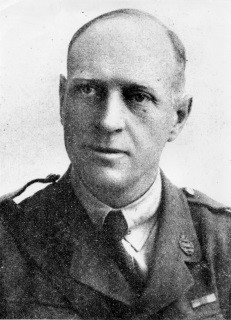
Annesley attends the Royal College of Defence Studies in 1980 and the following year returns to the Metropolitan Police as Deputy Assistant Commissioner (Central & North West London). In 1983 he becomes Deputy Assistant Commissioner (Personnel) and in 1984 is director of the Force Re-organisation Team.
In April 1985, under the new organisational structure, Annesley is appointed Assistant Commissioner Personnel and Training (ACPT) and in 1987 becomes Assistant Commissioner Specialist Operations (ACSO). In 1986 he graduates from the FBI National Executive Institute in the United States. In 1989 he takes up command of the RUC, despite the post being widely expected to go to Geoffrey Dear. He holds the post until his retirement in 1996.
Annesley is awarded the Queen’s Police Medal (QPM) in the 1986 New Year Honours and is knighted in the 1992 New Year Honours.
Interested in powered flight, Wilson collaborates with Percy Sinclair Pilcher and the Hon. Adrian Verney-Cave to attempt to make an aero-engine from 1898. The engine is a flat-twin air-cooled and weighs only 40 lbs., but shortly before a demonstration flight planned for September 30, 1899, it suffers a crankshaft failure. Unwilling to let down his backers, Pilcher opts to demonstrate a glider, which crashes, and he is fatally injured. The shock of Pilcher’s death ends Wilson’s plans for aeroengines.
Following Pilcher’s death, Wilson switches to building the Wilson–Pilcher motor car, which is launched in 1900. This car is quite remarkable in that it is available with either flat-four or flat-six engines, which are very well balanced, and with a low centre of gravity making good stability. Each water-cooled cylinder is separate and identical for either engine. Cylinders are slightly offset with separate crankpins, and the crankshaft has intermediate bearings between each pair of cylinders.
The gearbox of the car is also novel, having dual epicyclic gears and being bolted directly to the engine. This allows four speeds, with direct drive in top gear. All the gears are helical, and enclosed in an oil bath, making for very silent transmission. Reverse gear is built into the rear axle, as is the foot operated brake drum, all of which are housed in a substantial aluminum casing.
After marrying in 1904 Wilson joins Armstrong Whitworth who takes over production of the Wilson-Pilcher car. From 1908 to 1914 he works with J & E Hall of Dartford designing the Hallford lorry which sees extensive service with the army during World War I.
The sole known surviving Wilson-Pilcher car is a four-cylinder version that is retained by the Amstrong Whitworth factory and after restoration in the 1940s is presented to W.G. Wilson in the 1950s. It stays in the Wilson family until 2012 when it is sold at auction to a private collector.
With the outbreak of World War I, Wilson rejoins the navy and the Royal Naval Armoured Car Division, which protects the Royal Naval Air Service in France. When the Admiralty begins investigating armoured fighting vehicles under the Landship Committee in 1915, 20 Squadron is assigned to it and Wilson is placed in charge of the experiments. He works with the agricultural engineer William Tritton resulting in the first British tank called “Little Willie.” At Wilson’s suggestion the tracks are extended right round the vehicle. This second design becomes the prototype for the Mark I tank.
Designing several of the early British tanks, Wilson incorporates epicyclic gearing which is used in the Mark V tank to allow it to be steered by a single driver rather than the four previously needed. In 1937, he provides a new steering design which gives a larger turning radius at higher speeds.
O’Nolan writes prodigiously during his years as a student at University College, Dublin (UCD), where he is an active, and controversial, member of the well-known Literary and Historical Society. He contributes to the student magazine Comhthrom Féinne (Fair Play) under various guises, in particular the pseudonym Brother Barnabas. Significantly, he composes a story during this same period titled “Scenes in a Novel (probably posthumous) by Brother Barnabas”, which anticipates many of the ideas and themes later to be found in his novel At Swim-Two-Birds.
In 1934 O’Nolan and his student friends found a short-lived magazine called Blather. The writing here, though clearly bearing the marks of youthful bravado, again somewhat anticipates O’Nolan’s later work, in this case his Cruiskeen Lawn column as Myles na gCopaleen. Having studied the German language in Dublin, he may have spent at least parts of 1933 and 1934 in Germany, namely in Cologne and Bonn, although details are uncertain and contested.
A key feature of O’Nolan’s personal situation is his status as an Irish government civil servant, who, as a result of his father’s relatively early death, is obliged to support ten siblings, including an elder brother who is an unsuccessful writer. Given the desperate poverty of Ireland in the 1930s to 1960s, a job as a civil servant is considered prestigious, being both secure and pensionable with a reliable cash income in a largely agrarian economy. The Irish civil service is fairly strictly apolitical, prohibiting Civil Servants above the level of clerical officer from publicly expressing political views. This fact alone contributes to his use of pseudonyms, though he had started to create character-authors even in his pre-civil service writings. He rises to be quite senior, serving as private secretary to Seán T. O’Kelly and Seán McEntee.
Although O’Nolan is a well-known character in Dublin during his lifetime, relatively little is known about his personal life. On December 2, 1948, he marries Evelyn McDonnell, a typist in the Department of Local Government. On his marriage he moves from his parental home in Blackrock to nearby Merrion Street, living at several further locations in South Dublin before his death. The couple has no children.
O’Nolan is an alcoholic for much of his life and suffers from ill health in his later years. He suffers from throat cancer and dies from a heart attack in Dublin on the morning of April 1, 1966.
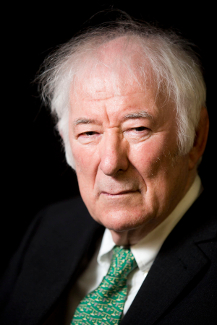
Heaney’s family moves to nearby Bellaghy when he is a boy. He attends Queen’s University Belfast and begins to publish poetry. In the early 1960s he becomes a lecturer at St. Joseph’s College in Belfast. He lives in Sandymount, Dublin from 1976 until his death. He also lives part-time in the United States from 1981 to 2006. He is recognised as one of the principal contributors to poetry during his lifetime.
American poet Robert Lowell describes Heaney as “the most important Irish poet since Yeats,” and many others, including the academic John Sutherland, have said that he is “the greatest poet of our age.” Robert Pinsky states that “with his wonderful gift of eye and ear Heaney has the gift of the storyteller.” Upon his death in 2013, The Independent describes him as “probably the best-known poet in the world.” One of his best-known works is Death of a Naturalist, published in 1966.
Seamus Heaney dies in Blackrock, Dublin on August 30, 2013, while hospitalized following a fall a few days earlier. He is buried at the Cemetery of St. Mary’s Church, Bellaghy, Northern Ireland. The headstone bears the epitaph “Walk on air against your better judgement,” from one of his poems, The Gravel Walks.
PresidentMichael D. Higgins, himself a poet, praises Heaney’s “contribution to the republics of letters, conscience and humanity.” TaoiseachEnda Kenny says that Heaney’s death has brought “great sorrow to Ireland, to language and to literature.”
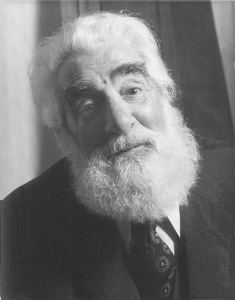
Purcell is the son of auctioneer Pierce Purcell and his second wife Catherine (née Hoban) of 4 Ashbrook Terrace, South Circular Road, Dublin. He is baptised six days after his birth at St. Kevin’s Church, Harrington Street. Within a few months, the Purcell family moves to 12 Mercer Street Lower. He is educated at Synge Street CBS. He loses the tip of his right index finger while making cigarette vending machines and also loses his entire left index finger due to an accident while he is an apprentice carpenter, a feature which he exploits for dramatic effect in the film Mutiny on the Bounty (1962).
Purcell begins his show business career at the age of 12 in Dublin’s Gaiety Theatre. Later, he tours Ireland in a vaudeville act with Jimmy O’Dea. Stage-trained in the classics in Dublin, he moves into films in 1934. He appears in Captain Boycott (1947) and as the elderly sailor whose death maroons the lovers-to-be in the first sound film version of The Blue Lagoon (1949). He plays a member of Captain Ahab‘s crew in Moby Dick (1956), Dan O’Flaherty in episode one, The Majesty of the Law, of The Rising of the Moon (1957), a gamekeeper in The List of Adrian Messenger (1963), and a barman in The Mackintosh Man (1973). The last two films are directed by John Huston.
Purcell is the subject of This Is Your Life in 1958 when he is surprised by Eamonn Andrews at the BBC Television Theatre. He also gains some recognition as a singer. Shortly after World War II, songwriter Leo Maguire composes “The Dublin Saunter” for him. He performs the song live for many years and later records it for the Glenside label, but the recording is not a hit. However, over time it becomes one of the most favourite songs about Dublin, receiving countless airplays on radio programmes.
Éamon de Valera, prominent politician in twentieth-century Ireland, dies at the age of 92 in Linden Convalescent Home, Blackrock, County Dublin on August 29, 1975. His wife, Sinéad de Valera, four years his senior, had died the previous January, on the eve of their 65th wedding anniversary.
De Valera’s political career spans over half a century, from 1917 to 1973. He serves several terms as head of government and head of state. He also leads the introduction of the Constitution of Ireland.
Assessments of de Valera’s career are varied. He has often been characterised as a stern, unbending, devious, and divisive Irish politician. Biographer Tim Pat Coogan sees his time in power as being characterised by economic and cultural stagnation, while Diarmaid Ferriter argues that the stereotype of de Valera as an austere, cold and even backward figure is largely manufactured in the 1960s and is misguided.
On September 2, 1975, Éamon de Valera makes his final journey through the streets of Dublin to his final resting place at Glasnevin Cemetery. De Valera’s body is taken from St. Patrick’s Hall in Dublin Castle, where it has lain in state, to the the St. Mary’s Pro-Cathedral, where a requiem Mass is celebrated by his grandson, Father Seán Ó Cuív, and then on to Glasnevin Cemetery.
On a day of national mourning, over 200,000 people pay tribute to the statesman along the three-mile funeral route from Dublin city centre to Glasnevin. The Army No. 1 Band plays Wrap the Green Flag Round Me as de Valera is carried into Glasnevin Cemetery.
In attendance at the funeral are family, friends, colleagues, politicians, dignitaries, diplomats, veterans of the 1916 Easter Rising, and citizens who want to pay their respect. The final prayers are recited at the graveside by Father Ó Cuív. The firing party of young cadets from the Curragh fire a final volley in tribute over the grave.
Maurice Walsh, Irish novelist best known for the short story The Quiet Man which is later made into an Oscar-winning movie, is born on April 21, 1879, in Ballydonoghue near Listowel, County Kerry.
Walsh is the third child of ten and the first son born to John Walsh, a local farmer, and his wife Elizabeth Buckley who live in a three-room thatched farmhouse. John Walsh’s main interests are books and horses and he himself does little work about the farm, preferring to have a hired man. The most famous of these hired men is Paddy Bawn Enright, whose name is immortalised by Walsh in his story The Quiet Man, although the name is not used in the later motion picture. John Walsh passes on to his son not only a love of books but also legends and folk tales that are later featured of many of Walsh’s books.
Walsh goes to school in Lisselton, a mile or so up the road from Ballydonoghue, and later goes to St. Michael’s College in Listowel to prepare for the Civil Service examination. He enters the service on July 2, 1901, as an Assistant Revenue Officer in the Customs and Excise Service. He is posted to Scotland before the year is out and, although he subsequently has a number of postings outside Scotland, he spends most of his time there while in the British service.
Walsh has a life-long interest in writing and, during his early years in Scotland, this interest starts to bear fruit. He submits some of his stories and has two published in the Irish Emerald in 1908. Later that year, on August 8, 1908, Walsh marries Caroline Begg in Dufftown, Banffshire, Scotland.
When the Irish Free State is formed in 1922, Walsh transfers to its excise service and moves to Dublin. Fighting is still going on there at the time, and he leaves his family in Scotland until it is safe for them to join him in 1923. The story The Key Above the Door is written during the months of separation although it is not published until some years later, appearing first in Chambers Journal as a serial between December 1925 and May 1926 and then in book form, published by W & R Chambers Ltd., in July 1926.
Sales of Walsh’s books grow steadily, especially in the wake of an unsolicited and generous letter from J. M. Barrie, the creator of Peter Pan, praising The Key Above the Door, which Chambers is subsequently able to use on dust covers of Walsh’s books.
Walsh retires from government service in 1933 but his success as a writer continues. In that same year he sells a story to TheSaturday Evening Post, then a well-known weekly magazine published in the United States. That story, later to be incorporated in the collection of stories published under the title Green Rushes, is The Quiet Man.
Director John Ford reads the story in 1933 and soon purchases the rights to it for $10. Walsh is paid another $2,500 when Republic Pictures buys the idea and receives a final payment of $3,750 when the film is actually made. Filming commences on June 7, 1951, with John Wayne and Maureen O’Hara in the leading roles. All of the outdoor scenes are shot on location in County Mayo and County Galway. The inside scenes are filmed in late July at the Republic Studios in Hollywood. The Quiet Man wins the Academy Award for Best Director for John Ford, his fourth, and for Best Cinematography.
Walsh becomes President of the Irish branch of PEN International in 1938 and visits the United States for an international meeting that year as the Irish delegate. His wife Caroline is able to accompany him although she has been in failing health for some years and ultimately dies in January 1941. Walsh himself dies on February 18, 1964, in Blackrock, a suburb of Dublin, and is buried in the Esker cemetery at Lucan, County Dublin. President Éamon de Valera attended Walsh’s funeral Mass.