seamus dubhghaill

Promoting Irish Culture and History from Little Rock, Arkansas, USA


Leave a comment

Birth of Motion Picture Actress Greer Garson

greer-garson

Eileen Evelyn Greer Garson, motion picture actress best known as Greer Garson, is born on September 29, 1904, in Manor Park, London, England. Her classic beauty and screen persona of elegance, poise, and maternal virtue make her one of the most popular and admired Hollywood stars of the World War II era.

Garson often claims to have been born in County Down, Ireland, where her grandparents lived and which she happily visited as a child, but she is, in fact, born and raised in London. Although she wanted to study acting, she wins a scholarship to the University of London and her practical-minded family encourage her to pursue a teaching career. After graduating with honours, she works briefly for Encyclopædia Britannica and a London advertising firm but continually tries to get her foot into a backstage door.

In 1932 Garson makes her debut with the Birmingham Repertory Theatre, playing a middle-aged schoolteacher in Elmer Rice’s Street Scene. Later that year she tours in George Bernard Shaw’s Too True to Be Good, billing herself as Greer, a maternal family name, for the first time. She soon establishes herself as a popular ingenue and leading lady in London’s West End. In 1938 Louis B. Mayer, head of Metro-Goldwyn-Mayer (MGM), catches her performance in Old Music and signs her to a contract with his studio.

After suffering through a discouraging first year in Hollywood, Garson returns to England to film the small role of Mrs. Chips in MGM’s Goodbye, Mr. Chips (1939). She receives her first Oscar nomination for the role but loses to Vivien Leigh for Gone with the Wind. Her portrayal of the beloved schoolteacher’s charming wife endears her to the American public and sets her career in motion. It is the first in a series of roles in which she plays women of great loyalty, refinement, and wifely or motherly strength.

Garson’s other significant films of the period include Pride and Prejudice (1940), Blossoms in the Dust (1941), her first appearance with her frequent costar Walter Pidgeon, Random Harvest (1942), and Madame Curie (1943). The film that cements her reputation and image, however, is Mrs. Miniver (1942). Filmed during World War II and tailor-made for the times, Mrs. Miniver extolls the strength and spirit of the British home front and is one of the year’s biggest hits. Her grace-under-pressure portrayal of a courageous wife and mother, the personification of British fortitude, not only wins her an Academy Award but is credited with bolstering American support for the war.

Following the war Garson’s career falters. The public rejects her attempts to reforge her image to that of a more fun-loving, less noble heroine in such films as Adventure (1945) and Julia Misbehaves (1948). During the 1950s she appears in several unexceptional films and television dramas and stars on Broadway in Auntie Mame. Her remarkably convincing portrayal of Eleanor Roosevelt in Sunrise at Campobello (1960) is widely praised and earns her a seventh Oscar nomination, but she performs only occasionally thereafter, devoting most of her time to philanthropic causes, including the endowment of scholarships for theatre students at Southern Methodist University in University Park, Texas and the construction of a campus theatre.

Garson spends her final years occupying a penthouse suite at the Presbyterian Hospital of Dallas. She dies there from heart failure on April 6, 1996, at the age of 91. She is interred beside her husband in the Sparkman-Hillcrest Memorial Park Cemetery in Dallas.

Leave a comment

Death of Patrick McGee, Actor & Director

patrick-mcgee

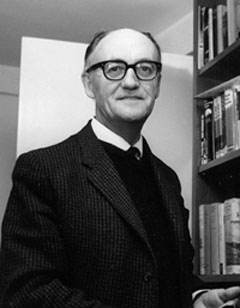
Patrick George McGee, Northern Irish actor and director of stage and screen known professionally as Patrick Magee, dies from a heart attack at his flat in Fulham, London on August 14, 1982. He is known for his collaborations with Samuel Beckett and Harold Pinter, as well as creating the role of the Marquis de Sade in the original stage and screen productions of Marat/Sade. He also appears in numerous horror films and in two Stanley Kubrick films, A Clockwork Orange and Barry Lyndon.

McGee is born into a middle-class family in Armagh, County Armagh, Northern Ireland on March 31, 1922. He is the first born of five children and is educated at St. Patrick’s Grammar School, Armagh.

McGee’s first stage experience in Ireland is with Anew McMaster’s touring company, performing the works of William Shakespeare. It is here that he first works with Pinter. He is then brought to London by Tyrone Guthrie for a series of Irish plays. He meets Beckett in 1957 and soon records passages from the novel Molloy and the short story From an Abandoned Work for BBC Radio. Impressed by “the cracked quality of Magee’s distinctly Irish voice,” Beckett requests copies of the tapes and writes Krapp’s Last Tape especially for the actor. First produced at the Royal Court Theatre in London on October 28, 1958, the play stars McGee and is directed by Donald McWhinnie. A televised version is later broadcast by BBC Two on November 29, 1972.

In 1964, McGee joins the Royal Shakespeare Company, after Pinter, directing his own play, The Birthday Party, specifically requests him for the role of McCann. In 1965 he appears in Peter Weiss‘s Marat/Sade, and when the play transfers to Broadway he wins a Tony Award. He also appears in the 1966 RSC production of Staircase opposite Paul Scofield.

McGee’s early film roles include Joseph Losey‘s The Criminal (1960) and The Servant (1963), the latter an adaptation scripted by Pinter. He also appears as Surgeon-Major James Henry Reynolds in Zulu (1964), Séance on a Wet Afternoon (1964), Anzio (1968), and in the film versions of Marat/Sade (1967) and The Birthday Party (1968). He is perhaps best known for his role as the victimised writer Frank Alexander, who tortures Alex DeLarge with Ludwig van Beethoven‘s music, in Stanley Kubrick’s film A Clockwork Orange (1971). His other role for Kubrick is as Redmond Barry’s mentor, the Chevalier de Balibari, in Barry Lyndon (1975).

McGee also appears in Young Winston (1972), The Final Programme (1973), Galileo (1975), Sir Henry at Rawlinson End (1980), The Monster Club and Chariots of Fire (1981) but is most often seen in horror films. These include Roger Corman‘s The Masque of Red Death (1964), and the Boris Karloff vehicle Die, Monster, Die! (1965) for AIP; The Skull (1965), Tales from the Crypt (1972), Asylum (1972), and And Now the Screaming Starts! (1973) for Amicus Productions; Demons of the Mind (1972) for Hammer Film Productions; and Walerian Borowczyk‘s Docteur Jekyll et les femmes (1981).

Patrick McGee dies from a heart attack at his flat in Fulham, London on August 14, 1982, at the age of 60, according to obituaries in The Herald and The New York Times. On July 29, 2017, a blue plaque is unveiled in Edward Street, Armagh to mark Patrick McGee’s birthplace.


Leave a comment

Birth of John B. Keane, Irish Playwright & Novelist

john-b-keane

John Brendan Keane, Irish playwright, novelist and essayist, is born in Listowel, County Kerry on July 21, 1928.

Keane is the son of a national school teacher, William B. Keane, and his wife Hannah Purtill. He is educated at Listowel National School and then at St. Michael’s College, Listowel. He works as a chemist’s assistant for A.H. Jones who dabbles in buying antiques. He has various jobs in the United Kingdom between 1951 and 1955 working as a street cleaner and a bartender and lives in a variety of places including Northampton and London. It is while he is in Northampton that he is first published in an unnamed women’s magazine for which he receives £15.

After returning from the UK, Keane is a pub owner in Listowel from 1955 where he writes plays for the local theatre company and sponsors, from 1971, the annual Listowel Writers’ Week. He marries Mary O’Connor at Knocknagoshel Church on January 5, 1955 and they have four children: Billy, Conor, John and Joanna.

His first play, Sive (1959), is initially rejected by the Abbey Theatre in Dublin but goes on to win the amateur All-Ireland Drama Festival. Later plays include The Field (1965), which is released in a bowdlerized film version in 1990, and Big Maggie (1969), which is produced on Broadway in 1982. In 1998 Keane is honoured with a medal from the Abbey for his contribution to Irish theatre.

Keane is an Honorary Life Member of the Royal Dublin Society from 1991, serves as president of Irish club of PEN International and is a founder member of the Society of Irish Playwrights as well as a member of Aosdána. He is named the patron of the Listowel Players after the Listowel Drama Group fractures. He remains a prominent member of the Fine Gael party throughout his life, never being shy of political debate.

John Keane dies of prostate cancer on May 30, 2002, in Listowel at the age of 73.

Keane’s nephew is the investigative journalist Fergal Keane. His son John is a journalist with the Kilkenny People while his son Billy regularly writes a column for the Irish Independent.


Leave a comment

Birth of George M. Cohan

george-m-cohan

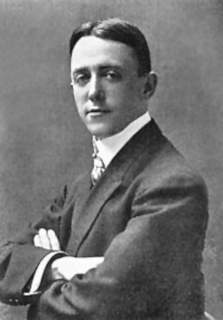
George Michael Cohan, legendary song and dance man, is born to Irish Catholic parents in Providence, Rhode Island on July 3, 1878.

A baptismal certificate from St. Joseph’s Roman Catholic Church indicates that Cohan was born on July 3, but Cohan and his family always insist that he had been “born on the Fourth of July!” His parents are traveling vaudeville performers, and he joins them on stage while still an infant, first as a prop, learning to dance and sing soon after he could walk and talk. As a child, he and his family tour most of the year and spend summer vacations from the vaudeville circuit at his grandmother’s home in North Brookfield, Massachusetts.

In 1904 Cohan produces his first successful musical play, Little Johnny Jones, in which he plays the character The Yankee Doodle Boy. As a songwriter, he is a charter member of the American Society of Composers, Authors and Publishers (ASCAP). His popular song catalog includes “The Yankee Doodle Boy,” “Venus, My Shining Love,” “I Guess I’ll Have to Telegraph My Baby,” “My Musical Comedy Maid,” “Revolutionary Rag,” “Give My Regards to Broadway,” “You Remind Me of My Mother,” “Life’s a Funny Proposition After All,” “Mary’s a Grand Old Name,” “So Long, Mary,” “Forty-Five Minutes from Broadway,” “I Was Born in Virginia,” “Harrigan,” “Over There” (the song of World War I which earns Cohan the Congressional Medal of Honor), “In the Kingdom of Our Own,” “Nellie Kelly, I Love You,” “When June Comes Along With a Song,” “Molly Malone,” “Where Were You, Where Was I?,” “The Song and Dance Man,” “Billie” and the patriotic theme song and 2002 Towering Song Award winner, “You’re a Grand Old Flag.”

The more than 40 musical dramas Cohan writes, produces, directs and stars in on Broadway include The Governor’s Son, Forty-Five Minutes from Broadway, Little Johnny, George Washington, Jr., The Honeymooners, The Yankee Prince, The Little Millionaire, Hello, Broadway, The Talk of New York, Fifty Miles From Boston, The American Idea, The Man Who Owns Broadway, The Cohan Revue (1916, 1918), The Royal Vagabond, The Merry Malones, Little Nellie Kelly, The Rise of Rosie O’Reilly, Get-Rich-Quick Wallingford, Seven Keys to Baldpate, The Miracle Man, Hit the Trail Hailday, Broadway Jones, A Prince There Was, The Song and Dance Man, American Born, Gambling, Dear Old Darling, The Return of the Vagabond, The Tavern, Elmer the Great, The O’Brien Girl, Ah, Wilderness! and I’d Rather Be Right.

In 1942, Cohan’s life is documented in the film Yankee Doodle Dandy.

George M. Cohan dies of cancer at his Manhattan apartment on Fifth Avenue on November 5, 1942, surrounded by family and friends. His funeral is held at St. Patrick’s Cathedral in New York and is attended by thousands of people, including five governors of New York, two mayors of New York City and the Postmaster General. The honorary pallbearers included Irving Berlin, Eddie Cantor, Frank Crowninshield, Sol Bloom, Brooks Atkinson, Rube Goldberg, Walter Huston, George Jessel, Connie Mack, Joseph McCarthy, Eugene O’Neill, Sigmund Romberg, Lee Shubert and Fred Waring. He is interred at Woodlawn Cemetery in The Bronx, New York City, in a private family mausoleum he had erected a quarter century earlier for his sister and parents.

On September 11, 1959, Oscar Hammerstein II presents an eight-foot high, bronze statue of Cohan in the heart of Times Square on Broadway.


Leave a comment

Birth of Creighton Hale, Irish American Actor

creighton-hale

Creighton Hale, Irish American theatre, film, and television actor, is born Patrick Fitzgerald on May 24, 1882, in County Cork. His career extends more than a half-century, from the early 1900s to the end of the 1950s.

Hale is educated in Dublin and London, and later attends Ardingly College in Sussex. He immigrates to the United States in his early twenties, traveling with a troupe of actors. While starring in Charles Frohman‘s Broadway theatre production of Indian Summer, he is spotted by a representative of the Pathé film company. He eventually becomes known professionally as Creighton Hale, although the derivation of those names remains unknown. His first movie is The Exploits of Elaine in 1914. He stars in hit films such as Way Down East, Orphans of the Storm, and The Cat and the Canary.

Some believe that in 1923 Hale stars in an early pornographic “stag” film On the Beach (a.k.a. Getting His Goat and The Goat Man). In the film, three nude women agree to have sex with him, but only through a hole in a fence. Photographs of the scene clearly show that the man in the film is not Hale but is another actor who also wears glasses.

When talkies come about, Hale’s career declines. He makes several appearances in Hal Roach‘s Our Gang series including School’s Out, Big Ears and Free Wheeling, and also plays uncredited bits in major talking films such as Larceny, Inc., The Maltese Falcon, and Casablanca.

Hale’s two sons, Creighton Hale, Jr. and Robert Lowe Hale, from his first marriage to Victoire Lowe, are adopted by Lowe’s second husband, actor John Miljan. After his divorce, Hale marries Kathleen Bering in Los Angeles in 1931.

Creighton Hale dies in South Pasadena at the age of 83 on August 9, 1965. He is buried at Duncans Mills Cemetery in Duncan Mills, Sonoma County, California.


1 Comment

Death of Writer Walter Macken

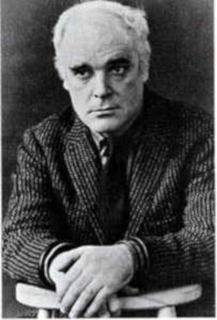
Walter Macken, writer of short stories, novels and plays, dies at his home in the Gaeltacht village of Menlo, County Galway on April 22, 1967.

Macken is born at 18 St. Joseph’s Terrance in Galway, County Galway on May 3, 1915. His father, Walter Macken, Sr., formerly a carpenter, joins the British Army in 1915 and is killed in March of the following year at Saint-Éloi. The family therefore has to rely on lodgers and a small service pension to sustain them.

Macken attends the Presentation Convent for Infants from (1918-1921), St. Mary’s, a Diocesan College where they train people who want to become priests (1923-1924), and Patrician Brothers both Primary and Secondary (1921-1922 and 1924-1934), where he takes his Leaving Certificate. He is writing short stories, novels, and plays in exercise books from the age of eight and carries on these works well into his teens.

Macken is originally an actor, principally with the Taibhdhearc na Gaillimhe in Galway, where he meets his wife Peggy, and The Abbey Theatre in Dublin. He also plays lead roles on Broadway in M. J. Molloy‘s The King of Friday’s Men and his own play Home Is the Hero. The success of his third book, Rain on the Wind, winner of the Literary Guild award in the United States, enables him to focus his energies on writing.

Macken also acts in films, notably in Arthur Dreifuss‘ adaptation of Brendan Behan‘s The Quare Fellow. He is perhaps best known for his trilogy of Irish historical novels Seek the Fair LandThe Silent People, and The Scorching Wind.

His son Ultan Macken is a well-known journalist in the print and broadcast media of Ireland, and wrote a biography of his father, Walter Macken: Dreams on Paper.

Walter Macken dies of heart failure at the age of 51 in Menlo, County Galway, on April 22, 1967.


Leave a comment

Birth of Irish American Actor Gregory Peck

gregory-peck

Actor Gregory Peck is born in La Jolla, California on April 5, 1916, to Bernice Mary (Ayres) and Gregory Pearl Peck, a chemist and pharmacist in San Diego. Through his Irish-born paternal grandmother, Catherine Ashe, Peck is related to Thomas Ashe, who takes part in the Easter Rising fewer than three weeks after Peck’s birth and dies while on hunger strike in 1917.

Peck’s parents divorce when he is five years old. An only child, he is sent to live with his grandmother. He never feels as though he has a stable childhood. His fondest memories are of his grandmother taking him to the movies every week and of his dog, which follows him everywhere.

At the age of ten Peck is sent to a Catholic military school, St. John’s Military Academy in Los Angeles. While he is a student there, his grandmother dies. At 14, he moves back to San Diego to live with his father and attends San Diego High School. After graduating he enrolls for one year at San Diego State Teacher’s College (now known as San Diego State University).

Peck studies pre-med at the University of California, Berkeley and while there is bitten by the acting bug and decides to change the focus of his studies. He enrolls in the Neighborhood Playhouse School of the Theatre in New York City and debuts on Broadway after graduation. His debut is in Emlyn Williams‘ play The Morning Star (1942). By 1943, he is in Hollywood, where he debuts in the RKO Pictures film Days of Glory (1944).

Stardom comes with Peck’s next film, The Keys of the Kingdom (1944), for which he is nominated for an Academy Award. Peck’s screen presence displays the qualities for which he becomes well known. He is tall, rugged and heroic, with a basic decency that transcends his roles. He appears in Alfred Hitchcock‘s Spellbound (1945) as an amnesia victim accused of murder. In The Yearling (1946), he is again nominated for an Academy Award and wins the Golden Globe Award. He is especially effective in westerns and appears in such varied fare as David O. Selznick‘s critically blasted Duel in the Sun (1946), the somewhat better received Yellow Sky (1948) and the acclaimed The Gunfighter (1950). He is nominated again for the Academy Award for his roles in Gentleman’s Agreement (1947), which deals with antisemitism, and Twelve O’Clock High (1949), a story of high-level stress in an Air Force bomber unit in World War II.

With a string of hits to his credit, Peck makes the decision to only work in films that interest him. He continues to appear as the heroic, larger-than-life figures in such films as Captain Horatio Hornblower R.N. (1951) and Moby Dick (1956). He works with Audrey Hepburn in her debut film, Roman Holiday (1953).

Peck finally wins the Oscar, after four nominations, for his performance as lawyer Atticus Finch in To Kill a Mockingbird (1962). In the early 1960s, he appears in two darker films than he usually makes, Cape Fear (1962) and Captain Newman, M.D. (1963), which deal with the way people live. He also gives a powerful performance as Captain Keith Mallory in The Guns of Navarone (1961), one of the biggest box-office hits of that year.

In the early 1970s, Peck produces two films, The Trial of the Catonsville Nine (1972) and The Dove (1974), when his film career stalled. He makes a comeback playing, somewhat woodenly, Robert Thorn in the horror film The Omen (1976). After that, he returns to the bigger-than-life roles he is best known for, such as MacArthur (1977) and the monstrous Nazi Dr. Josef Mengele in the huge hit The Boys from Brazil (1978). In the 1980s, he moves into television with the miniseries The Blue and the Gray (1982) and The Scarlet and the Black (1983). In 1991, he appears in the remake of his 1962 film, playing a different role, in Martin Scorsese‘s Cape Fear (1991). He is also cast as the progressive-thinking owner of a wire and cable business in Other People’s Money (1991).

In 1967, Peck receives the Academy’s Jean Hersholt Humanitarian Award. He has also been awarded the Presidential Medal of Freedom. Always politically progressive, he is active in such causes as anti-war protests, workers’ rights and civil rights. In 2003, Peck’s portrayal of Atticus Finch is named the greatest film hero of the past 100 years by the American Film Institute.

Gregory Peck dies in his sleep at his home in Los Angeles, California from bronchopneumonia at the age of 87 on June 12, 2003. He is entombed in the Cathedral of Our Lady of the Angels mausoleum in Los Angeles. His eulogy is read by Brock Peters, whose character, Tom Robinson, was defended by Peck’s Atticus Finch in To Kill a Mockingbird.


Leave a comment

Death of Ed Sullivan,Television Personality

ed-sullivan

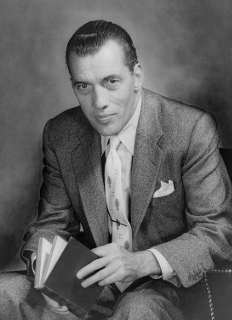
Edward Vincent Sullivan, Irish American television personality, sports and entertainment reporter, and syndicated columnist for the New York Daily News and the Chicago Tribune New York News Syndicate, dies in Manhattan, New York on October 13, 1974. He is principally remembered as the creator and host of the television variety show The Toast of the Town, later popularly and officially renamed The Ed Sullivan Show. Broadcast for 23 years from 1948 to 1971, it sets a record as the longest-running variety show in United States broadcast history.

Sullivan is born on September 28, 1901, in Harlem, New York City, the son of Elizabeth F. (née Smith) and Peter Arthur Sullivan, a customs house employee, and grows up in Port Chester, New York. He is a gifted athlete in high school, earning 12 athletic letters at Port Chester High School.

Sullivan lands his first job at The Port Chester Daily Item, a local newspaper for which he had written sports news while in high school and then joins the paper full-time after graduation. In 1919, he joins The Hartford Post. The newspaper folds in his first week there but he lands another job on The New York Evening Mail as a sports reporter. After The Evening Mail closes in 1923, he bounced through a series of news jobs. In 1927, he joins The Evening Graphic as sportswriter and eventually sports editor. In 1929, when Walter Winchell moves to the New York Daily Mirror, he is made Broadway columnist.

Throughout his career as a columnist, Sullivan dabbles in entertainment, producing vaudeville shows with which he appears as master of ceremonies in the 1920s and 1930s, directing a radio program over the original WABC (now WCBS) and organizing benefit reviews for various causes. In 1941, he is host of the Summer Silver Theater, a variety program on CBS radio, with Will Bradley as bandleader and a guest star featured each week.

In 1948, producer Marlo Lewis gets the CBS network to hire Sullivan to do a weekly Sunday night TV variety show, Toast of the Town, which later becomes The Ed Sullivan Show. Debuting in June 1948, the show is originally broadcast from the Maxine Elliott’s Theatre on West 39th Street in New York City. In January 1953, it moves to CBS-TV Studio 50, at 1697 Broadway in New York City, which in 1967 is renamed the Ed Sullivan Theater. The theater is later the home of the Late Show with David Letterman and The Late Show with Stephen Colbert. Television critics initially give the new show and its host poor reviews.

In the 1950s and 1960s, Sullivan is a respected starmaker because of the number of performers who become household names after appearing on the show, including Elvis Presley, The Beatles, The Dave Clark Five, B.J. Thomas and the Jackson Five. He has a knack for identifying and promoting top talent and pays a great deal of money to secure that talent for his show.

By 1971, the show’s ratings have plummeted. In an effort to refresh its lineup, CBS cancels the program along with some of its other longtime shows. Sullivan is angered and refuses to do a final show, although he remains with the network in various other capacities and hosts a 25th anniversary special in June 1973.

In early September 1974, X-rays reveal that Sullivan has an advanced growth of esophageal cancer. Doctors give him very little time to live, and the family chooses to keep the diagnosis secret from him. Sullivan, still believing his ailment to be yet another complication from a long-standing battle with gastric ulcers, dies five weeks later on October 13, 1974, at New York’s Lenox Hill Hospital. His funeral is attended by 3,000 at St. Patrick’s Cathedral, New York, on a cold, rainy day. He is interred in a crypt at the Ferncliff Cemetery in Hartsdale, New York.

Sullivan has a star on the Hollywood Walk of Fame at 6101 Hollywood Blvd.


Leave a comment

Birth of Chauncey Olcott, Actor, Singer & Songwriter

chauncey-olcott

John Chancellor “Chauncey” Olcott, American stage actor, songwriter and singer of Irish descent, is born in Buffalo, New York on July 21, 1858. His mother, Margaret (née Doyle), is a native of Killeagh, County Cork.

In the early years of his career Olcott sings in minstrel shows, before studying singing in London during the 1880s. Lillian Russell plays a major role in helping make him a Broadway star. When the producer Augustus Pitou approaches him in 1893 to succeed William J. Scanlan as the leading tenor in sentimental operettas on Irish themes, Olcott accepts and performs pseudo-Irish roles for the remainder of his career.

Olcott combines the roles of tenor, actor, lyricist and composer in many productions. He writes the complete scores to Irish musicals such as Sweet Inniscara (1897), A Romance of Athlone (1899), Garrett O’Magh (1901), and Old Limerick Town (1902). For other productions he collaborates with Ernest Ball and George Graff, Jr. in works such as The Irish Artist (1894), Barry of Ballymore (1910), Macushla (1912), and The Isle o’ Dreams (1913). There are some twenty such works between 1894 and 1920.

Olcott is a good songwriter who captures the mood of his Irish American audience by combining melodic and rhythmic phrases from traditional Irish music with melancholy sentiment. Some numbers from his musicals become very popular, such as “My Wild Irish Rose” from A Romance of Athlone, “Mother Machree” from Barry of Ballymore, and “When Irish Eyes Are Smiling” from The Isle o’ Dreams. Sometimes he uses tunes from others, such as that of the title song from Macushla from Irish composer Dermot Macmurrough (pseudonym of Harold R. White) or Too Ra Loo Ra Loo Ral (Irish Lullaby) by James Royce Shannon for his production Shameen Dhu (1914).

In 1925, a serious illness forces Olcott to retire, and he moves to Monte Carlo, Monaco where he dies of pernicious anemia on March 18, 1932. His body is brought home and interred in the Woodlawn Cemetery in The Bronx, New York City.

Olcott’s life story is told in the 1947 Warner Bros. motion picture My Wild Irish Rose starring Dennis Morgan as Olcott. The film’s plot is based on the biography by Olcott’s widow, Rita Olcott, Song in His Heart (1939).

In 1970, Olcott is posthumously inducted into the Songwriters Hall of Fame.


Leave a comment

Death of William James MacNeven, Physician & Writer

william-james-macneven-1

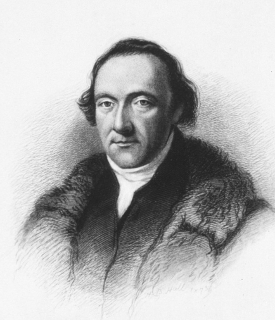
William James MacNeven, Irish American physician and writer, dies in New York City on July 12, 1841.

MacNeven is born on March 21, 1763, at Ballinahown, Aughrim, County Galway. The eldest of four sons, at the age of 12 MacNeven is sent by his uncle Baron MacNeven to receive his education abroad as the Penal Laws render education impossible for Catholics in Ireland. He makes his collegiate studies in Prague. His medical studies are made in Vienna where he is a pupil of Pestel and takes his degree in 1784. He returns to Dublin in the same year to practise.

MacNeven becomes involved in the Society of United Irishmen with such men as Lord Edward Fitzgerald, Thomas Addis Emmet, and his brother Robert Emmet. He is arrested in March 1798 and confined in Kilmainham Gaol, and afterwards in Fort George, Scotland, until 1802, when he is liberated and exiled. In 1803, he is in Paris seeking an interview with Napoleon Bonaparte in order to obtain French troops for Ireland. Disappointed in his mission, MacNeven comes to the United States, landing at New York City on July 4, 1805.

In 1807, he delivers a course of lectures on clinical medicine in the recently established College of Physicians and Surgeons. Here in 1808, he receives the appointment of professor of midwifery. In 1810, at the reorganization of the school, he becomes the professor of chemistry, and in 1816 is appointed to the chair of materia medica. In 1826 with six of his colleagues, he resigns his professorship because of a misunderstanding with the New York Board of Regents and accepts the chair of materia medica at Rutgers Medical College, a branch of the New Jersey institution of that name, established in New York as a rival to the College of Physicians and Surgeons. The school at once becomes popular because of its faculty, but after four years is closed by legislative enactment on account of interstate difficulties. The attempt to create a school independent of the regents results in a reorganization of the University of the State of New York.

MacNeven, affectionately known as “The Father of American Chemistry,” dies in New York City on July 12, 1841. He is buried on the Riker Farm in the Astoria section of Queens, New York.

One of the oldest obelisks in New York City is dedicated to him in the Trinity Church, located between Wall Street and Broadway, New York. The obelisk is opposite to another commemorated for his friend Thomas Emmet. MacNeven’s monument features a lengthy inscription in Irish, one of the oldest existent dedications of this kind in the Americas.