In June 1834, Archdale is elected the Member of Parliament for Fermanagh following the retirement of his uncle Mervyn Archdall. He is returned unopposed in the succeeding nine elections. From 1836, he is a noted member of the Orange Order and becomes treasurer of the Grand Lodge of Ireland. He votes in 1856 to disendow Maynooth College. When in 1868 he is asked to support a plea for the reprieve of Michael Barrett, a local Fenian under sentence of death in London, he refuses. He does not stand at the election of January 1874.
On the death of another uncle, Lt. Col. William Archdall, on January 1, 1857, Archdale inherits the family estates of Castle Archdale and Trillick in County Tyrone. He is appointed High Sheriff of Fermanagh in 1879.
Archdale has an interest in and also keeps racehorses. Other pursuits in which he is prominent are coursing and boating. He is a Freemason and member of five clubs.
Archdale marries Emma Inez, the daughter of Jacob Goulding of Kew, Surrey, with whom he has two sons, Mervyn Henry and Hugh James, and three daughters.
Archdale dies on December 22, 1895, at Cannes in the south of France. His estates pass to his brother, William Humphrys Archdale, who also takes over the representation of Fermanagh in Parliament.
Paul McGuinness, the founder of Principle Management Limited, a popular music act management company based in Dublin, is born on June 16, 1951, in Rinteln, Westphalia, Germany. He is the manager of the rock band U2 from 1978 to 2013.
McGuinness is born in a British military hospital at Rinteln where his father, Philip McGuinness, a native of Liverpool, is serving with the Royal Air Force. His mother, Sheila McGuinness (née Lyne), is a schoolteacher from County Kerry. There are three children in the family: Paul, Niall, and Katy.
McGuinness receives his early formal education in Ireland at the private Jesuit boarding school, Clongowes Wood College. From there he goes on to Trinity College Dublin, where he directs plays, edits the magazine T.C.D. Miscellany, and promotes gigs, but drops out before obtaining a degree.
Before becoming involved with U2, Guinness works as a film assistant director on productions such as John Boorman‘s Zardoz. For a time, he also manages folk-rock group Spud.
McGuinness first meets U2 at a Dublin gig on May 25, 1978, where they are supporting the Gamblers. Following this meeting, he becomes U2’s manager, having been introduced to the band by Bill Graham, a journalist with Hot Press magazine. His original agreement with the band is that the money is to be split equally five ways, though this is later changed.
McGuinness founds Principle Management Limited on March 29, 1984. He and Bill Whelan set up a music publishing company called McGuinness/Whelan Publishing in the late 1980s. Whelan later composes the music for the theatrical show Riverdance.
In 2002, McGuinness is presented with a Lifetime Achievement Award at the Meteor Music Awards at the Point Theatre in Dublin and U2 wins the best Irish Band Award.
Noted for his business acumen, McGuinness is responsible for U2 3D concert films, U2-branded iPods, sponsorship from BlackBerry and the first-ever concert streamed live on YouTube.
McGuinness is regarded as the fifth member of U2, although in an interview with The Irish Press in 1985, when asked if he is the fifth member of U2, he replies, “The fifth member of U2 is in Adam (Clayton)‘s trousers.” He is also regarded as one of the most successful managers in the music business.
McGuinness steps down as manager of U2 after 34 years on November 13, 2013, with Madonna‘s manager, Guy Oseary, succeeding him in 2014 when he sells Principle Management Limited to Live Nation.
McGuinness is a founding partner of TV3 (Ireland) and is one of the owners of Ardmore Film Studios. He becomes a member of the Arts Council of Ireland on January 1, 1988, having been appointed by Charles Haughey. He serves until February 2000 when he resigns.
McGuinness has been an advocate on behalf of artists, record labels, and music publishers. On January 28, 2008, in a speech at the Midem music industry convention in Cannes, he specifically accuses companies such as Apple, Google, Yahoo!, and Facebook of building “multi-billion dollar industries on the back of our content without paying for it.”
In 2015, McGuinness founds Primo Productions, a film and TV company. Primo produces three seasons of Riviera, a drama set in the South of France. He writes the “list of ingredients” for the show: “Rich people behaving badly in the sun, yachts, Maseratis, great clothes, beautiful women, art fraud, money laundering through the auction houses, Russians, English people, American, French. Murder, adultery.” Everyday life on the Côte d’Azur. His production partner is Kris Thykier of Archery Pictures. The show is originally commissioned by Anne Mensah of Sky Atlantic.
McGuinness marries Kathy Gilfillan in 1977. They meet while he is studying at Trinity. Gilfillan is director of The Lilliput Press. They have two children.
As a young man, O’Connor embraces the Republican movement early on as he is encouraged by the American Revolution overseas. After his oldest brother Daniel gets into debt, his brother Roger buys out his inheritance. The family’s political and financial conflicts are only deepened when their sister Anne commits suicide, after having been forbidden by the family from marrying a Catholic man she was in love with.
In 1796, O’Connor joins the Society of United Irishmen and determines, on its platform, to contest what had been his uncle Lord Longueville’s Irish parliamentary seat in Antrim. In January 1797, to the “free electors” of the county he commends the “entire abolition of religious distinctions” and the “establishment of a National Government,” while protesting the “invasion” of the country by English and Scottish troops and the continuation of the continental war. Arrests, including his own in February for seditious libel, frustrate his attempts to canvass. With Lord Edward FitzGerald and others in the leadership in Dublin his thoughts turn to securing “fraternal” French support for a revolutionary insurrection.
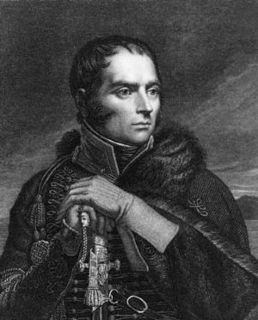
O’Connor is released in 1802 under the condition of “banishment,” He travels to Paris, where he is regarded as the accredited representative of the United Irishmen by Napoleon who, in February 1804, appoints him General of Division in the French army. General Louis-Alexandre Berthier, Minister of War, directs that O’Connor is to join the expeditionary army intended for the invasion of Ireland at Brest. When the plan falls through, O’Connor retires from the army.
In 1807, although more than twice her age, O’Connor marries Alexandrine Louise Sophie de Caritat de Condorcet, known as Eliza, the daughter of the scholar the Marquis de Condorcet and Sophie de Condorcet. Following his marriage he borrows money from fellow exile William Putnam McCabe to acquire a country residence. His tardiness in repaying the debt to McCabe, whose own investments into cotton spinning in Rouen had failed, results in a lawsuit. Cathal O’Bryne suggests that the debt is behind O’Connor’s later suggestion to Richard Robert Madden that McCabe had been a double agent, a charge to which, Madden notes, the French government lends no credence.
O’Connor offers his services to Napoleon during the Hundred Days. After Napoleon’s defeat he is allowed to retire, becoming a naturalised French citizen in 1818. He supports the 1830 revolution which creates the July Monarchy, publishing a defence of events in the form of an open letter to General Gilbert du Motier, Marquis de Lafayette. After the revolution he becomes mayor of Le Bignon-Mirabeau. The rest of his life is spent composing literary works on political and social topics. He and his wife continue the efforts of her mother, who is herself an accomplished translator of Thomas Paine and Adam Smith, to publish her father’s works in twelve volumes between 1847 and 1849.
O’Connor’s wife give birth to five children, three sons and two daughters, almost all of whom predecease him. Only one son, Daniel, marries and has issue. Daniel marries Ernestine Duval du Fraville, a daughter of Laurent-Martin Duval, Baron Duval du Fraville, in 1843. She dies at Cannes in 1877.
O’Connor dies on April 25, 1852. His widow dies in 1859.
O’Connor’s descendants continue to serve as officers in the French army and still reside at Château Dubignon. Through his only surviving son, Daniel, he is a grandfather of two boys, Arthur O’Connor (1844–1909), who serves in the French army, and Fernand O’Connor (1847–1905), a Brigade General who serves in Africa and is made a Knight of the Legion of Honour. His grandson, Arthur, marries Marguerite de Ganay (1859–1940), a daughter of Emily and Etienne, Marquis de Ganay, in 1878. They have two daughters, Elisabeth O’Connor, the wife of Alexandre de La Taulotte, and Brigitte Emilie Fernande O’Connor (1880–1948), who in 1904 marries the Comte François de La Tour du Pin (1878–1914), who is killed ten years later at the First Battle of the Marne.


 seamus dubhghaill