seamus dubhghaill

Promoting Irish Culture and History from Little Rock, Arkansas, USA


Leave a comment

Death of Saint Mo Chutu mac Fínaill

sts-carthage-catherine-patrick

Saint Mo Chutu mac Fínaill, also known as Carthach or Carthach the Younger (a name Latinized as Carthagus and Anglicized as Carthage), dies on May 14, 637. Mo Chutu is abbot of Rahan, County Offaly and subsequently, founder and first abbot of Lismore, County Waterford.

Through his father, Fínall Fíngein, Mo Chutu belongs to the Ciarraige Luachra, while his mother, Finmed, is of the Corco Duibne. Notes added to the Félire Óengusso, the Martyrology of Óengus, claim that his foster father is Carthach mac Fianáin, also known as Carthach the Elder, whose period of activity can be assigned to the late 6th century.

Mo Chutu first becomes abbot of Rahan, a monastery which lays in the territory of the southern Uí Néill. He composes a rule for his monks, an Irish metrical poem of 580 lines, divided into nine separate sections, a notable literary relic of the early Irish Church.

According to the Annals of Ulster, he is expelled from the monastery during the Easter season of 637. The incident is connected with the Easter controversy in which Irish churches are involved during the 7th century. Through his training in Munster, Mo Chutu is possibly a supporter of the Roman system of calculation, which likely brought him into conflict with adherents of the “Celtic” reckoning in Leinster.

Following his expulsion, Mo Chutu journeys to the Déisi, where he founds the great monastery of Lismore in modern day County Waterford. The Latin and Irish lives make very little of Mo Chutu’s earlier misfortune and focus instead on the saint’s resistance to the oppressive Uí Néill rulers and his joyous reception among the Déisi. He is portrayed in a heroic light in Indarba Mo Chutu a r-Raithin (The expulsion of Mo Chutu from Rahan).

His foundation at Lismore flourishes after his lifetime, eclipsing the reputation of the saint’s earlier church. It is able to withstand the Viking depredations which plague the area and benefit from the generosity of Munster kings, notably the Mac Carthaig of Desmond. In the 12th century, St. Déclán‘s foundation of Ardmore aspires to the status of episcopal see in the new diocese, but the privilege goes instead to Lismore.

His feast day in the Irish martyrologies is May 14, as well as in the Great Synaxaristes of the Orthodox Church. In the present calendar of the Catholic Church in Ireland, in which May 14 is the feast of Saint Matthias, the memorial of Saint Carthage is celebrated on May 15.

The photograph above is from an altar tomb of 1543 in St. Carthage’s cathedral in Lismore and depicts Mo Chutu along with St. Catherine and St. Patrick.

Leave a comment

Attempted Assassination of Mussolini by Violet Gibson

violet-albina-gibson

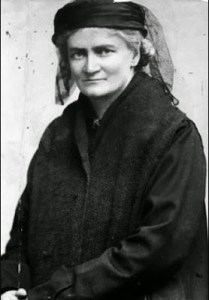
The Honourable Violet Albina Gibson, daughter of Lord Ashbourne, attempts to assassinate Benito Mussolini in Rome on April 7, 1926.

Gibson is born in Dublin in 1876. Her father, Edward Gibson, is an Irish lawyer and politician who is created Baron Ashbourne in 1886. She becomes a Roman Catholic in 1902.

In 1924, after spending two years in a mental institution, Gibson is released and goes to Rome accompanied by a nurse, Mary McGrath. They take up residence in a convent in a working-class neighborhood with a high crime rate. Her crisis of conscience grows as she becomes more convinced that killing is the sacrifice that God is asking of her. During this time, she somehow gains possession of a gun.

On February 27, 1925, Gibson goes to her room, reads the Bible, and then shoots herself in the chest. The bullet misses her heart, passes through her ribcage, and lodges in her shoulder. She tells McGrath that she wants to die for God. She recovers from the wound.

On Wednesday, April 7, 1926, Gibson leaves the convent after breakfast. In her right pocket she carries a revolver wrapped in a black veil. In her left pocket she carries a rock in case she has to break a windshield to get to Mussolini. She also clutches the address of the Fascist Party headquarters written on a scrap of envelope as she has read in the newspaper that Mussolini will be there in the afternoon.

Mussolini appears as scheduled and walks through the Palazzo del Littorio, soaking in the praise of the crowd. He stops about a foot from where Gibson is standing. Just before the gun goes off, Mussolini leans his head back to acknowledge the crowd’s adoration and the bullet grazes his nose. Gibson shoots again but the gun misfires.

Mussolini maintains his composure and consoles the crowd saying, “Don’t be afraid. This is a mere trifle.” Gibson is immediately captured and beaten by the crowd. The police gain control of the situation and take her away just before she succumbs to vigilante justice.

At the time of the assassination attempt Gibson is almost fifty years old and does not explain her reason for trying to assassinate Mussolini. It is theorised that Gibson is insane at the time of the attack and the idea of assassinating Mussolini is hers and that she worked alone. In a statement in reply to the questions of the Crown prosecutor, Gibson says she felt impelled by a “supernatural force entrusting her with a lofty mission.”

Gibson is later deported to Britain after being released without charge at the request of Mussolini. She spends the rest of her life in a mental asylum, St. Andrew’s Hospital in Northampton. She dies on May 2, 1956, and is buried in Kingsthorpe Cemetery, Northampton. No one attends her burial.


Leave a comment

First Public Unveiling of the Irish Tricolour

irish-flag

At a meeting in his native Waterford on March 7, 1848, the Young Ireland leader Thomas Francis Meagher first publicly unveils the flag from a second-floor window of the Wolfe Tone Club.

Following the Irish Rebellion of 1798, which pits the “green” United Irishmen against the Orange Order who are traditionally loyal to the British Crown, the ideal of making peace between both traditions in a self-governed Ireland is first mooted.

The oldest known reference to the use of green, white, and orange as a nationalist emblem date from September 1830 when the colours are used for rosettes and badges. Since that historical period the use of the tricolour becomes the preferred mark of a republic in national flags. However, widespread recognition is not accorded to the flag until 1848.

Presented to Meagher as a gift in 1848 by a small group of French women symathetic to the Irish cause, the flag flies proudly as Meagher addresses the Waterford crowd gathered on the street below who are celebrating news of the French Revolution. Speeches made at that time by Meagher suggest that it is regarded as an innovation and not as the revival of an older flag.

From March 1848 Irish tricolours appear side-by-side with French “tricolores” at meetings held all over the country. John Mitchel, referring to the provisional Irish banner which Meagher had presented at a meeting in Dublin on April 15, 1848, says, “I hope to see that flag one day waving as our national banner.”

Although the tricolour is not forgotten as a symbol of a free Ireland, it is rarely used between 1848 and 1916. Even up to the eve of the 1916 Easter Rising, the green flag featuring a harp holds undisputed sway. Neither the colours nor the arrangement of the early tricolours are standardised. All of the 1848 tricolours show green, white, and orange, but orange is sometimes put next to the staff, and, in at least one flag, the order is orange, green and white.

In 1850, a flag of green for the Roman Catholics, orange for the Protestants of the Established Church, and blue for the Presbyterians is proposed.

In 1883, a Parnellite tricolour of yellow, white, and green, arranged horizontally, is proposed. Down to modern times, yellow has occasionally been used instead of orange but such substitution tarnish’s the tricolour’s fundamental symbolism.

The flag is adopted by the rebels in the 1916 Easter Rising rebels and raised above the General Post Office in Dublin. This marks the first time that the tricolour is regarded as the national flag. It is subsequently adopted by the Irish Republic during the Irish War of Independence (1919–1921). Its use is continued by the Irish Free State (1922–1937) and is later given constitutional status under the 1937 Constitution of Ireland. The tricolour is used by nationalists on both sides of the border as the national flag of the whole island of Ireland since 1916.


Leave a comment

The Founding of Trinity College, Dublin

trinity-college

On March 3, 1592, a small group of Dublin citizens obtain a charter by way of letters patent from Queen Elizabeth I incorporating the College of the Holy and Undivided Trinity, later to become known as Trinity College (Coláiste na Tríonóide). It is one of the seven ancient universities of Britain and Ireland, as well as Ireland’s oldest university.

Originally established outside the city walls of Dublin in the buildings of the dissolved Augustinian Priory of All Hallows, Trinity College is set up in part to consolidate the rule of the Tudor monarchy in Ireland, and it is seen as the university of the Protestant Ascendancy for much of its history. Although Catholics and Dissenters have been permitted to enter since as early as 1793, certain restrictions on their membership to the college, such as professorships, fellowships, and scholarships, remain until 1873. From 1956 to 1970, the Catholic Church in Ireland forbids its adherents from attending Trinity College without permission from their archbishop. Women are first admitted to the college as full members in January 1904.

long-room-trinity-college

Trinity College is now surrounded by Dublin and is located on College Green, opposite the former Irish Houses of Parliament. The college proper occupies 47 acres, with many of its buildings arranged around large quadrangles and two playing fields. Academically, it is divided into three faculties comprising 25 schools, offering degree and diploma courses at both undergraduate and postgraduate levels.

In 2015, Trinity College is ranked by the Times Higher Education World University Rankings as the 160th best university in the world. The QS World University Rankings places Trinity as the 78th best. The Academic Ranking of World Universities has it within the 151–200 range. All three publications rank Trinity College as the best university in Ireland. The Library of Trinity College is a legal deposit library for Ireland and the United Kingdom, containing over 4.5 million printed volumes and significant quantities of maps, music, and manuscripts, including the Book of Kells.

On a side note, the organization of the exhibits within the main building of the William J. Clinton Presidential Center in downtown Little Rock, Arkansas was inspired by the famous Long Room in the Old Library at Trinity College, which Bill Clinton first saw when he was a Rhodes Scholar.


Leave a comment

Pope Gregory XIII Commissions the Gregorian Calendar

pope-gregory-xiii

Pope Gregory XIII commissions the new Gregorian calendar on February 24, 1582, replacing the Julian calendar introduced by Julius Caesar in 45BCE.

The reason for the reform is that the average length of the year in the Julian calendar is too long. It treats each year as 365 days, 6 hours in length, whereas calculations show that the actual mean length of a year is 365 days, 5 hours, and 49 minutes. As a result, the date of the actual vernal equinox, over the course of 13 centuries, has slowly slipped to March 10, while the calculation of the date of Easter still follows the traditional date of March 21.

These calculations are verified by the observations of mathematician and astronomer Christopher Clavius, and the new calendar is instituted when Gregory decrees on February 24, 1582, that the day after Thursday, October 4, 1582 will not be Friday, October 5, but rather Friday, October 15, 1582. The new calendar duly replaces the Julian calendar and has since come into universal use. Because of Gregory’s involvement, the reformed Julian calendar comes to be known as the Gregorian calendar.

The switchover is bitterly opposed by much of the populace, who fear it is an attempt by landlords to cheat them out of a week and a half of rent. However, the Catholic countries of Spain, Portugal, Poland, and Italy comply almost immediately. France, some states of the Dutch Republic, and various Catholic states in Germany and Switzerland follow suit within a year or two, and Hungary follows in 1587.

More than a century passes before Protestant Europe accepts the new calendar. Denmark, the remaining states of the Dutch Republic, and the Protestant states of the Holy Roman Empire and Switzerland adopt the Gregorian calendar in 1700–1701. Ireland and Great Britain, along with its American colonies, reform in 1752, where Wednesday, September 2, 1752 is immediately followed by Thursday, September 14, 1752. They are joined by the last Protestant holdout, Sweden, on March 1, 1753.

The Gregorian calendar is not accepted in eastern Christendom for several hundred years, and then only as the civil calendar. The Gregorian Calendar is instituted in Russia by the Bolsheviks in 1917. Romania accepts it in 1919 and is followed by Turkey in 1923. The last Orthodox country to accept the calendar is Greece, also in 1923.


Leave a comment

Birth of Mother Mary Frances Aikenhead

mary-aikenhead

Mother Mary Frances Aikenhead, founder of the Catholic religious institute, the Religious Sisters of Charity, and of St. Vincent’s Hospital in Dublin, is born in Daunt’s Square off Grand Parade, County Cork, on January 19, 1787.

Aikenhead is baptised in the Anglican Communion on April 4, 1787. Since she is quite frail and possibly asthmatic, it was recommended that she be fostered with a nanny named Mary Rourke who lives on higher ground on Eason’s Hill, Shandon, Cork. It is believed that she is secretly baptised a Catholic by Mary Rourke, who is a devout Catholic. Aikenhead’s parents visit every week until 1793 when her father, Dr. David Aikenhead, decides he wants her to rejoin the family in Daunt’s Square.

By the early 1790s, Aikenhead’s father has become imbibed by the principles of the United Irishmen. On one occasion Lord Edward FitzGerald, disguised as a Quaker, seeks refuge in the Aikenhead home. He is enjoying dinner with the family when the house is surrounded by troops. Fitzgerald manages to slip away but the house is searched but no incriminating documents are found.

On June 6, 1802, at age of fifteen, Aikenhead is officially baptised a Roman Catholic. In 1808, she goes to stay with her friend Anne O’Brien in Dublin. Here she witnesses widespread unemployment and poverty and soon begins to accompany her friend in visiting the poor and sick in their homes. After many years in charity work and feeling the call to religious life, she looks in vain for a religious institute devoted to outside charitable work.

Aikenhead is chosen by Archbishop Murray, Bishop Coadjutor of Dublin, to carry out his plan of founding a congregation of the Sisters of Charity in Ireland. From 1812 – 1815 she is a novitiate in the Convent of the Institute of the Blessed Virgin at Micklegate Bar, York. It is there she assumes the name Sister Mary Augustine, which she keeps for the rest of her life.

On September 1, 1815, the initial members of the Convent of the Institute take their vows and Sister Mary Augustine is appointed Superior-General. The following sixteen years are filled with arduous work – organizing the community and extending its sphere of labor to every phase of charity, chiefly hospital and rescue work.

In 1831, overexertion and disease take a toll Sister Mary Augustine’s health, leaving her an invalid. Her activity is unceasing, however, as she directs her sisters in their work during the plague of 1832, places them in charge of new institutions, and sends them on missions to France and Australia. She also founds St. Margaret’s Hospice, which has been known as St. Margaret of Scotland Hospice since 1950.

Sister Mary Augustine dies in Dublin on July 22, 1858 at 71 years of age. She leaves her institute in a flourishing condition, in charge of ten institutions, besides innumerable missions and branches of charitable work. She is buried in the cemetery adjacent to St. Mary Magdalen’s, Donnybrook.


Leave a comment

Hugh O’Brien – First Irish Mayor of Boston

hugh-obrien

Hugh O’Brien is sworn in as Boston’s 31st mayor and first Irish mayor on January 5, 1885, marking the beginning of a new era in Boston politics.

Born in Ireland on July 13, 1827, O’Brien moves with his family to Boston when he is five years old, well before the potato famine sends waves of impoverished Irish men and women to Boston. He spends seven years in the Boston public schools and is apprenticed to a printer at the age of 12.

Working first for the newspaper Boston Courier and then for a Boston printer, O’Brien excels at the printing business, making foreman when he is only fifteen. He starts his own publication, Shipping and Commercial List, and is soon successful enough to become a respected member of the Boston business elite.

O’Brien’s business success draws the attention of Patrick Maguire, publisher of The Republic newspaper and the unofficial head of Irish politics in Boston. He orchestrates O’Brien’s election to the city’s Board of Aldermen.

Boston has long been controlled by native-born Protestants, generally called “Yankees,” most of whom have a stereotypical view of Irish immigrants as poor, ignorant, undisciplined, and under the thumb of the Catholic Church. But the Irish-born population of Boston is exploding, making up over 40% of the city’s population by 1885.

By 1883, Maguire decides that the time has come for Boston to elect an Irish-born mayor. He devises a two-part strategy. O’Brien will be the public face of the campaign, an able public official who criticizes the previous administration for increasing taxes. O’Brien’s pledge to reduce the tax rate without cutting city services appeals to the Yankee tradition of frugality. Meanwhile, behind the scenes, Maguire develops a system of Irish ward bosses who visit each household in the neighborhood and make sure that every eligible Irishman votes for O’Brien. O’Brien sweeps 15 of Boston’s 25 wards and, on December 10, 1884, becomes the first Irish Catholic to be elected Mayor of Boston.

O’Brien surprises the opposition by governing the city in a conservative and honest way during his four terms in office. He cuts tax rates as promised. He also widens streets, establishes the commission that hires Frederick Law Olmsted to design the Emerald Necklace park system, and builds the new Boston Public Library in Copley Square. He disarms his critics by enlisting Yankee and Republican businessmen to serve on the committees overseeing these projects.

Hugh O’Brien dies on August 1, 1895, and is buried at Holyhood Cemetery in Brookline, Massachusetts.


Leave a comment

Death of Archbishop John Joseph Hughes

john-joseph-hughes

John Joseph Hughes, Irish-born prelate of the Roman Catholic Church in the United States and the fourth Bishop and first Archbishop of the Archdiocese of New York, dies in New York City on January 3, 1864.

Hughes is born in the hamlet of Annaloghan, near Aughnacloy, County Tyrone. He emigrates to the United States in 1817.

After several unsuccessful applications to Mount St. Mary’s College in Emmitsburg, Maryland, he is eventually hired as a gardener at the college. During this time, he befriends Mother Elizabeth Ann Seton, who is impressed by Hughes and persuades the rector to reconsider his admission. Hughes is subsequently admitted as a regular student of Mount St. Mary’s in September 1820.

On October 15, 1826, Hughes is ordained to the priesthood by Bishop Henry Conwell at Old St. Joseph’s Church in Philadelphia. His first assignment is as a curate at St. Augustine Church in Philadelphia, where he assists its pastor by celebrating Mass, hearing confessions, preaching sermons, and other duties in the parish.

Hughes is chosen by Pope Gregory XVI as the coadjutor bishop of the Diocese of New York on August 7, 1837. He is consecrated bishop at St. Patrick’s Old Cathedral on January 7, 1838, with the title of the titular see of Basilinopolis, by the Bishop of New York, John Dubois, his former Rector.

Hughes campaigns actively on behalf of Irish immigrants and attempts to secure state support for parochial schools. Although this attempt fails, he founds an independent Catholic school system which becomes an integral part of the Catholic Church’s structure at the Third Plenary Council of Baltimore (1884), which mandates that all parishes have a school and that all Catholic children be sent to those schools. In 1841, Hughes founds St. John’s College in New York City which is now Fordham University.

Hughes is appointed Apostolic Administrator of the diocese due to Bishop Dubois’ failing health. As coadjutor, he automatically succeeds Dubois upon the bishop’s death on December 20, 1842, taking over a diocese which covers the entire state of New York and northern New Jersey. He is a staunch opponent of Abolitionism and the Free Soil movement, whose proponents often express anti-Catholic attitudes. Hughes also founds the Ultramontane newspaper New York Freeman to express his ideas.

Hughes becomes an archbishop on July 19, 1850, when the diocese is elevated to the status of archdiocese by Pope Pius IX. As archbishop, he becomes the metropolitan for the Catholic bishops serving all the dioceses established in the entire Northeastern United States. To the dismay of many in New York’s Protestant upper-class, Hughes foresees the uptown expansion of the city and begins construction of the current St. Patrick’s Cathedral on Fifth Avenue between 50th and 51st Street, laying its cornerstone on August 15, 1858. At the request of President Abraham Lincoln, Hughes serves as semiofficial envoy to the Vatican and to France in late 1861 and early 1862. Lincoln also seeks Hughes’ advice on the appointment of hospital chaplains.

Hughes serves as archbishop until his death. He is originally buried in St. Patrick’s Old Cathedral, but his remains are exhumed in 1882 and reinterred in the crypt under the altar of the new cathedral he had begun.