seamus dubhghaill

Promoting Irish Culture and History from Little Rock, Arkansas, USA


Leave a comment

Birth of Eleanor Charlotte Butler, Recluse of Llangollen

Eleanor Charlotte Butler, recluse of Llangollen, is born in Cambrai, France, on May 11, 1739.

Butler is the youngest daughter of Walter Butler of Garryricken, County Tipperary, and his wife, Ellen (née Morres), of Latargh, County Tipperary. Her family are members of the old Catholic gentry, and her father is the sole lineal representative of James Butler, 2nd Duke of Ormonde. In 1740 her family returns to the Garryricken estate, where she spends part of her childhood. She is educated by the English Benedictine nuns of the convent of Our Lady of Consolation in Cambrai, where her Jacobite grand-aunt is a pensioner. Reared in the liberal and anti-clerical environment at Cambrai, she is open about her opposition to Irish Catholicism. She is also well read in literature.

By the time Butler returns to Ireland, her brother John had claimed the family titles and was recognised as 16th Earl of Ormond. Though he never uses the title, his sisters are recognised as the daughters of an earl. As the family is impoverished, and she is not disposed to marriage, a decade is passed in unhappiness. Then, in 1768, the thirteen-year-old Sarah Ponsonby arrives in Kilkenny to attend a local school. Following her visit to the Butler home at Kilkenny Castle, and despite the difference in age, the two form an immediate friendship and corresponded secretly, having discovered their mutual interest in the arts and Rousseau‘s ideal of pastoral retirement.

Ponsonby, upon finishing school, is sent to live with relatives at nearby Woodstock Estate, and there is subject to the uninvited attention of a middle-aged guardian. Butler is discontented with her life and the prospects of her family’s wish to send her back to Cambrai, so the two plan to leave their difficulties behind and settle in England. In their first attempt to flee in March 1778, they leave for Waterford disguised as men and wielding pistols, but their families manage to catch up with them. Butler is then sent to the home of her brother-in-law, Thomas ‘Monarch’ Kavanagh of Borris, County Carlow, but makes a second, successful attempt and runs away to find Ponsonby at Woodstock Estate. Her persistence wins out when both families finally capitulate and accepted their plans to live together.

Butler and Ponsonby set out for Wales in May 1778 and, after an extensive tour of Wales and Shropshire, eventually settle in Llangollen Vale, where they rent a cottage which is renamed Plas Newydd. They are accompanied by Mary Carryll, a former servant of the Woodstock household, who remains in their service until her death in 1809. Having made a deliberate decision to retire from the world, they spend the greater part of their days corresponding with friends, reading, building up a large library and making alterations to Plas Newydd, which takes on a fashionable Gothic look. Their garden, landscaped under their direction, becomes a popular attraction for visitors. Butler meticulously records their daily routine in a series of journals, some of which are now lost.

Their seclusion, eccentricities, semi-masculine dress and short-cropped powdered hair gain them notoriety, and it becomes fashionable to call on them. Their numerous and illustrious visitors include Hester Lynch Piozzi, Charles and Erasmus Darwin, Sir Walter Scott, Sir Arthur Wellesley, the Duke of Gloucester and Josiah Wedgwood. In 1792 they entertain Stéphanie Caroline Anne Syms, later that year to become the wife of Lord Edward FitzGerald, and her mother, Madame de Genlis. Following the arrest of Edward FitzGerald in 1798, Stéphanie and her suite flee to London and on May 27 pass through Llangollen, where the events in Dublin are already known. On hearing that she is staying in the local inn, Butler and Ponsonby invite her to call in. However, when she wishes to stay for the day, their apprehension of Jacobinism leads them to persuade her “principally for her own sake and a little for [our] own to proceed as fast and as incognito as possible for London.”

Both Anna Seward and William Wordsworth, who stay at Plas Newydd, write poems celebrating their friendship, and Lord Byron sends them a copy of The Corsair. Owing to her support of the Bourbons, Butler is sent the Croix St. Louis, which she wears about her neck. Though generally considered a hospitable couple, Seward, who is a good friend, admits that the “incessant homage” they received could make Butler “haughty and imperious,” while Lady Lonsdale thinks her “very clever, very odd.” Their celebrity does have its drawbacks: an article in the General Evening Post of July 24, 1790, entitled “Extraordinary female affection,” suggests indirectly that their relationship is unnatural. Butler is particularly angered by this publicity and appeals to Edmund Burke for legal advice. Their retirement is also continually dogged by financial difficulties. They live mainly off their respective allowances and Butler’s royal pension (granted through the influence of Lady Frances Douglas), but spend beyond their means and are often in debt. To add to their problems, Butler receives no mention in her father’s will. However, the Gothic eccentricities of their cottage, which they succeed over time in purchasing, and garden attract even the interest of Queen Charlotte.

Though it is claimed that neither woman spends a night away from Plas Newydd, in January 1786 they stay with their friends, the Barretts of Oswestry, and that September they visit Sir Henry Bridgeman of Weston Park, near Staffordshire. In June 1797 they take their only holiday, at the coastal resort of Barmouth. Despite their isolation they are well informed about international events and society gossip. The Irish serjeant-at-law Charles Kendal Bushe recalls how they gave him all the news of Dublin, London, Cheltenham, and Paris.

In later years Butler’s eyesight deteriorates, preventing her from keeping her journal. She is secretly painted as an old woman with Ponsonby by Lady Mary Leighton and sketched by Lady Henrietta Delamere. A distinctive, anonymous silhouette shows the two generously proportioned women in traditional riding habits (National Portrait Gallery, London). Butler dies on June 2, 1829, and is buried alongside Carryll at Llangollen church. Sarah Ponsonby is subsequently buried with them.

(From: “Butler, Lady (Charlotte) Eleanor” by Frances Clarke, Dictionary of Irish Biography, http://www.dib.ie)

Leave a comment

Death of Lady Eleanor Charlotte Butler, Recluse of Llangollen

Lady Eleanor Charlotte Butler, daughter of the 16th Earl of Ormonde and recluse of Llangollen, dies on June 2, 1829.

Butler is born in Cambrai, France, the youngest daughter of Walter Butler, 16th Earl of Ormonde, of Garryricken, County Tipperary, and his wife, Ellen (née Morres), of Latargh, County Tipperary. Her family are members of the old Catholic gentry, and her father is the sole lineal representative of James Butler, 2nd Duke of Ormonde. In 1740 her family returns to the Garryricken estate, where she spends part of her childhood. She is educated by the English Benedictine nuns of the convent of Our Lady of Consolation in Cambrai, where her Jacobite grand-aunt is a pensioner. Reared in the liberal and anti-clerical environment at Cambrai, she is open about her opposition to Irish Catholicism. She is also well read in literature.

By the time Butler returns to Ireland, her brother John has claimed the family titles and is recognised as 17th Earl of Ormonde. Though he never uses the title, his sisters are recognised as the daughters of an earl. As the family is impoverished, and she is not disposed to marriage, a decade is passed in unhappiness. Then in 1768 the thirteen-year-old Sarah Ponsonby arrives in Kilkenny to attend a local school. Following her visit to the Butler home at Kilkenny Castle, and despite the difference in age, the two form an immediate friendship and correspond secretly, having discovered their mutual interest in the arts and Jean-Jacques Rousseau‘s ideal of pastoral retirement.

Ponsonby, on finishing school, is sent to live with relatives at the nearby Woodstock Estate, and there is subject to the uninvited attention of a middle-aged guardian. Butler is discontented with her life and the prospects of her family’s wish to send her back to Cambrai, so the two plan to leave their difficulties behind and settle in England. In their first attempt to flee in March 1778, they leave for Waterford disguised as men and wielding pistols, but their families manage to catch up with them. Butler is then sent to the home of her brother-in-law Thomas ‘Monarch’ Kavanagh of Borris, County Carlow, but makes a second, successful attempt and runs away to find Ponsonby at the Woodstock Estate. Her persistence wins out when both families finally capitulate and accept their plans to live together.

The two set out for Wales in May 1778 and, after an extensive tour of Wales and Shropshire, eventually settle in Llangollen Vale, where they rent a cottage which is renamed Plas Newydd. They are accompanied by Mary Carryl, a former servant of the Woodstock household, who remains in their service until her death in 1809. Having made a deliberate decision to retire from the world, they spend the greater part of their days corresponding with friends, reading, building up a large library and making alterations to Plas Newydd, which takes on a fashionable Gothic look. Their garden, landscaped under their direction, becomes a popular attraction for visitors. Butler meticulously records their daily routine in a series of journals, some of which are now lost.

Their seclusion, eccentricities, semi-masculine dress and short-cropped powdered hair gain them notoriety, and it becomes fashionable to call on them. Their numerous and illustrious visitors include Hester Lynch Piozzi, Charles and Erasmus Darwin, Sir Walter Scott, Sir Arthur Wellesley, the Duke of Gloucester and Josiah Wedgwood. In 1792 they entertain Pamela Sims, later that year to become the wife of Lord Edward FitzGerald, and her mother Madame de Genlis. Following the arrest of Edward FitzGerald in 1798, Pamela and her suite flee to London and on May 27 pass through Llangollen, where the events in Dublin are already known. On hearing that Pamela FitzGerald is staying in the local inn, Butler and Ponsonby invite her to call in. However, when Pamela wishes to stay for the day, their apprehension of Jacobinism leads them to persuade her “principally for her own sake and a little for [our] own to proceed as fast and as incognito as possible for London.”

Both Anna Seward and William Wordsworth, who stay at Plas Newydd, write poems celebrating their friendship, and Lord Byron sends them a copy of The corsair. Owing to her support of the Bourbons, Butler is sent the Croix St. Louis, which she wears about her neck. Their celebrity does have its drawbacks: an article in the General Evening Post of July 24, 1790, entitled ‘Extraordinary female affection’, suggests indirectly that their relationship is unnatural. Butler is particularly angered by this publicity and appeals to Edmund Burke for legal advice. Their retirement is also continually dogged by financial difficulties. They live mainly off their respective allowances and Butler’s royal pension, granted through the influence of Lady Frances Douglas, but spend beyond their means and are often in debt. To add to their problems, Butler receives no mention in her father’s will. However, the Gothic eccentricities of their cottage, which they succeed over time in purchasing, and garden attract even the interest of Queen Charlotte.

Though it is claimed that neither woman spent a night away from Plas Newydd, in January 1786 they stay with their friends the Barretts of Oswestry, and that September they visit Sir Henry Bridgeman of Weston Park, near Staffordshire. In June 1797 they take their only holiday, at the coastal resort of Barmouth. Despite their isolation they are well informed about international events and society gossip. The Irish serjeant-at-law Charles Kendal Bushe recalls how they gave him all the news of Dublin, London, Cheltenham, and Paris. In later years Butler’s eyesight deteriorates, preventing her from keeping her journal. She is secretly painted as an old woman with Ponsonby by Lady Mary Leighton and sketched by Lady Henrietta Delamere. A distinctive, anonymous silhouette shows the two generously proportioned women in traditional riding habits (National Portrait Gallery, London).

Butler dies on June 2, 1829, and is buried alongside Mary Carryl at St. Collen’s Church in Llangollen. Sarah Ponsonby is subsequently buried with them.

(From: “Butler, Lady (Charlotte) Eleanor” by Frances Clarke, Dictionary of Irish Biography, http://www.dib.ie)


Leave a comment

Birth of Jimmy Kennedy, Songwriter & Lyricist

jimmy-kennedy-1

James Kennedy, songwriter and lyricist, is born on July 20, 1902, near Omagh, County Tyrone in what is now Northern Ireland. He puts words to existing music such as “The Teddy Bears’ Picnic” and “My Prayer” and co-writes with composers Michael Carr, Wilhelm Grosz and Nat Simon, among others. In a career spanning more than fifty years, he writes some 2,000 songs, of which over 200 become worldwide hits and about 50 are all-time popular music classics.

Kennedy’s father, Joseph Hamilton Kennedy, is a policeman in the Royal Irish Constabulary (RIC). While growing up in the village of Coagh, Kennedy writes several songs and poems. He is inspired by local surroundings — the view of the Ballinderry River, the local Springhill House and the plentiful chestnut trees on his family’s property, as evidenced in his poem Chestnut Trees. He later moves to Portstewart, a seaside resort in County Londonderry.

Kennedy graduates from Trinity College, Dublin, before teaching in England. He is accepted into the Colonial Service, as a civil servant, in 1927.

While awaiting a Colonial Service posting to the colony of Nigeria, Kennedy embarks on a career in songwriting. His first success comes in 1930 with “The Barmaid’s Song”, sung by Gracie Fields. Fellow lyricist Harry Castling introduces him to Bert Feldman, a music publisher based in London‘s “Tin Pan Alley“, for whom he starts to work. In the early 1930s he writes a number of successful songs, including “Oh, Donna Clara” (1930), “My Song Goes Round the World” (1931), and “The Teddy Bears’ Picnic” (1933), in which he provides new lyrics to John Walter Bratton‘s tune from 1907.

In 1934, Feldman turns down Kennedy’s song “Isle of Capri“, but it becomes a major hit for a new publisher, Peter Maurice. He writes several more successful songs for Maurice, including “Red Sails in the Sunset” (1935), inspired by beautiful summer evenings in Portstewart, Northern Ireland, “Harbour Lights” (1937) and “South of the Border” (1939), inspired by a holiday picture postcard he receives from Tijuana, Mexico and written with composer Michael Carr. He and Carr also collaborate on several West End shows in the 1930s, including London Rhapsody (1937). “My Prayer,” with original music by Georges Boulanger, has English lyrics penned by Kennedy in 1939. It is originally written by Boulanger with the title “Avant de Mourir” in 1926.

During the early stages of World War II, while serving in the British Army‘s Royal Artillery, where he rises to the rank of Captain, Kennedy writes the wartime hit, “We’re Going to Hang out the Washing on the Siegfried Line.” His hits also include “Cokey Cokey” (1945), and the English lyrics to “Lili Marlene.” After the end of the war, his songs include “Apple Blossom Wedding” (1947), “Istanbul (Not Constantinople)” (1953), and “Love Is Like a Violin” (1960). In the 1960s he writes the song “The Banks of the Erne'”, for recording by his friend from the war years, Theo Hyde, also known as Ray Warren.

Kennedy is a patron of the Castlebar Song Contest from 1973 until his death in 1984 and his association with the event adds great prestige to the contest.

Kennedy wins two Ivor Novello Awards for his contribution to music and receives an honorary degree from the New University of Ulster. He is awarded the OBE in 1983 and, in 1997, is posthumously inducted into the Songwriter’s Hall of Fame.

Jimmy Kennedy dies in Cheltenham on April 6, 1984, at the age of 81. He is interred in Taunton, Somerset.


Leave a comment

Death of Songwriter & Lyricist Jimmy Kennedy

jimmy-kennedy

James Kennedy, a Northern Irish songwriter and lyricist, dies in Cheltenham, Gloucestershire, England on April 6, 1984. In a career spanning more than fifty years, he writes some 2,000 songs, of which over 200 become worldwide hits and about 50 are all-time popular music classics. Until the duo of John Lennon and Paul McCartney, Kennedy has more hits in the United States than any other Irish or British songwriter.

Kennedy is born near Omagh, County Tyrone, Northern Ireland. His father, Joseph Hamilton Kennedy, is a policeman in the Royal Irish Constabulary, which exists before the partition of Ireland. While growing up in Coagh, Kennedy writes several songs and poems. He is inspired by local surroundings such as the view of the Ballinderry river, the local Springhill house and the plentiful chestnut trees on his family’s property, as evidenced in his poem Chestnut Trees. Kennedy later moves to Portstewart, a seaside resort.

Kennedy graduates from Trinity College, Dublin, before teaching in England. He is accepted into the Colonial Service, as a civil servant, in 1927.

While awaiting a Colonial Service posting to the colony of Nigeria, Kennedy embarks on a career in songwriting. His first success comes in 1930 with The Barmaid’s Song, sung by Gracie Fields. Fellow lyricist Harry Castling introduces him to Bert Feldman, a music publisher based in London‘s “Tin Pan Alley,” for whom Kennedy starts to work. In the early 1930s he writes a number of successful songs, including Oh, Donna Clara (1930), My Song Goes Round the World (1931), and The Teddy Bears’ Picnic (1933), in which he provides new lyrics to John Walter Bratton‘s tune from 1907.

In 1934, Feldman turns down Kennedy’s song Isle of Capri, but it becomes a major hit for a new publisher, Peter Maurice. He writes several more successful songs for Maurice, including Red Sails in the Sunset (1935), inspired by beautiful summer evenings in Portstewart, Northern Ireland, Harbor Lights (1937) and South of the Border (1939), inspired by a holiday picture postcard he receives from Tijuana, Mexico, and written with composer Michael Carr. Kennedy and Carr also collaborate on several West End theatre shows in the 1930s, including London Rhapsody (1937). My Prayer, with original music by Georges Boulanger, has English lyrics penned by Kennedy in 1939. It is originally written by Boulanger with the title Avant de Mourir in 1926.

During the early stages of World War II, while serving in the British Army‘s Royal Artillery, where he rises to the rank of Captain, Kennedy writes the wartime hit, We’re Going to Hang out the Washing on the Siegfried Line. His hits also include Cokey Cokey (1945), and the English lyrics to Lili Marlene. After the end of the war, his songs include Apple Blossom Wedding (1947), Istanbul (Not Constantinople) (1953), and Love Is Like a Violin (1960). In the 1960s he writes the song The Banks of the Erne, for recording by his friend from the war years, Theo Hyde, also known as Ray Warren.

Kennedy is a patron of the Castlebar International Song Contest from 1973 until his death in 1984 and his association with the event adds great prestige to the contest. He wins two Ivor Novello Awards for his contribution to music and receives an honorary degree from the New University of Ulster. He is awarded the Order of the British Empire (OBE) in 1983.

Jimmy Kennedy dies in Cheltenham on April 6, 1984, at the age of 81, and was interred in Taunton, Somerset. In 1997 he is posthumously inducted into the Songwriter’s Hall of Fame.


Leave a comment

Birth of Conel Hugh O’Donel Alexander, Cryptanalyst & Chess Player

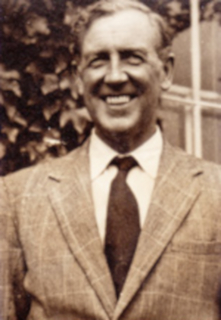
Conel Hugh O’Donel Alexander, Irish-born British cryptanalyst, chess player, and chess writer, is born in CorkCounty Cork, on April 19, 1909. He works on the German Enigma machine at Bletchley Park during World War II, and is later the head of the cryptanalysis division at Government Communications Headquarters (GCHQ) for over 20 years. In chess, he twice wins the British Chess Championship and earns the title of International Master. He is usually referred to as C.H.O’D. Alexander in print and Hugh in person.

Alexander is born into an Anglo-Irish family, the eldest child of Conel William Long Alexander, an engineering professor at University College Cork (UCC), and Hilda Barbara Bennett. His father dies during the Irish War of Independence in 1920, and the family moves to Birmingham in England where he attends King Edward’s School. He wins a scholarship to study mathematics at King’s College, Cambridge, in 1928, graduating with a first in 1931. He represents the University of Cambridge in the Varsity chess matches of 1929, 1930, 1931 and 1932.

From 1932, Alexander teaches mathematics in Winchester and marries Enid Constance Crichton Neate on December 22, 1934. In 1938 he leaves teaching and becomes head of research at the John Lewis Partnership.

In February 1940 Alexander arrives at Bletchley Park, the British codebreaking centre during the World War II. He joins Hut 6, the section tasked with breaking German Army and Air Force Enigma messages. In 1941, he transfers to Hut 8, the corresponding hut working on Naval Enigma. He becomes deputy head of Hut 8 under Alan Turing and formally becomes the head of Hut 8 in November 1942. In October 1944, Alexander is transferred to work on the Japanese JN-25 code.

In mid-1946, Alexander joins GCHQ, which is the post-war successor organisation to the Government Code and Cypher School (GC&CS) at Bletchley Park. By 1949, he has been promoted to the head of “Section H” (cryptanalysis), a post he retains until his retirement in 1971.

Alexander is twice a winner of the British Chess Championship, in 1938 and 1956. He represents England in the Chess Olympiad six times, in 1933, 1935, 1937, 1939, 1954 and 1958. At the 1939 Olympiad in Buenos AiresArgentina, Alexander has to leave part-way through the event, along with the rest of the English team, due to the declaration of World War II, as he is required at home for codebreaking duties. He is also the non-playing captain of England from 1964 to 1970. He is awarded the International Master title in 1950 and the International Master for Correspondence Chess title in 1970. He wins the Hastings International Chess Congress 1946/47 with the score 7½/9, a point ahead of Savielly Tartakower. His best tournament result may have been first equal Hastings 1953/54, where he goes undefeated and beats Soviet grandmasters David Bronstein and Alexander Tolush in individual games. He is also the chess columnist of The Sunday Times in the 1960s and 1970s.

Many knowledgeable chess people believe that Alexander had Grandmaster potential, had he been able to develop his chess abilities further. Many top players peak in their late twenties and early thirties, but for Alexander this stretch coincided with World War II, when high-level competitive opportunities were unavailable. After this, his professional responsibilities as a senior cryptanalyst limited his top-class appearances. He defeats Mikhail Botvinnik in one game of a team radio match against the Soviet Union in 1946, at a time when Botvinnik is probably the world’s top player. Alexander makes important theoretical contributions to the Dutch Defence and Petrov’s Defence.

Conel Hugh O’Donel Alexander dies on February 15, 1974, in CheltenhamGloucestershire, England.