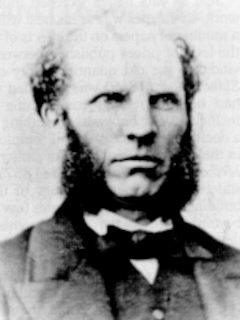
Mitchel is born in Camnish, near Dungiven, County Derry, on November 3, 1815, the son of a Presbyterian minister. At the age of four, he is sent to a classical school, run by an old minister named Moor, nicknamed “Gospel Moor” by the students. He reads books from a very early age. When a little over five years old, he is introduced to Latin grammar by his teacher and makes quick progress. In 1830, not yet 15 years old, he enters Trinity College, Dublin (TCD) and obtains a law degree in 1834.
In the spring of 1836, Mitchel meets Jane Verner, the only daughter of Captain James Verner. Though both families are opposed to the relationship, they become engaged in the autumn and are married on February 3, 1837, by the Rev. David Babington in Drumcree Church, the parish church of Drumcree.
Mitchel works in a law office in Banbridge, County Down, where he eventually comes into conflict with the local Orange Order. He meets Thomas Davis and Charles Gavan Duffy during visits to Dublin. He joins the Young Ireland movement and begins to write for The Nation. Deeply affected by the misery and death caused by the Great Famine, he becomes convinced that nothing will ever come of the constitutional efforts to gain Irish freedom. He then forms his own paper, United Irishmen, to advocate passive resistance by Ireland’s starving masses.
In May 1848, the British tire of Mitchel’s open defiance. Ever the legal innovators in Ireland, they invent a crime especially for the Young Irelanders – felony-treason. They arrest him for violating this new law and close down his paper. A rigged jury convicts him, and he is deported first to Bermuda and then to Australia. However, in June 1853, he escapes to the United States.
Mitchel works as a journalist in New York City and then moves to the South. When the American Civil War erupts, he is a strong supporter of the Southern cause, seeing parallels with the position of the Irish. His family fully backs his commitment to the Southern cause. He loses two sons in the war, one at the Battle of Gettysburg in 1863 and another at the Battle of Fort Sumter in 1864, and another son loses an arm. His outspoken support of the Confederacy causes him to be jailed for a time at Fort Monroe, where one of his fellow prisoners is Confederate PresidentJefferson Davis.
In 1874, the British allow Mitchel to return to Ireland and in 1875 he is elected in a by-election to be a member of the Parliament of the United Kingdom representing the Tipperary constituency. However, his election is invalidated on the grounds that he is a convicted felon. He contests the seat again in the resulting by-election and is again elected, this time with an increased vote.
Unfortunately, Mitchel, one of the staunchest enemies to English rule of Ireland in history, dies in Newry on March 20, 1875. He is buried in his parents’ grave in the unitarian cemetery, High Street, Newry, where a monument is later erected by his widow. He is also commemorated by a statue in Newry. Thirty-eight years later, his grandson, John Purroy Mitchel, is elected Mayor of New York City.
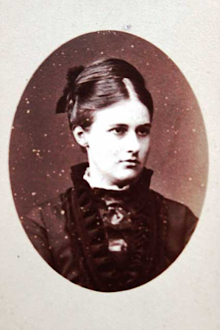
Mitchel is born Jane Verner around 1820 near Newry, County Down. At the time she, her brother and her mother, Mary Ward, are living with Captain James Verner (1777–1847), who is from a prominent Armagh family, and is involved in the Orange Order, going on to become Orange deputy grandmaster of Ireland in 1824. Although James Verner raises Mitchel, she is not believed to be his child. She attends Miss Bryden’s School for Young Ladies in Newry.
Mitchel meets her husband, John Mitchel, when she is fifteen. The couple elopes in November 1836, but do not marry as James Verner pursues them to Chester and brings her home to Ireland. They elope again in 1837, and are married at Drumcree Church, County Armagh, on February 3. At this point, Mitchel is disowned by James Verner, and goes to live with her in-laws at Dromalane, County Down. They then move to Banbridge in 1839 where her husband practises law. The couple goes on to have six children, three daughters and three sons.
The couple moves to Dublin in October 1845 when John Mitchel becomes the assistant editor of The Nation. They live at 8 Ontario Terrace, Rathmines, where they meet Young Irelanders. She is a full supporter of her husband’s nationalism. She aids in his work with The Nation, reading other newspapers, keeping and filing reference clippings, going on to become an editor and anonymous contributor to the United Irishman from February 1848. John Mitchel is convicted of treason for inciting insurrection in May 1848, and is sentenced to fourteen years’ transportation. Mitchel urges his fellow Young Irelanders to fight his removal, and denounces them when they fail to come out in support of him.
Due to her standing in the nationalist community, £1,450 is raised to support her and her family. For three years, Mitchel lives in Newry and Dublin, before she joins her husband in Van Diemen’s Land (Tasmania) in June 1851, where they settle in the village of Bothwell. Their youngest child, Isabel, is born there in 1853.
The Mitchels travel around the island with her husband, visiting fellow Irish exiles, becoming fond of William Smith O’Brien in particular.
When John Mitchel escapes in July 1853, Mitchel travels with her children to join him in Sydney, from where they sail to the United States. They live for a time in Brooklyn, New York, from 1853 to 1855, rekindling friendships with old friends who are fellow Young Ireland exiles.
In May 1855, the family moves to a remote farm at Tucaleechee Cove in Tennessee. She fears that the isolation and life in a primitive log cabin will be detrimental to their children’s education, and at her behest the family moves to Knoxville, Tennessee, in September 1856. From here, John Mitchel runs a pro-slavery newspaper, the Southern Citizen.
The family moves again in December 1858 to Washington, D.C. Mitchel supports her husband in the Southern cause, albeit with some reservation. Nothing, she says, will induce her “to become the mistress of a slave household.” Her objection to slavery is “the injury it does to the white masters.”
Mitchel accompanies her husband to Paris in September 1860, and in opposition to some of the family, she supports her daughter Henrietta’s conversion to Catholicism and entrance into a convent. She remains in Paris and Ireland with her daughters, while her husband and sons assist the Confederacy during the American Civil War. Without letting her husband know, she resolves to return to America when she hears of her youngest son, William’s, death at Gettysburg in July 1863. She sails with her daughters, Mary and Isabel, as Henrietta had died earlier the same year. While their ship runs a blockade by the Union, the ship is shelled, runs aground, and catches fire near the coast of North Carolina. She and her daughters are unhurt, but lose all of their possessions. By December 1863, she has joined her husband in Richmond, Virginia, remaining their for the rest of the Civil War. Their eldest son, John, is killed in action in July 1864.
The family returns to New York after the war, and John Mitchel sets up another paper, The Irish Citizen (1867–72). Due to lack of funding for the Irish American press and her husband’s ill health results in the family falling into poverty. This is alleviated by a testimonial raised by William and John Dillon in 1873. Mitchel is widowed in March 1875, going on to receive $30,000 from nationalist sympathisers. She invests this money in a photolithographic firm she and her son, James, run. She dies at home in Bedford Park, New York, on December 31, 1899. She is buried in Woodlawn Cemetery, Bronx, New York, with her plot marked with a large Celtic cross. She is survived by two of her children, James (1840–1908) and Mary (1846–1910).
Cairnes is born on December 26, 1823, at Castlebellingham, County Louth, the son of William Elliott Cairnes (1787–1863) of Stameen, near Drogheda, and Marianne Woolsey, whose mother is the sister of Sir William Bellingham, 1st Baronet of Castlebellingham. William decides upon a business career, against the wishes of his mother, Catherine Moore of Moore Hall, Killinchy, and becomes a partner in the Woolsey Brewery at Castlebellingham. In 1825, he starts on his own account in Drogheda, making the Drogheda Brewery an unqualified success. He is remembered for his great business capacity and for the deep interest he takes in charity.
After leaving school, Cairnes spends some years in the counting house of his father at Drogheda. His tastes, however, lay altogether in the direction of study, and he is permitted to enter Trinity College Dublin, where he takes the degree of BA in 1848, and six years later that of MA. After passing through the curriculum of Arts, he engages in the study of Law and is called to the Irish bar. But he lacks a desire to pursue the legal profession, and over some ensuing years, he devotes himself to writing in various publications about social and economic questions and treatises that relate to Ireland. He focuses mostly on political economy, which he studies thoroughly.
While residing in Dublin, Cairnes makes the acquaintance of the Archbishop of DublinRichard Whately, who conceives a very high respect for Cairnes’ character and abilities. In 1856, a vacancy occurs in the chair of political economy at Dublin, founded by Whately, and Cairnes receives the appointment. In accordance with the regulations of the foundation, the lectures of his first year’s course are published. The book appears in 1857 with the title Character and Logical Method of Political Economy. It follows up on and expands John Stuart Mill‘s treatment in the Essays on some Unsettled Questions in Political Economy and forms an admirable introduction to the study of economics as a science. In it the author’s peculiar powers of thought and expression are displayed to the best advantage. Logical exactness, precision of language, and firm grasp of the true nature of economic facts, are the qualities characteristic of this as of all his other works. If the book had done nothing more, it would still have conferred inestimable benefit on political economists by its clear exposition of the true nature and meaning of the ambiguous term law. To the view of the province and method of political economy expounded in this early work the author always remains true, and several of his later essays, such as those on Political Economy and Land, Political Economy and Laissez-Faire, are but reiterations of the same doctrine. His next contribution to economical science is a series of articles on the gold question, published partly in Fraser’s Magazine, in which the probable consequences of the increased supply of gold attendant on the Australian and Californian gold discoveries are analysed with great skill and ability. And a critical article on Michel Chevalier‘s work, On the Probable Fall in the Value of Gold, appears in the Edinburgh Review for July 1860.
In 1861, Cairnes is appointed to the professorship of jurisprudence and political economy in Queens College Galway, and in the following year he publishes his admirable work The Slave Power, one of the finest specimens of applied economic philosophy. The inherent disadvantages of the employment of slave labour are exposed with great fullness and ability, and the conclusions arrived at have taken their place among the recognised doctrines of political economy. The opinions expressed by Cairnes as to the probable issue of American Civil War are largely verified by the actual course of events, and the appearance of the book has a marked influence on the attitude taken by serious political thinkers in England towards the Confederate States of America.
During the remainder of his residence at Galway, Cairnes publishes nothing beyond some fragments and pamphlets, mainly upon Irish questions. The most valuable of these papers are the series devoted to the consideration of university education. His health, at no time very good, is still further weakened in 1865 by a fall from his horse. He is ever afterwards incapacitated from active exertion and is constantly liable to have his work interfered with by attacks of illness.
In 1866, Cairnes is appointed professor of political economy in University College, London. He is compelled to spend the session 1868–1869 in Italy, but on his return continues to lecture until 1872. During his last session he conducts a mixed class, ladies being admitted to his lectures. His health soon renders it impossible for him to discharge his public duties. He resigns his post in 1872 and retires with the honorary title of professor emeritus of political economy. In 1873 his own university confers on him the degree of LL.D.
Cairnes dies at the age of 51 at Blackheath, London, England, on July 8, 1875.
Mitchel is born in Camnish, near Dungiven, County Derry on November 3, 1815, the son of a Presbyterian minister. At the age of four, he is sent to a classical school, run by an old minister named Moor, nicknamed “Gospel Moor” by the students. He reads books from a very early age. When a little over five years old, he is introduced to Latin grammar by his teacher and makes quick progress. In 1830, not yet 15 years old, he enters Trinity College, Dublin (TCD) and obtains a law degree in 1834.
In the spring of 1836, Mitchel meets Jane Verner, the only daughter of Captain James Verner. Though both families are opposed to the relationship, they become engaged in the autumn and are married on February 3, 1837, by the Rev. David Babington in Drumcree Church, the parish church of Drumcree.
Mitchel works in a law office in Banbridge, County Down, where he eventually comes into conflict with the local Orange Order. He meets Thomas Davis and Charles Gavan Duffy during visits to Dublin. He joins the Young Ireland movement and begins to write for The Nation. Deeply affected by the misery and death caused by the Great Famine, he becomes convinced that nothing will ever come of the constitutional efforts to gain Irish freedom. He then forms his own paper, United Irishman, to advocate passive resistance by Ireland’s starving masses.
In May 1848, the British tire of Mitchel’s open defiance. Ever the legal innovators in Ireland, they invent a crime especially for the Young Irelanders – felony-treason. They arrest him for violating this new law and close down his paper. A rigged jury convicts him, and he is deported first to Bermuda and then to Australia. However, on June 8, 1853, he escapes to the United States.
Mitchel works as a journalist in New York City and then moves to the South. When the American Civil War erupts, he is a strong supporter of the Southern cause, seeing parallels with the position of the Irish. His family fully backs his commitment to the Southern cause. He loses two sons in the war, one at the Battle of Gettysburg in 1863 and another at the Battle of Fort Sumter in 1864, and another son loses an arm. His outspoken support of the Confederacy causes him to be jailed for a time at Fort Monroe, where one of his fellow prisoners is Confederate PresidentJefferson Davis.
In 1874, the British allow Mitchel to return to Ireland and in 1875 he is elected in a by-election to be a member of the Parliament of the United Kingdom representing the Tipperary constituency. However, his election is invalidated on the grounds that he is a convicted felon. He contests the seat again in the resulting by-election and is again elected, this time with an increased vote.
Unfortunately, Mitchel, one of the staunchest enemies to English rule of Ireland in history, dies in Newry on March 20, 1875, and is buried there. Thirty-eight years later, his grandson, John Purroy Mitchel, is elected Mayor of New York City.
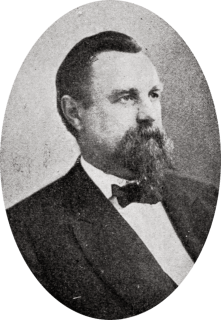
Roberts is the son of Randall Roberts, a baker, and Mary Roberts (née Bishop). He is educated locally and in July 1849 leaves with his family for the United States. For several years he works as a clerk for a dry goods company in New York City. In 1857, he sets up his own dry goods business, the Crystal Palace, which becomes successful. He retires in 1869 as a very wealthy man.
Having joined the American Fenian Brotherhood in 1863, Roberts gives it strong financial support for the remainder of the decade. He also supports several Irish American charitable organisations, including the Knights of St. Patrick, of which he is president. In October 1865, he is responsible for a change in the constitution of the Fenian Brotherhood, which results in a split in the movement. The majority of the Brotherhood supports his proposal to elect a “senate” to govern the organisation, with himself as president, in place of the autocratic leader, John O’Mahony. After the suppression of the Irish People and the arrest of the Irish Republican Brotherhood (IRB) leaders in Dublin in September 1865, he believes that it to be foolish to send American Fenian troops to Ireland.
Seeking to capitalise on the bad relations that develop between the United States and Britain during the American Civil War, Roberts hopes that a Fenian Brotherhood invasion Canada might provoke a war between Britain and the United States and thereby make a successful insurrection in Ireland more possible. Once the invasion takes place (May 31 – June 3, 1866), however, the American government seizes the Fenians’ supplies and reinforcements, thereby prompting him to abandon the attack. He is arrested in New York on June 7 and detained in prison but escapes prosecution and is released on June 15. Three days later, with the support of Irish American politicians, he is allowed to deliver an address to the United States Senate appealing for support for the cause of the amnesty of IRB prisoners in Ireland. Thereafter he goes on a lecture tour and argues that American politicians cannot hope to receive Irish American electoral support if they do not support the Fenian cause. In response to demands from Irish American politicians, in September 1866, PresidentAndrew Johnson orders that the arms seized by the United States army be returned to the Fenian Brotherhood.
After the failure of the March 1867 rising in Ireland, Roberts sends men to Ireland to assume command of the IRB on his behalf. A significant number of IRB men follow his lead, and in June 1867 a convention is held in Paris over which he presides. At this he proposes the establishment of a Supreme Council to govern the IRB, a proposal that is soon accepted. He seeks to be appointed president of the new Supreme Council, but the IRB refuses owing to his being such a divisive figure within American Fenianism. In dismay he resigns as president of the Senate wing of the Fenian Brotherhood on December 31, 1867, and becomes less active in the revolutionary movement. In 1870, he opposes the attempt of Fenians to invade Canada once more, and in January 1871 organises a welcoming committee in New York for five recently released IRB leaders who had been banished from Ireland.
By that time, however, Roberts is more concerned with American politics. During 1870, he is elected to Congress as a Democratic Party candidate for New York, a seat he holds until 1874 when, due to financial difficulties, he decides not to run for reelection. As a congressman, he criticises the Republican government for its policy towards the former Confederate states, opposes the increasing power of railroad companies, demands greater protection for American citizens living in foreign countries (including the Fenians imprisoned in Canada), and supports civil rights for black people. He also attracts much praise for his strong criticism of British foreign policy.
After leaving Congress, Roberts becomes a member of the Tammany Society and attains prominence in New York municipal politics, being elected president of the New York City Board of Aldermen in 1878. The following year, he runs for the position of sheriff of New York but is defeated. Thereafter, he leaves the Tammany Society and establishes a rival organisation, the New York County Democracy. In 1882, he supports Grover Cleveland for the governorship of New York and in 1884 as the Democratic candidate for the United States presidency. He is rewarded on April 2, 1885, when President Cleveland appoints him Envoy Extraordinary and Minister Plenipotentiary to Chile.
Roberts’s term of office is cut short, however, when he suffers a paralytic stroke in May 1888. He is sent back to New York and to hospital, where he remains for nine years. He never regains his mental or physical health and dies on August 9, 1897. His funeral takes place on hospital grounds with few people in attendance. He had been separated from his wife, of whom nothing is known, except that they had at least one son, prior to being admitted to hospital. He is buried at Calvary Cemetery, Queens, New York City.
(From: “Roberts, William Randall” by Owen McGee, Dictionary of Irish Biography, http://www.dib.ie, October 2009)
On the afternoon of September 8, 1863, Union Navy Lieutenant Frederick Crocker (“Acting Captain”) is in command of the advance squadron composed of four gunboats. Crocker is a veteran officer of considerable recent experience in Union river-gunboat actions and blockade duty. His ship is the USS Clifton, a steam-powered side-wheeler. Besides the USS Clifton, Crocker’s advance squadron includes USS Granite City, USS Sachem, and USS Arizona, all recently commissioned ironclad warships. Less than three miles southeast downriver, well out of range of the Confederate fort’s cannons, are anchored seven U.S. Navy transports carrying most of the Union Army soldiers of the landing force. The USS Suffolk, hosting invasion force commander Union Army Major GeneralWilliam B. Franklin and his staff, heads the seven-vessel squadron. Outside the principal Gulf shore sandbar, an additional two miles downstream of this squadron, lay at anchor the remaining ships of the 22-vessel invasion fleet. The total number of Union infantry assault troops in the landing force is given as 5,000 infantrymen, which includes 500 listed as aboard the USS Granite City, those aboard the six troop transports in the seven-ship squadron headed by USS Suffolk, plus an artillery company somewhere among them. The first wave of 500 men aboard USS Granite City, which steams as close behind USS Clifton as possible but out of range of the fort’s guns, are to land in the open space adjacent to and downstream of the fort. This is a flat, often muddy area already cleared of brush by the Confederate garrison as a clear field of fire for the canister and grapeshot of the fort’s artillery. The Union Army’s invasion plan, therefore, absolutely requires that the Confederate guns be silenced before any troops are debarked. This engagement is to be the largest amphibious assault on enemy territory in the history of the U.S. military to date.
Confederate CaptainLeon Smith, who is at Beaumont, Texas, immediately orders all Confederate troops in Beaumont, some eighty men, aboard the steamer Roebuck and sends them down the river to reinforce Fort Griffin. Smith and a Captain Good ride to the fort on horseback, reaching the fort some three hours before the steamer, arriving just as the Union gunboats USS Clifton and USS Sachem come within range, and assist in the defense of the fort.
Dowling’s well practiced Irish-Texan artillerymen, whose chosen and officially approved unit name is “Jefferson Davis Guards,” had placed range-stakes in the two narrow and shallow river channels. These are the “Texas channel” near the southwest shore and the “Louisiana channel” against the Louisiana shore. The white-painted stakes are for determining accurate range of the fort’s six old smooth-bore cannons. Each “Davis Guards” gun crew during gunnery practice thereby works to predetermine the approximate amount of gunpowder needed for each type of projectile (ball, canister, or grapeshot) available for their specific gun and which specific guns, charges, and loads have the best potential to hit each range-stake.
Crocker’s squadron has no local river pilots, only general knowledge of the river’s channels, no assurance of locations of the constantly varying depths especially of large oystershell “reefs” or “banks” between the river’s two channels. There is no mention in official U.S. Navy reports of whether Union sailors were making observations and taking depth soundings from the gunboats now dangerous top decks, while the Confederate cannon shots pounded and shook their ships. The few maps to which they have access are old and outdated and cannot account for recent changes in river-bottom conditions. On Captain Crocker’s signal the USS Sachem, followed by USS Arizona, advance up the right channel (Louisiana side) as fast as they dare, firing their port-side guns at the fort. USS Clifton approaches in the lead, ascending the Texas channel at full speed. USS Granite City hovers out of range behind USS Clifton, having orders not to risk debarking the 500 assault troops until the fort surrenders or its guns are silenced. As USS Sachem enters among the range-stakes, the Confederates open fire. Then USS Clifton comes into range, followed by USS Arizona. Despite their old smoothbore cannon, one of which has just become inoperable, after only a few rounds it is obvious the Confederate artillerymen’s months of training and target practice is an astounding success as their aim is deadly accurate.
The Confederates capture USS Clifton and USS Sachem with a total of 13 heavy cannon, including at least two new potent Parrott rifles, which are handed over to Leon Smith’s Texas Marine Department. The Union casualties amount to two dozen killed and badly wounded, about 37 missing, and 315 Navy men captured. The combined Union Army and Navy invasion force withdraw and return to New Orleans. The Confederates have no casualties.
In recognition of the victory, the Confederate States Congress passes a resolution of special thanks to the officers and men of the Davis Guard. In addition, Houston residents raise funds to provide medals to the Guard. The Davis Guards Medals are made from silver Mexican pesos by smoothing off the coins, then hand-stamping and hand-engraving on one side the battle name and date and on the other side the initials “D G” and a cross pattée. The medals are hung on green ribbons and presented to the members of the Davis Guard. The official Confederate silver medals are presented in a public ceremony a year later and are the only such medal ever awarded by that government.
The Battle of Sabine Pass is of moderate tactical or strategic significance to the American Civil War. It is successful in ensuring that the anticipated overland Union invasion of Texas is delayed indefinitely. A Confederate supply line from Mexico to Texas had existed out of the Port of Bagdad since the outbreak of the war but is held by the increasingly isolated Mexican Republicans. By the time Imperial French and Mexican forces capture Baghdad in 1864, a supply line to anywhere in the Confederacy east of the Mississippi River is no longer feasible on account of the Union victory at Vicksburg in July 1863. The Confederacy is therefore forced to continue its reliance on blockade running to import valuable materials and resources.
In 1937 a statue of Dowling is unveiled on the site of the fort. In 1998 a bronze plaque honoring Dowling is unveiled at the TuamTown Hall in County Galway.
(Pictured: Richard William “Dick” Dowling, circa 1865)
Cairnes is the son of William Elliott Cairnes (1787–1863) of Stameen, near Drogheda, and Marianne Woolsey, whose mother is the sister of Sir William Bellingham, 1st Baronet of Castlebellingham. William decides upon a business career, against the wishes of his mother, Catherine Moore of Moore Hall, Killinchy, and becomes a partner in the Woolsey Brewery at Castlebellingham. In 1825, he starts on his own account in Drogheda, making the Drogheda Brewery an unqualified success. He is remembered for his great business capacity and for the deep interest he takes in charity.
After leaving school, Cairnes spends some years in the counting house of his father at Drogheda. His tastes, however, lay altogether in the direction of study, and he is permitted to enter Trinity College Dublin, where he takes the degree of BA in 1848, and six years later that of MA. After passing through the curriculum of Arts, he engages in the study of Law and is called to the Irish bar. But he lacks a desire to pursue the legal profession, and over some ensuing years, he devotes himself to writing in various publications about social and economic questions and treatises that relate to Ireland. He focuses mostly on political economy, which he studies thoroughly.
While residing in Dublin, Cairnes makes the acquaintance of the Archbishop of DublinRichard Whately, who conceives a very high respect for Cairnes’ character and abilities. In 1856, a vacancy occurs in the chair of political economy at Dublin, founded by Whately, and Cairnes receives the appointment. In accordance with the regulations of the foundation, the lectures of his first year’s course are published. The book appears in 1857 with the title Character and Logical Method of Political Economy. It follows up on and expands John Stuart Mill‘s treatment in the Essays on some Unsettled Questions in Political Economy and forms an admirable introduction to the study of economics as a science. In it the author’s peculiar powers of thought and expression are displayed to the best advantage. Logical exactness, precision of language, and firm grasp of the true nature of economic facts, are the qualities characteristic of this as of all his other works. If the book had done nothing more, it would still have conferred inestimable benefit on political economists by its clear exposition of the true nature and meaning of the ambiguous term law. To the view of the province and method of political economy expounded in this early work the author always remains true, and several of his later essays, such as those on Political Economy and Land, Political Economy and Laissez-Faire, are but reiterations of the same doctrine. His next contribution to economical science is a series of articles on the gold question, published partly in Fraser’s Magazine, in which the probable consequences of the increased supply of gold attendant on the Australian and Californian gold discoveries are analysed with great skill and ability. And a critical article on Michel Chevalier‘s work, On the Probable Fall in the Value of Gold, appears in the Edinburgh Review for July 1860.
In 1861, Cairnes is appointed to the professorship of jurisprudence and political economy in Queens College Galway, and in the following year he publishes his admirable work The Slave Power, one of the finest specimens of applied economic philosophy. The inherent disadvantages of the employment of slave labour are exposed with great fullness and ability, and the conclusions arrived at have taken their place among the recognised doctrines of political economy. The opinions expressed by Cairnes as to the probable issue of American Civil War are largely verified by the actual course of events, and the appearance of the book has a marked influence on the attitude taken by serious political thinkers in England towards the Confederate States of America.
During the remainder of his residence at Galway, Cairnes publishes nothing beyond some fragments and pamphlets, mainly upon Irish questions. The most valuable of these papers are the series devoted to the consideration of university education. His health, at no time very good, is still further weakened in 1865 by a fall from his horse. He is ever afterwards incapacitated from active exertion and is constantly liable to have his work interfered with by attacks of illness.
In 1866 Cairnes is appointed professor of political economy in University College, London. He is compelled to spend the session 1868–1869 in Italy, but on his return continues to lecture until 1872. During his last session he conducts a mixed class, ladies being admitted to his lectures. His health soon renders it impossible for him to discharge his public duties. He resigns his post in 1872 and retires with the honorary title of professor emeritus of political economy. In 1873 his own university confers on him the degree of LL.D.
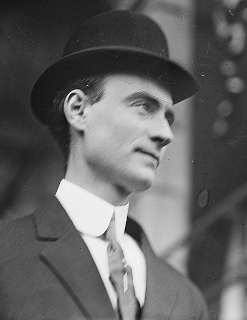
Mitchel is born to James Mitchel, a New York City fire marshal, and Mary Purroy who works as a schoolteacher until her marriage. His father is Irish, and Presbyterian in faith, the son of the famous Irish nationalistJohn Mitchel, and a veteran of the Confederate States Army. Two of his uncles were killed fighting for the Confederacy. His maternal grandfather, Venezuelan-born Juan Bautista Purroy, was that country’s consul in New York, which makes Mitchel the first Mayor of New York City of Latino descent. His great-grandfather, José Joaquin de Purroy, was a lawyer from Spain who settled in Venezuela. He graduates from a Catholic secondary school at Fordham Preparatory School in the late 1890s. He obtains his bachelor’s degree from Columbia College in 1899 and graduates from New York Law School in 1902 with honors. He then pursues a career as a private attorney.
In December 1906, Mitchel’s career takes flight when he is hired by family friend and New York City corporation counsel William B. Ellison to investigate the office of John F. Ahearn, borough president of Manhattan, for incompetence, waste and inefficiency. As a result, Ahearn is dismissed as borough president of Manhattan. He begins his career as assistant corporation counsel and then becomes a member of the Commissioners of Accounts, from which he investigates city departments. He gains results and recognition for his thorough and professional investigations into various city departments and high-ranking officials. Along with the help of Henry Bruère and other staff members of the Bureau of Municipal Research, he turns the insignificant Commissioners of Accounts into an administration of importance.
The young Mitchel’s reputation as a reformer garners him the support of the anti-Tammany forces. In 1909, he is elected president of the New York City Board of Aldermen, an organization similar to the current New York City Council. As president of the Board of Aldermen, he is able to enact fiscal reforms. He cuts waste and improves accounting practices. Also, he unsuccessfully fights for a municipal-owned transit system and the city sees him vote against allowing the Interborough Rapid Transit and the Brooklyn Rapid Transit companies permission to extend their existing subway and elevated lines. For a six-week period in 1910 after current Mayor William J. Gaynor is injured by a bullet wound, he serves as acting mayor. His biggest accomplishment during his short tenure is the act of neutrality during a garment industry strike.
As the mayoral election approaches in 1913, the Citizens Municipal Committee of 107 sets out to find a candidate that will give New York “a non-partisan, efficient and progressive government.” They are assisted in this endeavor by the Fusion Executive Committee, led by Joseph M. Price of the City Club of New York. After nine ballots, Mitchel is nominated as a candidate for mayor. During his campaign, he focuses on making City Hall a place of decency and honesty. He also focuses on business as he promises New Yorkers that he will modernize the administrative and financial machinery and the processes of city government.
At the age of 34, Mitchel is elected mayor on the Republican Party slate as he wins an overwhelming victory, defeating Democratic candidate Edward E. McCall by 121,000 votes, thus becoming the second youngest mayor of New York City. He is often referred to as “The Boy Mayor of New York.”
Mitchel’s administration introduces widespread reforms, particularly in the Police Department, which has long been highly corrupt, and which is cleaned up by Mitchel’s Police CommissionerArthur H. Woods. Woods is able to break up gangs and in his first year in office and he arrests more than 200 criminals. Woods also launches an attack on robbery, prostitution, pickpocketing and gambling. Woods ultimately transforms the police department into a crime-fighting machine. Mitchel aims to get rid of corruption wherever he sees it. His administration sets out to restructure and modernize New York City and its government. He is able to expand the city’s regulatory activities, runs the police department more honestly and efficiently and, much like in 1910, he maintains impartiality during garment and transportation workers strikes in 1916.
At 1:30 p.m. on April 17, 1914, Michael P. Mahoney fires a gun at the mayor as Mitchel is getting in his car to go to lunch. The bullet ricochets off a pedestrian and hits Frank Lyon Polk, New York City’s corporation counsel, in the chin.
Mitchel’s early popularity is soon diminished due to his fiscal policies and vision of education. He is heavily criticized for combining vocational and academic courses. He begins to trim the size of the Board of Education and attempts to control teachers’ salaries.
Mitchel advocates universal military training to prepare for war. In a speech at Princeton University on March 1, 1917, he describes universal military training as “the [only] truly democratic solution to the problem of preparedness on land.” His universal military training alienates New Yorkers and is not popular. Many feel he focuses too much on military patriotism and is indifferent to politics. This soon leads to a loss of support for his re-election bid in 1917.
Mitchel runs again for mayor in the highly charged wartime election of 1917. His re-election bid takes a hit as many New Yorkers feel he is socializing with the social elite, focuses too much on the economy and efficiency and his concern on military preparedness. He narrowly loses the Republican primary to William M. Bennett after a contentious recount but then runs for re-election as a pro-war Fusion candidate.
Mitchel’s main campaign theme is patriotism, with a media campaign that denounces Germans, Irish, and Jews as unpatriotic sympathizers with the enemy cause. He runs against Republican Bennett, antiwar SocialistMorris Hillquit, and the Tammany Hall Democrat John F. Hylan. Hylan ridicules and denounces Mitchel’s upper-class reform as an affront to democracy and to the voters. He wins by a landslide without taking a clear position on the war. Mitchel barely beats Hillquit for second place.
After failing to get re-elected, Mitchel joins the Air Service as a flying cadet, completing training in San Diego and obtaining the rank of major. On the morning of July 6, 1918, when returning from a short military training flight to Gerstner Field, near Lake Charles, Louisiana, his plane suddenly goes into a nosedive, causing him to fall from his plane due to an unfastened seatbelt. He plummets 500 feet to his death, his body landing in a marsh about a half mile south of the field.
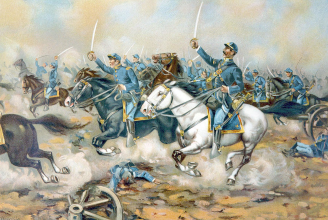
Following the inconclusive Battle of Beaver Dam Creek (Mechanicsville) the previous day, ConfederateGeneralRobert E. Lee renews his attacks against the right flank of the Union Army, relatively isolated on the northern side of the Chickahominy River. There, Brigadier GeneralFitz John Porter‘s V Corps establishes a strong defensive line behind Boatswain’s Swamp. Lee’s force is destined to launch the largest Confederate attack of the war, about 57,000 men in six divisions.
Porter’s reinforced V Corps holds fast for the afternoon as the Confederates attack in a disjointed manner, first with the division of Major GeneralA. P. Hill, then Major General Richard S. Ewell, suffering heavy casualties. Put into an exposed, forward position near the bridge over Powhite Creek, the 9th Massachusetts sustains heavy casualties while delaying the advance of A.P. Hill’s division, allowing other Federal forces to improve their defenses. Among the Confederates attacking the 9th’s position are the Irishmen of Company K, 1st South Carolina Rifle Regiment.
After pulling back to the main Federal line, the 9th Massachusetts regiment is hotly engaged again later in the day. Numerous attacks by Hill’s Confederates are repulsed through the day, and the 9th also helps cover the retreat of their brigade. The 9th Massachusetts is one of the last regiments of the V Corps remaining on the field as General Thomas Francis Meagher and his Irish Brigade rush into line to relieve the beleaguered remnant of the brave Massachusetts regiment. The arrival of Major General Stonewall Jackson‘s command is delayed, preventing the full concentration of Confederate force before Porter receives some reinforcements from the VI Corps.
Seeing the green flags of the Irish Brigade coming to the aid of the 9th Massachusetts, Lieutenant Colonel Patrick Guiney, who had been watching his regiment shrink in number all day, shakes the hand of Meagher and exclaims, “Thank God, we are saved.”
At dusk, the Confederates finally mount a coordinated assault that breaks Porter’s line and drives his men back toward the Chickahominy River. The Federals retreat across the river during the night. The Confederates are too disorganized to pursue the main Union force. Gaines’ Mill saves Richmond for the Confederacy in 1862. The tactical defeat there convinces Army of the Potomac commander Major General George B. McClellan to abandon his advance on Richmond and begin a retreat to the James River. The 9th Massachusetts’ loses for the day are 82 killed and 167 wounded.
The battle occurs in almost the same location as the Battle of Cold Harbor nearly two years later.
Mitchel is born in Camnish, near Dungiven, County Derry on November 3, 1815, the son of a Presbyterian minister. At the age of four, he is sent to a classical school, run by an old minister named Moor, nicknamed “Gospel Moor” by the students. He reads books from a very early age. When a little over five years old, he is introduced to Latin grammar by his teacher and makes quick progress. In 1830, not yet 15 years old, he enters Trinity College, Dublin and obtains a law degree in 1834. In the spring of 1836 he meets Jane Verner, the only daughter of Captain James Verner. Though both families are opposed to the relationship, they become engaged in the autumn and are married on February 3, 1837, by the Rev. David Babington in Drumcree Church, the parish church of Drumcree.
Mitchel works in a law office in Banbridge, County Down, where he eventually comes into conflict with the local Orange Order. He meets Thomas Davis and Charles Gavan Duffy during visits to Dublin. He joins the Young Ireland movement and begins to write for The Nation. Deeply affected by the misery and death caused by the Great Famine, he becomes convinced that nothing will ever come of the constitutional efforts to gain Irish freedom. He then forms his own paper, United Irishmen, to advocate passive resistance by Ireland’s starving masses.
In May 1848, the British tire of Mitchel’s open defiance. Ever the legal innovators in Ireland, they invent a crime especially for the Young Irelanders – felony-treason. They arrest him for violating this new law and close down his paper. A rigged jury convicts him, and he is deported first to Bermuda and then to Australia. However, in June 1853, he escapes to the United States.
Mitchel works as a journalist in New York City and then moves to the South. When the American Civil War erupts, he is a strong supporter of the Southern cause, seeing parallels with the position of the Irish. His family fully backs his commitment to the Southern cause. He loses two sons in the war, one at the Battle of Gettysburg in 1863 and another at the Battle of Fort Sumter in 1864, and another son loses an arm. His outspoken support of the Confederacy causes him to be jailed for a time at Fort Monroe, where one of his fellow prisoners is Confederate PresidentJefferson Davis.
In 1874, the British allow Mitchel to return to Ireland and in 1875 he is elected in a by-election to be a member of the Parliament of the United Kingdom representing the Tipperary constituency. However, his election is invalidated on the grounds that he is a convicted felon. He contests the seat again in the resulting by-election and is again elected, this time with an increased vote.
Unfortunately, Mitchel, one of the staunchest enemies to English rule of Ireland in history, dies eight days later in Newry on March 20, 1875, and is buried there. Thirty-eight years later, his grandson, John Purroy Mitchel, is elected Mayor of New York City.




 seamus dubhghaill