seamus dubhghaill

Promoting Irish Culture and History from Little Rock, Arkansas, USA


Leave a comment

Birth of Thomas Fitzsimons, U.S. Merchant & Statesman

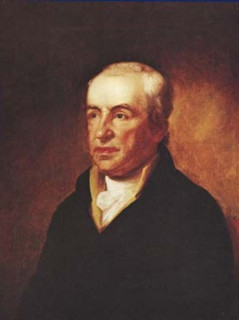
Thomas Fitzsimons, Irish-born American Founding Father, merchant, banker, and politician, is born in Ireland on October 11, 1741. His birthplace is variously given as Nobber, County Wicklow; Limerick, County Limerick; the north of Ireland; and Edenderry, County Offaly. He represents Pennsylvania in the Continental Congress, the Constitutional Convention and the United States House of Representatives.

In the mid-1750s, Fitzsimons’s family immigrates to Philadelphia, Pennsylvania, where his father dies soon thereafter. He has enough education that he begins work as a clerk in a mercantile house. He marries Catherine Meade on November 23, 1761, and forms a business partnership with her brother George. Their firm, which specializes in the West Indies trade, operates successfully for over 41 years.

The firm is soon hit by the new revenue measures created to help support the finances of the British Empire, including the much reviled Stamp Act of 1765. Concerned with these ideas, Fitzsimons becomes active in the Irish merchant community in Philadelphia. He is a founding member of the Friendly Sons of St. Patrick in 1771 and later, in 1774, a steering committee organized to protest the Coercive Acts.

When Pennsylvania begins mobilizing and organizing a militia to fight the British, Fitzsimons is soon involved. He serves as captain of a company of home guards under the command of Colonel John Caldwalader. Initially his company serves as part of the soldiers who man posts along the New Jersey coast. His unit later serves as part of the reserve at the Battle of Trenton in 1776. Later in the war, he serves on the Pennsylvania Council of Safety and heads a board to oversee the newly formed Pennsylvania Navy.

Fitzsimons enters active politics as a delegate to the Continental Congress in 1782 and 1783. He is a member of the Pennsylvania House of Representatives from 1786 until 1795. He is also a delegate to the U.S. Constitutional Convention in 1787. Although not a leading member of that convention, he supports a strong national government, the end of slavery, the United States Congress‘s powers to impose a tariff on imports and exports, the granting the House of Representatives, and power in equal to the United States Senate in making treaties. He is one of only two Catholic signers of the Constitution of the United States, the other being Daniel Carroll of Maryland.

After the Constitution is established, Fitzsimons serves in the first three sessions of the House of Representatives as a Federalist, where he favors protective tariffs and a strong navy, co-drafting the Naval Act of 1794 authorizing the original six frigates of the United States Navy. He fails to win re-election in 1794. This is partially attributed to public opinion turning against the Federalist Party over the forceful suppression of the Whiskey Rebellion. Although he never holds elective office again, he serves in 1798 as head of the committee of merchants overseeing the subscription-loan to build a warship at private expense for use in the Quasi-War.

In 1796, Fitzsimons, along with James Innes of Virginia, is appointed by President John Adams to serve as one of two American members on the five-man debt commission charged under Article VI of the Jay Treaty with examining the claims of British subjects unable to collect debts incurred by Americans prior to the American Revolution. Fitzsimons, Innes and Samuel Sitgreaves, who replaces Innes upon the latter’s death, become annoyed with the arguments used by their British counterparts to inflate the claims total. Fitzsimons and Sitgreaves angrily and permanently secede from the board in July 1799. The claims are eventually disposed of by a lump-sum payment, agreed upon by United States Minister to Britain Rufus King with British Foreign Secretary Robert Banks Jenkinson and approved by President Thomas Jefferson and the Senate in 1802.

While withdrawing from politics, Fitzsimons remains active in civic and business affairs. He serves as president of Philadelphia’s Chamber of Commerce, as a trustee of the University of Pennsylvania, Director of the Delaware Insurance Company and a director of the Bank of North America from 1781–1803. He is a founder of the bank and supports efforts to found Georgetown College. He also helps found the Insurance Company of North America.

Fitzsimons dies on August 26, 1811, in Philadelphia, where he is buried in the cemetery of St. Mary’s Roman Catholic Church, which is in present-day Independence National Historical Park.


Leave a comment

Death of Stephen Moylan, Patriot During the American Revolutionary War

Stephen Moylan, Irish American patriot leader during the American Revolutionary War, dies in Philadelphia, Pennsylvania, on April 11, 1811. He holds several positions in the Continental Army including Muster-Master General, Secretary and Aide to General George Washington, 2nd Quartermaster General, Commander of The Fourth Continental Light Dragoons and Commander of the Cavalry of the Continental Army.

Moylan is born to a Catholic family in Cork, County Cork, in 1737. His father, John Moylan, is a well-to-do merchant in Shandon, County Cork. His older brother Francis becomes Bishop of Cork. His family sends him to be educated in Paris. He then works in Lisbon for three years in the family shipping firm. He settles in Philadelphia in 1768 to organize his own firm. He is one of the organizers of the Friendly Sons of St. Patrick, an Irish American fraternal organization, and serves as its first president.

Moylan joins the American Continental Army in 1775 and upon the recommendation of John Dickinson, is appointed Muster-Master General on August 11, 1775. His brother John acts as United States Clothier General during the war. His experience in the shipping industry affords the United States a well-qualified ship outfitter, who helps fit out the first ships of the Continental Navy. On March 5, 1776, he becomes secretary to General George Washington with the rank of lieutenant colonel. He is appointed Quartermaster General in the American Continental Army on June 5, 1776, succeeding Thomas Mifflin. He resigns from this office on September 28, 1776. However, he continues to serve as a volunteer of General Washington’s staff through December 1776.

In January 1776, Moylan writes a letter using the term “United States of America,” the earliest known use of that phrase.

Moylan then raises a troop of light dragoons, the 4th Continental Light Dragoons, also known as Moylan’s Horse, on January 3, 1777, at Philadelphia, and is appointed colonel in the Continental Army on January 5. The regiment is be noted for taking the field in captured British red coats. However, they see action in green coats at the Battle of Brandywine on September 11, 1777, and the Battle of Germantown on October 4, 1777, and end the year by protecting the Cantonment at Valley Forge. He succeeds General Casimir Pulaski as Commander of the Cavalry in March 1778. Moylan’s Horse sees action at the Battle of Monmouth on June 28, 1778.

In the campaign of 1779 Moylan and the 4th Dragoons are stationed at Pound Ridge, New York, and see action when the British raid Norwalk, Connecticut, on July 11, 1779. He and the 4th Dragoons take part in the Battle of Springfield in New Jersey, on June 23, 1780, and General Anthony Wayne‘s expedition at Bull’s Ferry, New Jersey, on July 20, 1780. He commands his Dragoons at the Siege of Yorktown in October 1781, after which he is to take the cavalry to the Southern Campaign. However, his failing health causes him to leave the field and return to Philadelphia, where he constantly appeals to the Continental Congress to man, equip and maintain the Continental Dragoon Regiments.

Moylan is rewarded for his service by being breveted to brigadier general on November 3, 1783.

Moylan is married to Mary Ricketts Van Horne on September 12, 1778, and has two daughters, Elizabeth Catherine, and Maria. His two sons die as children. He dies in Philadelphia on April 11, 1811, and is buried there in the churchyard at St. Mary’s Roman Catholic Church.


Leave a comment

Founding of the Friendly Sons of St. Patrick

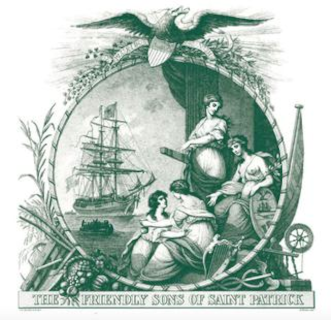
The Friendly Sons of St. Patrick, later the Friends Sons and Daughters of St. Patrick, officially The Society of The Friendly Sons of St. Patrick for the Relief of Emigrants from Ireland, an American charitable and social organization for Irish Americans is founded in Philadelphia, Pennsylvania, on Saint Patrick’s Day, March 17, 1771.

Among the founders are General Stephen Moylan, aide to George Washington and cavalry commander in the American Revolutionary War, and Thomas Fitzsimons, representative of Pennsylvania in the Continental Congress and signatory of the Constitution of the United States, both of whom were born in Ireland. Other founding members include Thomas Barclay, John Nixon, William West and George Meade. Other early members include John Leamy, Tench Francis, Jr., Commodore John Barry, General Anthony Wayne, General John Cadwalader, General William Irvine, General Richard Butler and General William Thompson. George Washington becomes an honorary member in 1782. Other honorary members include Robert Morris, Richard Bache and John Dickinson.

Originally founded as a charitable organization with the intent of aiding migrants from Ireland, the organization has since developed a focus on encouraging “greater interest in ties of friendship between America and Ireland,” in addition to sponsoring scholarships, cultural events, charity activities, and educational endowments.

On March 17, 1784, a group of New York City‘s Irish officers who had served in the Continental Army form the Society of the Friendly Sons of St. Patrick in the City of New York. Its founder and first president is Daniel McCormick, a merchant who is one of the first directors of the Bank of New York.

Branches of the Society have also been founded in cities such as Cincinnati, Detroit, Providence, San Diego and Spokane. The Cincinnati branch has an active glee club which has performed hundreds of benefit and goodwill performances for over 25 years.

Each branch operates independently. Originally all-male, the Philadelphia branch first admits women in 2016. The New York branch admits women to its annual pre-St. Patrick’s Day fundraising dinner for the first time in 2018, and votes to amend its by-laws on January 10, 2020, in order to permit women to apply for membership.


Leave a comment

John Armstrong, Sr. Appointed Brigadier General in the Continental Army

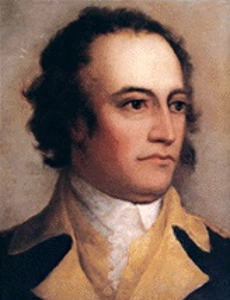
John Armstrong, Sr., an Irish American civil engineer and soldier, is appointed a brigadier general in the Continental Army on March 1, 1776. He also serves as a major general in the Pennsylvania Militia during the American Revolutionary War.

Armstrong is born on October 13, 1717, in Brookeborough, County Fermanagh, parents not determined, who married in 1704. He is one of approximately fifteen children born to his parents that included: Margaret Armstrong (1737–1817), who marries Rev. George Duffield (1732–90), and Rebecca Armstrong (1738–1828), who marries James Turner (1737–1803).

Armstrong is educated in Ireland and becomes a civil engineer before emigrating to Pennsylvania, with his brother-in-law, John Lyon, around 1740. He comes to Pennsylvania as a surveyor for the Penn family, the proprietary owners of the colony. In 1750, he lays out the first plat or plan for the town of Carlisle, Pennsylvania, and is one of its first settlers. He is later appointed surveyor for the newly established Cumberland County.

In 1756, during the Seven Years’ War, Armstrong leads the Kittanning Expedition. In 1758, he leads 2,700 Pennsylvania provincial troops on the Forbes Expedition, the approach of which compels the French to vacate and blow-up Fort Duquesne. He becomes a good friend to the other militia commander in this expedition, Colonel George Washington.

James Smith writes that in the fall of 1763, “I went on the Susquehannah campaign, against the Indians, under the command of General Armstrong. In this route we burnt the Delaware and Monsey towns, on the West Branch of the Susquehannah, and destroyed all their corn.”

In the early stages of the American Revolutionary War (1775-83), Armstrong is a brigadier general in the Pennsylvania militia. On March 1, 1776, the Continental Congress appoints him to that same rank in the Continental Army. He is sent south to begin preparations for the defense of Charleston, South Carolina. He contributes his engineering talents to the construction of defenses that enable them to withstand the Battle of Sullivan’s Island later that year. When General Charles Lee arrives to take command, Armstrong returns to his duties with the main army and with the Pennsylvania militia. Pennsylvania names him major general in charge of the state militia. This ends his service in the Continental Army, but not the war or his cooperation with General George Washington.

At the Battle of Brandywine on September 11, 1777, Armstrong’s militia holds the far left of the American line. They also guard the army’s supplies. After a hard day’s fighting, the Americans are forced to withdraw, or face being surrounded. He brings the supplies and his militia out from Pyle’s Ford after dark.

In the Battle of Germantown on October 4, Armstrong leads the American right. His mission is to skirt the British left flank and attack there and in their rear. Despite delays and the troubles some units have in moving, the overall attack is going well, until the center is held up at the Benjamin Chew House. The attack then collapses after a friendly fire incident in the fog in which General Adam Stephen‘s men fire on Anthony Wayne‘s troops causing their withdrawal. Armstrong, whose men have advanced nearly to the center of Germantown but are not greatly involved in the fight later complains that it was “…. a glorious victory fought for, and eight tenths won, …. mysteriously lost, for to this moment no one man can …. give any good reason for the flight.”

After Germantown, Armstrong is granted permission to give up active command. At aged sixty, his health is declining, and old wounds are troubling him. He serves until April 4, 1778.

After his service in the War ends, Armstrong returns home to Carlisle, where he is elected to the Continental Congress by the Pennsylvania Assembly. As a delegate from 1779 to 1780, he is a strong supporter of Washington and the army. He is firm in his support for a new United States Constitution and is returned to the Congress of the Confederation during its final days in 1787 and 1788.

Throughout his life Armstrong serves in a number of local or civic offices. One of these, the Carlisle school board, leads him to originally oppose Dr. Benjamin Rush‘s proposal to start a college in the town. He later relents and becomes a member of the first Board of Trustees for Dickinson College from 1783 to 1794.

In 1747, Armstrong marries Rebecca Lyon Armstrong (1719–97), daughter of Archibald Lyon and Ann Lyon. Together, they are the parents of:

Armstrong dies at his home in Carlisle, Pennsylvania, on March 9, 1795, and is buried in the Old Carlisle Cemetery. In 1800, when Pennsylvania creates a new county with its seat at Kittanning, it is named Armstrong County in his honor.


Leave a comment

Stephen Moylan Appointed Colonel in the Continental Army

Stephen Moylan, Irish American patriot leader during the American Revolutionary War, is appointed colonel in the Continental Army on January 5, 1777. He has several positions in the Continental Army including Muster-Master General, Secretary and Aide to General George Washington, 2nd Quartermaster General, Commander of The Fourth Continental Light Dragoons and Commander of the Cavalry of the Continental Army.

Moylan is born to a Catholic family in Cork, County Cork, in 1737. His father, John Moylan, is a well-to-do merchant in Shandon, County Cork. His older brother Francis becomes Bishop of Cork. His family sends him to be educated in Paris. He then works in Lisbon for three years in the family shipping firm. He settles in Philadelphia in 1768 to organize his own firm. He is one of the organizers of the Friendly Sons of St. Patrick, an Irish American fraternal organization, and serves as its first president.

Moylan joins the American Continental Army in 1775 and upon the recommendation of John Dickinson, is appointed Muster-Master General on August 11, 1775. His brother John acts as United States Clothier General during the war. His experience in the shipping industry affords the United States a well-qualified ship outfitter, who helps fit out the first ships of the Continental Navy. On March 5, 1776, he becomes secretary to General George Washington with the rank of lieutenant colonel. He is appointed Quartermaster General in the American Continental Army on June 5, 1776, succeeding Thomas Mifflin. He resigns from this office on September 28, 1776. However, he continues to serve as a volunteer of General Washington’s staff through December 1776.

In January 1776, Moylan writes a letter using the term “United States of America,” the earliest known use of that phrase.

Moylan then raises a troop of light dragoons, the 4th Continental Light Dragoons, also known as Moylan’s Horse, on January 3, 1777, at Philadelphia. The regiment is be noted for taking the field in captured British red coats. However, they see action in green coats at the Battle of Brandywine on September 11, 1777, and the Battle of Germantown on October 4, 1777, and end the year by protecting the Cantonment at Valley Forge. He succeeds General Casimir Pulaski as Commander of the Cavalry in March 1778. Moylan’s Horse sees action at the Battle of Monmouth on June 28, 1778.

In the campaign of 1779 Moylan and the 4th Dragoons are stationed at Pound Ridge, New York, and see action when the British raid Norwalk, Connecticut, on July 11, 1779. He and the 4th Dragoons take part in the Battle of Springfield in New Jersey, on June 23, 1780, and General Anthony Wayne‘s expedition at Bull’s Ferry, New Jersey, on July 20, 1780. He commands his Dragoons at the Siege of Yorktown in October 1781, after which he is to take the cavalry to the Southern Campaign. However, his failing health causes him to leave the field and return to Philadelphia, where he constantly appeals to the Continental Congress to man, equip and maintain the Continental Dragoon Regiments.

Moylan is rewarded for his service by being breveted to brigadier general on November 3, 1783.

Moylan is married to Mary Ricketts Van Horne on September 12, 1778, and has two daughters, Elizabeth Catherine, and Maria. His two sons die as children. He dies in Philadelphia on April 11, 1811, and is buried there in the churchyard at St. Mary’s Roman Catholic Church.


Leave a comment

Death of Richard Butler, Irish-born Officer in the Continental Army

Richard Butler, an Irish-born officer in the Continental Army during the American Revolutionary War, is killed on November 4, 1791, while fighting Native Americans in the United States in a battle that is known as St. Clair’s defeat.

Born on April 1, 1743, in St. Bridget’s Parish, Dublin, Butler is the oldest son of Thomas and Eleanor Butler (née Parker). His father is an Irish aristocrat who serves in the British Army. He is the brother of Colonel Thomas Butler and Captain Edward Butler. All three brothers serve in the American Revolution and in the Northwest Indian War against the Northwestern Confederacy of Native American tribes in the Northwest Territories. His two other brothers, William and Percival, serve in the Revolution but do not see later military service.

In 1748 Butler’s father opens a gun shop in Dublin, but that same year the family moves to Lancaster, Pennsylvania, where he learns to make the Pennsylvania long rifles used in the French and Indian War.

By 1760, the family moves to the frontier at Carlisle, Pennsylvania, where Thomas and his sons manufacture long rifles and become friends with Daniel Morgan. The Butler gun shop still stands in Carlisle.

By the 1770s, Butler and his brother William are important traders at Fort Pitt in Pennsylvania and in Ohio. Butler Street in Pittsburgh is named for them.

At the outset of the American Revolution, the Continental Congress names Butler a commissioner in 1775 to negotiate with the Indians. He visits representatives of the Delaware, Shawnee, and other tribes to secure their support, or at least neutrality, in the war with Britain.

On July 20, 1776, Butler is commissioned a major in the 8th Pennsylvania Regiment in the Continental Army, serving first as second in command to his friend Daniel Morgan. He is promoted to lieutenant colonel on March 12, 1777, retroactive to September 1776. On June 7, 1777, he is promoted to colonel and placed in command of 9th Pennsylvania Regiment.

During the war Butler sees action at the Battle of Saratoga (1777) and the Battle of Monmouth (1778). His four other brothers also serve and are noted for their bravery as the “fighting Butlers.” In January 1781 he is transferred to the 5th Pennsylvania Regiment and leads the Continental Army at the Battle of Spencer’s Ordinary.

At the conclusion of the Battle of Yorktown in October 1781, General George Washington confers on Butler the honor of receiving Cornwallis’ sword of surrender, an honor which he gives to his second in command, Ebenezer Denny. At the last moment, Baron von Steuben demands that he receive the sword. This almost precipitates a duel between Butler and Von Steuben.

At the victory dinner for his officers, George Washington raises his glass and toasts, “The Butlers and their five sons!”

Following Yorktown, Butler remains in the Continental Army and is transferred to the 3rd Pennsylvania Regiment following a consolidation of the Army on January 1, 1783. On September 30 of the same year, he is breveted as a brigadier general. He remains in active service with the Continental Army until it is finally disbanded on November 3, 1783.

In 1783 Butler and his brothers become original members of the Pennsylvania Society of the Cincinnati, a military society of officers who had served in the Continental Army.

After the war, the Confederation Congress puts Butler in charge of Indians of the Northwest Territory. He negotiates the Treaty of Fort Stanwix in 1784, in which the Iroquois surrender their lands. He is also called upon during later negotiations, such as the Treaty of Fort McIntosh in 1785.

Butler returns to Pennsylvania and is a judge in Allegheny County. He also serves in the state legislature. He marries Maria Smith, and they have four children, only one of whom lives to have children and continue the line. He also fathers a son, Captain Butler (or Tamanatha) with Shawnee chief Nonhelema. He and his Shawnee son fight in opposing armies in 1791.

In 1791, Butler is commissioned a major general in the levies (i.e. militiamen conscripted into Federal service) under Major General Arthur St. Clair to fight against the Western Confederacy of Native Americans in the Northwest Territories (modern day Ohio). He is killed in action on November 4, 1791, in St. Clair’s Defeat at what is now Fort Recovery, Ohio.

Reportedly Butler is first buried on the battlefield, which site is then lost until it is accidentally found years later. The remains are laid to rest with the remains of the other fallen at Fort Recovery.

Butler County, Ohio, where Fort Hamilton stood, is named for Richard Butler, as are Butler County, Kentucky, and Butler County, Pennsylvania. The city of Butler, Pennsylvania and the General Richard Butler Bridge, located in the city of Butler, are also named for him. A miniature portrait of Butler is painted by “The Painter of The Revolution,” Colonel John Trumbull, in 1790 and is in the collection of Yale University.

Butler is also honored in the name of General Richard Butler KYSAAR, Butler County, Kentucky recognized August 20, 2016. A chapter of the Sons of the American Revolution is named for him as as is the General Richard Butler Chapter of the Daughters of the American Revolution (DAR), founded in Butler, Pennsylvania.


Leave a comment

Death of John Dunlap, Printer of the Declaration of Independence

John Dunlap, Irish printer who printed the first copies of the United States Declaration of Independence and one of the most successful Irish American printers of his era, dies in Philadelphia, Pennsylvania on November 27, 1812.

Dunlap is born in 1747 in Strabane, County Tyrone, in what is now Northern Ireland. When he is ten years old, he goes to work as an apprentice to his uncle, William Dunlap, a printer and bookseller in Philadelphia. In 1766, William Dunlap leaves the business in the care of his nephew, who eventually purchases the business. Initially he makes a living by printing sermons, broadsides and handbills. In November 1771, he begins the publication of the Pennsylvania Packet, or General Advertiser, a weekly newspaper. In 1773 he marries Elizabeth Hayes Ellison.

During the American Revolutionary War, Dunlap becomes an officer in the First Troop Philadelphia City Cavalry and sees action with George Washington at the battles of Trenton and Princeton. He continues in the First City Troop after the war, rising to the rank of major, and leading Pennsylvania’s cavalry militia to help suppress the Whiskey Rebellion in 1794.

In 1776, Dunlap secures a lucrative printing contract for the Continental Congress. In July 1776, fighting between the American colonists and the British forces had been going on for over a year. On July 2, the Second Continental Congress votes on the Lee Resolution to secede. Two days later, they approve the final wording of a public declaration regarding their decision, which ultimately comes to be known as the Declaration of Independence. President of Congress John Hancock signs the fair copy with Secretary of Congress Charles Thomson attesting it. That evening Hancock orders Dunlap to print broadside copies of the declaration. He prints perhaps 200 broadsides, since known as the Dunlap broadsides, which are the first published versions of the Declaration.

Dunlap also prints items for Pennsylvania’s revolutionary government. In 1777 he takes over the printing of the Journals of the Continental Congress from Robert Aitken, but loses the contract in 1779 after printing in his newspaper a letter from Thomas Paine that leaks news of the secret French aid to the Americans.

In 1784, Dunlap’s paper becomes a daily with a new title: the North American and United States Gazette. It is not the first daily in the United States as the Pennsylvania Evening Post is the first in 1783, but it becomes the first successful daily.

Continuing to serve the changing needs of the government, Dunlap and his partner David Claypoole print the Constitution of the United States on September 19, 1787 for use by the Constitutional Convention, and later publish it for the first time in the Pennsylvania Packet.

Dunlap’s major financial success comes from real estate speculation. During the American Revolutionary War, he purchases property confiscated from Loyalists who refuse to take Pennsylvania’s new loyalty oath. After the war, he purchases land in Kentucky. By 1795, when he is forty-eight, he is able to retire with a sizable estate. Retirement does not agree with him, however. According to his friend, Dr. Benjamin Rush, he becomes a drunkard in his final years. He dies in Philadelphia on November 27, 1812.


Leave a comment

Death of Thomas Fitzsimons, U.S. Merchant & Statesman

thomas-fitzsimons

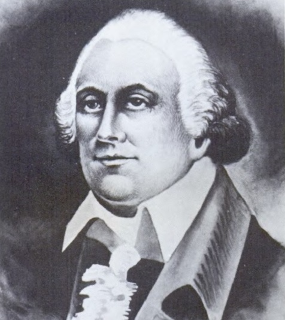
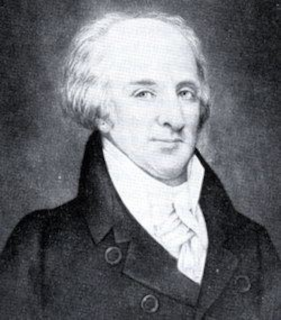
Thomas Fitzsimons, American merchant and statesman of Philadelphia, Pennsylvania, dies in Philadelphia on August 26, 1811. He represents Pennsylvania in the Continental Congress, the Constitutional Convention and the United States House of Representatives.

Fitzsimons is born in Ireland in 1741. In the mid-1750s his family immigrates to Philadelphia, where his father dies soon thereafter. He has enough education that he begins work as a clerk in a mercantile house. He marries Catherine Meade on November 23, 1761 and forms a business partnership with her brother George. Their firm, which specializes in the West Indies trade, operates successfully for over 41 years.

The firm is soon hit by the new revenue measures created to help support the finances of the British Empire, including the much reviled Stamp Act of 1765. Concerned with these ideas, Fitzsimons becomes active in the Irish merchant community in Philadelphia. He is a founding member of the Friendly Sons of St. Patrick in 1771 and later, in 1774, a steering committee organized to protest the Coercive Acts.

When Pennsylvania begins mobilizing and organizing a militia to fight the British, Fitzsimons is soon involved. He serves as captain of a company of home guards under the command of Colonel John Caldwalader. Initially his company serves as part of the soldiers who man posts along the New Jersey coast. His unit later serves as part of the reserve at the Battle of Trenton in 1776. Later in the war, he serves on the Pennsylvania Council of Safety and heads a board to oversee the newly formed Pennsylvania Navy.

Fitzsimons enters active politics as a delegate to the Continental Congress in 1782 and 1783. He is a member of the Pennsylvania House of Representatives from 1786 until 1795. He is also a delegate to the U.S. Constitutional Convention in 1787. Although not a leading member of that convention, he supports a strong national government, the end of slavery, the United States Congress‘s powers to impose a tariff on imports and exports, the granting the House of Representatives, and power in equal to the United States Senate in making treaties. He is one of only two Catholic signers of the Constitution of the United States, the other being Daniel Carroll of Maryland.

After the Constitution is established, Fitzsimons serves in the first three sessions of the House of Representatives as a Federalist, where he favors protective tariffs and a strong navy, co-drafting the Naval Act of 1794 authorizing the original six frigates of the United States Navy. He fails to win re-election in 1794. This was partially attributed to public opinion turning against the Federalist Party over the forceful suppression of the Whiskey Rebellion. Although he never holds elective office again, he serves in 1798 as head of the committee of merchants overseeing the subscription-loan to build a warship at private expense for use in the Quasi-War.

In 1796, Fitzsimons, along with James Innes of Virginia, is appointed by President John Adams to serve as one of two American members on the five-man debt commission charged under Article VI of the Jay Treaty with examining the claims of British subjects unable to collect debts incurred by Americans prior to the American Revolution. Fitzsimons, Innes and Samuel Sitgreaves, who replaces Innes upon the latter’s death, become annoyed with the arguments used by their British counterparts to inflate the claims total. Fitzsimons and Sitgreaves angrily and permanently secede from the board in July 1799. The claims are eventually disposed of by a lump-sum payment, agreed upon by United States Minister to Britain Rufus King with British Foreign Secretary Robert Banks Jenkinson and approved by President Thomas Jefferson and the Senate in 1802.

While withdrawing from politics, Fitzsimons remains active in civic and business affairs. He serves as president of Philadelphia’s Chamber of Commerce, as a trustee of the University of Pennsylvania, Director of the Delaware Insurance Company and a director of the Bank of North America from 1781–1803. He is a founder of the bank and supports efforts to found Georgetown College. He also helps found the Insurance Company of North America.

Fitzsimons dies on August 26, 1811, in Philadelphia, where he is buried in the cemetery of St. Mary’s Roman Catholic Church, which is in present-day Independence National Historical Park.
Leave a comment

Andrew Lewis Appointed Brigadier General of the Continental Army

andrew-lewis-statue

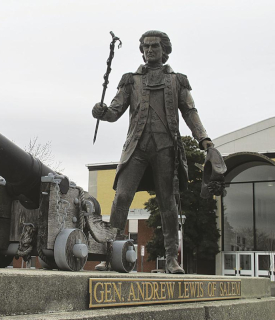
Irish-born Andrew Lewis is appointed a brigadier general in the Continental Army on March 1, 1776. He is most famous for his 1774 victory in the Battle of Point Pleasant in Lord Dunmore’s War. He also helps found Liberty Hall, later Washington and Lee University, when it is made into a college in 1776.

Lewis is born in County Donegal to Colonel John Lewis and his wife Margaret Lynn. In 1732 John Lewis, having killed his landlord in an altercation, flees to Virginia with his sons Andrew and Thomas. They become among the first settlers in western Augusta County.

Lewis receives a basic education and learns the skills of a surveyor. He spends at least fifteen years farming and working as a surveyor in southwestern Virginia. He also serves as county lieutenant and later captain in the Augusta County militia.

Early in the 1740s Lewis marries Elizabeth Givens, daughter of Samuel and Sarah (Cathey) Givens, formerly of County Antrim. They establish their own home, called Richfield, in what later becomes Roanoke County near Salem.

The Virginia frontier becomes a battleground in the French and Indian War, as do the frontiers of the more northerly colonies of Pennsylvania and Maryland. Virginia organizes a militia to defend settlers subject to attacks by Indians upset at encroachments into their territories. Lewis becomes a captain in George Washington‘s regiment. However, after the loss at the Battle of Fort Necessity in 1754, Washington is forced to surrender to the French. Lewis retreats across the Appalachian Mountains.

Washington proposes a series of frontier fortifications to protect settlers east of the Appalachians. Lewis initially serves to build Fort Dinwiddie on the Jackson River of present-day Bath County and is relieved of his command September 21, 1755. The Virginia assembly approves Lewis’ promotion to major and assigns him to oversee the region along the Greenbrier River. On February 18, 1756, he leads the Big Sandy expedition from Fort Frederick with a mixed force of militiamen and Cherokees to raid the Shawnee towns along the Big Sandy and Ohio rivers to retaliate for Shawnee attacks. He leads several expeditions against both Indian settlements and French outposts. During the Forbes Expedition, he is captured during Major James Grant‘s attack on Fort Duquesne during the Battle of Fort Duquesne in September 1758. Taken to Quebec, he remains a prisoner until late 1759.

Upon the formation of Botetourt County from Augusta County in 1769, Lewis is elected to the House of Burgesses and reelected several times until 1780, though the American Revolution precludes much attendance in later years.

When the American Revolution begins, Governor Dunmore suspends Virginia’s legislature. The Whigs form a provisional congress, which includes both Lewis and his brother Thomas as delegates. When the Continental Congress creates a Continental Army in 1775 and makes George Washington its commander, he asks that Lewis be made a brigadier general. However, initially the Continental Congress had decided there should be only one general from each state, and Charles Lee is the first Virginian commissioned as Brigadier General.

On March 1, 1776, Lewis becomes a brigadier general, overseeing Virginia’s defense and raising men for the Continental Army. Virginia’s Committee of Safety calls on Lewis to stop Governor Dunmore’s raids along the coast from his last stronghold, a fortified position on Gwynn’s Island in the Chesapeake Bay. On July 9, 1776, he leads Virginia’s forces which capture the island as Lord Dunmore escapes by sea, sailing to the Caribbean, never to return.

On April 15, 1777, Lewis resigns his commission, alleging poor health. However, he also faces discontent among his men and the army as a whole. Moreover, he is bypassed when promotions are announced for Major General in early 1777. George Washington, in need of every able officer, expresses his disappointment to Lewis.

Lewis remains active in the legislature, and in 1780, Governor Thomas Jefferson appoints him to the Executive Council. The following year, he falls ill while returning home from a council meeting. He dies of fever in Bedford County on September 26, 1781. He is buried in the family plot at his home. His gravesite is not marked. Colonel Elijah McClanahan, who marries Lewis’ granddaughter, Agatha Lewis McClanahan, attended his funeral as a young man, and later identifies his grave to Roanoke County’s Clerk of the Court. In 1887 General Lewis’ remains are re-interred in the East Hill Cemetery at Salem, Virginia.

(Pictured: Statue of General Andrew Lewis outside the Salem Civic Center)


Leave a comment

John Sullivan & The Battle of Trenton

john-sullivan

The Battle of Trenton is a small but pivotal battle during the American Revolutionary War which takes place on the morning of December 26, 1776, in Trenton, New Jersey.

The Continental Army has previously suffered several defeats in New York and has been forced to retreat through New Jersey to Pennsylvania. Morale in the army is low. To end the year on a positive note, George Washington, Commander-in-Chief of the Continental Army, devises a plan to cross the Delaware River on the night of December 25–26 and surround the Hessian garrison.

Because the river is icy and the weather severe, the crossing proves dangerous. Two detachments are unable to cross the river, leaving Washington with only 2,400 men under his command in the assault, 3,000 less than planned.

Washington’s army marches 9 miles south to Trenton. One division commanded by John Sullivan, the third son of Irish settlers from the Beara Peninsula in County Cork, secures the important bridge over the Assunpink Creek to the south of the town. This prevents escape and ensures the high number of Hessian prisoners captured.

The Hessians have lowered their guard, thinking they are safe from the American army, and have no long-distance outposts or patrols. Washington’s forces catch them off guard and, after a short but fierce resistance, most of the Hessians surrender, with negligible losses to the Americans. Almost two thirds of the 1,500-man garrison are captured, and only a few troops escaped across Assunpink Creek.

Despite the battle’s small numbers, the American victory inspires rebels in the colonies. With the success of the revolution in doubt a week earlier, the army had seemed on the verge of collapse. The dramatic victory inspires soldiers to serve longer and attracted new recruits to the ranks.

John Sullivan goes on to serve as a delegate in the Continental Congress, the third Governor of New Hampshire and a judge of the United States District Court for the District of New Hampshire. He dies on January 23, 1795, at the age of 54 in Durham, New Hampshire. He is buried in the Sullivan Family Burial Ground in Durham.